Knit Garments (Jersey): Properties, Manufacturing Process and Applications in Fashion
March 18, 202614 min read
Knit garments are also called jersey garments and are made from a knit fabric. This fabric is made by interlocking loops of yarn to produce a flexible and stretchy textile structure. The comfort, breathability and versatility of knit garments make them the leading choice for casual and performance wear across global markets.
Knit Garments(Jersey)
Knitted garments and especially jerseys, account for a large share of the world's apparel exports. Jersey garments remain central to the fast fashion, athleisure and sustainable fashion movements, driven by growing demand for clothing that is both comfortable and functional.
Characteristics of Knit (Jersey) Garments
Knit or jersey garments are widely popular in the apparel industry because of their comfort, flexibility and versatility. Their unique looped structure gives them properties that are very different from woven fabrics, making them ideal for everyday wear as well as performance clothing. These garments are designed to move with the body, offering a relaxed and comfortable experience throughout the day.
Comfort
One of the biggest advantages of knit garments is their superior comfort. The fabric structure allows it to stretch naturally, which means it adapts easily to body movement without feeling restrictive. At the same time, the soft texture makes it pleasant to wear directly on the skin.
Key comfort features include:
High stretch and flexibility
Soft and smooth hand feel
Body-conforming fit without tightness
Breathability and Moisture Management
Knit fabrics are generally more breathable due to their loop structure, which allows air to circulate easily through the fabric. This makes them especially suitable for warm climates and active wear.
In addition, modern knit fabrics can be engineered with moisture-wicking properties, helping to keep the body dry and comfortable during physical activity.
Key performance benefits include:
Good air circulation and ventilation
Suitable for hot and humid conditions
Can support moisture-wicking for sportswear
Ease of Movement
The loop structure of knitted fabrics provides natural stretch, allowing the garment to expand and contract with body movements. This makes knit garments ideal for both daily wear and high-movement activities.
Key movement advantages include:
Natural mechanical stretch
No restriction during movement
Comfortable for active and casual use
Fast Production
Knit garments are easier and faster to produce compared to many woven products. Modern knitting machines can produce fabric at high speed, making them suitable for mass production and fast fashion cycles.
Production advantages include:
High-speed fabric manufacturing
Efficient large-scale production
Reduced processing time
Versatility
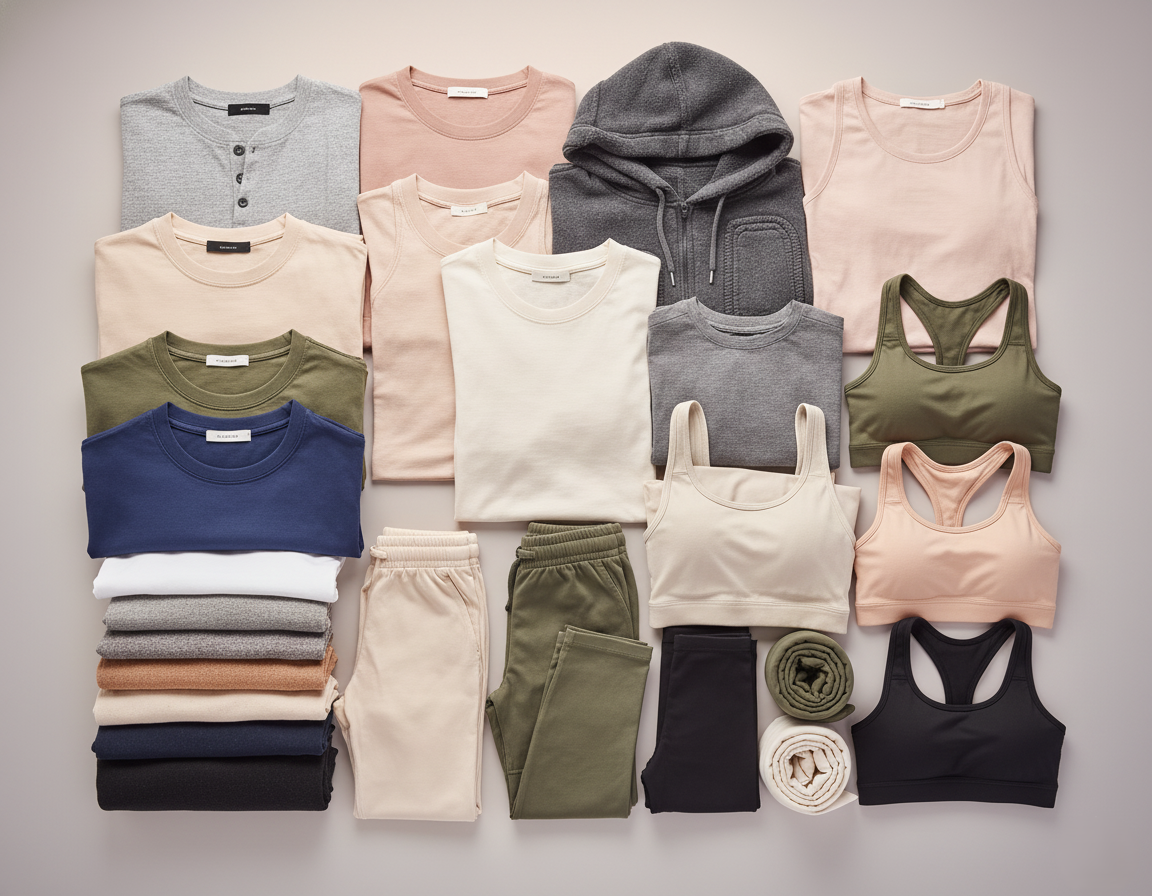
Knit fabrics are extremely versatile and can be used across a wide range of garment types. Their adaptability makes them suitable for different styles, climates and functions.
Common applications include:
T-shirts and casual tops
Hoodies and sweatshirts
Sportswear and activewear
Underwear and innerwear
Dresses and leggings
Kidswear and everyday garments
Knit fabrics can be classified by:
Structure:
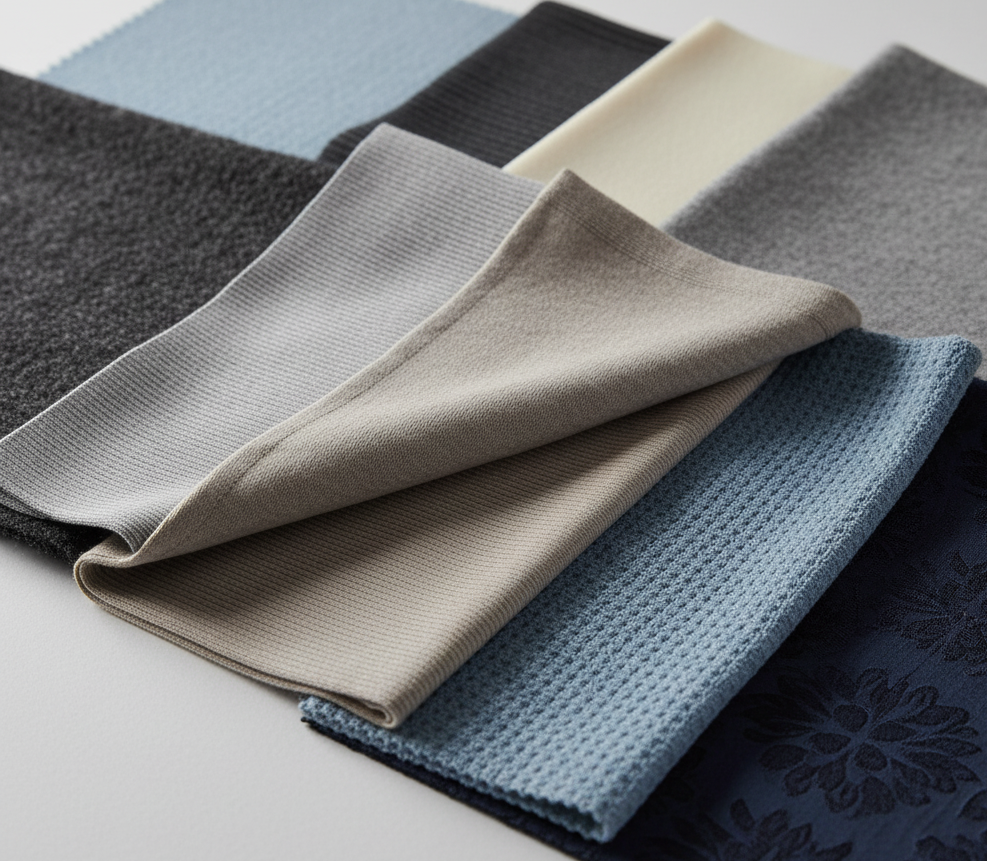
Knit fabric structure
Fabric Type
Key Features
Common Uses
A. Single Jersey
Lightweight, soft, good drape
T‑shirts, basic tops
B. Rib Knit
Highly stretchy, ribbed texture
Cuffs, collars, tank tops, slim-fit tees
C. Interlock Knit
Thicker, more stable, smooth finish
Premium T‑shirts, babywear
D. Piqué Knit
Textured, breathable, structured
Polo shirts
E. French Terry
Soft loops on back, mid‑weight
Loungewear, tracksuits, joggers
F. Fleece Knit
Brushed inner side, warm, soft
Hoodies, winter trousers
G. Jacquard Knit
Patterned designs, decorative
Fashion tops, dresses, premium garments
Fiber Type:
A. Natural Fibers
Fiber
Key Features
Common Uses
Cotton
Breathable, soft, skin‑friendly
T‑shirts, tops, babywear
Organic Cotton
Sustainable, eco‑friendly
Premium tees, kidswear, eco fashion
Wool
Warm, insulating, premium feel
Sweaters, winter dresses
Silk
Luxurious, smooth, natural sheen
Luxury knit garments, premium tops
B. Synthetic Fibers
Fiber
Key Features
Common Uses
Polyester
Durable, wrinkle‑free, quick‑dry
T‑shirts, sportswear
Nylon
Strong, stretchy, smooth
Activewear, tights, lingerie
Acrylic
Soft, wool‑like, lightweight
Sweater knitwear, winter garments
C. Blended Fibers
Blend Type
Key Features
Common Uses
Cotton–Spandex
Soft + stretch
Stretch tees, leggings
Poly–Cotton
Durable, wrinkle‑resistant
Uniform tees, everyday wear
Nylon–Spandex
High stretch, excellent recovery
Sportswear, tights, yoga wear
Viscose–Spandex
Soft, drapey, premium feel
Fashion tops, dresses
Types of Knit Dresses & Jersey Garments
Here is a structured list of commonly produced knit garments:
Jersey Garments
Category
Garment Types
Description / Notes
1. Tops & T‑Shirts
Basic crew neck tees, V‑neck tees, polo shirts, tank tops, camisoles, long‑sleeve tees, crop tops
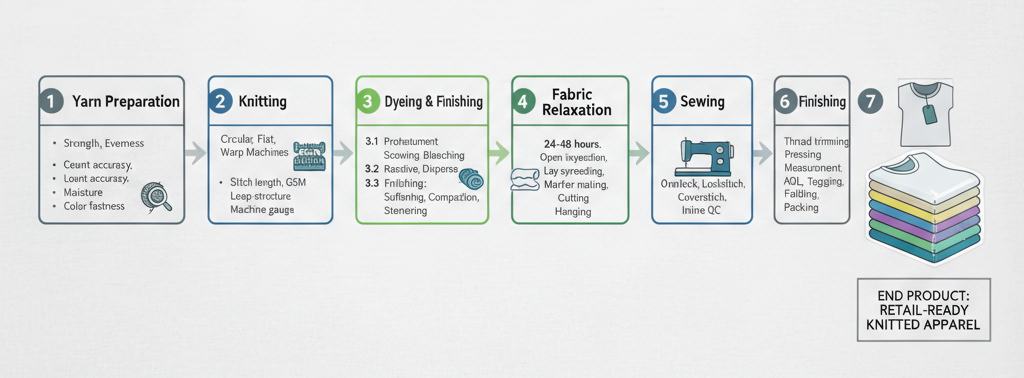
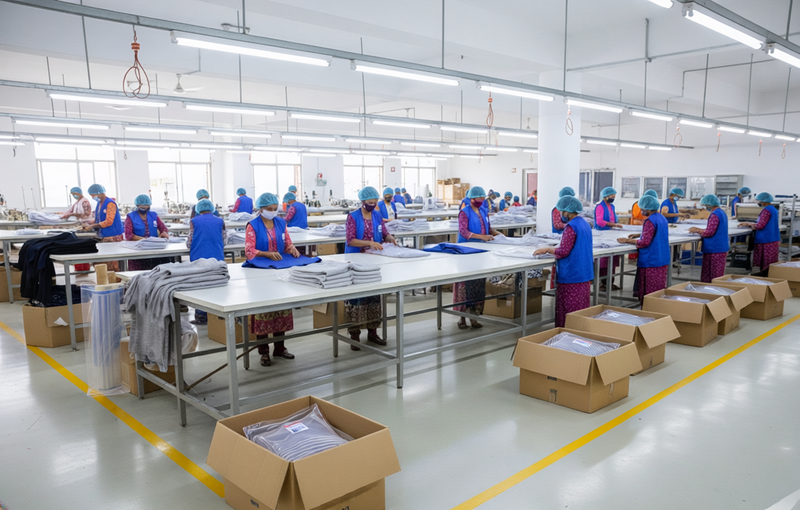
Jersey garments manufacturing is a complete end-to-end process that starts from raw yarn and ends with finished, retail-ready apparel. In a vertical manufacturing setup, all stages—knitting, dyeing, cutting, sewing and finishing—are integrated to ensure better quality control, efficiency and consistency. Each step is interconnected and proper control at every stage is essential to achieve the desired product quality and performance.
Knit Garments Manufacturing Process Flow
1. Yarn Preparation
The process begins with yarn selection and testing, as yarn quality directly affects fabric and garment quality. Before production, yarn is checked to ensure it meets required standards for strength, consistency and performance.
Proper yarn preparation helps minimize defects during knitting and ensures smoother processing.
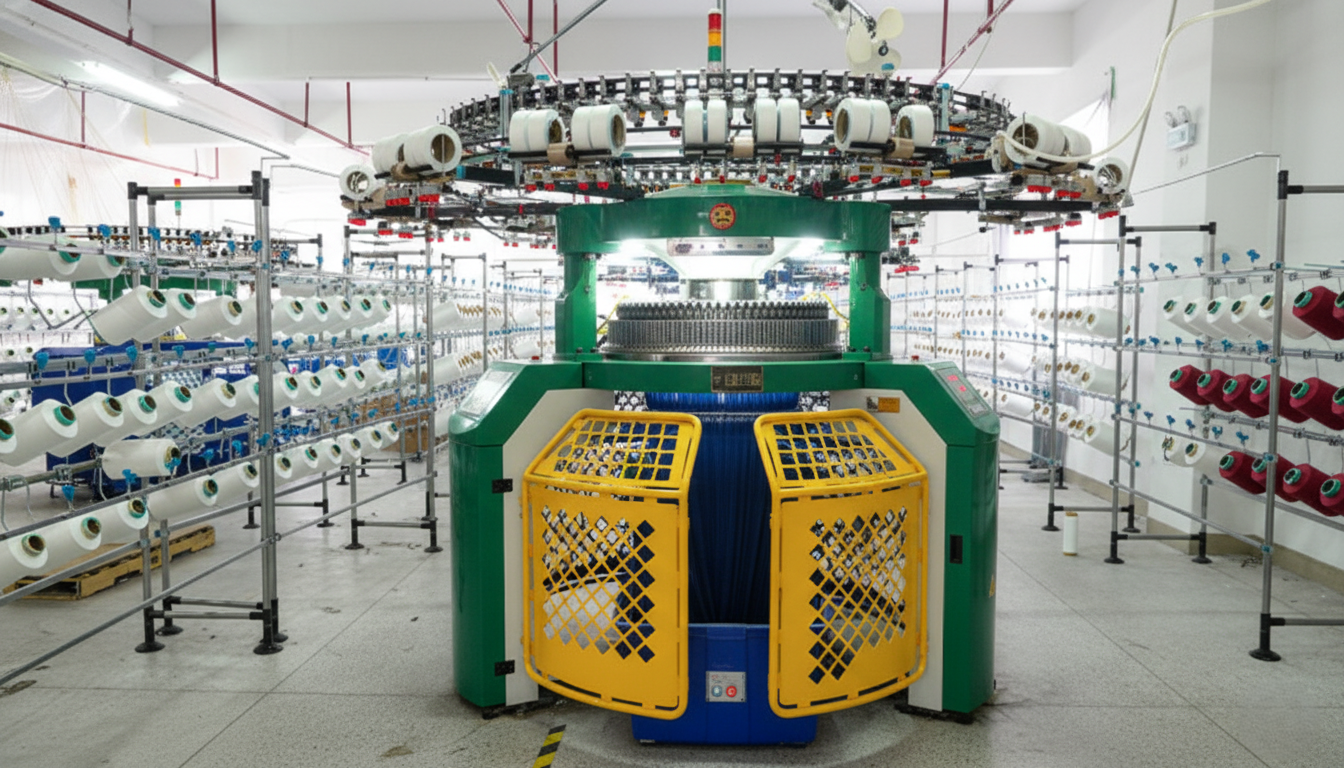
2. Knitting
In this stage, yarn is converted into fabric using different types of knitting machines. The type of machine used depends on the required fabric structure and end use.
After knitting, the greige fabric undergoes wet processing to achieve the desired color, feel and performance. This stage includes three main parts: pretreatment, dyeing and finishing.
Pretreatment
Fabric is cleaned and prepared to ensure proper dye absorption.
Scouring removes oils and impurities
Bleaching improves whiteness for light shades
Enzyme treatment enhances softness and reduces pilling
Dyeing
Different dyeing methods are used depending on fiber type:
Reactive dyes for cotton → bright colors and strong bonding
Disperse dyes for polyester → high-temperature dyeing
Vat or pigment dyes → for durability or cost efficiency
Finishing
Fabric properties are improved to meet performance and quality standards:
Softening for better hand feel
Compaction to control shrinkage
Stentering for width and GSM control
Brushing for fleece fabrics
The output is finished fabric ready for garment cutting.
Process Stage
Sub‑Process
Purpose / Description
Pretreatment
Scouring
Removes natural oils, waxes, dirt to improve absorbency
Bleaching
Achieves whiteness and prepares fabric for light shades
Before cutting, fabric is allowed to rest (usually 24–48 hours) to remove tension created during knitting and dyeing. This step is important to prevent shrinkage and ensure dimensional stability in the final garment.
Common relaxation methods:
Open-width relaxation
Tube relaxation
Hanging relaxation
5. Cutting
In the cutting stage, fabric is transformed into garment panels based on the approved design and marker plan. Accuracy here is critical because it directly impacts fabric consumption and garment fitting.
Key steps include:
Fabric inspection (using the 4-point system)
Lay spreading (manual or automated)
Marker making for efficient fabric usage
Cutting using straight knife, round knife or auto cutters
Bundling and numbering parts for easy tracking
6. Sewing
Cut panels are assembled into finished garments through various sewing operations. Different types of machines are used depending on seam type and garment construction.
During this stage, production control is important:
Line balancing for efficiency
Operator skill allocation
Work-in-progress (WIP) tracking
Inline quality control checks
The output is a fully stitched garment.
7. Finishing
The final stage involves preparing garments for shipment and retail display. It ensures that the product meets all quality, measurement and presentation standards.
Key finishing activities:
Thread trimming and cleaning
Final pressing/ironing
Measurement checking
Final quality inspection (AQL)
Tag and label attachment
Folding and packing
Carton packing for shipment
✅ Overall understanding:
Jersey garments are made in a very precise way, every step in the process, from yarn to finishing, adds value to the end product. Seamless co-ordination between departments and rigorous quality controls at all steps is crucial to produce consistent high-quality garments that are on buyer and market expectations.
References & Sources
Spencer, D. J. Knitting Technology: A Comprehensive Handbook and Practical Guide. Woodhead Publishing.
Choudhury, A. K. R. Principles of Textile Finishing. Woodhead Publishing.
Cooklin, G. Introduction to Clothing Manufacturing. Wiley-Blackwell.
Carr, H., & Latham, B. The Technology of Clothing Manufacture. Wiley-Blackwell.
Kadolph, S. J. Textiles. Pearson Education.
Gong, R. H., & Wright, R. M. Knitting Technology and Product Development. Woodhead Publishing.
ASTM International Textile Testing Standards.
AATCC (American Association of Textile Chemists and Colorists) Technical Manuals and Test Methods.
Textile Institute Publications on Knitting, Dyeing, Finishing, and Apparel Manufacturing.
Industry best practices and technical guidelines used in knit garment manufacturing and quality management.
Disclaimer: The information in this article is provided for educational and informational purposes only. While every effort has been made to ensure accuracy, textile manufacturing methods, standards, and technologies may vary between companies and regions. Readers should verify technical requirements and production practices with relevant professionals or industry sources before making business or production decisions.
Written by
Alam Mohammad Shafiqul
Lead Editor, Senior Contributor & Founder
Textile Technology
Textile engineering professional with over 15 years of experience in Sweater Manufacturing, Industrial Engineering and Technical Development. Holds a degree in Textile Engineering and an MBA in Apparel Merchandising. Passionate about bridging the gap between factory-floor operations and technical expertise to drive efficiency, innovation, and continuous improvement.
Textile EngineeringSweaterIndustrial EngineeringLean Six SigmaPythonJS