Modern garment factories use a variety of sewing machines, from simple general stitching machines to sophisticated automated machines for specific garment operations. Main garment assembly is done using lockstitch and chainstitch machines, while overlock and safety stitch machines are used for seam strength and clean edge finishing. Flatlock, coverstitch and Kansai multi-needle machines are widely used in knitwear production for stretchable, comfortable and decorative seams.
Specialized machines such as feed‑off‑the‑arm, post bed and cylinder bed machines make possible the efficient sewing of tubular, curved or heavy garment parts, particularly in denim, sportswear and fashion garments. Reinforcement and finishing machines, like bartack, buttonhole and button attaching machines, make garments durable and uniform at stress points. As automation develops, programmable and automatic sewing machines have become more and more popular in the garment industry. These machines such as auto pocket setters, sleeve setters, waistband attaching machines and pattern sewing machines, reduce manual handling, increase accuracy, improve productivity and reduce the defects. Additional auxiliary equipment such as thread trimming and marking systems further improves finishing quality and production flow.
In short, garment sewing machines are the lifeline of apparel manufacturing. Manufacturers can meet the global buyer requirements through proper selection of machines, effective use and skilled operation, ensure high productivity and consistent quality and be competitive in the global apparel market.
List of Garment Sewing Machines
Lockstitch Machines
Lockstitch machines are widely used in the apparel industry because they produce clean, strong and balanced seams. They use two threads (needle and bobbin) that interlock to form a secure stitch, making them suitable for precise and durable stitching.
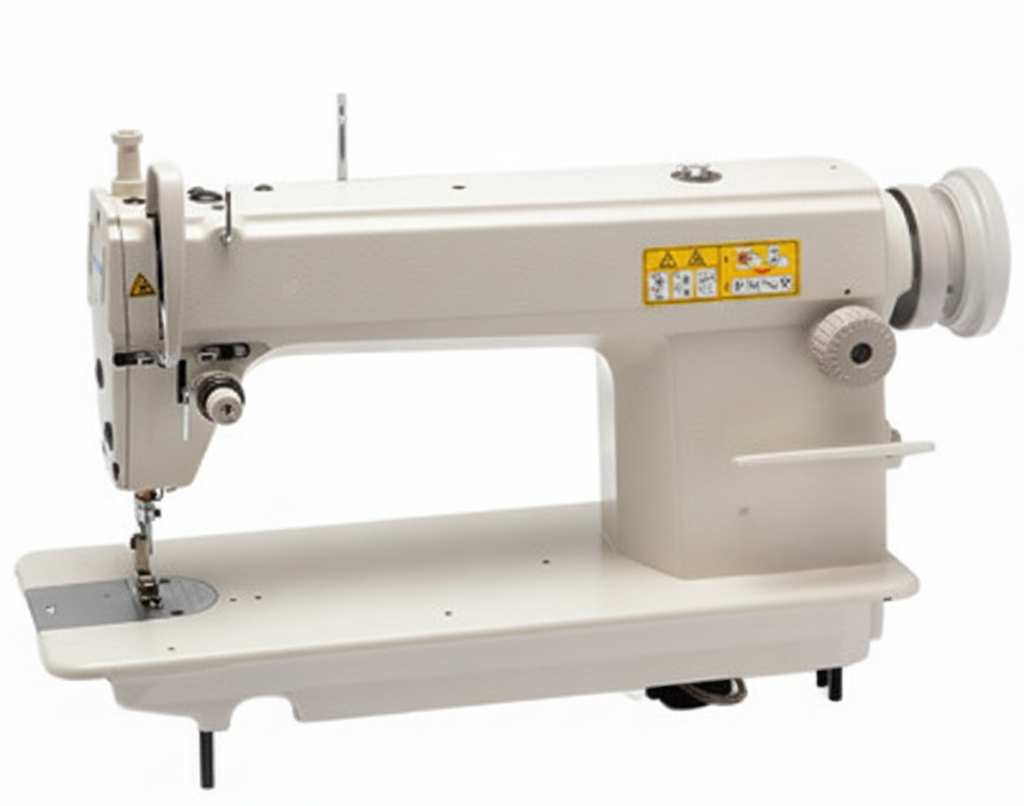
Single Needle Lockstitch (SNLS)
The single needle lockstitch machine is the most basic and widely used sewing machine. It is mainly used for general garment assembly where straight seams are required.
Typical uses include:
- Side seams and shoulder seams
- Darts and tucks
- Plackets and basic construction
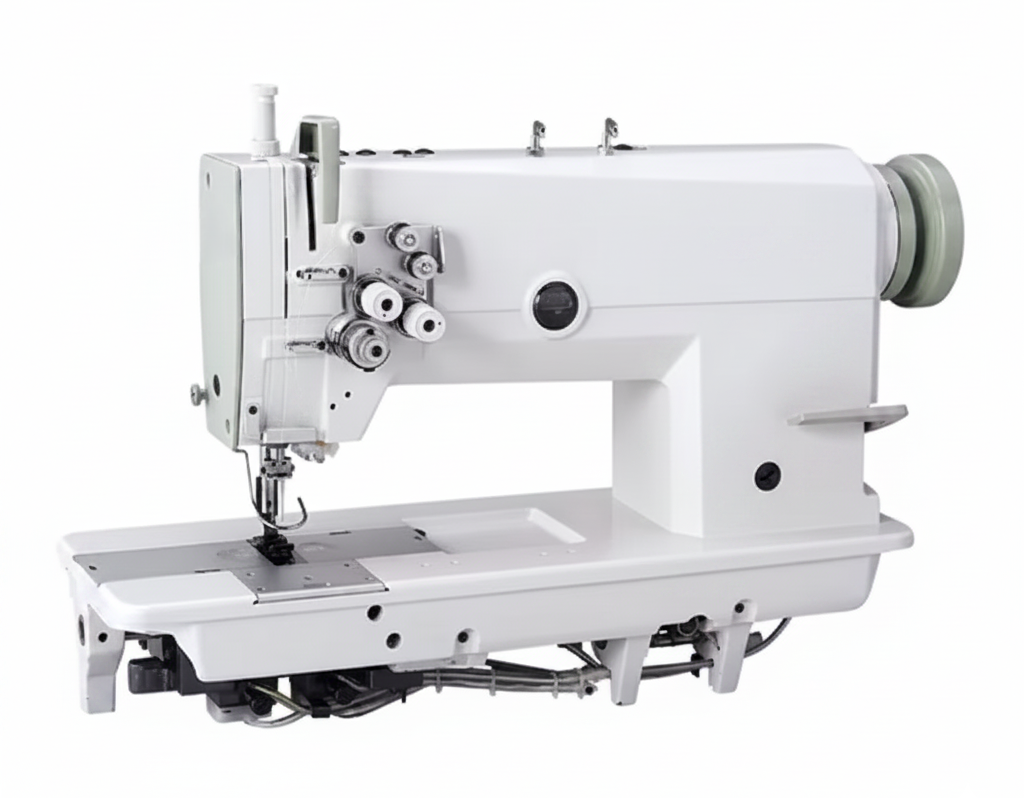
Double Needle Lockstitch (DNLS)
Double needle lockstitch machines are used when two parallel stitches are required for both functional strength and decorative appeal.
Typical uses include:
- Shirt fronts and panels
- Decorative stitching on pockets
- Parallel seams in garments
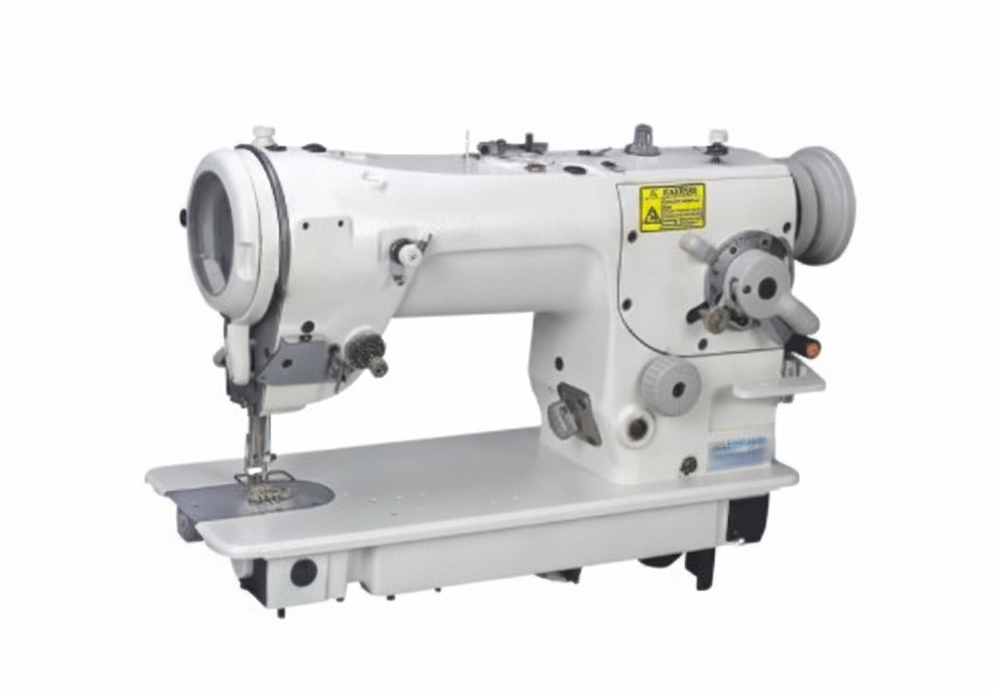
Zigzag Machine
Zigzag machines create a zigzag stitch instead of a straight line, allowing flexibility and stretch. They are often used for elastic materials and decorative work.
Typical uses include:
- Lingerie and stretch fabrics
- Elastic attachment
- Embroidery support and decorative stitching
Chainstitch Machines
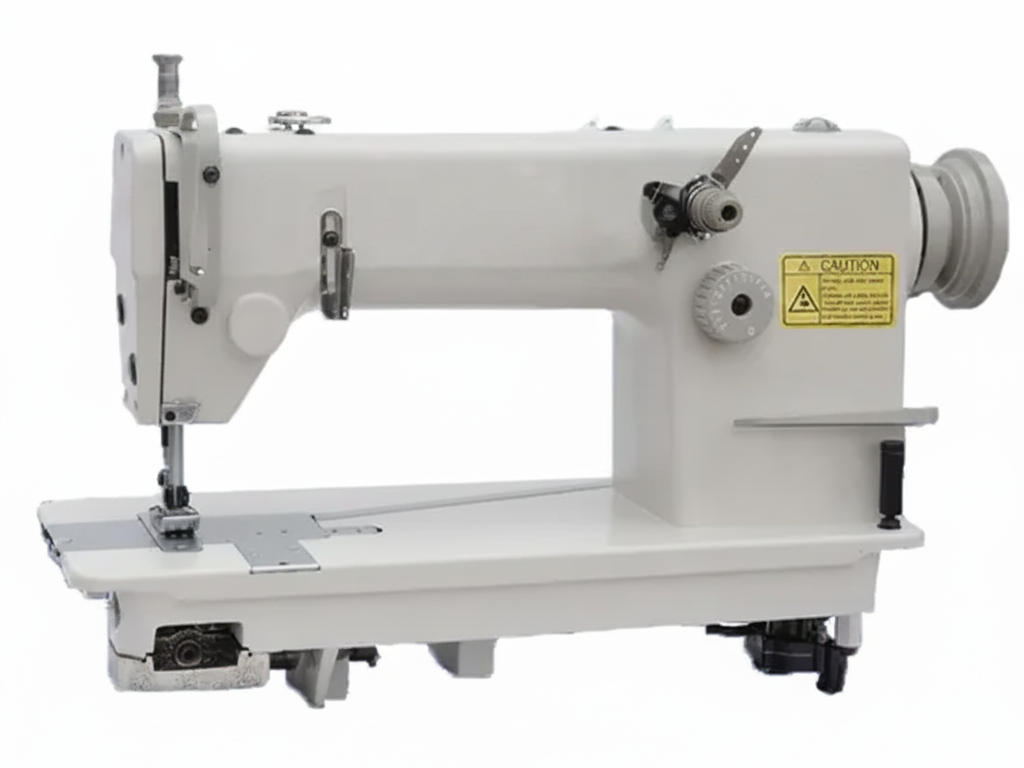
Single Needle Chainstitch (SNCS)
Single needle chainstitch machines are used where some stretch is required, especially in long seams.
Typical uses include:
- Trouser side seams
- T-shirts and knit garments
- Long continuous seams
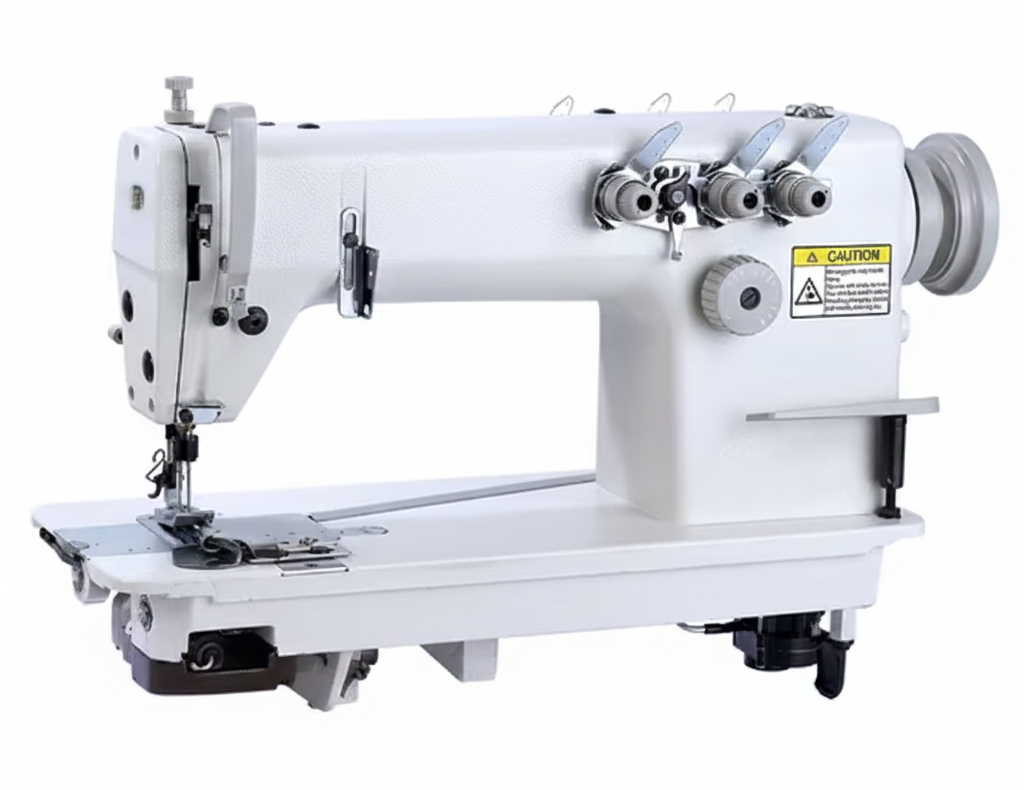
Double Needle Chainstitch (DNCS)
Double needle chainstitch machines provide extra strength and elasticity, making them suitable for high-stress areas.
Typical uses include:
- Waist seams
- Yokes and panels
- Sportswear garments
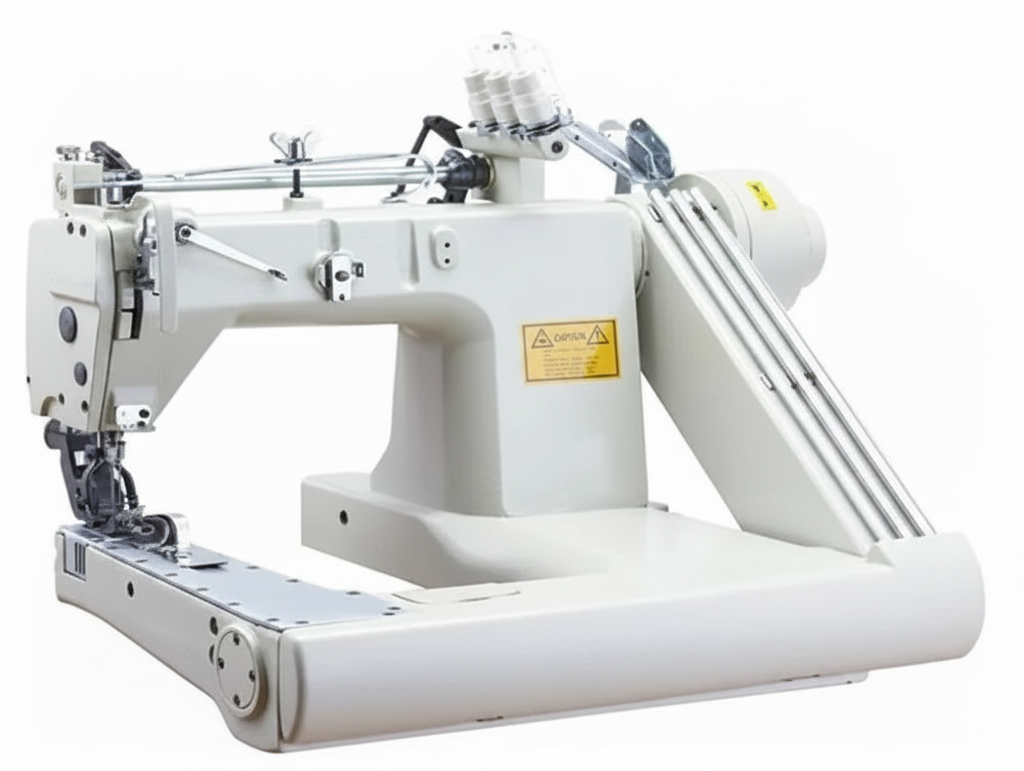
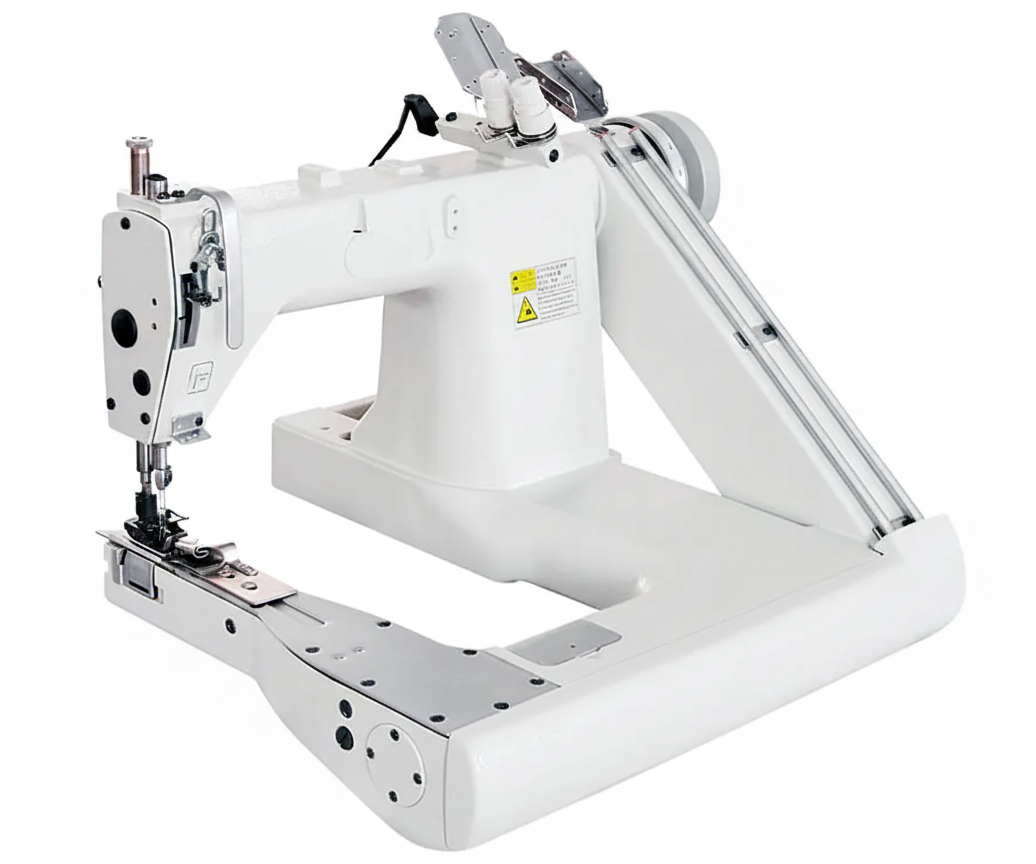
Feed‑off‑the‑Arm Chainstitch
This machine is specially designed for sewing tubular or circular parts. The fabric moves around the arm, making it easier to handle curved seams.
Typical uses include:
- Jean inseams
- Sleeve joining
- Trouser assembly
Feed‑off‑the‑Arm Lockstitch
Used for heavy or shaped components where controlled handling is required.
Typical uses include:
- Denim seams
- Curved or bulky garment parts
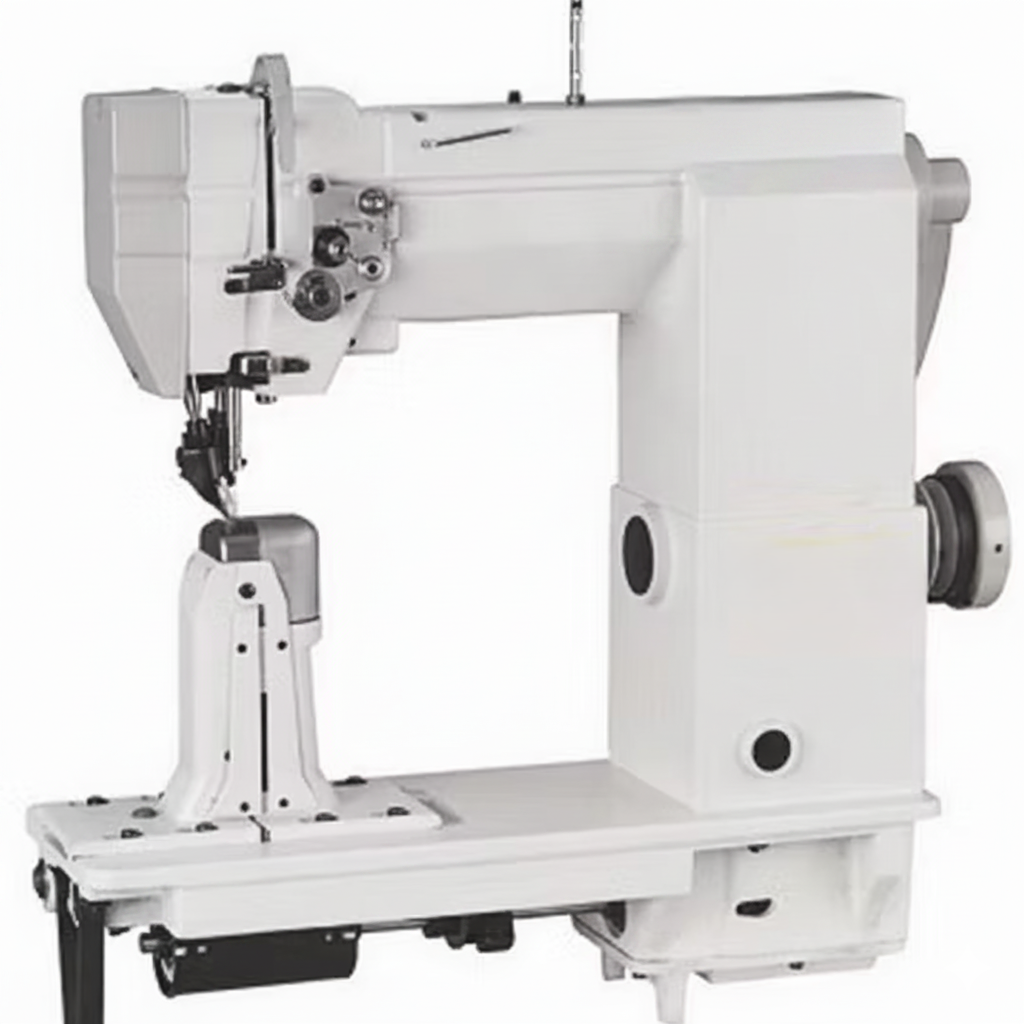
Post Bed Lockstitch
This machine has a vertical post, making it ideal for sewing three-dimensional or difficult-to-access areas.
Typical uses include:
- Collars and cuffs
- Bags and footwear
- Accessories and structured garments
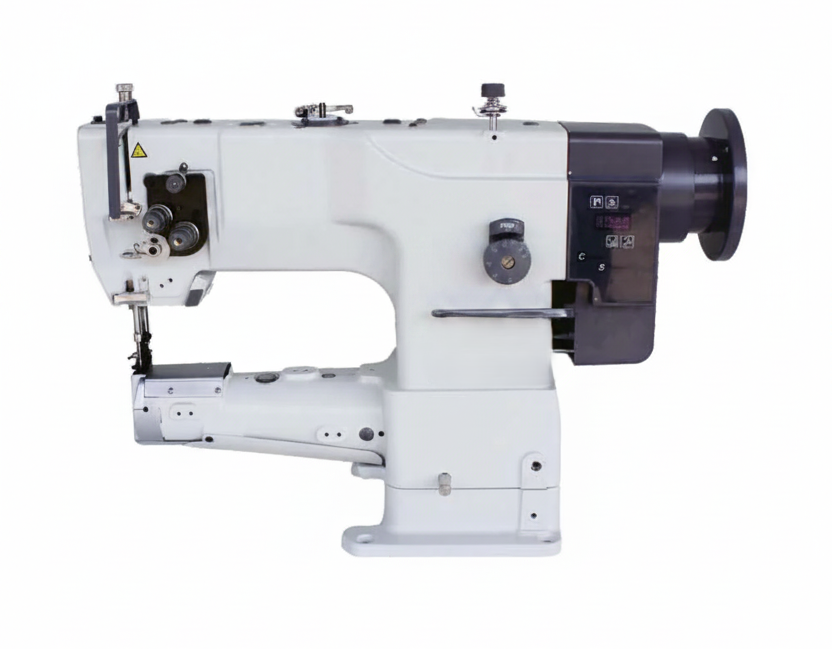
Cylinder Bed Lockstitch
Cylinder bed machines are used for narrow, circular parts where flat-bed machines cannot operate efficiently.
Typical uses include:
- Sleeves and cuffs
- Children’s garments
- Small tubular products
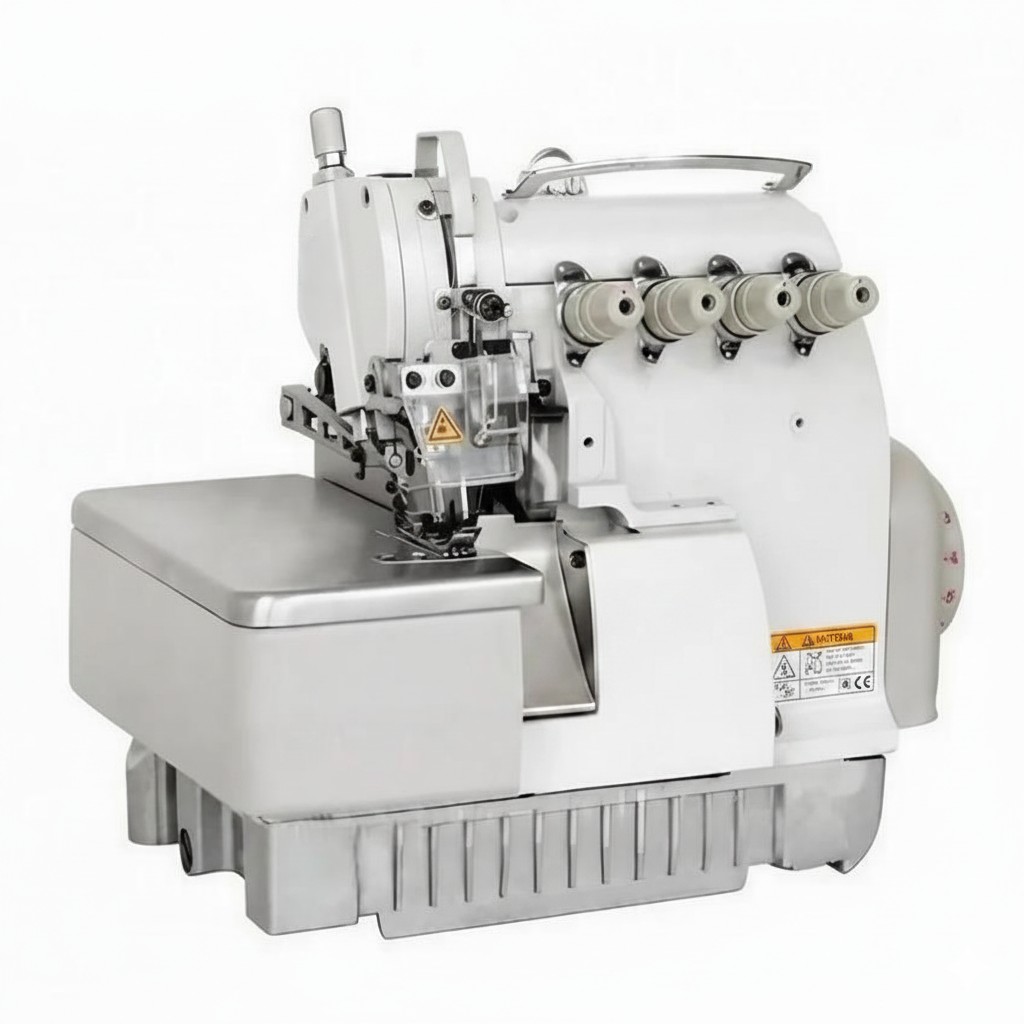
Overlock / Overedge Machines
2‑Thread Overlock
The 2-thread overlock machine is mainly used for lightweight fabrics where minimal stitching is required. It is suitable for simple edge finishing without adding bulk.
Typical uses include:
- Lining fabrics
- Lightweight knit garments
- Basic edge finishing
3‑Thread Overlock
This machine is commonly used for edge neatening, especially in woven fabrics. It effectively prevents fabric edges from fraying.
Key uses include:
- Edge finishing of woven garments
- Lightweight seam finishing
4‑Thread Overlock
The 4-thread overlock machine combines seam joining and edge finishing in one operation, making it highly efficient for knit garments.
Typical uses include:
- T-shirt assembly
- Knitwear seam joining
- General garment construction
5‑Thread Safety Stitch
This machine provides strong and durable seams by combining chainstitch and overlock stitching. It is widely used for heavy-duty garments.
Common applications:
- Jeans and denim products
- Workwear and trousers
- High-stress seams
Flatseam & Kansai Machines
Flatlock Machine
Flatlock machines create flat, stretchable seams that lie smoothly against the fabric. They are ideal for garments worn close to the body.
Typical uses include:
- Activewear and sportswear
- Underwear and innerwear
- Seamless-looking finishes
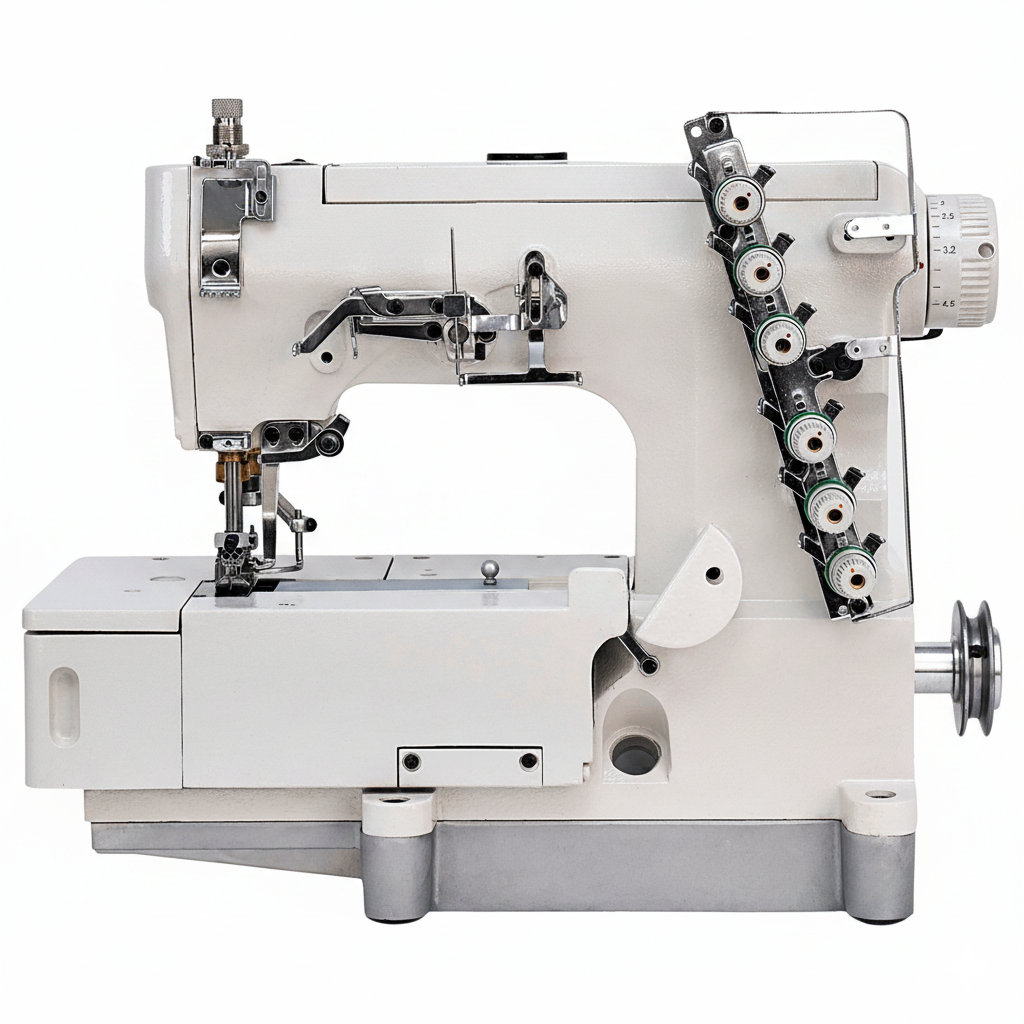
Kansai Multi‑Needle Flatseamer
This machine is used to produce decorative seams with multiple parallel stitches, adding both strength and visual appeal.
Typical uses include:
- T-shirt panels
- Rib joining
- Decorative seams in knitwear
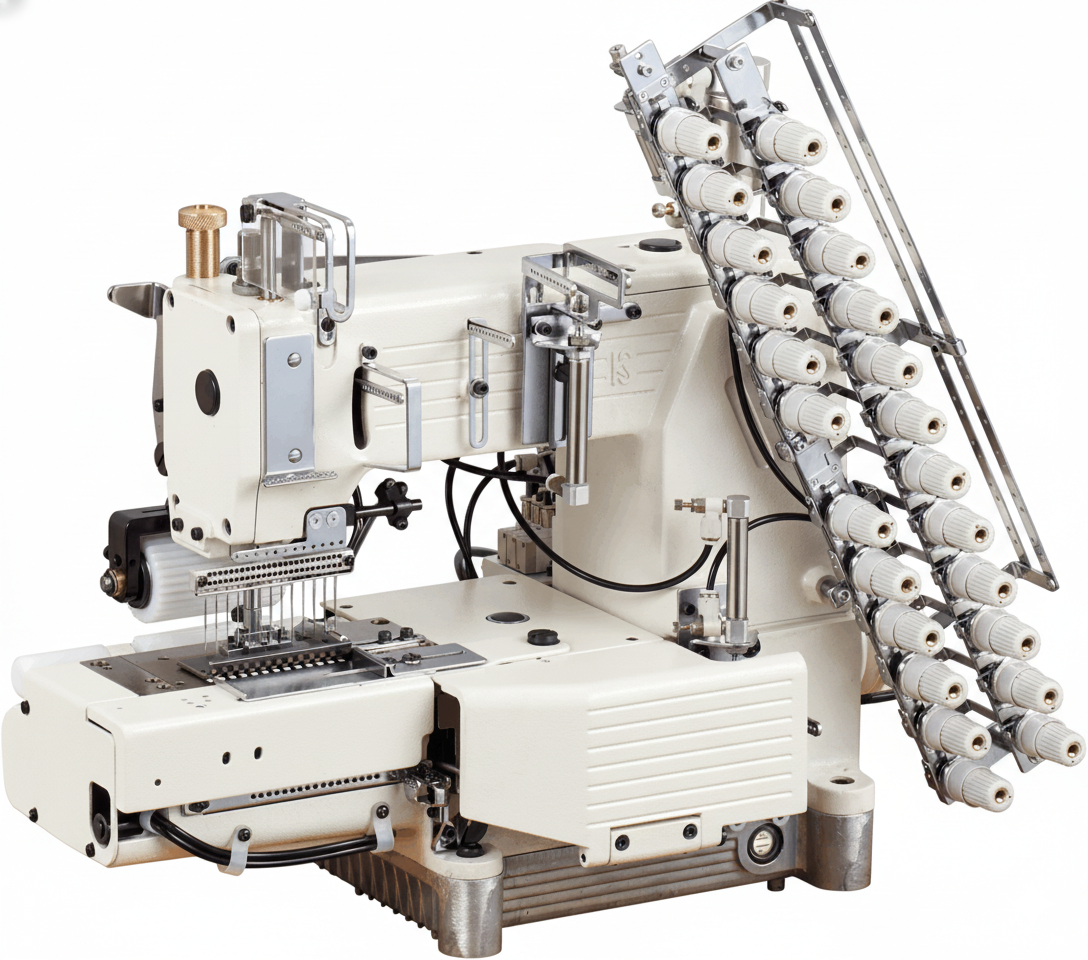
Kansai Coverstitch Machine
Coverstitch machines are used to cover raw edges while providing stretch and durability. They create the familiar seam used in hems and necklines.
Common applications:
- T-shirt hems
- Sleeve ends
- Necklines in knit garments
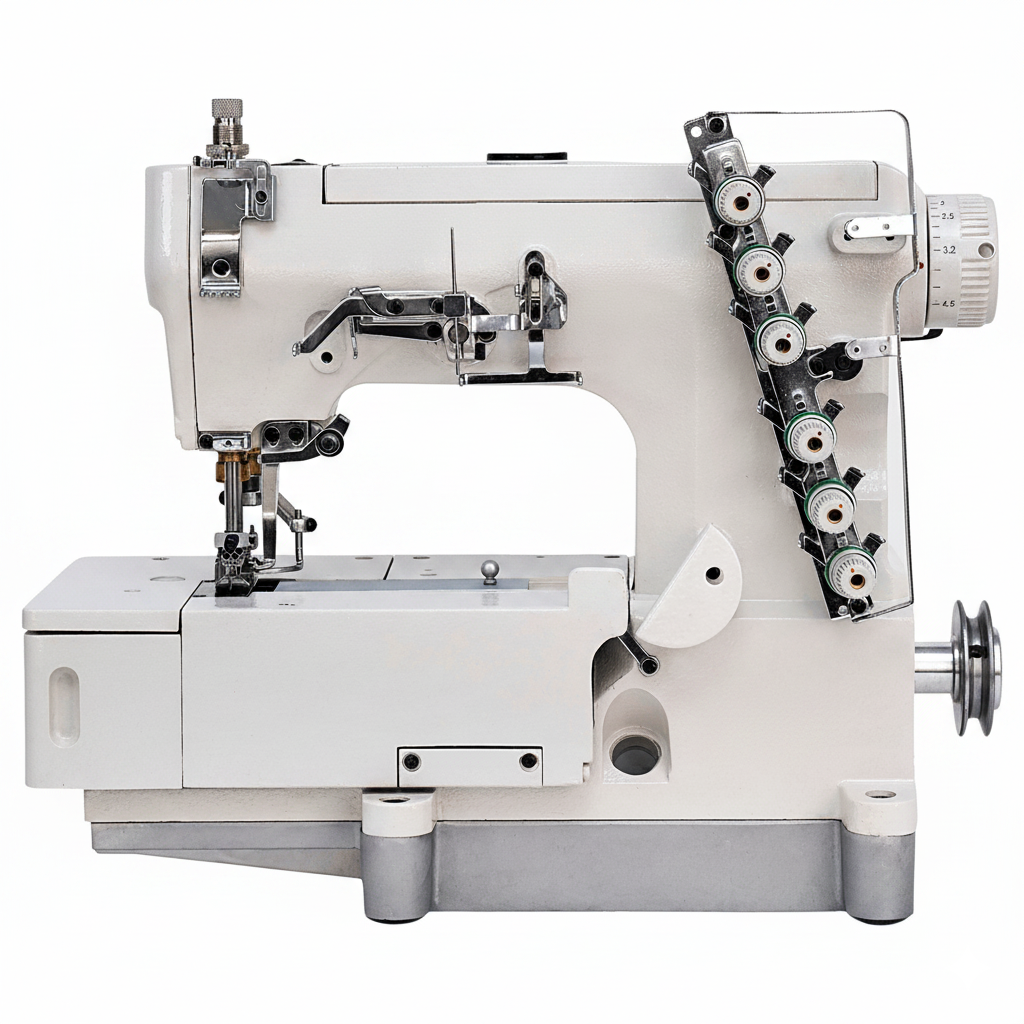
Top & Bottom Coverstitch
This machine produces a premium finish by stitching both the top and bottom sides of the fabric, ensuring durability and aesthetics.
Typical uses include:
- High-quality knit garments
- Export-standard finishing
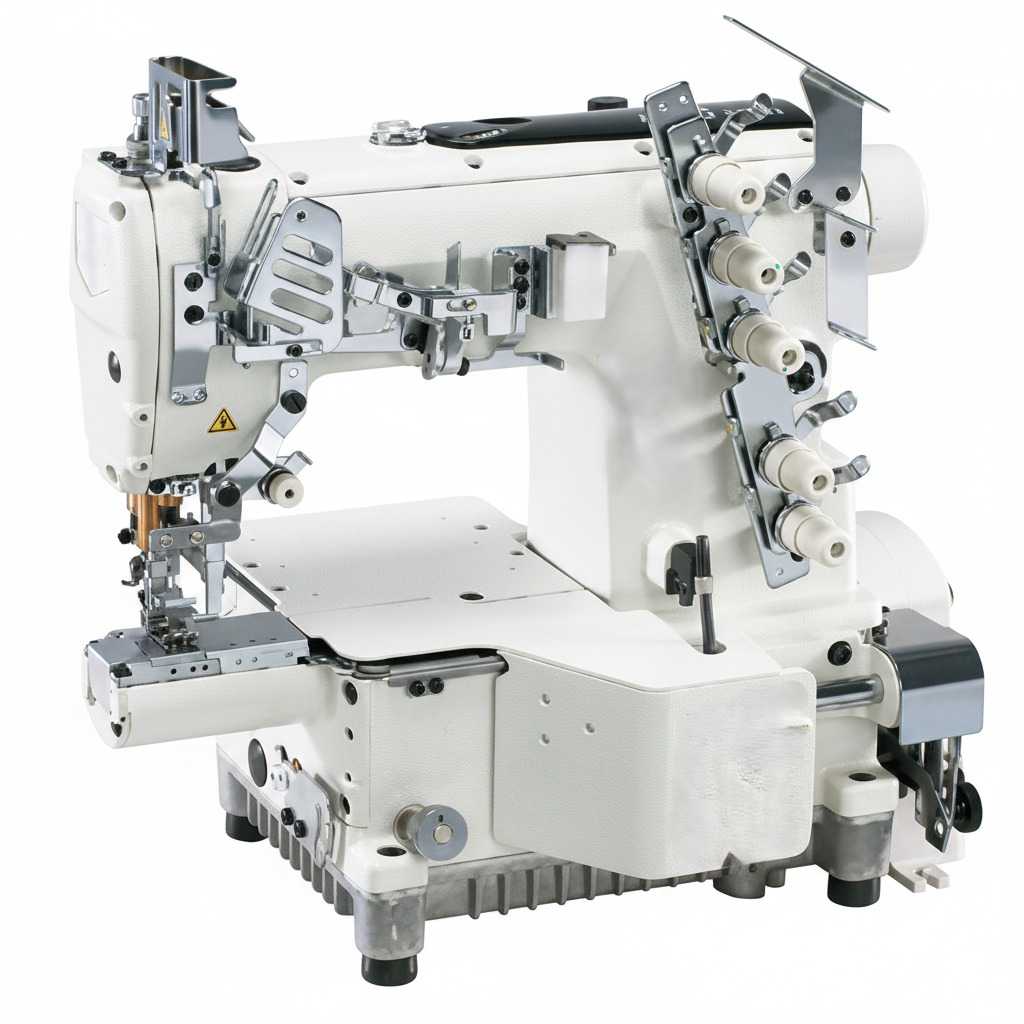
Kansai Rib Attachment Machine
This specialized machine is used for attaching rib components such as collars and cuffs in knit garments.
Typical uses include:
- Polo shirts
- Sweatshirts
- Ribbed garment parts
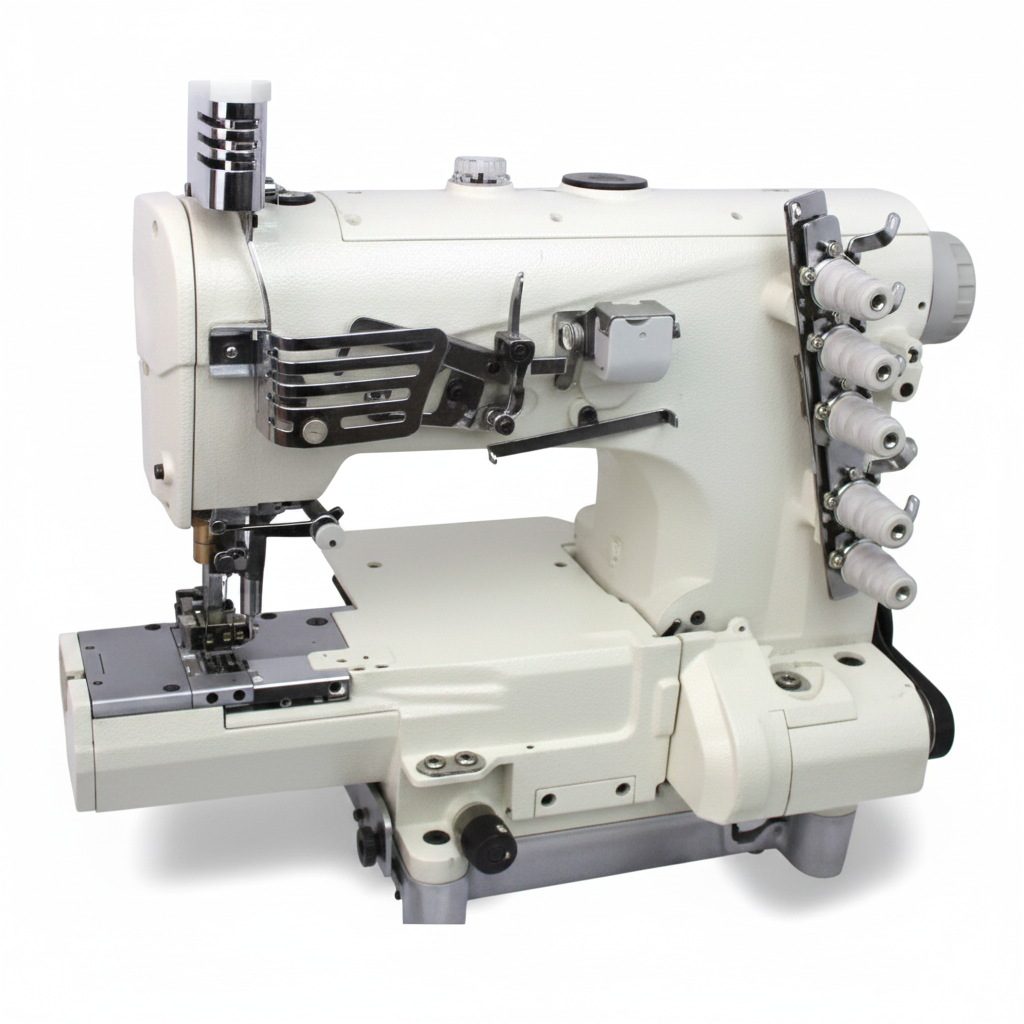
Multi‑Needle Elastic Attaching Machine
This machine is designed for inserting and securing elastic in garments with precision and consistency.
Typical uses include:
- Waistbands in underwear
- Lingerie and stretch garments
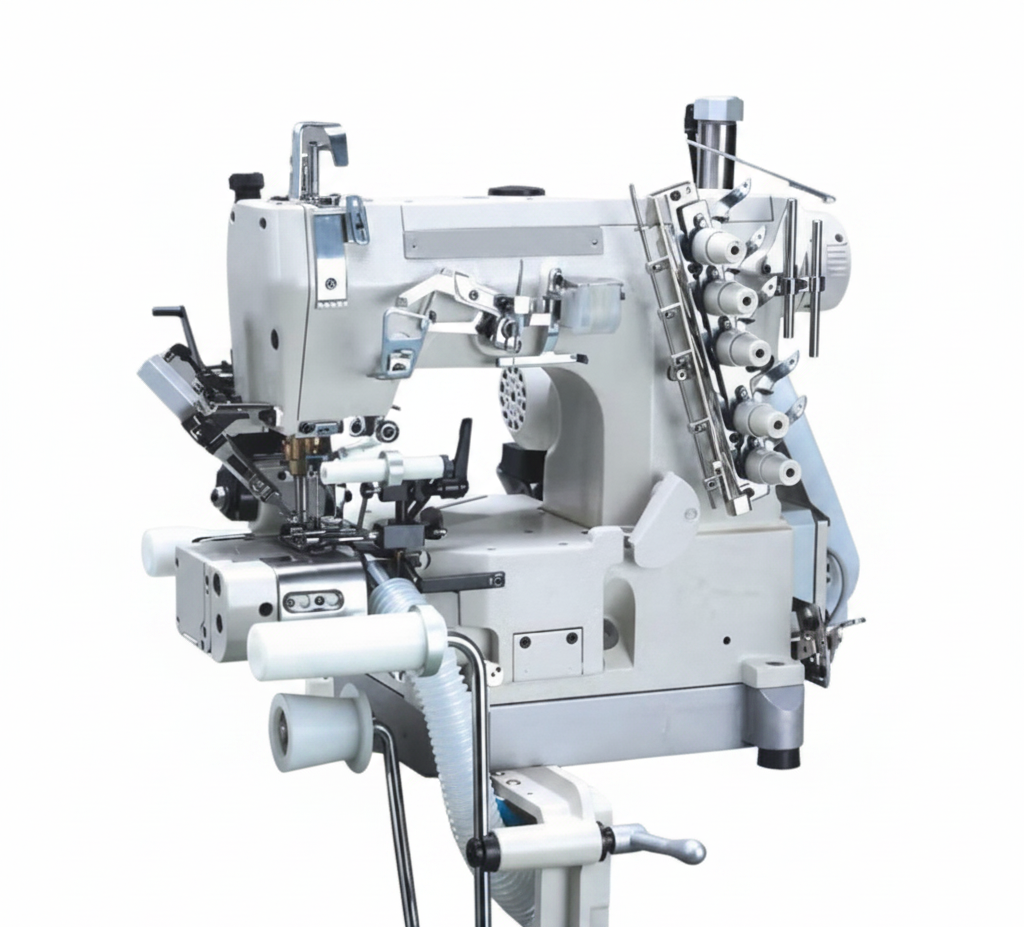
Multi‑Needle Tape Binding Machine
Used to attach binding tape along seams or edges, especially in garments requiring reinforcement or decoration.
Common applications:
- Sportswear seams
- Reinforced edges
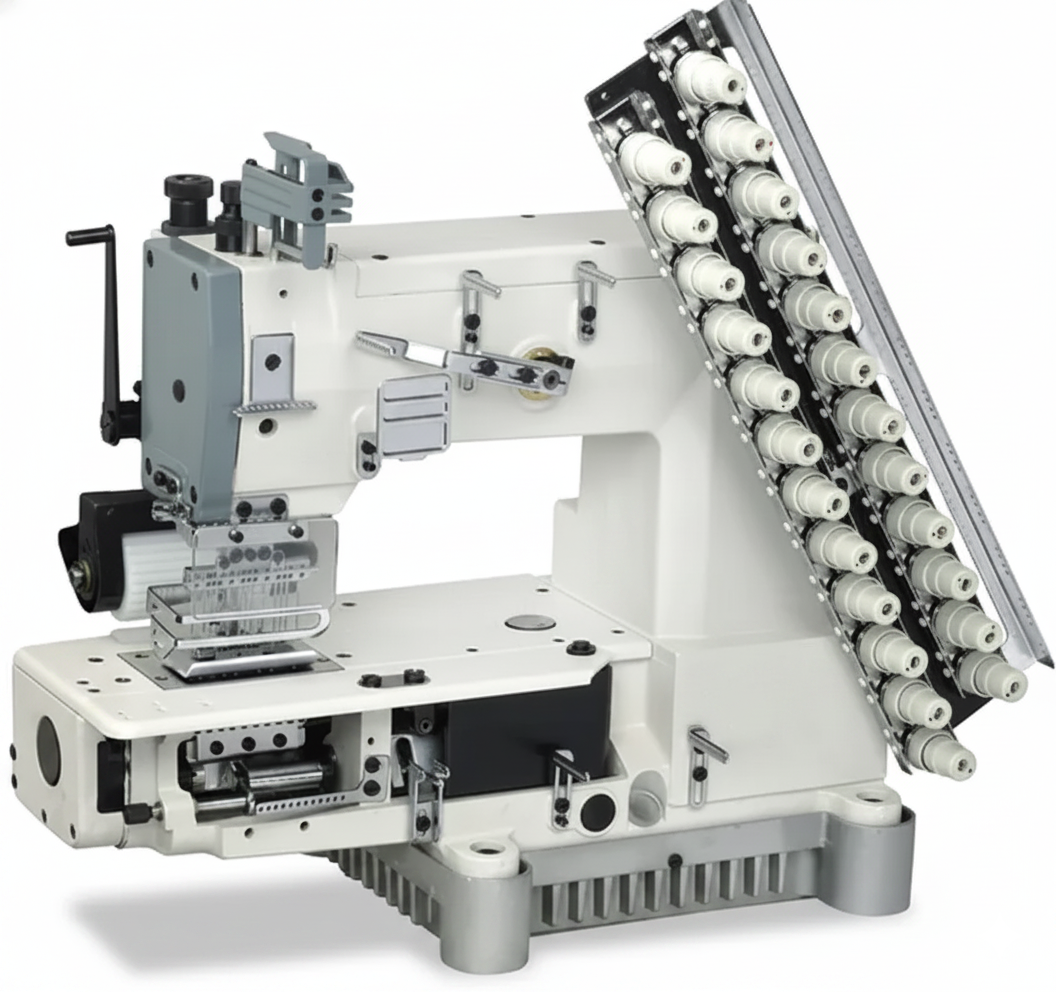
Multi‑Needle Waistband Machine
This machine is specifically used for attaching knit waistbands, ensuring both strength and flexibility.
Typical uses include:
- Joggers
- Leggings
- Activewear bottoms
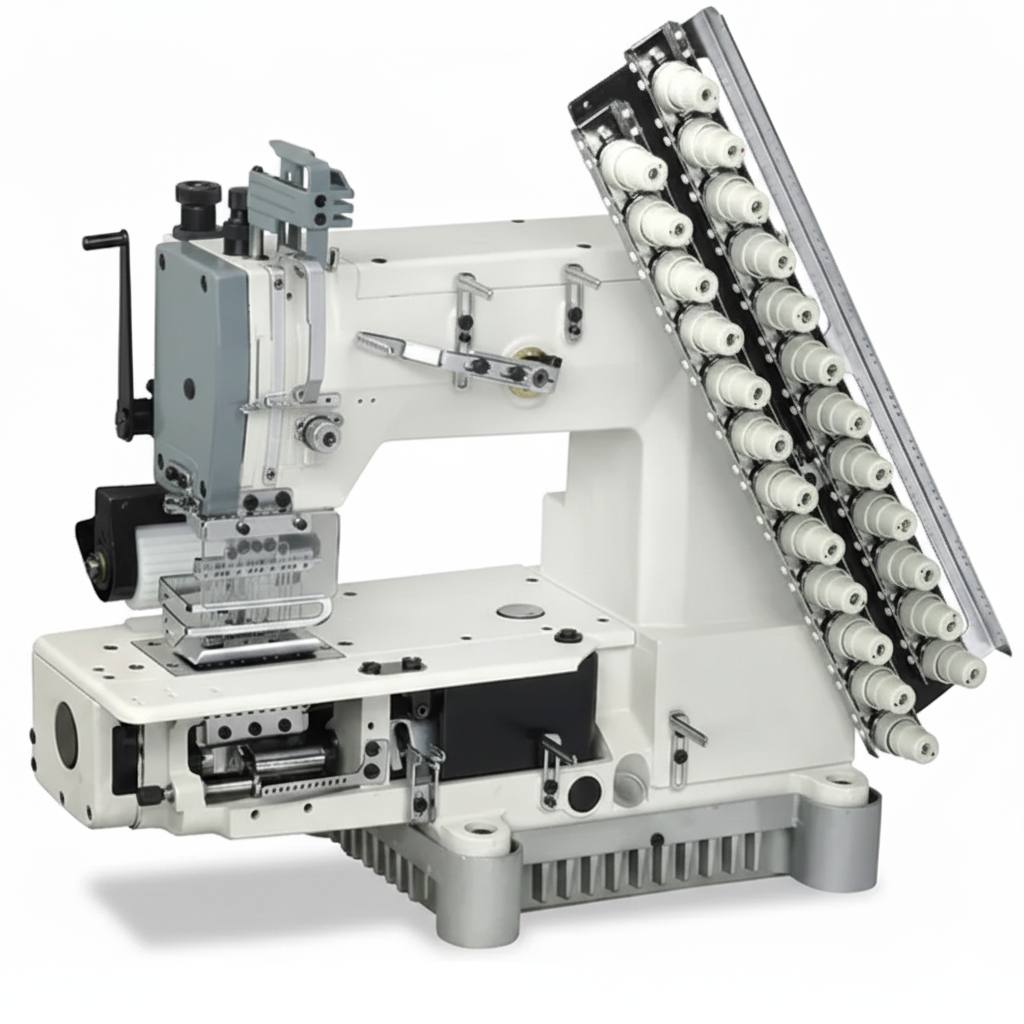
Feed‑of‑the‑Arm & Special Bed Machines
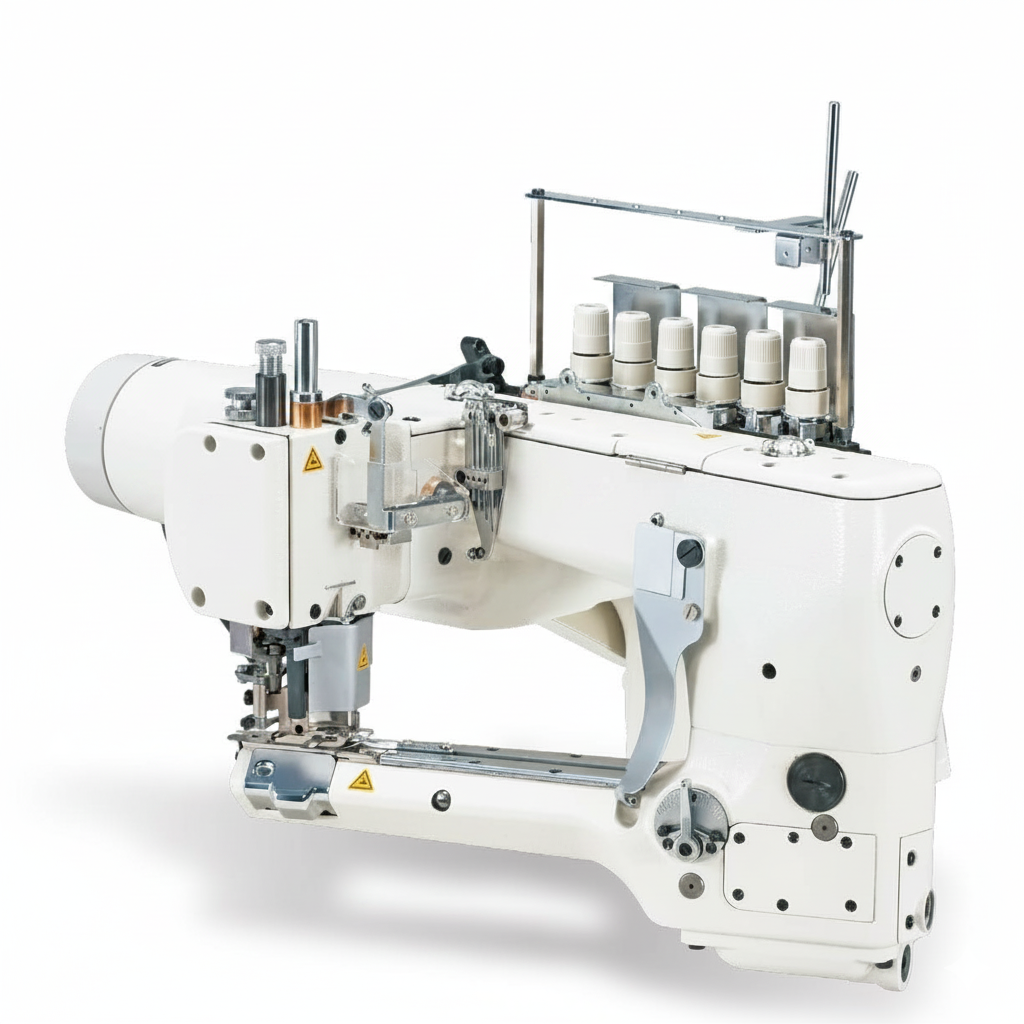
Feed‑off‑the‑Arm Overlock
This machine is designed for continuous sewing of tubular or circular garments at high speed. The fabric moves around the arm, making it easier to handle seams without distortion.
Typical uses include:
- Sleeves and armholes
- Trouser inseams
- Side seams of tubular garments
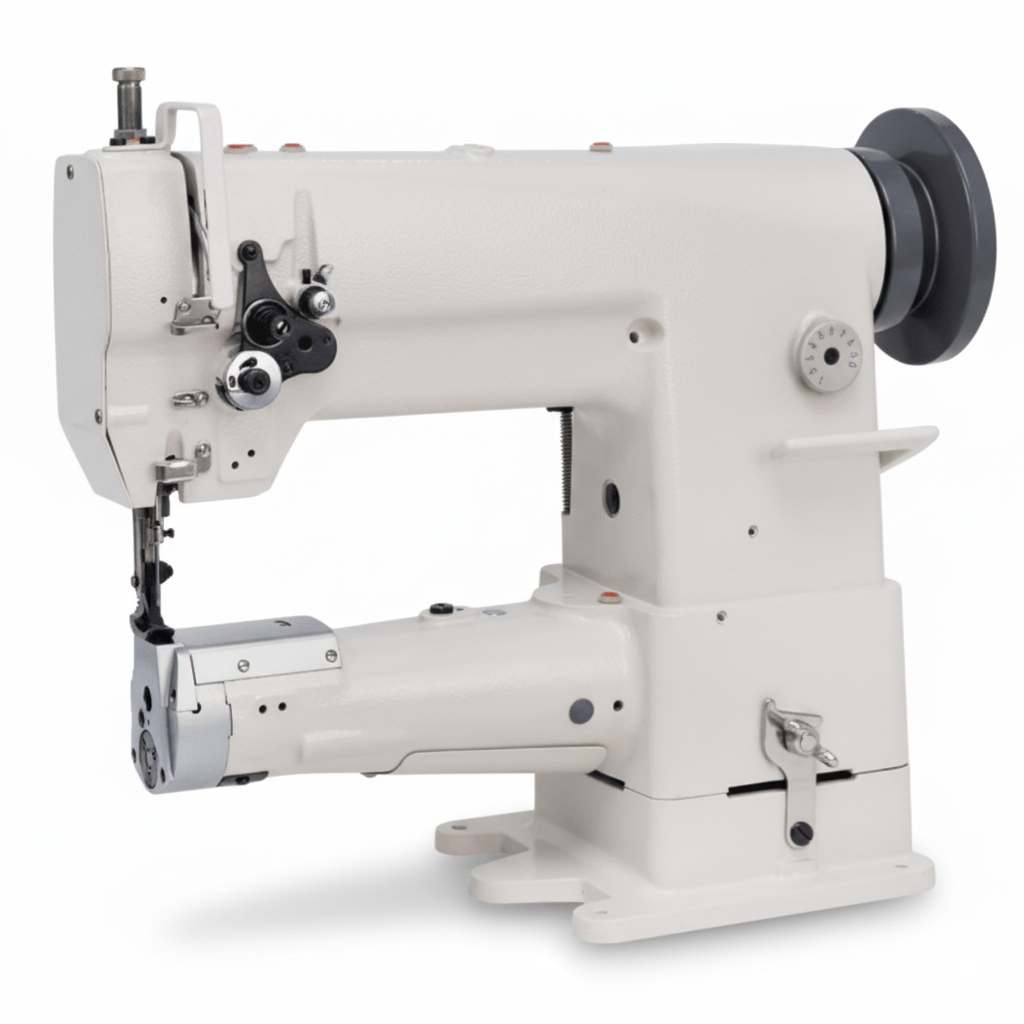
Cylinder Bed Feeding Machine
Cylinder bed machines are used when working with small or narrow circular parts where flat machines cannot operate effectively. The cylindrical shape allows easy movement of the garment around the needle.
Typical uses include:
- Cuffs and sleeve openings
- Children’s garments
- Ribbed sections and small components
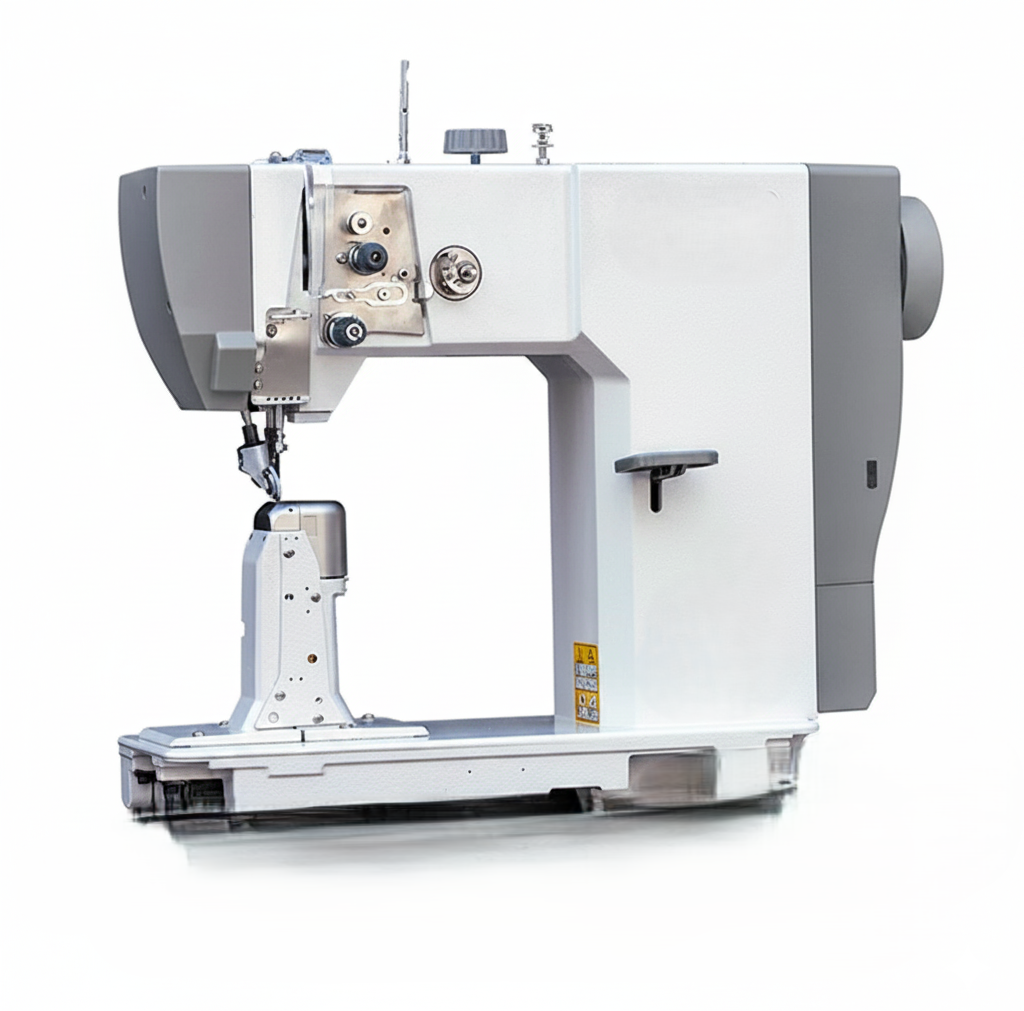
Roller Feed Machine
Roller feed machines are specially designed to handle materials that are either slippery or very heavy. The roller mechanism helps maintain consistent feeding without slippage.
Typical uses include:
- Leather and synthetic materials (PU)
- Denim topstitching
- Heavy or coated fabrics
Decorative & Reinforcement Machines
Bartack Machine
Bartack machines are used to reinforce areas that experience high stress during use. They create dense stitches that prevent tearing and increase durability.
Typical uses include:
- Pocket corners
- Belt loops
- Openings and stress points

Programmable Bartack
A more advanced version of the bartack machine, this type ensures consistent stitching with precise control. It is widely used in export-quality garments.
Typical uses include:
- Denim products
- Uniforms and industrial garments
- High-strength reinforcement areas
Buttonhole Machine
Buttonhole machines automatically create clean and uniform buttonholes, ensuring consistent quality across garments.
Typical uses include:
- Shirts and blouses
- Jackets and coats
- Trousers
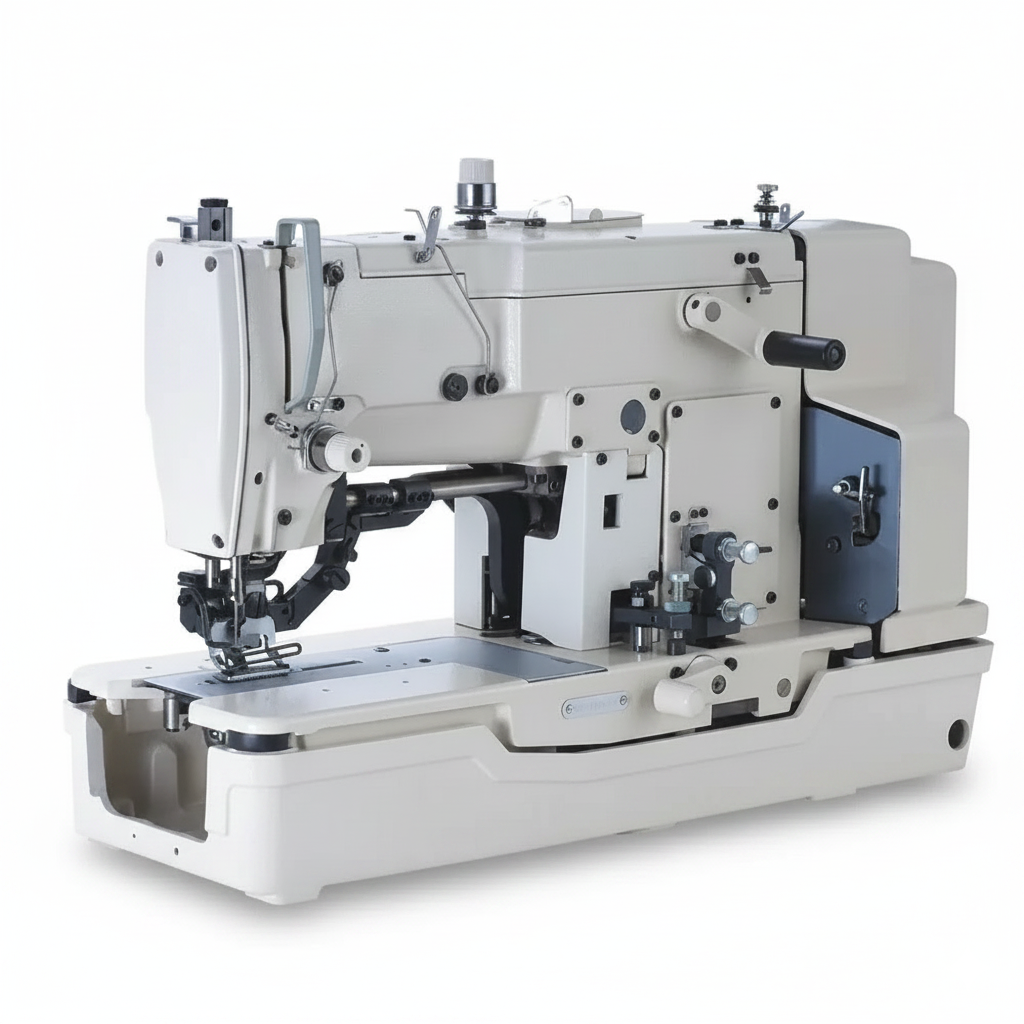
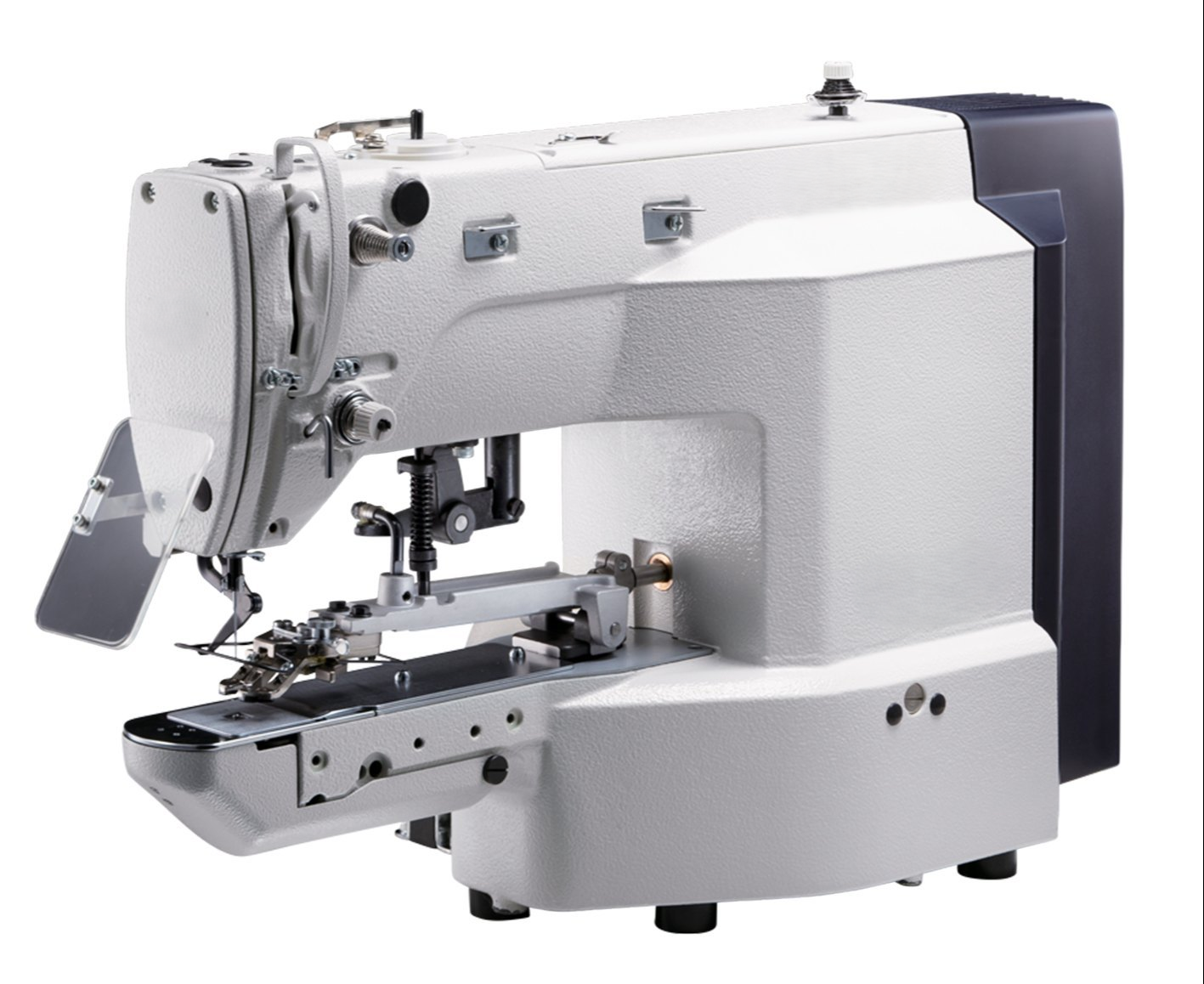
Button Attaching Machine
This machine is used for fast and secure attachment of buttons, improving both speed and consistency in production.
Key benefits:
- Uniform button placement
- High productivity
- Reduced manual effort
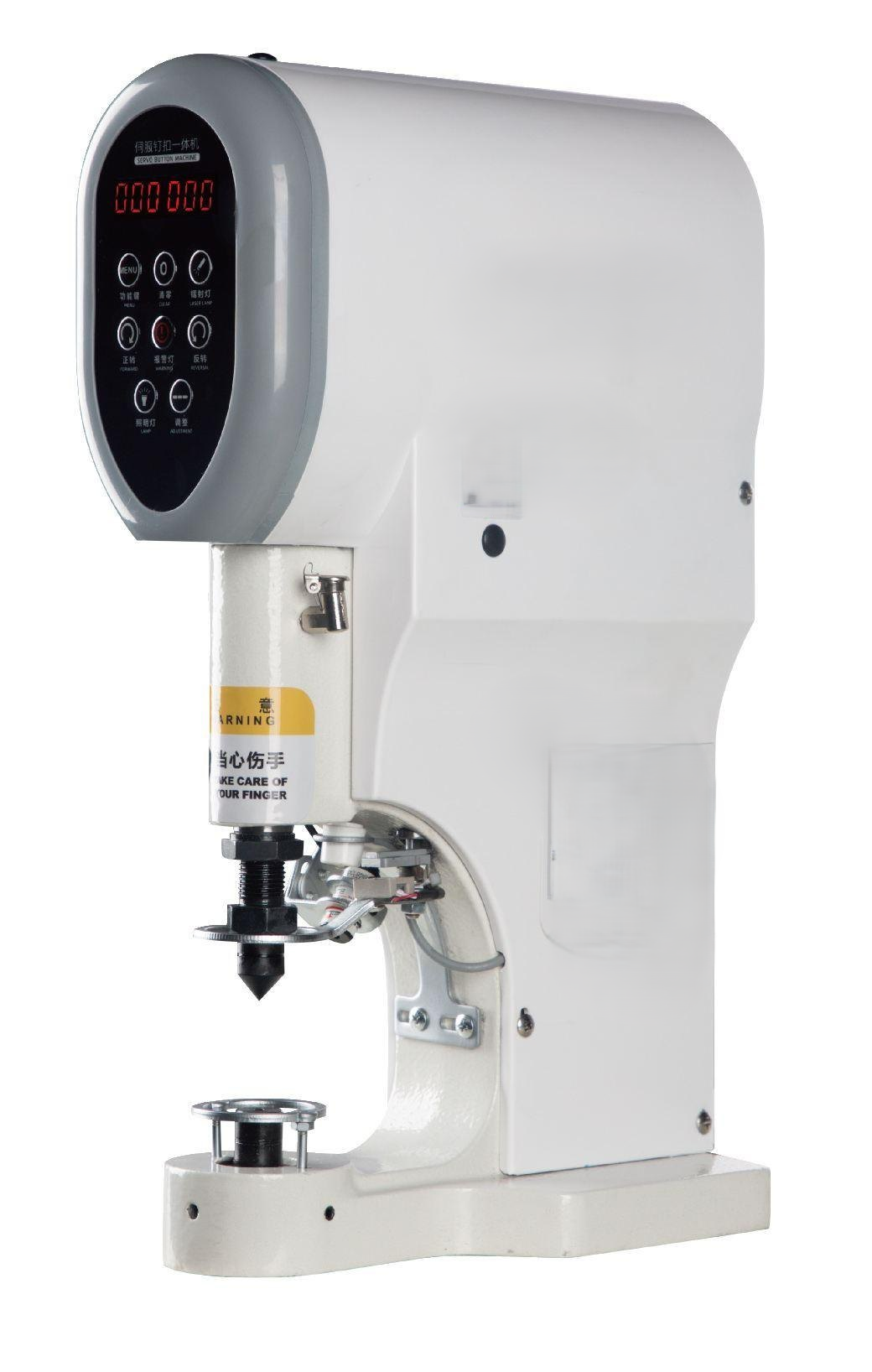
Eyelet / Snap Button Machine
These machines are used to attach metal accessories such as eyelets, rivets and snap buttons, which are common in fashion and heavy-duty garments.
Typical uses include:
- Jeans and denim products
- Jackets and outerwear
- Bags and accessories
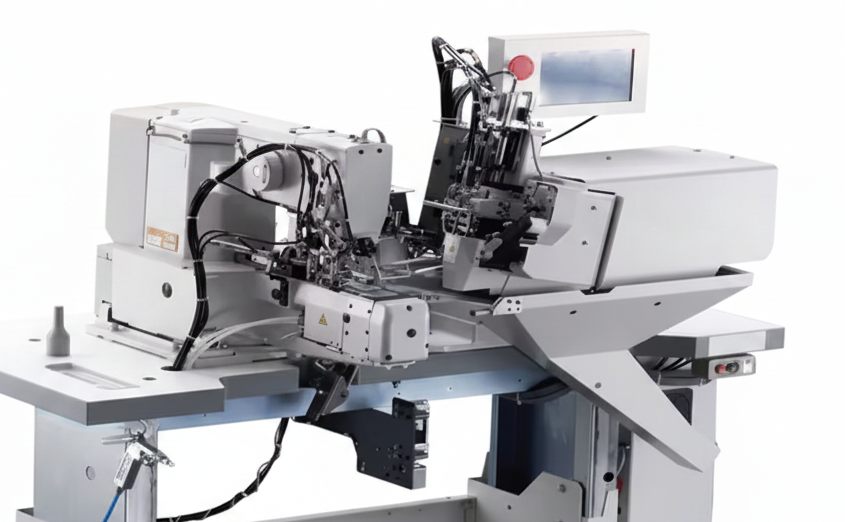
Loop Attaching Machine
Loop attaching machines are used to fix loops onto garments, which may serve functional or decorative purposes.
Typical uses include:
- Hanger loops in garments
- Belt loops in trousers
- Utility loops in sportswear
Automated & Program Sewing Machines
Pattern Sewing Machine
Pattern sewing machines are used for pre-programmed stitching operations, ensuring identical results for every piece. They are ideal for repetitive decorative or functional stitching.
Typical uses include:
- Pockets
- Labels and badges
- Decorative stitching patterns
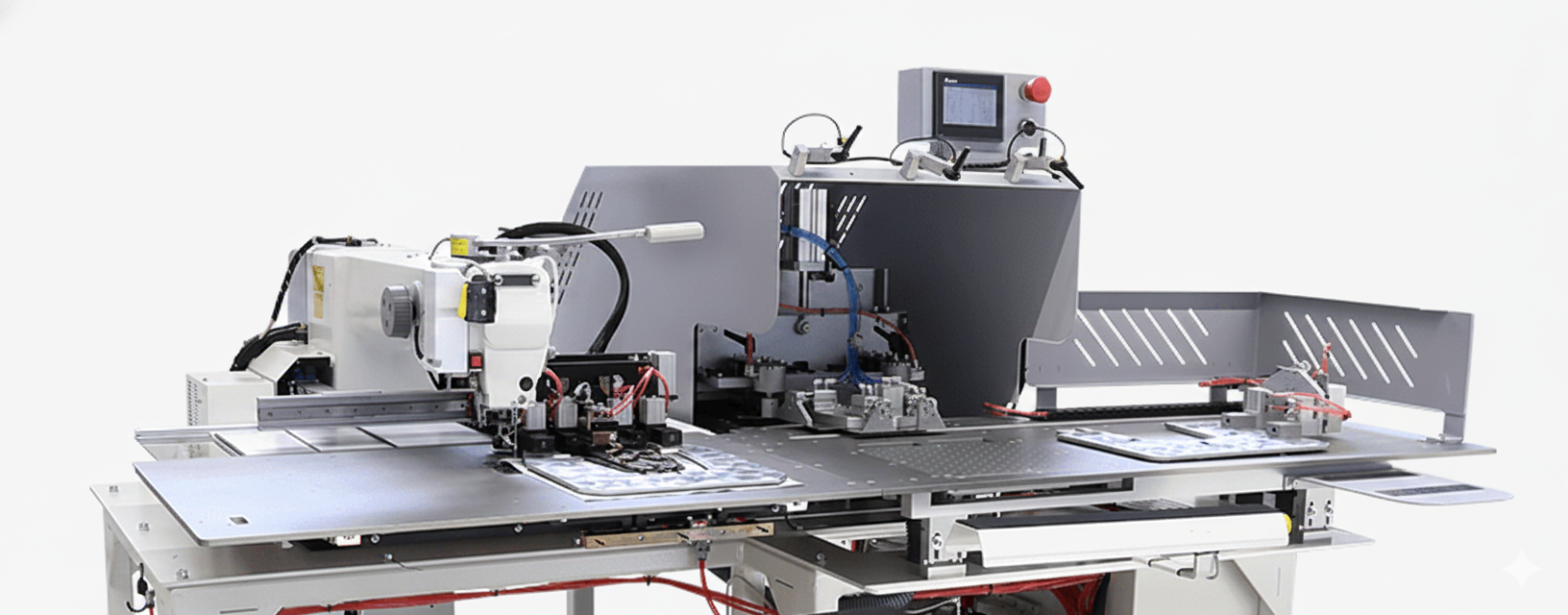
Auto Pocket Setter
The auto pocket setter is an advanced automated machine used to attach pockets onto garments with high precision and consistency. Pocket placement is a critical operation in garment production, especially in shirts, trousers and uniforms, as even small misalignments can affect overall appearance. This machine ensures that every pocket is positioned accurately and stitched uniformly, regardless of production volume.
By automating the process, it significantly reduces manual handling and improves overall production efficiency, making it highly suitable for mass manufacturing.
Key benefits include:
- High accuracy and repeatability in pocket placement
- Increased productivity and faster operation
- Reduced dependency on operator skill
- Consistent stitching quality across all garments
Typical applications:
- Shirts and casual wear
- Trousers and uniforms
- Denim and workwear
Auto Sleeve placket Setter
Designed to automate sleeve placket assembly, which is usually a detailed and time-consuming operation.
Typical uses include:
- Shirt sleeve placket construction
- Precision joining and folding
Auto Collar Attaching Machine
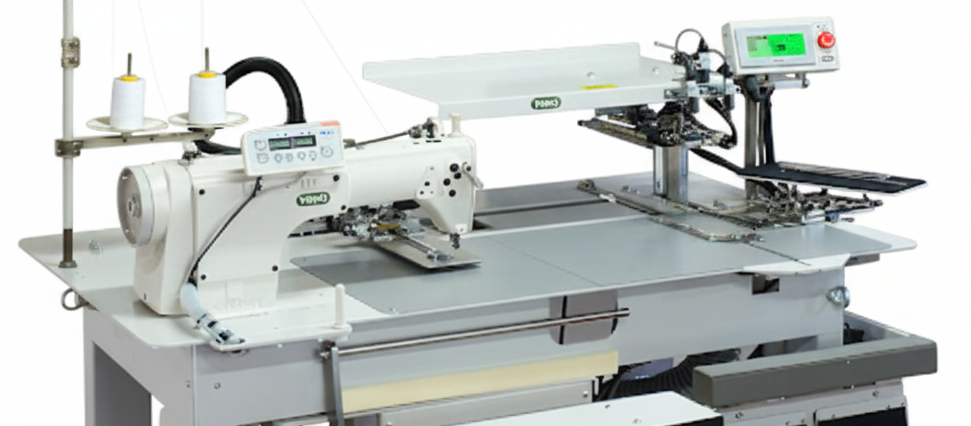
The auto collar attaching machine is used in shirt manufacturing to join collars with high accuracy and consistency. Since collar construction requires precise alignment, automation helps eliminate variations that may occur in manual sewing.
Key advantages include:
- Consistent collar shape and alignment
- Reduced dependency on operator skill
- Improved production speed and quality
Auto Cuff Attaching Machine
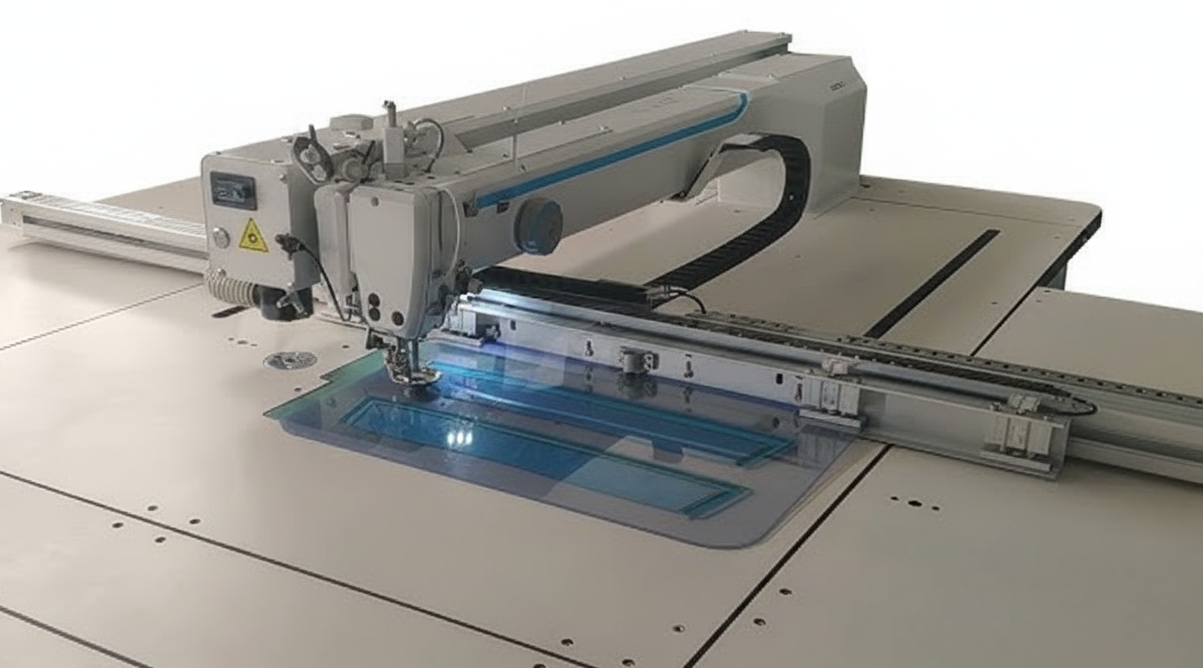
This machine automates the process of attaching cuffs to sleeves, ensuring uniform stitching and neat finishing. It is especially useful in high-volume shirt production.
Key benefits include:
- Uniform cuff attachment and stitching quality
- Faster production compared to manual methods
- Reduced defects and rework
Auto Placket Machine
The auto placket machine is used to construct plackets in shirts and tops. Plackets require accurate folding and stitching, which this machine performs efficiently and consistently.
Key features include:
- Clean and precise placket construction
- Consistent appearance across garments
- Improved productivity and reduced handling time
Auto Waistband Machine
This machine is designed to attach waistbands with accuracy and strength, especially in trousers, joggers and casual wear. It ensures proper alignment and uniform stitching throughout the waistband.
Key benefits include:
- Strong and consistent waistband attachment
- Time-saving in bulk production
- Improved fit and finishing quality
Label Attaching Machine
The label attaching machine automates the process of fixing size labels, care labels and brand tags onto garments. Proper label placement is important for both compliance and brand presentation.
Key advantages include:
- Accurate and consistent label positioning
- Increased production efficiency
- Reduced human error and mislabeling
Belt Loop Attaching Machine
The belt loop attaching machine is specially designed for fixing belt loops onto garments, particularly in denim and trousers. Since belt loops are stress points and require strong attachment, this machine ensures secure stitching with consistent placement and alignment.
It is widely used in denim production lines where speed and uniformity are essential for high-volume manufacturing.
Key functions and benefits include:
- Strong and durable attachment of belt loops
- Consistent positioning and stitching quality
- Increased production efficiency
- Reduced manual errors and rework
Typical applications:
- Jeans and denim garments
- Trousers and workwear with belt loops
Denim & Heavy Garment Machines
Heavy Duty Lockstitch
The heavy duty lockstitch machine is designed for stitching thick and dense fabrics where standard machines may struggle. It produces strong, balanced seams while handling multiple layers with ease.
Typical uses include:
- Denim garments
- Canvas and heavy-duty fabrics
- Structured apparel components
Key advantages:
- Strong and secure stitching
- Suitable for thick materials
- High durability in production
Heavy Duty Chainstitch
This machine is used when both strength and flexibility are required. The chainstitch structure provides slight elasticity, making it suitable for seams that may undergo stress during wear.
Typical uses include:
- Reinforced seams in heavy garments
- Areas requiring both strength and flexibility
Key advantages:
- Strong yet slightly elastic seams
- Better performance under stress
Lap Seam / Flat Fell Machine
The lap seam or flat fell machine is commonly used in denim production to create overlapped seams that are both strong and neat. These seams are characteristic of jeans and provide extra durability.
Typical applications include:
- Jeans inseams
- Yoke seams
- Side seams in heavy garments
Key advantages:
- Extremely strong and durable seams
- Clean and professional finish
- Ideal for heavy-duty garments
Yoke Attaching Machine
The yoke attaching machine is specifically used in denim manufacturing to join the back yoke of jeans. This operation requires precise alignment to ensure both comfort and correct garment shape.
Typical uses include:
- Back yoke assembly in jeans
Key advantages:
- Accurate alignment and stitching
- Improved consistency and fit
- Increased production efficiency
Elastic, Tape & Binding Machines
In garment manufacturing, elastic, tape and binding machines are used to attach functional and decorative components that improve both comfort and finish. These machines are especially important in garments like activewear, lingerie and knitwear, where flexibility, neat edges and durability are essential.
Elastic Attaching Machine
This machine is used to insert and attach elastic in garments, ensuring proper stretch and comfort. It provides controlled feeding and even tension during stitching.
Typical uses include:
- Waistbands in underwear and trousers
- Leg openings in innerwear and sportswear
Tape Binding Machine
Tape binding machines are used to cover raw edges with binding tape, improving durability and giving a neat finish.
Key uses include:
- Reinforcing seams
- Finishing edges in sportswear and casual garments
Bias Binding Machine
Bias binding machines are designed to apply binding on curved or shaped edges smoothly. This is important for maintaining uniformity in complex garment parts.
Typical uses include:
- Necklines and armholes
- Decorative binding on fashion garments
Lace Attaching Machine
This machine is used to attach lace trims accurately, often in delicate garments where appearance is important.
Common applications:
- Lingerie
- Women’s fashion garments
- Decorative trims
Drawstring Attaching Machine
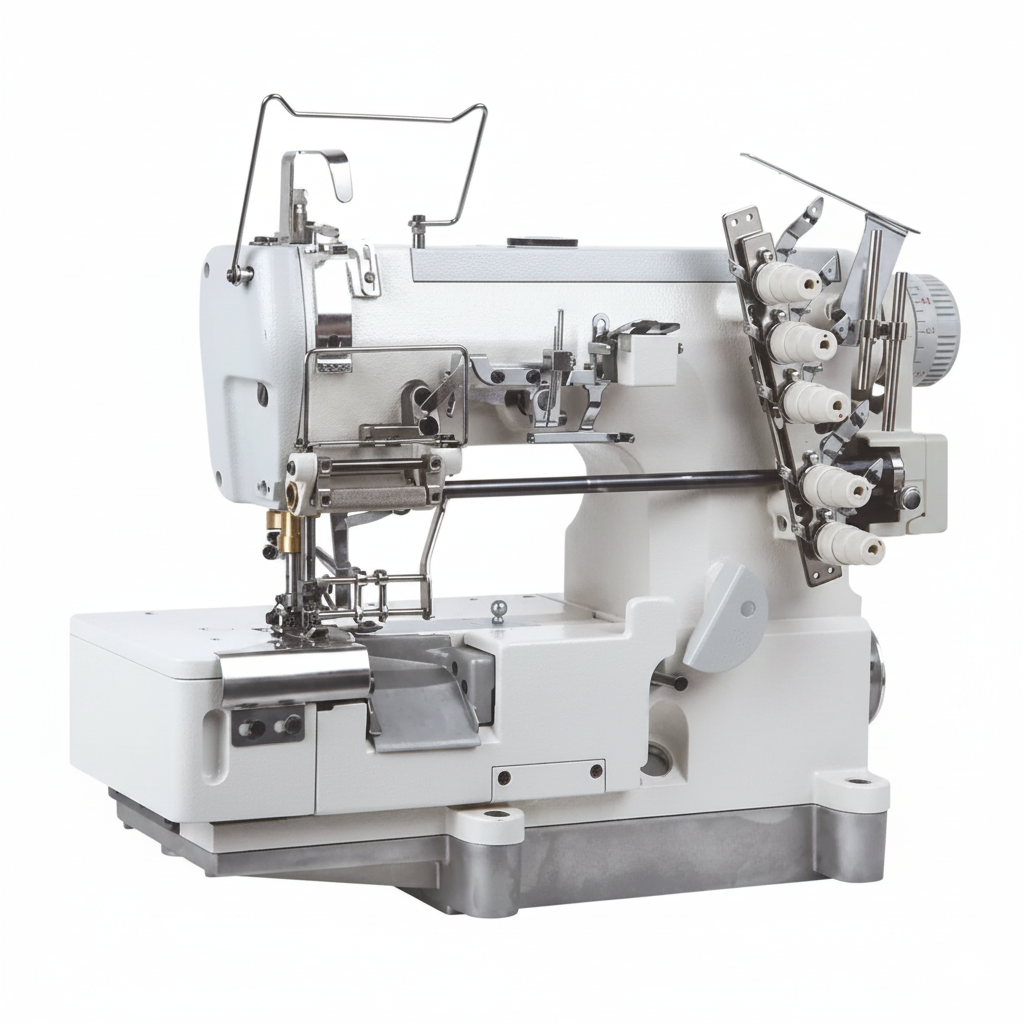
Drawstring machines are used to insert and secure cords or strings in garments, providing both function and style.
Typical uses include:
- Hoodies and sweatshirts
- Waist cords in joggers and casual wear
Velcro Attaching Machine
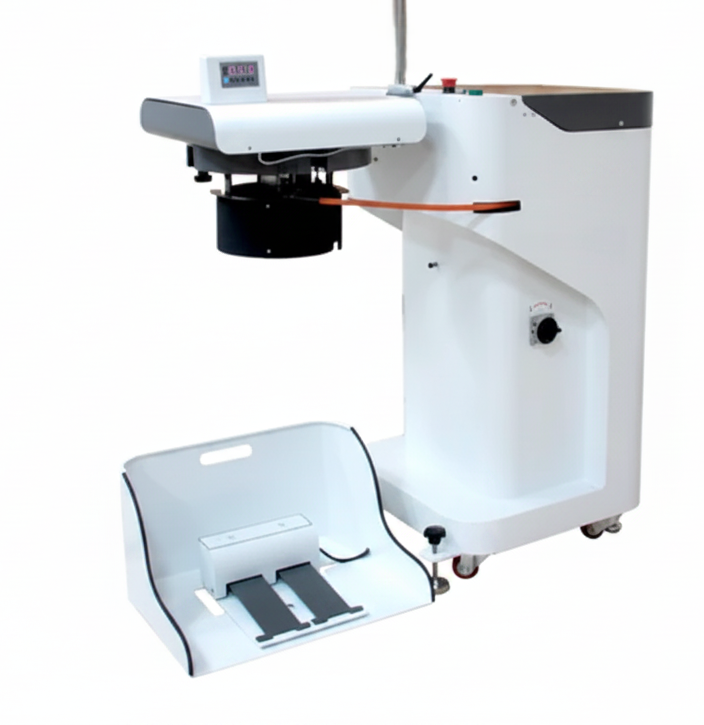
Velcro attaching machines are used for fixing hook-and-loop fasteners securely onto garments.
Typical uses include:
- Adjustable garments
- Sportswear and functional apparel
- Children’s wear
Finishing & Closing Machines
Blind Stitch Machine
The blind stitch machine is used for hemming where the stitches are almost invisible from the outside. It is commonly used in formal garments.
Typical uses include:
- Trousers and formal pants
- Blazers and suits
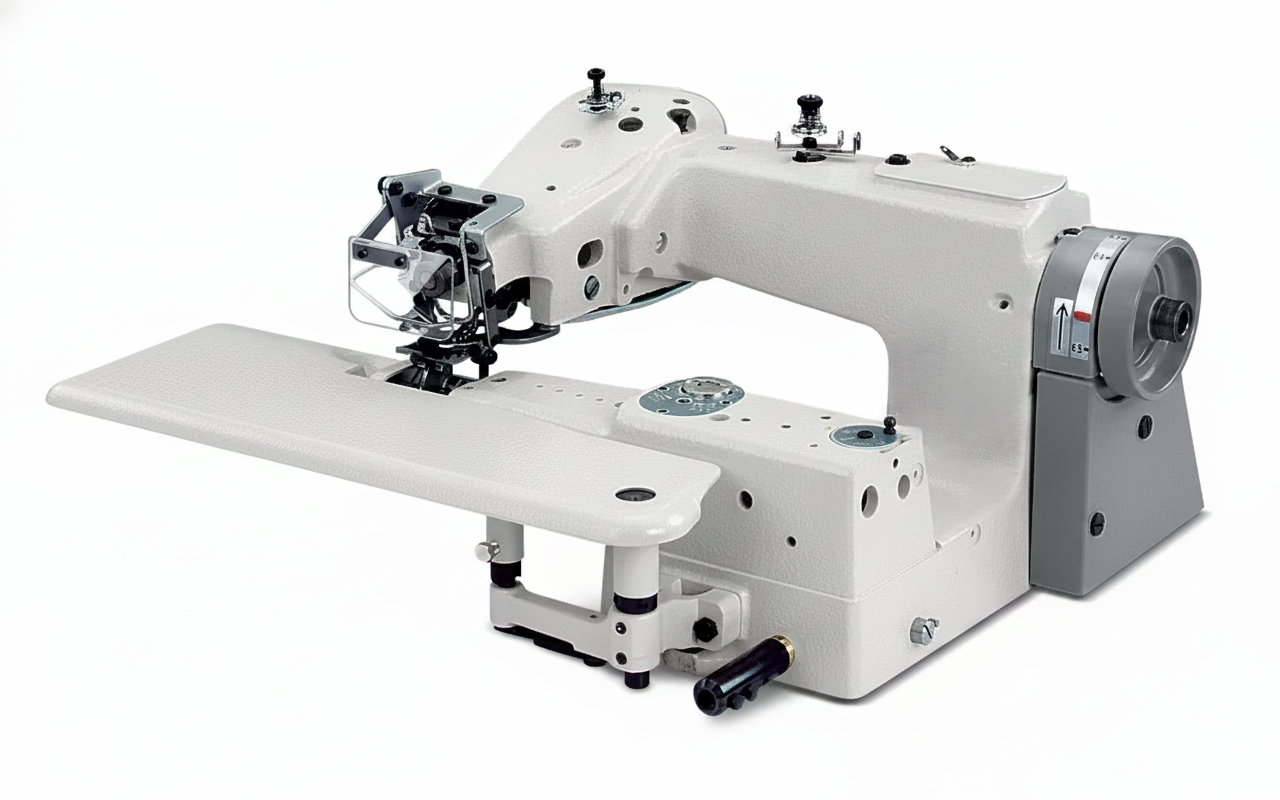
Hemming Machine
Hemming machines are used to finish the bottom edges of garments by folding and stitching the fabric neatly.
Common applications:
- Shirt hems
- Dress hems
- Bottom finishing of garments
Bottom Hem Coverstitch
Coverstitch machines are widely used in knit garments to create strong, stretchable hems with a clean finish.
Typical uses include:
- T-shirt hems
- Sleeve ends
- Knitwear finishing
Special Garment Category Machines
Some garments require highly specialized machines due to their delicate construction, complex shapes or heavy materials. These machines are designed to handle specific product categories such as lingerie, padded items, accessories and technical products, ensuring precision, durability and quality without damaging the material.
Lingerie Sewing Machine
Lingerie sewing machines are specially designed for lightweight and delicate fabrics that require fine stitching and careful handling. These machines maintain fabric quality while ensuring smooth seams.
Typical uses include:
- Bras, panties and slips
- Nightwear and innerwear
Key advantages:
- Fine stitch control for delicate materials
- Prevents fabric damage and distortion
- Smooth and neat seam appearance
Bra Cup Seam Machine
This machine is used for joining molded or cut bra cups, which require high precision to maintain shape and comfort. It ensures smooth seams without affecting the cup structure.
Key benefits include:
- Strong yet flexible seams
- Maintains cup shape and structure
- Clean and comfortable finish
Corset Sewing Machine
Corset sewing machines are used for stitching structured lingerie that includes boning and reinforced panels. These garments require durability along with precise shaping.
Typical uses include:
- Corsets and structured innerwear
- Reinforced fashion garments
Key advantages:
- Handles heavy and structured materials
- Supports boning channel attachment
- Ensures durability and shape retention
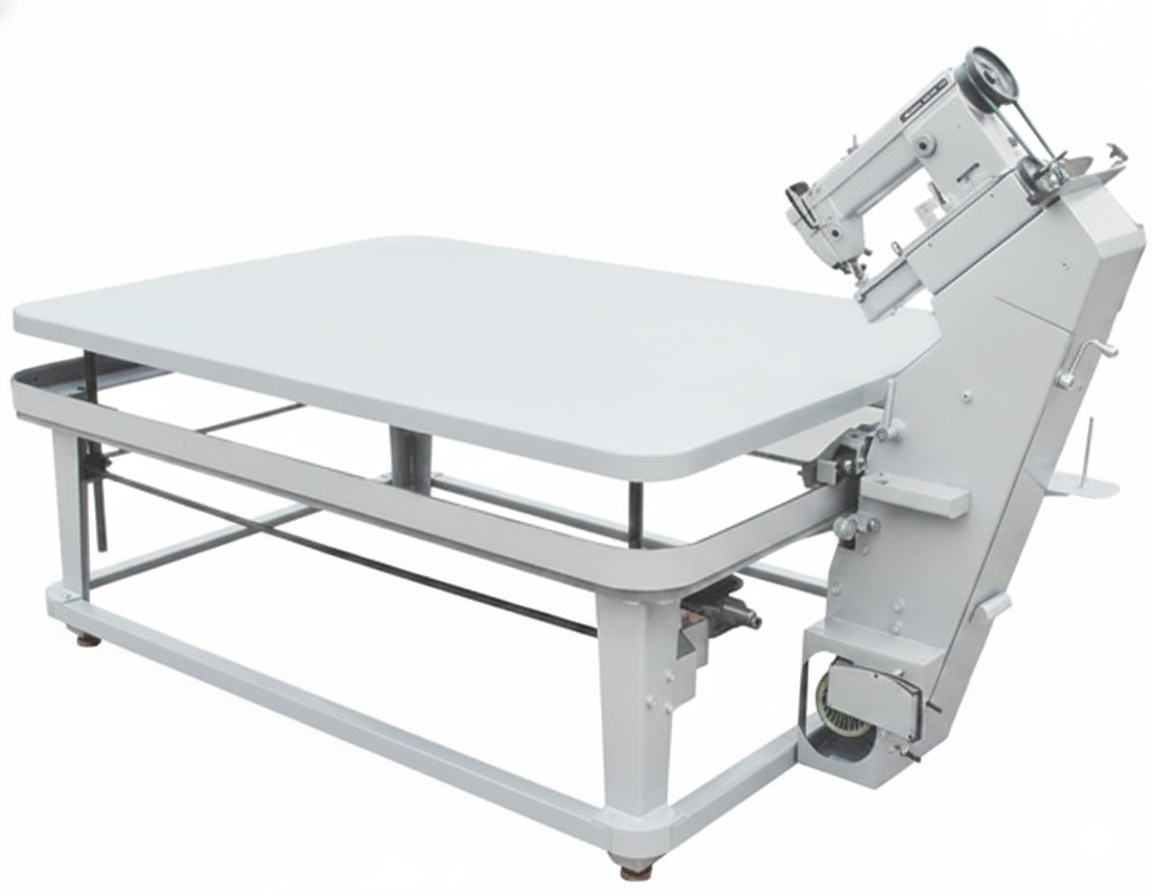
Mattress Stitch Machine
This machine is designed for joining thick, padded materials where standard machines cannot perform effectively. It is commonly used in home textile and bedding applications.
Typical uses include:
- Quilts and padded covers
- Mattresses and upholstery items
Glove Sewing Machine
Glove sewing machines are specialized for sewing very small, narrow and curved components with high precision. They are essential for products that require detailed stitching.
Typical uses include:
- Gloves and safety handwear
- Small accessories
Key advantages:
- Precision stitching for small areas
- Suitable for curved and tight sections
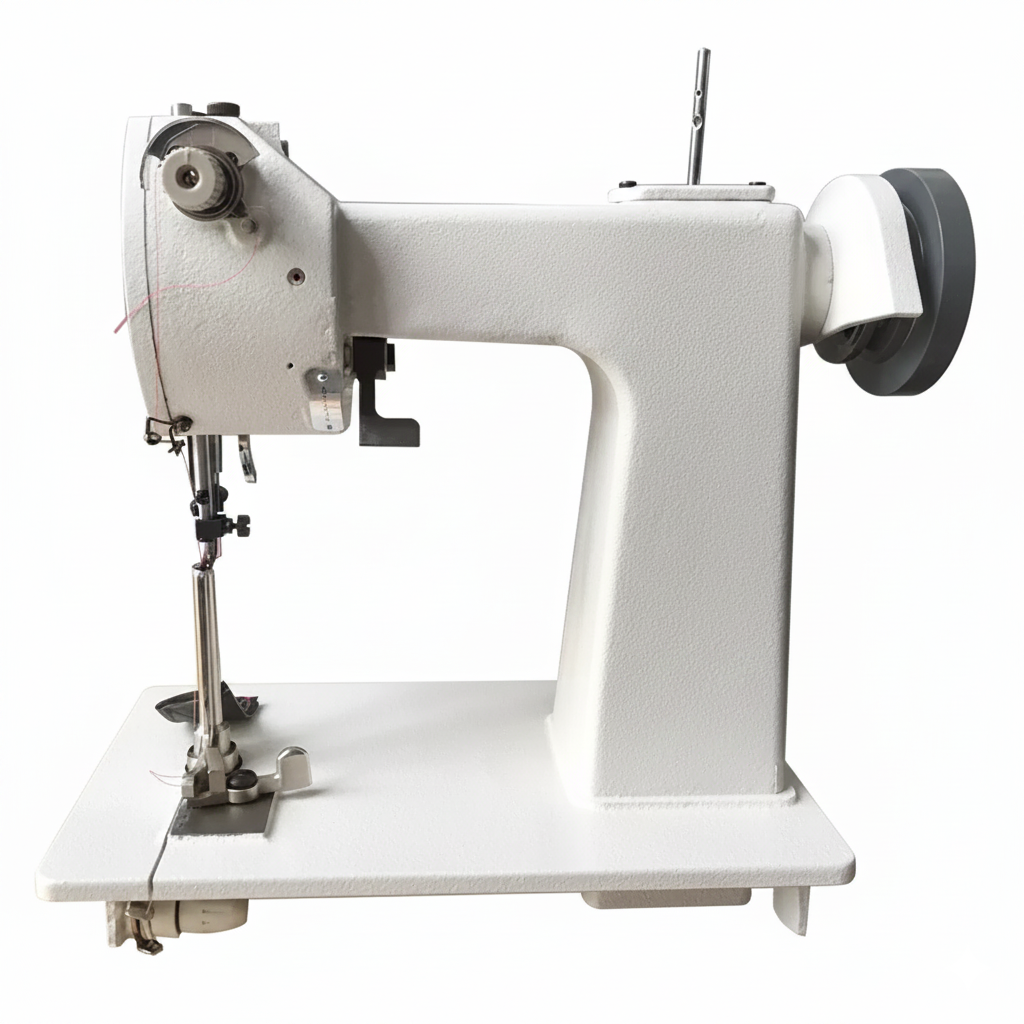
Shoe Upper Sewing Machine (Garment-linked)
This machine is used for stitching textile-based shoe uppers and is also applied in accessory manufacturing. It handles heavy stitching while maintaining accuracy.
Typical uses include:
- Textile shoe uppers
- Bags and accessories
Key advantages:
- Strong stitching for heavy materials
- Suitable for multi-layer constructions
- High durability for end-use products
Auxiliary Sewing Equipment (Production Sewing Zone)
Thread Trimming Machine
The thread trimming machine is used to remove excess threads after sewing operations. Loose threads can affect the overall appearance and quality perception of a garment, so proper trimming is an important finishing step.
Key benefits include:
- Clean and neat garment appearance
- Improved finishing quality
- Reduced manual trimming effort
Auto Backtack Machine
This machine automatically performs backtacking at the start and end of seams. Backtacking is essential to lock stitches and prevent seam opening during use.
Key advantages include:
- Consistent seam locking
- Improved seam strength and durability
- Reduced dependence on operator skill
Edge Cutting Sewing Machine
Edge cutting sewing machines combine stitching and trimming in one operation. This eliminates the need for separate cutting processes and improves workflow efficiency.
Key benefits include:
- Simultaneous sewing and trimming
- Reduced production time
- Improved process efficiency
- Cleaner seam edges
Laser Marking Sewing Station
Laser marking systems are used to mark stitching lines, pocket positions and placement guides directly on the fabric. This modern technology replaces traditional chalk marking and improves precision.
Key advantages include:
- High accuracy in placement marking
- Consistent alignment across garments
- Reduced rework and errors
- Faster and cleaner marking process
Summary
Garment production requires a variety of sewing machines suitable for particular processes, materials and product requirements. The basic lockstitch and chainstitch machines for core assembly, overlock and flatseam machines for finishing and stretch seams – each machine has a specific job to do to create the final garment.
Specialised machines—such as feed-off-the-arm, cylinder bed and heavy-duty machines—allow for complex shapes, tubular parts and thick fabrics like denim. Automated and programmable machines do however provide consistency, accuracy and speed, allowing factories to meet high production demands with little variation.
Auxiliary equipment and finishing machines also help the process by improving appearance, precision and workflow efficiency, while reinforcement and decorative machines ensure durability and enhance garment design.
✅ In short, modern garment production is a mix of different machines working in tandem – each machine playing a part in quality, efficiency and consistency. The choice and combination of these machines are basic to producing high quality garments that correspond to the technical standards and the market’s expectations.