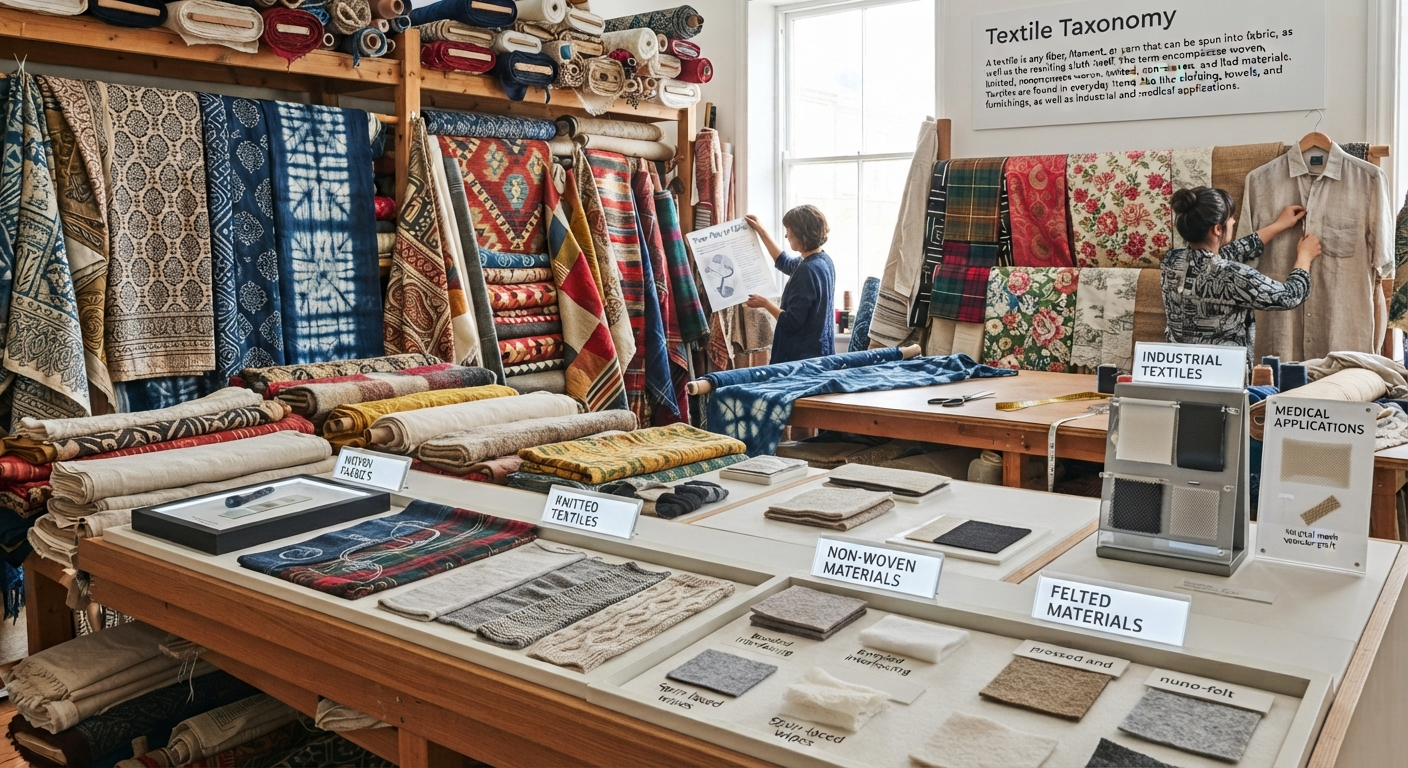
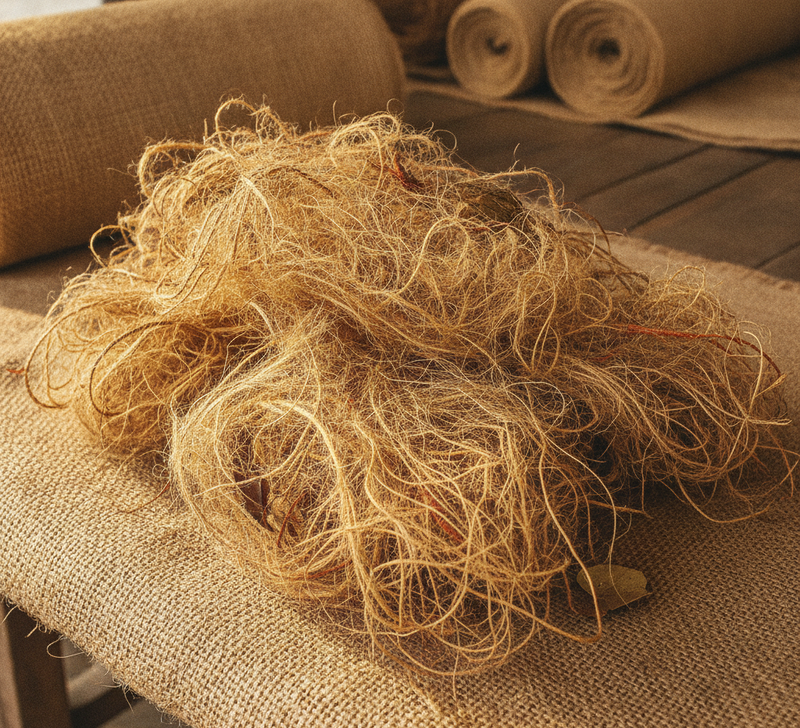
Softening is basically that final touch in fabric processing where you make the material feel… well, nicer. Fabrics come out of earlier processes a bit rough or stiff sometimes, and this step smooths things out. A softener is applied to improve the hand feel, help the fabric fall better (that natural drape), and reduce that slightly harsh surface.
It also helps cut down static and just makes the fabric more comfortable to wear. Simple idea, but it makes a noticeable difference.
You’ll see softening applied across pretty much all textile forms:
- Woven fabrics
- Knitted fabrics
- Finished garments
- Piece goods
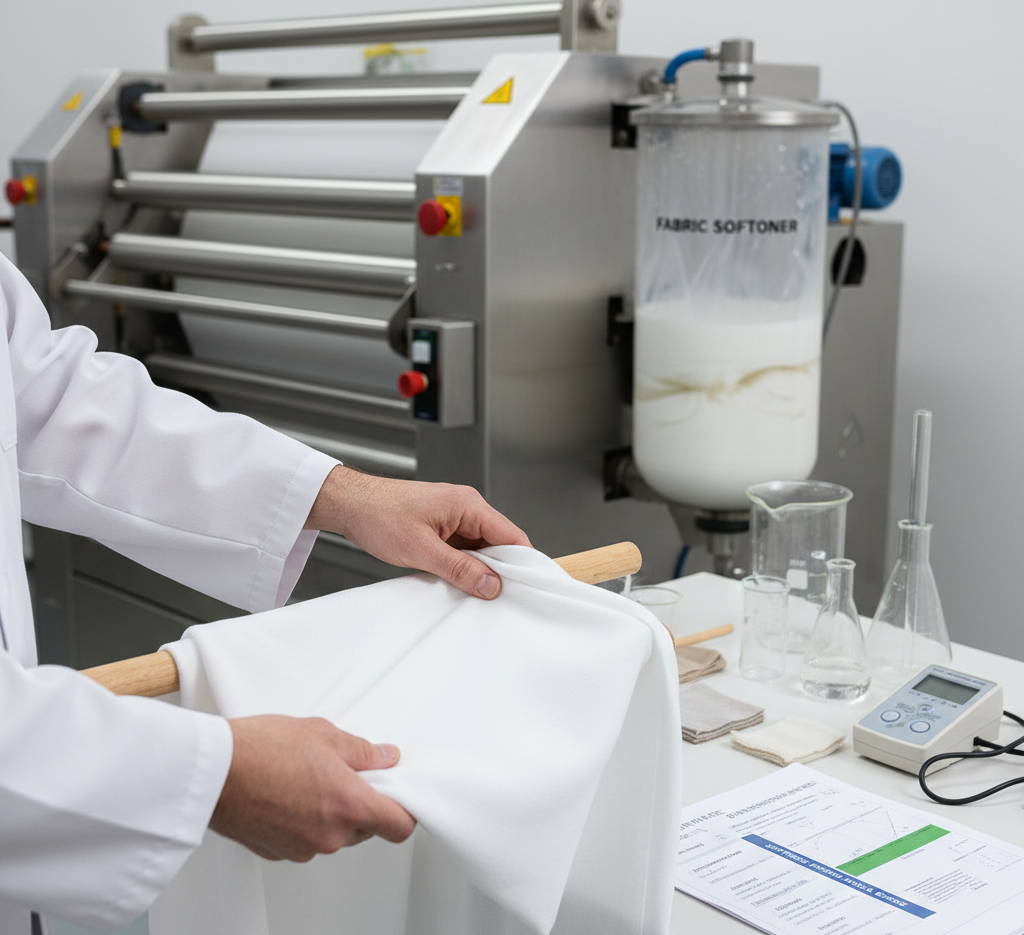
Why Softening Matters
At its core, softening is about comfort and feel. But it does a bit more than that.
- Takes away that stiff, hard touch
- Makes the surface smoother and more flexible
- Reduces static buildup
- Adds a bit of luster
- Improves overall comfort during wear
- Helps with sewability (less friction while stitching)
- Gives better drape
And sometimes—this part gets overlooked—it can subtly improve how the color looks. After heavy washing or processing, fabrics can look a bit dull. Softening can bring back some depth and richness.
Types of Softener
A. Cationic Softeners
(Most Common for Cotton Knits)
Cationic softeners carry a positive charge, making them highly compatible with cotton fibers.
Main Chemicals
| Chemical | Formula |
|---|---|
| Quaternary Ammonium Compounds | R₄N⁺Cl⁻ |
| Fatty Amine Condensates | Various organic compounds |
Characteristics
- Excellent softness
- Good cotton compatibility
- Durable to washing
- Smooth hand feel
Recommended For
- T-shirts
- Babywear
- Cotton knits
- Casual garments
Limitation
- May cause yellowing on white fabrics at high temperatures.
B. Non-Ionic Softeners
Non-ionic softeners do not carry a positive or negative charge, making them suitable for light-colored fabrics.
Main Chemicals
| Chemical | Formula |
|---|---|
| Fatty Alcohol Ethoxylates | Various compounds |
| Polyethylene Emulsions | (C₂H₄)ₙ |
Characteristics
- Mild softening effect
- Low yellowing tendency
- Excellent for white and pastel shades
- Good process compatibility
Recommended For
- White garments
- Light shades
- Delicate fabrics
C. Anionic Softeners
Anionic softeners carry a negative charge and are more commonly used on synthetic textiles.
Main Chemicals
| Chemical | Formula |
|---|---|
| Sulfonated Oils | R–SO₃Na |
| Sulfated Fatty Esters | Various compounds |
Characteristics
- Smooth feel
- Anti-static performance
- Good lubricating effect
Recommended For
- Polyester fabrics
- Synthetic blends
- Technical textiles
Limitation
- Less commonly used for cotton.
D. Silicone Softeners (Premium Quality)
Silicone softeners provide the highest level of softness, smoothness, and drape.
Main Chemical: Polydimethylsiloxane (PDMS): (C₂H₆OSi)
Characteristics
- Extremely soft touch
- Excellent smoothness
- Superior drape
- High wash durability
- Premium garment appearance
Used For
- Premium garments
- Fashion apparel
- High-end knitwear
- Luxury fabrics
Types of Silicone Softeners
1. Macro Silicone
| Feature | Benefit |
|---|---|
| Larger particle size | High surface softness |
| Good slip effect | Cost-effective |
Main Polymer: (C₂H₆OSi)ₙ
2. Micro Silicone
| Feature | Benefit |
|---|---|
| Smaller particle size | Better penetration into fabric |
| Improved smoothness | Enhanced durability |
Main Polymer: Plain Text1(C₂H₆OSi)ₙ
3. Amino Silicone (Most Advanced)
A silicone polymer modified with amino groups.
Main Chemical Structure: PDMS + –NH₂
Characteristics
- Premium soft handle
- Exceptional smoothness
- Improved elasticity
- Superior wash fastness
Applications
- Premium knitwear
- Luxury T-shirts
- High-end apparel
E. Fatty Acid Softeners
Traditional and economical softeners based on fatty acids and waxes.
Main Chemicals
| Chemical | Formula |
|---|---|
| Stearic Acid | C₁₈H₃₆O₂ |
| Palmitic Acid | C₁₆H₃₂O₂ |
| Fatty Acid Condensates | Various compounds |
Characteristics
- Cost-effective
- Mild softness
- Easy application
- Good bulk finishing performance
Recommended For
- Towels
- Denim
- Bulk production garments
- Home textiles
Key Chemical Symbols Used in Softening
| Chemical | Formula |
|---|---|
| Silicone (PDMS) | (C₂H₆OSi)ₙ |
| Amino Silicone | PDMS + NH₂ |
| Quaternary Ammonium Compound | R₄N⁺Cl⁻ |
| Polyethylene Emulsion | (C₂H₄)ₙ |
| Stearic Acid | C₁₈H₃₆O₂ |
| Palmitic Acid | C₁₆H₃₂O₂ |
| Water | H₂O |
Most Important Softener Chemistry
- Cotton Knits: Cationic Softener (R₄N⁺Cl⁻)
- Premium Garments: Amino Silicone (PDMS + NH₂)
- Economical Finishing: Fatty Acid Softener (C₁₈H₃₆O₂)
These softeners are selected based on the desired fabric hand feel, durability, shade sensitivity, and cost requirements.
Working Principle
Nothing too complicated here.
Softeners sit on the surface of the fibers and form a very thin lubricating layer. That’s it.
Because of that layer:
- Fibers don’t rub against each other as much
- Yarns slide more easily
- The fabric feels smoother, almost silky
Cationic silicone softeners are the go-to in many cases, especially with cellulose fibers like cotton. They bond well and hold up after washing, which is why they’re used so widely.
Typical Softening Setup (Recipe)
A common setup might look like this:
- Silicone softener (cationic): 400 g
- Temperature: 40°C
- Time: 5 minutes
Quick, controlled, and effective.
But there’s a catch—too much softener can backfire. You might end up with an oily feel or even slight shade changes. So dosing matters. A lot.
Types of Softening Agents
A. Cationic Softeners (Most Common for Cotton Knits)
- Excellent softness
- Good compatibility with cotton
- Durable to washing
- Recommended for T-shirts, babywear
Limitations:
May cause yellowing in white fabrics at high temperatures.
B. Non‑Ionic Softeners
- Mild, non‑yellowing
- Good for light/white shades
- Less strong softening compared to cationic
C. Anionic Softeners
- Used for synthetic fibers
- Provide anti-static and smooth feel
Less common for cotton textiles
D. Silicone Softeners (Premium Quality)
- Very high softness and smoothness
- Excellent drape
- High durability
- Used for premium garments
Types:
- Macro silicone
- Micro silicone
- Amino silicone (most advanced)
E. Fatty Acid Softeners
- Cost-effective
- Mild softening effect
- Used for towel, denim, bulk goods
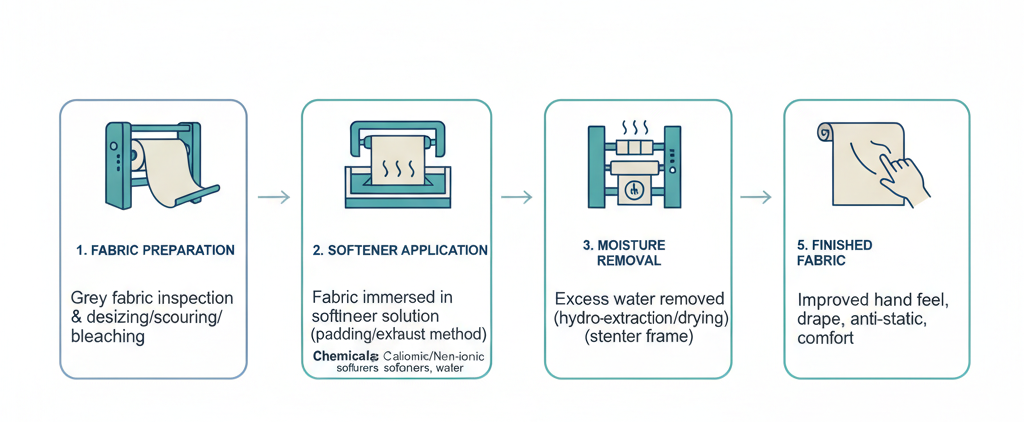
Methods of Applying Fabric Softener
1. Exhaust Method
Done in dyeing or soft flow machines.
- Softener is added to the bath
- Fabric absorbs it through movement and agitation
Best for:
- Knits
- Towels
- Bulk processing
2. Padding Method
Used in stenter machines.
- Fabric passes through softener solution
- Pick-up is controlled (usually 50–80%)
Good for:
- Woven fabrics
- Situations where uniformity is critical
3. Spray Method
Simple and cost-effective.
- Softener sprayed directly onto fabric surface
Used for:
- Low-cost finishing
- Quick top-up before processes like compacting
Key Parameters in Softening
Parameter Importance Softener concentration Controls level of softness pH level Typically kept neutral Temperature Should be controlled to avoid yellowing Dwell time Ensures proper absorption Drying temperature High heat may cause shade change
| Parameter | Importance |
|---|---|
| Softener concentration | Controls level of softness |
| pH level | Typically kept neutral |
| Temperature | Should be controlled to avoid yellowing |
| Dwell time | Ensures proper absorption |
| Drying temperature | High heat may cause shade change |
Effects of Softening on Fabric Properties
Softening changes how a fabric feels—and behaves—quite a bit. Most of the time, in a good way. But like anything in processing, it’s not always perfect.
Positive Effects
This is where softening really earns its place.
- The most obvious one—improved softness and smoothness. Fabrics just feel better in the hand. Less harsh, more pleasant.
- Better drape and elasticity. The fabric falls more naturally instead of looking stiff or bulky.
- Reduced friction between fibers, which helps both in wear and during sewing. Things glide instead of snag.
- On synthetic fibers, you also get anti-static properties, which makes a big difference especially in dry conditions.
- And overall—this is the big picture—it leads to improved garment comfort. The kind you don’t think about… but would notice if it wasn’t there.
Possible Negative Effects
It’s not all upside. Small issues can creep in if the process isn’t controlled well.
- Yellowing on white fabrics, especially when using cationic softeners and higher temperatures. It doesn’t always happen—but when it does, it’s frustrating.
- Reduced moisture absorbency. That soft, coated feel can make fabrics (like towels) slightly less absorbent.
- Silicone build-up on machinery if overdosed. Over time, that can create maintenance headaches.
- And if too much softener is used, you might see fabric flattening—losing some of its natural body and structure.
Common Defects & Causes
Defect Possible Cause Patchy softness Uneven padding or spray Yellowing High drying temperature + cationic softener Fabric flattening Overuse of silicone softeners Poor absorbency Heavy deposition of softener Shade variation Softener incompatibility with dyes
| Defect | Possible Cause |
|---|---|
| Patchy softness | Uneven padding or spray |
| Yellowing | High drying temperature + cationic softener |
| Fabric flattening | Overuse of silicone softeners |
| Poor absorbency | Heavy deposition of softener |
| Shade variation | Softener incompatibility with dyes |
Applications of Fabric Softening
Softening is everywhere in textiles. Not just in one or two product types—it cuts across almost the whole industry. Different fabrics, different end uses… same basic need: better feel.
Knit Fabrics
This is probably where softening shows its impact the most. Knits can feel a bit dry or rough after processing, so softening really brings them to life.
You’ll commonly see it applied on:
- Single jersey – especially for everyday T-shirts
- Interlock – needs that extra smooth, premium touch
- Rib fabrics – helps maintain flexibility without feeling tight
- Fleece – improves softness, makes it cozier
- Piqué – reduces that slightly harsh surface from its structure
Without softening, many of these wouldn’t feel nearly as wearable.
Garment Categories
Once fabrics are converted into garments, softening is almost expected. Customers notice feel instantly—it’s the first impression.
Used heavily in:
- T-shirts – soft hand feel is critical here
- Polo shirts – especially piqué, which can be a bit stiff otherwise
- Underwear – comfort is non-negotiable
- Babywear – needs to be extra gentle on skin
- Sportswear – helps with flexibility and movement
- Towels – adds softness, though balance is needed to keep absorbency
You could say softening directly affects perceived quality at retail level.
Synthetic Fabrics
With synthetics, the role shifts slightly.
It’s not just about softness—it’s also about control.
- Provides anti-static properties, which synthetics badly need
- Gives a smoother, less “plastic” feel
- Reduces that clingy behavior during wear
Without softening, synthetic garments can feel uncomfortable pretty quickly.
In short, fabric softening isn’t limited to one segment—it’s kind of a universal finishing step. Different fabrics, different reasons… but same end goal: make the product feel right.