Knitting gauge is one of the most basic parameters in textile and apparel manufacturing. It determines density, appearance, structure, weight of the knitted fabric, elasticity and touch. For knitting mills, merchandisers, product developers, designers and quality teams, knowing gauge is critical to correctly specifying fabric and ensuring consistency across production.
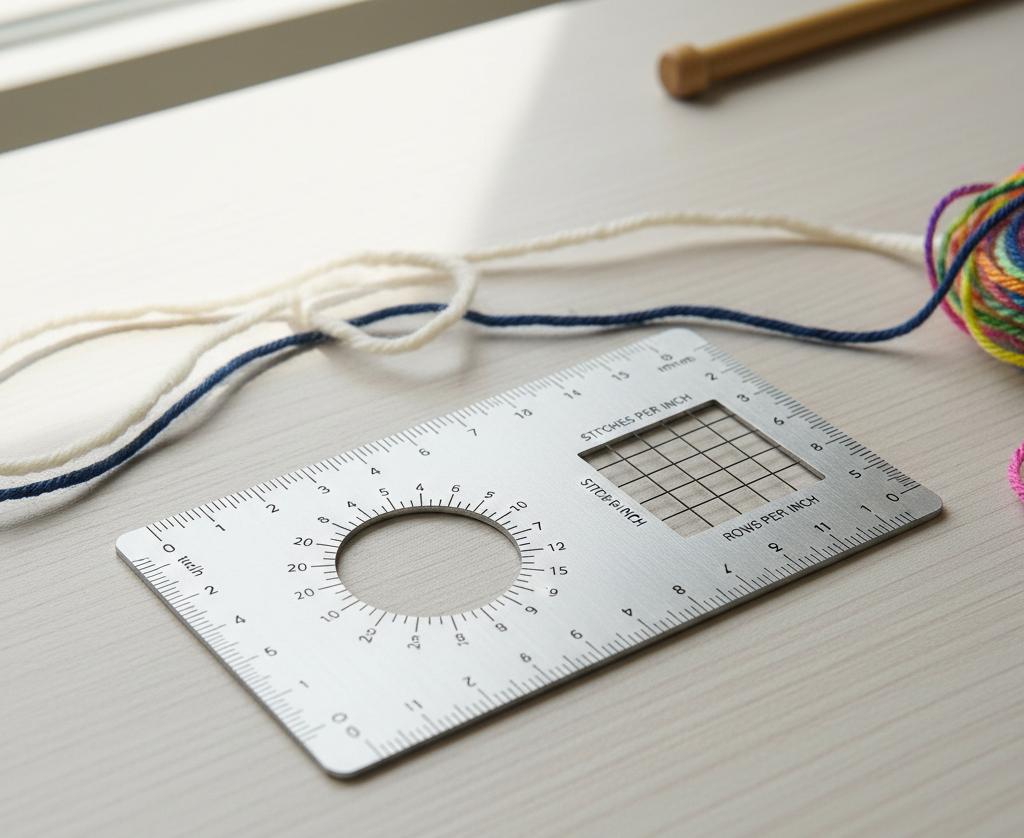
Knitting Gauge Measurement
Knitting gauge refers to the number of needles per inch in a knitting machine.
Higher gauge → finer fabric
- Smaller loops
- Smoother and lighter fabric
Lower gauge → coarser fabric
- Larger loops
- Thicker and heavier fabric
Effects of Gauge on Fabric
Fabric Appearance & Hand Feel
Gauge significantly affects how the fabric looks and feels to the touch.
- Higher gauge → produces smooth, soft and refined fabrics
- Lower gauge → results in rougher, bulkier and textured fabrics
This is why fine-gauge fabrics are preferred for comfort wear, while coarse-gauge fabrics are used for structured garments.
Stitch Size & Loop Density
Gauge determines the size of the loops and how tightly they are packed.
- Higher gauge → smaller loops and tighter structure
- Lower gauge → larger loops and more open structure
This directly impacts fabric density and performance.
Fabric GSM & Thickness
The weight and thickness of the fabric are also influenced by gauge.
- High gauge fabrics → lighter and thinner
- Low gauge fabrics → heavier and thicker
This is an important factor when designing fabrics for different seasons and uses.
Gauge in Circular Knitting Machines
Circular knitting machines commonly use gauges such as:
20G, 24G, 28G, 32G, 34G, 36G and 40G
Applications
- Single jersey: 24G–40G
- Rib / interlock: 18G–24G
- Seamless or body‑size knitting: 28G–34G
Higher‑gauge circular machines produce finer T‑shirt fabrics, high‑density sportswear and smooth interlock fabrics.
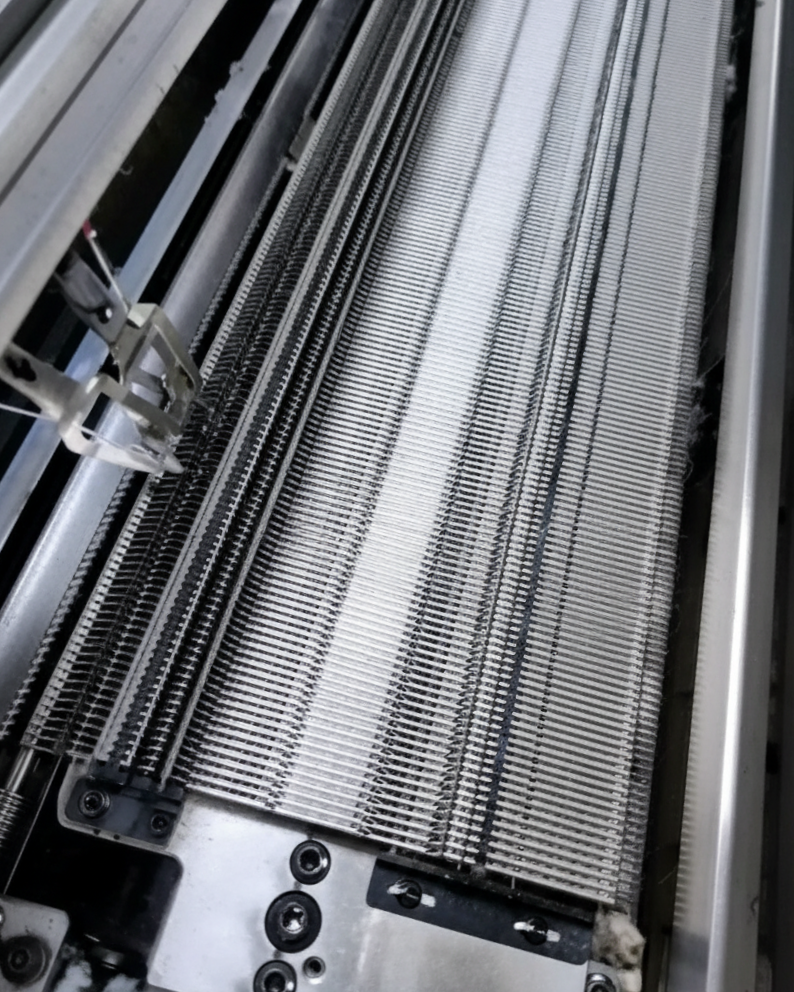
Gauge in Flat Knitting Machines (Sweater Machines)
Flat knitting machines use the following gauges:
3G, 5G, 7G, 10G, 12G, 14G, 16G and 18G
Applications
- 3G–5G: Heavy sweaters
- 7G–10G: Medium‑weight sweaters
- 12G–14G: Fine fashion sweaters
- 16G–18G: Luxury fine‑gauge knitwear
Gauge in Warp Knitting Machines
Warp knitting machines (Tricot and Raschel) commonly use gauges such as:
E18, E24, E28, E32 and E40
(E indicates needles per inch)
Finer warp knitting gauges are used to produce lingerie fabrics, swimwear and sportswear.
Understanding the Relationship Between Yarn Count & Knitting Gauge
Understanding Yarn Count
Yarn count describes the fineness or thickness of a yarn. In the commonly used cotton count system (Ne), the relationship works as follows:
Higher count number → finer yarn
Lower count number → coarser yarn
Yarn count represents how much length of yarn is obtained from a fixed weight. Because of this, it becomes a critical parameter when selecting yarns for specific fabric constructions and end uses.
Relationship Between Yarn Count and Gauge
Yarn count and machine gauge must be matched correctly for smooth knitting and good fabric quality.
Fine yarns (higher Ne) perform best on high‑gauge machines, where the small needle spacing supports neat loop formation.
Coarse yarns (lower Ne) are better suited to low‑gauge machines, which provide enough space for thicker yarns to form stable loops.
There is no single fixed formula. A range of yarn counts can often be knitted on the same gauge, depending on:
- Fabric structure
- Machine condition
- Stitch length and loop settings
- Desired fabric appearance
General Yarn Count vs Knitting Gauge Reference
| Knitting Gauge (G) | Typical Yarn Count (Ne) | Fabric Type / Application |
|---|---|---|
| 1.5 – 3 | 2 – 6 | Very coarse, chunky knits, hand‑feel structures |
| 3 – 5 | 4 – 8 | Heavy sweaters, bulky outerwear |
| 5 – 7 | 6 – 10 | Coarse sweater knits, textured fabrics |
| 7 – 9 | 8 – 14 | Heavy jersey, winter knitwear |
| 9 – 12 | 10 – 18 | Thick jersey, polo & sweatshirt fabrics |
| 12 – 18 | 14 – 18 | Coarse knits, heavy jersey |
| 18 – 20 | 14 – 18 | Heavy jersey, coarse knits |
| 20 – 24 | 18 – 22 | Everyday knitted fabrics |
| 22 – 28 | 22 – 26 | Medium‑weight jersey |
| 24 – 30 | 26 – 30 | Lightweight rib & jersey |
| 28 – 32 | 30 – 36 | Fine, soft knitted fabrics |
| 32+ | 36+ | Ultra‑fine knitwear |
How Gauge Influences Fabric Performance
Durability
Fine gauge = tighter structure = higher durability
Coarse gauge = looser structure = lower durability
Comfort
High gauge provides soft, smooth surfaces
Low gauge gives breathable, airy fabrics
Drape
Fine gauge drapes better
Coarse gauge gives structure
Buyer Requirements for Gauge
Different garment categories are associated with specific gauge ranges:
T‑shirts: 28G – 32G (fine, smooth fabrics)
Polo shirts: 24G – 28G (slightly heavier with structure)
Sportswear: 28G – 36G (lightweight and performance fabrics)
Sweaters: 3G – 14G (coarse to medium depending on season)
Seamless underwear: 28G – 40G (very fine and stretchable fabrics)
How to Control Gauge in Production
To ensure consistent fabric quality, factories must control gauge settings carefully through machine adjustment, yarn selection and quality checks.
Machine Settings
Proper machine setup is the first step in controlling gauge.
- Cylinder and dial gauge settings
- Needle bed alignment
- Yarn tension control
- Loop length adjustment
Yarn Selection
The yarn used must match the machine gauge and fabric requirement.
- Correct yarn count selection
- Proper twist level
- Uniformity and evenness in yarn quality
Quality Control Checks
Regular inspection ensures that the fabric maintains the desired gauge and quality throughout production.
- Fabric GSM monitoring
- Stitch density evaluation
- Course per inch (CPI) measurement
- Wale per inch (WPI) measurement