Knitting Techniques and Stitch Calculations for Sweater and Jersey Fabric Production
December 18, 202533 min read
Knitting is a process of inter-looping one or more yarns to form a continuous fabric structure. Unlike woven fabrics, knitting fabrics are made by forming loops that are connected both vertically and horizontally, giving them greater elasticity and comfort.
Knitting
Classification of Knitting
Knitting is one of the most widely used fabric formation techniques in the textile industry, known for producing flexible, comfortable and stretchable fabrics. Based on the direction in which yarn loops are formed, knitting is broadly classified into two main types: weft knitting and warp knitting. Among these, weft knitting is the most commonly used method for apparel fabrics.
Weft Knitting
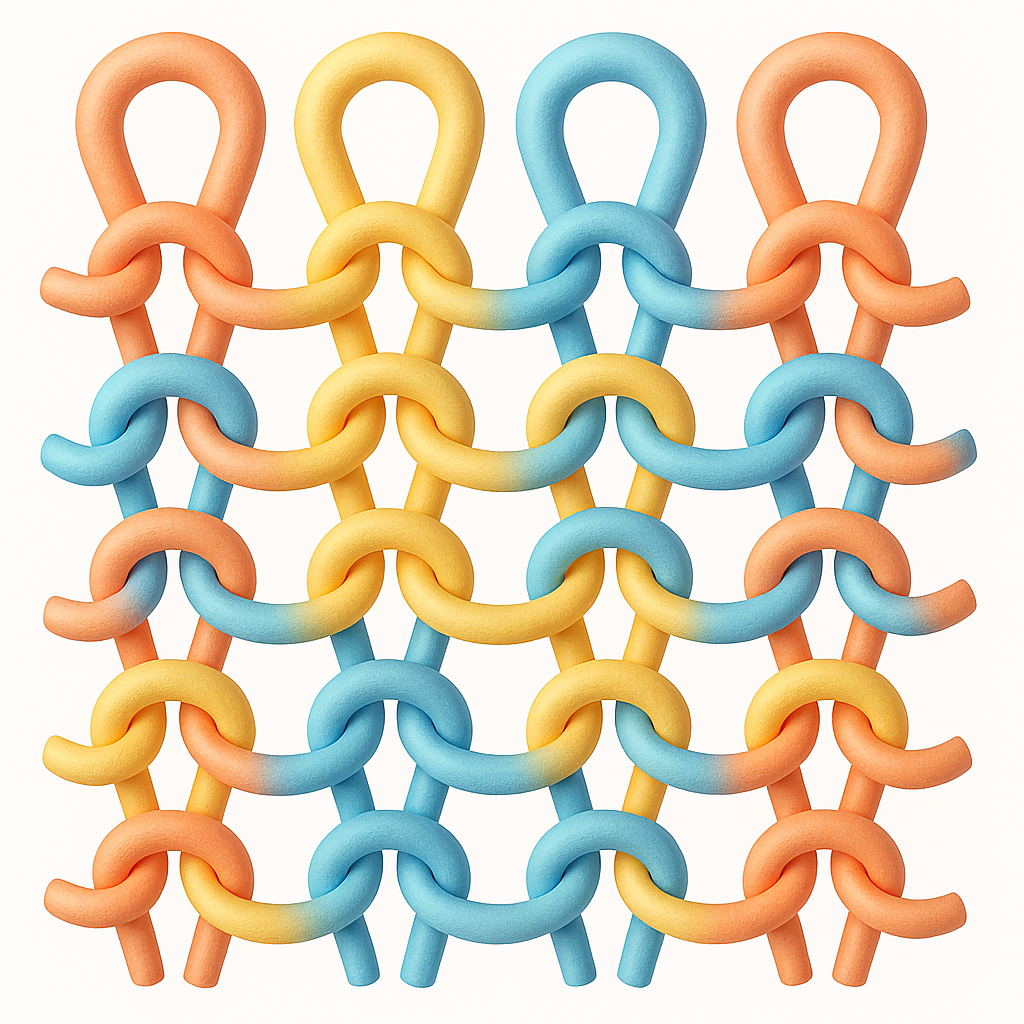
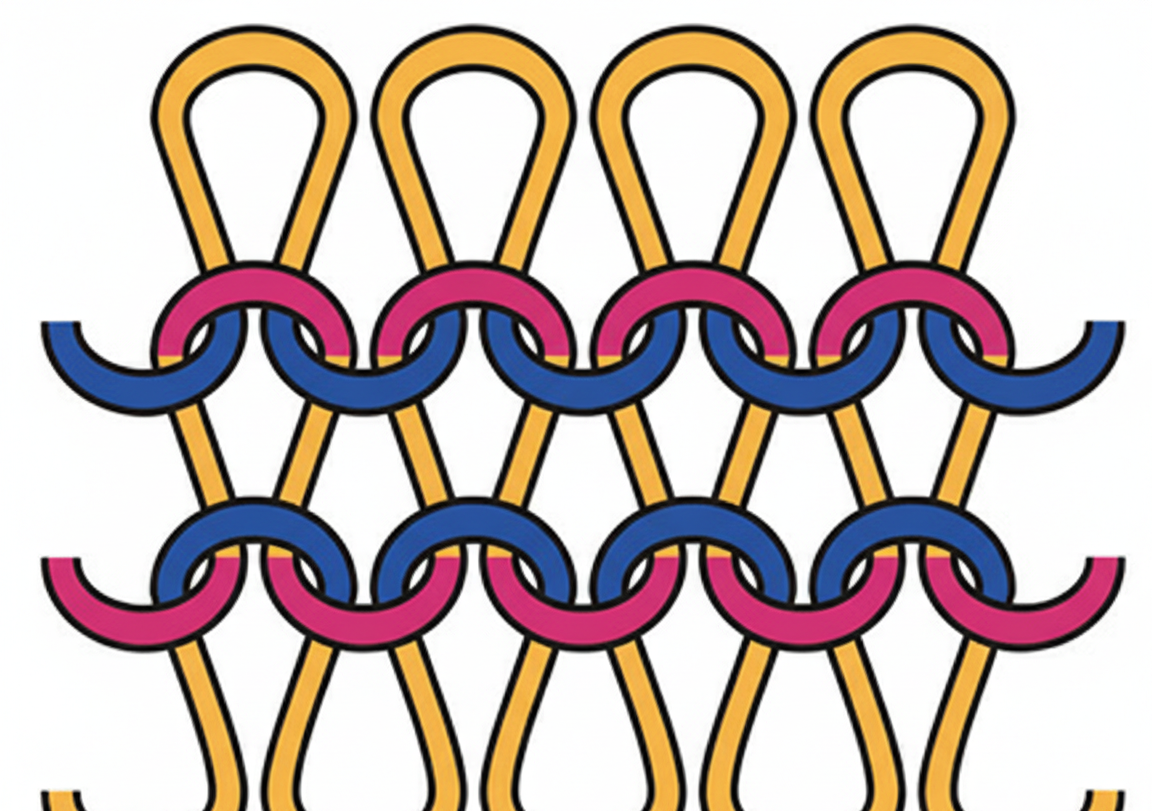
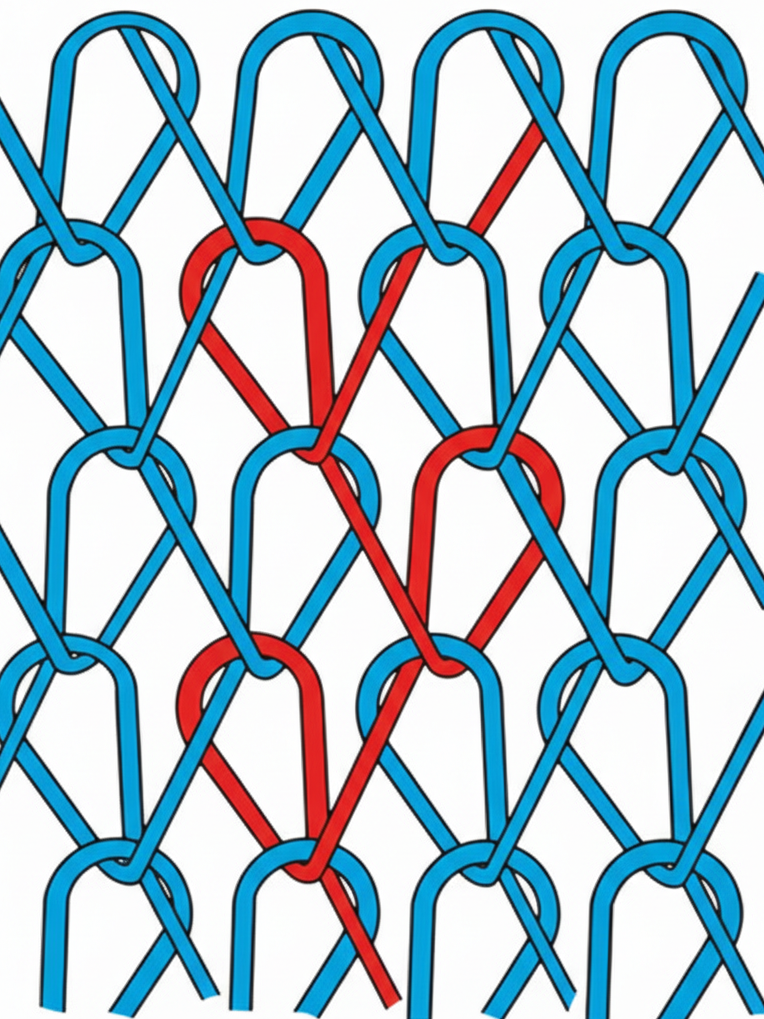
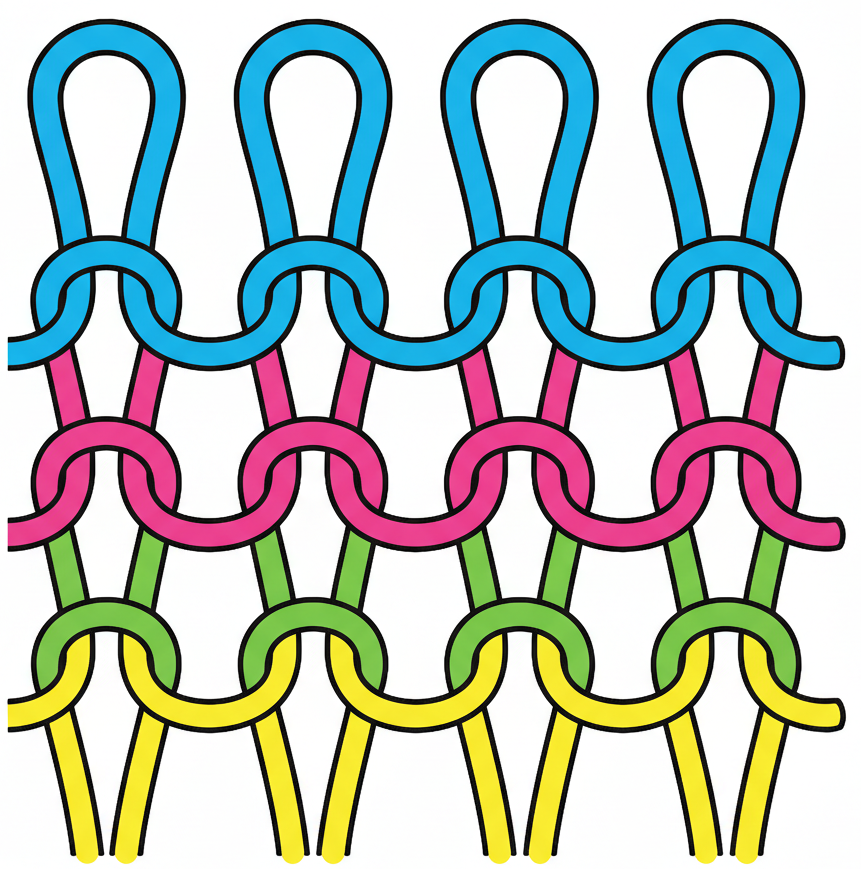
In weft knitting, the yarn is fed horizontally across the fabric width and loops are formed one after another from the same yarn. This looping action creates a fabric structure where each course (row of loops) is interconnected, giving the fabric its characteristic stretch and softness.
Because the loops are formed using a continuous yarn, the fabric can easily unravel if cut, especially along the edge. Despite this, weft knitting is widely used due to its flexibility and ease of production.
Loop Formation
The loop formation in weft knitting follows a simple and continuous sequence:
Yarn is fed horizontally across the machine
Each course is formed using the same yarn
Loops interlock across the width of the fabric
Fabric can be easily unraveled if damaged or cut
Weft knitting-loop
Characteristics of Weft Knitted Fabrics
Weft knitted fabrics are popular for their comfort and adaptability. Their structure allows them to stretch easily and conform to the body, making them ideal for garments.
Key characteristics include:
High elasticity, especially in the width direction
Soft and smooth hand feel
Excellent drape and flexibility
Easy and cost-effective manufacturing process
Tendency to curl at edges
Lower dimensional stability compared to warp knits
Common Weft Knitted Structures
Weft knitting can produce a variety of fabric structures, each offering different properties and applications:
Single Jersey: Lightweight, breathable and widely used for T-shirts
Rib Knit: Highly elastic and commonly used for cuffs, collars and hems
Interlock Knit: Smooth, stable and used for premium knitwear
Purl Knit: Reversible fabric with strong texture and stretch
Single Jersey
Single Jersey
Rib
Rib-loop
Interlock
Interlock loop
Purl
Purl
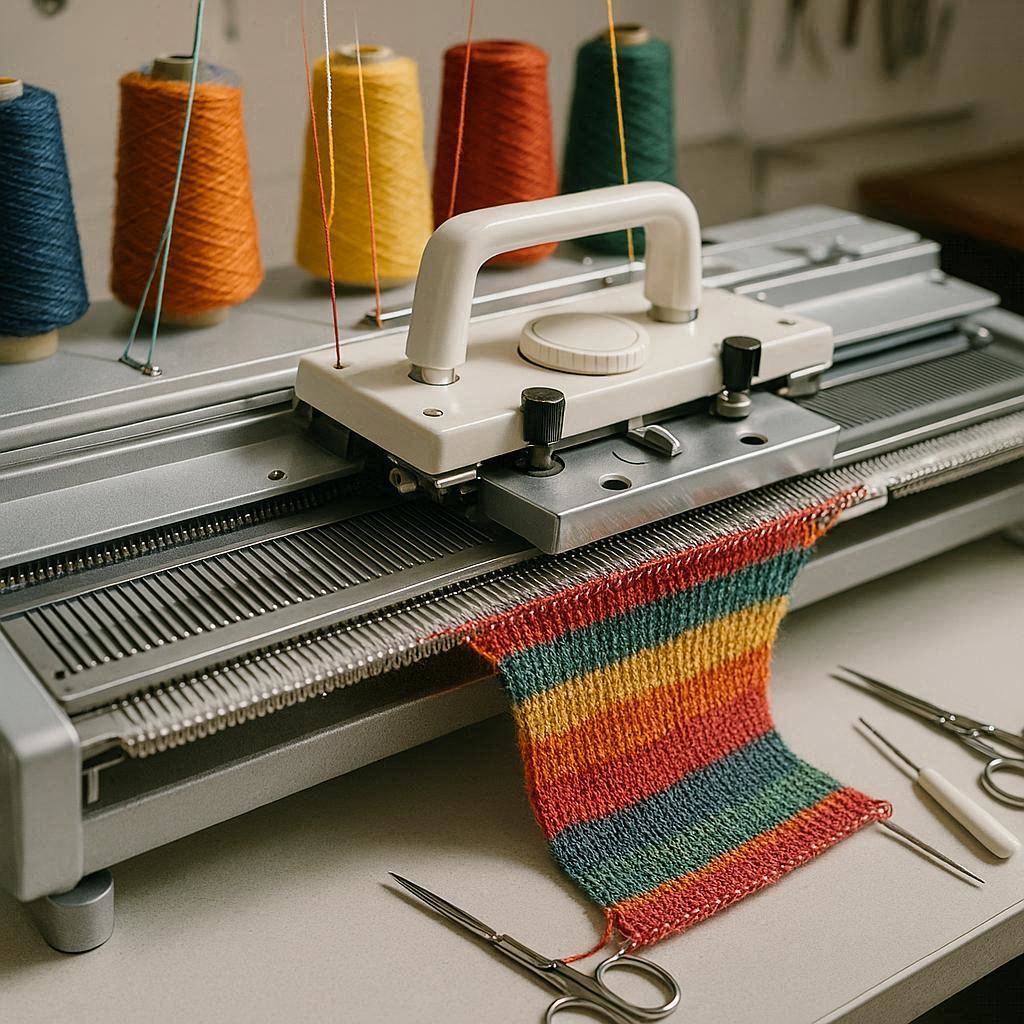
Typical knitting Machines
The type of fabric manufactured, its structure and its end use are mainly decided by the knitting machines. According to the knitting method, machines are generally classified into weft knitting machines and warp knitting machines. These machines are designed to produce specific fabric characteristics and production requirements.
Weft Knitting Machines
Circular Weft Knitting Machine
Circular Weft Knitting Machines are the most common high-production machines used for mass apparel manufacturing.
Single Jersey Circular (Cylinder x Dial):
Typically available in gauges like 24–36G, these machines produce fabrics such as single jersey, piqué, lacoste, sinker terry and fleece face.
High productivity
Ideal for T-shirts and lightweight garments
High productivity
Ideal for T-shirts and lightweight garments
Double Jersey Circular (Rib & Interlock): These machines use two needle beds (cylinder and dial) to produce thicker and more stable fabrics like rib (1×1, 2×2), interlock and Milano.
Suitable for heavier garments
Better shape retention
Suitable for heavier garments
Better shape retention
Jacquard Circular:
Equipped with electronic needle selection, these machines can create complex patterns and engineered designs.
Used for jacquard jersey, rib and interlock fabrics
High design flexibility
Used for jacquard jersey, rib and interlock fabrics
High design flexibility
Fleece / Terry Circular:
These machines include special attachments to create loop or fleece structures.
Produces 3-thread fleece and terry fabrics
Common in sweatshirts and sportswear
Produces 3-thread fleece and terry fabrics
Common in sweatshirts and sportswear
Spacer Circular:
Designed to create 3D spacer fabrics using dual needle beds.
Lightweight, breathable 3D structures
Used in footwear and technical applications
Lightweight, breathable 3D structures
Used in footwear and technical applications
Flat Knitting Machines (V-Bed)
are more design-focused and allow panel knitting rather than continuous fabric, reducing wastage.
Flat V-Bed (Fully Fashioned):
Range from 5G–18G and produce fashion panels, ribs, cables and structured knitwear.
Minimal cutting and sewing
High design flexibility
Minimal cutting and sewing
High design flexibility
Computerized Flat Jacquard:
Advanced machines capable of producing intarsia, transfer and pointelle patterns.
Used for premium and designer knitwear
Used for premium and designer knitwear
Seamless Machines (Santoni type):
Small circular machines used to produce garments without side seams.
Ideal for bodywear, leggings and underwear
Ideal for bodywear, leggings and underwear
Hand Flat / Dubied (Legacy Machines):
Traditionally used for sampling and artisanal knitwear production.
Hand Flat / Dubied (Legacy)
End Uses
Weft knitted fabrics are widely used in everyday apparel due to their comfort and stretch.
T-shirts and tops
Underwear and innerwear
Casual wear
Sweaters and knitwear
Sportswear and activewear
Warp Knitting
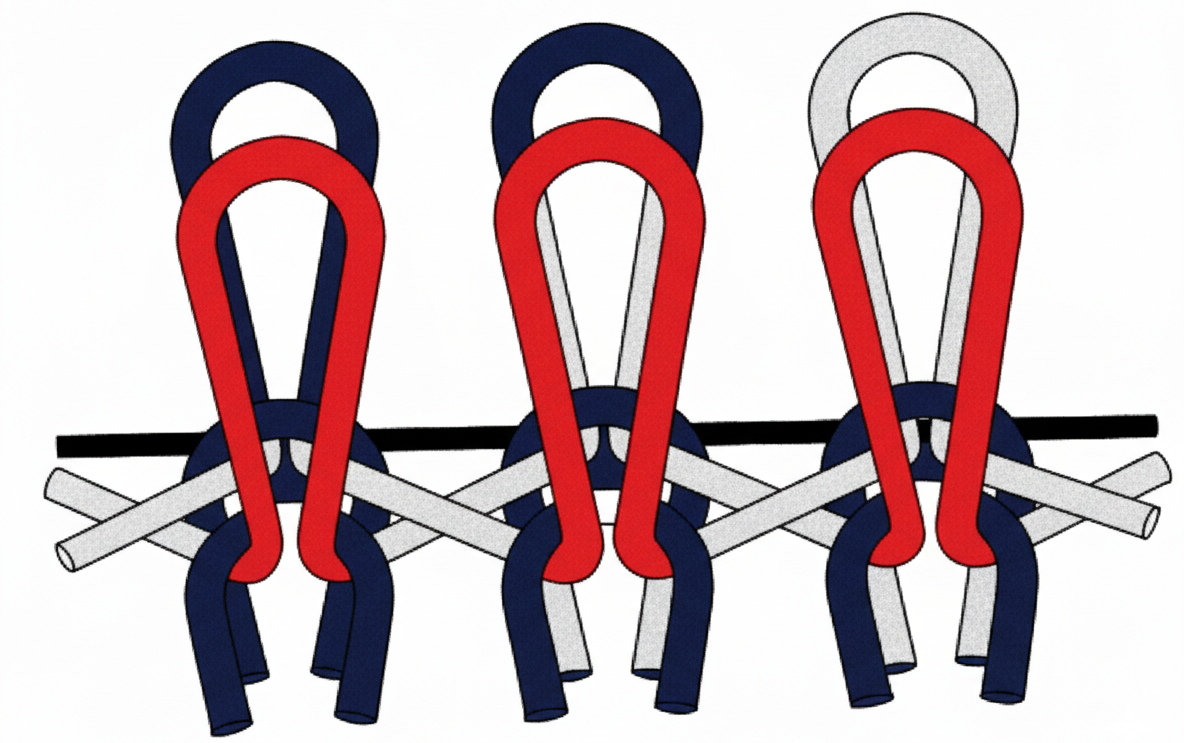
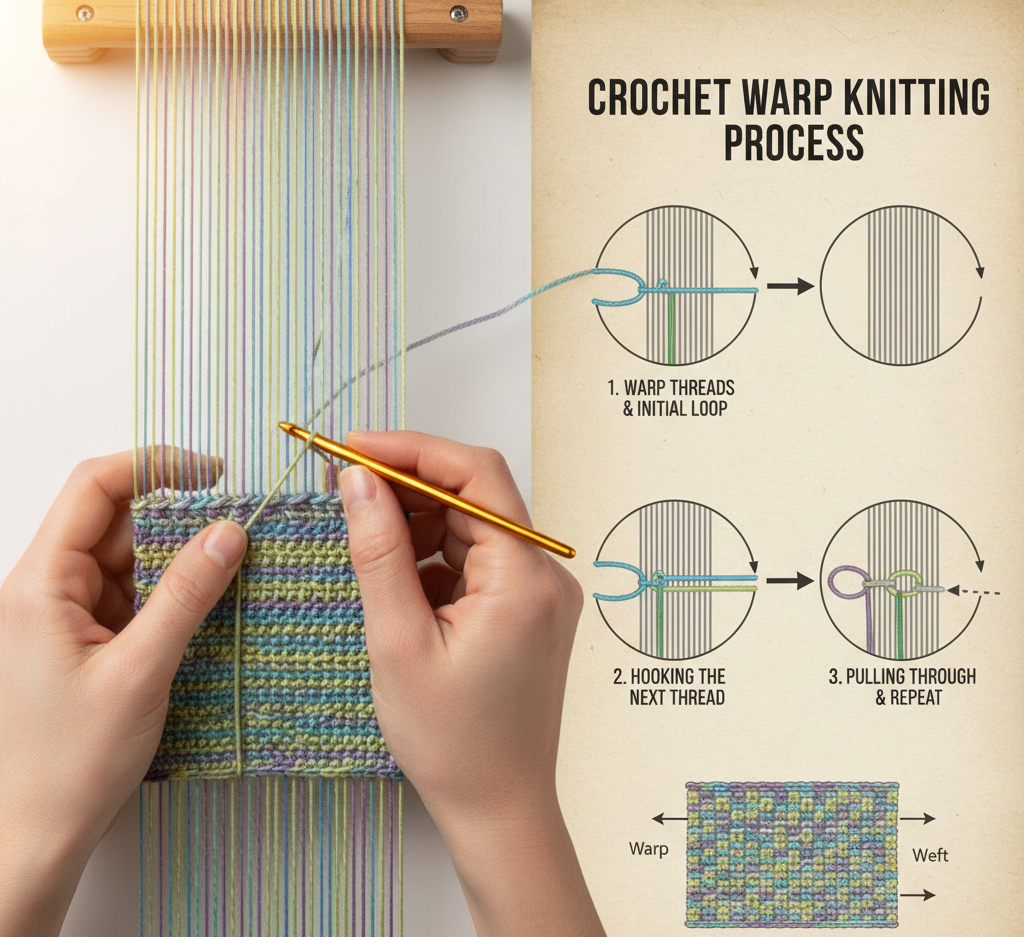
In warp knitting, loops are formed along the length of the fabric and each needle is supplied with its own yarn.
Loop Formation
Yarns run parallel to fabric length
Each wale has a separate yarn
Fabric does not easily unravel
Warp Knitting
Characteristics of Warp Knitted Fabrics
Higher dimensional stability
Lower stretch than weft knits
Smooth surface appearance
Better shape retention
Higher production speed
Common Warp Knitted Structures
Tricot
Raschel
Milanese
Typical Machines (Warp)
Tricot Machines (KS/KT series):
Fine gauge machines (24–40G) using filament yarns
Produce tricot, brushed tricot, satin fabrics
Common in lingerie and lightweight fabrics
Produce tricot, brushed tricot, satin fabrics
Common in lingerie and lightweight fabrics
Raschel Machines:
Highly versatile machines capable of producing a wide range of fabrics
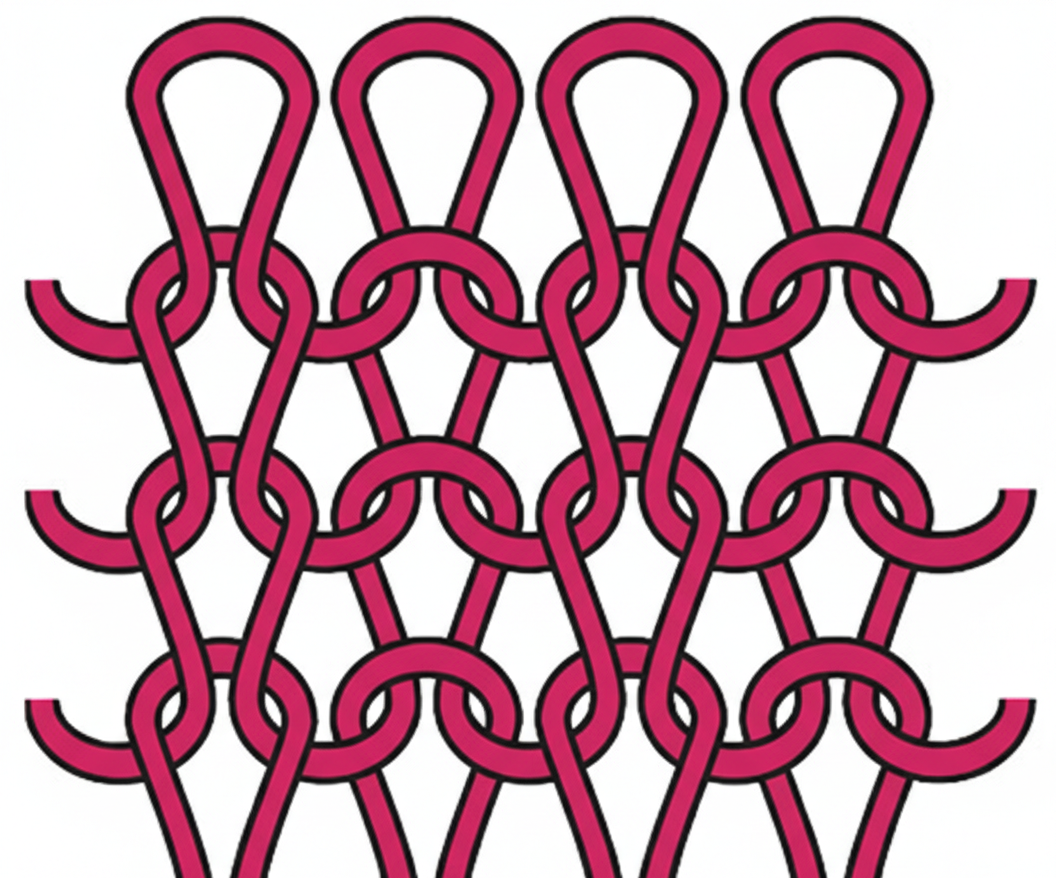
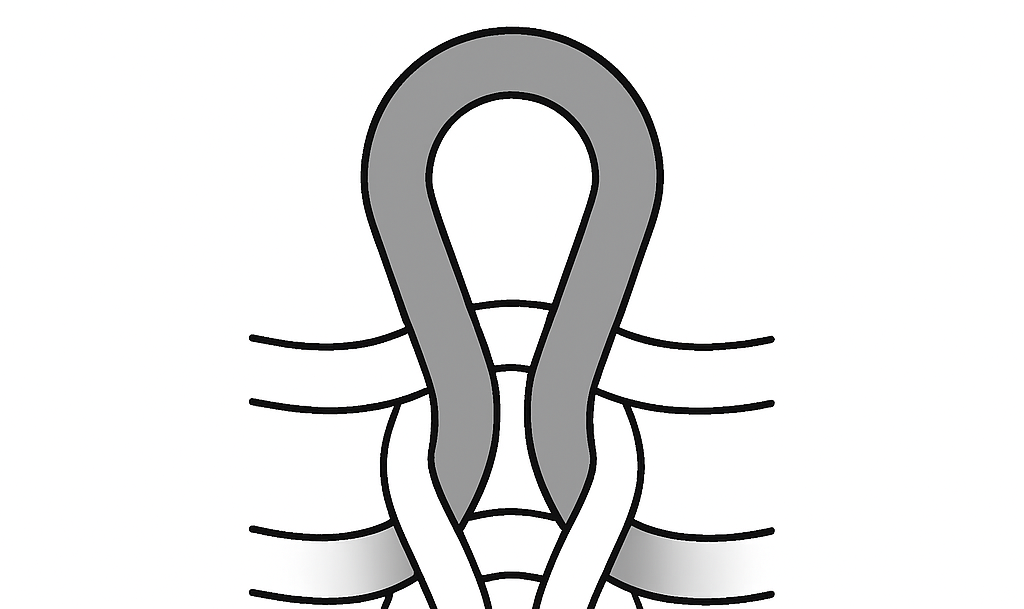
A loop is the basic structural unit of a knitted fabric.
Each loop is formed when yarn is drawn through a previously formed loop.
One loop is part of both a course and a wale.
Loop
How a Needle Forms a Loop
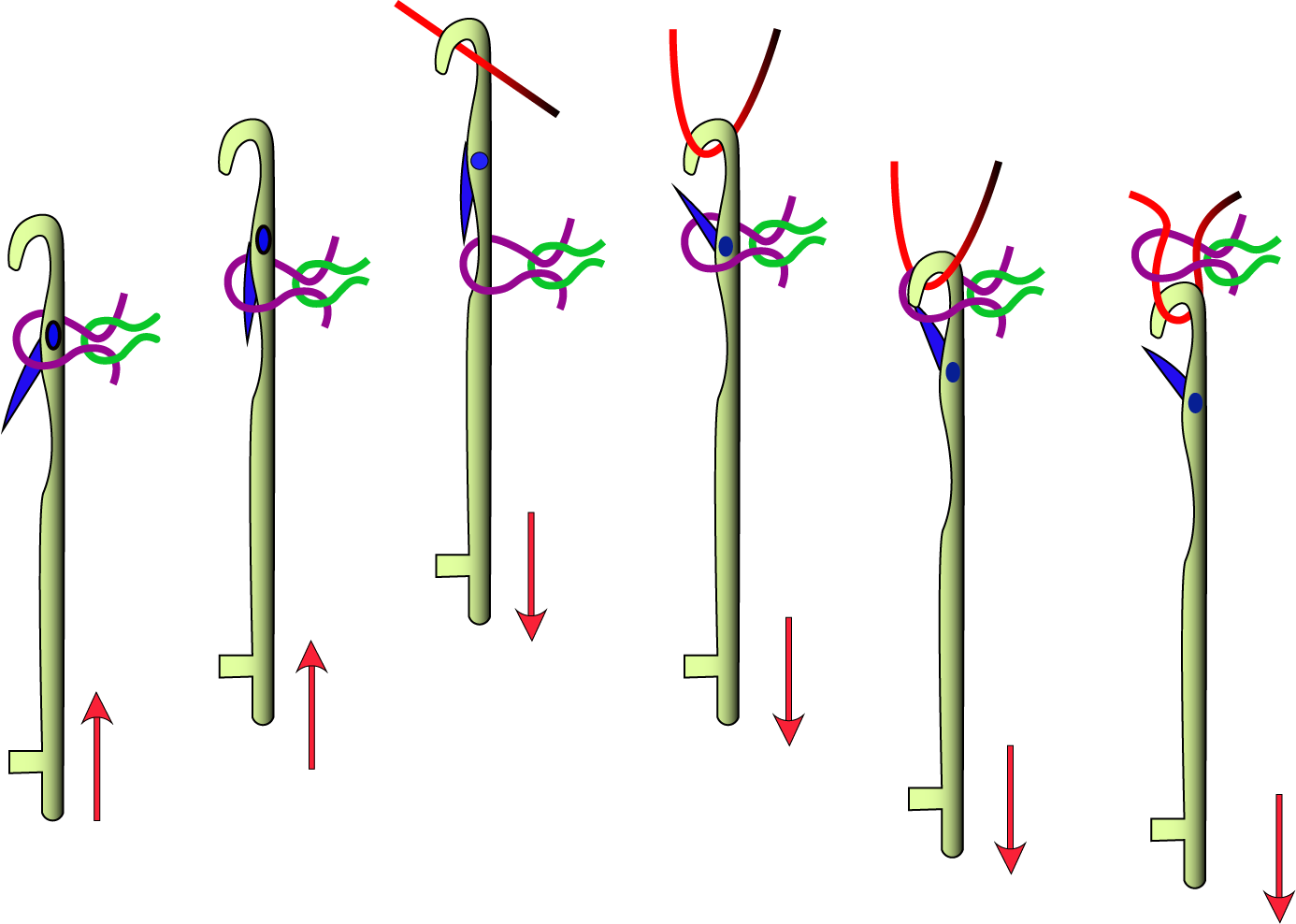
Knitting Actions of a Latch Needle
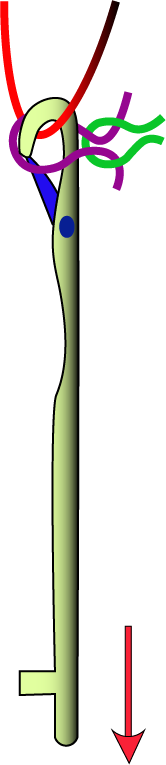
The latch needle is the most common knitting needle used in flat, circular and computerized knitting machines. Its special feature is the latch, a small hinged flap that opens and closes automatically during knitting to aid in forming loops.
The latch needle performs four basic knitting actions:
Knitting Actions of a Latch Needle
Clearing
Feeding
Knocking‑over
Drawing‑down (loop forming)
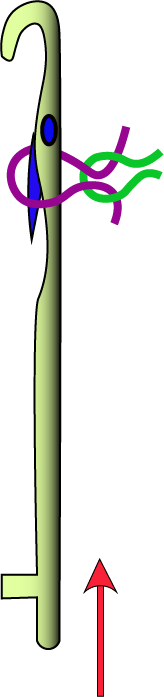
Clearing (Raising the Needle)
The needle is lifted upward by the CAM.
Clearing (Raising the Needle)
Key Actions
-The existing (old) loop slides down from the hook and rests on the needle stem.
-The latch automatically opens as the old loop pushes against it.
-The hook becomes completely empty and ready to receive new yarn.
Purpose:
To clear the hook so a new loop can be formed.
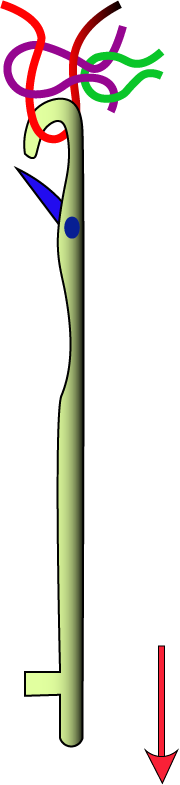
Yarn Feeding (Receiving the New Yarn)
As the needle reaches its highest point:
Yarn Feeding (Receiving the New Yarn)
Key Actions
-The yarn feeder lays a new yarn strand into the empty hook.
-The latch remains open, allowing the yarn to position correctly.
Purpose:
To introduce fresh yarn that will become the next loop.
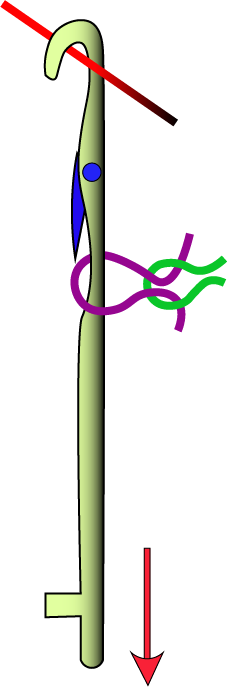
3. Latch Closing (Old Loop Closes the Latch)
As the needle begins descending:
Latch Closing (Old Loop Closes the Latch)
Key Actions
-The old loop moves upward toward the hook.
-It pushes the latch closed.
-The latch drops over the new yarn, trapping it inside the hook.
Purpose:
To secure the new yarn inside the hook before knitting begins.
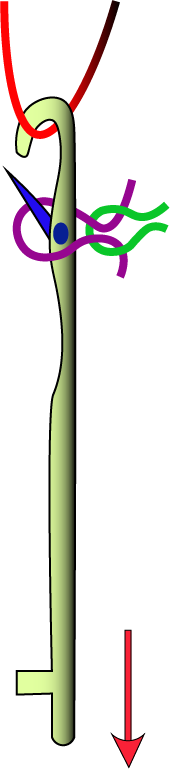
4. Knocking‑Over (Forming the New Loop)
Knocking‑Over (Forming the New Loop)
The needle continues moving downward.
Key Actions
The old loop slides over the closed latch and over the new yarn.
The old loop is knocked off the needle, becoming part of the fabric.
The new loop is pulled through the old loop.
Purpose:
To create a new stitch and integrate it into the fabric structure.
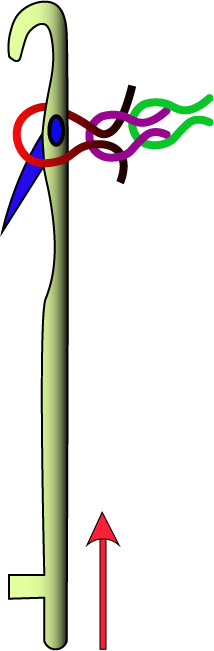
5. Drawing‑Down (Loop Tightening)
As the new loop is pulled below the latch
Drawing‑Down (Loop Tightening)
Key Actions
The latch opens again as the new loop passes through the hook.
The new loop becomes the old loop for the next knitting cycle.
Take‑down tension pulls the fabric downward to maintain loop size.
Purpose:
To finalize the newly formed loop and prepare for the next cycle.
The needle continues downward, pulling the new loop through the old one.
The old loop slips off the needle, forming part of the fabric.
This cycle repeats continuously as the carriage moves across the needle bed.
Latch Needle Actions
Clearing for new loop
Step
Name
What Happens
1
Clearing
Hook emptied; latch opened; old loop moves to stem
2
Feeding
New yarn placed in the hook
3
Latch Closing
Old loop closes latch over the new yarn
4
Knocking‑Over
Old loop is cast off; new loop is drawn through
5
Drawing‑Down
New loop becomes old loop; fabric pulled down
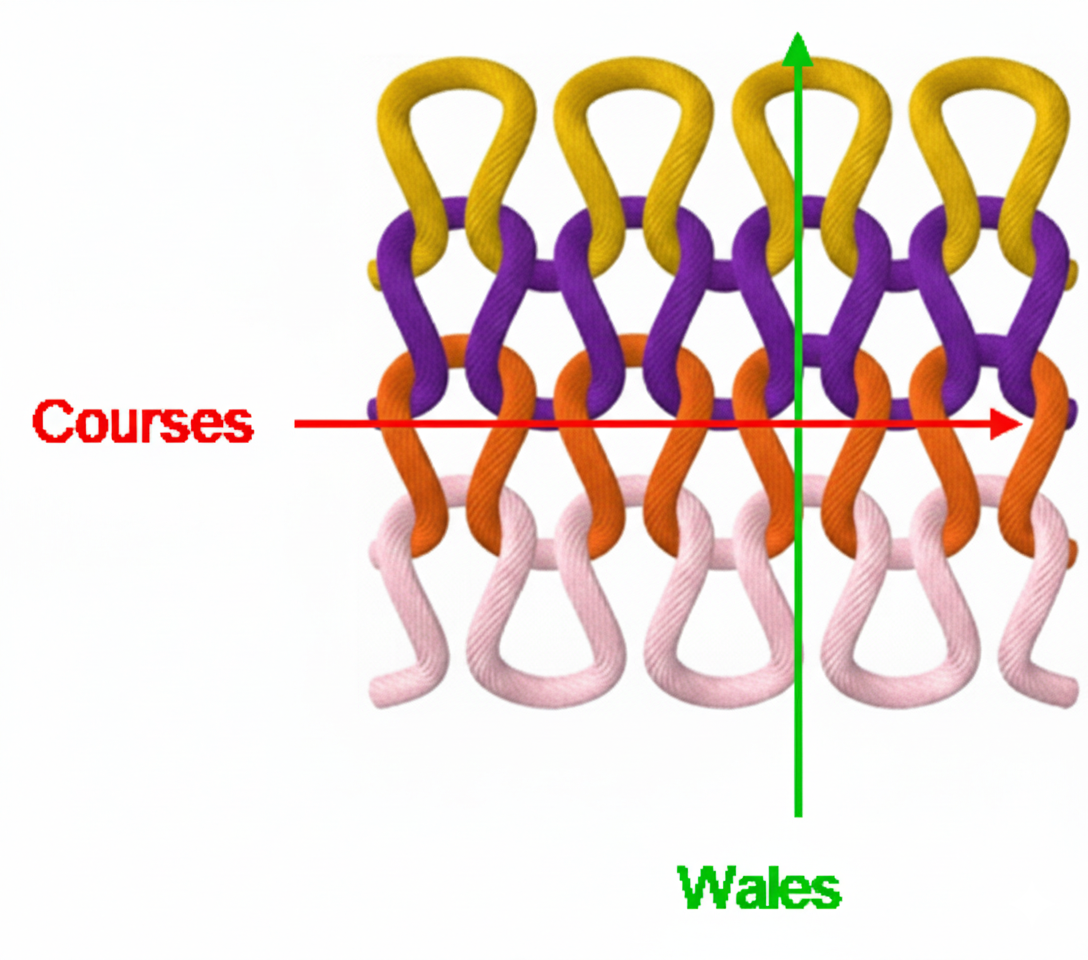
Course
A course is a horizontal row of loops formed across the width of the fabric.
Courses run left to right
Measured as Courses Per Inch (CPI)
Wale
A wale is a vertical column of loops running along the length of the fabric.
Wales run top to bottom
Measured as Wales Per Inch (WPI)
Course-Wales
Fabric Density Terms
WPI – Wales Per Inch
Number of wales present in one inch of fabric width
Indicates fabric fineness
CPI – Courses Per Inch
Number of courses present in one inch of fabric length
Indicates fabric compactness
Types of Knitting Stitches (Loop Formation)
Knitted fabrics are produced from 3 fundamental types of stitches which determine the structure and appearance of the fabric.
1. Knit Stitch (Loop Stitch)
The knit stitch is produced when a new loop is drawn through the old loop and the old loop is released from the needle.
Characteristics
Forms smooth V‑shaped loops on the technical face
Provides elasticity and strength
Basic building block of all knitted fabrics
Knit Stitch (Loop Stitch)
Fabric Impact
Good stretch and recovery
Balanced fabric appearance
2. Tuck Stitch
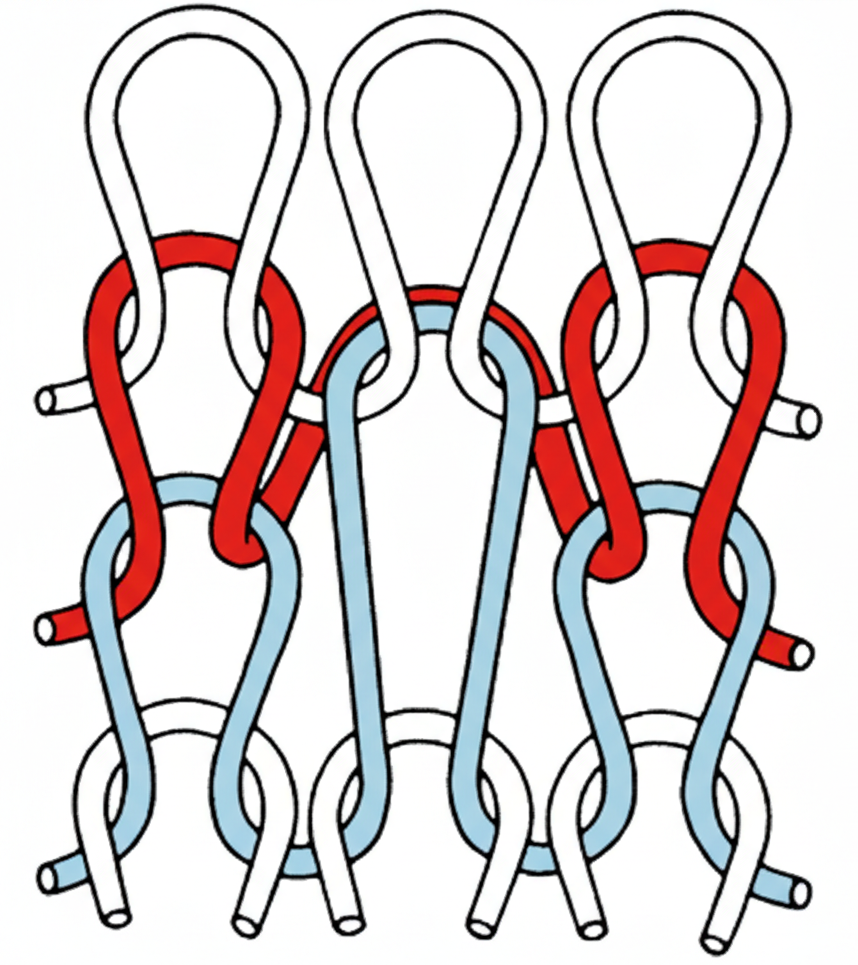
A tuck stitch is formed when a needle holds the old loop and also receives a new yarn, creating an elongated loop.
Characteristics:
Tuck Stitch
Produces an open and textured structure
Increases fabric thickness and width
Reduces elasticity in tuck areas
Fabric Impact
Improves air permeability
Creates decorative and functional designs
Common Uses
Piqué fabrics
Lacoste and waffle knits
Patterned jersey structures
3. Miss Stitch (Float Stitch)
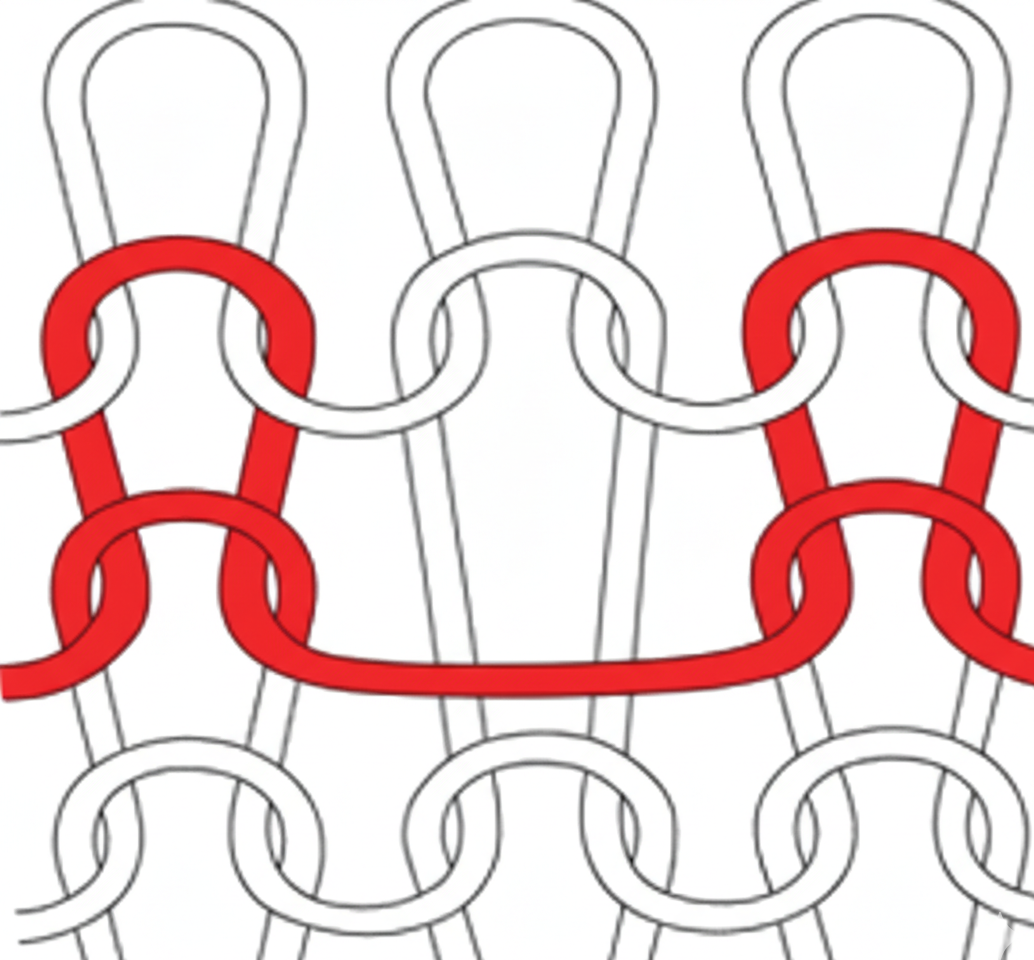
In a miss stitch, the needle does not receive yarn; the yarn floats behind the held loop.
Characteristics
Creates floats on the technical back
Reduces yarn consumption in selected areas
Adds design contrast
Miss Stitch (Float Stitch)
Fabric Impact
Lower elasticity in float direction
Used for striping and jacquard effects
Common Uses
Jacquard knits
Engineered stripes
Decorative patterns
Summary
Knitting is a fabric formation technique where yarns are inter-looped to create a flexible and stretchable structure. It is widely used in apparel because of its comfort, elasticity and ease of production. The entire fabric is built from loops, which are the fundamental elements of knitting and determine the fabric’s structure and performance.
Knitting is mainly classified into two types—weft knitting and warp knitting—based on how the yarns are interlooped. In weft knitting, yarns run horizontally across the fabric, while in warp knitting, yarns run vertically along the length. These directions create the basic structural lines known as courses and wales.
Key points to remember:
Knitting forms fabric through inter-looping of yarns
Two main types: Weft knitting and Warp knitting
Loops are the basic building blocks of the fabric
Courses run horizontally across the fabric
Wales run vertically along the fabric length
CPI (Courses per Inch) and WPI (Wales per Inch) define fabric density, quality and appearance
References & Sources
Spencer, D.J. – Knitting Technology: A Comprehensive Handbook and Practical Guide.
David J. Spencer – Knitting Technology (3rd Edition).
Raymond Uynongco – Principles of Knitting.
A.R. Horrocks & S.C. Anand – Handbook of Technical Textiles.
J.J. Pizzuto – Fabric Science.
B.P. Corbman – Textiles: Fiber to Fabric.
V.K. Kothari – Testing and Quality Management in Textiles.
The Textile Institute (UK) – Textile Terms and Definitions.
Disclaimer: Information provided is for educational guidance only. Actual knitting processes, machine capabilities, fabric characteristics, and performance results may vary depending on yarn, machine settings, and production conditions.
Written by
Alam Mohammad Shafiqul
Lead Editor, Senior Contributor & Founder
Textile Technology
Textile engineering professional with over 15 years of experience in Sweater Manufacturing, Industrial Engineering and Technical Development. Holds a degree in Textile Engineering and an MBA in Apparel Merchandising. Passionate about bridging the gap between factory-floor operations and technical expertise to drive efficiency, innovation, and continuous improvement.
Textile EngineeringSweaterIndustrial EngineeringLean Six SigmaPythonJS