Brush and Peach Finish in Textiles: Techniques for Softness and Fabric Enhancement
December 24, 202513 min read
Brush finish and peach finish are textile finishing techniques used to improve the surface aesthetics, hand feel and comfort of fabrics—primarily for casualwear, loungewear, sportswear and winter garments.
These finishes create a soft, suede-like texture by raising micro‑fibers on the fabric surface.
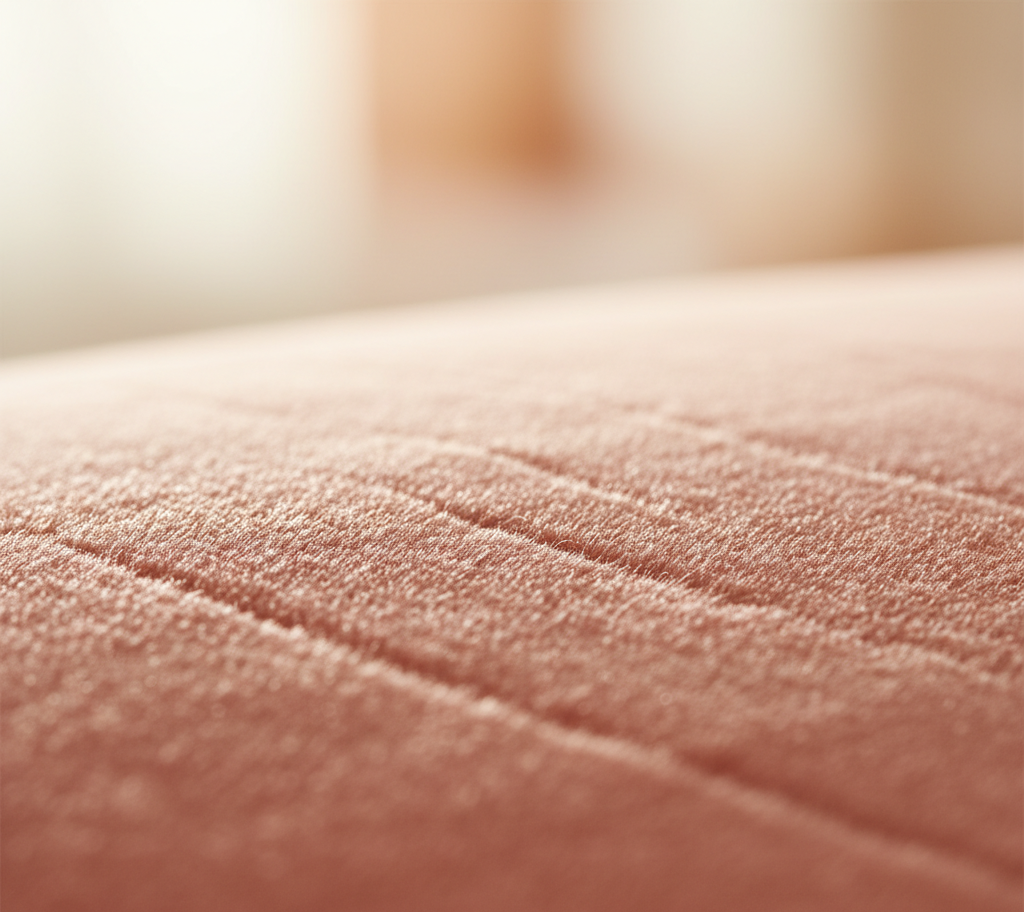
Brush & Peach Finish
In the textile world, the initial contact with a fabric is nearly always through touch. Consumers have an instinctive sense of a garment or home textile as they touch it with their fingers, judging quality within seconds. It’s the silent but powerful factors of softness, warmth, comfort and appearance that make a fabric feel premium or ordinary. Interestingly, two fabrics can feel worlds apart, even when they are made from the same fiber and construction, simply because of the finishing techniques applied after the weaving or knitting process.
Among many mechanical finishing processes, Brush Finish and Peach Finish are two of the most influential ones. Both aim to enhance softness and comfort, but they give different tactile and visual effects. Often the difference between a basic cotton shirt and a luxurious premium blouse is the subtle finishing touches like brushing or peach finishing.
Mechanical Fabric Finishing (MF) Explained
Mechanical finishing is a surface modification technique based on physical treatment rather than chemical reactions . Mechanical finishes alter fiber ends and fabric surfaces through controlled abrasion, brushing or sanding, as opposed to chemical softeners or resins. The idea is to enhance tactile properties – softness, smoothness, warmth – and visual appeal without altering the fiber chemistry.
These finishes are gaining in importance in modern textile production for two reasons:
Consumer demand for comfort and luxury – Fabrics are expected to feel pleasant against the skin, even in everyday garments.
Sustainability – Mechanical finishes generally require less chemical processing, which lowers environmental impact and fits well with eco-friendly manufacturing goals.
Brush Finish
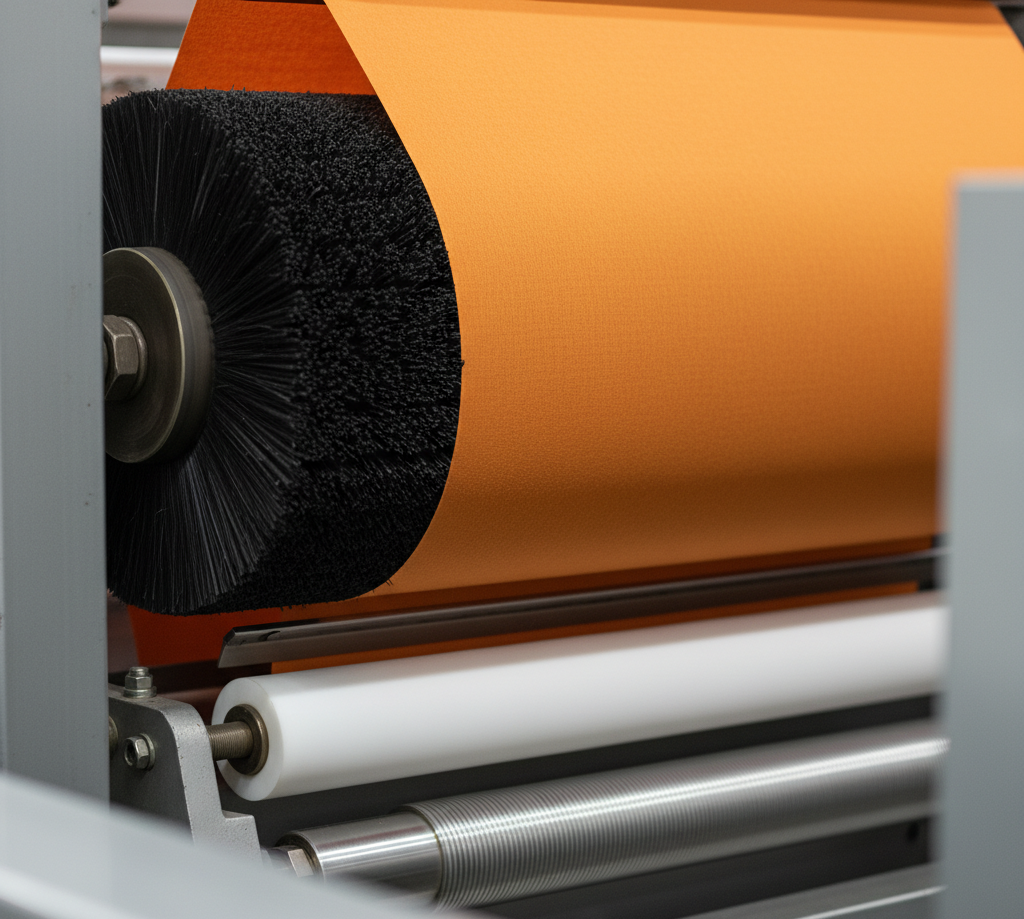
Brush finishing is one of the oldest and most common mechanical surface treatments. It’s just sort of passing fabric through machinery with spinning brushes or rough rollers. The brushes gently lift the surface fibers, smooth the rough areas and create a softer hand feel.
Historically, brushing was used in the processing of wool to raise a nap for warmth. As the technique evolved with modern machinery, it became possible to control the fiber lifting and modifying the surface precisely. Today brushing is applied to cotton, polyester blends, knits and even home textiles.
Brush finish
Purpose of Brush Finish
The objectives of brush finishing go beyond mere softness:
Enhanced Surface Softness
By raising fine fibers, brushing creates a cushioned surface that feels gentle against the skin.
Improved Thermal Insulation
Lifted fibers trap air pockets, which act as natural insulation. This makes brushed fabrics warmer, ideal for winter wear.
Reduced Surface Roughness
Brushing smooths uneven textures, eliminating harshness and improving comfort.
Better Fabric Appearance
The process refines the surface, giving fabrics a more uniform and premium look.
Premium Consumer Experience
Brands use brushing to elevate product value. A brushed sweatshirt or blanket instantly feels more luxurious compared to its unbrushed counterpart.
How Brush Finish Works (Working Principle)
The process involves several technical parameters:
Brush Type and Material – Metallic brushes provide aggressive abrasion, while nylon brushes offer gentler treatment. Sanding rollers are used for specific effects.
Number of Passes – Multiple passes deepen the effect, but over-brushing can weaken fabric.
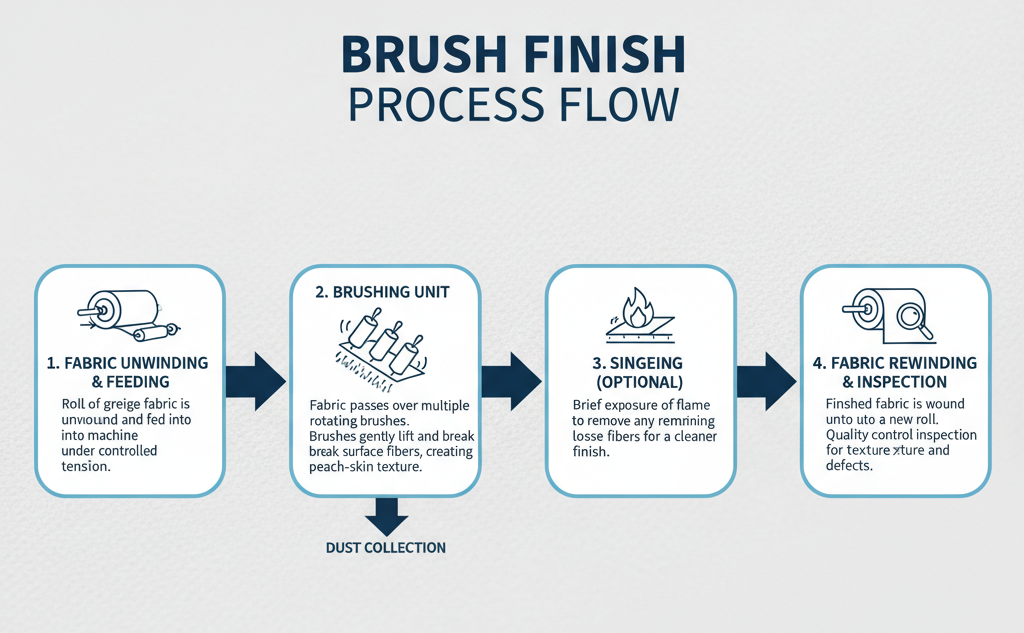
In practice, fabric passes through a series of rollers where brushes rotate against the surface. The controlled abrasion lifts protruding fibers, aligns them, and modifies texture. Technicians carefully balance speed, pressure, and brush type to achieve the desired softness without compromising durability.
Process flow -Brush Finish
Fabric Characteristics After Brushing
Softened surface
Better warmth retention
Smooth, comfortable hand feel
Enhanced aesthetic appearance
Improved drape and comfort during wear
For example, brushed cotton shirts feel warmer and smoother, while brushed blankets gain a cozy, plush texture.
Applications of Brush Finish
Brush finish is used for:
Casual and everyday apparel
Shirts and blouses
Knitwear and light winterwear
Home textiles requiring pleasant touch
Advantages of Brush Finish
Chemical-free
finishing – Eco-friendly compared to softener-based processes.
Long-lasting
softness – Unlike chemical softeners that wash out, brushing provides
durable comfort.
Cost-effective
– Adds value without expensive treatments.
Weight
Loss – Fiber removal reduces fabric weight.
Dust
and Lint Generation – Requires regular machine cleaning.
Quality control involves monitoring abrasion levels,
inspecting uniformity, and balancing softness with durability.
Limitations / Challenges of brush Finish
Issue
Cause
Pilling
Excess fiber lifting
Shade change
Abrasion changes surface reflection
Weight loss
Fiber removal during finishing
Weakening of fabric
Excess brushing/peaching
Dust generation
Fiber lint from abrasive process
Peach Finish: A Deeper Dive into Luxury Mechanical Finishing
Peach Finish, often called Peach Skin Finish, is not just another softening technique—it’s a hallmark of premium textile engineering. While brushing raises fibers in a more visible way, peach finishing works at a micro level, creating a delicate fuzz that mimics the velvety surface of a peach. This subtle yet luxurious texture is what makes consumers instantly associate peach-finished fabrics with high-end fashion and refined comfort.
Unlike brushing, which can be applied broadly across casual and winter textiles, peach finishing is more selective. It’s typically reserved for fabrics intended to carry a premium identity—garments that must feel indulgent, look sophisticated, and drape elegantly.
Peach Finish
The Science Behind Peach Finish
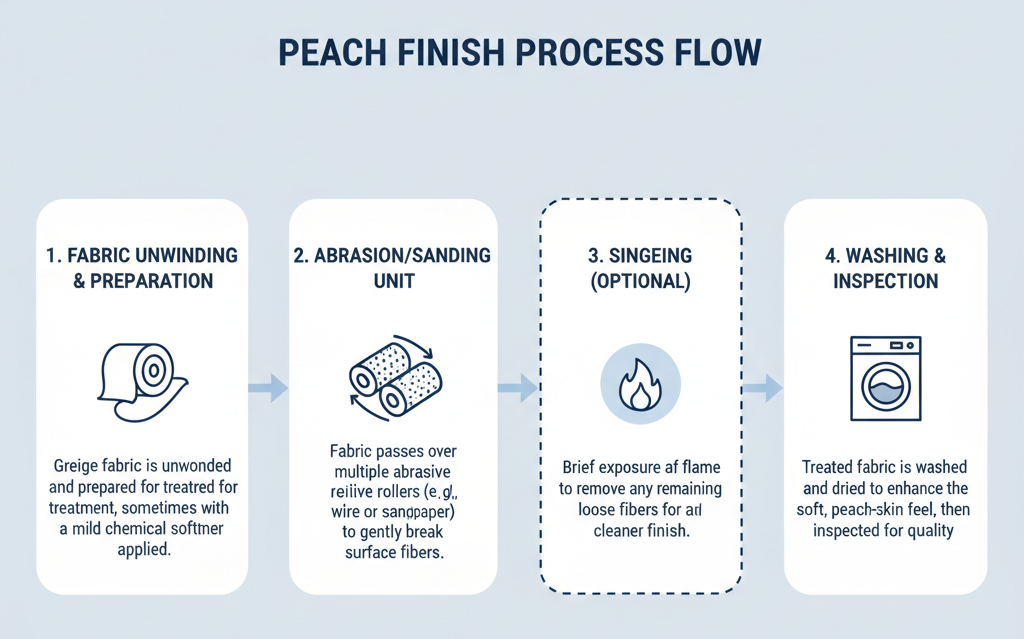
The process relies on micro-abrasion using emery rollers or sanding rollers coated with fine abrasive grit. As fabric passes through these rollers:
Micro-fiber ends are gently broken – This creates ultra-fine fuzz on the surface.
Uniform nap is formed – Unlike brushing, which can sometimes raise uneven fibers, peach finishing produces a consistent suede-like layer.
Controlled abrasion ensures durability – Technicians carefully adjust grit size, roller speed, and pressure to avoid weakening the fabric.
This precision is why peach finishing is considered more technically demanding than brushing. A slight miscalibration can lead to uneven texture, excessive pilling, or loss of fabric strength.
Process Parameters
Abrasive Grit Size – Determines how fine or coarse the peach effect will be. Smaller grit sizes create smoother, more luxurious finishes.
Roller Rotation Speed – Higher speeds intensify abrasion but risk damaging fibers; slower speeds provide controlled refinement.
Fabric Tension – Ensures the fabric remains stable during sanding, preventing distortion.
Pressure Settings – Critical for balancing softness with durability. Too much pressure can thin the fabric.
Number of Passes – Multiple passes deepen the peach effect, but excessive passes may reduce strength.
In premium mills, technicians often run trial batches to fine-tune these parameters before committing to full production.
Process flow of Peach Finish
Fabric Characteristics After Peach Finish
Peach-finished fabrics undergo a remarkable transformation:
Ultra-soft
hand feel – Softer than brushed fabrics, often compared to suede or
velvet.
Velvety
surface – Creates a luxurious tactile sensation.
Improved
drape – Fabrics fall gracefully, enhancing garment aesthetics.
Enhanced
warmth – Fine fibers trap air, adding insulation.
Controlling pilling tendencies – Fine fuzz can increase pilling risk if not managed.
Maintaining roller cleanliness – Dust buildup can cause uneven finishing.
Ensuring uniformity – Consistency across batches is critical for brand reputation.
High-end mills often implement strict inspection protocols, including tactile testing and visual grading, to ensure every roll meets luxury standards.
Brush Finish vs. Peach Finish – Quick Comparison
Feature
Brush Finish
Peach Finish
Surface Feel
Soft & smooth
Very soft, velvety, suede-like
Equipment
Brushes or abrasive rollers
Sanding / emery rollers
Fiber Action
Raises and aligns surface fibers
Micro‑abrasion breaks fiber tips
Visual Effect
Subtle
More suede-like, premium
Common Use
Casual wear, shirts, knits
Premium wear, winterwear, bottoms
Softness Level
Medium to high
Very high
Softening vs Brush & Peach Finish – Comparison
Aspect
Softening
Brush & Peach Finish
Type of Process
Chemical
Mechanical
Main Effect
Smooth, flexible hand feel
Velvety, peach‑skin texture
Comfort Level
High
Very high
Effect on Appearance
Improved luster
Matte, soft surface
Durability
Moderate to high
High
Importance in Apparel Manufacturing
Softening improves wear comfort and fabric drape
Brush & Peach finish enhances tactile luxury
Combined use delivers superior hand feel and premium quality
Helps meet buyer expectations and brand standards
Conclusion:
Two cornerstone mechanical finishing techniques, Brush Finish and Peach Finish, show how much you can change the perception of a fabric through surface treatment. Brushing is about raising and aligning fibers to create softness, warmth and functional comfort; peach finishing is about refinement – micro-abrasion to create a velvety, suede-like hand that consumers subconsciously associate with luxury.
The decision on which of these finishes to use depends on the end use, positioning of the product and cost factors for manufacturers. Brush finishing is a versatile, economical process for everyday apparel and home textiles, whereas peach finishing is more selective, reserved for premium garments and decorative fabrics where tactile luxury is king. Both are chemical-free processes, in line with sustainability goals, and both require careful quality control to balance softness and durability.
Finishing quality is often more important than fiber composition in today's competitive textile market. “A good brush or peach finish can make a regular fabric something that consumers can immediately see as more desirable and higher value. Developments in sustainable abrasion systems, precision roller technology and eco-friendly finishing methods will continue to push these processes forward in the future, ensuring that fabrics not only meet, but exceed modern expectations for comfort, aesthetics and environmental responsibility.
In the final analysis, Brush Finish and Peach Finish are not merely technical steps in production, they are value adding strategies bridging engineering with consumer psychology, transforming fabric into fashion and comfort into loyalty.
References & Sources
The Textile Institute – Textile Finishing, Mechanical Finishing Processes, Fabric Hand and Surface Modification Resources. Available at: https://www.textileinstitute.org
AATCC (American Association of Textile Chemists and Colorists) – Textile Finishing Technologies, Fabric Hand Evaluation and Performance Testing. Available at: https://www.aatcc.org
Textile Finishing by Derek Heywood – Comprehensive reference on mechanical and chemical finishing techniques, including brushing, raising, sueding and peach finishing.
Chemical Finishing of Textiles by W.D. Schindler & P.J. Hauser – Textile finishing principles, fabric aesthetics and hand modification processes.
Handbook of Textile Finishing by S.R. Karmakar – Industrial finishing methods, quality control and textile surface engineering.
Woodhead Publishing / Elsevier Textile Series – Advanced Textile Finishing and Fabric Enhancement Technologies. Available at: https://www.elsevier.com
Monforts Textile Finishing Technologies – Industrial brushing, raising, sueding and finishing machinery resources. Available at: https://www.monforts.com
Disclaimer: This article is intended for educational and informational purposes only. Brush finishing, peach finishing, sueding, raising, and other mechanical finishing processes may vary significantly depending on fiber type, fabric construction, machine configuration, abrasive materials, production speed, pressure settings and end-use requirements. The process descriptions, performance characteristics and application recommendations presented here are general industry practices and may not reflect proprietary manufacturing methods used by individual mills. Actual softness, appearance, durability, pilling performance and strength retention should always be validated through laboratory trials, pilot production and quality testing before commercial implementation. Readers should consult equipment manufacturers, textile finishing specialists and factory technical standards for specific production parameters and process optimization.
Written by
Alam Mohammad Shafiqul
Lead Editor, Senior Contributor & Founder
Textile Technology
Textile engineering professional with over 15 years of experience in Sweater Manufacturing, Industrial Engineering and Technical Development. Holds a degree in Textile Engineering and an MBA in Apparel Merchandising. Passionate about bridging the gap between factory-floor operations and technical expertise to drive efficiency, innovation, and continuous improvement.
Textile EngineeringSweaterIndustrial EngineeringLean Six SigmaPythonJS