Key Yarn Testing Parameters
Yarn testing is essential to ensure consistency, performance and suitability for downstream processes such as weaving, knitting, dyeing and finishing. The following parameters are commonly evaluated to assess yarn quality.
Yarn Testing Parameters, Machines & Test Methods
The table below outlines common yarn testing parameters, the instruments used for testing and the applicable standard methods followed in the textile industry.
| Testing Parameter | Purpose | Required Machine / Instrument | Test Method / Standard |
|---|---|---|---|
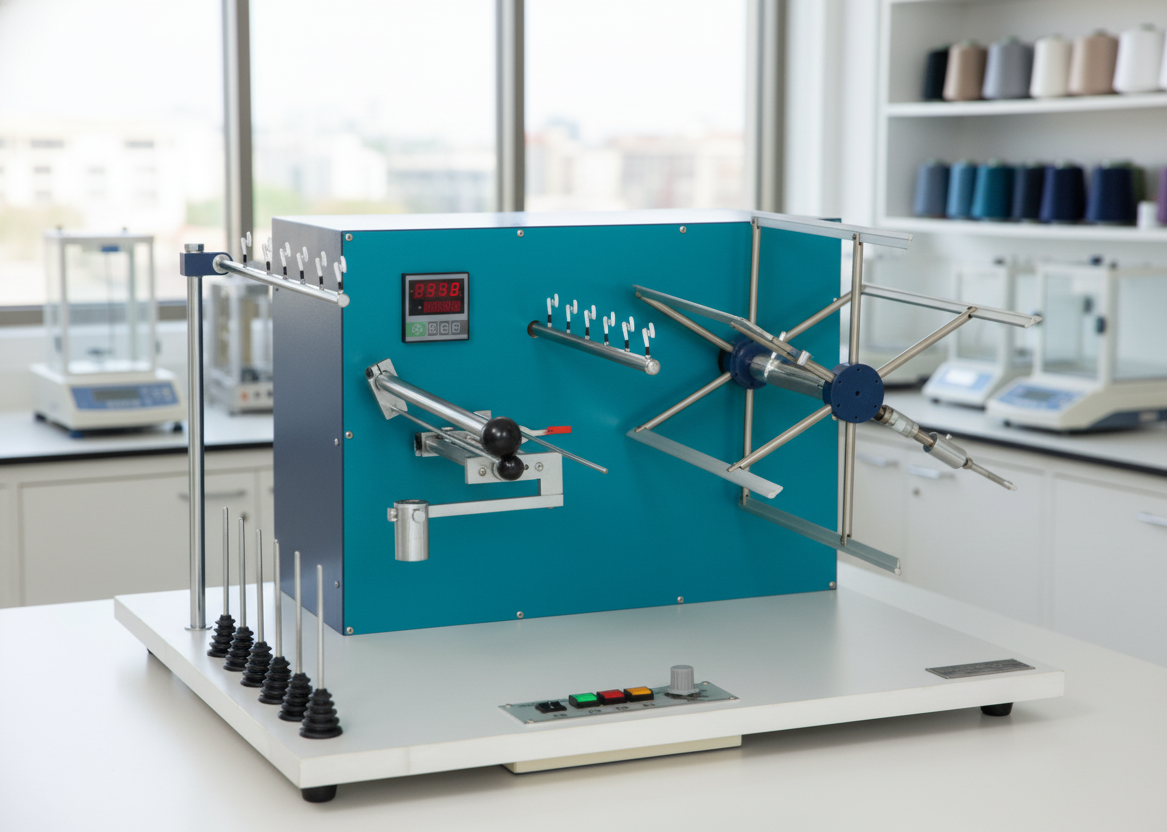
| Yarn Count | Determines yarn fineness or thickness | Wrap Reel, Electronic Balance | ASTM D1059 / ISO 2060 |
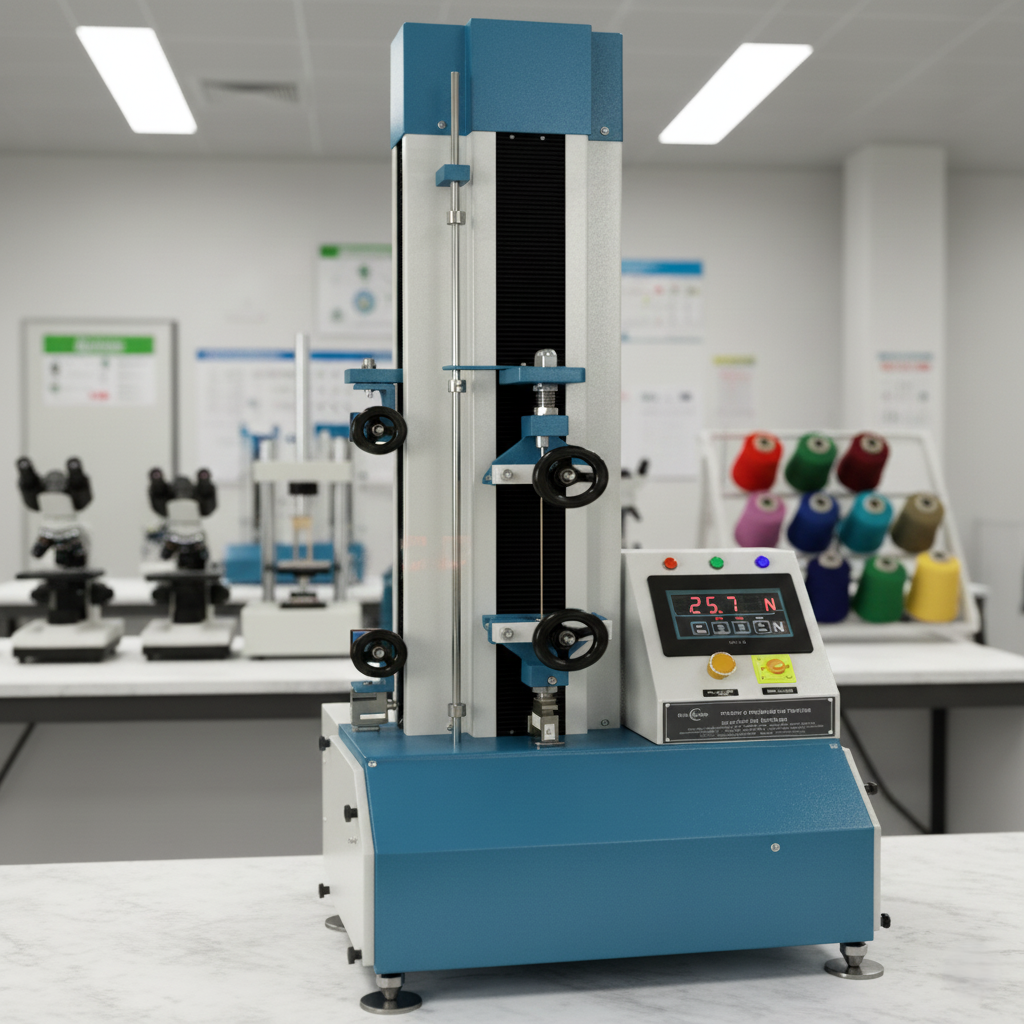
| Single Yarn Strength / Tenacity | Measures force required to break yarn | Single Yarn Strength Tester (Instron, TensoLab) | ASTM D2256 / ISO 2062 |
| Elongation at Break | Measures yarn extensibility | Single Yarn Strength Tester | ASTM D2256 / ISO 2062 |
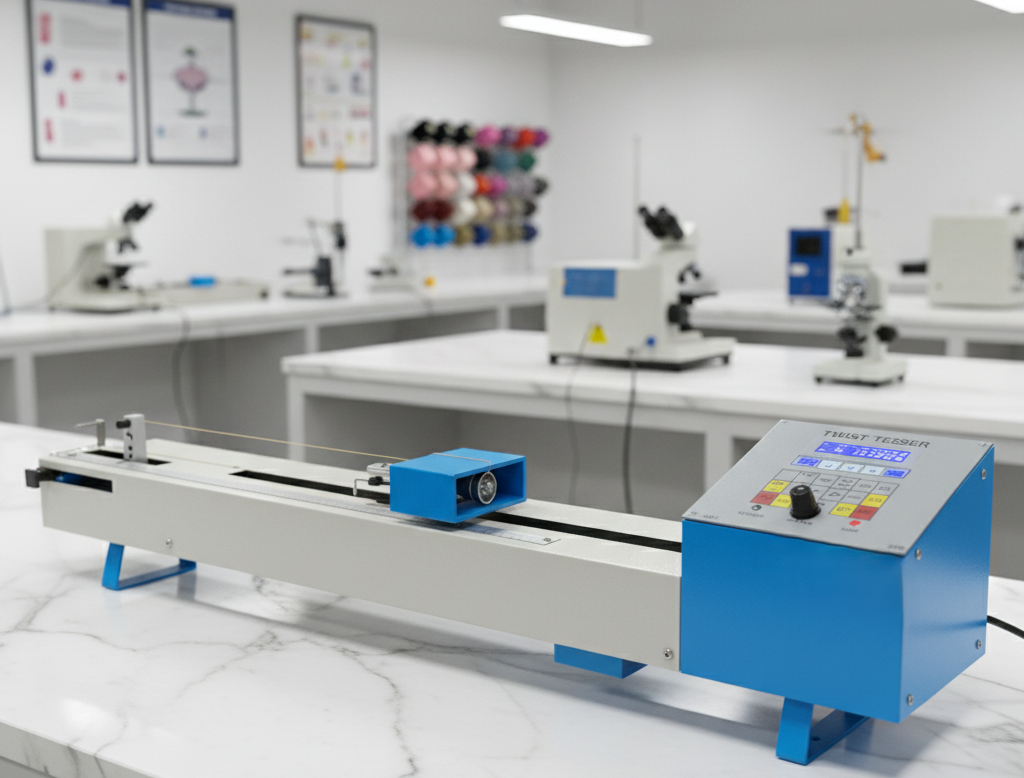
| TPI (Twist Per Inch) | Determines twist level in yarn | Twist Tester | ASTM D1422 / ISO 2061 |
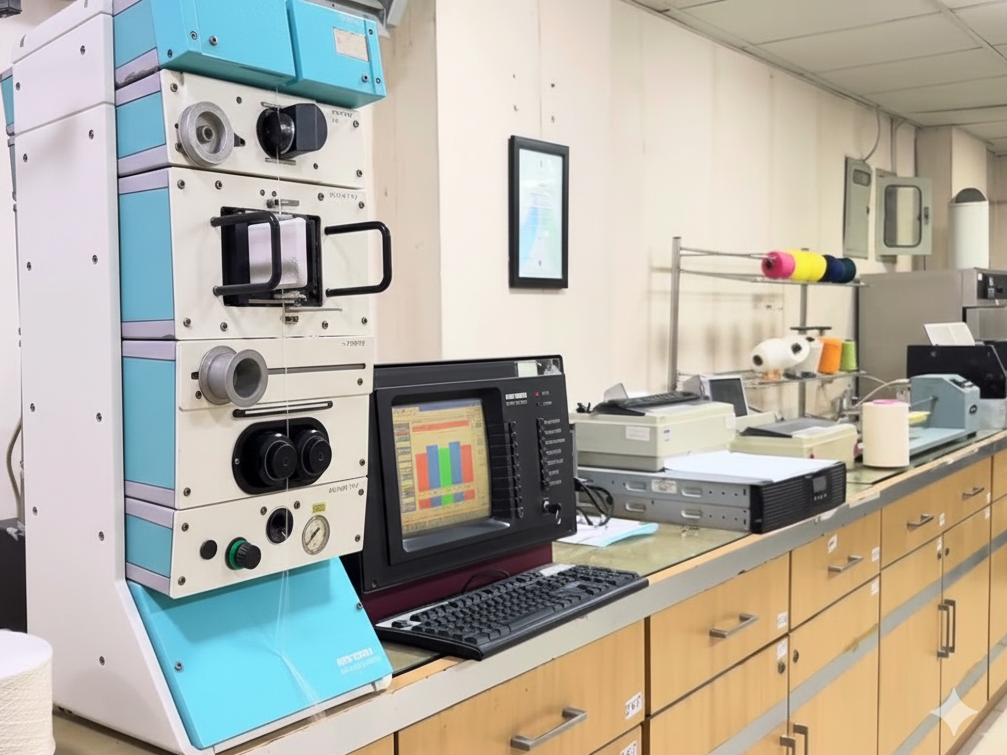
| Yarn Evenness (U%, CVm%) | Measures mass variation along yarn length | USTER Evenness Tester (UT5/UT6) | ASTM D1425 / ISO 16549 |
| Thick Places (+50%) | Identifies diameter variations | USTER Evenness Tester | ASTM D1425 / ISO 16549 |
| Thin Places (–50%) | Detects weak yarn sections | USTER Evenness Tester | ASTM D1425 / ISO 16549 |
| Neps (+200%) | Measures fibre entanglements | USTER Evenness Tester | ASTM D1425 / ISO 16549 |
| Slubs | Detects extreme thick places | USTER Evenness Tester / Visual Board | In‑house / ISO Guidelines |
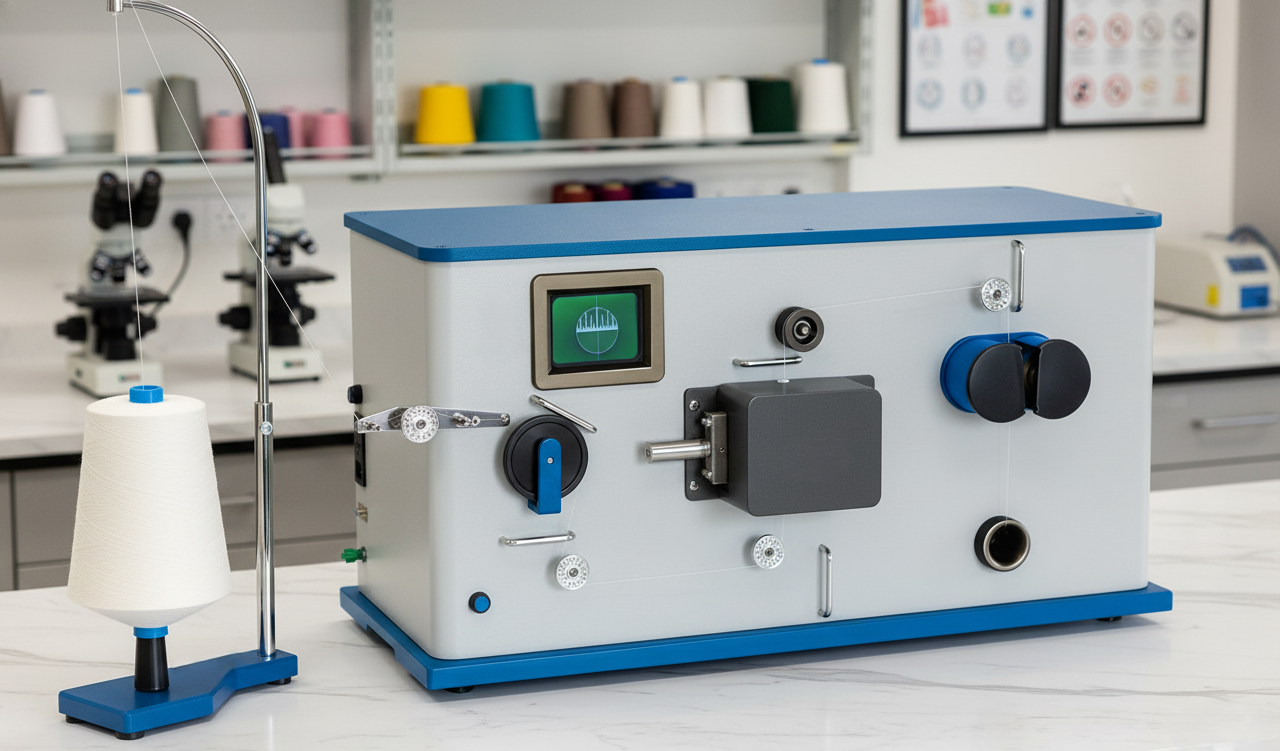
| Yarn Hairiness (H Index) | Measures protruding fibre ends | USTER Hairiness Tester | ASTM D5647 |
| CSP (Count Strength Product) | Indicates overall yarn quality | Calculation (Count × Strength) | Industry Practice |
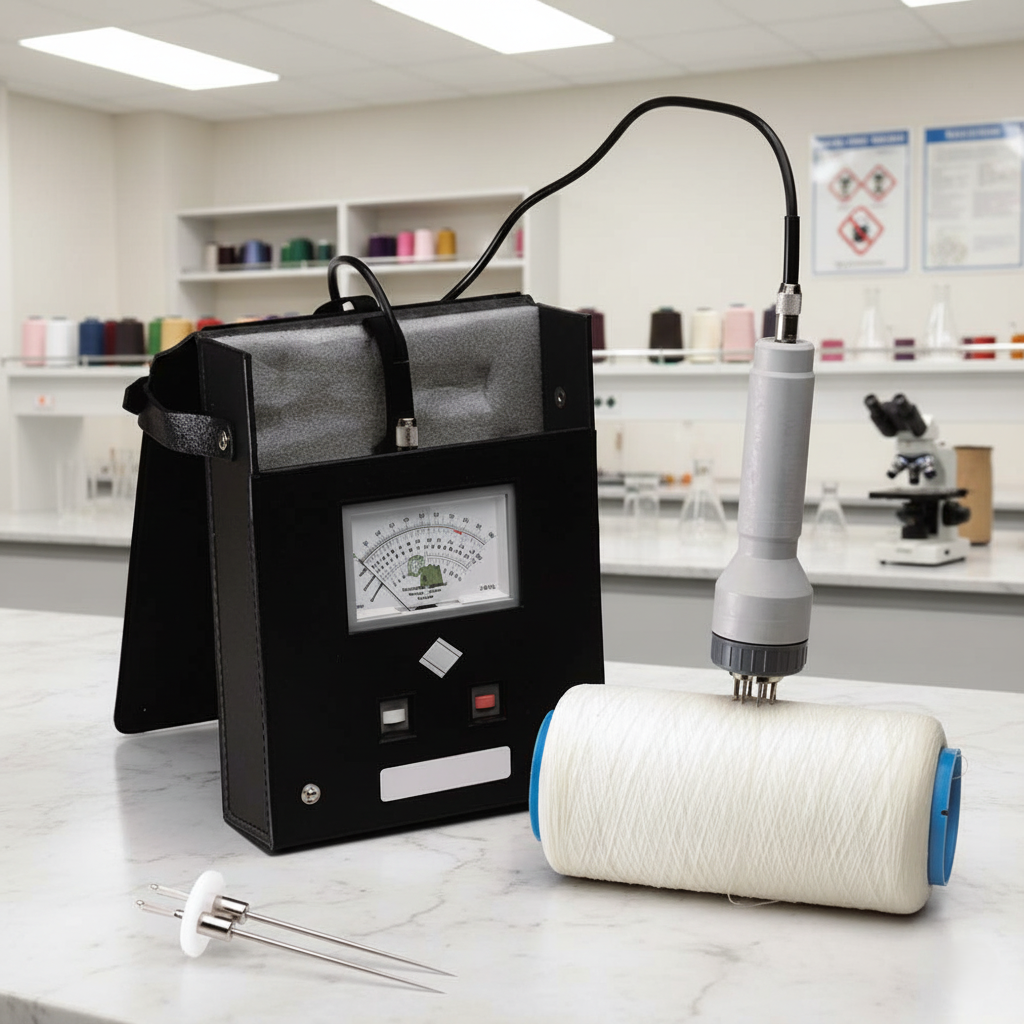
| Moisture Content (MC) | Measures moisture percentage in yarn | Moisture Analyzer / Conditioning Oven | ASTM D2495 / ISO 6741 |
| fibre Composition | Identifies fibre type and blend ratio | Microscope, FTIR, Chemical Lab | AATCC 20 / ISO 1833 |
| Foreign Matter Contamination | Detects PP, jute, colored fibres | USTER Quantum / Visual Inspection | In‑house / ISO Yarn Grading |
| Snarling Tendency | Assesses twist balance | Snarl Tester / Knitting Trial | In‑house Method |
| Visual Appearance | Checks overall yarn quality | Yarn Board | ASTM D2255 |
Yarn Count
Yarn countindicates the fineness or thickness of yarn and plays a major role in determining fabric GSM, handle and appearance.
It is expressed using systems such as Ne (English count), Tex or Denier.
Why it matters
- Ensures uniform fabric construction
- Controls fabric weight and texture
❌ Impact of poor control
- Uneven fabric surface
- Barre effect
- Shade variation after dyeing
Testing Machine / Tools
- Wrap Reel
- Electronic Balance
Test Method / Standard
- ASTM D1059
- ISO 2060
Single Yarn Strength / Tenacity
Single yarn strength measures the force required to break a yarn, expressed in cN/tex or grams/denier.
It reflects the yarn’s ability to withstand stresses during processing.
Higher strength leads to:
- Fewer end breaks
- Higher machine efficiency
- Improved fabric durability
Testing Machine
- Single Yarn Strength Tester
(Instron, TensoLab, Uster Tensorapid)
Test Method / Standard
- ASTM D2256
- ISO 2062
TPI (Twist Per Inch)
TPI refers to the number of twists inserted per inch of yarn.
It directly affects yarn strength, compactness and hairiness.
- Low TPI → Soft feel, higher hairiness
- High TPI → Higher strength, harsher handle
Balanced TPI is critical for optimal performance, comfort and appearance.
Testing Machine
- Twist Tester (Direct Count Method)
Test Method / Standard
- ASTM D1422
- ISO 2061
Thick & Thin Places (Yarn Evenness)
These are diameter variations along the yarn length, commonly measured using evenness testers.
Definitions
- Thin Places: Yarn diameter >50% thinner than normal
- Thick Places: Yarn diameter >50% thicker than normal
- Slubs: Diameter >150% thicker than normal
- Neps: Small entangled fibre clusters (50–150% thicker)
Impact on fabric
- Fabric streaks and visual defects
- Weak points in fabric
- Poor dye uniformity
Testing Machine
- USTER Evenness Tester (UT5 / UT6)
Test Method / Standard
- ASTM D1425
- ISO 16549
Composition
Composition identifies the fibre content and blend ratio (e.g., 100% Cotton, CVC 60/40, PC 50/50).
Importance
- Ensures buyer compliance
- Meets legal labeling requirements
❌ Incorrect composition may result in buyer rejection or legal issues.
Testing Equipment
- Microscope
- Chemical Analysis Lab / FTIR
Test Method / Standard
- AATCC 20 / 20A
- ISO 1833 (All Parts)
CSP (Count Strength Product)
CSP = Yarn Count × Yarn Strength, CSP is a widely used indicator of overall cotton yarn quality.
Benefits
- Higher CSP indicates better spinning performance
- Helps buyers and spinners compare yarn lots objectively
Testing Requirement
- Yarn Count Test
- Single Yarn Strength Test
- Mathematical Calculation
Standard Practice
- Industry / Buyer Standard (No separate ISO/ASTM)
Moisture Content (MC)
Moisture content is the amount of moisture present in yarn, expressed as a percentage of dry weight.
Proper moisture level
- Improves yarn strength
- Reduces static electricity
- Prevents brittleness during processing
Testing Machine
- Moisture Analyzer
- Conditioning Oven
Test Method / Standard
- ASTM D2495
- ISO 6741
Yarn Hairiness (H Index)
The hairiness index measures the number and length of fibre ends protruding from the yarn surface, typically tested using an USTER Hairiness Tester.
- Higher H value = More protruding fibres
Excessive hairiness causes
- Pilling
- Linting
- Poor fabric appearance
Testing Machine
- USTER Hairiness Tester
Test Method / Standard
- ASTM D5647
- USTER Statistics Reference
Yarn Defects
Yarn defects are imperfections that occur during spinning, handling, or storage, which can negatively impact processing efficiency, fabric quality, and the final garment appearance. Even small irregularities in yarn can cause major issues such as knitting faults, dyeing problems, machine stoppages, and product rejection. Therefore, identifying and controlling yarn defects is essential for maintaining consistent quality throughout production.
Twist Variation
Twist is responsible for holding fibres together. Any imbalance affects yarn strength and appearance.
- Over‑twist: Yarn becomes hard, stiff, and brittle
- Under‑twist: Yarn becomes weak, loose, and hairy
Impact:
- Uneven strength
- Poor dye absorption
- Increased breakage during processing
Count Variation
Count variation refers to uneven yarn thickness along its length.
Includes:
- Thick places
- Thin places
- Neps
- Slubs
Impact:
- Fabric streaks (barre effect)
- Holes or weak areas
- Uneven appearance
Foreign Matter Contamination
This is one of the most critical defects, often impossible to correct later.
Common contaminants:
- Polypropylene (PP) fibres
- Jute, plastic, seed coat fragments
- Colored fibres
Impact:
- Visible defects after dyeing
- High rejection rates
- Poor fabric aesthetics
Stains
Stains occur due to contamination during handling or processing.
Types:
- Oil and grease
- Rust
- Dirt or dust
Impact:
- Permanent dye defects
- Shade inconsistency
- Garment rejection
Hairy Yarn (Grade 5)
Hairy yarn has excessive fibre ends protruding from the surface.
Impact:
- Fuzzy fabric appearance
- High pilling tendency
- Poor dye uniformity
Snarls (Grade 3)
Snarls occur when yarn twists onto itself forming loops.
Causes:
- Improper twist balance
- Tension issues
Impact:
- Knitting defects
- Machine stoppages
- Yarn breakage
Yarn Breakage (Frequent End Breaks)
This defect occurs when yarn breaks frequently during processing.
Causes:
- Weak yarn
- Uneven twist
- Poor fibre quality
Impact:
- Production stoppages
- Reduced machine efficiency
- Increased waste
Uneven Yarn (Irregularity / CV%)
Variation in mass along the yarn length leading to uneven structure.
Impact:
- Fabric defects (barre, streaks)
- Poor appearance and feel
- Inconsistent dyeing
Thick/Thin Faults (Classified Defects)
More specific form of count variation measured in yarn testing.
- Thick faults → bulky spots
- Thin faults → weak areas
Impact:
- Weak fabric zones
- Breakage during knitting or weaving
Neps (Excessive Nep Formation)
Small entangled fibre knots within the yarn.
Impact:
- Specky appearance after dyeing
- Rough fabric surface
- Poor finishing quality
Yarn Contamination (Color Mixing)
Presence of fibres of different color shade within the yarn.
Impact:
- White/colored spots after dyeing
- Major defect in export garments
- Often leads to rejection
Fly and Lint Issues
Loose fibres released during yarn handling.
Impact:
- Machine contamination
- Fabric surface defects
- Cleanliness issues in production
Poor Winding Defects
Improper winding leads to issues in package formation.
Types:
- Hard packages
- Soft packages
- Uneven winding
Impact:
- Tension problems during knitting/weaving
- Yarn breakage
- Inconsistent feeding
Shade Variation in Yarn
Variation in color in dyed yarn.
Impact:
- Fabric shade variation
- Stripe or barre effect
- Rejection in quality control
High Imperfections (IPI – Thick + Thin + Nep count)
High imperfection index indicates poor yarn quality.
Impact:
- Increased defects in fabric
- Reduced machine performance
- Poor final garment appearance
Visual Defects Observed in Yarn Boards
Yarn boards are used for visual inspection to evaluate:
- Evenness – Uniformity of yarn thickness throughout its length
- Hairiness – Presence of protruding fibres on the yarn surface
- Contamination – Presence of foreign fibres or particles
- Count variation – Light and thick places in the yarn
- Overall appearance – General visual quality and consistency
To standardize evaluation, yarn defects observed on boards are graded using a scale from 1 to 7:
Lower grades (1–2): Good quality with minimal defects
Middle grades (3–4): Moderate variations
Higher grades (5–7): Severe defects and poor yarn quality
Summary
Yarn testing is an important step in textile manufacturing because it ensures consistency, performance and standards before the yarn moves on to the next stages of knitting or weaving. This enables the manufacturer to monitor key parameters in detail and anticipate the production of the yarn and the quality of the final fabric.
Count, strength, twist (TPI), CSP, evenness, moisture and hairiness are important characteristics that largely determine the performance of yarn. However, at the same time, defects such as twist variation, contamination, stains and snarls can create serious problems in the fabric appearance, dyeing and garment quality if not controlled at an early stage.