Fabric compacting is a finishing process used mainly on knitted fabrics, especially cotton and cotton blends, to reduce shrinkage, control GSM and improve fabric hand feel. It is one of the most important processes before cutting to ensure the stability of the size in garment making.
So, what’s the point of compacting?
At its core, it’s about control.
- Reduce lengthwise shrinkage
- Lock in fabric dimensions
- Smooth out the surface a bit
- Hit the shrinkage limits buyers demand
Nothing fancy on the surface. But pretty critical if you don’t want surprises later.
How it actually works
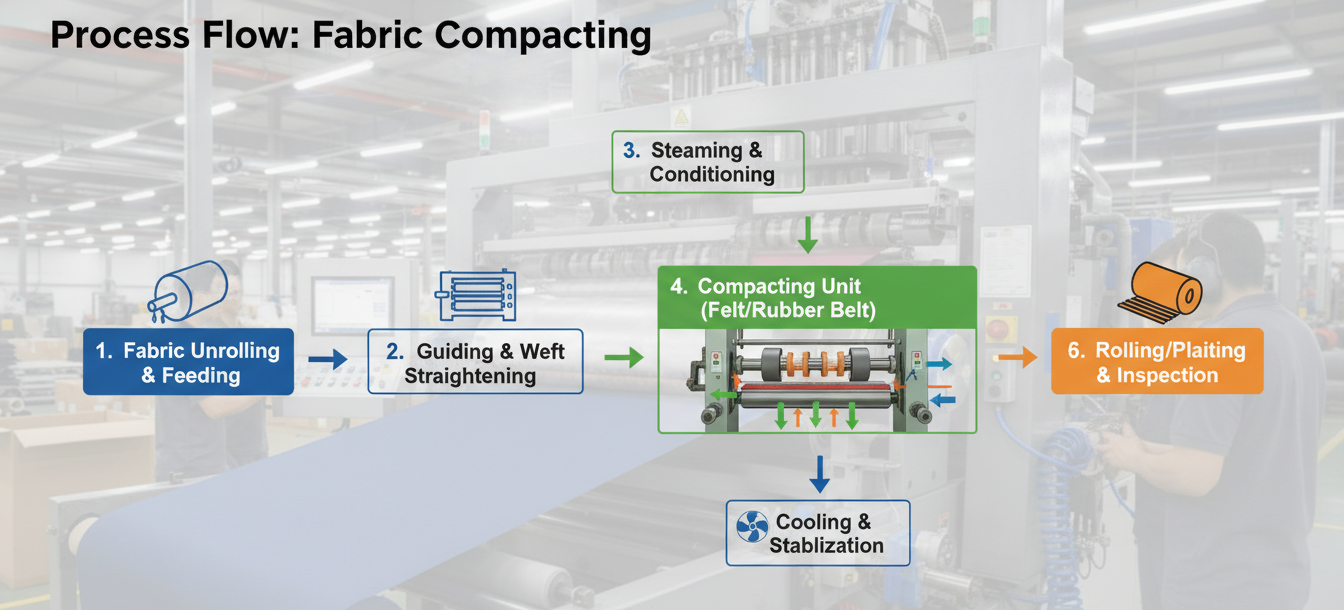
Here’s the rough flow—simple, but very deliberate:
The fabric gets slightly damp. Steam or water does the job.
Then it runs over heated rollers and through a rubber belt system.
And under all that, it’s gently—but firmly—compressed lengthwise.
That’s where the magic happens.
The compression relaxes the internal stress built into the fabric structure. It’s like pre-shrinking it under controlled conditions, so when the customer washes it later, it stays put (more or less).
Process flow of compacting (in plain terms)
- Moistening the fabric
- Heating
- Mechanical compression
- Stabilization
Short sequence. Big impact.
Shrinkage behavior—why compacting matters
Not all fabrics behave the same.
- Loosely knitted or woven structures? They shrink more. No surprise there.
- Tightly constructed fabrics? Already more stable. Less movement.
Compacting kind of levels the field. It evens things out and stabilizes the structure, so you’re not guessing how the fabric will act later.
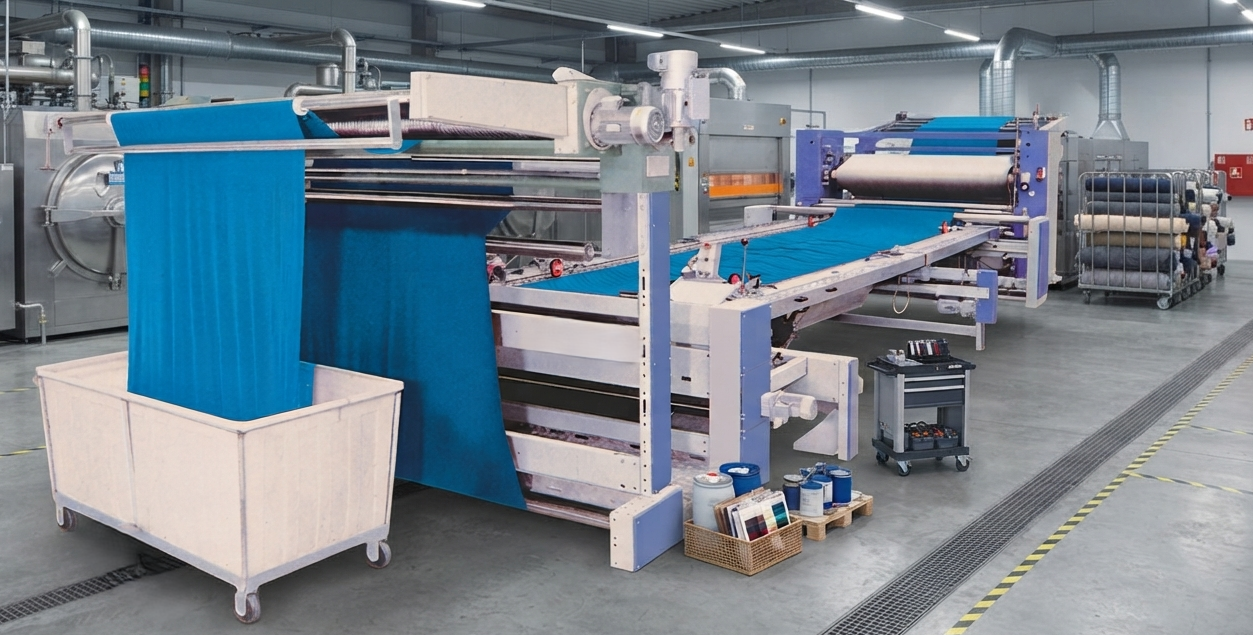
Types of Compacting Machines
Different setups, depending on the need.
Single Felt Compactor
One heated drum. One felt blanket. Straightforward. Used for basic compaction jobs.
Double Felt Compactor (most commonly used)
Two cylinders, two felt blankets. More pressure, more control. Typically achieves around 3–5% controlled shrinkage, which is what most buyers are looking for.
Open Width Compactor
This one’s used when you’re working with open-width fabric instead of tubular. Pretty common for higher-end products—T-shirts, polos, rib, interlock.
Tube (Tubular) Compactor
Made just for tubular knits. Does the job, but production output is usually lower compared to open-width systems.
Key Output Parameters After Compacting
Parameter Typical Range Shrinkage Within ±5% or as buyer requirement GSM Control ±3% tolerance Width Control Consistent, uniform Fabric Hand Feel Softer and smoother Skew/Torque Reduced
| Parameter | Typical Range |
|---|---|
| Shrinkage | Within ±5% or as buyer requirement |
| GSM Control | ±3% tolerance |
| Width Control | Consistent, uniform |
| Fabric Hand Feel | Softer and smoother |
| Skew/Torque | Reduced |
Benefits of Fabric Compacting
A few real, practical benefits:
Dimensional stability
This is the big one. Fabrics don’t suddenly shrink after washing. Garments hold their size.
Better GSM control
Helps hit target GSM more accurately. Less rework.
Improved hand feel
Fabric just feels nicer. Softer. More comfortable.
Cleaner surface
Spirality and bowing are reduced. Crease marks? Smoothed out.
Easier cutting
Stable fabric behaves better on the cutting table. Fewer distortions. Less waste.
Key Machine Settings to Control
Parameter Role Overfeed (%) Controls shrinkage & GSM Cylinder Temperature Softens fabric for compaction Blanket Tension Determines compaction efficiency Fabric Speed Higher speed → lower compaction Steam / Moisture Helps relaxation of loops
| Parameter | Role |
|---|---|
| Overfeed (%) | Controls shrinkage & GSM |
| Cylinder Temperature | Softens fabric for compaction |
| Blanket Tension | Determines compaction efficiency |
| Fabric Speed | Higher speed → lower compaction |
| Steam / Moisture | Helps relaxation of loops |
Common Defects in Compacting & Causes
Defect Likely Cause High shrinkage Low overfeed, low pressure, low temperature Uneven GSM Uneven feeding or inconsistent tension Crease marks Wrinkles before compaction zone Spirality Uneven fabric feeding or knitting issues Shade variation Excess heat or moisture imbalance
| Defect | Likely Cause |
|---|---|
| High shrinkage | Low overfeed, low pressure, low temperature |
| Uneven GSM | Uneven feeding or inconsistent tension |
| Crease marks | Wrinkles before compaction zone |
| Spirality | Uneven fabric feeding or knitting issues |
| Shade variation | Excess heat or moisture imbalance |
Conclusion
At the end of the day, fabric compacting isn’t just another finishing step you tick off. It’s the one that makes sure everything stays where it should. Size, shape, feel—all of it.
Without it, even a well-made fabric can behave unpredictably once it reaches the customer. Shrinking, twisting, losing form. Not a great look.
Compacting brings things under control. It stabilizes the fabric, improves consistency and helps mills hit those tight buyer specs without constant rework. And honestly, it makes life easier later—during cutting, sewing and even after the garment is sold.
Simple process. Big impact.