What Is Textile?
Take a second and look down at what you're wearing right now. Maybe it's a cotton t-shirt, a wool sweater or a pair of jeans that have gone soft after a hundred washes. Now glance around the room. There's probably a curtain hanging by the window, a rug under your feet, a couch cushion within reach. Every single one of those things started life as something called a textile. It's one of those words we hear all the time but rarely stop to actually define, even though textiles are arguably as important to human civilization as fire, the wheel or written language.
So let's slow down and actually answer the question properly: what is textile, really? Where does the word come from, how are textiles made from start to finish, what are they made of and why do they matter so much to the way we live? This isn't going to be a dry dictionary entry. Textiles have a genuinely fascinating story, one that stretches back tens of thousands of years and touches everything from ancient trade routes to the exact factory process behind the shirt hanging in your closet right now.
Defining Textile: More Than Just Fabric
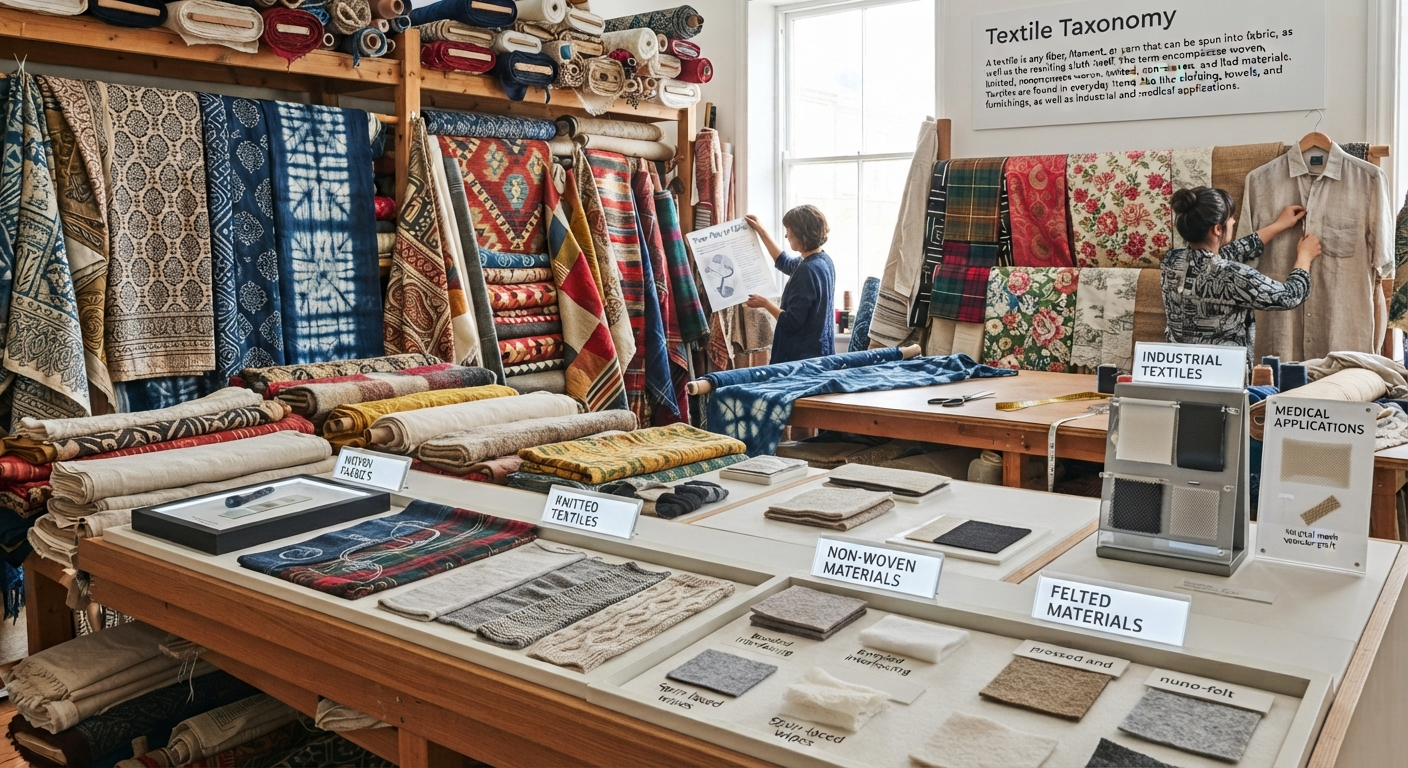
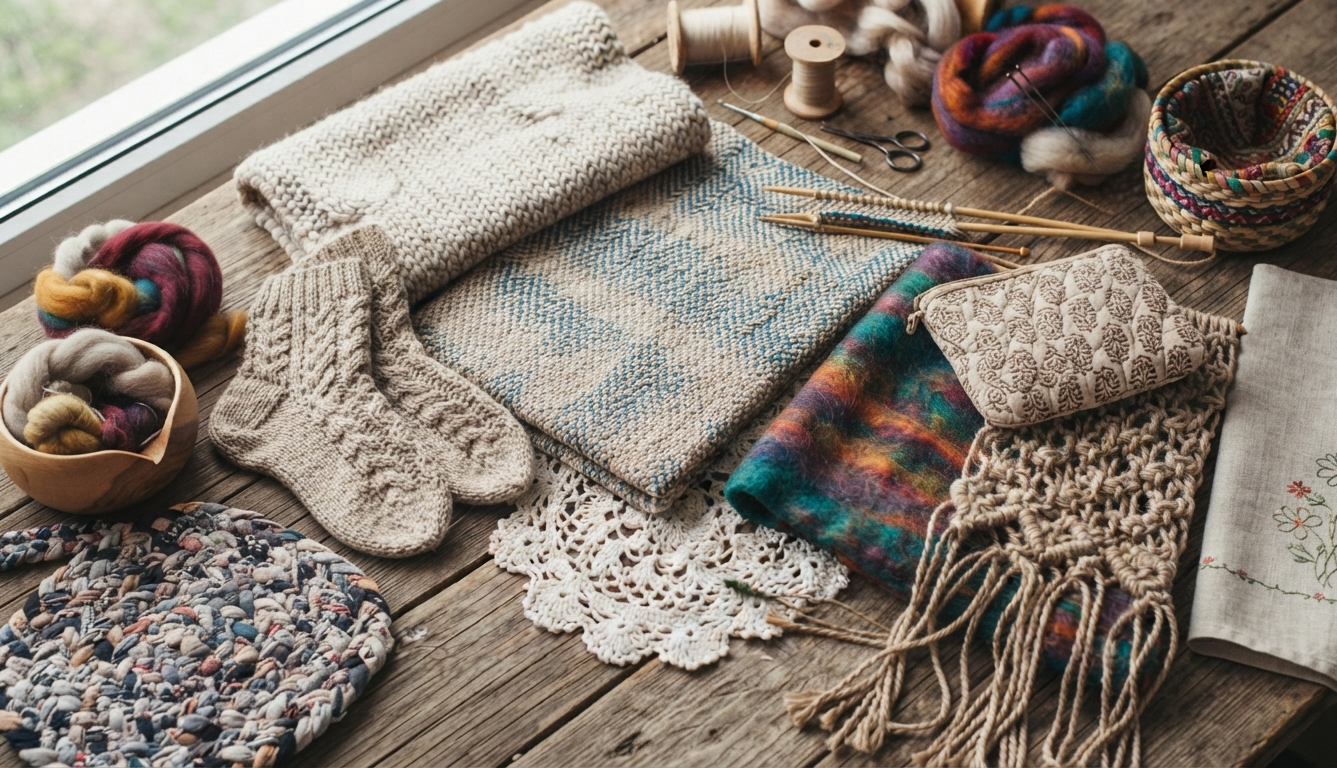
At its simplest, a textile is any material made by weaving, knitting, crocheting, knotting, felting or otherwise interlacing fibres together to create a flexible, usable material. The word itself comes from the Latin "textilis," which traces back to "texere," meaning "to weave." That root is worth sitting with for a moment, because it tells you something important: at its core, textile-making is about taking something thin, flexible and individually weak — a single strand of fibre — and combining it with countless others to create something strong, durable and useful.
A lot of people use "textile" and "fabric" interchangeably and honestly, in casual conversation that's fine. But if you want to be precise, there's a subtle distinction. Textile is the broader term. It refers to any fibre-based material, whether that's the raw yarn, the woven cloth, a knitted piece or even non-woven materials like felt. Fabric, on the other hand, usually refers specifically to the finished, flat material you'd use to make clothing, upholstery or other goods. Think of textile as the whole category and fabric as one of its most common products.
Textiles aren't limited to clothing, either, even though that's what most of us think of first.
- They show up in medicine as surgical gowns and wound dressings.
- They show up in construction as geotextiles that stabilize soil and prevent erosion.
- They're in your car as seatbelts, airbags and upholstery.
- They're in space, quite literally, as the materials that make up astronaut suits.
The scope of what counts as a textile is honestly much bigger than most people realize.
The Building Blocks: fibres
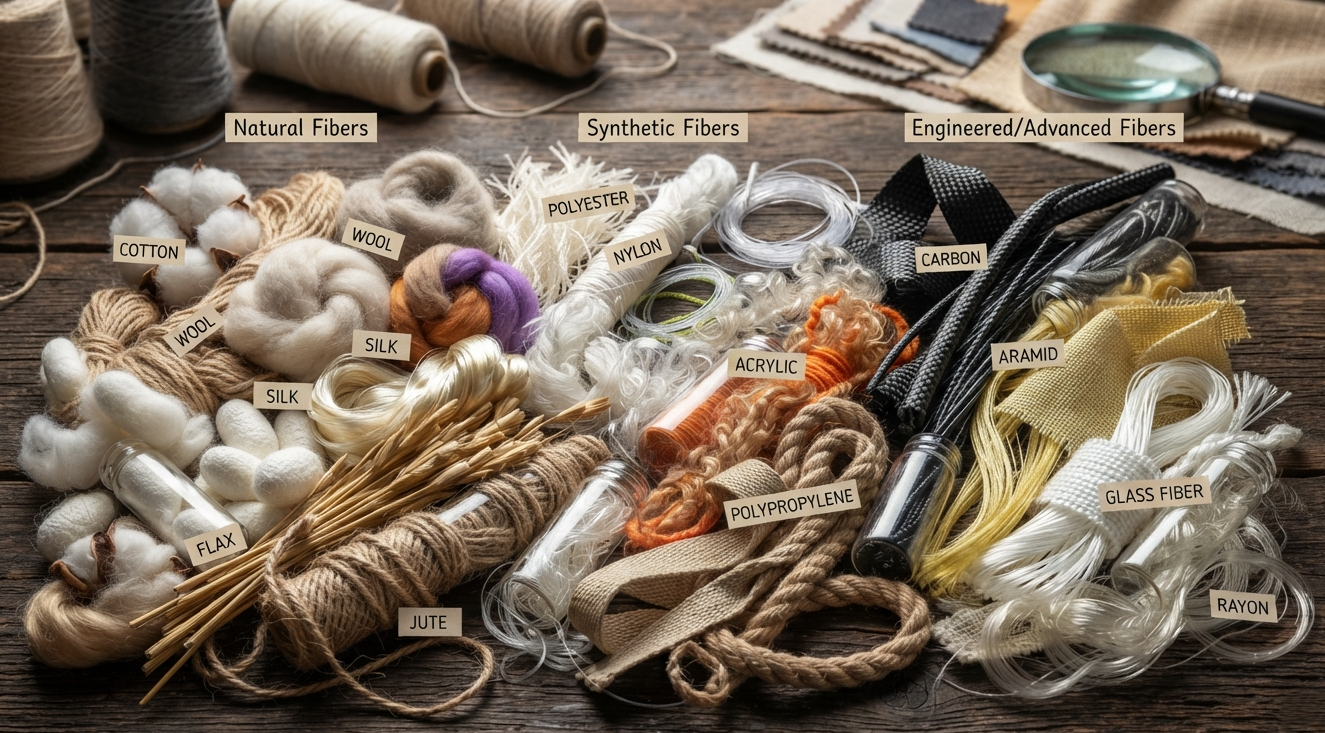
You can't talk about textiles without talking about fibres first, because fibres are the raw material everything else is built from. A fibre is a thin, thread-like strand of material and textiles are essentially fibres that have been processed, spun and interlaced into something larger. fibres generally fall into two broad camps: natural and synthetic (also called man-made).
Natural fibres
Natural fibres come from plants, animals or, in rarer cases, minerals. They've been used by humans since prehistoric times, long before anyone understood chemistry or had the ability to engineer materials from scratch.
- Cotton — the most familiar plant fibre, grown as a soft, fluffy boll around the seeds of the cotton plant. Once harvested and cleaned, it spins into yarn that's breathable, absorbent and comfortable against skin. Cultivated for thousands of years in the Indus Valley, ancient Egypt and Central America.
- Linen — made from the flax plant, actually older than cotton in documented use, with fibres dating back over 30,000 years. Cool, breathable and strong, though it wrinkles easily.
- Wool — comes from sheep (and related fibres from goats, alpacas and rabbits). A protein fibre that insulates well, resists moisture to a degree and has natural elasticity.
- Silk — spun by silkworms, specifically the larvae of the Bombyx mori moth, as they build their cocoons. The harvesting process, sericulture originated in China and was kept a closely guarded secret for centuries.
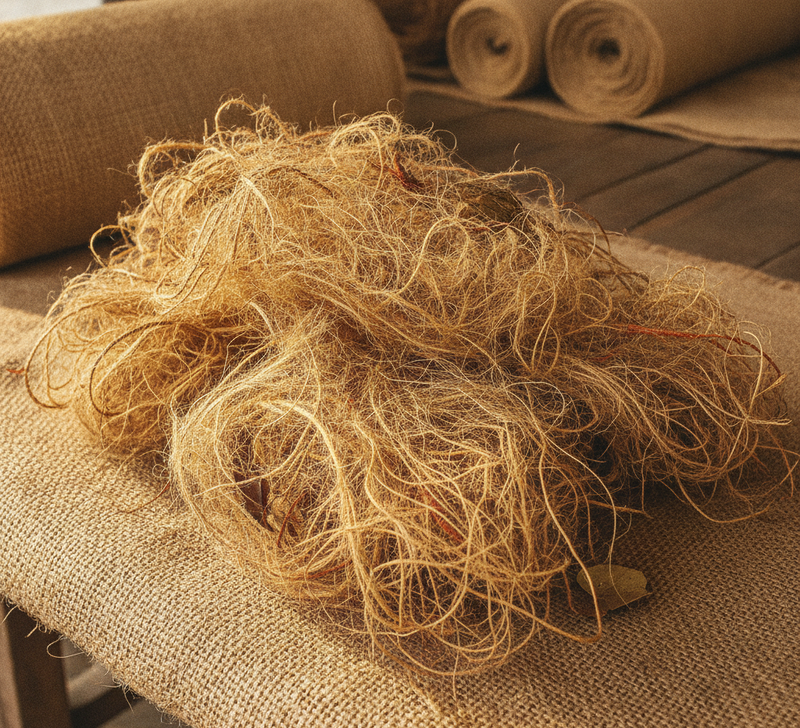
- Minor natural fibres — jute, hemp, ramie and others, each with a niche from burlap sacks to rope to specialty textiles.
Synthetic and Man-Made fibres
The 20th century changed textiles forever with the introduction of synthetic fibres, created through chemical processes rather than grown from plants or animals.
- Rayon — one of the first man-made fibres, created from processed wood pulp; sometimes called "semi-synthetic" since it starts from a natural material but needs heavy chemical processing.
- Nylon — introduced by DuPont in 1935, the first fully synthetic fibre made entirely from petrochemicals.
- Polyester — the single most widely produced fibre in the world today; durable, wrinkle-resistant and cheap to produce.
- Spandex (Lycra/elastane) — brought stretch into the picture, transforming activewear and fitted clothing.
Synthetic fibres tend to be cheaper, more consistent and more resistant to wrinkling and shrinking than natural ones. But they also come with real environmental downsides — they're derived from fossil fuels, they don't biodegrade the way natural fibres do and they shed microplastics into water systems every time they're washed. We'll come back to that tension later.
A Brief History of Textiles
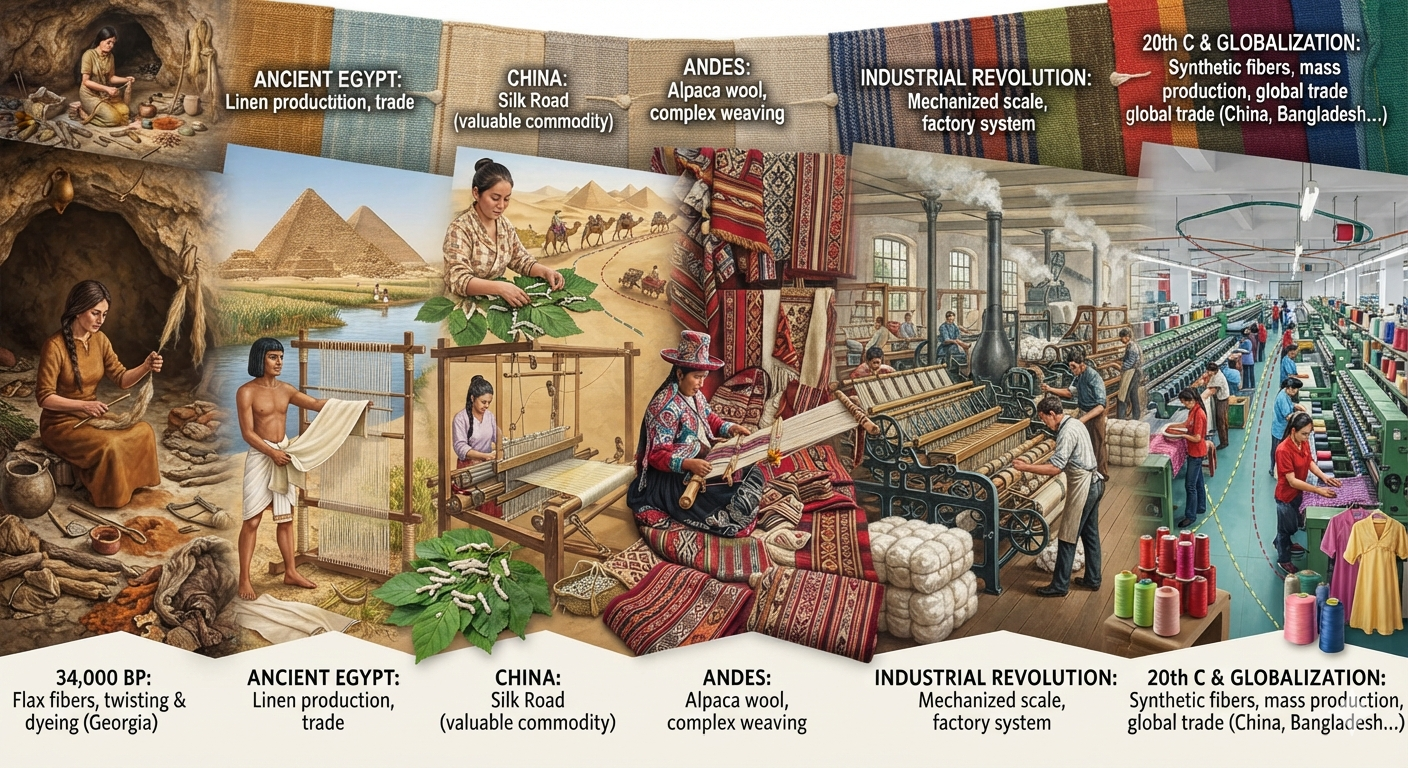
It's genuinely hard to overstate how central textiles have been to human development. The earliest evidence of textile production dates back an astonishing 34,000 years, based on flax fibres discovered in a cave in the Republic of Georgia that showed signs of twisting and dyeing. Long before agriculture, before permanent settlements, humans were already figuring out how to turn plant and animal fibres into usable material.
Ancient Egypt became famous for its linen production, using flax grown along the Nile for everything from burial wrappings to everyday clothing, prized enough to become a major Mediterranean trade commodity.
In China, the discovery of silk created one of history's most valuable trade goods — the Silk Road was literally named after this single textile.
In the Andes, civilizations developed sophisticated textile traditions using alpaca and llama wool, weaving patterns that carried cultural and record-keeping significance.
Then came the Industrial Revolution, impossible to separate from the story of textiles. Innovations like the spinning jenny, the power loom and the cotton gin transformed textile production from a slow, home-based craft into a mechanized industry capable of massive scale. This shift reshaped economies, drove urbanization, fueled colonial trade systems (including the deeply troubling role cotton played in the transatlantic slave trade) and laid the groundwork for the modern factory system.
The 20th century brought synthetic fibres into the mix and globalization later shifted textile manufacturing heavily toward countries like China, Bangladesh, Vietnam and India, where labor costs are lower — a shift that created its own complicated legacy of labor and safety concerns still being addressed today.
The Textile Process Flow: From Raw fibre to Finished Fabric
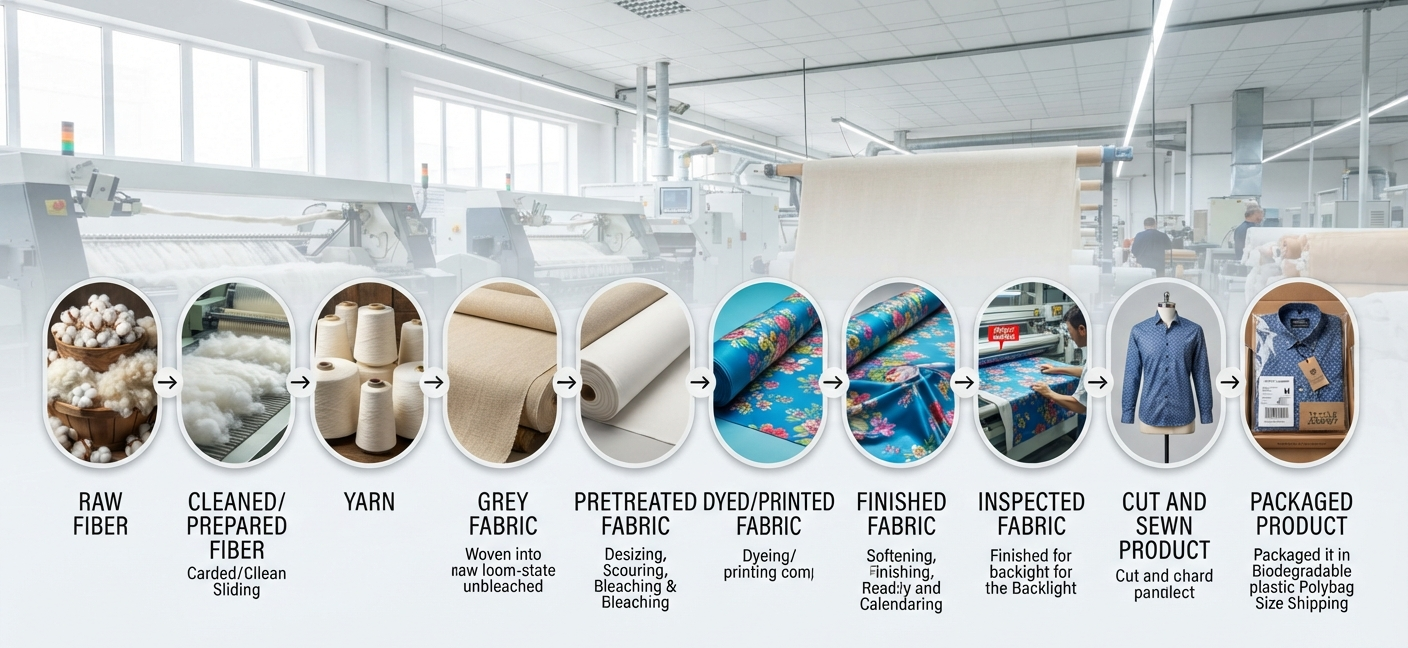
This is the heart of the matter. Understanding what a textile is really means understanding exactly how it's made — the full chain of industrial steps that transform a raw fibre into something you'd actually want to wear or use. The table below lays out the entire pipeline at a glance before we dig into each stage individually.
| Stage | What Happens | Primary Output |
|---|---|---|
| 1. fibre Production | Growing or synthesizing raw fibre | Raw fibre (cotton, wool, polyester chips, etc.) |
| 2. fibre Preparation | Cleaning, sorting, blending | Cleaned, aligned fibre |
| 3. Spinning | Twisting fibre into continuous strands | Yarn |
| 4. Fabric Formation | Weaving, knitting or bonding yarn/fibre | Grey (unfinished) fabric |
| 5. Pretreatment | Removing impurities, preparing fabric for color | Bleached, desized fabric |
| 6. Dyeing and Printing | Adding color and pattern | Colored/patterned fabric |
| 7. Finishing | Applying functional and aesthetic treatments | Finished fabric |
| 8. Quality Control | Inspecting for defects | Approved fabric |
| 9. Garment/Product Manufacturing | Cutting, sewing, assembling | Finished textile product |
| 10. Packaging and Distribution | Packing and shipping | Product delivered to market |
Now let's walk through each of these stages properly.
Stage 1: fibre Production
Natural fibres are grown or harvested — cotton is picked once bolls mature, wool is sheared once a year, silk is carefully harvested from cocoons before the moth emerges and damages the thread and flax for linen is pulled from the ground (not cut) to keep the fibre inside the stalk as long as possible.
Synthetic fibres are manufactured chemically. Polyester and nylon, derived from petrochemicals, go through melt spinning, where molten polymer is forced through tiny holes in a device called a spinneret, cooling into fine continuous filaments as it emerges.
- Natural fibres vary in quality depending on climate, soil and harvesting conditions.
- Synthetic fibres are far more uniform since they're engineered under controlled conditions.
- Natural fibre production is seasonal and agricultural; synthetic production is continuous and industrial.
- Natural fibres generally require more water and land; synthetic fibres rely more on fossil fuel inputs.
Stage 2: fibre Preparation
Raw fibre isn't ready to be spun into yarn straight away — it needs cleaning and preparation first.
| fibre Type | Preparation Steps | Purpose |
|---|---|---|
| Cotton | Ginning → Carding → Combing (optional) | Remove seeds/debris, align fibres, improve smoothness |
| Wool | Scouring → Carding → Combing (optional) | Remove grease/dirt, align fibres |
| Silk | Degumming | Remove sericin (natural gum) coating |
| Synthetic | Cutting to staple length, blending | Prepare for spinning or direct use as filament |
For cotton, ginning separates the fluffy fibre from seeds and plant debris before it's baled and shipped to a spinning mill, where carding combs the fibres, removes remaining impurities and aligns them in a roughly parallel direction. Higher-quality yarns also go through combing, which removes shorter fibres for a smoother, stronger result. For wool, scouring washes away lanolin, dirt and sweat residue before carding does the same alignment job. Synthetic fibres usually skip most of this since they're produced clean and uniform from the start.
Stage 3: Spinning
Spinning is where individual fibres become yarn and it's one of the oldest textile technologies in human history, dating back tens of thousands of years to hand spindles and later spinning wheels. Modern industrial spinning happens on high-speed machines, but the principle hasn't changed: fibres are drawn out and twisted together and that twist creates enough friction and cohesion to hold the strand together.
- Ring spinning – the traditional, most widely used method; strong, high-quality yarn but relatively slower.
- Rotor (open-end) spinning – faster and cheaper, producing slightly bulkier yarn, often used for lower-cost fabrics.
- Air-jet spinning – very high-speed production, mainly for certain synthetic and blended yarns.
- Filament spinning – used for synthetic fibres like polyester and nylon, extruding continuous filaments rather than twisting short fibres.
Once spun, yarn is wound onto cones or bobbins and may undergo twisting (combining strands for strength) or texturizing (adding bulk or stretch, common with synthetics).
Stage 4: Fabric Formation
This is where yarn actually becomes fabric and there are three main routes.
Weaving interlaces two sets of yarn at right angles on a loom — the warp (lengthwise, held under tension) and the weft (crosswise). Different weave structures create fabrics with distinct textures and properties.
| Weave Type | Structure | Common Uses |
|---|---|---|
| Plain weave | Simple over-under pattern | Cotton shirting, muslin, canvas |
| Twill weave | Diagonal ribbing pattern | Denim, chino, gabardine |
| Satin weave | Long yarn floats create sheen | Bridal wear, lining fabric |
| Basket weave | Grouped yarns in plain weave pattern | Upholstery, heavier cottons |
Knitting interlocks loops of yarn rather than crossing two separate yarn sets, which is why knitted fabric naturally stretches more than woven fabric.
- Weft knitting – loops formed horizontally, row by row (t-shirts, sweaters); more flexible for garment production.
- Warp knitting – loops formed vertically using multiple yarns simultaneously; resists laddering, common in activewear and lingerie.
Non-woven fabric formation skips spinning and weaving entirely — fibres are bonded directly using heat, chemicals or mechanical pressure. This fast, inexpensive method is common for disposable products like medical masks, wipes, filtration materials and felt.
Stage 5: Pretreatment
Fresh off the loom or knitting machine, fabric is called grey fabric or greige goods and it's far from finished. It still contains natural impurities, sizing agents (starches applied to help yarn survive weaving), oils and waxes — none of which are compatible with even dyeing or a soft final feel.
- Desizing – removing the starch-based sizing agents applied before weaving.
- Scouring – removing natural waxes, oils and remaining impurities.
- Bleaching – whitening the fabric and preparing it to accept dye evenly.
- Mercerization- (cotton specifically) – treating fabric with caustic soda under tension, increasing strength, luster and dye absorption.
Skipping or rushing this stage causes uneven dyeing later, which is why it's treated as a non-negotiable step in quality-focused manufacturing.
Stage 6: Dyeing and Printing
Once fabric is properly prepared, color enters the picture. Dyeing can happen at several different points in the process and each approach has trade-offs.
| Dyeing Stage | Description | Trade-Off |
|---|---|---|
| fibre dyeing | fibre dyed before spinning | Excellent color consistency, expensive |
| Yarn dyeing | Yarn dyed before weaving/knitting | Good for stripes, checks, patterns |
| Piece (fabric) dyeing | Whole fabric dyed after formation | Most common, cost-effective, flexible |
| Garment dyeing | Finished garment dyed as one piece | Unique faded/washed effects, limited to simple garments |
Printing, unlike dyeing, applies color and pattern only to specific areas of the fabric surface.
- Screen printing – dye pushed through a mesh stencil; good for bold, simple designs.
- Digital printing – inkjet-based, allows highly detailed, photographic designs.
- Roller printing – engraved rollers apply continuous repeating patterns; efficient for mass production.
- Block printing – a traditional, often handmade method, still valued for artisanal and heritage textiles.
Stage 7: Finishing
Finishing is where fabric gets its final functional and aesthetic properties and it's often underappreciated even though it dramatically affects how a fabric performs and feels.
Mechanical finishing:
- Calendering – pressing fabric between heated rollers for a smooth, glossy surface.
- Brushing/napping – raising fibre ends for a soft, fuzzy texture (flannel, fleece).
- Sanforizing – controlled shrinkage treatment to prevent excessive shrinking after purchase.
Chemical finishing:
- Water repellency treatments for outdoor and rainwear fabrics.
- Flame retardant finishes for protective and industrial textiles.
- Anti-microbial treatments for medical and athletic fabrics.
- Wrinkle-resistant (easy-care) finishes for shirting and workwear.
- Softening treatments to improve hand-feel and comfort.
The specific finish applied depends entirely on the fabric's intended use — a hospital gown and a hiking jacket both start from the finishing stage but end up with completely different chemical treatments.
Stage 8: Quality Control
Quality control isn't a single step but a checkpoint running throughout the process, with particular emphasis after fabric formation and finishing. Inspectors check for:
- Weaving or knitting defects (holes, dropped stitches, misaligned yarns)
- Uneven dyeing or color mismatches
- Fabric weight and width consistency
- Strength and durability through tensile testing
- Colorfastness (resistance to fading from washing, light or rubbing)
Fabric that fails inspection is typically downgraded and sold at a lower price point, sometimes called "seconds," rather than being discarded outright.
Stage 9: Garment and Product Manufacturing
Once fabric passes quality control, it moves into actual product manufacturing:
- Pattern making – designing the shapes needed to construct the final product.
- Cutting – cutting fabric according to the pattern, often with automated cutting machines.
- Sewing/assembly – stitching pieces together into the finished item.
- Trimming and detailing – adding buttons, zippers, labels and other components.
- Pressing – giving the finished item its final shape and appearance.
This stage is highly labor-intensive compared to earlier stages, a major reason garment manufacturing has historically concentrated in regions with lower labor costs.
Stage 10: Packaging and Distribution
The final stage involves folding, tagging, packaging and shipping the finished product to retailers or directly to consumers — a part of the process reshaped considerably by e-commerce, with many manufacturers now handling smaller, more frequent shipments directly to fulfillment centers rather than large seasonal shipments to physical stores.
The Whole Chain in One Line
Raw fibre → Cleaned/Prepared fibre → Yarn → Grey Fabric → Pretreated Fabric → Dyed/Printed Fabric → Finished Fabric → Inspected Fabric → Cut and Sewn Product → Packaged Product
Each arrow in that chain represents a dedicated industrial process, often happening in entirely different factories, sometimes in different countries, before the raw fibre a farmer grew or a chemical plant synthesized finally becomes the shirt on your back or the sheet on your bed.
Types of Textiles and Their Uses
Textiles today are generally grouped by their end use and the range is wider than most people expect.
| Category | Examples | Notes |
|---|---|---|
| Apparel textiles | Shirting cotton, wool coats, stretch activewear blends | The most familiar category; chosen for comfort, drape and appearance |
| Household textiles | Bedding, towels, curtains, upholstery, carpets | Prioritize durability and comfort over drape |
| Industrial textiles | Conveyor belts, filtration fabrics, tarps, tire reinforcement | Engineered for strength and resistance, not appearance |
| Technical/smart textiles | Firefighting gear, Kevlar vests, moisture-wicking wear, sensor-embedded fabric | Rapidly growing frontier blending textiles and technology |
| Medical textiles | Surgical gowns, bandages, sutures, artificial blood vessels | Highly regulated, advancing quickly with materials science |
| Geotextiles | Soil stabilization fabric, erosion control, road reinforcement | Rarely noticed but essential to modern infrastructure |
Why Textiles Matter So Much
It's easy to take textiles for granted precisely because they're so ubiquitous. But textiles are one of the very few categories of human need that touch literally every person on the planet, every single day. Everyone wears clothing. Most people sleep under some kind of fabric. Textiles show up in transportation, healthcare, construction and technology.
Economically, the textile industry is enormous. It employs tens of millions of people worldwide, particularly in manufacturing hubs across South and Southeast Asia. For many developing economies, textile manufacturing has served as an entry point into industrialization, providing jobs and export revenue that help build broader economic infrastructure. That said, this growth has come with real costs — labor rights violations, unsafe working conditions and environmental degradation have all been persistent problems in parts of the global textile supply chain and they remain issues that consumers, companies and governments are still working to address.
Culturally, textiles carry meaning far beyond their practical function. Patterns, colors and weaving techniques often carry deep cultural and historical significance — think of Scottish tartans tied to specific clans, intricate Indian silk saris woven with regional techniques passed down for generations or West African kente cloth with patterns that carry symbolic meaning. Textiles are, in a very real sense, wearable history and identity.
The Environmental Question
No honest discussion of textiles today can avoid talking about sustainability, because the industry has a genuinely significant environmental footprint. Textile production is water-intensive — growing cotton alone requires enormous amounts of water and dyeing processes can generate polluted wastewater if not properly managed. Synthetic fibres are derived from petroleum and shed microplastics with every wash, which end up in oceans and waterways. The rise of "fast fashion" — cheap, trend-driven clothing produced and discarded at rapid speed — has intensified these problems considerably, with garments often worn only a handful of times before being thrown away.
The good news is that the industry is responding, even if slowly and unevenly:
- Recycled polyester, made from plastic bottles or reclaimed textile waste, is becoming more common.
- Organic cotton farming reduces pesticide use.
- Innovative materials are emerging from unexpected sources — fabric made from pineapple leaf fibres, mushroom-based leather alternatives and fibres made from recycled ocean plastic.
- Circular design principles are being adopted by some brands, creating clothing meant to be recycled or biodegraded rather than landfilled.
Whether these innovations can scale fast enough to meaningfully shift an industry as massive as global textile manufacturing is still an open question, but it's worth noting that a fabric made from recycled fibre can still be dyed using water-polluting processes or finished with harmful chemicals if the later stages of the process flow aren't addressed too — which is exactly why sustainability has to be tackled across the entire chain, not just the fibre stage.
Looking Ahead
The future of textiles is likely to be shaped by a few converging forces. Sustainability pressures, from both consumers and regulators, are pushing manufacturers toward more responsible sourcing and production methods. Technology is enabling entirely new categories of "smart" textiles that blur the line between clothing and electronics. And automation is changing how and where textiles are manufactured, potentially reshaping the global labor patterns that have defined the industry for decades.
At the same time, some of the oldest textile traditions are experiencing a genuine revival. Handwoven fabrics, natural dyeing techniques and artisanal craftsmanship are being valued again, partly as a reaction against mass production and partly because people are rediscovering the quality and character that comes from slower, more intentional methods.
Bringing It All Together
So, what is textile? At the most basic level, it's fibre transformed into something usable through weaving, knitting or bonding — and getting there involves a genuinely long chain of production: growing or synthesizing fibre, cleaning and spinning it into yarn, forming that yarn into fabric, pretreating and coloring it, finishing it for its intended purpose, inspecting it and finally cutting and sewing it into something you'd actually use.
That simple definition barely scratches the surface of what textiles actually represent, though. They're one of humanity's oldest technologies, dating back tens of thousands of years. They're an enormous global industry that touches the lives of billions of people, for better and sometimes for worse. They're a canvas for cultural expression and identity. And increasingly, they're a frontier for technological innovation, from smart fabrics to sustainable materials that didn't exist a decade ago.
Next time you put on a shirt, sit on a couch or wrap yourself in a blanket, it might be worth pausing for a second to think about the incredibly long chain of human ingenuity behind that simple piece of fabric — from someone twisting fibre into thread thousands of years ago, all the way to the modern factory or workshop where your particular textile was made. It's a story that's been unfolding for tens of thousands of years and it's still being written today.