Classification of Woven Fabrics (Based on Construction)
Walk into any fabric store or even just check the tag on your own shirt and you'll see words like twill, satin, dobby or jacquard thrown around like everyone should already know what they mean. Most of us don't and that's fine. These words sound complicated, but the idea behind them is actually pretty simple once someone breaks it down.
Woven fabric is made by crossing threads over and under each other, the lengthwise threads are called the warp and the crosswise threads are called the weft. How those threads cross, tight and even, diagonal or spaced out and floating, decides what kind of fabric you end up with. Change that one thing, the crossing pattern and you can go from a stiff canvas to a soft, silky satin to a fancy patterned brocade.
This guide walks through the whole picture, starting from the three basic weaves that everything else is built on, moving into the more creative variations and ending with the decorative weaves that focus more on looks than anything else. By the end, fabric labels should feel a lot less like a foreign language and more like something you can actually read and understand.
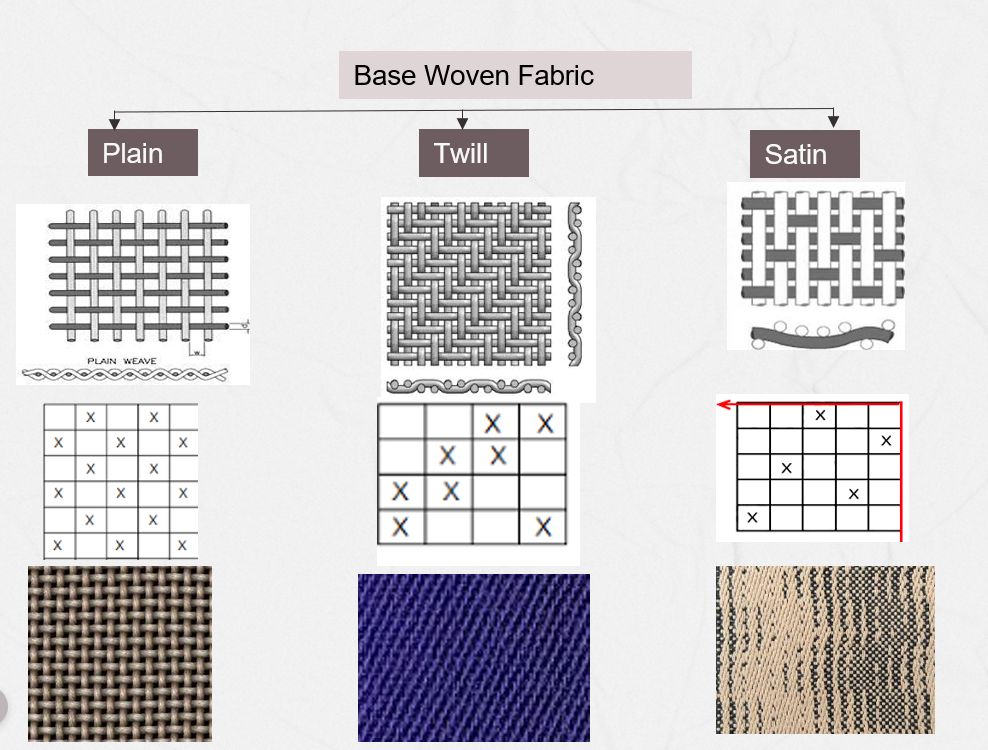
If you look closely at any woven fabric, no matter how fancy it seems, you'll find it all comes from just three basic weaves. That's it. Only three. But these three simple patterns are the starting point for almost every woven fabric you've ever touched.
The three basic weaves are:
- Plain Weave
- Twill Weave
- Satin Weave
Everything else, all the fancy fabrics with patterns and textures, are built on top of these three. Once you understand these basics, the rest starts to make sense pretty fast.
Plain Weave
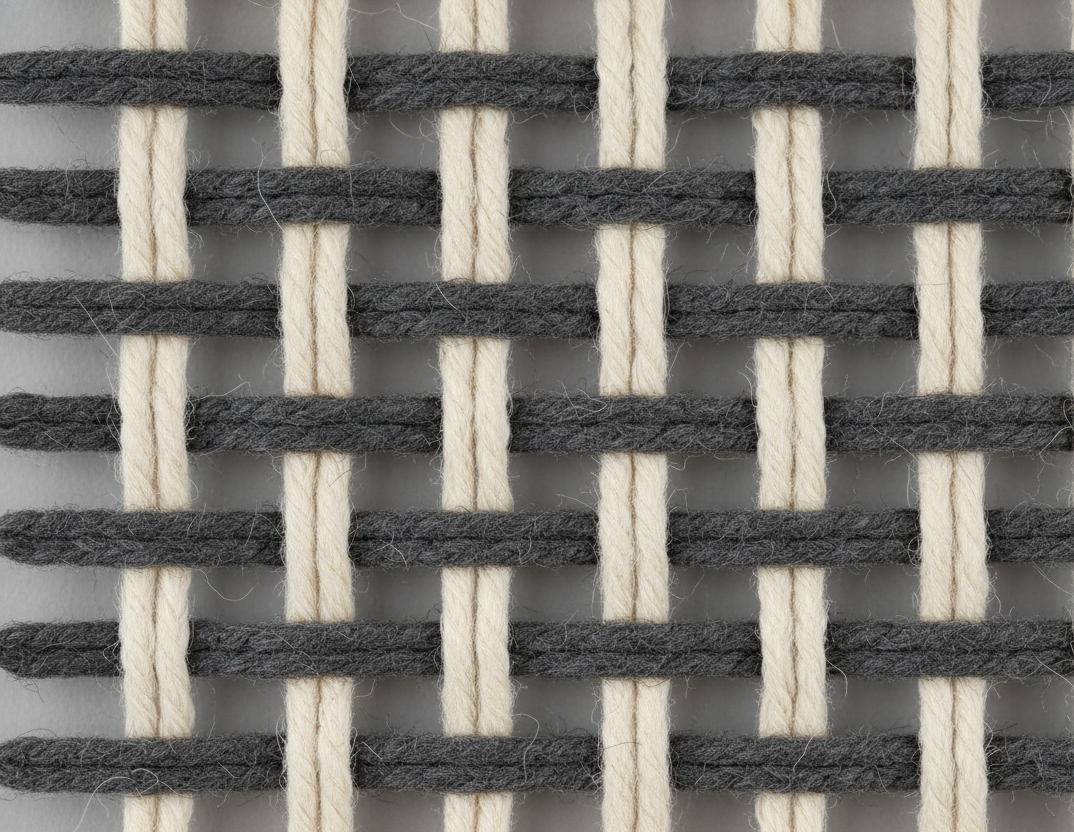
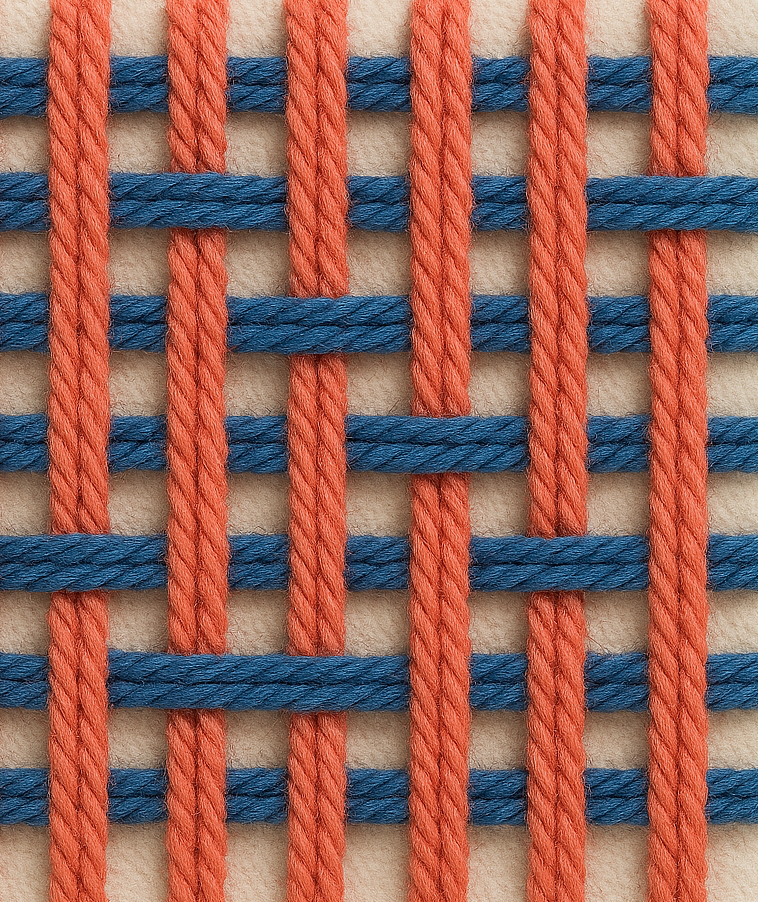
Plain weave is about as basic as weaving gets. The pattern is simple: one thread goes up, the next goes down. Then it repeats, over and over.
Here's how it actually works. Each crosswise thread, called the weft, goes over one lengthwise thread, called the warp, then under the next one. This keeps happening across the whole fabric. In technical terms, people call this a 1/1 weave. But you don't need to remember that term. Just picture a tight checkerboard pattern of threads crossing over and under each other, again and again.
What makes plain weave stand out:
- It has a lot of thread crossings, more than most other weaves
- It feels firm and holds its shape well
- It doesn't stretch out of shape easily
- It doesn't drape or flow much, it's stiffer
- The threads don't slide around, so the fabric stays tight and even
It's not a flashy weave. But it does its job well and that's exactly why it's used so much.
Why people like plain weave:
- It's strong and lasts a long time
- It's simple and cheap to make
- It looks neat and even
- It won't cost you much
There's nothing surprising here. It's popular because it's dependable.
Where plain weave falls short:
- It wrinkles pretty fast
- It doesn't bend or move much
- It doesn't drape well, so it can look stiff on the body
Basically, you get a strong, sturdy fabric, but you give up softness and flow. Also worth knowing: there are hundreds of variations built from this one basic pattern.
Twill Weave
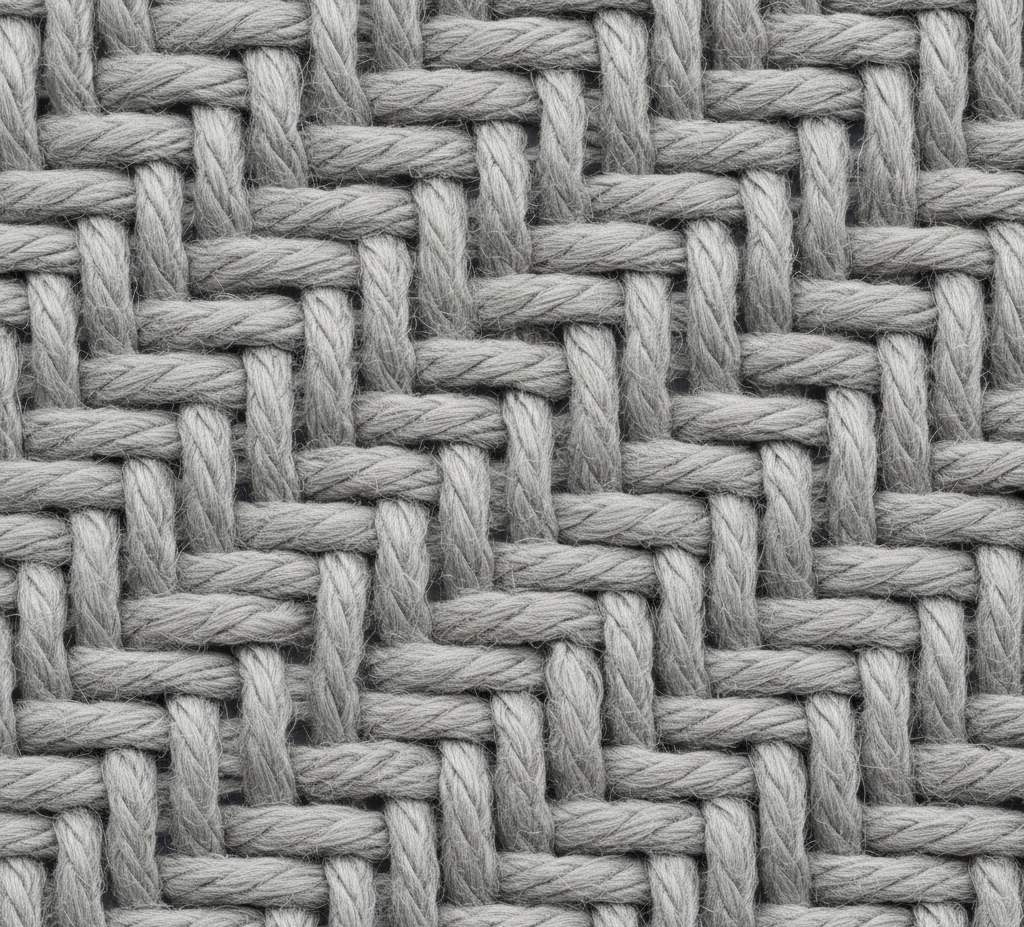
Twill weave is more interesting to look at. Instead of the plain over-under pattern, twill creates a diagonal line running across the fabric. This happens because the weft thread goes over and under several warp threads in a repeating step pattern, like 2 over and 1 under or 3 over and 1 under.
That diagonal line is easy to spot once you know what to look for. Denim is a good example most people already know.
What makes twill weave stand out:
- Fewer thread crossings than plain weave
- A clear diagonal line or rib, on the surface
- Better drape, meaning it moves and flows more naturally
- Can handle thicker or denser yarns
It already feels a step above plain weave, a bit more refined.
Why people like twill weave:
- It's tough and holds up over time
- Wrinkles don't show as much
- It resists rubbing and wear better than plain weave
- It feels more comfortable to wear
This mix of toughness and comfort is really what makes twill special. It's not the toughest option out there and it's not the softest either, but it strikes a nice middle ground.
Where twill weave falls short:
- It takes a bit more skill and effort to make
- Over time, the diagonal lines can start to show wear, especially in spots that get rubbed a lot
These aren't big problems, just small things worth keeping in mind. Like plain weave, twill has hundreds of variations built on the same basic idea.
Satin Weave
Satin weave takes a totally different approach. Here, threads "float" over several other threads before dipping under one. That means long stretches of thread sit on the surface without crossing much. And these crossing points are spread out so they don't bunch up next to each other.
What do you get from all this? A fabric that's smooth, shiny and almost glossy to the touch.
There are two main types:
- Warp satin, where the lengthwise threads create the shine
- Weft satin, where the crosswise threads do the work
What makes satin weave stand out:
- A smooth, shiny surface
- Long thread floats, meaning fewer crossing points
- Excellent drape, it flows and moves beautifully
- A very soft feel against the skin
This is the point where fabric starts to feel luxurious, almost special.
Why people like satin weave:
- It looks elegant and rich
- It's comfortable and moves easily
- It's perfect for fancy or high-end products
You wouldn't pick satin for something plain or everyday. It's really about how it looks and feels, not just how tough it is.
Where satin weave falls short:
- It's not as strong as plain or twill weave
- It can snag or catch on things easily
- It usually costs more than the other two
Those long floating threads are what give satin its beautiful look, but they're also the reason it's easier to damage.
Common satin fabrics you might know:
- Satin
- Charmeuse
- Duchess satin
- Sateen, which is a cotton version of satin
Where satin fabric usually shows up:
- Evening gowns and fancy dresses
- Lingerie and underwear
- Bed sheets, especially sateen
- Decorative home fabrics
So there you go, three basic weaves and that's really the whole foundation. But depending on how you twist them, combine them or change small details, you can end up with a massive range of different fabrics. Some are tough and practical. Some are soft and pretty. Others sit somewhere in between.
Derived and Modified Weaves
Once you go past the three basic weaves, things start getting more inventive. A lot of the fancier woven fabrics out there aren't built from nothing, they're really just twists on plain, twill or satin weave. Change how the threads cross, tweak the pattern or adjust how they're controlled and suddenly you get a fabric that looks and behaves in a whole new way.
Here are a few common examples you'll run into:
Basket weave. Picture plain weave, but instead of single threads crossing one at a time, you get pairs or small groups of threads working together. This gives the fabric a slightly looser, chunkier feel. Oxford cloth, the fabric often used in casual button-down shirts, is a well-known example. You've probably worn it without ever thinking about how it's made.
Herringbone. This one comes from twill weave, but with a clever twist. The diagonal lines flip direction at set points, forming a zigzag pattern that looks a bit like fish bones, which is where the name comes from. It has a sharper, more polished look than a plain twill.
Broken twill. Another spin on twill weave and one that's closely tied to denim. Instead of one continuous diagonal line, the pattern gets broken up on purpose, creating a scattered or interrupted look. This actually serves a practical purpose too, it helps stop jeans and other twill garments from twisting out of shape over time.
Jacquard weave. This is where weaving starts to feel like an art form. Jacquard fabric is made on a special loom that can control each lengthwise thread on its own. That level of control means designers can create incredibly detailed patterns, flowers, shapes, complex pictures, almost anything you can imagine. It's less a simple weave and more like a picture woven straight into the cloth.
Dobby weave. This sits somewhere between simple and complicated. Dobby weaving creates small, repeating patterns, usually geometric shapes, nothing huge or elaborate, but enough to give the fabric a bit of texture and visual interest. You'll often spot this style in shirts and lighter fabrics where a subtle design matters more than a bold one.
Decorative Woven FabricsDecorative woven fabrics take things a step further. Plain, twill and satin weaves are still working quietly in the background, but here, the design and appearance move to the front. These fabrics aren't made just to be tough or practical, they're made to look good, feel interesting and stand out. And even with all that focus on appearance, they still hold up fine in everyday use.
The most common types of decorative weaves are dobby, pile, leno and jacquard. Each one brings something different to the table.
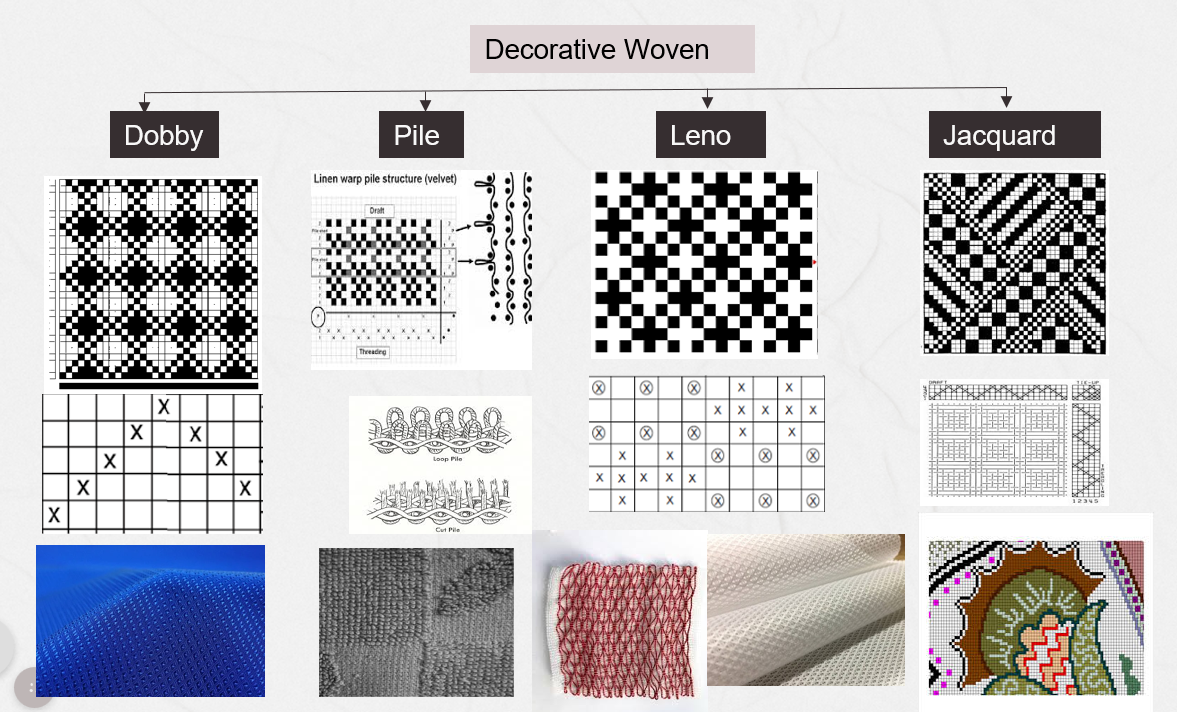
Dobby Weave
Dobby fabric is made on a dobby loom, a machine that controls certain lengthwise threads to build small patterns. These aren't giant, bold designs, they're clean, repeating and subtle.
What stands out about dobby fabric:
- Small geometric or textured patterns
- The same little design repeats across the fabric
- A fairly firm, sturdy feel
- More detail than a basic weave, but not overly heavy or busy
It's not loud, but it's definitely not boring either.
Common yarns used: Cotton, polyester, viscose, silk or blends of these.
Common fabric names: Dobby poplin, dobby shirting, pique dobby.
Where you'll find it: Shirts (this is really common), dress fabrics, curtains, upholstery and other home textiles.

Pile Weave
Pile fabric is easy to recognize the moment you touch it. It's made using extra threads that form small loops on the surface and sometimes those loops get cut open. This creates a raised, fuzzy surface that feels soft and sometimes plush or thick.
There are two main kinds:
- Warp pile, seen in fabrics like velvet and corduroy
- Weft pile, seen in fabrics like terry towels
What stands out about pile fabric:
- A raised, soft surface you can feel right away
- High absorbency, especially with terry cloth
- A rich, textured look
- Good at holding in warmth
It feels thicker and more cushioned than most other fabrics.
Common yarns used: Cotton, silk, polyester, viscose.
Common fabric names: Velvet, corduroy, terry cloth, velour.
Where you'll find it: Towels, bathrobes, upholstery, winter clothes, carpets, basically anywhere softness or warmth really matters.

Leno Weave
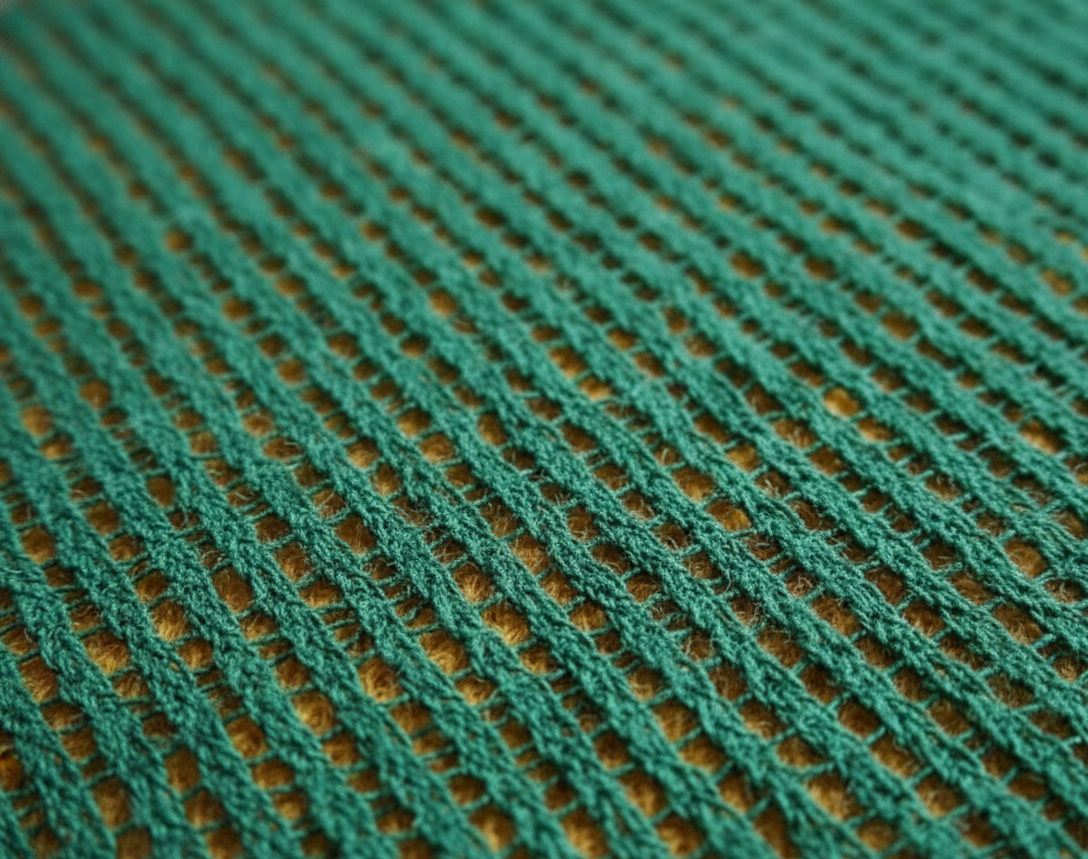
Leno weave works a bit differently from the others. Here, the lengthwise threads actually twist around the crosswise threads, almost locking them in place like a knot. It sounds complicated, but the result is pretty striking.
What you end up with is an open, see-through, mesh-like fabric that still holds together well, even though it looks delicate.
What stands out about leno fabric:
- An open, airy structure you can see through
- Good shape stability, it doesn't stretch or sag easily
- Threads stay in place instead of shifting around, even though the fabric looks loose
- Light and breathable
It looks fragile at first glance, but it actually holds up better than you'd expect.
Common yarns used: Cotton, linen, polyester, silk.
Common fabric names: Leno gauze, mosquito netting, open mesh fabric.
Where you'll find it: Curtains, mosquito nets, summer clothing and some industrial uses too.
Jacquard Weave
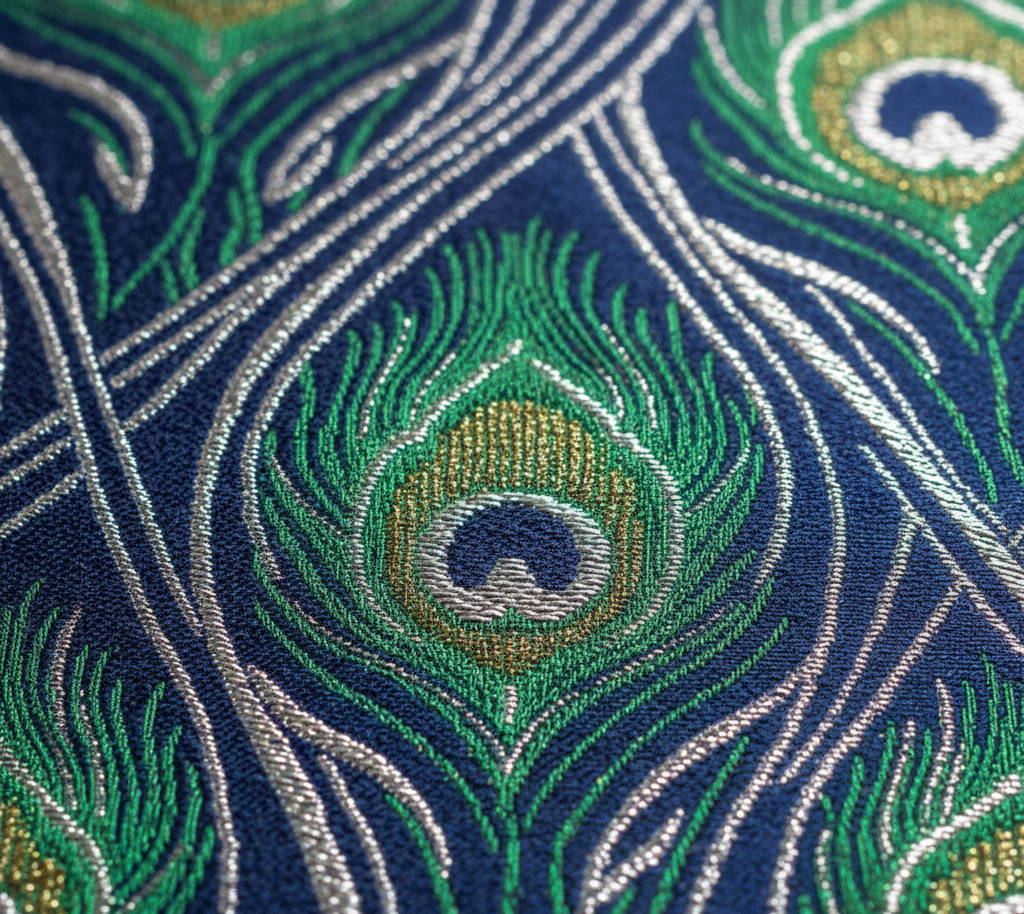
This is where fabric design gets really serious. Jacquard fabric is made on a jacquard loom, a machine that controls every single lengthwise thread on its own. That means there's almost no limit to how detailed or complex the pattern can be.
Flowers, big shapes, intricate designs, you name it, jacquard can weave it right into the fabric.
What stands out about jacquard fabric:
- Highly detailed, complex patterns
- A huge amount of design freedom
- A rich, decorative look and feel
- The ability to mix different weave types into one fabric
With jacquard, it's less about the basic structure and more about what kind of picture or pattern you can create.
Common yarns used: Cotton, silk, wool, polyester and sometimes even metallic threads.
Common fabric names: Brocade, damask, tapestry, matelasse.
Where you'll find it: Curtains, upholstery, bed covers, fashion clothing and traditional or cultural clothing.
Bringing It All Together
Step back and look at the whole picture and woven fabric really isn't complicated at its core. Everything starts with just three weaves, plain, twill and satin. Simple building blocks, nothing more.
But those three simple weaves behave in very different ways.
Plain weave gives you strength and stability. It's steady, reliable, no drama involved.
Twill weave adds some flexibility and toughness, plus that signature diagonal line that's easy to spot.
Satin weave shifts the focus toward softness, shine and a more luxurious feel.
Three different structures, three completely different personalities.
From there, fabric makers start experimenting. They tweak how the threads cross, group threads together differently or flip the pattern direction. Suddenly you're not looking at a basic fabric anymore, you get new weaves like basket, herringbone or broken twill. Same roots, but a totally different look and feel.
Then things go even further with decorative weaves like dobby, pile, leno and jacquard. Here, the goal isn't just how well the fabric performs, it's also about how it looks and feels on a deeper level, texture, depth and fine detail. Sometimes the effect is subtle. Other times it's bold and impossible to miss.
And that's really the whole point. Understanding woven fabric isn't about memorizing a long list of names. It's about seeing how one simple idea, threads crossing over and under each other, can be stretched, twisted and reshaped into something completely new.
Same starting point. Totally different results. And that's honestly where it gets interesting.
A Few Extra Things Worth Knowing
If you're trying to pick a fabric for a project or you just want to understand what you're buying, a few small tips can go a long way.
Think about what the fabric needs to do first. If you want something that holds its shape and lasts a long time, plain weave is usually your safest bet. If you want a balance of comfort and toughness, twill is a strong middle choice. And if you're after something soft, shiny and a bit fancy, satin is where you land.
Check the surface pattern. A lot of people can actually tell weaves apart just by looking closely. Plain weave has a tight, even checkerboard look. Twill has a clear diagonal line running across it. Satin looks smooth and almost glassy, with barely any visible pattern at all.
Don't judge a fabric only by its weave. The type of yarn used, cotton, silk, polyester or a blend, also changes how the final fabric feels and performs. Two fabrics with the same weave can feel completely different depending on the yarn.
Care matters too. Fabrics with a lot of texture, like pile weaves, often need gentler washing to protect the raised surface. Satin needs careful handling too, since it can snag easily. Plain and twill weaves tend to be more forgiving and easier to care for.
Price often follows complexity. As a general rule, the more complicated the weave, the more it usually costs. Plain weave is the cheapest to produce, twill sits in the middle and satin and jacquard weaves, with their long floats or complex patterns, tend to cost more.
Why Any of This Actually Matters
You might be wondering why it's worth knowing all this in the first place. The truth is, once you understand the basic weaves, a lot of decisions get easier. Buying clothes, choosing curtains, picking fabric for a sewing project, even reading a product label, all of it makes more sense once you know what "twill" or "satin" or "dobby" actually means.
It also helps explain why some fabrics cost more than others, why some wrinkle easily and others don't and why certain fabrics are chosen for certain jobs. A hospital gown isn't made from satin and an evening dress usually isn't made from stiff plain-weave canvas. The weave is doing a lot of quiet work behind the scenes, shaping how a fabric looks, feels and performs, long before anyone even thinks about color or print.
At the end of the day, weaving is just threads crossing over and under each other in a pattern. But as you can see, that one simple idea opens the door to an enormous range of fabrics, from the plainest cotton shirt to the shiniest evening gown. Once you know the three basic building blocks, everything else starts to feel like small, clever variations on the same simple theme.