It’s easy to underestimate sewing thread. Looks simple. Feels light. Almost invisible once the garment is done.
But it deals with a lot.
Every stitch goes through tension, friction, heat from the needle, bending, washing… over and over again. And still—no failure is expected. Not even small ones.
That’s why sewing thread isn’t the same as yarn. It’s engineered. Carefully.
Twist is controlled. Strength is calculated. Surface finish is adjusted. Even colorfastness becomes critical.
All that… just for something you barely notice.
Why thread selection actually matters
There’s no “one thread fits all” situation.
A thread that works perfectly on woven cotton may fail completely on stretch knit.
What holds a denim seam might destroy a lightweight blouse.
So selection depends on:
- Fabric type (woven vs knit, light vs heavy)
- Garment use (casual, industrial, decorative)
- Sewing method
- Required durability
Get it right → smooth sewing, clean stitches, longer garment life
Get it wrong → breaks, puckering, seam failure… complaints later
Cotton Thread
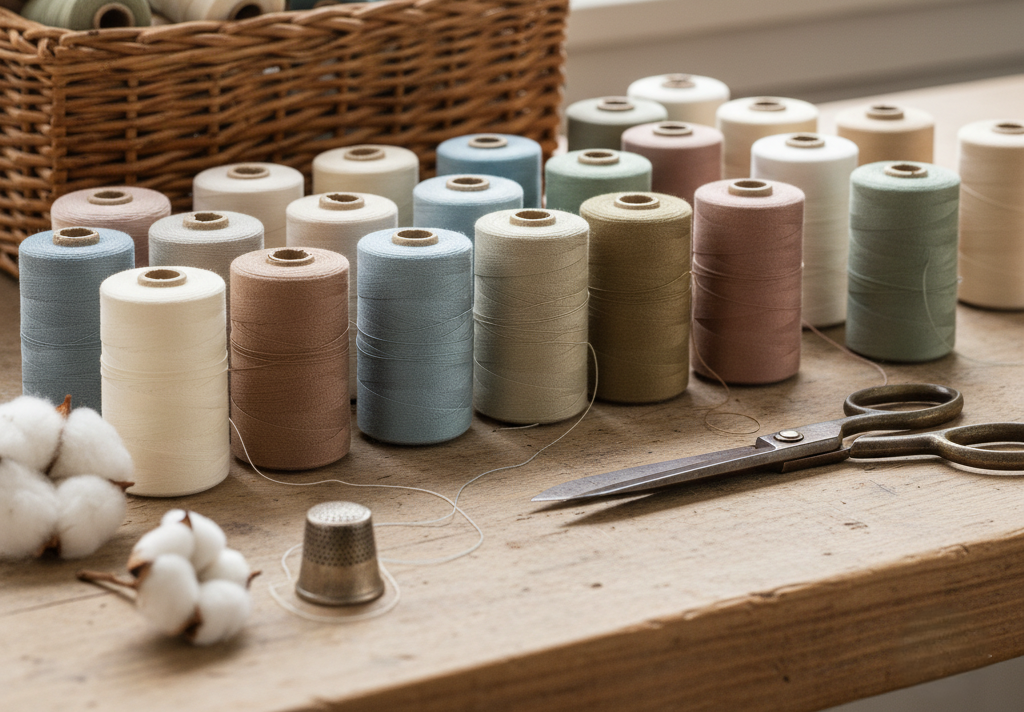
Cotton thread is made from 100% natural cotton fiber. It was once widely used, but is less common now as synthetic and blended threads are more durable and versatile.Cotton thread makes soft, flexible stitches and comes in several weights, so it can be used on different fabric thicknesses. It has very little stretch and is ideal for sewing natural fiber woven fabrics such as cotton and linen. However, it is not recommended for knit fabrics or garments that require elasticity.
Strength (Tenacity Value)
Cotton thread has moderate strength, typically ranging from 15–25 cN/tex. Strength reduces after repeated washing and abrasion, limiting its suitability for stress seams.
Twist Value
Cotton threads generally have a medium to high twist, around 700–1100 TPM, to bind short fibers together effectively.
Hairiness Value
Hairiness is high, usually 6–8 on Uster Hairiness Index, due to protruding short fibers. This leads to lint accumulation and needle heating at high speeds.
Other Physical Properties
Cotton thread has low elongation (3–6%), excellent heat resistance (up to 200°C) and poor abrasion resistance. It offers soft seam appearance but is unsuitable for knit elasticity requirements.
Cotton‑Covered Polyester Core Thread
Most Common All‑Purpose Thread
One of the most common sewing threads is a polyester core thread covered in cotton. It uses the strength and stretchiness of a polyester core and the soft surface of a cotton wrap.This construction allows the thread to easily slide through fabric and through the sewing machine, but with high tensile strength and moderate stretch. Its balanced properties make it suitable for both woven and knit fabrics and it is often used in garment manufacturing and home sewing projects.
Strength (Tenacity Value)
Due to the polyester core, strength increases to 30–45 cN/tex, making it much stronger than pure cotton thread.
Twist Value
Twist levels are carefully controlled, typically 600–900 TPM, enough to secure the cotton wrap without increasing stiffness.
Hairiness Value
Hairiness is moderate, around 4–5 on Uster scale, lower than cotton but higher than filament polyester.
Other Physical Properties
Elongation ranges from 12–18%, allowing seam flexibility. Heat resistance is moderate and abrasion resistance is significantly better than cotton, making it ideal for high‑speed apparel sewing.
Polyester Thread
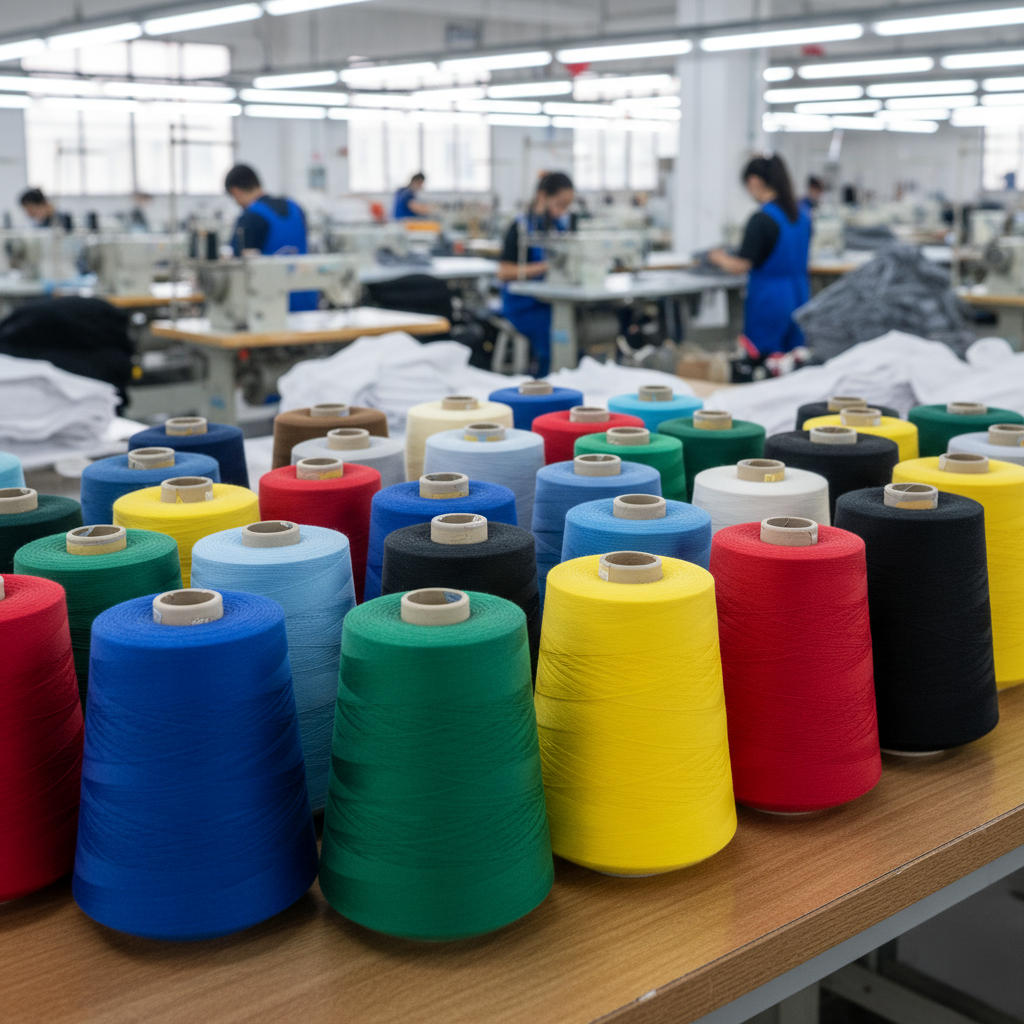
100% polyester thread is strong, durable and flexible. This one can stretch and bounce back, so it is a very good one for knit fabrics, but it works well on woven fabrics too.
Short Staple Polyester
Polyester fibers of short staple are cut to small lengths, usually about 1.5 inches. These threads are fuzzy and leave lint when you sew with them. Cheap. But can cause problems down the road with machine maintenance.
Long Staple Polyester
Long staple polyester fibers are typically 4 to 5 inches long. The result is a finer, smoother, more even stitch and a better sewing performance. Good quality long staple polyester is often used as a substitute for silk, as it is smooth and strong.
Strength (Tenacity Value)
Polyester thread shows high strength, typically 35–60 cN/tex, with excellent retention after washing and wear.
Twist Value
Spun polyester uses higher twist (800–1200 TPM), while filament polyester uses lower twist (300–600 TPM) to maintain smoothness.
Hairiness Value
Short staple polyester has medium hairiness (3–5), while filament polyester has very low hairiness (1–2).
Other Physical Properties
Polyester thread has elongation of 15–25%, high abrasion resistance, low moisture absorption and moderate heat resistance (softening begins around 230°C). It is suitable for both knits and wovens.
Silk Thread
Silk thread is made from long, continuous filament fibers, which produce a strong, smooth and lustrous thread. It is a premium thread option and is often utilized in tailoring and high quality garment construction.Silk Thread is more expensive than other options but has excellent elasticity, making it ideal for hand-tailoring, buttonholes and fine garments. Its natural luster enhances the appearance of stitches.
Strength (Tenacity Value)
Silk thread has high strength for its fineness, typically 30–45 cN/tex.
Twist Value
Silk threads contain low to medium twist, usually 300–600 TPM, preserving luster and smoothness.
Hairiness Value
Hairiness is very low (≈1 on Uster scale) due to filament structure.
Other Physical Properties
Silk has elongation of 15–20%, excellent stitch elasticity, high heat resistance and superior aesthetic quality. It is chemically sensitive, especially to chlorine bleach.
Rayon Thread
Rayon thread has a lovely sheen like silk but is not as durable. It is often used for decorative stitching and embroidery and not for constructional seams.
Rayon serves as a cost‑effective substitute for silk in decorative applications where appearance is more important than strength.
Strength (Tenacity Value)
Rayon thread has lower strength, typically 18–28 cN/tex and loses up to 30% strength when wet.
Twist Value
Rayon embroidery threads use low twist (250–500 TPM) to maximize surface coverage and sheen.
Hairiness Value
Hairiness is low (1–2) because rayon is filament‑based.
Other Physical Properties
Elongation ranges from 12–18%. Rayon has low abrasion resistance and moderate heat sensitivity, making it unsuitable for structural seams.
Nylon Thread
Extremely strong, monofilament nylon thread is semi-transparent, so it blends into fabrics. It is mainly for sewing nylon tricot and other light lingerie fabrics.Be careful when pressing clothes made with nylon thread, as nylon is sensitive to high heat. Nylon thread can be used in both regular sewing machines and serger machines.
Strength (Tenacity Value)
Nylon has very high strength, typically 60–90 cN/tex, making it one of the strongest sewing threads.
Twist Value
Monofilament nylon has no twist, while multifilament nylon uses low twist (200–400 TPM).
Hairiness Value
Hairiness is negligible (≈0–1).
Other Physical Properties
Nylon exhibits very high elongation (20–35%) and excellent abrasion resistance but is heat sensitive, melting at around 250–260°C.
Metallic Threads
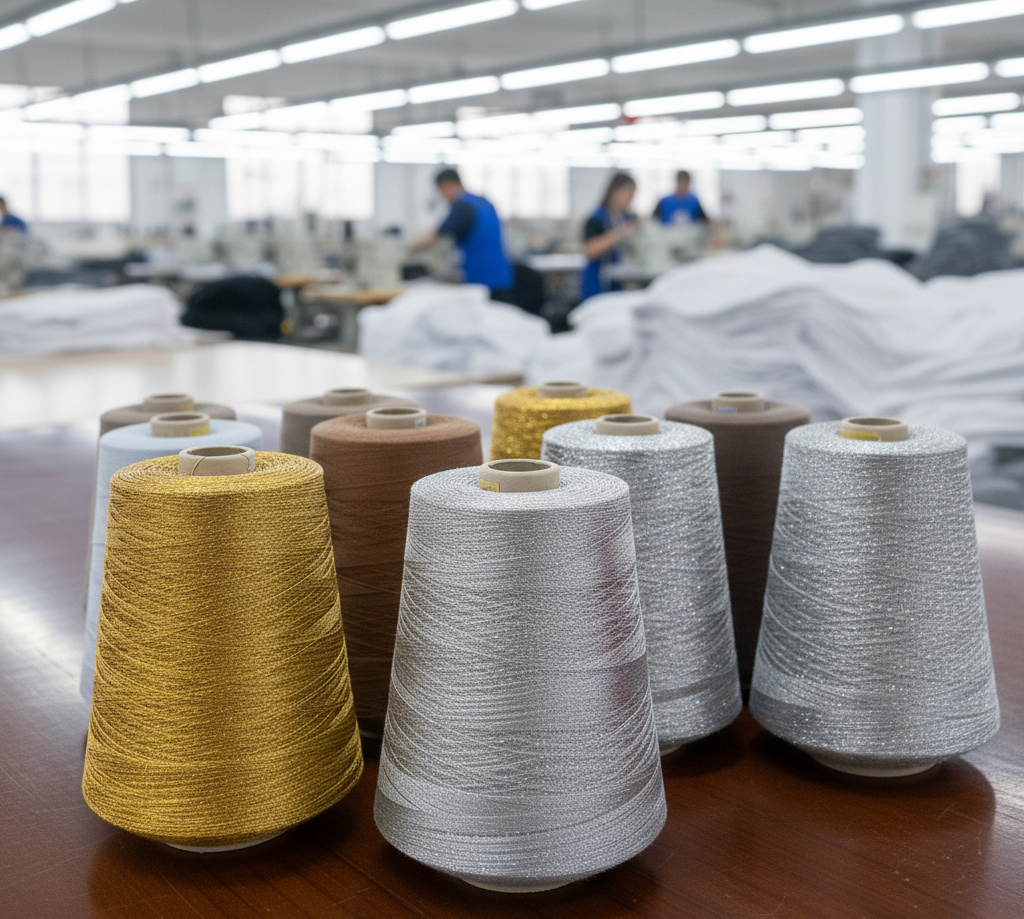
Metallic threads are used mostly for decorative effects. They are often a combination of polyester and metallic fibers and need special handling. Use a larger needle size, use an all-purpose thread in the bobbin and sew at a slower speed to avoid breakage.
Strength Value
Metallic threads have low strength, around 10–15 cN/tex, due to metal film construction.
Twist Value
They use very low twist (150–300 TPM) to avoid breakage.
Hairiness Value
Fiber hairiness is low, but surface roughness is high, increasing friction.
Other Properties
Elongation is minimal (<8%) and heat resistance is poor. Sewing must be done slowly with larger needles.
Basting Thread
Basting thread is a soft, lightweight, weak thread used for temporary stitching. Easy to remove and widely utilized in garment fitting and positioning prior to permanent stitching.
Strength Value
Basting thread has very low strength (8–12 cN/tex).
Twist Value
Twist is low (400–600 TPM) to allow easy breakage.
Hairiness Value
Hairiness is moderate (4–5), assisting visibility and removal.
Other Properties
Elongation is low and durability is intentionally poor
Buttonhole Twist and Topstitching Thread
These threads are thicker and stronger than normal sewing threads and are designed for buttonholes and decorative topstitching. They come in silk and polyester and need a large‑eye needle to prevent shredding.
Strength Value
These threads have high strength, typically 45–70 cN/tex, depending on fiber.
Twist Value
They use low twist (250–500 TPM) to enhance thickness and appearance.
Hairiness Value
Hairiness is low to moderate (2–4).
Other Properties
Elongation is moderate (10–15%). They are abrasion resistant and visually prominent.
Button and Carpet Thread
button and carpet threads are very strong and have a glazed finish. This finish allows the thread to easily penetrate heavy weight fabrics. Used for sewing thick materials and attaching buttons.
Strength Value
These threads have high strength, typically 45–70 cN/tex, depending on fiber.
Twist Value
They use low twist (250–500 TPM) to enhance thickness and appearance.
Hairiness Value
Hairiness is low to moderate (2–4).
Other Properties
Elongation is moderate (10–15%). They are abrasion resistant and visually prominent.
Machine Embroidery Thread
Machine embroidery threads are made to fill stitched areas smoothly and evenly without creating excessive bulk or breakage. They may be composed of cotton, rayon, long-staple polyester or core-spun polyester.They are threads with high color brilliance and durability, suitable for decorative surface designs and logos.
Strength Value
Embroidery threads have controlled strength, around 25–40 cN/tex, sufficient to resist breakage without stiffness.
Twist Value
They use low twist (200–400 TPM) for smooth fill coverage.
Hairiness Value
Hairiness is very low (1–2).
Other Properties
Elongation ranges 12–20% and emphasis is placed on color brilliance and stitch uniformity rather than structural performance.
Fusible Threads
Thread Fuse is a polyester thread covered with a heat activated fusible fiber. Steam iron it; it sticks fabrics together. It is commonly found in the bobbin of traditional machines or the lower looper of serger machines.Fusible threads are very useful for hemming, for positioning zippers, pockets, facings, appliqué work and for matching plaids. A similar product to Stitoh’s Fuse is made of 100% nylon.
Strength Value
Fusible threads have moderate strength, around 20–30 cN/tex.
Twist Value
Twist is low to medium (400–600 TPM).
Hairiness Value
Hairiness is low (2–3) to ensure clean bonding.
Other Properties
Elongation is limited and performance depends heavily on correct heat activation (130–160°C).
Serger Threads
Serger threads are made for high‑speed sewing. They’re a little finer and have a special finish so they can perform smoothly at high speeds.They are usually sold in cones or king spools. Special effects may also be created with alternative threads such as pearl cotton, viscose rayon filament, wooly nylon and decorative ribbons in addition to standard serger thread.
Strength Value
Serger threads typically range 20–35 cN/tex, prioritizing flexibility over raw strength.
Twist Value
They have low twist (200–400 TPM) for smooth looping at high speed.
Hairiness Value
Hairiness is low (2–3) to reduce lint in overlock machines.
Other Properties
Elongation is 20–30%, essential for stretch seams and knitted garments. Threads are optimized for continuous high‑speed operation.
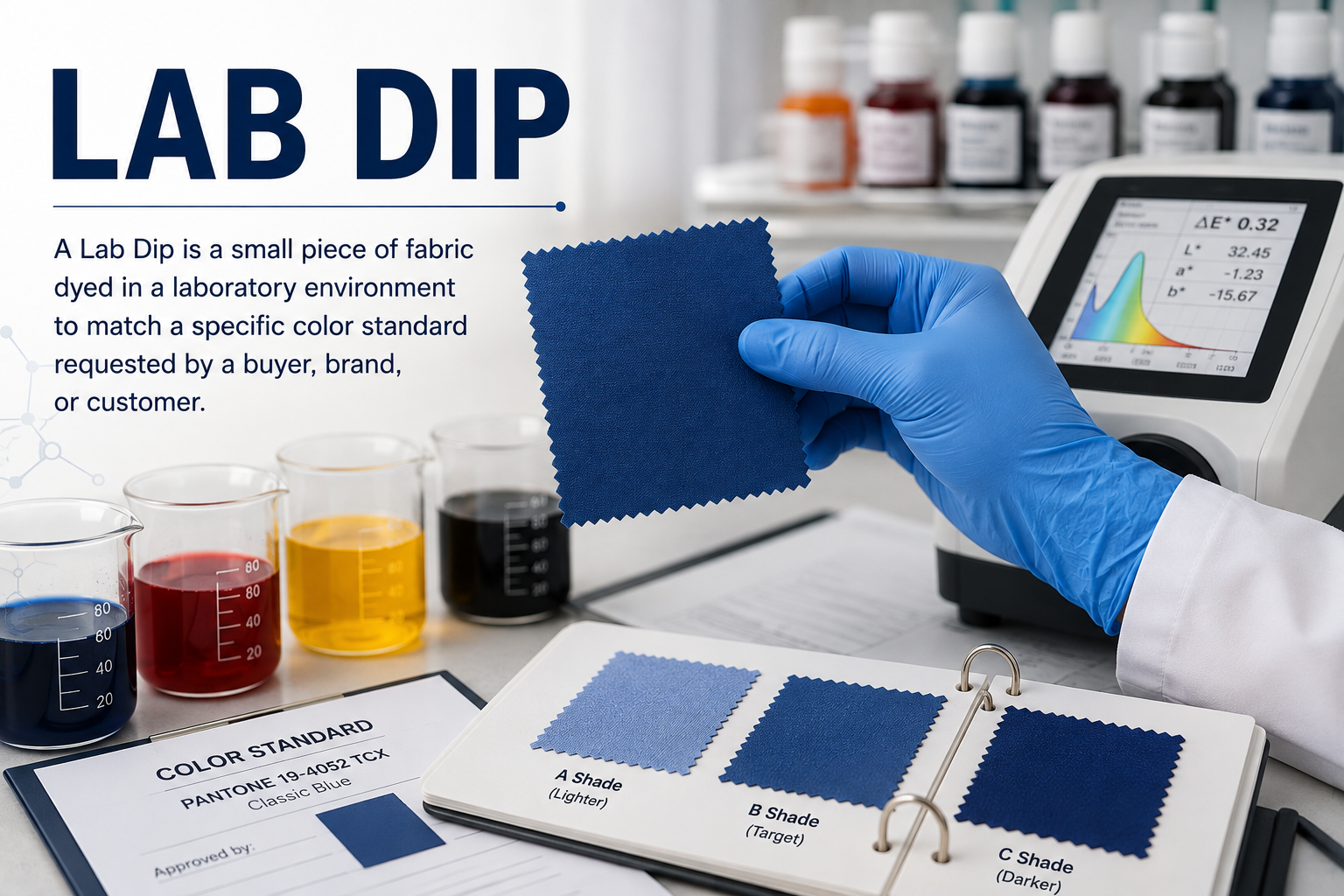
Colorfastness of Threads
Colorfastness is the ability of a thread to retain its color under normal usage and care. There are several factors used to evaluate colorfastness performance.
Wash Fastness
Wash fastness is the ability of a sewing thread to resist color change or color bleeding during laundering.
During washing, threads are exposed to water, detergent, agitation and temperature. Poor wash fastness causes:
- Fading of thread color
- Bleeding onto surrounding fabric
- Uneven appearance after multiple washes
Influencing Factors
- Type of dye used
- Fiber content of thread
- Washing temperature and detergent strength
Synthetic threads such as polyester and nylon generally have better wash fastness than cotton or rayon threads.
Crock Fastness
Crock fastness refers to the resistance of thread color to rubbing or friction transfer.
Types of Crock Fastness
- Dry crock fastness – color transfer during dry rubbing
- Wet crock fastness – color transfer during wet rubbing
Thread is exposed to continuous rubbing during wear (collars, cuffs, seams). Poor crock fastness leads to:
- Color rubbing off onto light‑colored fabrics
- Visible seam discoloration
Threads with low twist or surface dyes usually show lower crock fastness.
Sublimation
Sublimation refers to color loss or color transfer caused by high temperature, where dye changes from solid to gas.
During ironing, pressing, embroidery or heat setting, certain dyes can vaporize and redeposit onto other areas, causing:
- Color loss at seams
- Ghost staining on adjacent panels
Polyester threads dyed with disperse dyes are commonly tested for sublimation fastness, especially for garments requiring high‑temperature pressing.
Cold Water Migration
Cold water migration is the tendency of thread dye to migrate and stain fabric when the garment remains wet for a long time at low temperatures.
This occurs when:
- Dark thread is sewn on light fabric
- Garments are left soaked or stacked while wet
Reactive‑dyed cotton threads and some rayon threads are more prone to this issue.
Light Fastness
Light fastness is the resistance of thread color to fading when exposed to light, especially sunlight.
Garments such as outdoor wear, curtains, uniforms and summer clothing are continuously exposed to daylight. Weak light fastness results in:
- Gradual fading of seam color
- Thread becoming lighter than surrounding fabric
Synthetic threads usually show better light fastness than cotton and rayon threads, although dye selection plays a significant role.
Perspiration Fastness
Perspiration fastness is the ability of a thread to resist color change when exposed to human sweat, which may be acidic or alkaline.
Sweat can cause:
- Color bleeding
- Discoloration at stress points (underarms, collars)
Threads used in sportswear and activewear must have good perspiration fastness.
Factors Affecting Color Fastness of Threads
Several factors influence how colorfast a sewing thread will be:
- Fiber type (polyester > nylon > cotton > rayon)
- Dye class and dyeing method
- Thread construction and twist
- Finishing and lubrication
- End‑use conditions and care methods
Even a colorfast fabric can fail if paired with a poorly dyed thread.
Comparison of Thread Types by Color Fastness (General Trend)
- Polyester thread – Excellent overall color fastness
- Nylon thread – Very good wash and crock fastness, moderate light fastness
- Cotton thread – Moderate wash and light fastness
- Rayon thread – Lower wash and light fastness, mainly decorative use
| Thread Type | Main Uses / Purpose | Wash Fastness | Crock Fastness | Light Fastness | Heat / Sublimation Fastness | Overall Fastness Suitability |
|---|---|---|---|---|---|---|
| Cotton Thread | Light woven fabrics, traditional garments, hand sewing | Good | Moderate | Moderate | Excellent | Not suitable for high‑performance garments |
| Cotton‑Covered Polyester Core Thread | General apparel seams, woven & knit garments | Very Good | Very Good | Good | Good | Best all‑purpose thread |
| Polyester Thread (Spun & Filament) | Knitwear, woven garments, denim, industrial sewing | Excellent | Excellent | Very Good | Very Good | Highly suitable for mass production |
| Silk Thread | Tailoring, luxury garments, hand finishing | Good | Good | Good | Very Good | Premium appearance, limited durability |
| Rayon Thread | Decorative stitching, machine embroidery | Moderate | Moderate | Poor–Moderate | Moderate | Only for decoration, not structure |
| Nylon Thread (Mono / Multi) | Lingerie, hosiery, technical seams | Excellent | Excellent | Good | Poor | Avoid high‑heat processes |
| Metallic Thread | Decorative seams, embroidery, fashion detailing | Poor | Poor | Poor | Poor | Visual use only, careful handling needed |
| Basting Thread | Temporary stitching, fitting purposes | Poor | Poor | Poor | Poor | Not for finished garments |
| Buttonhole / Topstitch Thread | Buttonholes, visible seams, topstitching | Very Good | Very Good | Good | Good | Strong and decorative |
| Button & Carpet Thread | Attaching buttons, heavy fabrics | Very Good | Very Good | Good | Good | High seam security |
| Machine Embroidery Thread (Poly/Rayon) | Logos, surface design, embroidery | Good–Very Good | Good | Moderate–Good | Moderate | Choose polyester for better durability |
| Fusible Thread | Hems, zipper placement, appliqué | Good | Not applicable | Good | Moderate | Auxiliary use only |
| Serger Thread | Overlock seams, knit garments | Very Good | Very Good | Good | Good | Optimized for stretch seams |
Key Industrial Notes
- Polyester threads provide the best overall color fastness and are preferred for export garments.
- Rayon and metallic threads should never be used where durability or washing performance is critical.
- Thread fastness must always match fabric fastness—a colorfast fabric can still fail due to poor thread selection.
- For dark threads on light fabric, ensure excellent wash and crock fastness to avoid staining.
Color Fastness Testing Standards
Color fastness of sewing threads is evaluated using standard test methods such as:
- ISO standards
- AATCC standards
- Buyer‑specific protocols (e.g., global apparel brands)
Test results are graded using gray scales that indicate color change and staining levels.
Practical takeaway (the part people remember)
- Strong fabric + weak thread = seam failure
- Good fabric + poor dye thread = staining issues
- Right thread + wrong garment use = complaints
And one more thing—
Thread doesn’t have to match fabric fiber.
But it must match performance.
Final thought
Sewing thread doesn’t look like much—but it quietly decides how well a garment holds up.
It takes all the stress. Washing, stretching, friction… again and again. And if the thread isn’t right, things start failing fast—open seams, uneven stitches, color issues. The fabric might still be fine, but the garment feels off.
That’s the catch.
Choosing thread isn’t about picking the “best” one. It’s about picking the right one for that fabric, that use, that finish. Sometimes strong is better. Sometimes softer matters more. There’s always a bit of trade-off involved.
And in production, even small mistakes here can scale up quickly.
When everything is done right, nobody notices the thread at all.
Which… is exactly how it should be.