
Merchandising
Subcategories
 Consumption
 Export_Import

How Garment Factories Get Onboarded by Buyers (Step-by-Step)
In the garment industry, onboarding is not just a formality; it is the structured process by which buyers evaluate and …
Yarn Count in Textiles: Measurement, Conversion and Impact on Fabric Quality
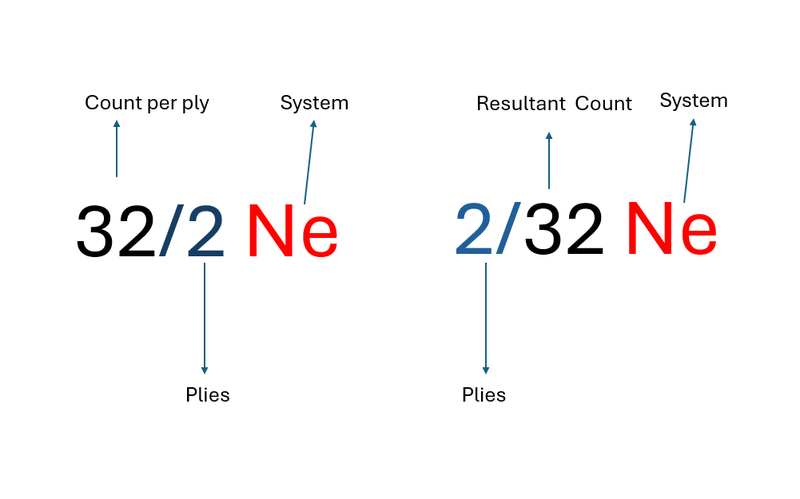
The numerical system to indicate the fineness or thickness of yarn is called yarn count. It is the relationship between …

Sewing Threads in Garment Manufacturing: Types, Properties and Applications
Sewing thread is a fine continuous strand of fibres or filaments, specially made to join, secure, decorate or reinforce materials, …

Yarn Defects in Textiles: Identification, Causes and Prevention Methods
A defect in yarn is any irregularity or abnormality in the structure, appearance or cleanliness of the yarn which is …

Knit Fabric Testing & Quality Control
To ensure the consistent quality of knit fabrics, systematic testing and strict quality control measures are required. Knit fabric testing …

Defects in Woven Fabrics: Identification, Causes and Prevention Methods
A woven fabric defect is any visible or structural fault in fabric that occurs during weaving, yarn preparation or handling. …

Count vs GSM in Textiles: Understanding Yarn Count, Fabric Weight and Quality Measurement
Fabric GSM (Grams per Square Meter) is one of the most critical parameters in textile manufacturing. It directly influences fabric …

Garment Inspection System & AQL (Acceptable Quality Level)
Quality, the foundation of the global Garment industry. International buyers want well made, perfect fitting, faultless clothes, on time. For …

Defects in Knit Garments: Identification, Causes and Quality Control Solutions
Defects in knit garments are common quality problems that occurred during the knitting, dyeing, finishing, cutting or sewing processes. These …

Woven Fabric Testing and Quality Control: Standards, Methods and Best Practices
Woven Fabric Testing & Quality Control (QC) is an important process in textile manufacturing to assure fabrics meet buyer requirements, …

Color Fastness in Textiles: Testing Methods, Standards and Quality Control
Color fastness is the resistance of a dyed or printed textile material to change in color or transfer of color …

Dyeing Defects in Textiles: Identification, Causes and Corrective Measures
Dyeing defects are faults that occur during or after the dyeing process due to incorrect pre‑treatment, dye selection, recipe control, …

Order Scheduling in Garment Manufacturing: Workflow, Planning and Efficiency Management
Order scheduling is the process of deciding what to produce, when to produce it, and which production line should handle …

Modes of International Trade Payment
International trade involves transactions between buyers and sellers located in different countries, often separated by distance, legal systems, currencies and …

Incoterms (International Commercial Terms)
Incoterms short for International Commercial Terms, are a globally recognized set of rules published by the International Chamber of Commerce …

Letter of Credit (LC) in Textile Trade: Process, Documentation and Role in International Business
A Letter of Credit (LC) is one of the most important financial instruments used in international trade to facilitate secure …

Foreign Back‑to‑Back (B2B) Letter of Credit
A Foreign Back‑to‑Back Letter of Credit (B2B LC) is a documentary credit opened by an exporter’s bank in favor of …

Sales and Purchase Contracts in Textile Industry: Key Clauses, Negotiation and Compliance
Every international trade transaction is fundamentally based on a sales or purchase contract between a seller and a buyer. This …

Lodgment of Import Bill and PAD (Payment Against Documents)
Lodgment of Import Bill is a critical phase in import finance where the issuing bank makes payment against compliant import …

Export Procedure in Textile Industry: Workflow, Documentation, and International Trade Compliance
Export procedures form the backbone of international trade, ensuring that goods and services produced in one country are legally sold …