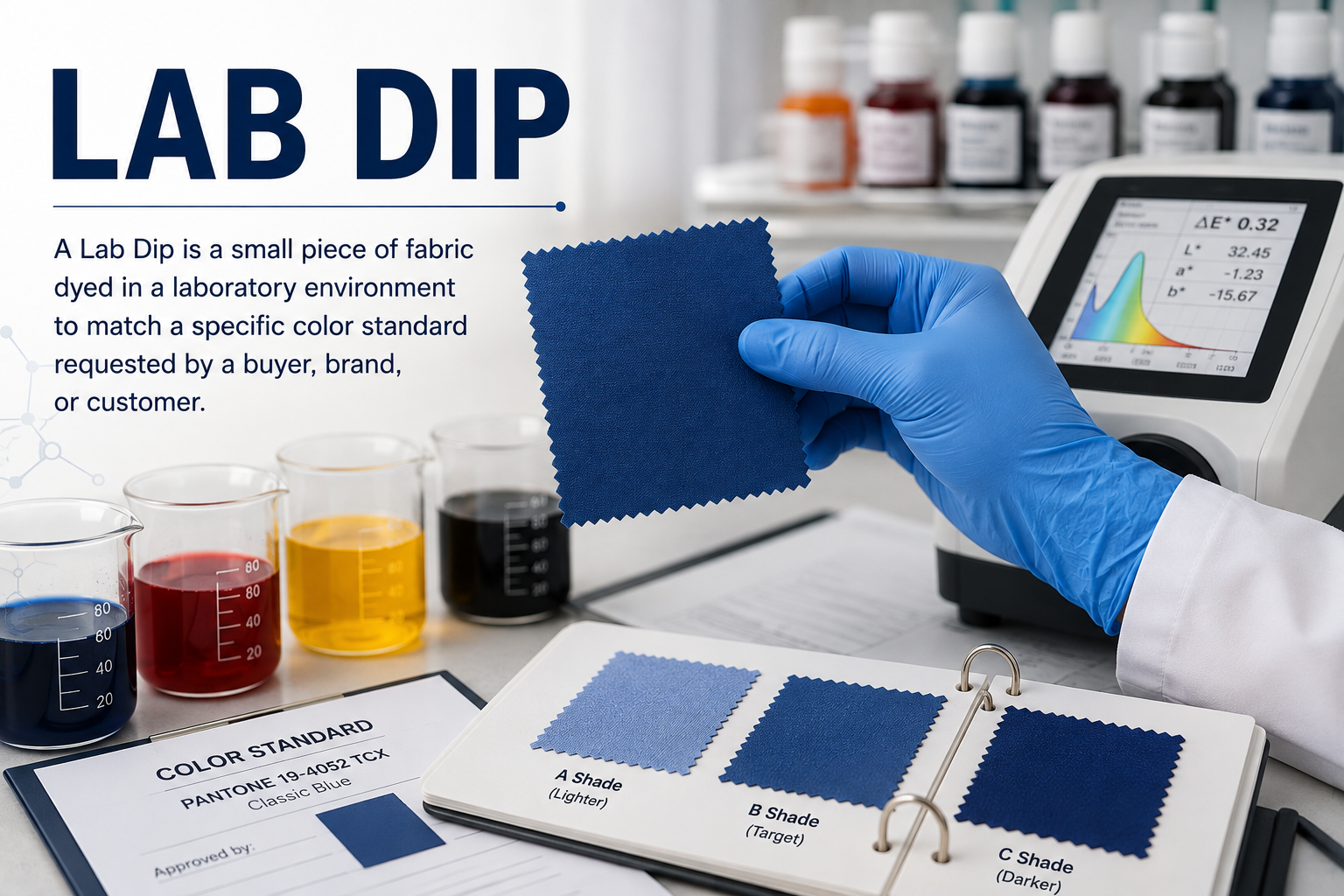
Garment inspection system is a set of planned quality checks at various stages of production to ensure that garments conform to buyer specifications, quality standards and safety requirements. Inspection is not only a final check at the end of production, but also preventive and corrective in nature.
Objectives of Garment Inspection
- Identify defects early
- Prevent mass rejection
- Ensure buyer compliance
- Reduce rework and wastage
- Maintain consistent quality
- Improve production discipline
Types of Garment Inspections
Pre‑Production Inspection (PPI)
Conducted before bulk production starts.
Checks include:
- Approved sample vs specs
- Fabric, trims & accessories approval
- Print / embroidery standards
- Fit, measurement & construction
- Washing and finishing method
✅ Purpose: Prevent mistakes before bulk work begins.
In‑Line Inspection (During Production Inspection – DPI)
Performed during production, usually at 15–30% and 50–60% completion.
Focus Areas:
- Stitch quality
- Seam defects
- Measurement accuracy
- Color consistency
- Print/embroidery placement
- Workmanship issues
✅ Purpose: Catch defects early to avoid bulk damage.
End‑Line Inspection
Done after sewing but before finishing or packing.
Checks include:
- Garment appearance
- Measurements
- Sewing defects
- Thread trimming
- Spots, stains, oil marks
✅ Purpose: Ensure garments are ready for finishing and washing.
Final Random Inspection (FRI)
The most critical inspection, conducted after packing or when 80–100% goods are packed.
This inspection is usually:
- Based on AQL standards
- Performed by factory QC, buyer reps or third‑party inspectors
✅ Purpose: Decide shipment approval or rejection.
What Is AQL (Acceptable Quality Level)?
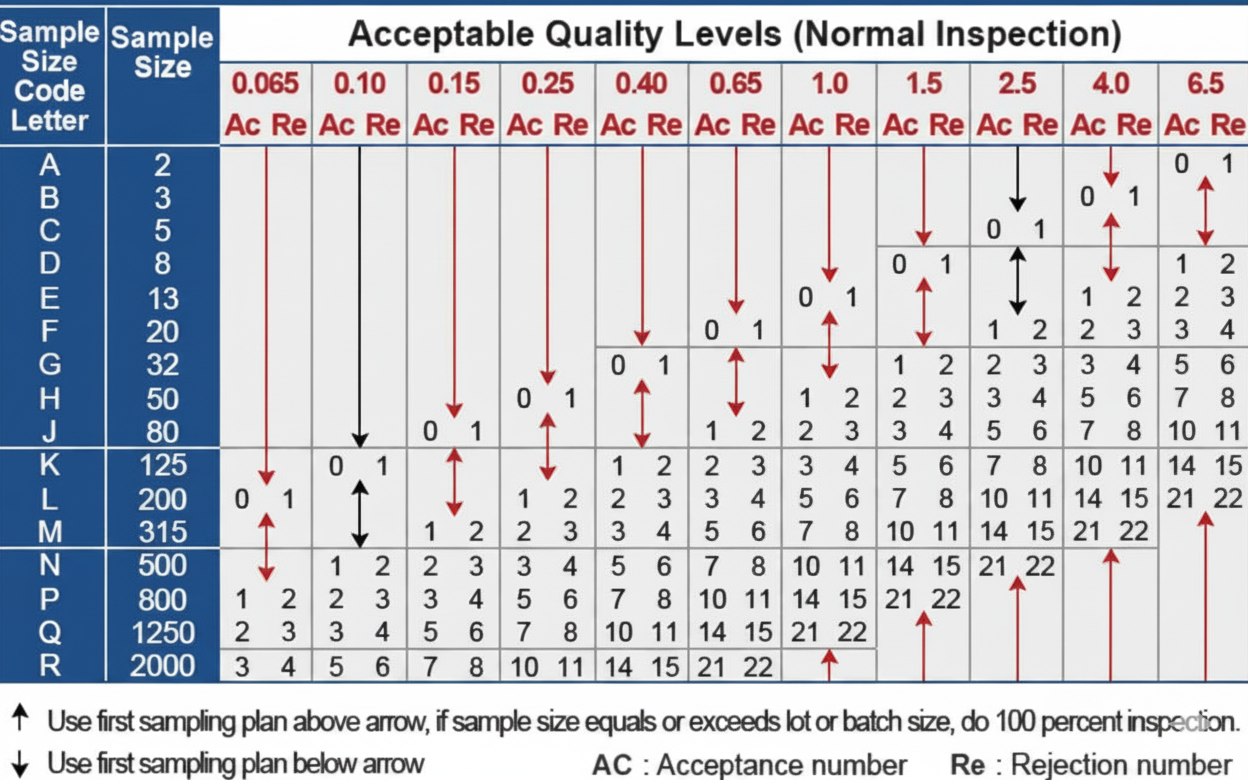
AQL (Acceptable Quality Level) The maximum number of defective items permitted in a random sample to be considered acceptable for shipment.
It is a statistical sampling method, not a 100% inspection.
Why AQL Is Used in Garment Inspections
- 100% inspection is costly and time‑consuming
- Sampling ensures fairness and consistency
- Internationally accepted standard (ISO/ANSI)
- Preferred by global buyers and brands
Common AQL Standards Used in Apparel
Most garment inspections follow:
- ISO 2859‑1
- ANSI/ASQ Z1.4
Typical Buyer‑Accepted AQL Levels
| Defect Category | Common AQL |
|---|---|
| Critical Defects | 0.0 |
| Major Defects | 2.5 |
| Minor Defects | 4.0 |
✅ Critical defects are never allowed.
✅ Major and minor defects have specific acceptance limits.
Defect Classifications in Garments
Critical Defects (AQL 0.0)
Defects that:
- Endanger safety
- Violate legal regulations
- Make garment unsellable
Examples:
- Sharp objects
- Broken needle inside garment
- Severe chemical contamination
- Infant wear choking hazards
⛔ Any single critical defect = shipment rejection
Major Defects (AQL 2.5)
Defects that:
- Affect appearance or performance
- Are clearly noticeable to consumers
Examples:
- Open seams
- Wrong size labeling
- Incorrect measurements beyond tolerance
- Skipped stitches
- Large stains
Minor Defects (AQL 4.0)
Defects that:
- Do not affect usability
- Are slightly noticeable
Examples:
- Small loose threads
- Minor shade variation
- Slight puckering
- Small print alignment issues
How AQL Sampling Works
Step 1: Identify Lot Size
Total quantity of garments to be inspected.
Example:
Lot size: 10,000 pcs
Step 2: Determine Sample Size Code
Using AQL tables (Inspection Level II is most common).
Step 3: Find Sample Size
Based on lot size and inspection level.
Example:
Lot size 10,001–35,000 → Sample size = 200 pcs
Step 4: Apply AQL Limits
| Defect Type | Accept | Reject |
|---|---|---|
| Critical (0.0) | 0 | 1 |
| Major (2.5) | 10 | 11 |
| Minor (4.0) | 14 | 15 |
✅ If defects found are ≤ Accept, shipment passes
❌ If defects exceed Reject, shipment fails
Inspection Levels in AQL
1. General Inspection Levels
- Level I – Less strict
- Level II – Standard (Most Used)
- Level III – More strict
2. Special Inspection Levels
- S‑1 to S‑4
- Used for:
- Small items
- Expensive tests
- Limited inspection
Responsibilities of QC Inspectors
Quality Control (QC) inspectors play a vital role in ensuring that garments meet required standards before shipment. Their responsibility is not just to find defects, but to maintain consistency, reliability and trust between the factory and the buyer. They must follow structured procedures while remaining objective and detail-oriented throughout the inspection process.
A QC inspector is expected to work systematically and without bias, ensuring that all inspections are carried out according to defined quality standards and AQL guidelines.
Key responsibilities include:
- Strictly following the inspection SOP (Standard Operating Procedure)
- Inspecting garments randomly and objectively based on sampling plans
- Identifying and recording defects with the correct classification
- Avoiding personal judgement or subjective bias
- Reporting findings clearly and accurately
- Communicating issues quickly to relevant teams for corrective action
Common Garment Defects Checked During AQL Inspection
During AQL (Acceptable Quality Level) inspection, QC inspectors focus on identifying defects that can affect the appearance, performance, or compliance of the garment. These defects are categorized and evaluated to determine whether a shipment meets quality standards.
Common defects include:
- Measurement deviations (size not within tolerance)
- Fabric defects (holes, stains, shading issues)
- Stitch defects (broken stitches, uneven seams)
- Print or embroidery defects (misalignment, color variation)
- Color shading or inconsistent dyeing
- Labeling errors (wrong labels, missing information)
- Packing mistakes (wrong quantity, incorrect folding)
- Carton marking issues (wrong codes or labeling)
Benefits of Proper AQL‑Based Inspection
When AQL inspection is implemented correctly, it brings significant advantages to both factories and buyers by ensuring controlled quality and reducing risks.
For Factories
- Reduces rework, rejection and wastage
- Improves production control and process discipline
- Enhances buyer confidence and long-term relationships
- Supports better audit and compliance performance
For Buyers
- Ensures consistent product quality
- Minimizes complaints from the market
- Protects brand reputation and image
- Builds a reliable supplier base
Limitations of AQL System
Although AQL is widely used, it is not a perfect system and has certain limitations that must be understood.
- It does not guarantee a completely defect-free shipment
- Results depend heavily on the skill and judgment of the inspector
- Random sampling may fail to detect hidden or rare defects
- Not sufficient alone for safety-critical or high-risk products
Because of these limitations, AQL inspection should not be used as the only quality control method. A more effective approach is to combine it with continuous quality monitoring throughout production.
✅ Best practice includes:
- Conducting in-line inspections during production
- Implementing strong process quality control
- Performing root cause analysis for defect prevention
AQL Inspection Chart for Garments
(Inspection Level II – Most Common in Apparel Industry)
1. AQL Defect Level Summary
| Defect Type | Standard AQL Level | Acceptance Rule |
|---|---|---|
| Critical Defects | 0.0 | Not allowed (0 tolerance) |
| Major Defects | 2.5 | Limited acceptance |
| Minor Defects | 4.0 | Higher tolerance |
2. Sample Size Determination Chart (General Inspection Level II)
| Lot Size (pcs) | Sample Size Code | Sample Size (pcs) |
|---|---|---|
| 2 – 8 | A | 2 |
| 9 – 15 | B | 3 |
| 16 – 25 | C | 5 |
| 26 – 50 | D | 8 |
| 51 – 90 | E | 13 |
| 91 – 150 | F | 20 |
| 151 – 280 | G | 32 |
| 281 – 500 | H | 50 |
| 501 – 1,200 | J | 80 |
| 1,201 – 3,200 | K | 125 |
| 3,201 – 10,000 | L | 200 |
| 10,001 – 35,000 | M | 315 |
| 35,001 – 150,000 | N | 500 |
| 150,001 – 500,000 | P | 800 |
✅ Most garment buyers use Sample Size = 125 or 200 pcs
AQL Acceptance / Rejection Chart
(Most Commonly Used in Apparel Inspection)
Sample Size: 125 pcs
| Defect Type | AQL | Accept (Ac) | Reject (Re) |
|---|---|---|---|
| Critical | 0.0 | 0 | 1 |
| Major | 2.5 | 7 | 8 |
| Minor | 4.0 | 10 | 11 |
Sample Size: 200 pcs
| Defect Type | AQL | Accept (Ac) | Reject (Re) |
|---|---|---|---|
| Critical | 0.0 | 0 | 1 |
| Major | 2.5 | 10 | 11 |
| Minor | 4.0 | 14 | 15 |
Sample Size: 315 pcs
| Defect Type | AQL | Accept (Ac) | Reject (Re) |
|---|---|---|---|
| Critical | 0.0 | 0 | 1 |
| Major | 2.5 | 14 | 15 |
| Minor | 4.0 | 21 | 22 |
How to Use the AQL Chart (Practical Example)
Order Quantity: 8,000 pcs
Inspection Level: General Level II
Sample Size: 200 pcs
Inspection Result:
- Critical defects: 0
- Major defects: 9
- Minor defects: 13
✅ Result: PASS
(Because defects are within acceptance limits)
Rejection Example:
- Major defects found: 11
- Minor defects found: 16
❌ Result: FAIL
(Exceeds AQL reject quantity)
Important AQL Rules in Garment Inspection
- One critical defect = automatic rejection
- Defects must be classified correctly
- Measurements beyond tolerance count as major defect
- Visual defects affecting appearance are usually major
- Slight workmanship issues are minor
- Sampling must be random
Buyer Variations (Industry Practice)
| Buyer Type | Common Major AQL | Common Minor AQL |
|---|---|---|
| High‑fashion brands | 1.5 – 2.5 | 4.0 |
| Mass retailers | 2.5 | 4.0 |
| Value / discount brands | 2.5 – 4.0 | 6.5 |
⚠️ Always follow buyer‑specific manuals if provided.
Best Practice Recommendation
For best results, AQL final inspection should be supported by:
- Pre‑production inspection
- Regular in‑line inspections
- End‑line checks
- Measurement audits
- Root cause corrective actions
Conclusion
A well-structured garment inspection system based on AQL sampling is essential for maintaining consistent quality in apparel manufacturing. It provides a clear and internationally accepted method for evaluating shipments, helping both factories and buyers make confident decisions about product acceptance.
However, AQL is not meant to replace proper production control. Instead, it works best as a final checkpoint within a broader quality system. When combined with strong in-line inspections, process control and continuous improvement, it helps ensure better product quality, fewer defects and stronger customer satisfaction.
✅ In simple terms, AQL is a reliable tool for quality assurance—but true quality comes from controlling the process, not just inspecting the final product.