Woven Fabric Quality Control Focus
When it comes to woven fabric quality control, there isn’t just one thing to check and move on. It’s layered. Bit by bit.
You’re looking at structure, strength, performance… and honestly, how the fabric feels and behaves in real use.
Here’s how it usually breaks down:
- Physical: GSM, thickness, fabric construction
- Mechanical: tensile strength, tearing strength, bursting strength
- Performance: air permeability, water repellency
- Appearance: pilling, crease resistance, drape
- Dimensional: shrinkage
Each category tells a different story. Miss one and you might regret it later.
Looking deeper into woven fabric tests
Now let’s stretch this out a bit—because in reality, these tests don’t sit in isolation. They overlap, influence each other and sometimes even contradict expectations.
GSM / OZ (Fabric Weight)
GSM (grams per square meter) or OZ (ounces per square yard). Sounds basic. But it’s not something you take lightly.
It tells you how heavy—or light—the fabric is.
Why it matters:
- Directly affects fabric drape
- Impacts cost (heavier = more yarn, simple math)
- Influences comfort and end use
- Critical for buyer approval (no compromise here)
A small deviation can throw off the whole product. Especially in bulk.
Typical methods:
- GSM cutter + weighing balance
- Standards: ASTM D3776 / ISO 3801

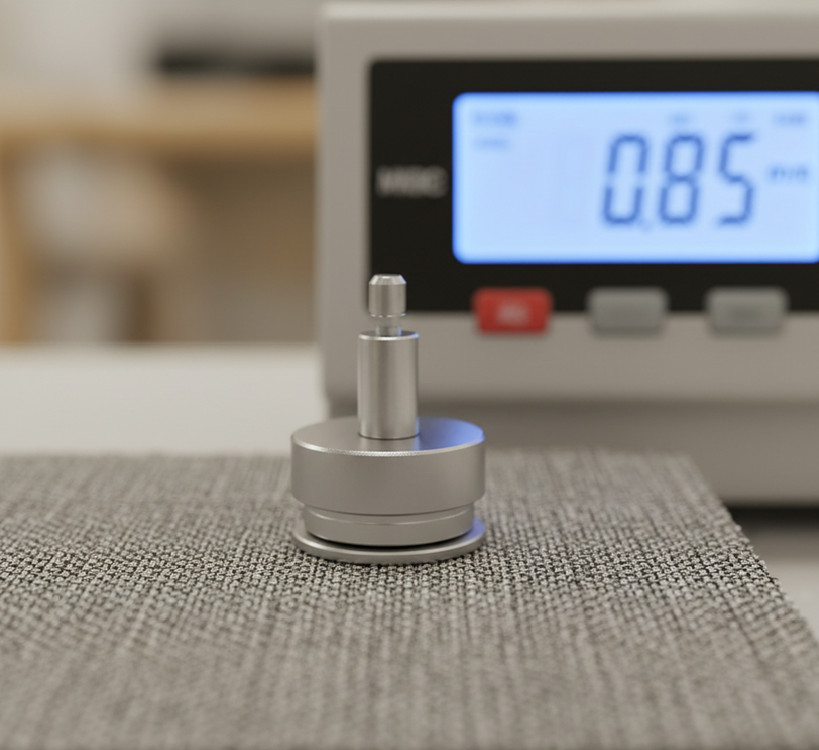
Thickness
Thickness is just the distance between two fabric surfaces under pressure. Simple definition, but in reality—it changes how a fabric behaves.
Why it matters:
- Affects warmth (think winter vs summer fabric)
- Influences stiffness and drape
- Impacts visual appearance
- Key for upholstery and outerwear
Too thick? Feels bulky. Too thin? Might feel cheap.
Test standard:
- ASTM D1777 / ISO 5084
Tensile Strength
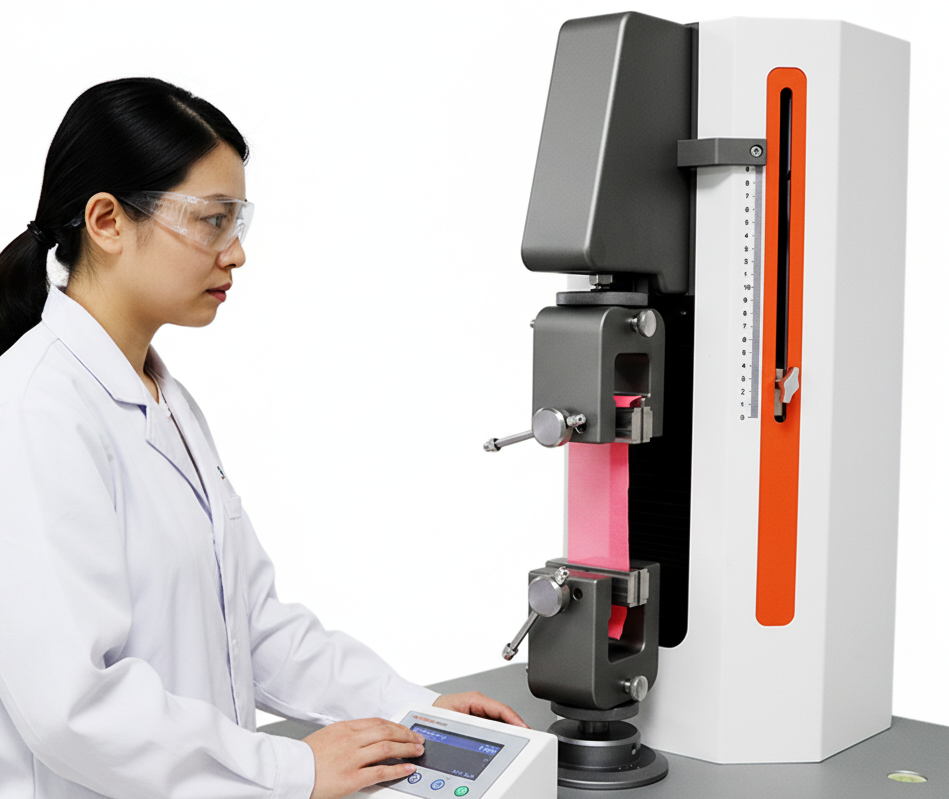
This is about how much pulling force a fabric can take before it breaks. Tested in both warp and weft.
Why it matters:
- Indicates overall durability
- Essential for workwear, uniforms, upholstery
- Helps predict performance under stress
If tensile strength is weak… you’ll hear complaints. Fast.
Standards:
- ASTM D5034 / ISO 13934
Tearing Strength
Different from tensile. This measures how well a fabric resists an existing tear from getting worse.
Once a tear starts—how quickly does it run?
Why it matters:
- Critical for woven fabrics used in garments
- Important for industrial applications too
- Affects long-term wear performance
Standards:
- ASTM D1424 (Elmendorf) / ISO 13937
Bursting Strength
Not always the first test people think of for woven fabrics, but still relevant—especially for certain constructions.
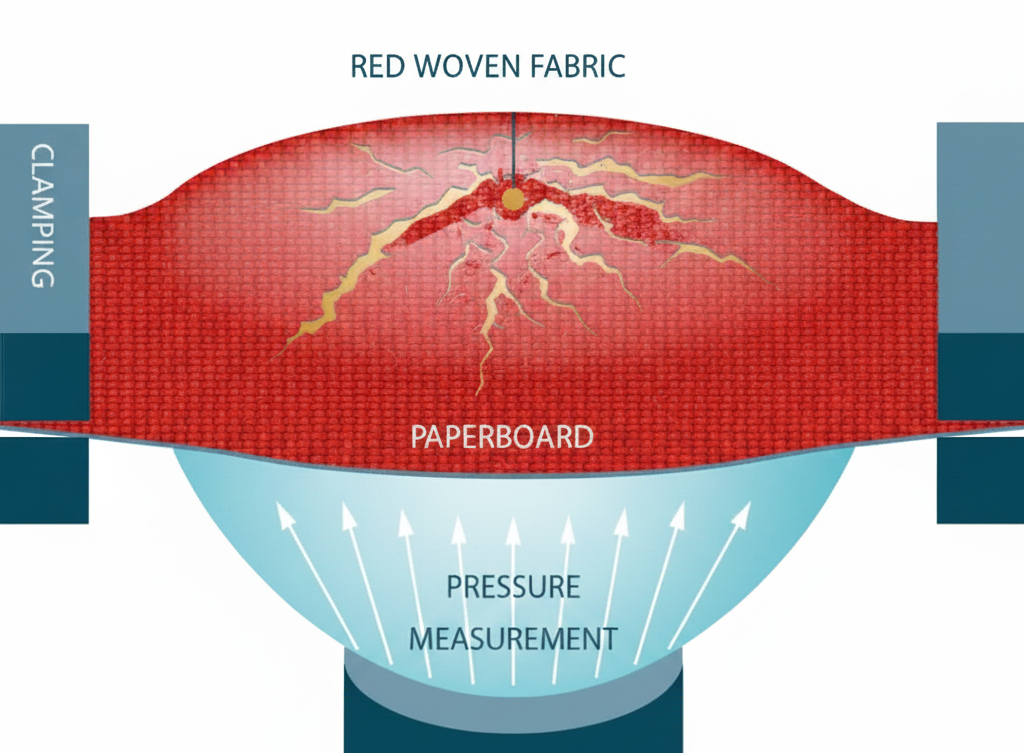
It measures resistance to pressure applied from multiple directions.
Why it matters:
- Useful for loosely constructed or decorative woven fabrics
- Shows overall structural integrity
Think of it as a “pressure test” for the fabric.
Standards:
- ASTM D3786 / ISO 13938
Composition (Fiber Content)
This one is less about performance testing and more about truth-checking.
What’s actually inside the fabric?
Fabric composition identifies the percentage of fibers (cotton, polyester, nylon, etc.) used in the fabric.
Why it matters:
- Required for labeling compliance
- Affects comfort and durability
- Determines care instructions
If composition is off, it’s not just a quality issue—it’s a compliance problem.
Methods:
- Chemical analysis
- Microscopic analysis
- ISO 1833 / AATCC 20
EPI & PPI (Fabric Construction)
These two define the backbone of woven fabrics.
- EPI (Ends Per Inch): warp yarn count
- PPI (Picks Per Inch): weft yarn count
Why it matters:
- Determines fabric density
- Affects GSM, strength and air permeability
- Controls cover factor
Higher isn’t always better. It depends on the end use.
Measurement:
- Counting glass or digital pick counter
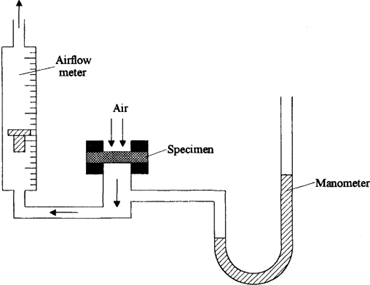
Air Permeability (Cover Factor)
How easily air passes through the fabric.
Sounds simple. But it directly ties to comfort.
Why it matters:
- Determines breathability
- Important for summer wear and sportswear
- Also relevant for home textiles
Low airflow = sweaty problems. High airflow = better comfort.
Standards:
- ASTM D737 / ISO 9237
Water Repellency
Not waterproof. Just resistant.
Water beads up and rolls off instead of soaking in.
Water repellency indicates a fabric’s ability to resist wetting by water while allowing moisture to bead and roll off the surface.
Why it matters:
- Essential for outerwear
- Improves comfort in wet conditions
- Adds functional value to the fabric
Standard:
- AATCC 22 (Spray Test)
Crease Resistance
How well the fabric bounces back after being folded or wrinkled.
Some fabrics hold creases like memory foam. Others recover quickly.
Why it matters:
- Affects appearance
- Important for formalwear and travel garments
- Impacts ease of maintenance
Standards:
- AATCC 66 / ISO 2313
Stiffness
Basically, resistance to bending.
Why it matters:
- Influences drape and hand feel
- Critical for areas like collars and cuffs
- Important in technical textiles
Too stiff feels harsh. Too soft may not hold shape.
Standard:
- ASTM D1388 (Cantilever method)
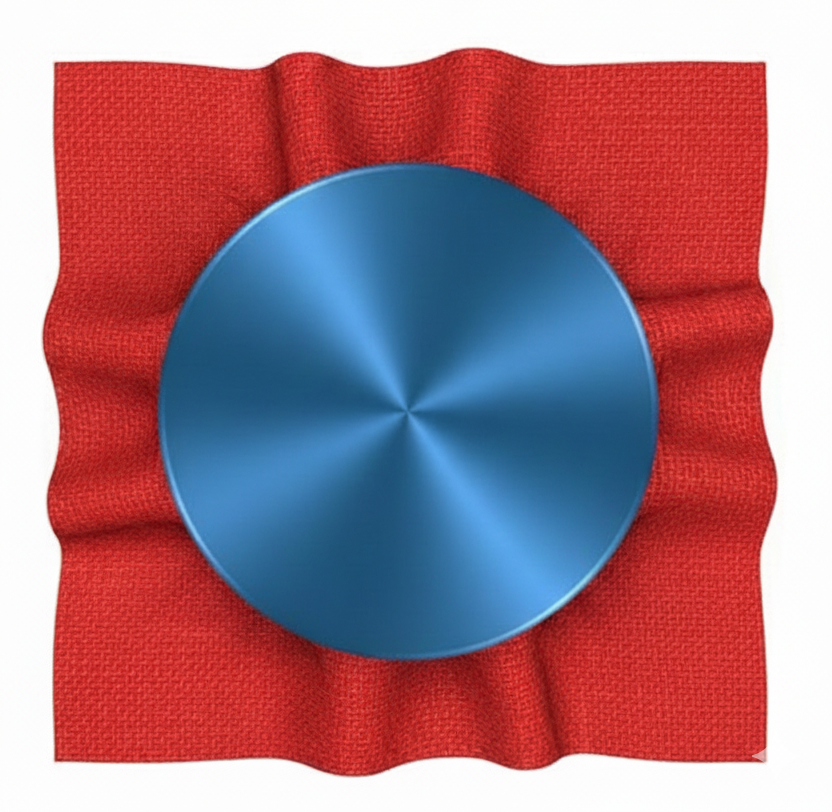
Drape
This one’s more visual. How the fabric hangs under its own weight.
Sometimes you just see it—and you know if it’s right.
Why it matters:
- Strong impact on garment aesthetics
- Important in fashion design
- Influences garment movement
Method:
- Drape coefficient measurement
Pilling
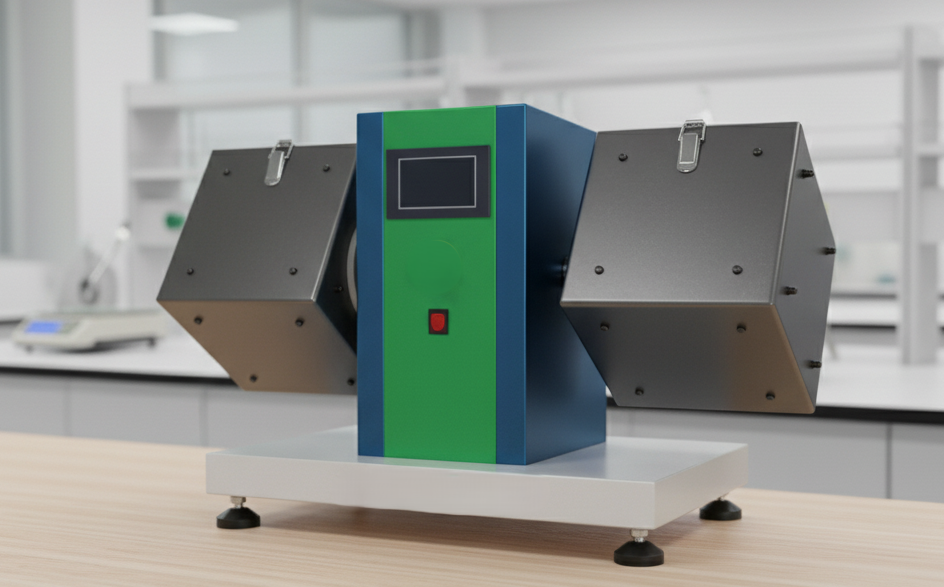
Pilling refers to the formation of small fiber balls (pills) on the fabric surface due to abrasion.
Why it matters:
- Affects appearance quickly
- Reduces perceived fabric quality
- Major concern for buyers
Test Standards:
- ASTM D4970 / ISO 12945
Shrinkage
Probably one of the most sensitive parameters.
It measures how much the fabric changes size after washing or drying.
Why it matters:
- Ensures garment size stability
- Directly linked to customer satisfaction
- One of the top buyer requirements
If shrinkage isn’t controlled, everything else almost doesn’t matter.
Standards:
- AATCC 135 / ISO 5077
Final thought
Woven fabric testing isn’t about ticking boxes. It’s more like building confidence, piece by piece.
You check GSM, strength, air flow, shrinkage… and slowly, a clear picture forms.
Some tests feel routine. Others catch you off guard.
But together? They tell you whether the fabric will actually perform where it matters—out there, in real use.