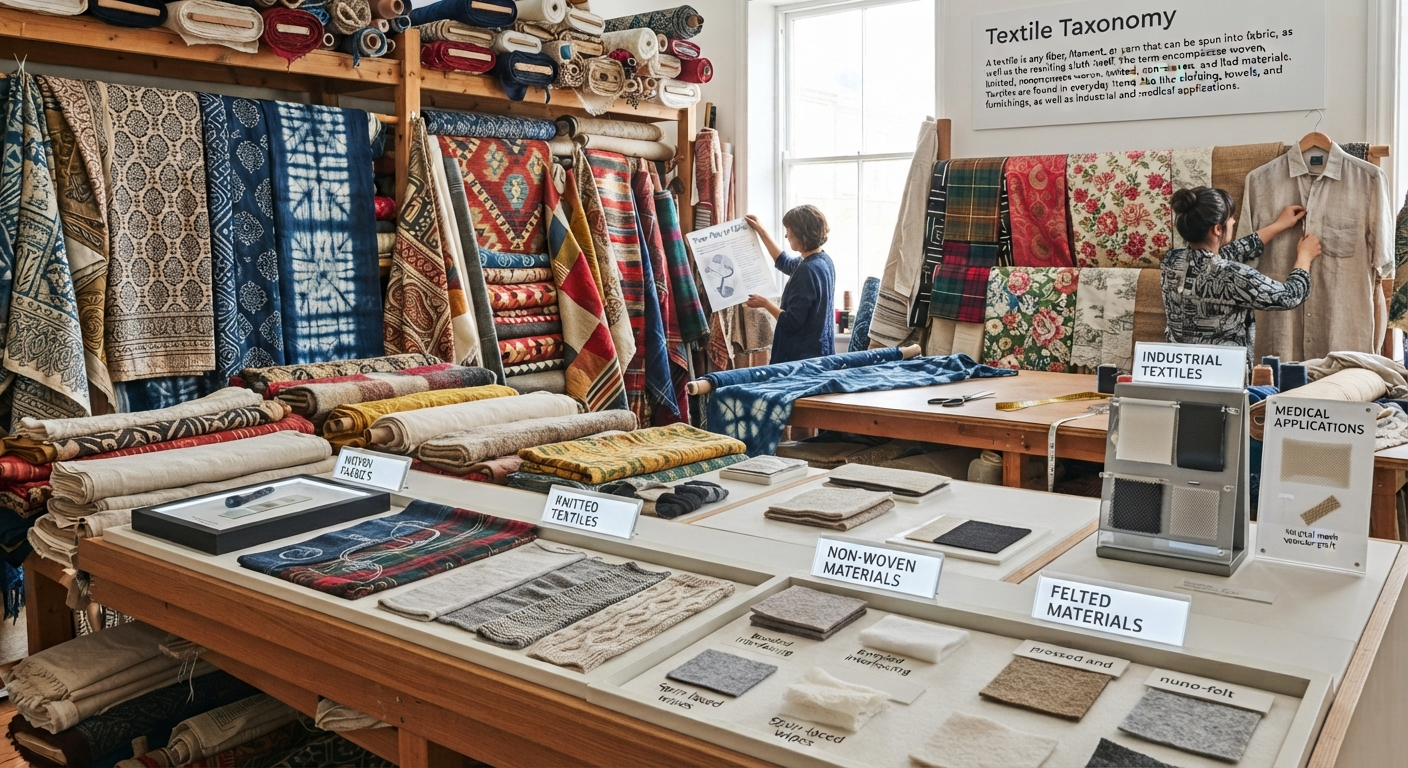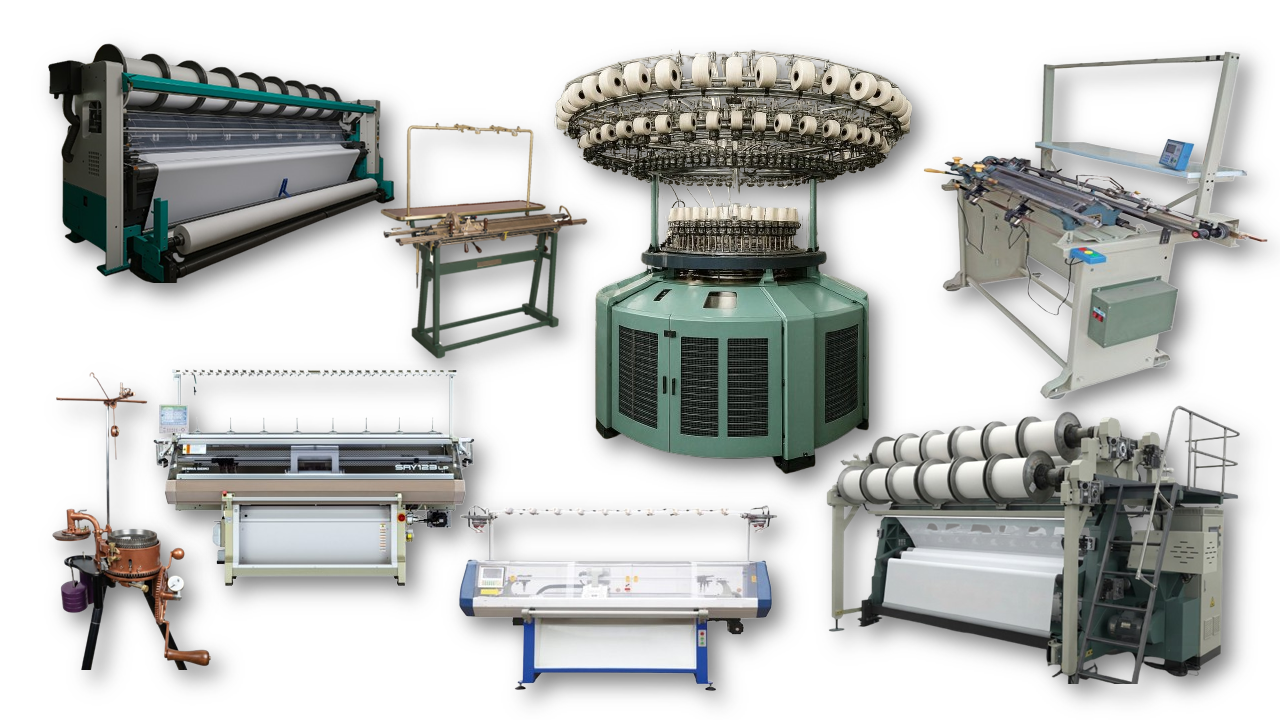
Understanding the different types of knitting machines helps manufacturers, textile engineers, merchandisers, and apparel brands select the most suitable technology based on production volume, fabric construction, design complexity, and investment requirements. This guide explores the major categories of knitting machines, their working principles, key features, advantages, and common applications.
What Is a Knitting Machine?
A knitting machine is a textile manufacturing machine that creates fabric by interlocking loops of yarn. Unlike weaving machines, which interlace warp and weft yarns at right angles, knitting machines produce flexible and stretchable fabrics through a series of interconnected loops. Depending on the machine type, fabrics can be produced in tubular or flat form and may range from simple jersey fabrics to highly engineered technical textiles.
Knitting machines can be broadly classified into the following categories:
- Hand Knitting Machines
- Circular Knitting Machines
- Flat Knitting Machines
- Warp Knitting Machines
- Weft Knitting Machines
- Computerized Knitting Machines
- Sock Knitting Machines
- Glove Knitting Machines
- Jacquard Knitting Machines
- Seamless Knitting Machines
Hand Knitting Machines
Hand knitting machines are manually operated devices primarily used by hobbyists, designers, educational institutions, and small-scale knitwear businesses. The operator manually moves a carriage across a needle bed to create knitted fabric one course at a time. Although production speed is lower than industrial alternatives, hand knitting machines offer exceptional control and flexibility for custom production and sampling.
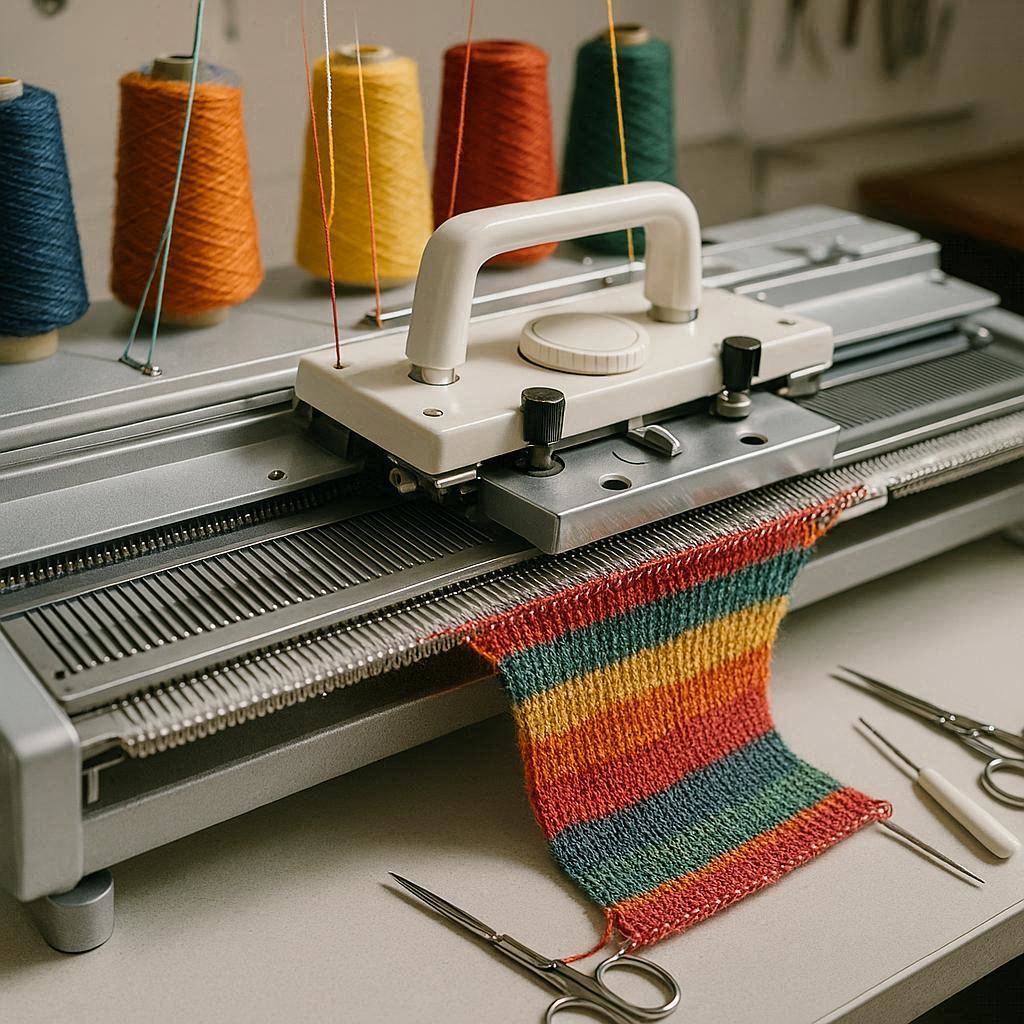
Key Features
- Manual carriage operation
- Compact and portable design
- Available in different needle gauges
- Basic pattern-making capability
- Suitable for home and workshop environments
Advantages
- Low investment cost
- Easy operation and maintenance
- Ideal for small-batch production
- Excellent for sampling and prototyping
Common Applications
- Sweaters
- Scarves
- Hats
- Handmade knitwear
- Sample development
Circular Knitting Machines
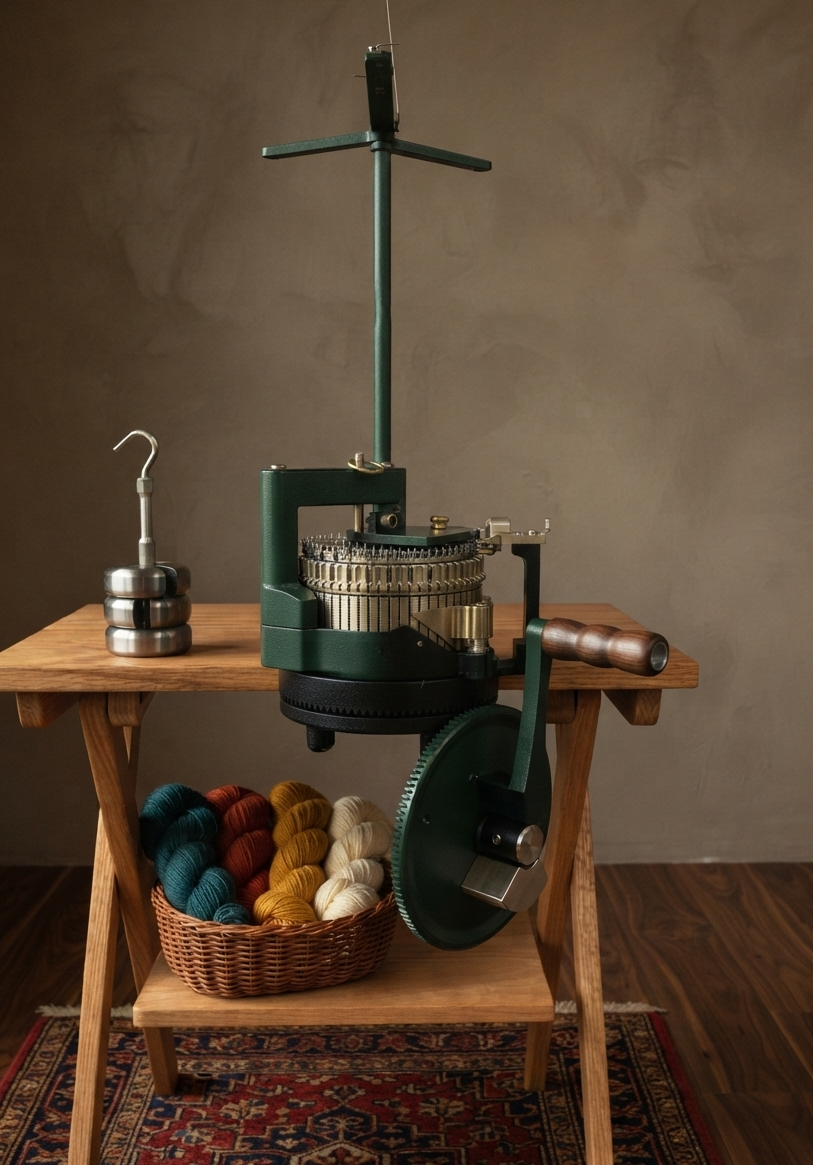
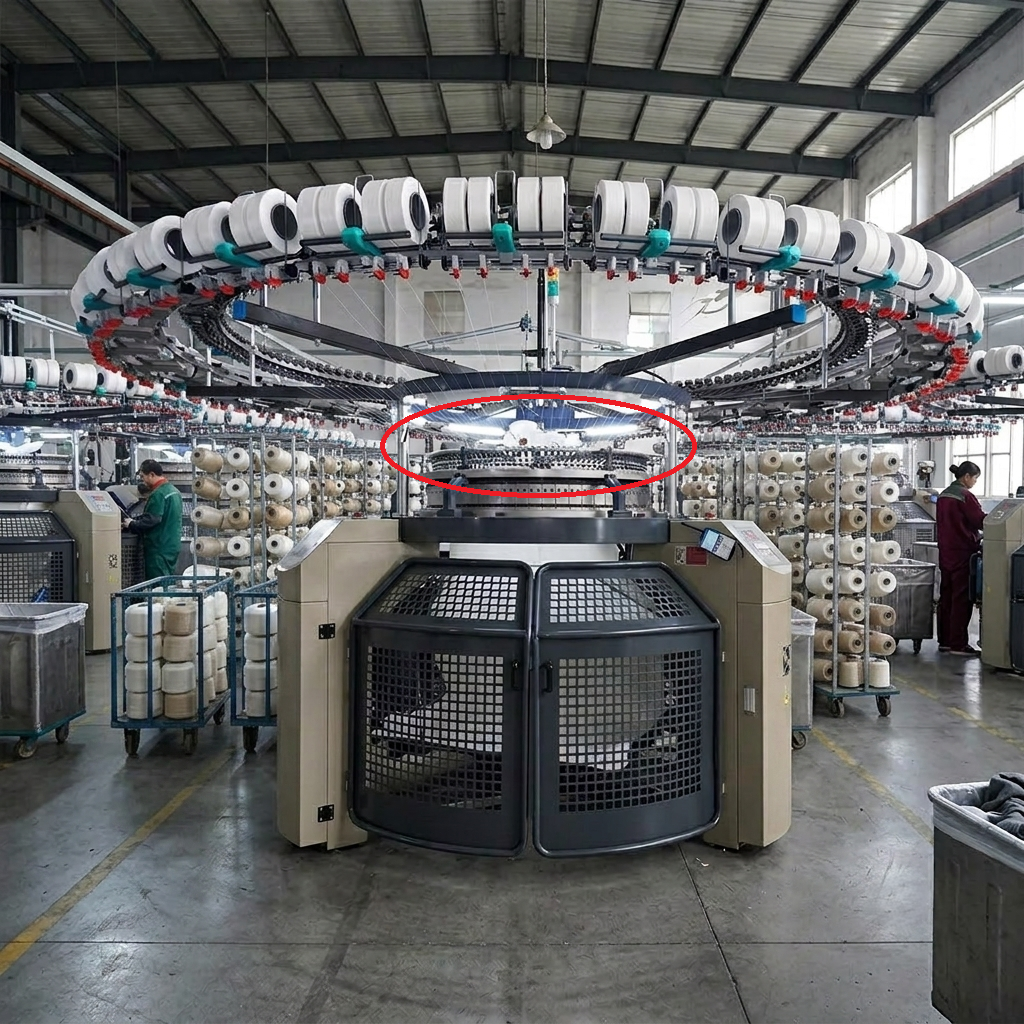
Circular knitting machines utilize needles arranged around a rotating cylinder to produce continuous tubular fabric. They are among the most widely used knitting machines in the textile industry due to their high speed, consistent quality, and suitability for mass production.

Single Jersey Circular Knitting Machines
Single jersey knitting machines produce lightweight and breathable fabrics using a single set of needles. These machines are highly efficient and commonly used for basic apparel fabrics.
Key Features
- Single needle cylinder
- Continuous fabric production
- High machine efficiency
- Lightweight fabric construction
Advantages
- Cost-effective manufacturing
- High production rates
- Consistent fabric quality
Common Applications
- T-shirts
- Undergarments
- Casual wear
- Fashion basics
Double Jersey (Interlock) Circular Knitting Machines
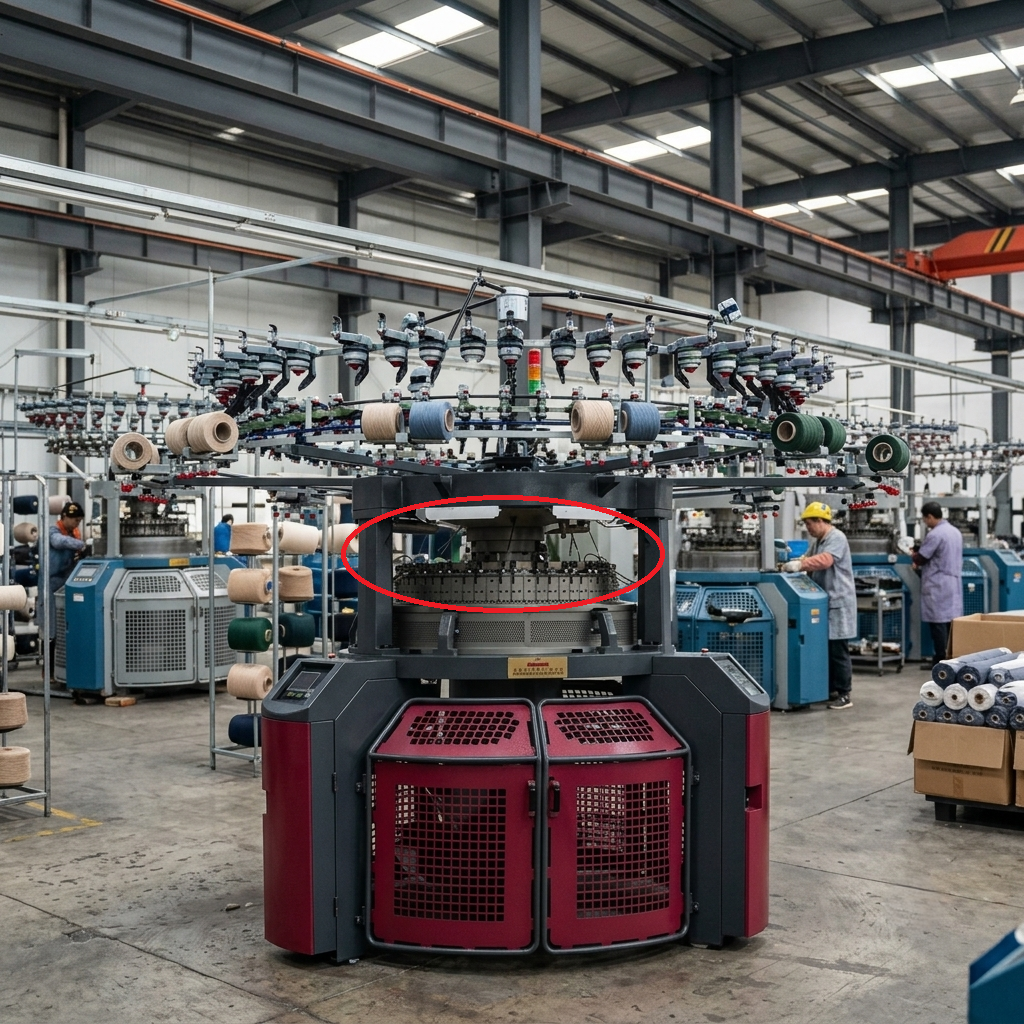
Double jersey machines employ both cylinder and dial needles to create thicker, more stable fabrics. The resulting fabrics offer better shape retention and durability compared to single jersey structures.
Key Features
- Cylinder and dial needle arrangement
- Reversible fabric structure
- Improved dimensional stability
Advantages
- Superior fabric strength
- Better shape retention
- Enhanced appearance and durability
Common Applications
- Polo shirts
- Sportswear
- Premium knit garments
- Winter clothing
Flat Knitting Machines (V-Bed Knitting Machines)
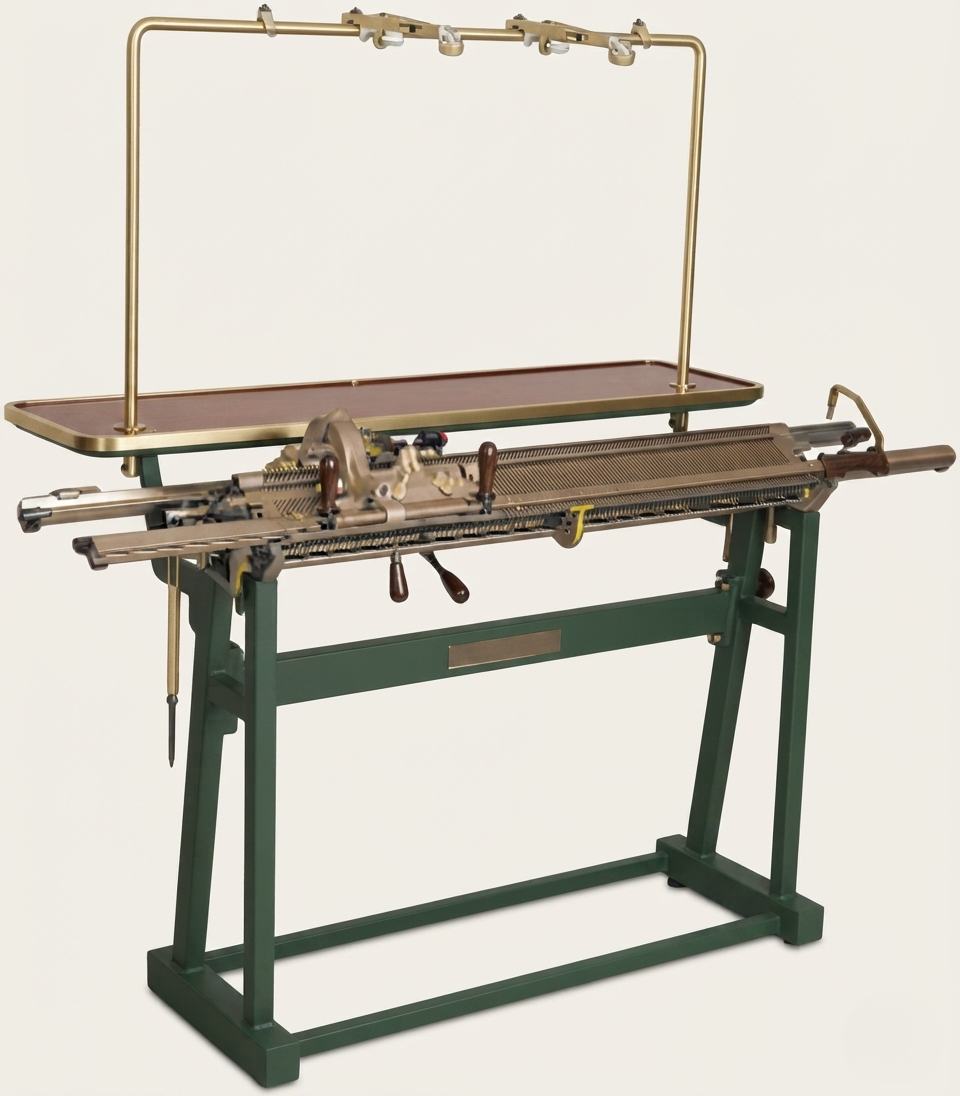
Flat knitting machines consist of two needle beds arranged in a V-shape. Unlike circular machines, they produce flat fabric panels and can shape garments directly during knitting. This capability significantly reduces fabric waste and sewing requirements.
Flat knitting technology has become increasingly important in fashion knitwear manufacturing due to its versatility and ability to produce fully fashioned and whole-garment products.
Key Features
- Dual V-shaped needle beds
- Advanced shaping capability
- Supports cables, jacquard, intarsia, and rib structures
- Available in computerized versions
Advantages
- Reduced fabric waste
- High design flexibility
- Lower sewing requirements
- Ability to produce seamless garments
Common Applications
- Sweaters
- Cardigans
- Fashion knitwear
- Collars and cuffs
- Whole-garment products
Types of Sweater Knitting Machines ( V bed)
Sweater knitting machines are specialized flat knitting machines designed to produce sweater panels, fully fashioned knitwear, and seamless garments. Over the years, sweater manufacturing technology has evolved from manually operated machines to highly automated computerized systems capable of producing complete garments with minimal labor and material waste.
The choice of machine depends on production volume, design complexity, gauge requirements, and investment budget. Modern sweater factories typically use computerized jacquard machines with multiple knitting systems to achieve higher productivity and advanced pattern capabilities.
Manual Knitting Machines (Fixed Gauge)
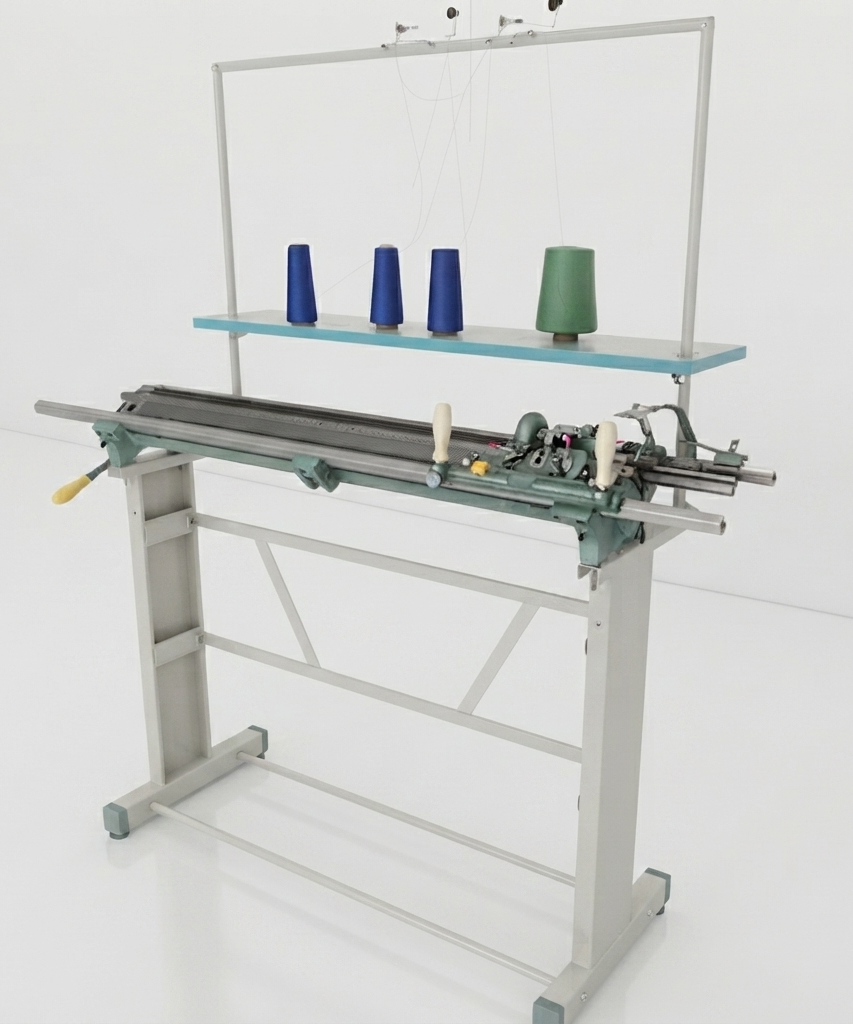
Manual knitting machines are the most basic type of sweater knitting machine. The operator manually moves the carriage across the needle bed to form stitches and create fabric panels.
Key Features
- Hand-operated carriage system
- Fixed gauge configuration
- Simple machine construction
- Low maintenance requirements
Advantages
- Affordable investment
- Easy to operate
- Suitable for training and sampling
- Ideal for small-scale production
Applications
- Hand-knit style sweaters
- Sample development
- Small custom orders
Semi-Automatic Knitting Machines (Fixed Gauge)
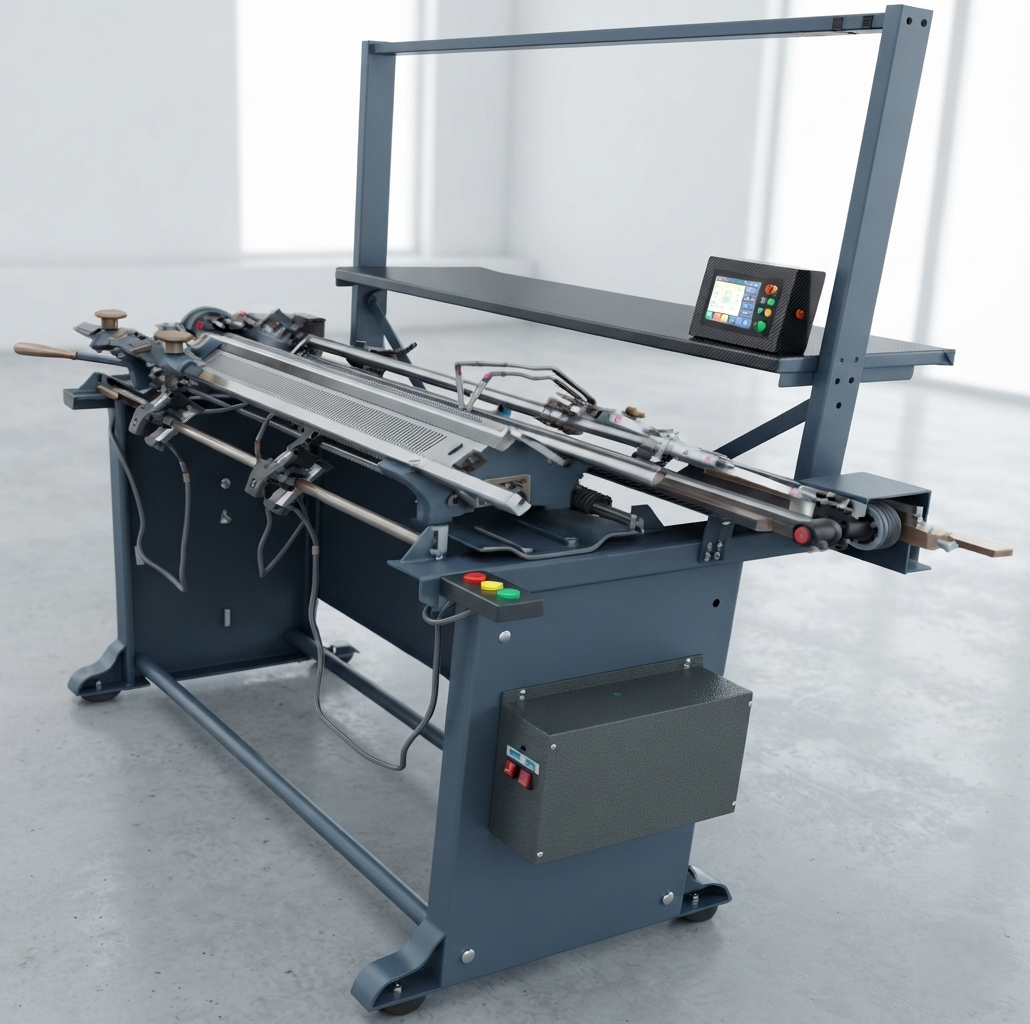
Semi-automatic machines combine manual operation with powered mechanisms to improve productivity and consistency. They are commonly used by small and medium-sized knitwear manufacturers.
Key Features
- Partial automation
- Fixed gauge design
- Higher production speed than manual machines
- Improved knitting consistency
Advantages
- Increased efficiency
- Reduced operator workload
- Better quality control
Applications
- Small-scale commercial sweater production
- Knitwear sampling
- Medium-volume orders
Jacquard Computerized weft Knitting Machines
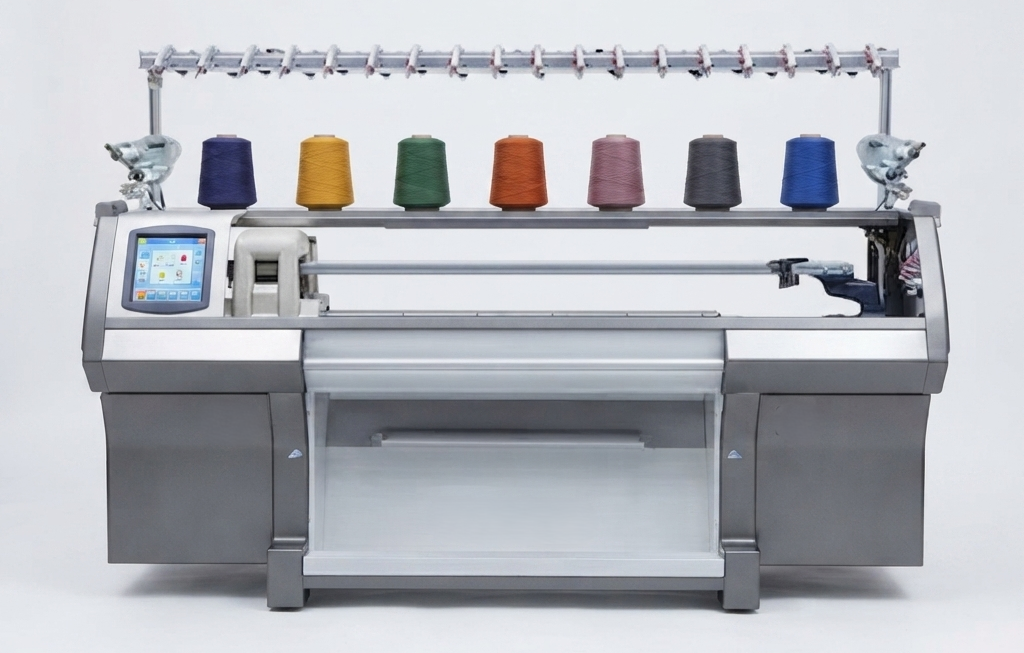
Jacquard knitting machines use computerized needle selection technology to create complex patterns, logos, textures, and multi-color designs directly during knitting. These machines are widely used in modern sweater manufacturing.
Key Features
- Electronic jacquard system
- Automatic needle selection
- Multi-color knitting capability
- Available in fixed, multi-gauge, and convertible-gauge versions
Advantages
- Advanced pattern flexibility
- High production efficiency
- Improved garment quality
- Reduced manual intervention
Applications
- Fashion sweaters
- Branded knitwear
- Premium jacquard garments
- Fully fashioned knitwear
Common Jacquard Machine Configurations
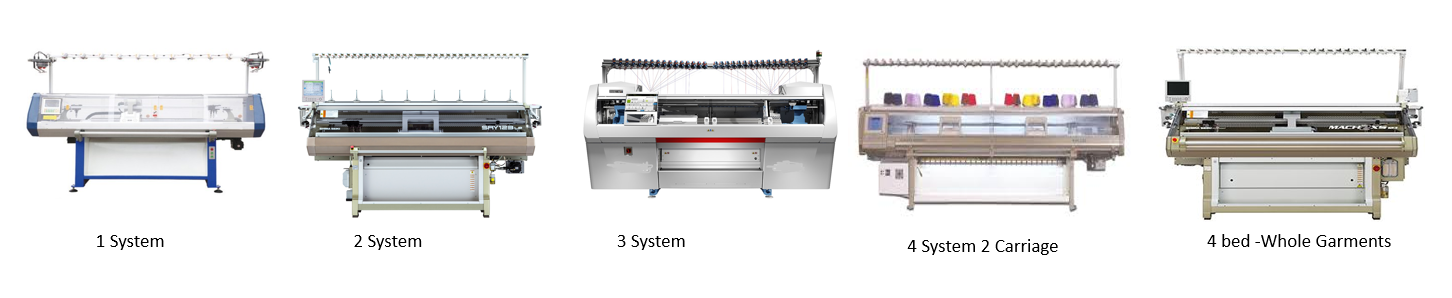
Modern sweater knitting machines are available in various system configurations depending on production requirements and machine manufacturers.
1 System Machine
A single-system machine uses one knitting carriage and is generally suited for basic sweater production.
- Commonly available from Chinese manufacturers
- Lower production capacity
- Suitable for sampling and small-scale production
2 System Machine
Two-system machines provide improved productivity by utilizing two knitting systems.
- Available from Chinese, German, and Japanese manufacturers
- Faster knitting speed
- Suitable for medium-volume production
3 System Machine
Three-system machines offer higher manufacturing efficiency and support more complex knit structures.
- Commonly manufactured in Germany and Japan
- Higher production output
- Enhanced patterning capability
4 System Double-Carriage Machine
These machines use four knitting systems with double carriage technology to maximize productivity.
- Available from German and Japanese manufacturers
- High-speed sweater production
- Excellent for bulk orders and complex designs
2 System Double-Carriage Machine
A balanced solution between productivity and investment cost.
- Improved efficiency compared to standard 2-system machines
- Suitable for medium to large knitwear factories
4-Bed WholeGarment Machines
4-bed WholeGarment technology represents one of the most advanced sweater knitting solutions available today. These machines can knit complete garments without traditional side seams.
- Primarily produced by Japanese manufacturers
- Seamless garment production
- Reduced sewing operations
- Lower material waste
- Superior fit and comfort
Common Applications
- Premium sweaters
- Seamless knitwear
- Fashion garments
- Technical knitwear
- Fully fashioned apparel
Popular Sweater Knitting Machine Categories at a Glance
| Machine Type | Gauge Type | Automation Level | Best For |
|---|---|---|---|
| Manual | Fixed Gauge | Manual | Sampling & Small Production |
| Semi-Automatic | Fixed Gauge | Partial Automation | Medium Production |
| 1 System Jacquard | Fixed/Multi Gauge | Computerized | Basic Sweaters |
| 2 System Jacquard | Fixed/Multi Gauge | Computerized | Medium Production |
| 3 System Jacquard | Fixed/Multi Gauge | Computerized | Complex Knitwear |
| 4 System Double Carriage | Fixed/Multi Gauge | Computerized | High-Volume Production |
| 4-Bed WholeGarment | Convertible Gauge | Fully Computerized | Seamless Garments |
This section naturally fits after "Flat Knitting Machines (V-Bed Knitting Machines)" and before "Warp Knitting Machines" in your article. It also adds valuable industry-specific information that is highly relevant for sweater and knitwear manufacturers.
Seamless Knitting Machines
Seamless knitting machines create garments without conventional side seams. By producing a complete garment tube or body shape directly on the machine, these systems improve wearer comfort while reducing sewing operations and material waste.
Seamless technology is increasingly popular in performance apparel and activewear manufacturing.
Key Features
- Integrated garment shaping
- Computerized size grading
- Tubular garment production
- Minimal post-processing
Advantages
- Superior comfort
- Reduced sewing costs
- Lower fabric waste
- Faster production cycles
Common Applications
- Activewear
- Compression garments
- Shapewear
- Underwear
- Performance apparel
Sock Knitting Machines
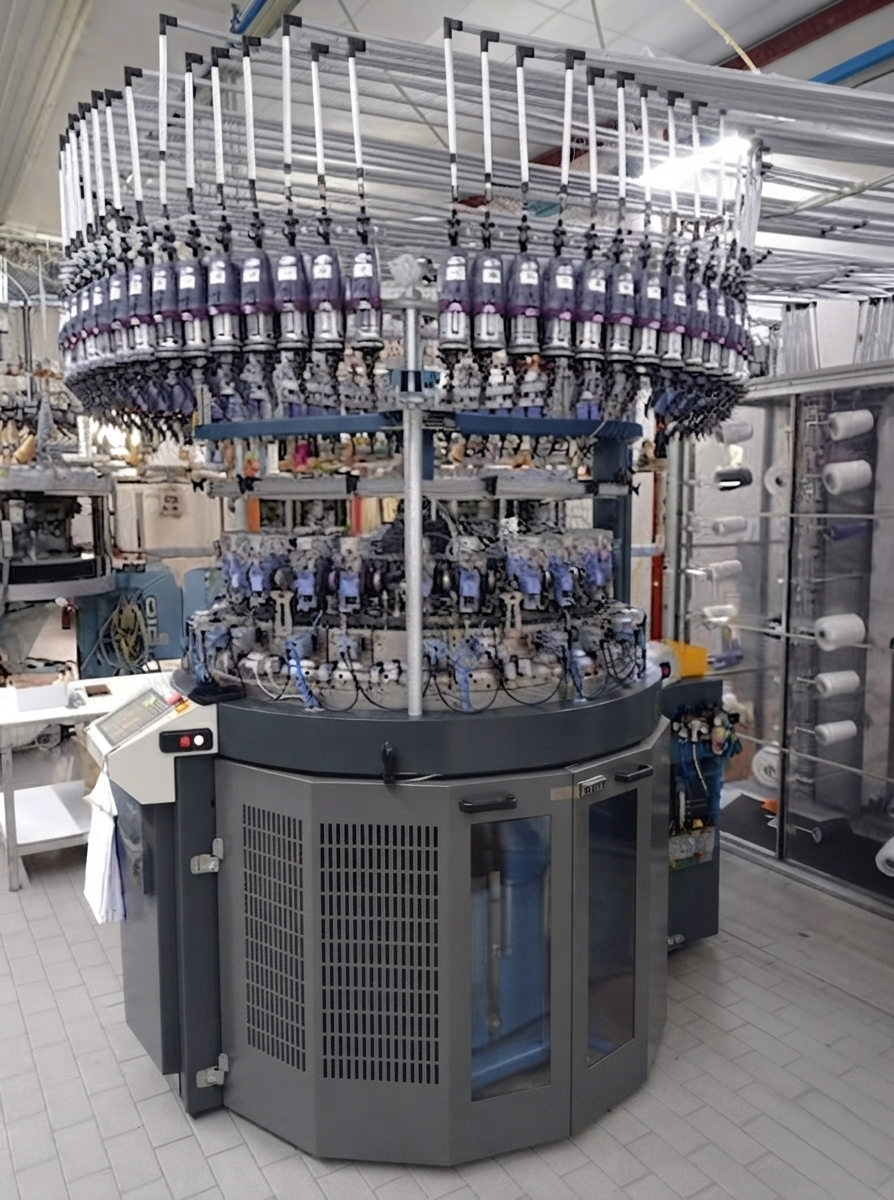
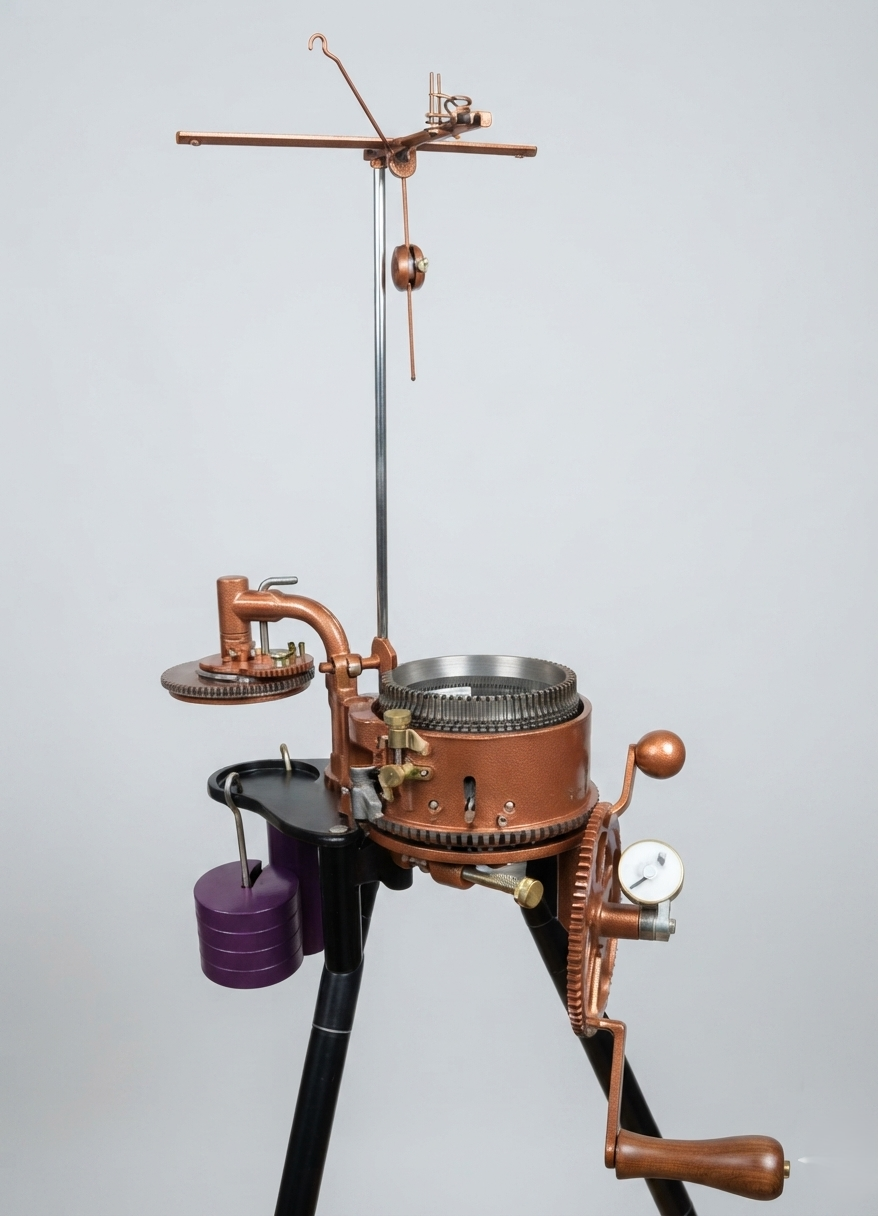
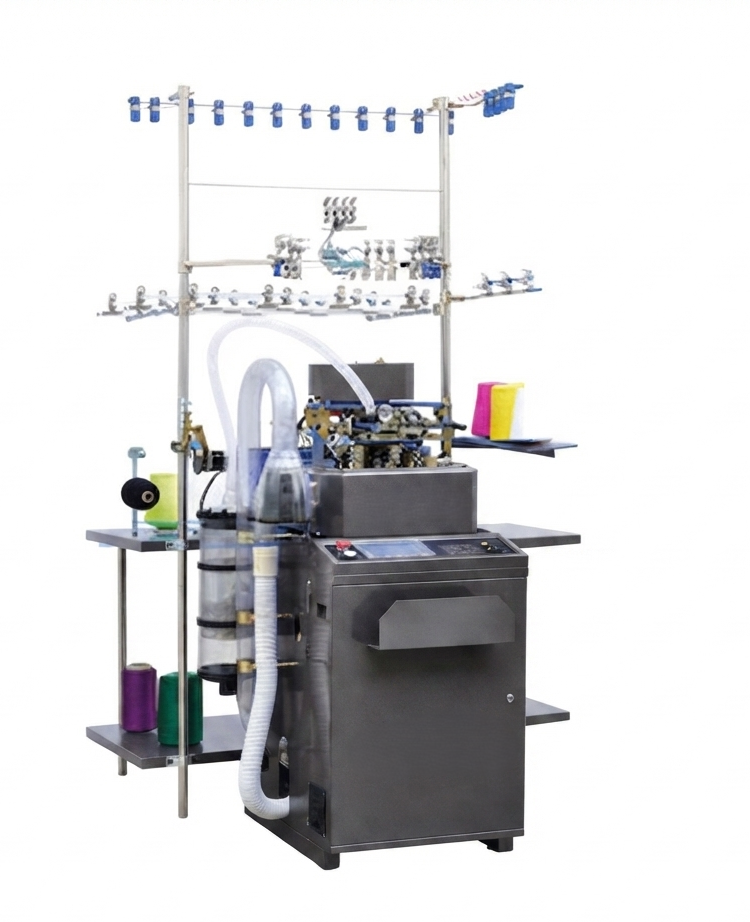
Sock knitting machines are specialized circular knitting machines developed specifically for automated sock production. They can create complete sock structures, including heels and toes, within a single production cycle.
The high level of automation makes these machines ideal for large-scale hosiery manufacturing.
Key Features
- Small-diameter knitting cylinder
- Automatic heel and toe formation
- Elastic yarn integration
- Terry knitting capability
Advantages
- High production efficiency
- Consistent sizing
- Fully automated manufacturing
Common Applications
- Athletic socks
- Casual socks
- Compression socks
- Terry sports socks
Glove Knitting Machines
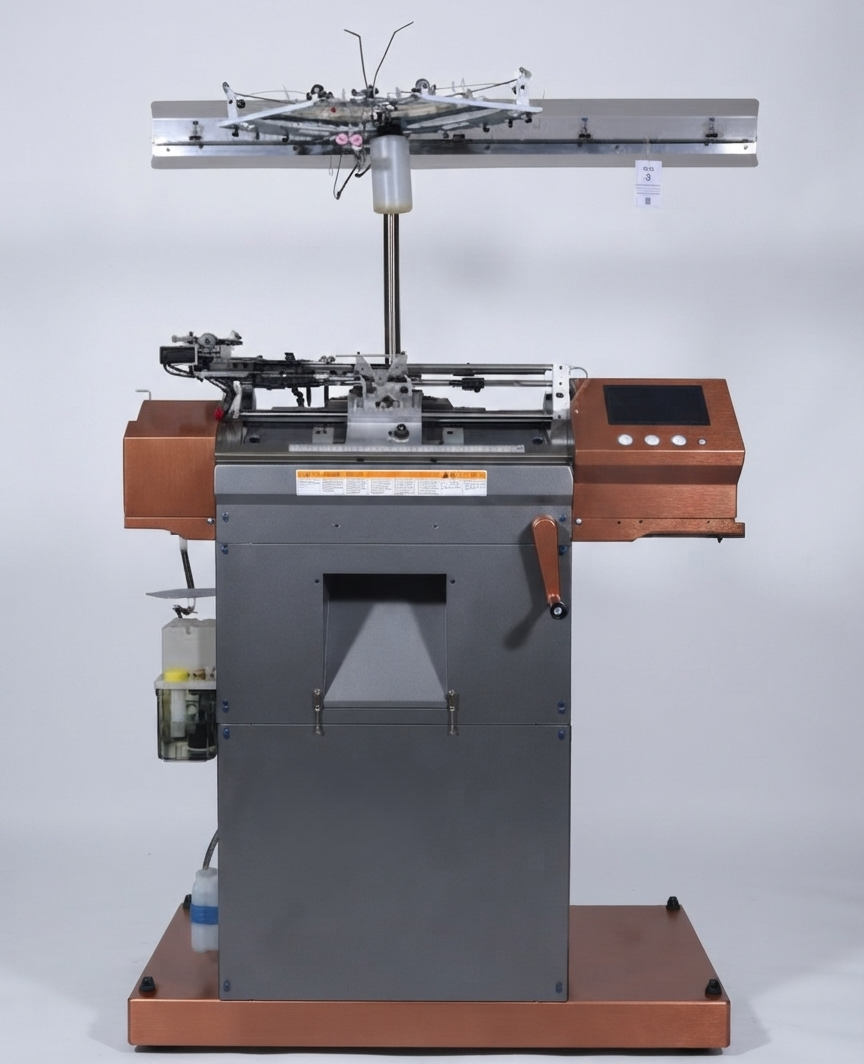
Glove knitting machines are designed to produce seamless glove constructions with integrated finger and thumb formation. These machines deliver precise dimensions and excellent comfort while minimizing manual sewing operations.
Key Features
- Automatic finger shaping
- Fine-gauge needle systems
- Seamless knitting technology
Advantages
- Comfortable fit
- High production output
- Consistent glove dimensions
Common Applications
- Industrial safety gloves
- Winter gloves
- Fashion gloves
- Sports gloves
Comparison of Knitting Machine Types
Before selecting a knitting machine, manufacturers should evaluate production requirements, fabric structures, investment budgets, and desired design flexibility. The table below provides a quick comparison of the major knitting machine categories.
| Machine Type | Best Application | Production Speed | Design Flexibility |
|---|---|---|---|
| Hand Knitting | Sampling & Hobby | Low | Medium |
| Circular Single Jersey | T-Shirts | High | Low |
| Circular Double Jersey | Sportswear | High | Medium |
| Flat Knitting | Sweaters | Medium | High |
| Warp Tricot | Lingerie & Linings | Very High | Medium |
| Warp Raschel | Lace & Technical Textiles | High | High |
| Computerized Knitting | Fashion Knitwear | High | Very High |
| Sock Knitting | Socks | High | Medium |
| Glove Knitting | Gloves | High | Medium |
| Jacquard Knitting | Patterned Fabrics | Medium-High | Very High |
| Seamless Knitting | Activewear | Medium-High | High |
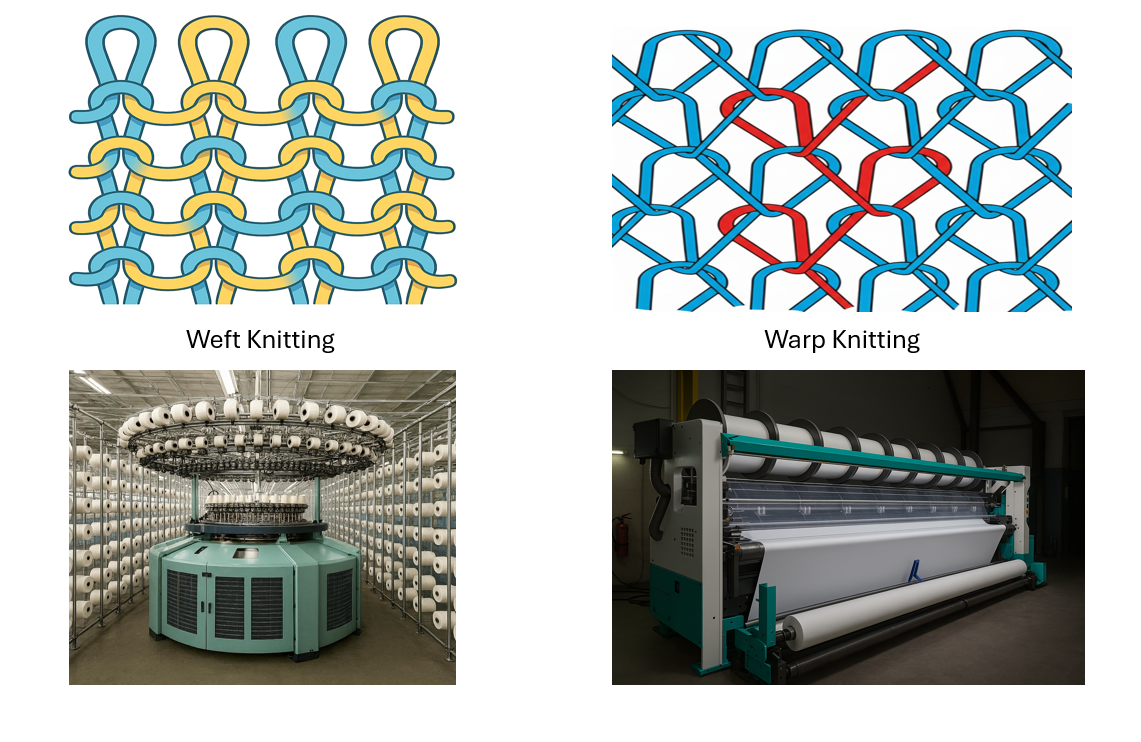
Knitting is a fabric manufacturing process in which yarns are interlooped to form a textile structure. Knitted fabrics are broadly classified into two categories: Weft Knitting and Warp Knitting. These two techniques differ in yarn feeding direction, machine construction, fabric properties, and end-use applications.
Weft Knitting
Definition
Weft knitting is a knitting method where a single yarn or a set of yarns runs horizontally across the fabric width, forming loops in a side-to-side (course-wise) direction.
Characteristics
- Yarn feeds across the fabric width.
- One yarn can form multiple loops across many needles.
- High elasticity and stretch.
- Soft and comfortable fabric handle.
- Easier to unravel if a yarn breaks.
- Suitable for garment production.
Warp Knitting
Definition
Warp knitting is a knitting method in which each needle is supplied by its own yarn, and the yarns run lengthwise along the fabric direction.
Characteristics
- Yarn moves vertically along fabric length.
- Each needle requires a separate yarn.
- High production speed.
- Excellent dimensional stability.
- Resistant to laddering and unraveling.
- More complex machine setup.
Common Warp Knitting Machines
Tricot Machine
- Produces fine fabrics.
- Used in lingerie and sportswear.
Raschel Machine
- Produces openwork, mesh, lace, and technical textiles.
- Used for nets and industrial fabrics.
Difference Between Weft Knitting and Warp Knitting
| Feature | Weft Knitting | Warp Knitting |
|---|---|---|
| Yarn Direction | Yarn runs horizontally (across fabric width). | Yarn runs vertically (along fabric length). |
| Needle | One yarn can feed many needles. | Each needle requires a separate yarn. |
| Fabric | Loops are formed in a crosswise direction. | Loops are formed in a lengthwise direction. |
| Machine | Circular knitting machine, Flat knitting machine. | Tricot machine, Raschel machine. |
| Fabric Elasticity | Higher stretch and elasticity. | Lower stretch, better dimensional stability. |
| Run/Un | Easily unravels when a yarn breaks. | Does not easily unravel. |
| Production Speed | Generally slower than warp knitting. | Very high production speed. |
| Fabric Appearance | Similar appearance on both sides in many cases. | Different technical face and back. |
| Fabric Stability | Less stable; more prone to distortion. | More stable with good shape retention. |
| Cost | Lower machine and production cost. | Higher machine cost and setup complexity. |
Warp Knitting Machines
Warp knitting machines form fabric using multiple yarns supplied simultaneously in the lengthwise direction. Each needle is fed by a separate yarn, resulting in fabrics with excellent dimensional stability, durability, and resistance to laddering.
Warp knitting is widely used for both apparel and technical textile applications.
Tricot Knitting Machines
Tricot machines are designed to produce fine, lightweight fabrics with smooth surfaces and excellent drape characteristics.

Key Features
- Fine-gauge knitting
- High production speed
- Smooth and uniform fabric surface
Advantages
- Excellent productivity
- High fabric quality
- Good dimensional stability
Common Applications
- Lingerie
- Sportswear
- Linings
- Lightweight technical textiles
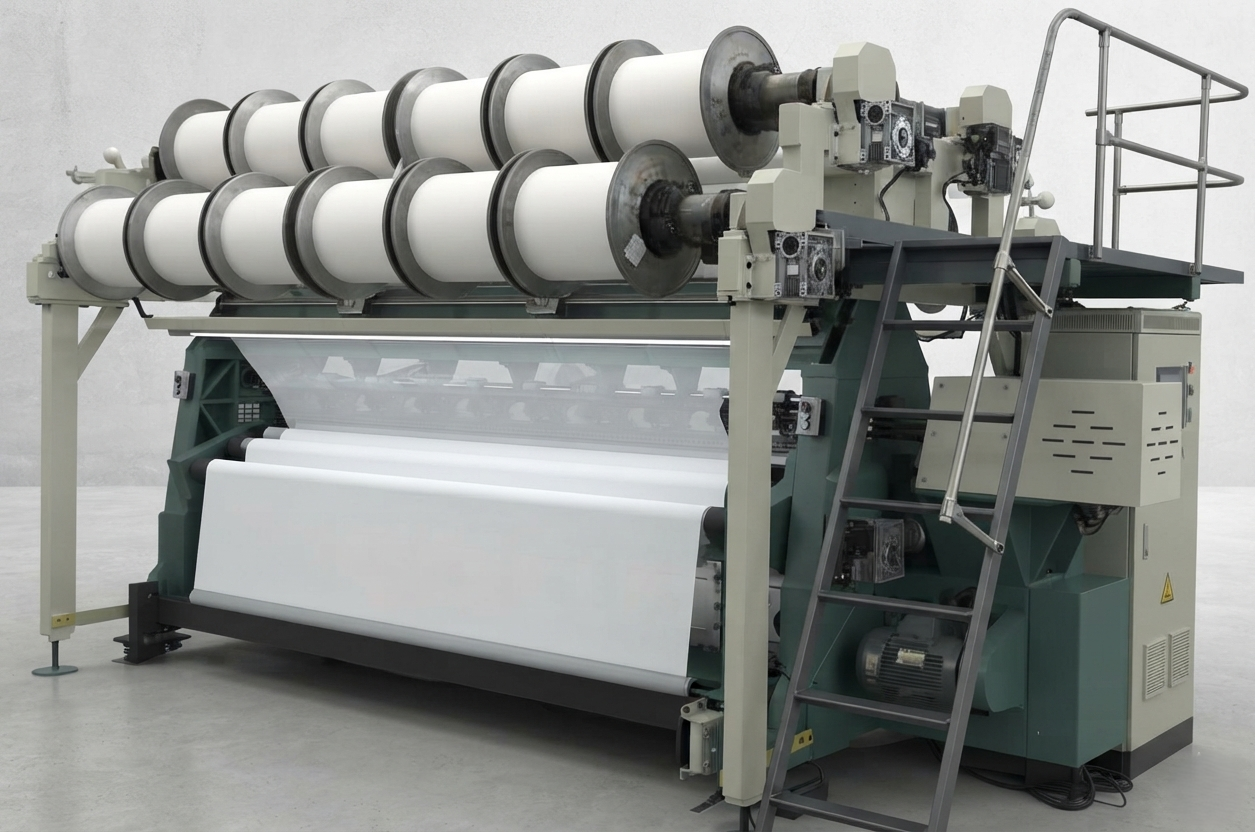
Raschel Knitting Machines
Raschel machines are capable of producing complex textile structures such as lace, mesh, nets, and decorative fabrics. Their design flexibility makes them highly versatile across multiple industries.
Key Features
- Multiple guide bar systems
- Advanced pattern creation
- Suitable for openwork structures
Advantages
- Excellent design versatility
- Durable fabric structures
- Wide range of fabric possibilities
Common Applications
- Lace fabrics
- Mesh fabrics
- Netting
- Upholstery textiles
- Technical textile products
Conclusion
The textile industry relies on a diverse range of knitting machines to meet varying production, quality, and design requirements. Circular knitting machines remain the preferred choice for high-volume fabric manufacturing, while flat knitting machines provide exceptional flexibility for shaped garments and fashion knitwear. Warp knitting machines excel in producing stable fabrics for apparel and technical applications, while computerized systems bring automation and precision to modern manufacturing.
Specialized technologies such as sock, glove, jacquard, and seamless knitting machines further expand the capabilities of knitwear production by addressing specific product categories and performance requirements. As textile manufacturing continues to evolve, advanced computerized and seamless knitting technologies are expected to play an even greater role in improving efficiency, sustainability, and product innovation.
Organizations that select the right knitting machine technology can achieve higher productivity, better fabric quality, reduced waste, and greater competitiveness in today's global textile market.