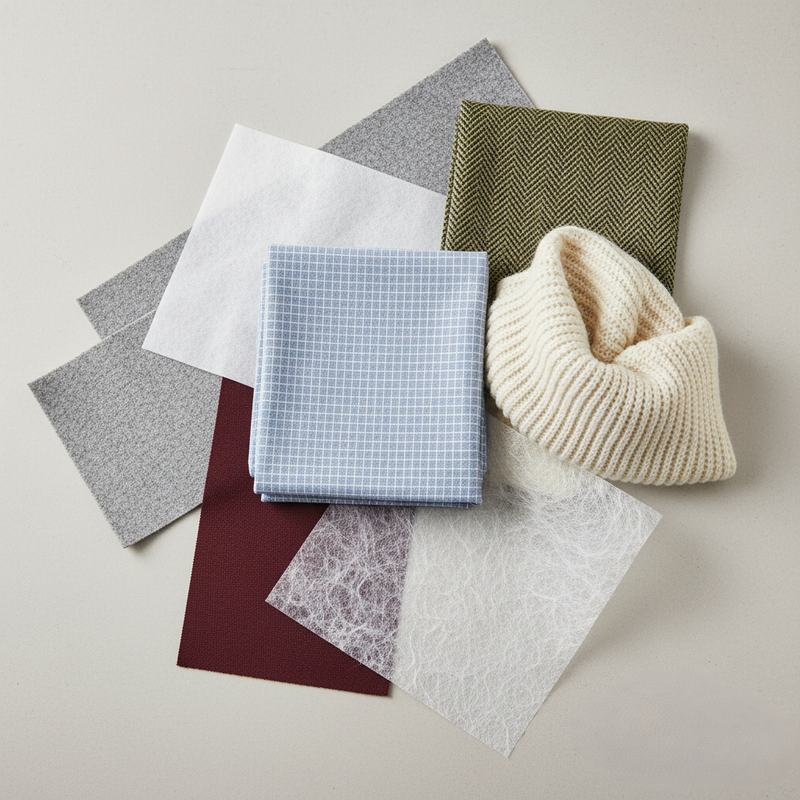
Techniques of Fabric Manufacture
There are three primary techniques used to manufacture fabrics:
Each technique produces fabrics with distinct structures, properties and end uses.
Weaving
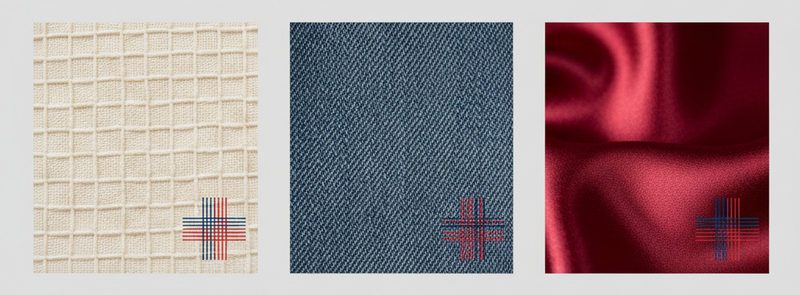
Weaving is the process of making fabric by interlacing two sets of yarns right angle to each other.
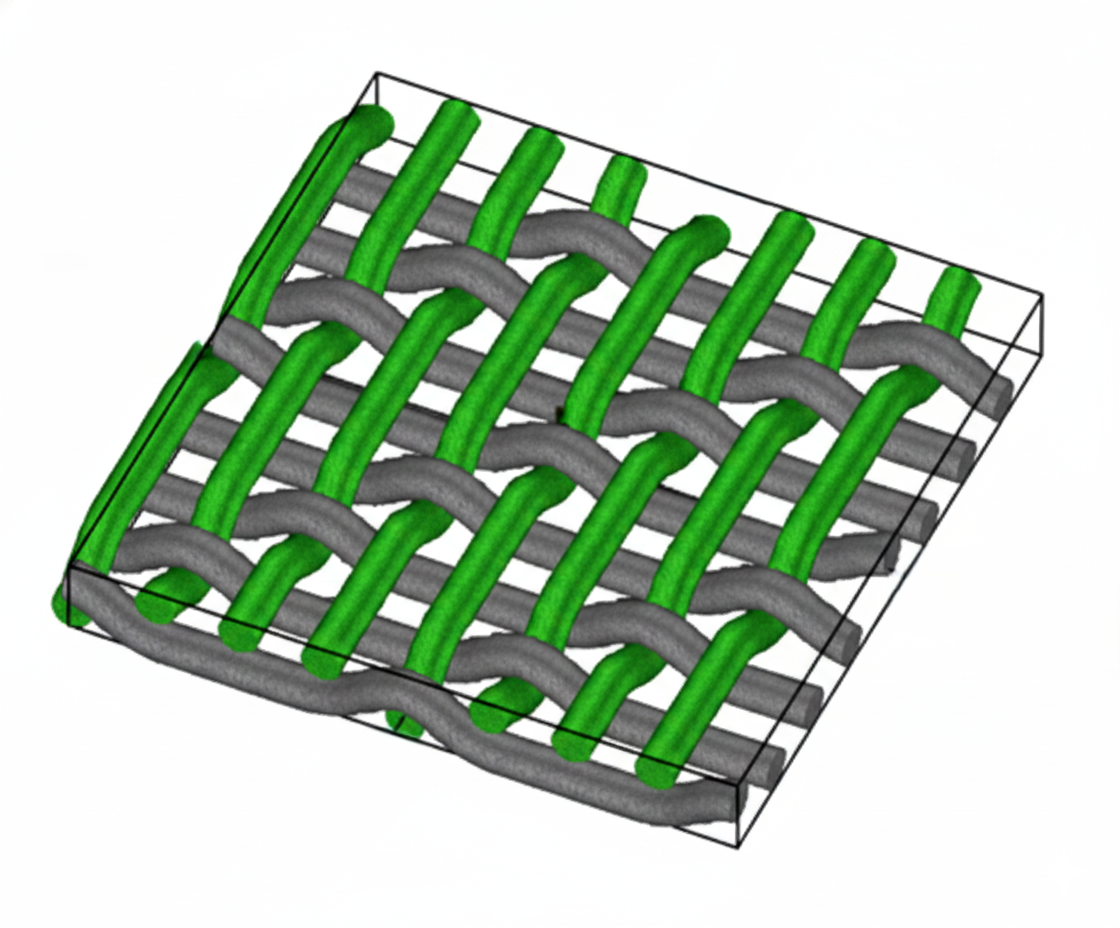
- Warp yarns: Run lengthwise (vertical direction)
- Weft yarns: Run crosswise (horizontal direction)
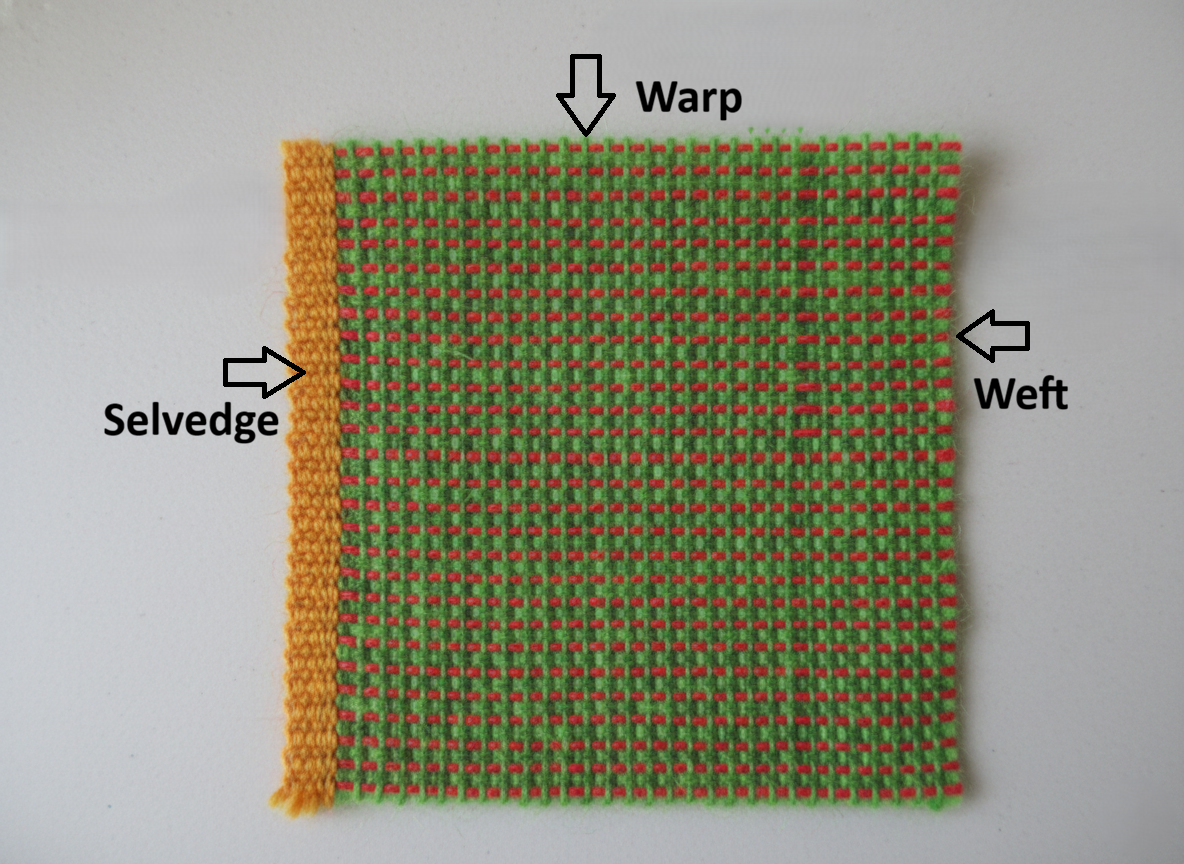
The edges of woven fabric are finished as selvedges, which prevent fraying.
Basic Components of woven fabric
- Warp – Strong yarns held under tension on the loom
- Weft – Yarn inserted across the width of the fabric
- Selvedge – Self‑finished edges formed during weaving
Common Weave Structures
- Plain Weave – One up, one down (e.g., poplin, voile)
- Twill Weave – Diagonal pattern (e.g., denim, gabardine)
- Satin Weave – Smooth surface with long floats (e.g., satin, sateen)
Characteristics of Woven Fabrics
- High dimensional stability
- Good strength and durability
- Lower stretch compared to knits (except bias direction)
- Crisp appearance and defined structure
End Uses of Woven Fabrics
- Shirts and blouses
- Denim and trousers
- Formal wear
- Home textiles (bedsheets, curtains)
- Industrial fabrics
Knitting
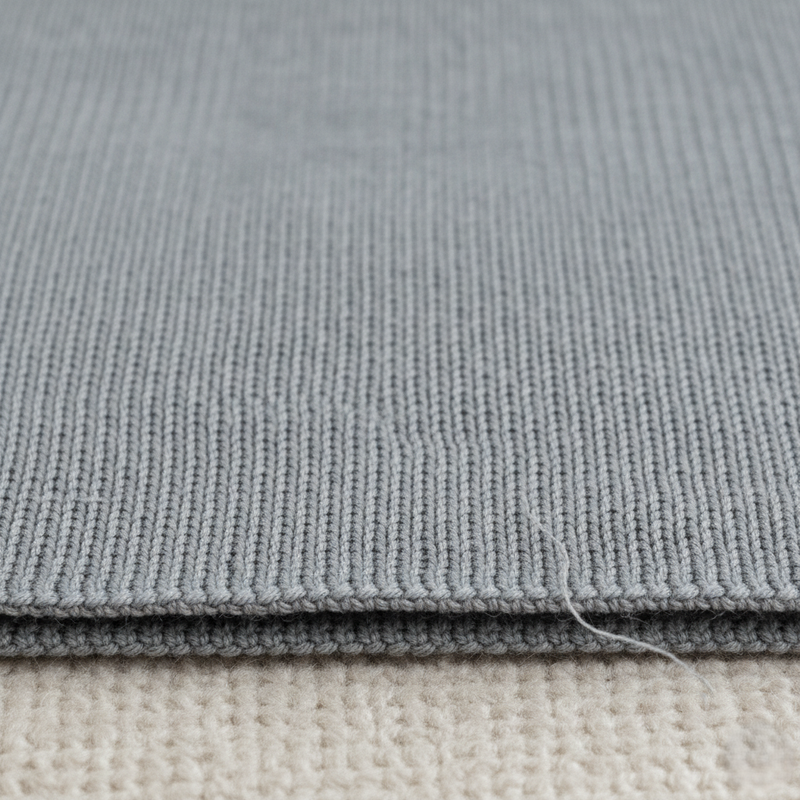
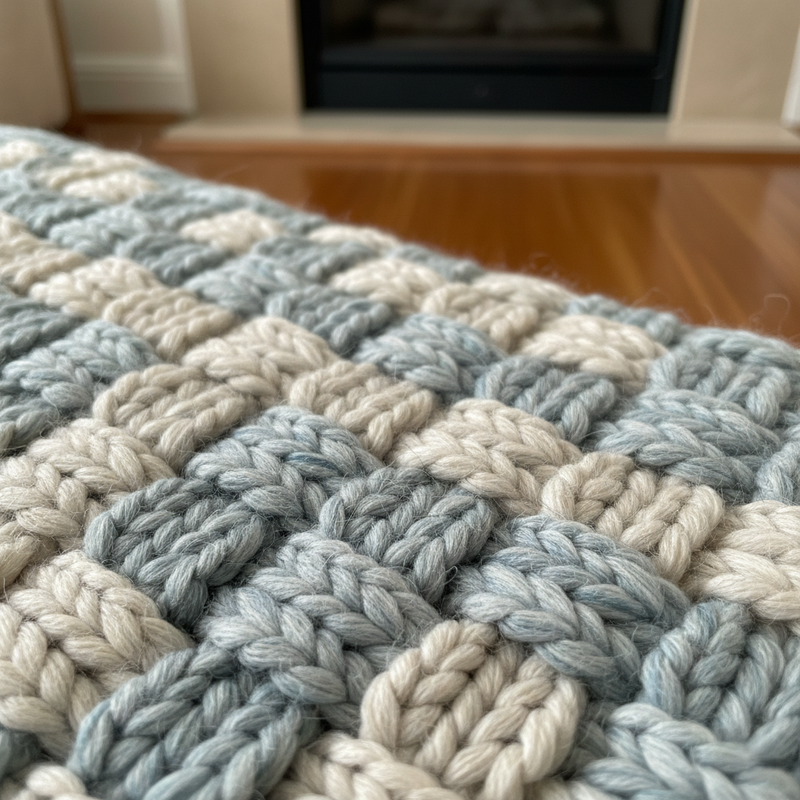
Knitting is the process of fabric formation by interlooping yarns. unlike crossing at right angles, yarns form loops that are interconnected.
Knitted fabrics are characterized by courses and wales:
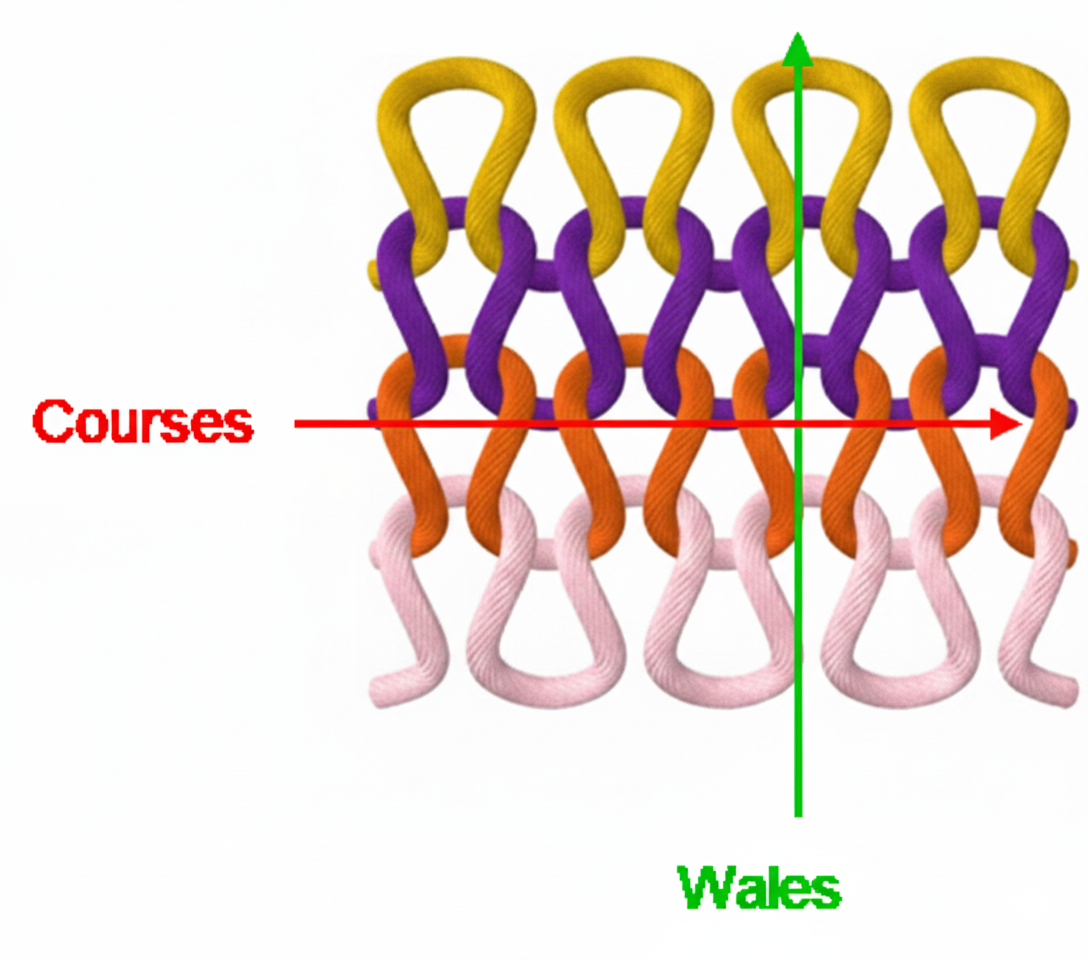
- Courses – Horizontal rows of loops
- Wales – Vertical columns of loops
Types of Knitting
Knitting is a method of fabric formation that creates textiles by inter-looping yarns. Based on how the yarn moves and forms loops, knitting is mainly classified into two types: weft knitting and warp knitting. Each type produces fabrics with different structures, properties, and applications.
Weft Knitting
In weft knitting, the yarn runs horizontally across the fabric and forms loops one after another. This process usually uses a single yarn or a set of yarns, making it flexible and easy to produce. Because of its structure, weft knitted fabrics are generally more stretchable and comfortable.
Common examples include:
- Single jersey
- Rib knit
- Interlock
Warp Knitting
Warp knitting works differently, as the yarns run vertically along the length of the fabric. In this method, each needle is supplied with its own yarn, which creates a more stable and structured fabric compared to weft knitting. Warp knitting is widely used for both apparel and technical textiles.
Common examples include:
- Tricot
- Raschel
Characteristics of Knitted Fabrics
Knitted fabrics are known for their comfort and flexibility due to their looped construction. These properties make them highly suitable for garments worn close to the body.
Some key characteristics include:
- High elasticity and natural stretch
- Soft and comfortable feel on the skin
- Excellent drape, allowing garments to fall naturally
- Better wrinkle resistance compared to many woven fabrics
- Lower dimensional stability than woven fabrics, meaning they may stretch or shrink more
End Uses of Knitted Fabrics
Because of their comfort, stretch, and versatility, knitted fabrics are used in a wide range of apparel products. They are especially preferred for garments that require flexibility and ease of movement.
Common end uses include:
- T-shirts and casual tops
- Activewear and sportswear
- Sweaters and knitwear
- Hosiery and underwear
- Casual and comfort garments
Non‑Woven Fabrics
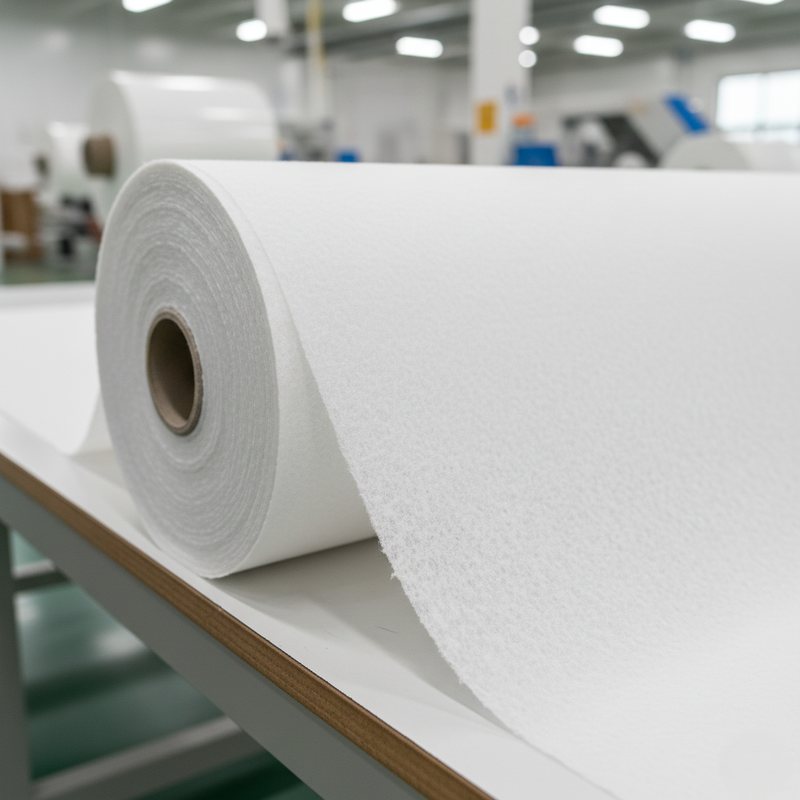
Non‑woven fabrics are made directly from fibres, without spinning them into yarns. fibres are bonded together using mechanical, chemical or thermal methods.
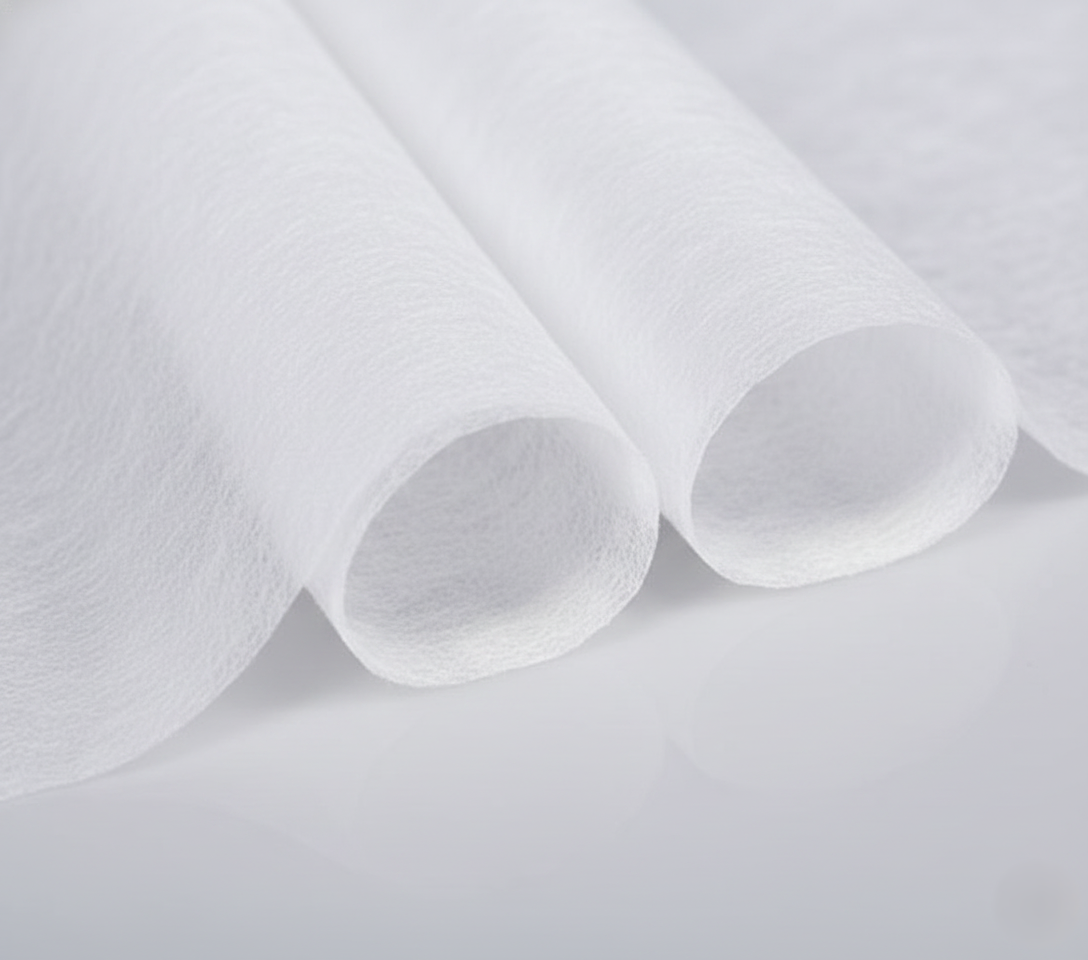
Unlike woven and knitted fabrics, non‑wovens do not have a regular yarn structure.
Non-woven fabrics are produced using different bonding techniques, each giving the fabric its own characteristics and performance.
The main production methods include:
Mechanical bonding – fibres are physically entangled using methods like needle punching or hydro-entanglement (water jets).
- Creates strong and textured fabrics
- Used in wipes, geotextiles, and technical products
Creates strong and textured fabrics
Used in wipes, geotextiles, and technical products
Chemical bonding – Adhesives or binders are used to hold the fibres together.
- Provides controlled bonding strength
- Suitable for interlinings and industrial applications
Provides controlled bonding strength
Suitable for interlinings and industrial applications
Thermal bonding – Heat and pressure are applied to melt and bond thermoplastic fibres.
- Produces lightweight and uniform fabrics
- Widely used in hygiene and medical products
Produces lightweight and uniform fabrics
Widely used in hygiene and medical products
Characteristics of Non‑Woven Fabrics
Non-woven fabrics have distinct properties that differ from conventional textiles. These characteristics make them suitable for both disposable and durable applications.
Key characteristics include:
- Lightweight and cost-effective to produce
- Can be designed as disposable or long-lasting products
- High absorbency and filtration efficiency (depending on structure)
- Flexible and customizable for different uses
- Generally lower strength compared to woven fabrics
End Uses of Non‑Woven Fabrics
Due to their versatility, non-wovens are widely used across multiple industries. Their ability to deliver specific performance properties makes them suitable for both everyday and technical applications.
Common end uses include:
Medical textiles:
- Surgical masks, gowns, wipes
Surgical masks, gowns, wipes
Hygiene products:
- Diapers, sanitary napkins
Diapers, sanitary napkins
Interlinings:
- Used to provide structure in garments
Used to provide structure in garments
Geotextiles:
- Soil stabilization and construction applications
Soil stabilization and construction applications
Filters and insulation materials:
- Air and liquid filtration
- Thermal and acoustic insulation
Air and liquid filtration
Thermal and acoustic insulation
you can go through Non woven fabric for further knowledge
Comparison of Fabric Manufacturing Techniques
| Feature | Weaving | Knitting | Non‑Woven |
|---|---|---|---|
| Structure | Interlaced yarns | Interlooped yarns | Bonded fibres |
| Stretch | Low | High | Very low |
| Comfort | Medium | High | Low–Medium |
| Strength | High | Medium | Low–Medium |
| Production Speed | Medium | High | Very high |
| Cost | Medium | Medium | Low |
Choosing the right fabric manufacturing technique is essential because it determines:
- Garment fit and comfort
- Durability and life cycle
- Appearance and drape
- Cost and production efficiency
- Suitability for end use
Summary
Fabric is essentially a flexible two-dimensional textile structure, created either from yarns or directly from fibres. Depending on how these materials are combined, different types of fabrics are formed, each with its own unique properties and applications. The three main methods—weaving, knitting, and non-woven production—define how the fabric behaves in terms of strength, flexibility, comfort, and usability.
Woven fabrics are produced by interlacing yarns at right angles, resulting in a strong and stable structure with minimal stretch. In contrast, knitted fabrics are formed by inter-looping yarns, giving them natural elasticity, softness, and comfort, making them ideal for everyday wear. Non-woven fabrics, on the other hand, are created by bonding fibres directly without forming yarns, making them highly versatile for technical and disposable uses.
Key points to understand:
- Fabric is a flexible 2D structure made from yarns or fibres
- Weaving produces strong, stable fabrics with low stretch
- Knitting creates soft, elastic fabrics suitable for comfort wear
- Non-wovens are fibre-based and widely used in technical and disposable products
- Each fabric type serves a specific functional and commercial purpose