Staple Yarn Manufacturing (Spinning): Process, Types and Applications in Textiles
February 03, 202616 min read
Yarn spinning is one of the most fundamental and technologically sophisticated processes in the textile manufacturing chain. This is the process of taking fibres, whether they be natural, synthetic or regenerated and turning them into a continuous, cohesive strand called yarn. Yarn is the basic raw material used in weaving, knitting, braiding and other fabric-forming operations.
Yarn spinning is the mechanical process of converting cotton fibers into continuous yarn and is the backbone of textile industry. This is not just a matter of twisting fibers together; it is a matter of carefully orchestrating a sequence of operations that clean, align, and strengthen fibers so they can withstand the demands of weaving, knitting, dyeing, and garment production. Every step in the spinning process builds on the previous step and a mistake early on in the chain can snowball downstream affecting fabric strength, appearance, dye uptake, and garment durability. Spinning is basically where raw cotton is given its identity as yarn and the quality of yarn will determine if the final fabric will be premium, average or downright defective. Cotton spinning quality is influenced by:
Fabric strength
Appearance
Dye uptake
Comfort and durability
Key Stages in the Cotton Spinning Process
Raw Fibre Bale
↓
Blow Room (Opening, Cleaning, Blending)
↓
Carding → Card Sliver
↓
(Combing – Optional)
↓
Drawing → Drawn Sliver
↓
Roving (Only for Ring Spinning)
↓
Spinning (Ring / Rotor / Air-Jet)
↓
Winding (Clearing & Splicing)
↓
Finished Yarn Packing
Spinning Process Flow –
Step No.
Process Stage
Main Objective
Key Operations
Major Machines
Material Form (Input → Output)
Remarks / Notes
1
Raw Material Storage
Store and condition fibres
Bale identification, segregation, moisture control
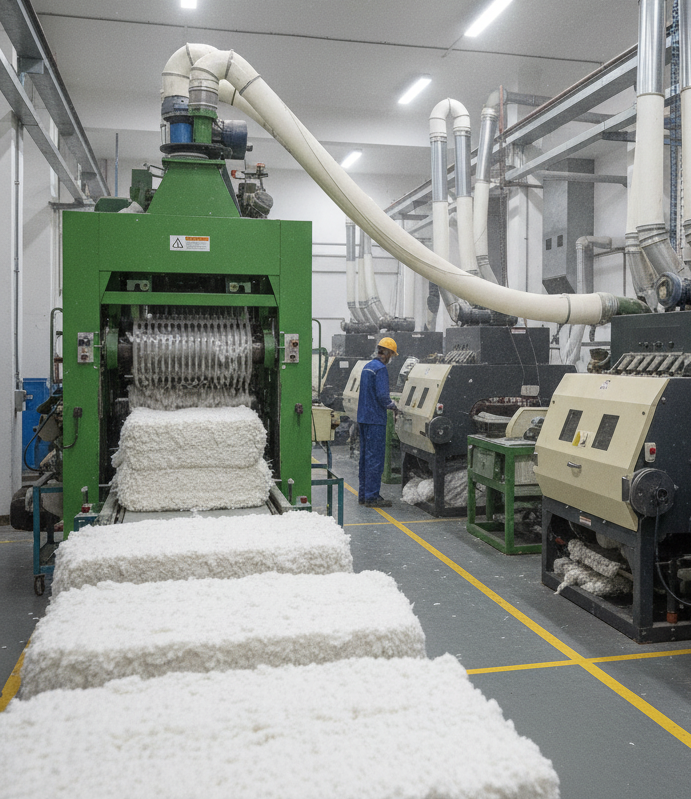
The blow room is the first gateway into spinning, where raw cotton bales are turned from compressed, dusty blocks into loose, workable tufts. Cotton bales often have seed fragments, husk, dust and uneven packing. If these impurities are not properly removed they will travel through the entire spinning line and cause defects in yarn and fabric. The function of the blow room is to open, clean and mix the fibers so that the subsequent processes can run without any problem.
The process starts with bale openers that break up tightly packed bales into manageable tufts. The tufts then pass through pre-openers and cleaners that further loosen the fibers and knock out larger impurities. Mixers are used to blend fibers from different bales so that they are uniform. The chute feed system feeds the fibers evenly to the carding machine.
All critical parameters such as beater speed, air flow, cleaning intensity and waste percentage, need to be carefully controlled. Over-cleaning may remove dirt, but it will also damage the fibers, creating neps (small knots) and increasing the short fiber content. Insufficient cleaning results in trash in the yarn that appears as defects in the fabric later on. Therefore, the operation of the blow room is always a fine balance between the removal of impurities and the preservation of fibres.
Purpose of Blow Room
This is where everything kicks off. The starting point of spinning.
In the blow room, you basically prepare the fibres so the rest of the process doesn’t struggle later.
Opening up those tightly packed fibre bales
Knocking out bigger, coarser impurities
Mixing fibres to get some level of uniformity
Simple goals—but if things go wrong here, it shows up all the way down the line.
Key Machines
Blow room
You’ll usually find a sequence of machines working together:
Bale opener – breaks compressed bales into tufts.
Pre‑openers – loosen fibers further.
Cleaners – remove larger trash particles.
Mixers – blend fibers for consistency.
Chute feed system – delivers fibers evenly to carding.
Each one does a bit of opening, a bit of cleaning… step by step.
Important Parameters
A few things really matter here:
Beater speed – too high damages fibers, too low leaves impurities.
Airflow – ensures smooth transport and separation.
Cleaning intensity – must balance impurity removal with fiber preservation.
Waste percentage – excessive cleaning increases waste and short fibers.
Push cleaning too hard? Problems start.
Fibre damage
Neps formation
More short fibres than you’d like
So yeah—there’s always a balance.
Carding: The Heart of Spinning
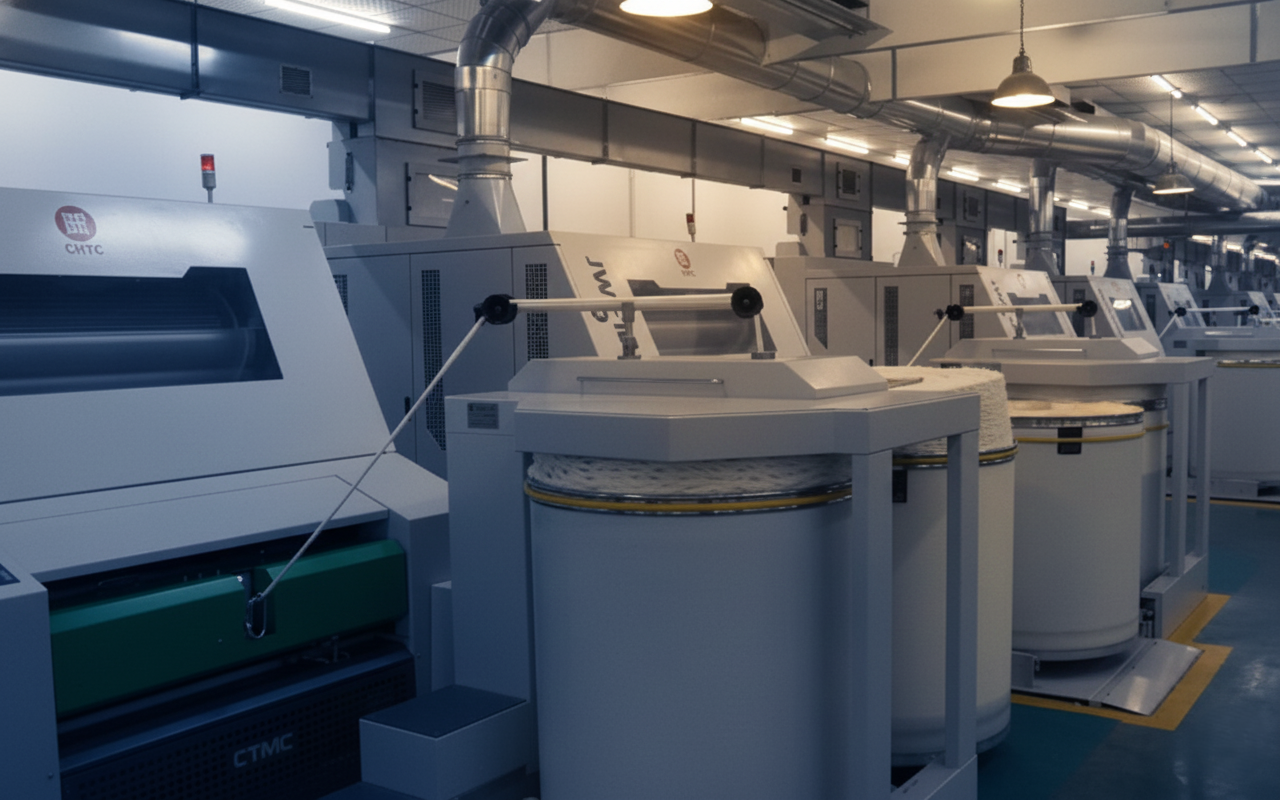
Carding is frequently referred to as the heart of spinning, and with good reason. Carding is a major factor in the final quality of the yarn. After the confusion of blow room Carding arranges the fibers in continuous sliver.
The carding aims are well known: to separate the fibers into single strands, to remove neps and dust, to form a uniform web of fibers and to deliver card sliver for the next step. This is done by the coordinated action of the cylinder, flats and doffer, all covered with wire clothing that combs fibers gently. Brushing is aggressive, carding is controlled and precise, so the fibers are straightened without damage.
The output is called card sliver and has low fiber alignment and relatively high mass. It’s not ready for spinning, but is a rough draft that needs more refinement. Carding is very important as it provides the basis for uniformity in the yarn . Poor carding causes uneven yarn , excess hairiness and weak spots in fabric .
Objectives of Carding
Carding
Separate fibres into individual units
Remove neps, dust, leftover trash
Form a uniform fibre web
Deliver card sliver
You’re basically straightening things out after the chaos of blow room.
Carding Action
This happens through three main parts:
Cylinder – main rotating drum covered with wire clothing.
Flats – moving surfaces that clean and refine fibers.
Doffer – transfers fibers into sliver form.
And the clothing—metallic or flexible—does the controlled combing.
Not aggressive. Just enough.
Card Sliver Characteristics
Low fibre alignment
Relatively high mass
Not ready yet—needs further drafting
It’s like a rough draft, not the final version.
Combing (Optional… but Important)
Combing may not be always employed but it is a great help when quality is the concern. This process is used mainly for finer, premium yarns where strength, luster and smoothness are important.
Combing removes short fibers (<~12-16 mm), further reduces neps and improves fiber parallelism. The result is a stronger, smoother and less hairy yarn which makes fabrics with an improved appearance and hand. Comb yarns are used for high-end shirting, fine knitwear and luxury fabrics.
But there are trade-offs to combing. It produces more waste (known as noil), increases the cost of production and decreases output. Mills must therefore determine if the benefits of combed yarn warrant the higher cost. Combing is often a non-negotiable in markets where buyers want perfection.
Purpose of Combing
Combing
Mainly for finer, premium yarns.
Removes short fibres (below ~12–16 mm)
Cuts down neps further
Improves fibre parallelism
Basically cleaning up what carding couldn’t fully handle.
Combed Yarn Advantages
Higher strength
Better luster
Less hairiness
Cleaner fabric appearance
You can see the difference. And feel it too.
Trade-off
Nothing comes free:
More waste (noil)
Higher cost
Slower production
So it’s always a decision—quality vs efficiency.
Drawing: Fibre Equalization and Alignment
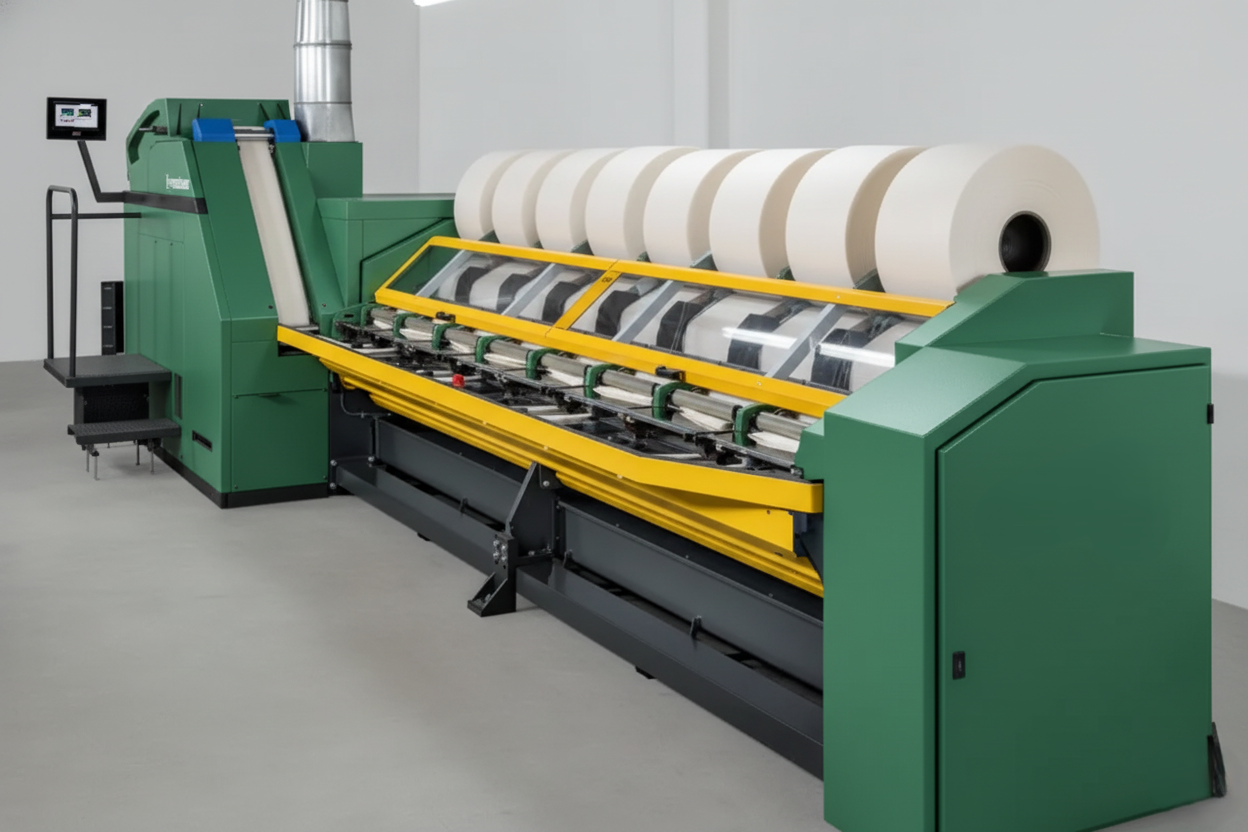
Drawing is about tight control. It takes several slivers from carding or combing and consolidates them into one, increasing mass uniformity and aligning fibers more consistently.
The principle of drafting is straightforward – the back rollers move slowly and the front rollers move faster, which stretches the sliver and aligns the fibres as it passes through. Modern draw frames are fitted with autoleveller systems, which employ sensors to monitor the weight of the sliver and to regulate the draft automatically. This limits variation and makes sure that there is consistency over thousands of meters of yarn.
Drawing is important, as it gets rid of irregularities from the previous steps. Without proper drawing yarn would be of uneven thickness and would cause streaking, barre effects and weak places in fabric.
Function of Draw FrameDraw Frame
Combine multiple slivers
Improve mass uniformity
Straighten and align fibres
You take uneven inputs… and try to smooth everything out.
Drafting Principle
Pretty straightforward:
Back rollers move slow
Front rollers move faster
That difference stretches the sliver. Aligns fibres more in the process.
Autoleveller Systems
Modern machines don’t just run blindly anymore.
Sensors check sliver weight
Draft adjusts automatically
Less variation. More consistency.
Roving (Simplex): Intermediate Yarn Formation
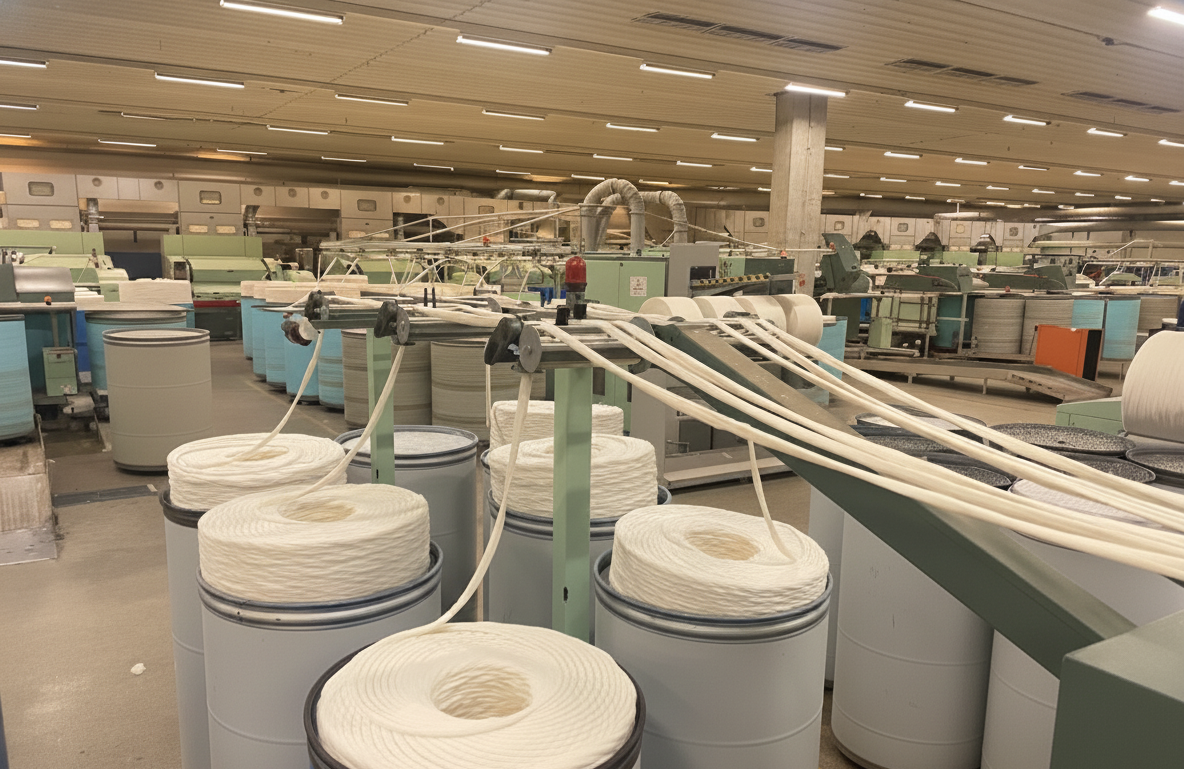
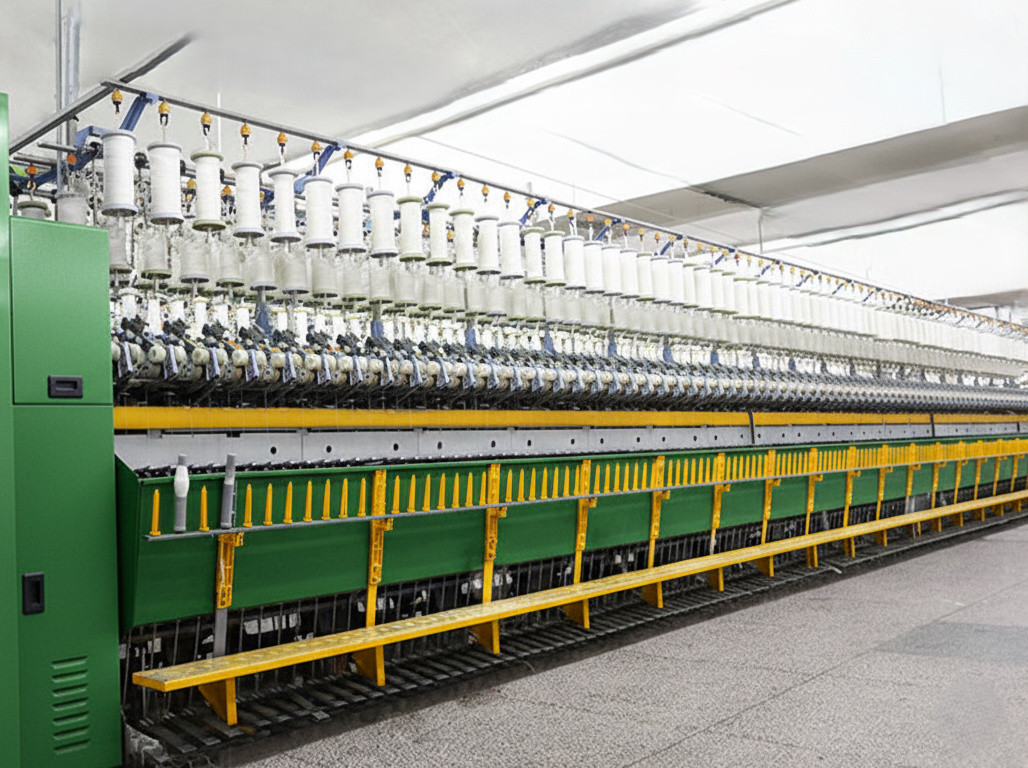
Drawing links to spinning through roving. Reduces the thickness of slivers . Adds a slight twist . Winds the material on bobbins . Prepares fibers for ring spinning . The roving puts some controlled tension and structure on the fibers, making them easier to handle on the spinning frame. Roving is not final yarn; it is still thick and loosely twisted, but it has enough integrity to survive the drafting and twisting of ring spinning.
This is a stage that is often overlooked but bad roving results in uneven yarn, frequent breakages and poor spinning efficiency.
Why Roving Matters:
Provides controlled tension.
Inserts a slight twist.
Winds material onto bobbins.
Roving (Simplex)
Ring spinning needs Controlled tension & a bit of twist that’s exactly what roving provides.
What Happens in Roving
Sliver thickness is reduced
Slight twist is inserted
Material is wound onto bobbins
Just enough structure to handle the next stage.
Key Characteristic
Low twist
Still quite thick
Easy to draft further
Not a final yarn. Just getting there.
Spinning Systems: Yarn Formation Technologies
Ring Spinning
Now comes the actual yarn formation. Different systems—different outcomes.
Ring Spinning
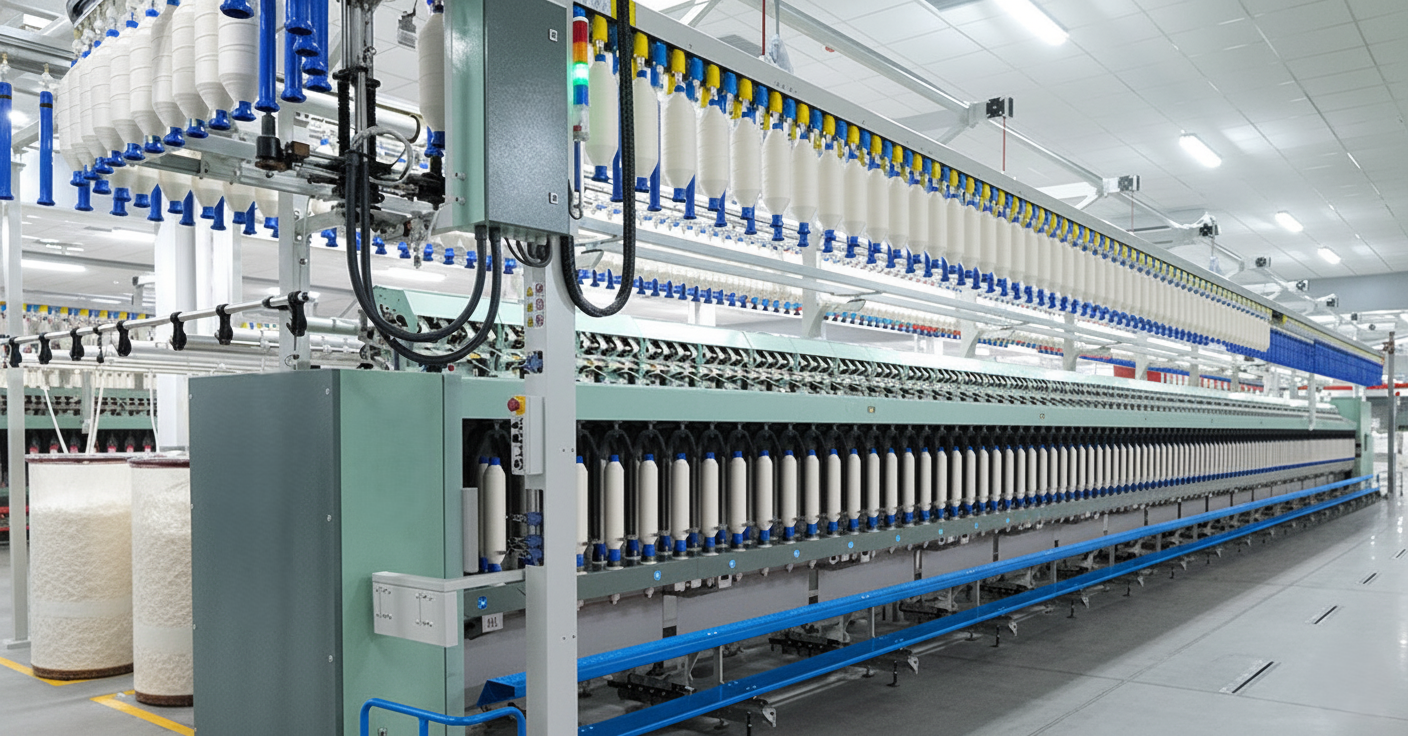
Ring spinning is the most popular system and gives the best quality yarn. It is versatile, giving excellent strength and appearance over a wide range of counts. But it uses more energy, takes more time and is more laborious. If quality is the most important consideration, as in fine apparel and premium fabrics, mills will opt for ring spinning.
A different approach—Rotor spinning bypasses roving and yarn is formed by a different principle. It is quicker, cheaper and makes good use of waste fibres. But rotor yarns are thicker and weaker than ring yarns. They have wide application in denim, towels and workwear, where bulk and cost efficiency is more important than finesse.
Air-jet spinning is a very modern pneumatic process It produces yarn at ultra high speeds, low hairiness and consistent quality. Best for shirts, bed linen and lightweight fabrics. Air-jet yarns. The disadvantages are the high cost of the machines and the limited types of fibres. These difficulties notwithstanding, the air‑jet spinning method is gaining popularity for producing high-volume fine yarns.
Features
Extremely high speed
Low hairiness
Consistent quality
Applications
Shirts
Bed linen
Lightweight fabrics
Limitations
Limited fibre types
High machine investment
So not everywhere—but growing.
Process Requirement by Spinning System
Process Stage
Ring
Rotor
Air‑Jet
Blow Room
✅
✅
✅
Carding
✅
✅
✅
Combing
Optional
❌
Optional
Drawing
✅
✅
✅
Roving
✅
❌
❌
Final Spinning
Ring frame
Rotor machine
Air-jet machine
Winding
✅
✅
✅
Winding: Final Yarn Preparation
Winding is the final process in the preparation of yarn for weaving or knitting. Although it may appear simple compared to blow room or spinning, it is a vital step in ensuring that yarn is free of defects, uniform, and packaged in a way that downstream processes can run smoothly. At this stage, yarn is transferred from spinning bobbins into larger, more convenient packages such as cones or cheeses. But winding is not only about re‑packaging – it is also about quality improvement, acting as the last safeguard before yarn enters fabric formation.
Winding Objectives
Remove yarn faults: During winding, faults such as thick places, thin places, neps, or foreign matter are detected and removed. This ensures that only clean, uniform yarn continues to weaving or knitting.
Even up packages: Yarn packages must be uniform in density and shape so they can unwind smoothly during weaving or knitting. Uneven packages cause tension variation, which leads to fabric defects.
Yarn preparation for weaving/knitting: Winding ensures yarn is strong, clean, and properly tensioned, preparing it for high‑speed operations in looms and knitting machines.
In short, winding is the last checkpoint where yarn quality is protected before fabric formation.
Modern Winding Characteristics
Modern winding machines are highly sophisticated, equipped with electronic systems that make the process more efficient and precise.
Electronic Yarn Clearing: Sensors detect defects such as thick places, thin places, or foreign fibers. If a defect is found, the damaged part is removed, leaving only sound yarn.
Splicing Not Knotting: Traditional knotting created weak points and visible defects in fabric. Modern machines use air or water splicing, fusing yarn ends together without knots, resulting in greater strength and improved appearance.
Automatic Defect Detection: Machines continuously check yarn quality, automatically detecting and removing defects. This reduces the need for manual inspection and improves reliability.
Package Density Control: Advanced winders regulate package density, enabling even unwinding of yarn during weaving or knitting. This prevents tension variation and reduces stoppages in downstream processes.
These features make winding not just a mechanical step but a smart quality assurance process.
Quality Control in Spinning – Importance
Quality control is the basis of spinning operations. Without strict monitoring, defects introduced at any stage can accumulate, resulting in massive losses during fabric production.
Important Parameters of Quality Control
Yarn Count Accuracy: Ensures yarn thickness matches specifications. Even minor deviations can cause barre effects or inconsistent fabric strength.
Uster Evenness (CV%): Measures variation in yarn mass. A lower CV% means more uniform yarn and smoother fabric.
Hairiness & Imperfections: Excessive hairiness leads to fuzziness, pilling, and poor print clarity. Imperfections such as neps or slubs reduce fabric quality.
Strength & Elongation: Yarn must be strong and elastic enough to withstand weaving and knitting stresses without breaking.
Sophisticated Digital Surveillance Systems
Modern spinning mills use advanced computer systems to constantly monitor these parameters. Operators can make real‑time adjustments, reducing waste and ensuring consistent quality. These systems also generate detailed reports, helping mills identify recurring problems and improve efficiency.
Final Word on Yarn Spinning
Yarn spinning is much more than simply twisting fibers together, it is a carefully orchestrated series of operations that convert raw cotton into strong, uniform and reliable yarn. Each stage starting from opening and cleaning in blow room to carding, combing, drawing, roving, spinning and winding plays an important role in the strength, appearance, dyeability and durability of the yarn.
Early stages matter: Impurities not removed in the blow room or poor carding will manifest later as defects in yarn and fabric.
Quality vs efficiency: Processes like combing improve the quality of the yarn but also contribute to waste and cost, so mills have to balance production speed with what buyers want.
Technology makes the difference Modern spinning systems (ring, rotor, air-jet) and advanced winding machines with electronic clearing, splicing and package density control ensure higher consistency and less defects.
Quality control is non-negotiable: Parameters like yarn count accuracy, evenness (CV%), hairiness, strength and elongation should be continuously monitored with digital surveillance systems to prevent costly rejections.
Bottom line: Spinning is where cotton gets its identity as yarn and yarn quality is what makes fabric quality. Mills that invest in precision, technology and rigorous quality control not only reduce waste and downtime but also create fabrics that meet buyer standards, protect brand reputation and thrive in competitive textile markets.
References & Sources
Carl A. Lawrence - Fundamentals of Spun Yarn Technology.
Carl A. Lawrence - Advances in Yarn Spinning Technology.
Eric Oxtoby - Spun Yarn Technology.
W. Klein - The Technology of Short-Staple Spinning (Volumes I-V).
B.P. Corbman - Textiles: Fiber to Fabric.
V.K. Kothari - Testing and Quality Management in Textiles.
The Textile Institute (UK) - Textile Terms and Definitions.
Uster Technologies AG - Technical publications on yarn quality, evenness, imperfections, hairiness, HVI, AFIS, and spinning optimization.
Rieter Machine Works Ltd. - Technical manuals and spinning process guidelines.
Trützschler Group - Blow room, carding, drawing, and spinning technology resources.
Disclaimer: This content is intended for educational and training purposes only. Spinning processes, machine settings, production parameters, and quality requirements may vary depending on fibre type, mill technology, equipment manufacturer, yarn count, and customer specifications. For production decisions, readers should follow established operating procedures, supplier recommendations, and applicable industry standards.
Written by
Alam Mohammad Shafiqul
Lead Editor, Senior Contributor & Founder
Textile Technology
Textile engineering professional with over 15 years of experience in Sweater Manufacturing, Industrial Engineering and Technical Development. Holds a degree in Textile Engineering and an MBA in Apparel Merchandising. Passionate about bridging the gap between factory-floor operations and technical expertise to drive efficiency, innovation, and continuous improvement.
Textile EngineeringSweaterIndustrial EngineeringLean Six SigmaPythonJS