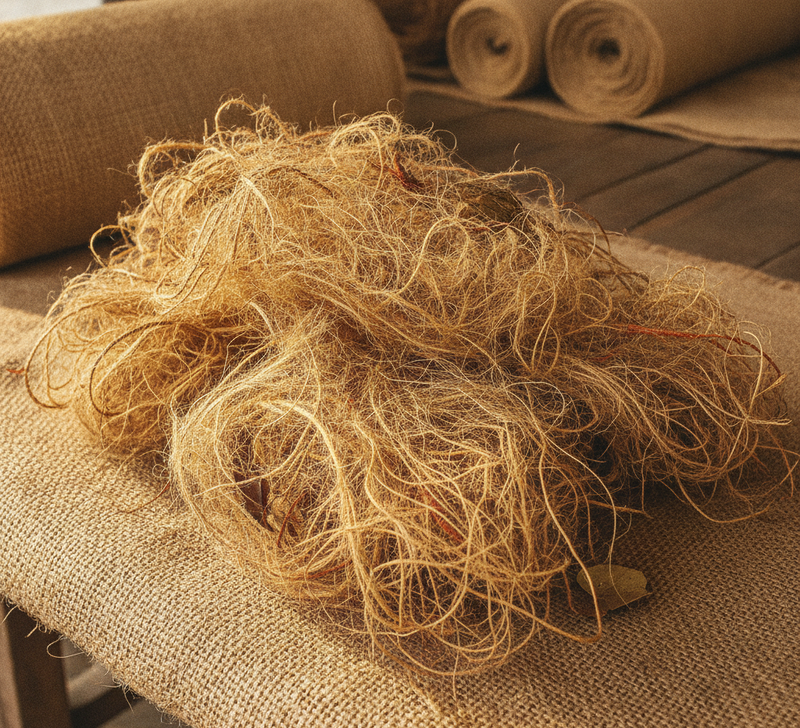
Fibre identification tests enable us to determine the basic composition of textile fibres – whether they are cellulosic, protein-based or synthetic. In the previous lessons you have been introduced to the properties of natural and man‐made fibres. Now we will understand the importance of identification of fibre.As a weaver/manufacturer, you usually go to the market to purchase yarns. But can you always be sure to get exactly what you ask for? For example, if you ask for wool but get acrylic, how will you tell the difference?Similarly, as a consumer you can buy fabric and not know what fibre is. You can’t judge the properties of the cloth without knowing the fibre content. So what now?
Yes, you are thinking the right way. Simple fibre identification tests can be conducted to readily determine the fibre content of a fabric. That is why it is important to learn and practice techniques of textile identification.
before starting you can visit Textile fibre Classification to clear up fibre basics
There are four commonly used tests to identify textile fibres:
- Visual and physical examination
- Microscopic test
- Burning test
- Chemical test
| Test Name | What It Checks | Procedure | What It Reveals | Useful For Identifying | Limitations |
|---|---|---|---|---|---|
| Visual Examination | Appearance, lustre, fibre length, colour, crimp | Observe fibre/fabric with the naked eye | Shiny/dull surface, staple vs. filament length, natural crimp, weave/knit structure | Cotton, wool, silk, linen, synthetic filaments | Not accurate for fibres that look similar (e.g., cotton vs. viscose) |
| Touch & Feel Test | Texture, warmth, elasticity, absorbency, drape | Rub, stretch, crumple or wet fabric lightly | Soft/coarse feel, warm/cool touch, stretchiness, drape behaviour, water absorption rate | Wool, silk, cotton, linen, synthetics | Subjective; needs experience; cannot identify blends |
| Microscopic Test | Fibre shape, surface structure, cross-section | View fibres under microscope | Cotton shows convolutions, wool has scales, linen has nodes, synthetics have smooth/engineered shapes | Natural vs. synthetic fibres, fibre structure differences | Requires a microscope; needs training to interpret |
| Burning Test | Flame behaviour, odour, residue, melting | Bring fibre close to and into flame | Cotton burns like paper, wool smells like burning hair, synthetics melt and form hard beads | Distinguishing natural vs. synthetic fibres | Not safe for large samples; cannot identify blends accurately |
| Chemical Test | Reaction to chemicals (dissolving, swelling) | Apply specific chemicals (acids, alkalis, solvents) | Cotton dissolves in strong alkalis, wool dissolves in chlorine, nylon dissolves in formic acid | Most accurate for fibre type confirmation | Requires chemicals, safety precautions and training |
Methods of Fibre Identification:
Visual and Physical Examination
Visual and physical examination is the most basic method used for identification of textile fibres. This includes looking at the fabric or fibre with the naked eye and how it looks and feels. It is not as accurate as microscopic or chemical testing, but can give you valuable clues as to fibre type, structure and quality.
This test depends on appearance, texture, lustre, length of fibre, crimp and structure of fabric which help to distinguish between natural, man‑made and synthetic fibres
What to look for:
| Feature Observed | What to Look For | What It Indicates | Examples |
|---|---|---|---|
| Surface Appearance | Shiny, dull, matte, smooth, rough | Helps identify lustre level and fibre type | Silk → shiny; Cotton → matte; Wool → slightly rough |
| Colour | Natural, bleached, dyed | Determines if fibre is untreated or processed | Natural cotton is off‑white; wool varies from cream to brown |
| Lustre | Silk-like shine vs. dull | High lustre often means filament or regenerated fibre | Silk and Rayon → bright; Cotton → dull |
| Fibre Length | Staple (short) vs. Filament (long) | Helps distinguish natural from synthetic filaments | Cotton, Wool → staple; Silk, Polyester, Nylon → filament |
| Crimp or Curl | Natural or artificial crimp | Helps identify protein vs. synthetic fibres | Wool → natural crimp; Synthetics → artificial crimp |
Advantages
- Quick and easy
- Requires no equipment
- Useful for preliminary identification
Limitations
- Not accurate for similar‑looking fibres
- Cannot identify blends
- Requires experience
Touch and Feel Test
One of the oldest and simplest methods of fibre identification is the Touch and Feel Test. It uses your senses – mostly touch – to see how a fibre behaves when you handle it. Each type of textile fibre has a characteristic feel, response to temperature, elasticity and behaviour to moisture. This method is not scientifically accurate however it provides strong initial clues and is widely used by weavers, tailors, traders and consumers.
This test is useful in distinguishing natural from synthetic fibres and is often useful in identifying specific fibre families such as cotton, wool, silk, linen and man‑made fibres.
What We Observe in the Touch and Feel Test
What We Observe in the Touch and Feel Test
| Observation Category | What We Check | Fibre Behaviour / Characteristics | Examples of Fibres |
|---|---|---|---|
| 1. Texture | Smooth, rough, soft, coarse | Each fibre type has a unique surface feel | Cotton: soft, slightly rough Linen: crisp, firm, coarse Wool: warm, slightly scratchy Silk: smooth, luxurious Synthetics: very smooth, slippery, uniform |
| 2. Warmth or Coolness | Temperature sensation when touched | Depends on fibre structure and thermal conductivity | Wool: warm (traps air) Cotton/Linen: cool (conduct heat away) Silk: cool at first, then warm Synthetics: neutral or slightly warm |
| 3. Elasticity & Stretch | Stretchiness when pulled gently | Reveals resilience and fibre type | Wool: naturally elastic Nylon: very high elasticity Polyester: moderate elasticity Cotton/Linen/Rayon: low elasticity Silk: slight stretch |
| 4. Flexibility & Drapability | How fabric bends and flows | Indicates softness and fluidity | Silk: excellent flowing drape Rayon: soft and fluid drape Cotton: moderate drape Linen: stiff and structured Wool: springy or soft depending on type |
| 5. Strength & Durability | How strong the fibre feels when pulled | Fibre strength in dry or wet state | Linen: very strong Cotton: moderate strength Wool: weak when wet Silk: strong when dry Synthetics: strong and difficult to break |
| 6. Moisture Absorbency | Absorption rate when touched with a water drop | Helps distinguish natural vs. synthetic | Cotton/Linen: absorb water quickly Wool: absorbs slowly but retains moisture well Silk: moderate absorbency Synthetics: repel water; droplets stay on surface |
Advantages of the Touch and Feel Test
- Quick and easy
- Requires no tools or chemicals
- Useful for initial identification
- Helps narrow down possible fibre categories
Limitations
- Not 100% accurate
- Experience and practice are needed
- Cannot accurately identify blends
- Similar fibres (e.g., cotton vs. viscose) may feel alike
Microscopic Test
| Fibre Category | Fibre Type | Longitudinal (Side) View Under Microscope | Cross‑Section Shape | Shape | Key Identification Features |
|---|---|---|---|---|---|
| Natural Cellulosic Fibres | Cotton | Twisted ribbon appearance; irregular twists (convolutions) | Kidney‑shaped / bean‑shaped | 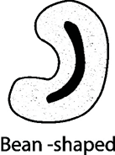 | Convolutions are the strongest clue for cotton |
| Linen (Flax) | Straight, long and smooth; nodes appear like “bamboo joints” | Polygonal, irregular | 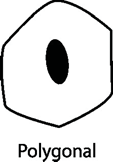 | Distinct nodes (joints) identify linen | |
| Protein Fibres | Wool | Scaly surface, like overlapping roof shingles | Oval / round | 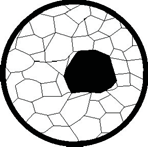 | Scales clearly distinguish wool from other fibres |
| Silk | Smooth, glassy, uniform surface | Triangular cross‑section | 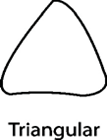 | High lustre; smooth surface; triangular section | |
| Synthetic Man‑made Fibres | Polyester | Very smooth, uniform, even surface | Round, trilobal or varied engineered shapes | Unlimited shape | Cross‑section often engineered (trilobal) for shine |
| Nylon | Smooth, rod‑like, uniform | Circular or trilobal | Unlimited shape | Smoothness + strong filament shape |
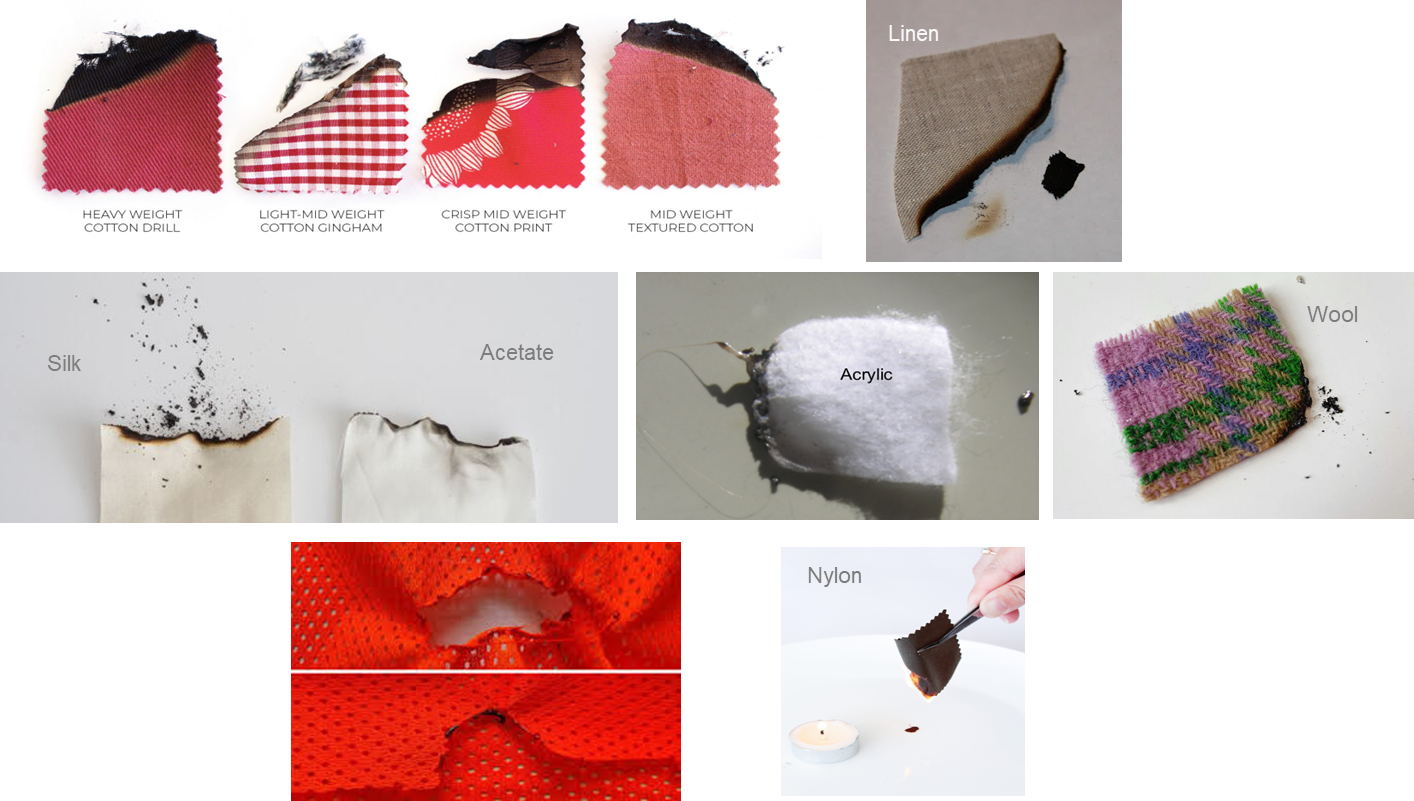
Burn Test
The Burn Test is a commonly used method of identifying textile fibres by their reaction to flame. Different fibres burn, melt, shrink, emit characteristic smells and leave characteristic residues. These reactions are useful for differentiating natural fibres from synthetic fibres and protein fibres from cellulosic fibres.
The burn test is easy but has to be done carefully and in a well-ventilated area with small samples for safety. Identification method based on burning behavior commonly used.
Observed factors:
- Reaction near flame
- Smell while burning
- Nature of residue or ash
| Fibre | Melt | Shrink from flame | Continue to Burn | Appearance of ash | Smell | |
| Natural Fibre | Cotton | No | No | Rapidly | Light Grayish | smell of burnt paper |
| Wool | Yes | Yes | Slowly | Irregular black | smell of burnt hair | |
| Silk | Yes | Yes | Slowly | Soft Black head | smell of burnt hair | |
| Man-made | Nylon | Yes | Yes | Rapidly | Hard grey round shaped bead | smell of Celery |
| Polyester | Yes | Yes | Rapidly | Hard Black round shaped bead | smell of sweet chemical | |
| Acrylic | Yes | Yes | Rapidly | Hard Black irregular shaped bead | smell of acidic chemical | |
| Spandex | Yes | No | Rapidly | Fluffy black or grey | smell of hazard chemical | |
| Regenerated | Viscose | No | Yes | Rapidly | Light Greyish | smell of burnt paper |
| Acetate | Yes | Yes | Rapidly | Hard Black irregular shaped bead | smell of Vinegar |
Note: This test should be performed carefully.
Chemical Test
Different fibres react differently to chemicals.
Principle:
Some fibres dissolve or weaken in specific chemicals.
Examples:
- Cotton dissolves in strong acids
- Wool dissolves in alkalis
- Acetate dissolves in acetone
Mostly used in laboratories and industries.
| Factor/Fibre | Acetic Acid | Sodium Hypochlorite | Hydrochloric acid | Formic Acid | Dimethyl Formamide | Sulfuric acid | Sulfuric acid | M Cresol /Methyl phenol |
| Conc.(%) | 100 | 5 | 20 | 85-90 | 100 | 59.5 | 70-75 | 100 |
| Temp © | 20 | 20 | 20 | 20 | 90 | 20 | 38 | 139 |
| Time (min) | 5 | 20 | 10 | 5 | 10 | 20 | 20 | 5 |
| Cotton | Insoluble | Insoluble | Insoluble | Insoluble | Insoluble | Insoluble | Soluble | Insoluble |
| Wool | Insoluble | Soluble | Insoluble | Insoluble | Insoluble | Insoluble | Insoluble | Insoluble |
| Silk | Insoluble | Soluble | Insoluble | Insoluble | Insoluble | Soluble | Soluble | Insoluble |
| Nylon | Insoluble | Insoluble | Soluble | Soluble | Soluble | Soluble | Soluble | Soluble |
| Polyester | Insoluble | Insoluble | Insoluble | Insoluble | Insoluble | Insoluble | Insoluble | Soluble |
| Acrylic | Insoluble | Insoluble | Insoluble | Insoluble | Soluble | Insoluble | Insoluble | Plastic mass formed |
| Spandex | Insoluble | Insoluble | Insoluble | Insoluble | Insoluble | Soluble/Plastic mass formed | Soluble/Plastic mass formed | Soluble/Plastic mass formed |
| Viscose | Insoluble | Insoluble | Insoluble | Insoluble | Insoluble | Insoluble | Soluble | Insoluble |
| Acetate | Soluble | Insoluble | Insoluble | Soluble | Soluble | Soluble | Soluble | Soluble |
summary
Fibre identification is a basic skill in textile education and industry. Visual observation, touch and feel, microscopic analysis, burning behavior and chemical reactions can be combined to achieve an accurate and confident identification of textiletextile fibres.
Each method has its advantages and disadvantages, and the best results are obtained when multiple tests are used in combination. Fibre identification techniques are mastered to ensure quality control, fair trade practices, informed purchase decisions and a better understanding of textile performance.