Color has always been at the heart of textiles. From the deep indigo of ancient trade routes to the warm reds of madder roots, natural dyeing is more than just a technique — it’s a cultural heritage. Today, as the fashion and textile industry faces increasing pressure to adopt sustainable practices, natural dyeing is making a powerful comeback
For centuries, artisans across Asia, Africa, and Europe relied on plants, minerals, and even insects to create vibrant hues. Indigo leaves, turmeric, henna, and cochineal were not just sources of color but symbols of identity and trade. In Bengal, for example, indigo cultivation shaped entire communities, leaving behind both beauty and history.
Historical Significance
Ancient civilizations: Egyptians used madder for reds, while the Greeks and Romans prized Tyrian purple from sea snails.
Asian traditions: Indigo in India and Japan became symbols of prestige and artistry.
Local heritage: In Bengal, indigo cultivation shaped economies and communities, leaving behind both prosperity and painful colonial histories.
Natural dyeing was never just about aesthetics — it was about trade, rituals, and identity.
Natural Dyestuffs: The Palette of Nature
Natural dyestuffs are the raw materials that give textiles their colors. Each source carries its own chemistry, history, and cultural meaning.
Plant‑based dyes
Indigo: Extracted from indigofera leaves, producing deep blues.
Madder root: Rich in alizarin, yielding reds and pinks.
Turmeric: Bright yellow, often used in South Asian traditions.
Henna: Orange‑brown tones, also used for body art.
Marigold flowers: Golden hues, common in eco‑fashion.
Animal‑based dyes
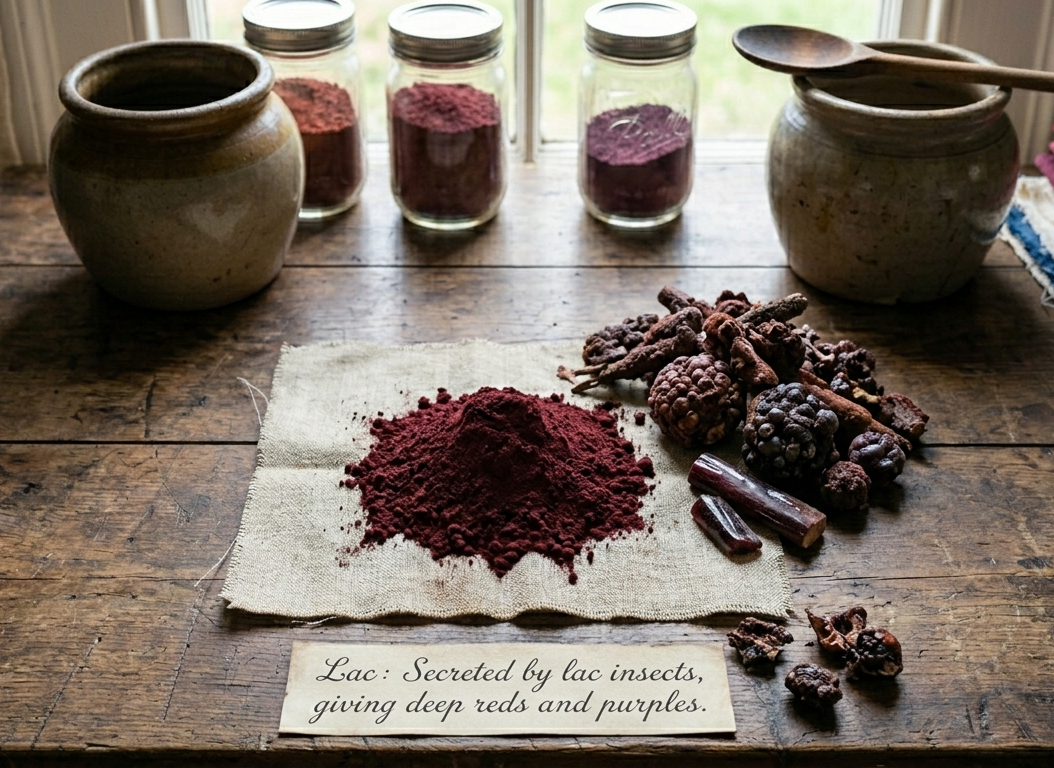
Cochineal: Derived from insects on cactus plants, producing brilliant crimson.
Lac: Secreted by lac insects, giving deep reds and purples
Mineral‑based dyes
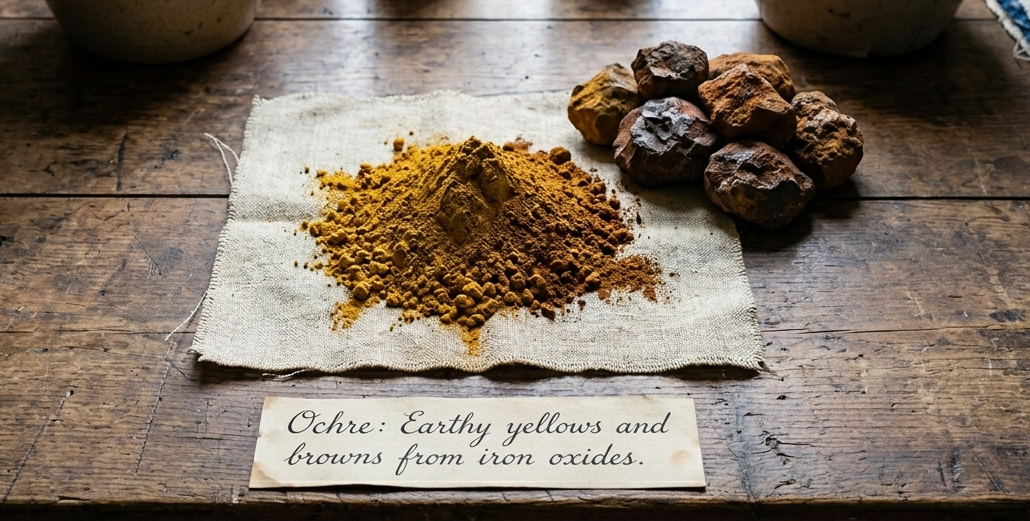
Ochre: Earthy yellows and browns from iron oxides.
Iron filings: Used with tannins to create greys and blacks.
Each dyestuff requires careful preparation — boiling, fermenting, or grinding — before it can be applied to fabric.
| Common Name | Latin Name | Parts Used | General Colour Guide | Suggested Mordant |
|---|---|---|---|---|
| Indigo | Indigofera tinctoria | Leaves (fermented vats) | Deep blue | None (vat dye) |
| Madder | Rubia tinctorum | Roots | Reds, pinks, oranges | Alum, chalk, tannin |
| Turmeric | Curcuma longa | Rhizome | Bright yellow | Alum |
| Henna | Lawsonia inermis | Leaves | Orange‑brown | Alum, iron |
| Marigold | Tagetes erecta | Flowers | Golden yellow, orange | Alum |
| Pomegranate | Punica granatum | Rind/peel | Yellow, greenish tones | Alum, iron |
| Walnut | Juglans regia | Husks/shells | Browns, deep earthy tones | Iron, copper |
| Cochineal | Dactylopius coccus | Insect bodies | Crimson red, scarlet | Alum, tin |
| Lac | Kerria lacca | Resin from insects | Red, purple hues | Alum |
| Onion | Allium cepa | Skins | Yellow, rust, brown | Alum, iron |
| Tea | Camellia sinensis | Leaves | Soft browns, beiges | Alum, iron |
| Hibiscus | Hibiscus sabdariffa | Flowers | Pink, purple tones | Alum, vinegar |
| Logwood | Haematoxylum campechianum | Heartwood | Purples, blacks | Alum, iron |
| Safflower | Carthamus tinctorius | Petals | Yellow, pink, red | Alum |
| Chamomile | Matricaria chamomilla | Flowers | Soft yellow | Alum |
| Cutch | Acacia catechu | Heartwood extract | Brown, khaki | Alum, iron |
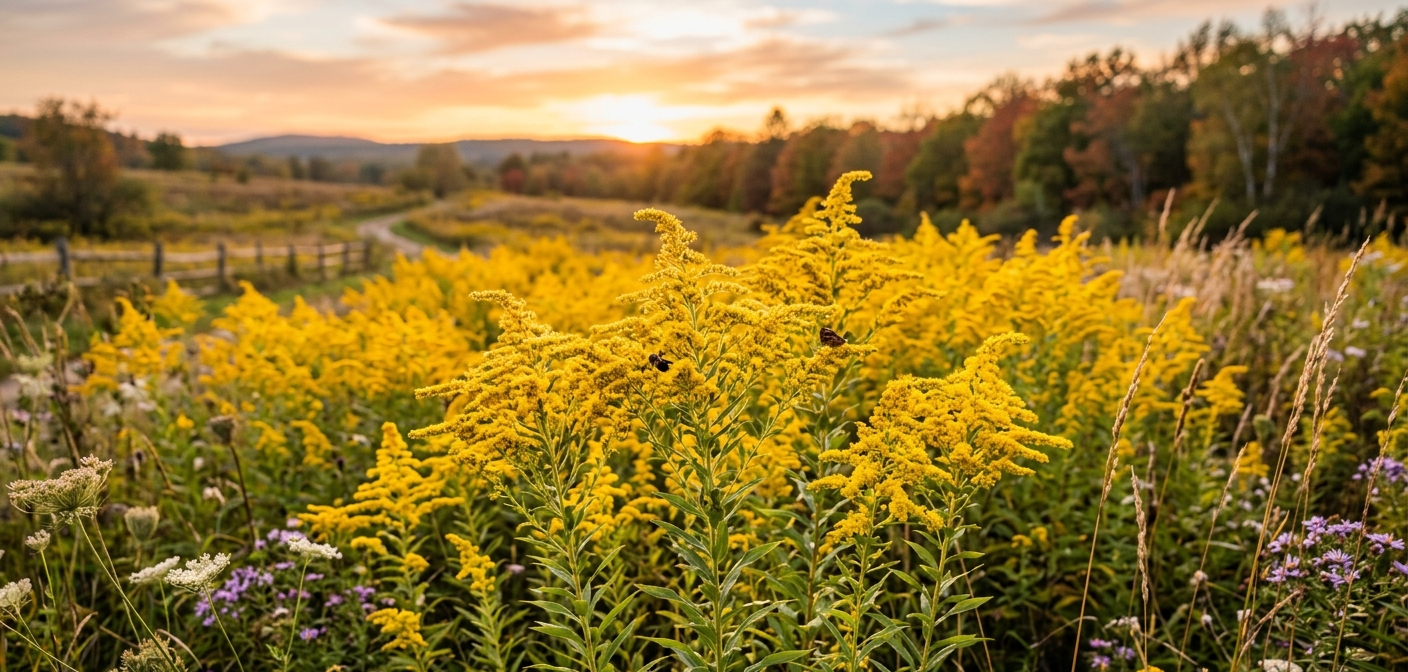
| Goldenrod | Solidago canadensis | Flowers | Bright yellow | Alum |
| Elderberry | Sambucus nigra | Berries | Purple, grey | Alum, iron |
| Red Sandalwood | Pterocarpus santalinus | Wood shavings | Red, maroon | Alum |
| Fustic | Chlorophora tinctoria | Wood | Yellow, greenish tones | Alum |
| Dock | Rumex spp. | Roots | Yellow, tan | Alum |
| Oak Galls | Quercus spp. | Galls | Grey, black (with iron) | Iron |
| Apple Bark | Malus domestica | Bark | Soft yellow, tan | Alum |
| Birch | Betula spp. | Bark, leaves | Pale yellow, brown | Alum |
| Maple | Acer spp. | Bark | Beige, tan | Alum |
| Chestnut | Castanea sativa | Bark, husks | Brown, grey | Iron |
| Bamboo | Bambusa spp. | Leaves | Light green, yellow | Alum |
| Eucalyptus | Eucalyptus globulus | Leaves | Rust red, brown | Alum, iron |
| Mango | Mangifera indica | Leaves, bark | Yellow, olive | Alum |
| Rose | Rosa spp. | Petals | Pale pink, soft red | Alum |
| Beetroot | Beta vulgaris | Root | Red, purple | Alum |
| Spinach | Spinacia oleracea | Leaves | Greenish tones | Alum |
Notes
Colour variation depends on fiber type (cotton, silk, wool) and mordant choice.
Mordants like alum, iron, copper, and tannins act as fixatives, improving fastness and altering shades.
Eco‑friendly alternatives (bio‑mordants from plants) are being researched to replace heavy metals.
Methods of Dyeing
Natural dyeing is not a single process but a collection of techniques, each suited to different fibers and desired effects.
Mordanting-Essential
Prepares fabric to bond with natural dyes.
Treat fibers with alum, iron, or tannins
Improves color fastness
Different mordants produce different shades
Immersion Dyeing-Traditional
Fabric is submerged in dye baths for uniform color.
Boil dyestuff to extract pigment
Dip fabric repeatedly for deeper shades
Dry in sunlight to fix color
Resist Dyeing-Creative
Patterns are created by blocking parts of fabric from dye.
Tie-dye: fabric tied before immersion
Batik: wax applied to resist dye
Shibori: folding and binding for unique designs
Overdyeing-Layered
Combines multiple dyes for complex hues.
Dye fabric first with one color
Apply second dye for blended tones
Example: Indigo over turmeric creates green
Direct Application-Artisanal
Dyestuff applied directly to fabric surface.
Brush or stamp natural pigments
Used for decorative textiles
Requires careful fixation to prevent fading
Advantages of Natural Dyeing
Eco‑friendly: No toxic effluents, reducing water pollution.
Health benefits: Gentle on skin, especially for children and sensitive users.
Cultural preservation: Keeps traditional knowledge alive.
Unique aesthetics: Variations in shade make each piece distinctive.
Challenges in Modern Industry
Scalability: Synthetic dyes dominate mass production due to speed.
Color fastness: Some natural dyes fade unless carefully mordanted.
Cost: Labor‑intensive processes increase production expenses.
Yet, with rising consumer demand for sustainable fashion, these challenges are being addressed through innovation — blending traditional methods with modern science.
Case Studies & Modern Applications
Artisan cooperatives: Rural communities in India and Africa are reviving natural dyeing as a livelihood.
Eco‑fashion brands: Designers use natural dyes to tell authentic sustainability stories.
Research labs: Scientists are experimenting with bio‑mordants and plant‑based fixatives to improve durability.
The Future of Natural Dyeing
Natural dyeing is not a relic of the past — it’s a roadmap for the future. As consumers demand transparency and eco‑friendly practices, natural dyes offer authenticity, beauty, and sustainability. Imagine a textile industry where rivers run clear, artisans thrive, and fabrics carry the soul of nature.
Final Thought
Natural dyestuffs and dyeing methods are more than technical processes — they are cultural practices that blend science, art, and sustainability. By reviving them, the textile industry can create fabrics that are not only eco‑friendly but also rich in heritage and individuality.