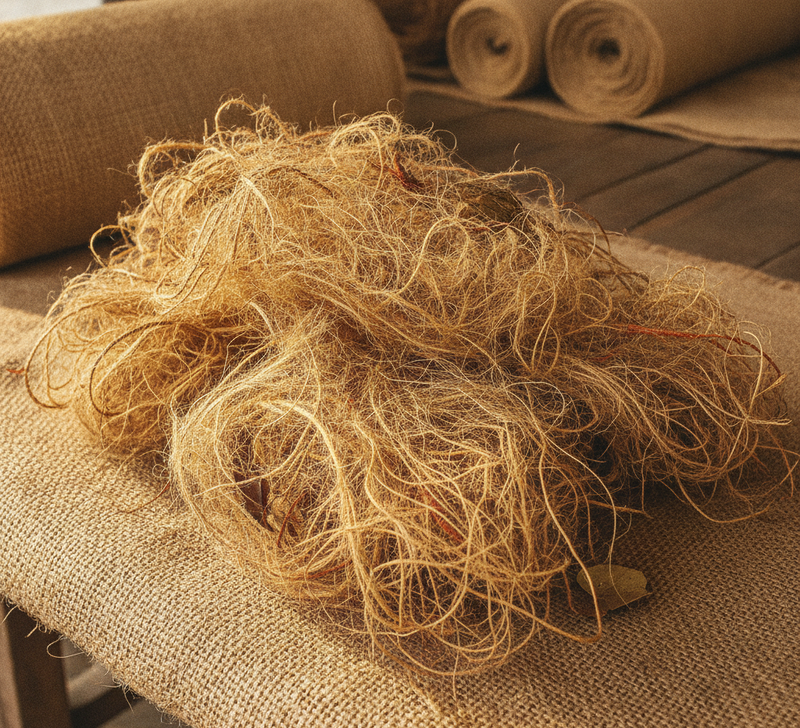
Fabric singeing is an treatment process in textile finishing to remove protruding fibers and surface fuzz from the fabric surface. This step significantly enhances the fabric’s smoothness, appearance, print clarity and overall quality.
It is normally performed on woven and knitted cotton, cotton blends and synthetics where a clean, even surface is required before dyeing, printing or finishing.
A clean surface leads to better results in all subsequent processes, which is why singeing is one of the first value-adding processes in textile finishing.
Why Singeing Is Actually Important
On paper, it sounds like a surface treatment.
In reality, it affects almost every downstream result.
It helps to:
- Smooth out the fabric by removing loose fibers
- Improve how color develops during dyeing
- Make prints sharper (especially fine details)
- Reduce pilling later on
- Clean up the overall appearance
- Minimize little imperfections—neps, fuzz, uneven spots
Without singeing… fabrics can look dull. Slightly fuzzy. Even cheap sometimes.
Not what you want, especially for premium products.
How the Singeing Process Works
The idea is simple—almost blunt, in a way.
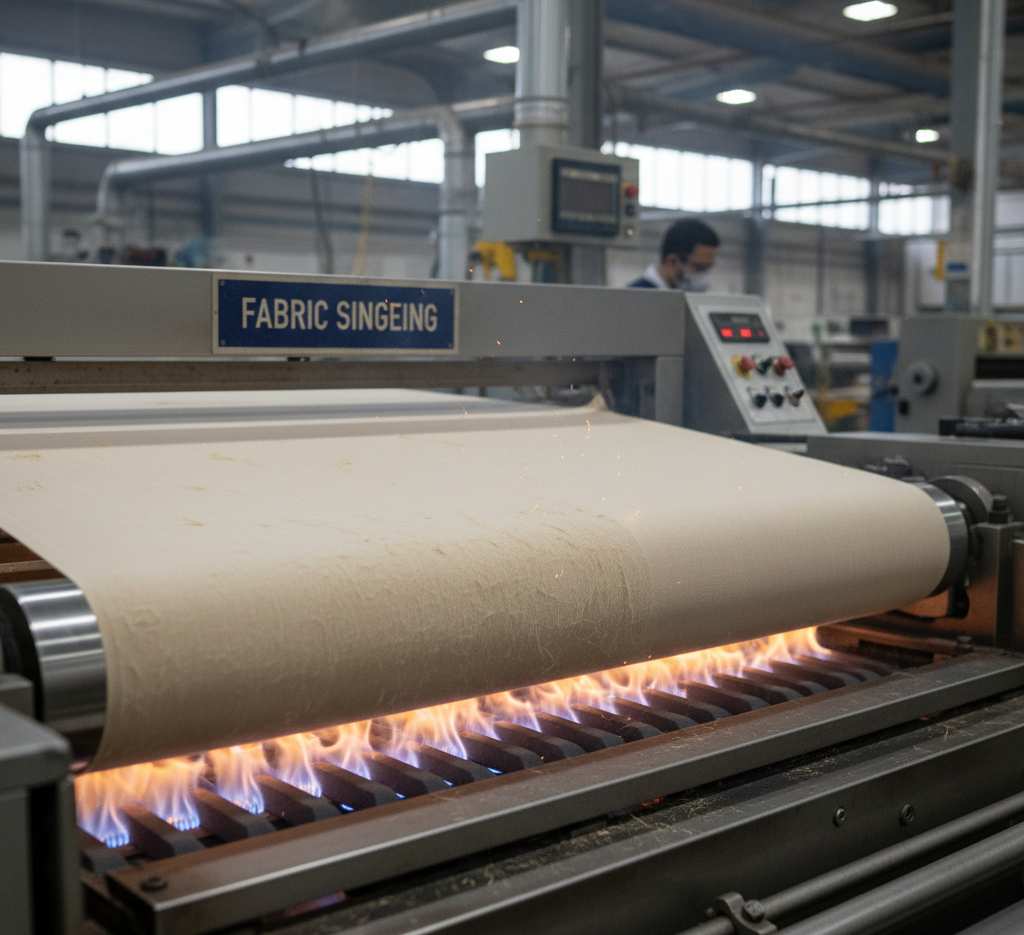
You pass the fabric quickly over a flame or heated surface.
Just enough to burn off the loose fibers… not enough to damage the base yarn.
Timing is everything.
What actually happens:
- Protruding fibers catch fire instantly
- The main yarn structure doesn’t burn—it’s too brief
- Cooling zones stop heat from spreading
End result?
A clean, smooth, hair-free surface.
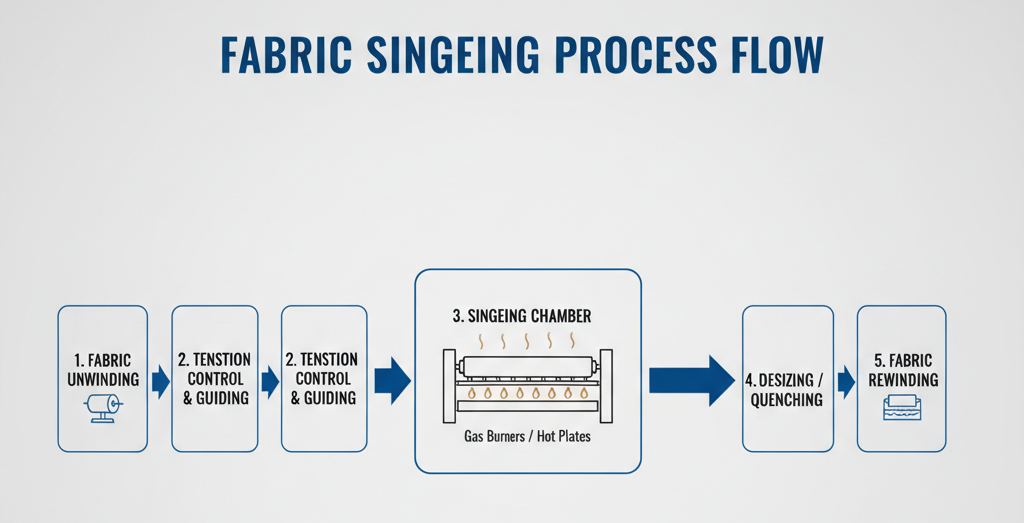
There isn’t just one way to do it. Different setups exist, depending on the quality level and cost.
1. Plate Singeing
Fabric moves over heated metal plates (usually steel or copper).
- Contact-based method
- More basic setup
Pros:
- Lower cost
- Less risk of open flame damage
Cons:
- Not as effective
- Limited for high-end finishing
2. Roller Singeing
Here, the fabric passes over heated rollers.
- Metallic cylinders at high temperature
- Slightly better consistency
Pros:
- Improved uniformity
- Better than plate method
Cons:
- Still not ideal for premium results
3. Gas Flame Singeing (Most Common)
This is the one most factories rely on.
Fabric runs over a controlled gas flame—fast, precise, adjustable.
Pros:
- Very clean finish
- Uniform results
- Works well for cotton, polyester, blends
- Ideal for printing-quality fabrics
Cons:
- Needs careful handling
- Safety is critical
But in terms of quality… this is the benchmark.
Key Parameters That Control Quality
This is where things get sensitive. Small changes can affect results.
Flame Intensity
- Too weak → fibers remain
- Too strong → risk of scorching
Fabric Speed
- Faster → lighter singeing
- Slower → deeper effect
Typical range: 80–200 m/min
Moisture Content
- Dry fabric burns easier
- Too much moisture reduces effectiveness
Fabric Tension
- Keeps surface flat
- Prevents fold lines or uneven burning
Number of Passes
- Single pass for normal fabrics
- Double pass for high-end or printing fabrics
Quality & Production Considerations
This is where mistakes can creep in.
A few things operators keep an eye on:
- Flame consistency → uneven flames cause streaks
- Pre-inspection → knots or thick spots can burn differently
- Avoid over-singeing → can weaken fabric or create pinholes
- Burner condition → dirty burners mess up flame control
- After-treatment → washing removes burnt residue
Skip any of these… and defects show up.
Common Defects & How to Prevent Them
| Defect | Cause | Preventive Action |
|---|---|---|
| Burn marks | Excess flame, slow speed | Adjust flame/ speed |
| Streaks | Uneven burner flame | Regular burner cleaning |
| Pinholes | Overexposure | Maintain proper distance |
| Patchy effect | Fabric tension variations | Uniform feeding tension |
| Smoke marks | Poor extraction system | Clean and maintain ducts |
Fabrics Commonly Singed
Woven Fabrics
- Poplin
- Twill
- Denim
- Satin
- Sheeting
- Shirting fabrics
Knit Fabrics
- Single jersey
- Interlock
- Rib
- Piqué (before mercerization or dyeing)
Synthetic Fabrics
- Polyester
- Nylon
- Blended fabrics
Final Thought
Singeing doesn’t get much attention. It’s not visible like printing or dyeing.
But skip it—or do it poorly—and everything that follows feels off.
Because fabric finishing isn’t just about adding things.
Sometimes, it’s about removing what shouldn’t be there in the first place.
Loose fibers. Fuzz. Surface noise.
Clean that up early…
and the rest of the process has a much better chance of coming out right.