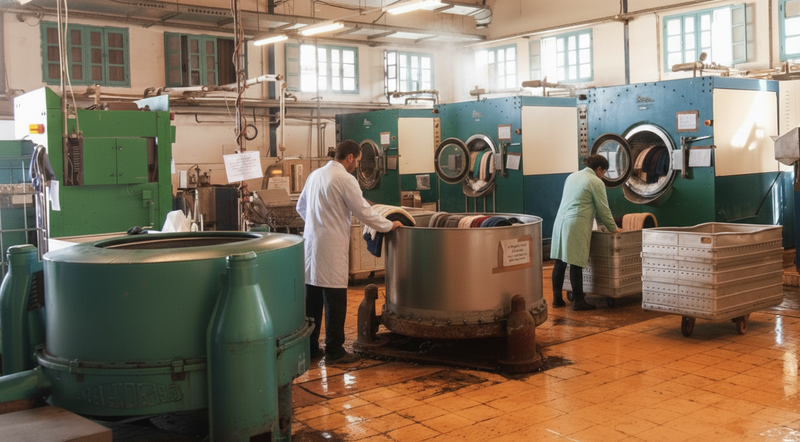
If you've ever wondered why a sweater feels different fresh off the knitting machine compared to the soft, well-shaped garment you eventually pull off a store shelf, the answer lies in one deceptively simple-sounding process: washing. In the world of knitwear manufacturing, "washing" isn't just about getting a garment clean. It's a carefully engineered sequence of chemistry, temperature control, mechanical handling, and drying science that transforms a raw, stiff, freshly-linked sweater into something you'd actually want to wear.
What makes sweater washing so much more complicated than washing a t-shirt or a pair of jeans comes down to one thing: yarn behavior. Every fiber type — wool, cotton, acrylic, cashmere, viscose, and their countless blends — reacts to water, heat, and agitation in its own way. Wool felts if you're not careful. Acrylic can go glossy or misshapen under too much heat. Cashmere can lose its loft if handled roughly. Because of this, sweater washing isn't a one-size-fits-all operation; it's closer to a technical discipline, with its own machinery, chemical recipes, and quality checkpoints, all built around the specific fiber sitting in the drum.
This guide walks through the entire sweater washing journey from start to finish: why factories wash sweaters in the first place, what actually happens during each stage of the process, the different washing methods used for different fiber types (complete with the recipes factories rely on), the equipment involved, and — perhaps most usefully — the common defects that crop up during washing and how experienced technicians solve them.
Objectives of Sweater Washing
It might seem odd that a brand-new, never-worn sweater needs washing before it ever reaches a customer, but there are several very deliberate reasons behind this step, and each one addresses a real risk to the finished garment.
Controlling shrinkage before the customer does. Knitted fabric is inherently more elastic and more prone to dimensional change than woven fabric. If a sweater isn't properly washed and stabilized at the factory, it may shrink or warp unpredictably the first time the customer washes it at home. Pre-emptive, controlled washing settles the fabric's dimensions in a factory environment where every variable can be measured and corrected.
Locking in accurate measurements. Sweaters don't reach their true, stable dimensions until after they've been through a proper wet-finishing process. A garment might measure perfectly on the knitting machine and then shift once it meets water and heat. Washing is what lets a factory confirm — and adjust — that the sweater will actually match the size specification the buyer signed off on.
Making the fabric feel the way it's supposed to feel. Raw knitted yarn, especially straight off industrial cones, can feel stiff, waxy, or scratchy. Softener treatments applied during washing dramatically improve hand feel, giving the sweater the soft, comfortable drape that customers associate with quality.
Getting rid of everything that shouldn't be there. Knitting machines use oils and lubricants to keep yarn running smoothly through the needles, and the knitting process itself sheds loose fibers and picks up dust. None of that belongs in a finished garment, and washing is the step that removes it.
Reducing pilling before it starts. Enzyme washes and softener treatments both play a role in taming the tiny fiber ends that eventually clump into pills. Addressing this at the factory level significantly improves how the sweater looks after repeated wear.
Stabilizing color. Washing helps set dye and reduce the risk of shade variation showing up later — a critical concern for brands that need consistent color across a production run.
Improving how the fabric moves. The knitting process leaves loops under a certain amount of tension. Washing relaxes those loops, which is what gives a finished sweater its natural drape and stretch instead of a stiff, boardy feel.
Detailed Sweater Washing Process Flow
Below is a standard industrial washing workflow:
Pre-Wash Activities
- ✓ Collecting assembled garments
- ✓ Checking measurements
- ✓ Removing dust, loose fibers
- ✓ Patch test for wool or delicate yarns
- ✓ Sorting by color & fiber type
Main Washing Cycle
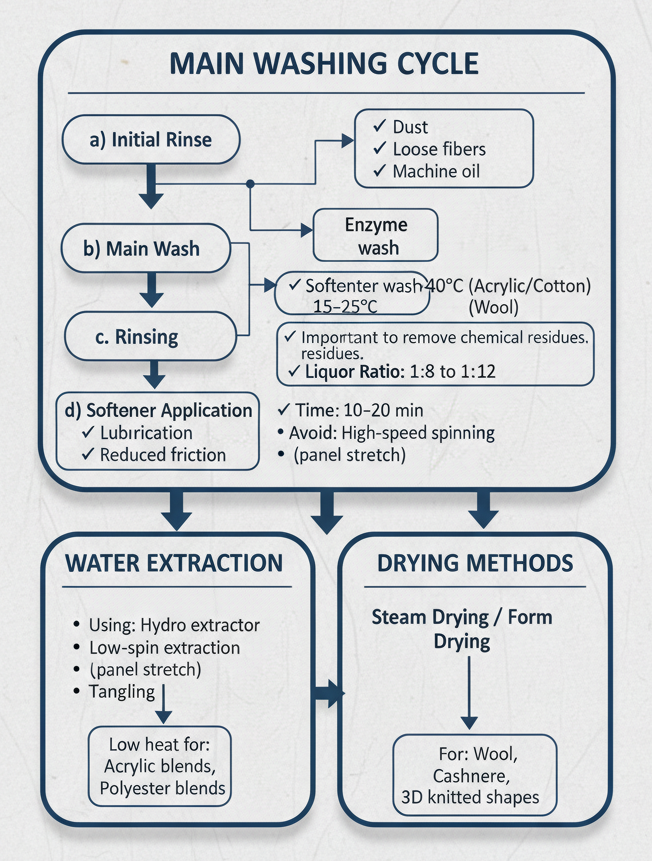
a) Initial Rinse
Removes:
- ✓ Dust
- ✓ Loose fibers
- ✓ Machine oil
b) Main Wash
Depending on yarn type:
- ✓ Softener wash
- ✓ Enzyme wash
- ✓ Wool wash
Parameters:
- ✓ Temperature: 20–40°C (for acrylic/cotton), 15–25°C (for wool)
- ✓ Time: 10–20 minutes
- ✓ Liquor ratio: 1:8 to 1:12
c) Rinsing
Important to remove chemical residues.
d) Softener Application
Provides:
- ✓ Smooth feel
- ✓ Lubrication on fibers
- ✓ Reduced friction
Water Extraction
Using:
- ✓ Hydro extractor
- ✓ Low-spin extraction
Avoid:
- ✓ High-speed spinning = panel stretch
- ✓ Tangling from over-extraction
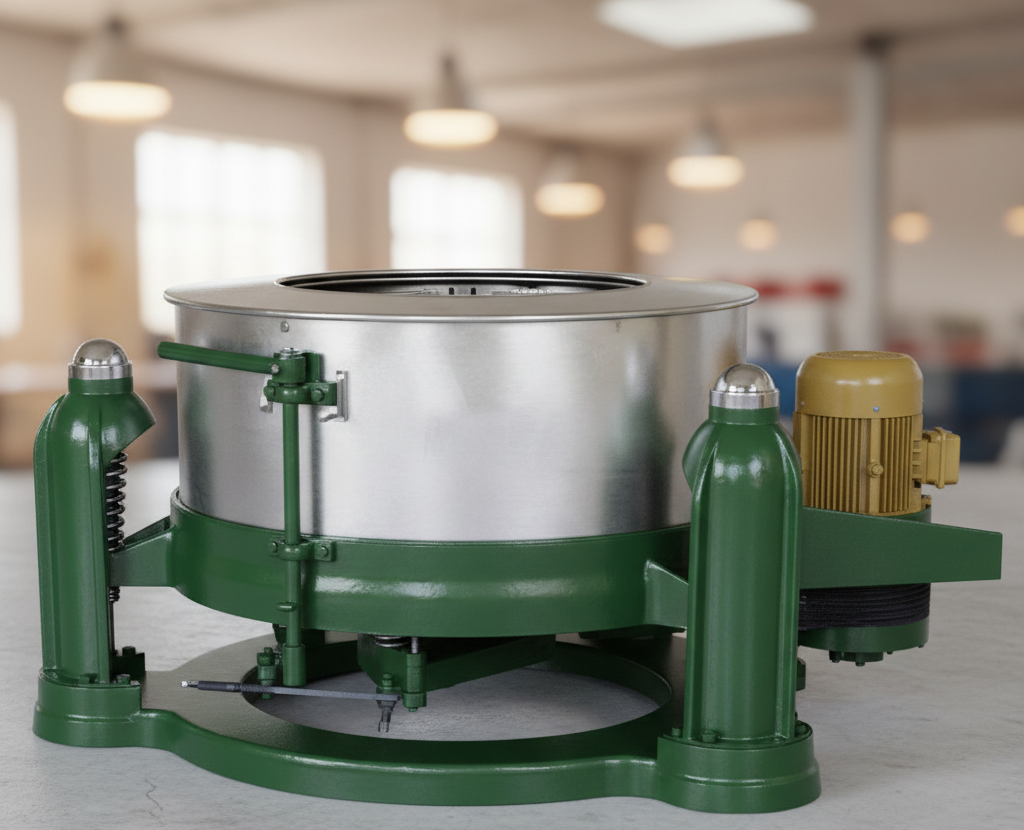
Parameters Affecting Hydro Extraction
a) RPM (Rotational Speed)
- Typical range: 800–1000 RPM for sweaters
- Higher RPM removes more water but may distort loosely knitted garments.
b) Time
- 2–5 minutes is standard
- Longer extraction may flatten surface textures or stretch fibers.
c) Loading Capacity
- Overloading reduces efficiency
- Underloading creates imbalance and vibration
d) Fabric Type & Yarn Composition
Different fibers respond differently:
- Wool: Requires more gentle extraction
- Acrylic: Can handle slightly higher RPM
- Cotton knits: Moderate RPM is suitable
Drying Methods
Tumble Drying (Selective)
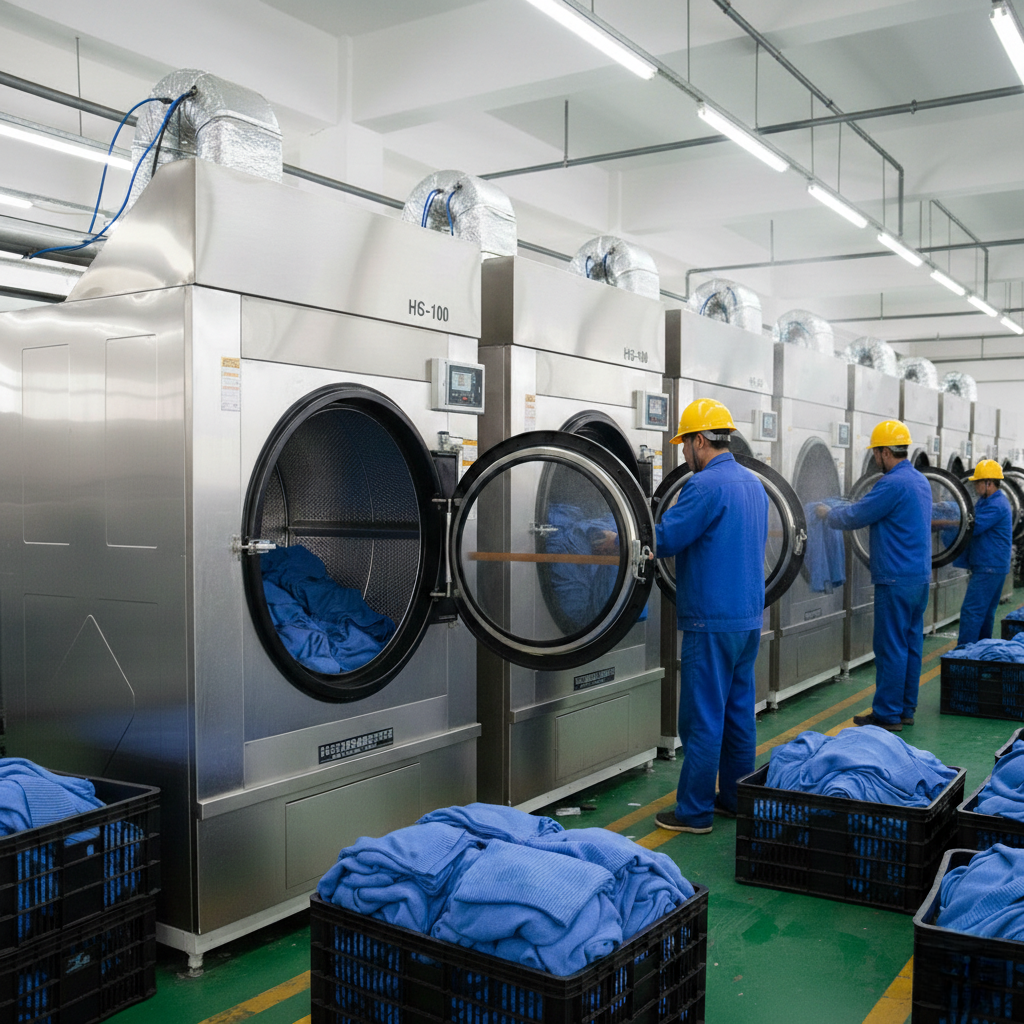
Low heat for:
- ✓ Acrylic blends
- ✓ Polyester blends
Recommended Tumble-Drying Parameters
- Temperature: 45°C – 55°C
- Tumble speed: Medium to low
- Time: 20–35 minutes (depending on GSM and moisture level)
- Load: 60–70% of machine capacity
Steam Drying / Form Drying
For: Wool, Cashmere, 3D knitted shapes
Recommended Steam Drying Parameters
- Temperature: 40°C – 55°C (gentle drying)
- Steam Pressure: 1–2 bar depending on fabric
- Drying Time: 45–90 minutes based on thickness
- Form Adjustment: Match garment measurements exactly
Drying Method Fiber Type Heat Level Advantages Risks Controlled Tumble Dry (Low Heat) Acrylic blends, Polyester blends Low (45–55°C) Fast, uniform, safe for synthetics Glossiness, melting, deformation Steam Drying Wool, Cashmere Gentle steam Maintains softness, zero shrinkage Fiber damage, over‑drying Form Drying Wool, Cashmere, 3D knits Mild heat & airflow Shape retention, dimensional stability Stretching, shape loss
Measurements Control After Washing
Sweaters change size significantly after wash.
So factories follow:
Pre-Wash Measurement
Before washing, initial measurements recorded.
During-Wash Adjustment
If necessary, sweaters are stretched or relaxed during drying.
Post-Wash Measurement
Compared with buyer tolerance.
Types of Washing Methods for Sweaters
Different sweater materials require specific washing techniques.
Below are the most common methods used in factories.
Softener Wash – Recipe (Most Common Process)
Purpose: General finishing wash for acrylic, cotton, blends.
Recipe:
| Step | Chemical / Action | Dosage | Conditions |
|---|---|---|---|
| Pre‑Rinse | Water only | — | 5 min, 25–30°C |
| Main Cycle | Neutral detergent | 0.3% – 0.5% | 10 min, 30–35°C |
| Rinse | Clean water | — | 3 min |
| Softener Bath | Silicone or cationic softener | 0.5% – 1.0% | 5–7 min at room temperature |
| Extraction | Hydro‑extractor | Low RPM | < 300–350 RPM |
| Drying | Flat drying | — | Until moisture removed |
Liquor Ratio: 1:8 – 1:12
Effect: Soft feel, improved drape, reduced stiffness.
2. Enzyme Wash – Recipe
Purpose: Bio polishing, Reduce hairiness, pilling, fuzz.
Recipe:
| Step | Chemical / Action | Dosage | Conditions |
|---|---|---|---|
| Pre‑Rinse | Water only | — | 25–30°C |
| Enzyme Treatment | Bio‑polishing enzyme (cellulase) | 0.3% – 0.8% | 30–40°C for 10–15 min |
| Buffer / pH Control | Acetic acid | 0.3% | pH 5.5–6.0 |
| Rinse | Clean water | — | 3 min |
| Softener Bath | Silicone softener | 0.5% – 1.0% | 5 min |
Liquor Ratio: 1:8 – 1:10
Key Note: Over‑exposure causes thinning or color fading.
3. Wool Scouring / Wool Relax Wash – Recipe
Purpose:
Safe washing for wool, merino, lambswool, high‑wool content blends.
Recipe:
| Step | Chemical / Action | Dosage | Conditions |
|---|---|---|---|
| Initial Wetting | Mild wool detergent | 0.3% | 20–25°C |
| Anti‑Felting Treatment | Anti‑felting agent | 0.2% – 0.5% | Low agitation |
| Soft Rinse | Clean water | — | 3 min |
| Conditioning | Wool conditioner | 0.5% | 20–25°C |
| Steam Relax | Steaming | — | 1–2 min in steamer |
Liquor Ratio: 1:10 – 1:12
Key Protection: Prevent felting & shrinkage.
4. Steam Washing / Steam Relaxing – Recipe
Purpose:
Gentle finishing for luxury fibers with minimal water exposure.
Process:
| Step | Action | Conditions |
|---|---|---|
| Pre‑Conditioning | Light water mist | Room temp |
| Steam Cycle | Moist steam | 1–3 min at 90–100°C |
| Flat Cooling | On racks | Until temperature stabilizes |
Chemicals: None typically required.
Fiber Suitability: Cashmere, Angora, Merino.
5. Anti‑Pilling Treatment Wash – Recipe
Purpose:
Reduce long‑term pilling on acrylic, viscose, poly blends.
Recipe:
| Step | Chemical / Action | Dosage | Conditions |
|---|---|---|---|
| Pre‑Rinse | Water | — | 25–30°C |
| Anti‑Pilling Bath | Anti‑pilling resin | 1.0% – 3.0% | 20–30°C, 10 min |
| Softener Bath | Silicone softener | 0.5% – 1.0% | 5 min |
| Rinse | Water | — | 3 min |
Liquor Ratio: 1:8 – 1:12
Note: Avoid over‑resination (causes stiffness).
6. Cold Wash – Recipe (Delicate Fibers / High Gauge)
Purpose:
For sensitive fibers (12GG–16GG).
Recipe:
| Step | Chemical / Action | Dosage | Conditions |
|---|---|---|---|
| Wash Cycle | Mild detergent | 0.2% – 0.3% | 15–20°C, 5–7 min |
| Rinse | Water | — | 2–3 min |
| Softener Bath | Light softener | 0.3% – 0.5% | 5 min |
Drying: Only flat drying.
7. Dry Cleaning – Recipe (Premium Sweaters)
Purpose:
For luxury wool and cashmere.
Process
- Use Perchloroethylene (PERC) or hydrocarbon solvent.
- Standard dry‑cleaning cycle (8–12 minutes).
- Minimal agitation.
- Steam or form‑board finishing afterward.
Consolidated Washing Parameters Summary
| Wash Type | Temp | Time | Key Chemicals | Drying |
|---|---|---|---|---|
| Softener | 30–35°C | 10–15 min | Neutral soap + softener | Flat |
| Enzyme | 30–40°C | 10–15 min | Cellulase enzyme | Flat |
| Wool Relax | 20–25°C | Minimal | Wool detergent, anti‑felting | Steam/Flat |
| Steam Relax | — | 1–3 min | None | Flat |
| Anti‑Pilling | 20–30°C | 10–12 min | Resin + silicone | Flat |
| Cold Wash | 15–20°C | 5–7 min | Mild soap | Flat |
| Dry Cleaning | Solvent | 8–12 min | Dry‑cleaning solvent | Form steam |
Washing Equipment Used for Sweater Processing
Sweater washing uses specialized equipment to prevent garment damage.
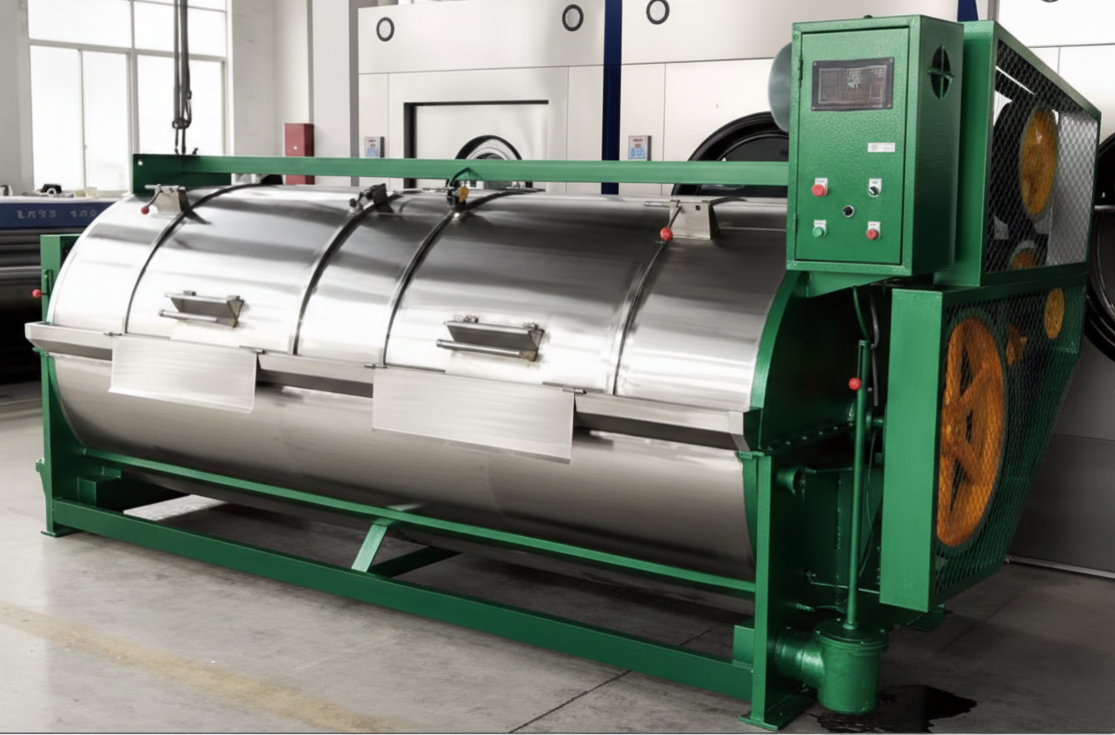
Front-Loading Industrial Washing Machines
Most common machine, includes:
- ✓ Programmable cycles
- ✓ Temperature control
- ✓ Low mechanical agitation
Ideal for all sweater types.
Hydro Extractor / Water Extraction Machine
Used to remove excess water without stretching.
Must be low RPM to avoid panel distortion.
Tumble Dryers (with Care)
Used mainly for:
- ✓ Acrylic
- ✓ Polyester
Rarely used for wool or luxury fibres.
Flat Drying Beds / Racks
Critical for sweaters. Prevents:
- ✓ Stretching
- ✓ Panel lengthening
- ✓ Shape distortion
Used for all woolen and cotton-blended sweaters.
Form Board Steamers
To set shape and measurements:
- ✓ Body length
- ✓ Chest width
- ✓ Armhole shape
- ✓ Collar shape
Common in mass production.
Common Problems in Sweater Washing & Their Solutions (Extended Guide)
Sweater washing is a sensitive process because knitted fabrics respond strongly to moisture, heat, chemical balance and mechanical action. Even minor deviations in parameters can lead to serious defects that affect garment fit, appearance and overall quality. Below is an in‑depth overview of the most common problems encountered during sweater washing, their technical causes and practical industrial solutions
Shrinkage Beyond Tolerance (Major Problem Across All Fibers)
Why It Happens
Sweaters—especially wool, cotton, viscose and acrylic blends—are prone to dimensional shrinkage. Key causes include:
- High water temperature that tightens the knit structure
- Excess agitation causing fibers to contract
- Improper liquor ratio, leading to uneven soaking
- Incorrect detergent pH, especially harmful for wool
- Improper steam drying causing loop contraction
Shrinkage beyond buyer‑approved tolerance leads to rejections, rework and significant financial loss.
Solutions
- Strict temperature control:
- Wool: 15–25°C
- Cotton/Acrylic: 25–35°C
- Low agitation settings to prevent loop tightening
- Use anti‑shrink or anti‑felting chemicals for wool
- Maintain correct liquor ratio (1:8–1:12)
- Immediate measurement checks before drying
- Steam relaxation for minor shrinkage recovery
A well‑designed wash program dramatically lowers shrinkage risk.
Panel Distortion (Shape Loss, Stretching, Twisting)
Why It Happens
Panel distortion is one of the most visible sweater wash defects. It occurs when:
- High RPM hydro‑extraction stretches the sweater
- Tumble drying elongates the body and sleeves
- Poor panel support during drying
- Incorrect loading quantity causing garments to pull on each other
- Over‑wet handling, which stretches sensitive fibers
Results include:
- Twisted body
- Wavy hems
- Uneven sleeve length
- Side seam wobbles
Solutions
- Use low‑speed extraction:
- Recommended: 300–350 RPM max
- Avoid tumble drying for wool & cotton knits
- Always use flat drying on mesh trays
- Dry sweaters in original shape (block to required dimensions)
- Do not overload washing machines
- Use form boards for wool/cashmere to maintain shape
Proper handling prevents most distortion issues.
Color Bleeding or Shade Variation
Why It Happens
Color instability during washing is common when working with dyed yarns. Causes include:
- Unfixed or unstable dyes
- Mixing dye‑lots in the same batch
- High temperature washes, especially on reactive or disperse dyes
- Incorrect pH, leading to dye migration
- Uneven chemical distribution
Results in:
- Contrast differences between panels
- Stripes looking washed out
- Patchy or cloudy dye appearance
Solutions
- Strict lot segregation to avoid mixing different dye batches
- Use cold wash (20–25°C) for unstable dye types
- Use dye‑fixing agents during the wash cycle
- Maintain pH control, especially for cotton
- Short wash cycle for sensitive colors
- Perform a dye‑rub test before bulk washing
Color consistency is crucial for fashion buyers and brand QC.
Pilling Increase (Before or After Washing)
Why It Happens
Pilling worsens when fibers break or loosen during washing. Causes include:
- Low‑quality yarn or short fibers
- High mechanical agitation
- Wrong wash chemistry
- Insufficient softening
- Excessive tumble drying
Pills make the sweater look worn out and reduce customer satisfaction.
Solutions
- Use enzyme wash to remove surface fuzz (for cotton/cotton blends)
- Apply silicone softeners to reduce friction
- Lower mechanical action and agitation
- Use anti‑pilling resin treatments for synthetics
- Flat dry instead of tumble dry
- Use micro‑emulsion softeners for premium finishes
A combination of enzymatic and softener treatment provides the best long‑term pilling resistance.
Additional Problems Often Seen in Sweater Washing
To make this content more extended and useful, here are more important issues factories commonly face:
Excess Hand‑Feel Roughness
Cause
- Low softener dosage
- Incorrect softener type
- Hard water in washing process
Solution
- Increase silicone content to 0.5%–1.0%
- Switch to micro silicone softeners
- Use water‑softening agents
Uneven Surface Texture / Loop Flattening
Cause
- High pressure extraction
- Overloading machine
- Heavy tumble action
Solution
- Reduce load per batch
- Lower extraction time
- Use steam relaxation
Stitch Opening or Loosening
Cause
- Excessive softener
- Over‑relaxed drying
- High temperature from blow dryers
Solution
- Reduce softener dosage
- Use controlled flat drying
- Maintain proper tension during shaping
Harsh Odor After Washing
Cause
- Chemical residue
- Low‑quality detergent
- Insufficient rinsing
Solution
- Rinse cycles with 2–3 changes of water
- Use odor‑removal additives
- Improve chemical quality
The Bottom Line
Sweater washing looks, from the outside, like a fairly mundane manufacturing step — throw the garments in a machine, add some soap, dry them off. In practice, it's a tightly controlled balancing act between water, heat, chemistry, and mechanical force, where the right recipe changes depending on whether you're working with a chunky acrylic pullover or a delicate cashmere cardigan. Get the parameters right, and you end up with a sweater that fits true to size, feels soft against the skin, holds its color, and resists pilling wash after wash. Get them wrong, and even a well-knitted, well-designed sweater can come out shrunken, twisted, faded, or scratchy — defects that are hard to fix after the fact and expensive for a factory to absorb.
That's really the underlying logic behind every recipe, every RPM limit, and every temperature range covered here: none of it is arbitrary. Each parameter exists because someone, somewhere, learned the hard way what happens when it's ignored. For manufacturers, buyers, and quality teams alike, understanding this process in detail isn't just technical trivia — it's the difference between a sweater that meets spec and one that gets sent back.