Sweater development is based on knit structures. The choice of knit has a direct impact on the look of the garment, but also on its comfort, stretch, weight and performance. From simple everyday basics to highly engineered fashion pieces, knit constructions can be categorized into different levels based on their complexity and application.
Why Knit Structure Is a Strategic Decision, Not a Random One
Before diving into specific structures, it's worth pausing on why this classification exists at all. Selecting a knit structure is never just an aesthetic call. It sits at the intersection of five very different pressures:
- Design intention — what mood, silhouette, and visual language the collection is trying to achieve
- Yarn behavior — how a specific fiber and yarn count will actually perform in that structure (a chunky wool behaves nothing like a fine merino in the same stitch)
- Machine capability — whether the factory's equipment can even execute the structure at the required gauge
- Production cost — every additional stitch complexity adds machine time, labor, and risk of defects
- Consumer expectations — a $20 basic and a $200 statement sweater are held to completely different standards of texture and finish
Because of this, the industry has settled into a useful mental model: grouping knit constructions into three broad levels — basic (Level‑1), intermediate (Level‑2), and advanced (Level‑3). Each level isn't just "more complicated" for its own sake; it represents a genuine step forward in creativity, technical skill, and the amount of production involvement required to bring it to life.
A Quick Snapshot Before We Go Deeper
It helps to hold a rough mental map of how these levels differ before getting into individual structures.
- Level‑1 (Basic): Single Jersey, Rib, Half Cardigan, Full Cardigan. Handfeel ranges from fluid jersey to bulky cardigan. Stretch and recovery is generally strong, especially in ribs. Production is fast, and GSM (grams per square meter, a proxy for fabric weight) typically runs from around 140 for lightweight jersey up to 550 for heavy cardigans.
- Level‑2 (Intermediate): Zig Zag, Lace/Pointelle, Moss, Cable, Brioche, Link Link, Pineapple, Float, Twill, Rice, Waffle, Honeycomb. These are visibly textured fabrics with moderate stretch and moderate-to-high warmth (brioche being the standout for warmth). Production speed drops to moderate, and GSM tends to land between 220 and 500 depending on pattern and yarn.
- Level‑3 (Advanced): Flexible Stitch Length, Multi‑Gauge, Fringe, Destroy Stitch, Cable+Tuck, Racking & Tuck, Half Fisherman, Braid+Cable, Double Moss, Flux Honeycomb, Pocket Stitch, and more. These fabrics are sculptural and three-dimensional, often heavier and elastic, with production running slow and GSM frequently exceeding 350, sometimes climbing past 800 for the heaviest fisherman and brioche-based structures.
Keep in mind that GSM ranges are always indicative rather than fixed — the real number depends on yarn count, stitch length, gauge, and finishing, so any of these figures should be validated against an actual sample before committing to production.
Quick Reference: Fabric Behavior by Knit Level
| Complexity | Primary Structures | Handfeel & Drape | Stretch/Recovery | Warmth | Production Speed | Typical GSM (range)* |
|---|---|---|---|---|---|---|
| Level‑1 (Basic) | Single Jersey, Rib, Half Cardigan, Full Cardigan | From fluid (jersey) to bulky (full cardigan) | Jersey: high; Ribs: very high | Jersey: low–med; Cardigans: high | Fast | Jersey: 140–220; Rib: 220–350; Cardigans: 300–550 |
| Level‑2 (Intermediate) | Zig Zag, Lace/Pointelle, Moss, Cable, Brioche, Link Link, Pineapple, Float, Twill, Rice, Waffle, Honeycomb | Visibly textured | Moderate | Moderate–High (Brioche high) | Moderate | 220–500 (pattern & yarn dependent) |
| Level‑3 (Advanced) | Flexible Stitch Length, Multi‑Gauge, Fringe, Destroy Stitch, Cable+Tuck, Racking & Tuck, Half Fisherman, Braid+Cable, Double Moss, Flux Honeycomb, Pocket Stitch, etc. | Sculptural/3D | Varies (often heavier and elastic) | High (Fisherman/Brioche) | Slow | 350–800+ |
Level 1: Basic Knit Structures — The Foundation of the Industry
Level‑1 constructions are the backbone of knitwear manufacturing, and there's no shame in that. These are the structures that keep the industry running at scale: simple to program, efficient to produce, and consistent enough that a factory can turn out thousands of units with very little variation between them. Because they're so straightforward, they come with real commercial advantages — lower production cost, faster lead times, and stable, predictable quality. That combination is exactly why they dominate everyday, mass-market garments.
Single Jersey
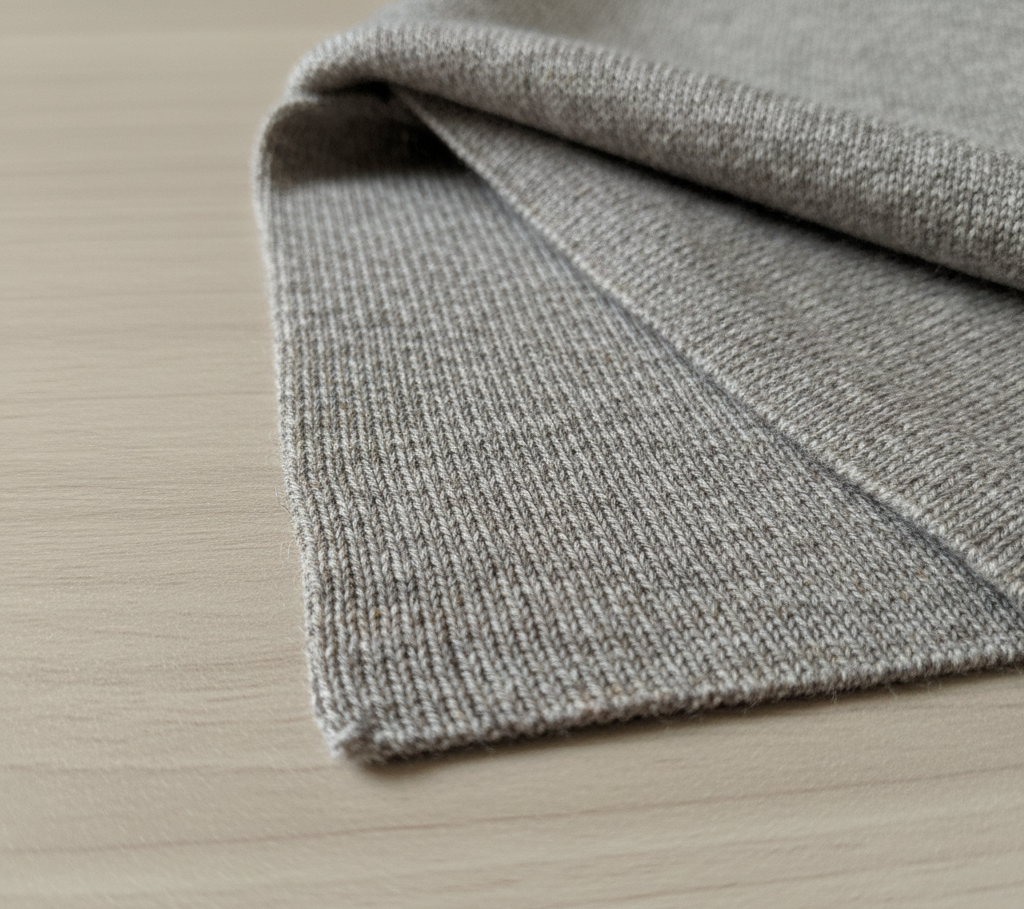
Single jersey is arguably the most universally recognized knit structure in the world, and for good reason. It's created by interlooping yarn in a single direction, which produces a fabric that's lightweight, flexible, and simple to work with on both the design and manufacturing side.
What makes single jersey so dependable is its consistency: a smooth, clean face paired with a slightly textured back, good drape, and enough stretch to feel comfortable without needing added elastane. It's economical, quick to knit, and forgiving of yarn substitutions, which is why it shows up everywhere from T-shirts to basic sweaters to garment linings.
- Smooth face with a subtly textured reverse side
- Reliable drape and stretch without special finishing
- Economical and fast to produce at scale
- Common applications: T-shirts, basic pullovers, linings, layering pieces
Rib
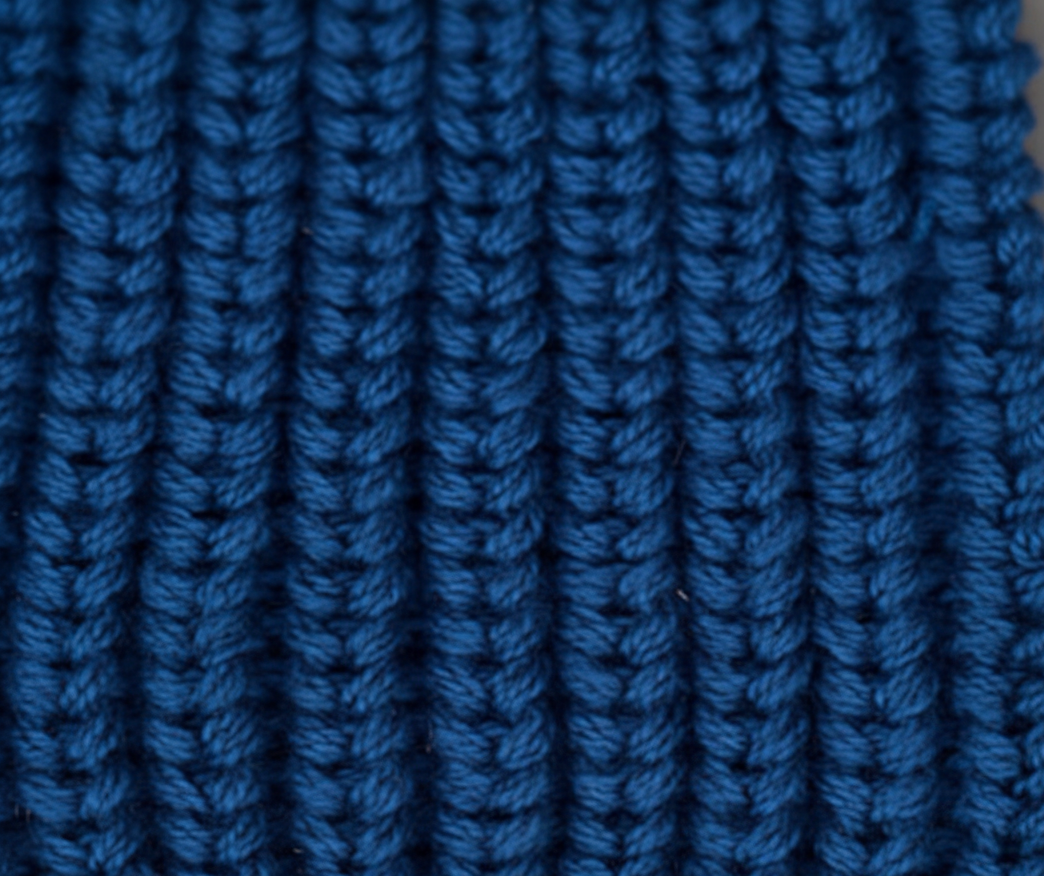
Rib knit takes a different approach, alternating knit and purl stitches in vertical columns rather than a single continuous face. That alternating structure is what gives rib its signature superpower: elasticity. Few basic structures can match its stretch-and-recovery performance, which is exactly why it's rarely used for an entire garment and instead shows up strategically at the points that need to move and hold shape.
- Excellent elasticity with strong recovery after stretching
- Creates a snug, body-hugging fit where used
- The go-to choice for collars, cuffs, and hems across nearly every sweater category
Half Cardigan
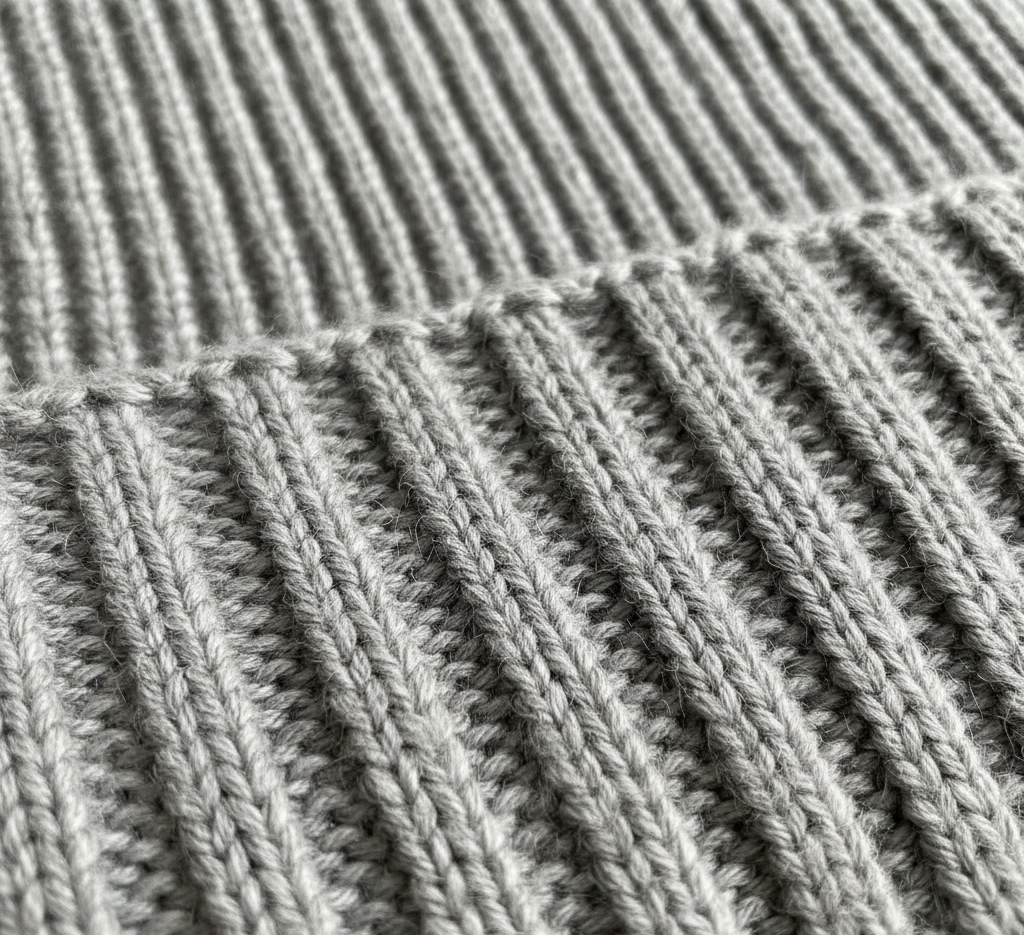
Half cardigan sits a step above rib and plain jersey in terms of texture. It introduces more surface interest and a noticeably softer hand, while still remaining firmly in "everyday" territory rather than crossing into fashion-forward complexity.
- Thicker and more textured than standard rib
- Soft, pleasant hand-feel against the skin
- Well suited to cozy, casual sweaters that need a bit more visual presence than plain jersey
Full Cardigan
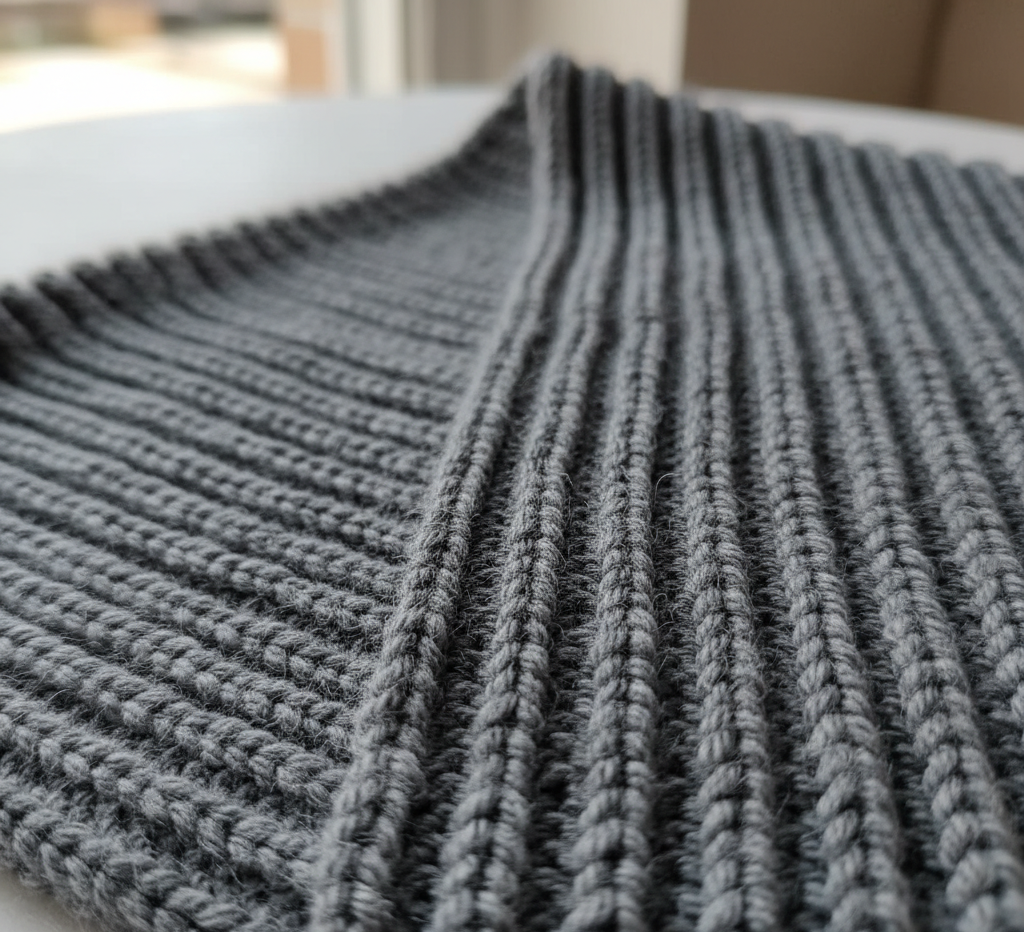
Full cardigan pushes that same idea further, producing a highly textured, voluminous fabric that's really built around one core purpose: warmth. The deep ridges that define this structure aren't just decorative — they trap air and add loft, which is what makes full cardigan knits feel so substantial.
- Deep ridges create a lofty, voluminous surface
- Exceptional warmth retention compared to other Level‑1 structures
- A perennial favorite for heavy winter sweaters and outerwear-adjacent knitwear
Level 2: Intermediate Knit Structures — Where Texture Meets Fashion
Once a collection needs to say something beyond "basic," Level‑2 structures start to earn their place. These knits introduce visible pattern, dimension, and personality, and they typically show up in fashion-oriented collections sitting in the mid-to-premium price bracket. The tradeoff is technical: Level‑2 structures demand more precise machine control and a bit more expertise on the production floor than anything in Level‑1.
Key Level‑2 Knit Constructions
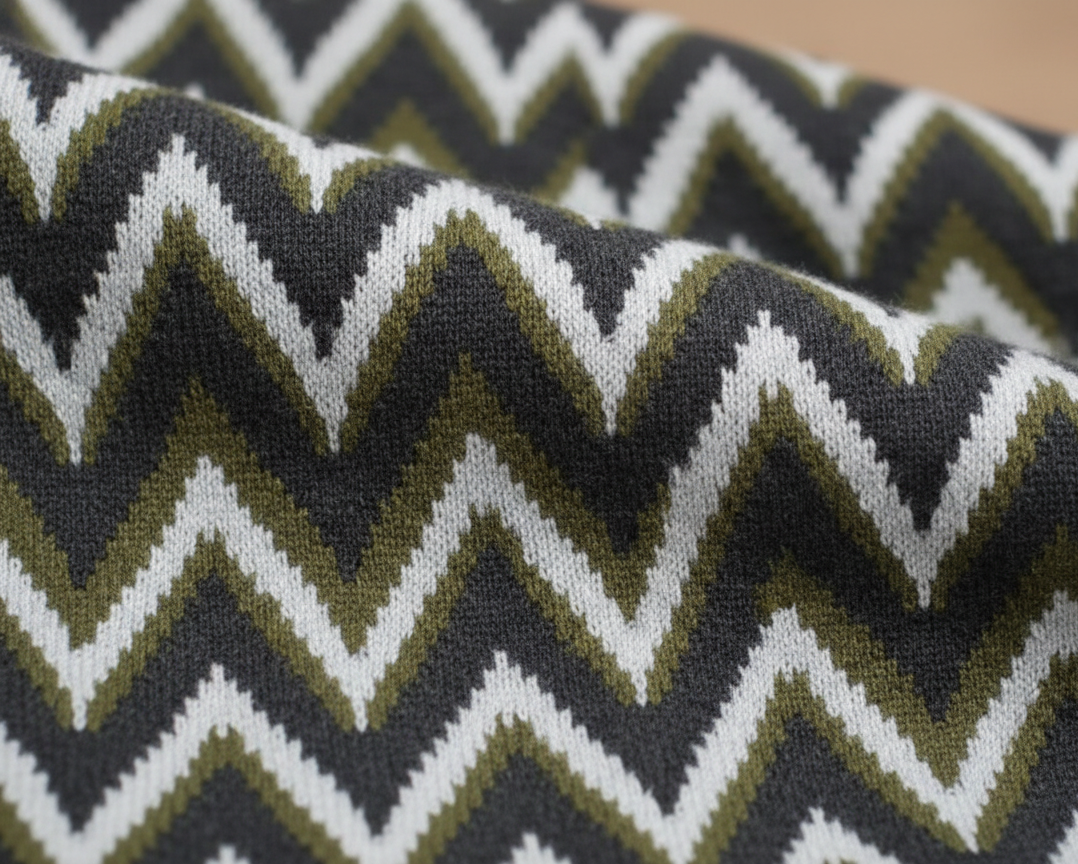
Zig Zag
Zig zag knit forms a distinct diagonal, chevron-like pattern across the fabric surface, primarily used to add visual dynamism rather than functional benefit. It's a structure that reads as "designed" at a glance, which makes it popular in mid-gauge sweaters for both men's and women's collections.
- Diagonal patterned surface with clear directional movement
- Adds energy and visual dynamism to an otherwise simple silhouette
- Frequently used in mid-gauge sweaters across menswear and womenswear
Lace / Pointelle
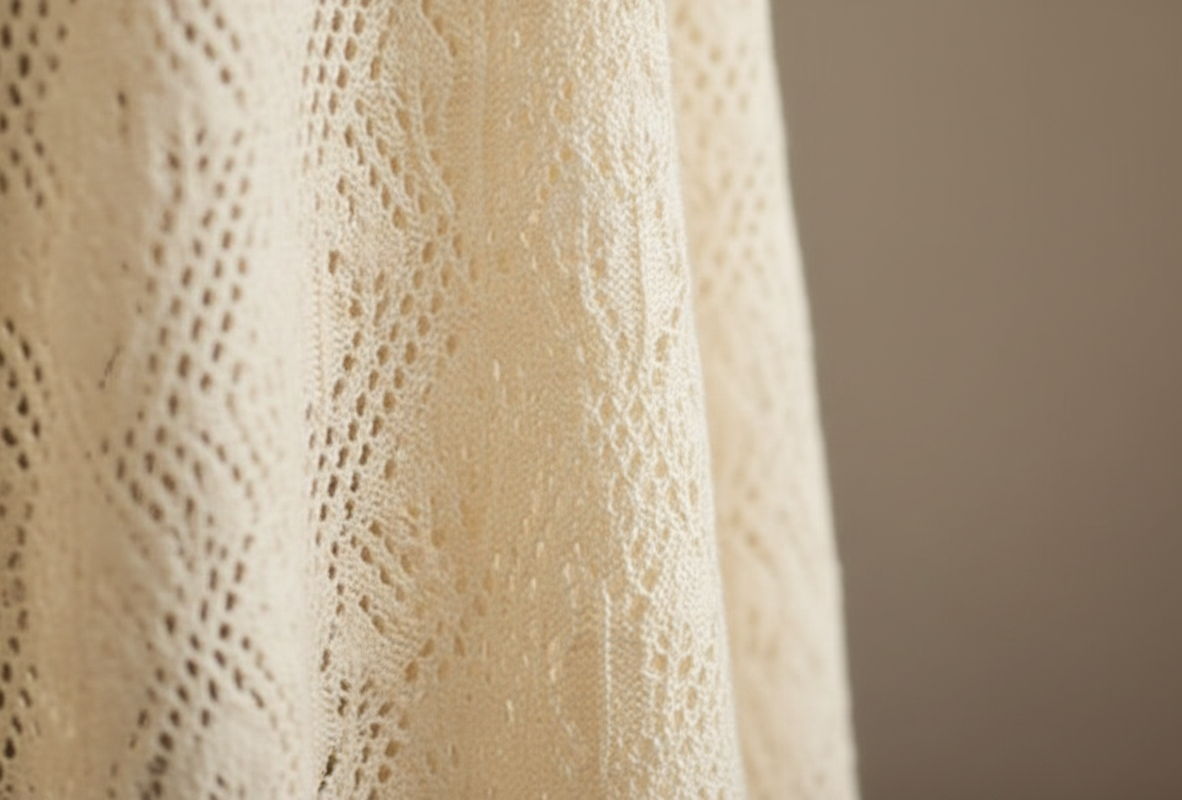
Lace and pointelle knits work in almost the opposite direction from something like full cardigan — instead of adding density, they remove it. Small, deliberate holes and decorative openwork patterns make the fabric lighter and more breathable, which is exactly why these structures gravitate toward spring and summer collections. They're a great reminder that knitwear isn't only a cold-weather category; the same technical toolkit that builds warmth can just as easily build airiness.
- Open-work patterns with small decorative holes
- Lightweight and breathable, ideal for warmer seasons
- Reads as feminine and delicate, popular in spring–summer sweater collections
Moss
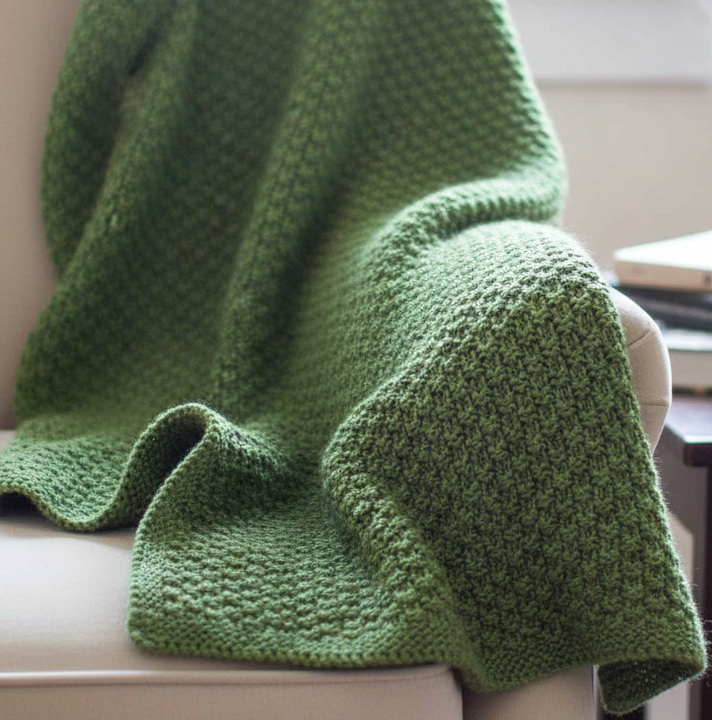
Moss stitch relies on alternating knit and purl stitches to create a bumpy, grainy texture that's subtle but tactile. It's a quietly versatile structure — understated enough to work in casual pieces, but textured enough to elevate a premium item.
- Bumpy, grainy texture from alternating knit/purl placement
- Strong dimensional stability, meaning the fabric holds its shape well
- Adaptable across price points, from casual basics to premium knitwear
Double Moss
Double moss simply takes that same principle and intensifies it, layering in extra depth and stability for a more pronounced textural effect.
- Enhanced version of moss stitch with amplified texture
- Adds more depth and structural stability than standard moss
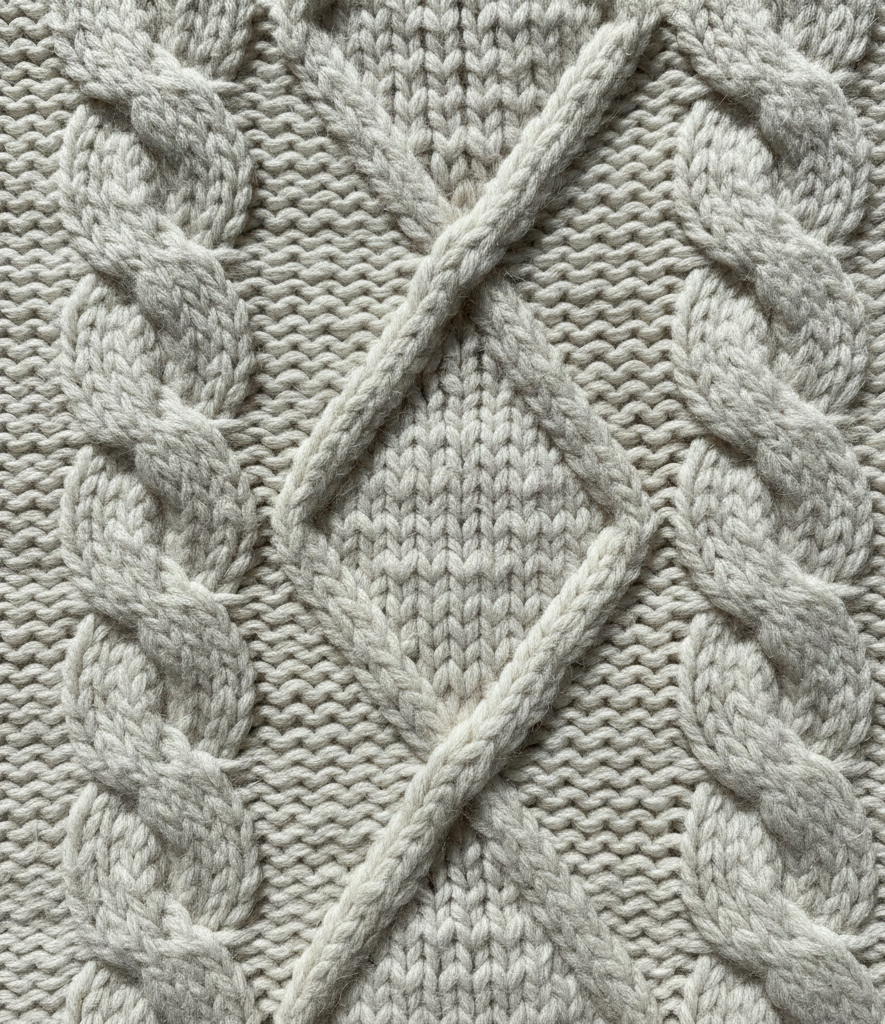
Cable
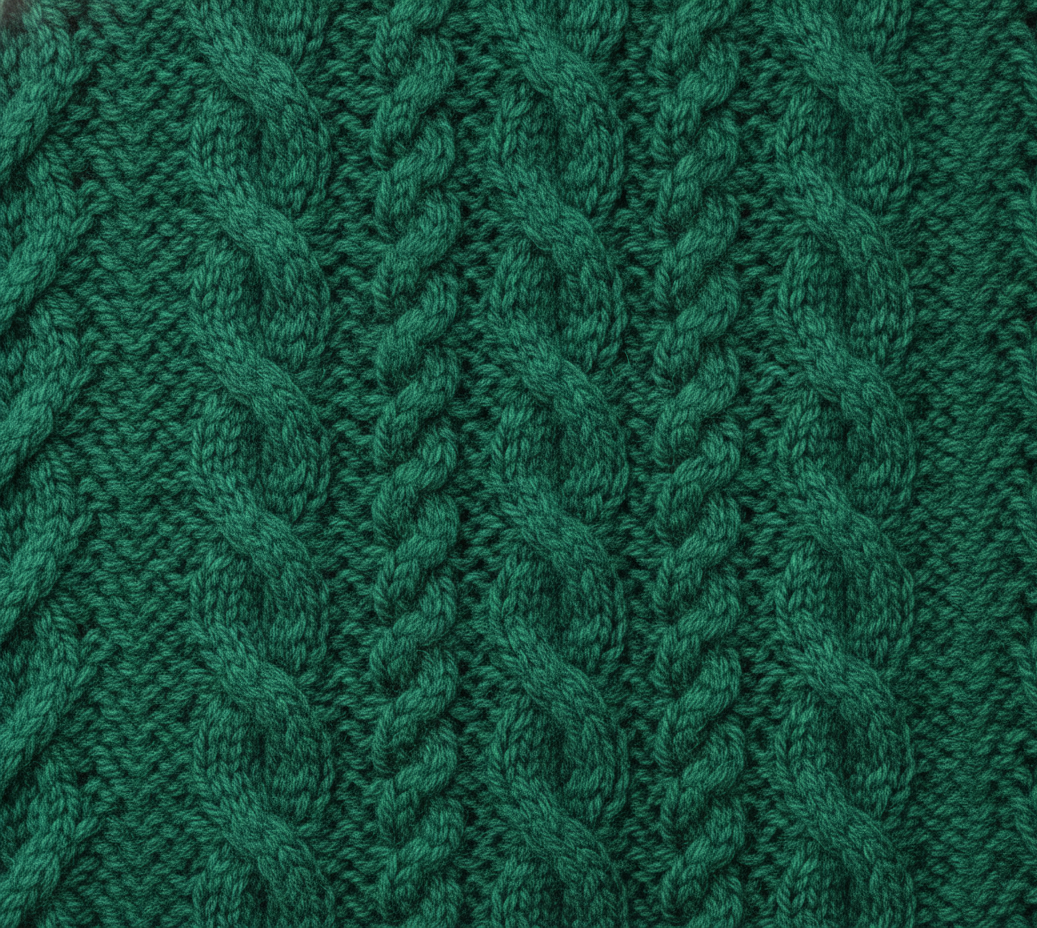
Cable knit is probably the most instantly recognizable "fashion" knit structure there is. Twisted, rope-like columns of stitches create a strong three-dimensional effect that has become genuinely iconic — it's the defining feature of classic Aran sweaters and has remained a design staple for generations.
- Twisted, rope-like patterns with strong 3D presence
- Instantly recognizable and closely associated with classic Aran sweaters
- A dependable way to add visual weight and craftsmanship to a design
Brioche
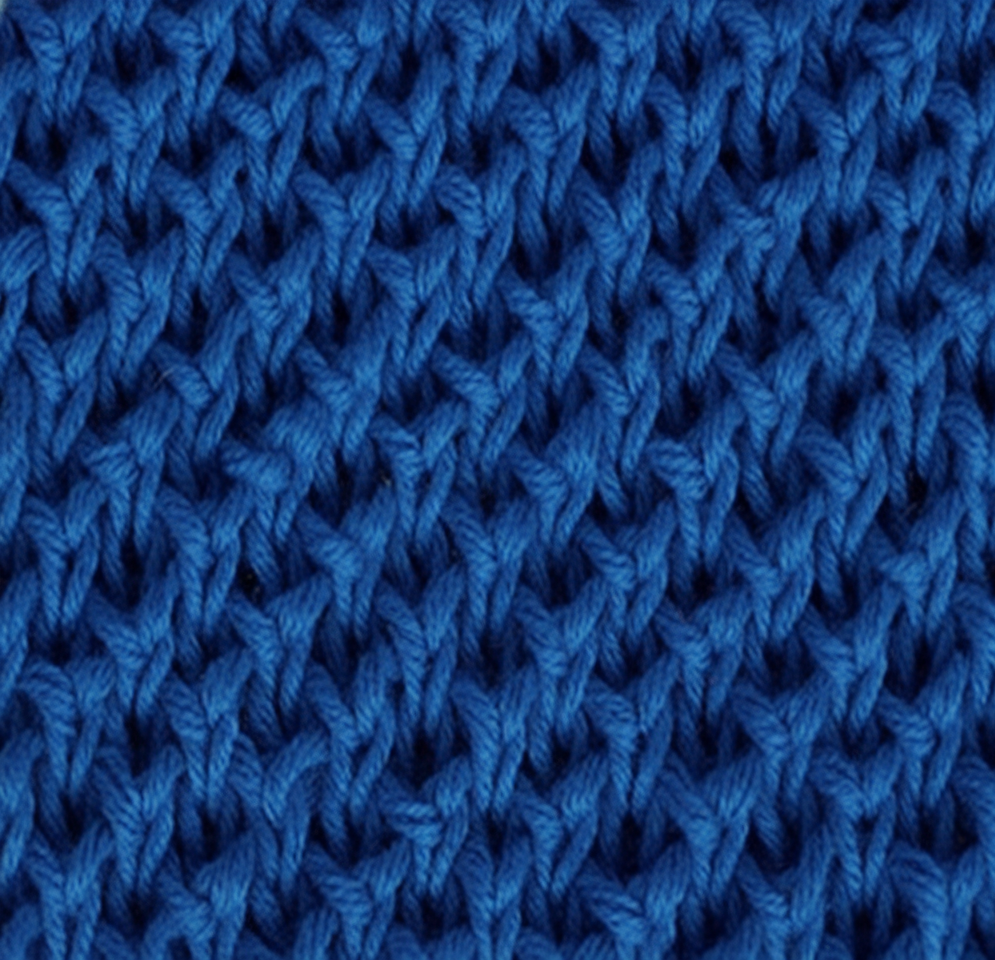
Brioche is built for two things at once: softness and warmth. The structure produces a plush, lofty fabric with impressive stretch, which is why it's a favorite for winter-focused premium collections where comfort is as important as appearance.
- Plush, lofty structure with a soft, cushioned hand
- High stretch combined with strong insulating properties
- Well suited to winter premium styles where comfort is a selling point
Purl or Link Link
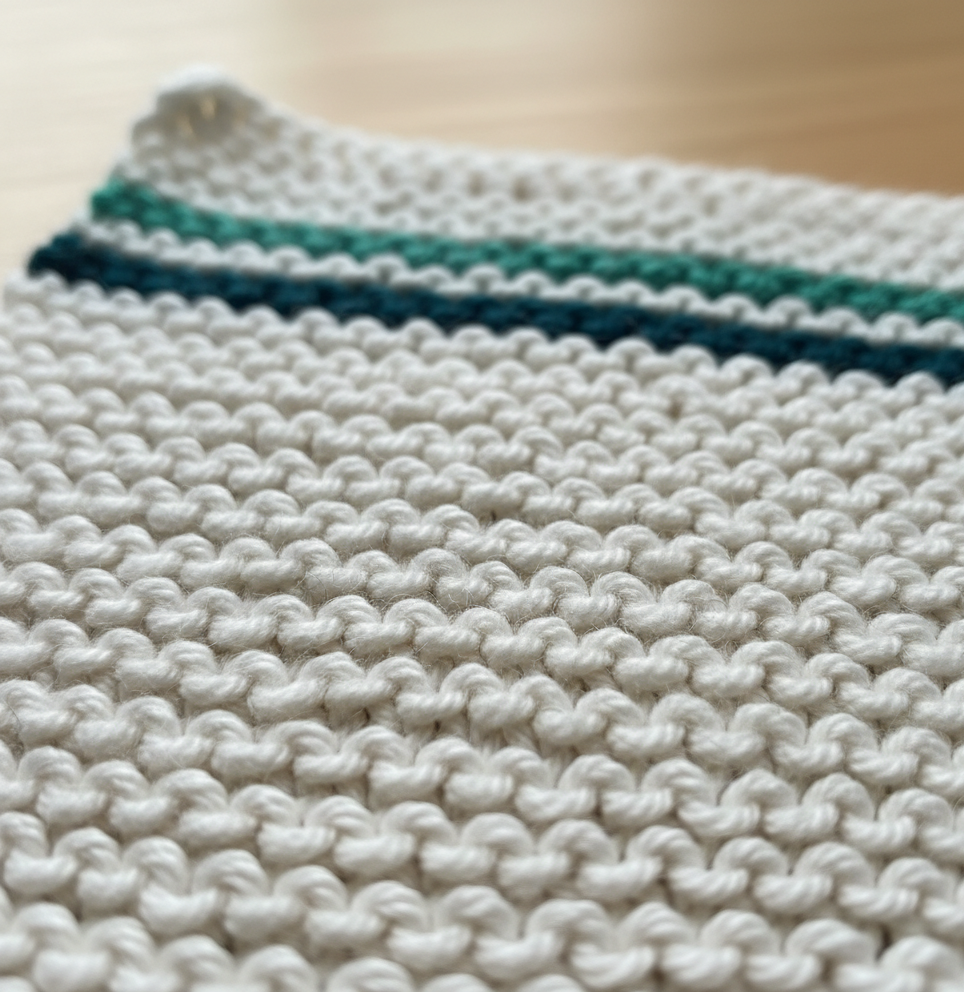
Link link, sometimes referred to simply as purl stitch, alternates face and back stitches to create a distinctive horizontal texture. It's a subtler structure than cable or brioche, but it adds real visual interest without piling on extra weight.
- Alternating face and back stitches create unique horizontal texture
- Adds visual interest while staying relatively lightweight
- A good middle-ground option when a design needs texture without bulk
Pineapple
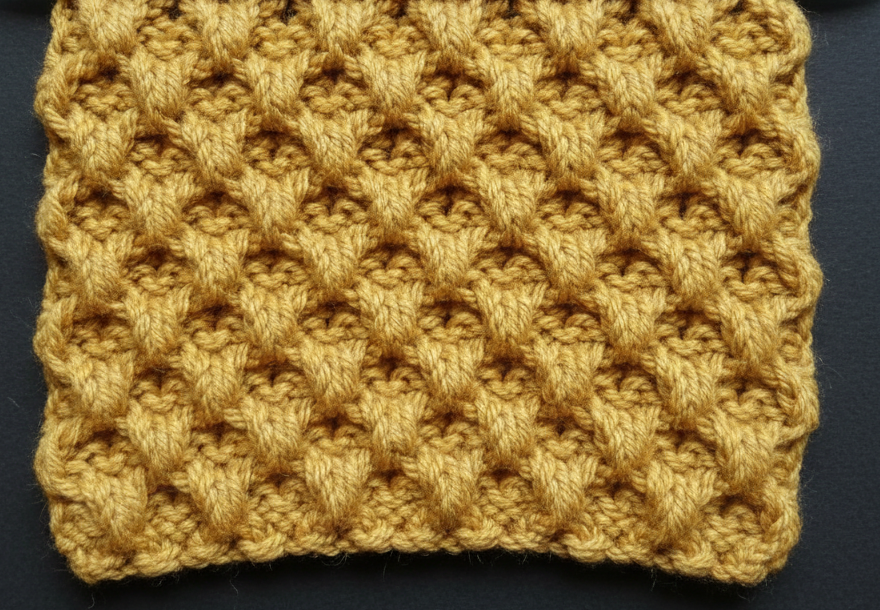
Pineapple knit draws on lace-based techniques to build geometric, decorative patterns. It leans further into the "statement" end of Level‑2, offering strong decorative appeal for pieces meant to stand out.
- Lace-based construction with geometric motifs
- Strong decorative impact, well suited to statement pieces
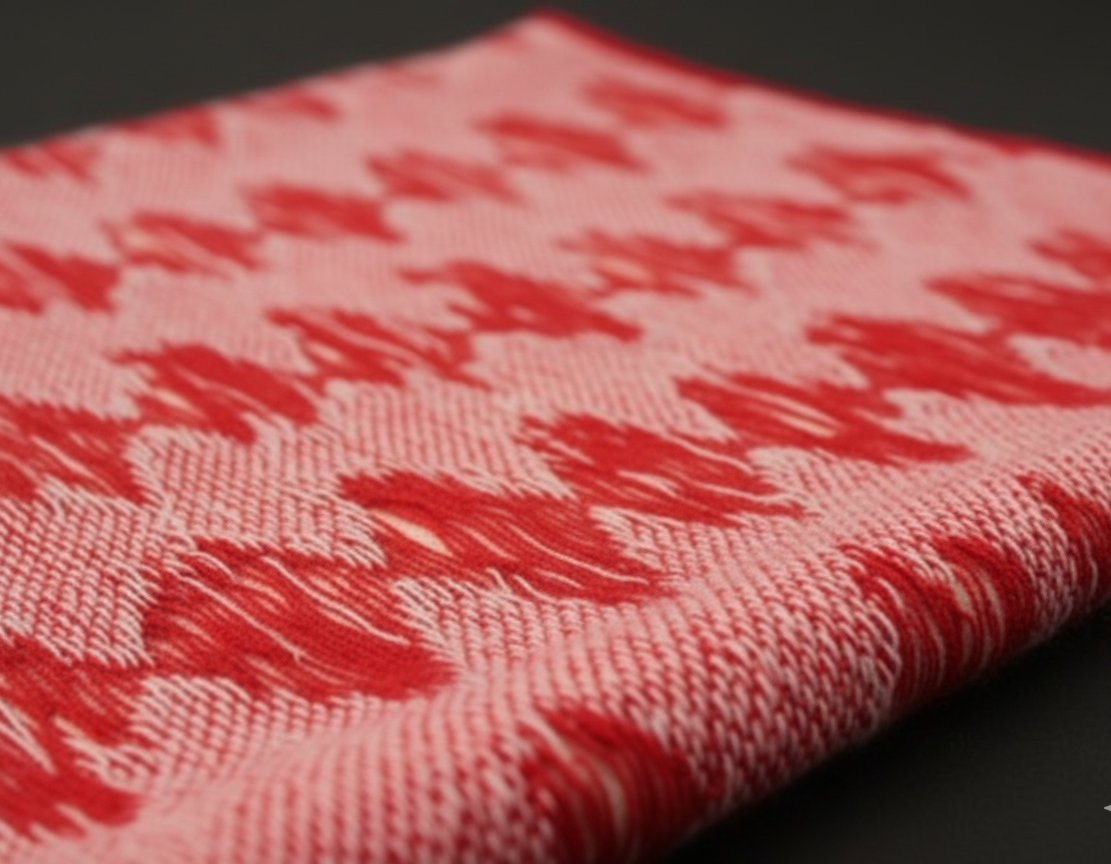
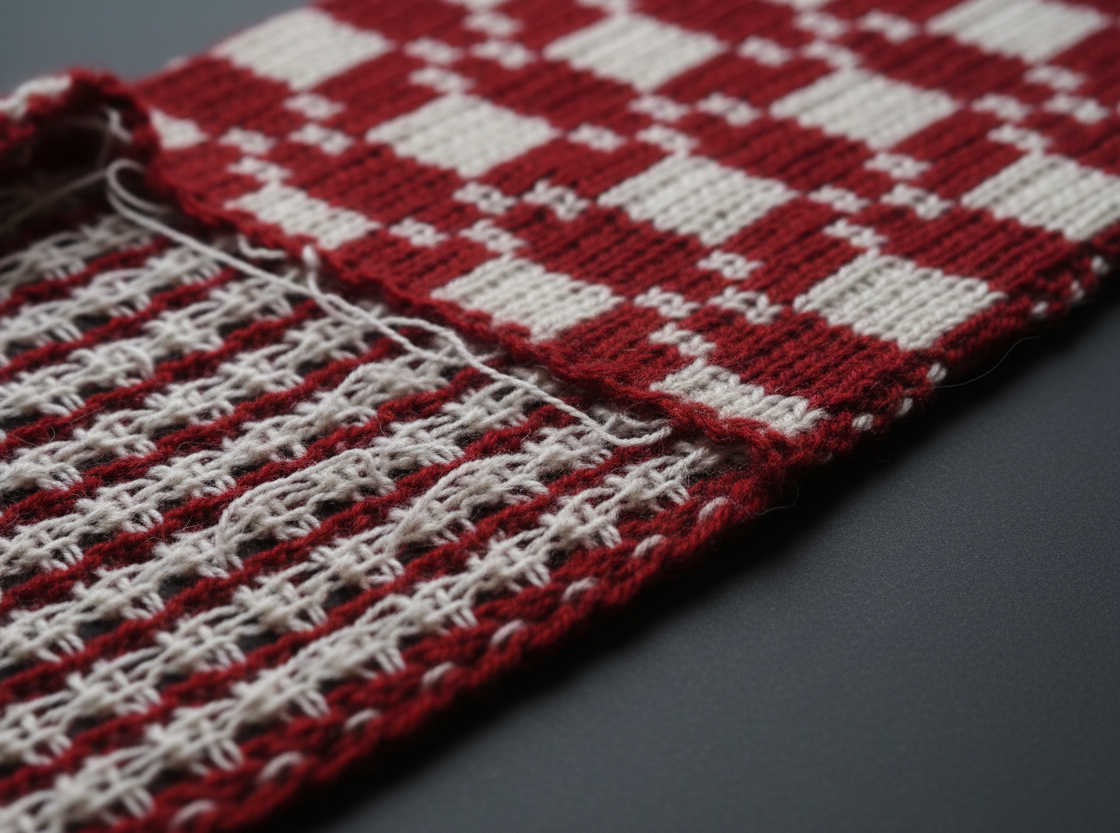
Float
Float knit creates its surface pattern through yarn floats — sections where yarn passes over stitches rather than knitting into every one. This technique opens the door to color-mixing effects and subtle wave-like patterns across the fabric.
- Surface patterning achieved through deliberate yarn floats
- Can produce color-mix effects or gentle wave textures across the fabric
Twill
Twill knit brings a diagonal knit direction into the structure, producing a fabric that's noticeably denser and more durable than a standard jersey or rib.
- Diagonal knit direction gives the fabric a distinct directional texture
- Denser and more durable than many other Level‑2 options
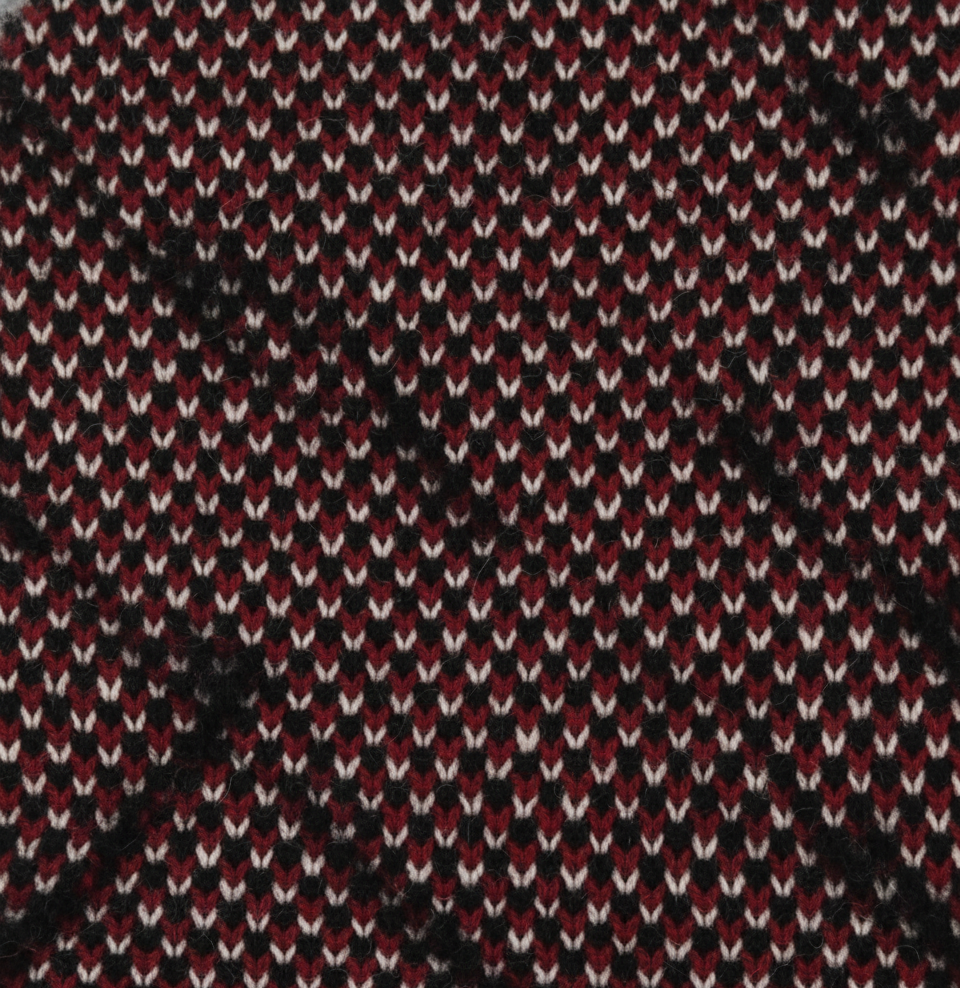
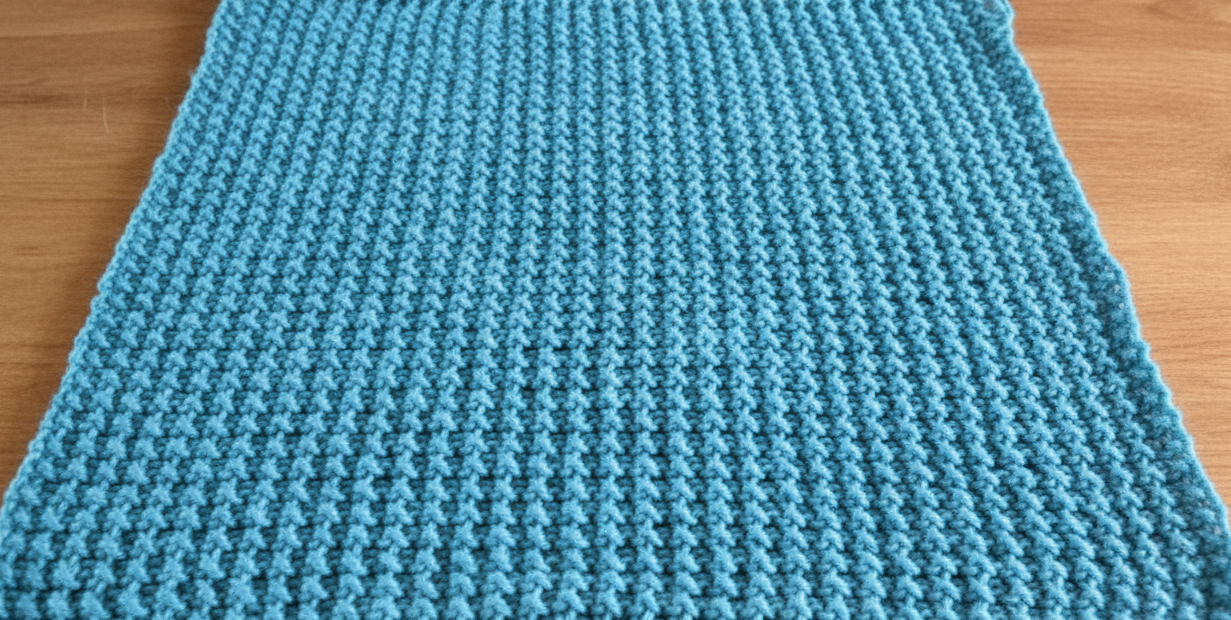
Rice
Rice knit combines knit and purl stitches to create a fine, pebbled texture. It's a great option when a collection needs textured basics — pieces that feel more considered than plain jersey without moving into heavily patterned territory.
- Pebbled texture from combined knit and purl placement
- Well suited to textured basics that need a bit more character
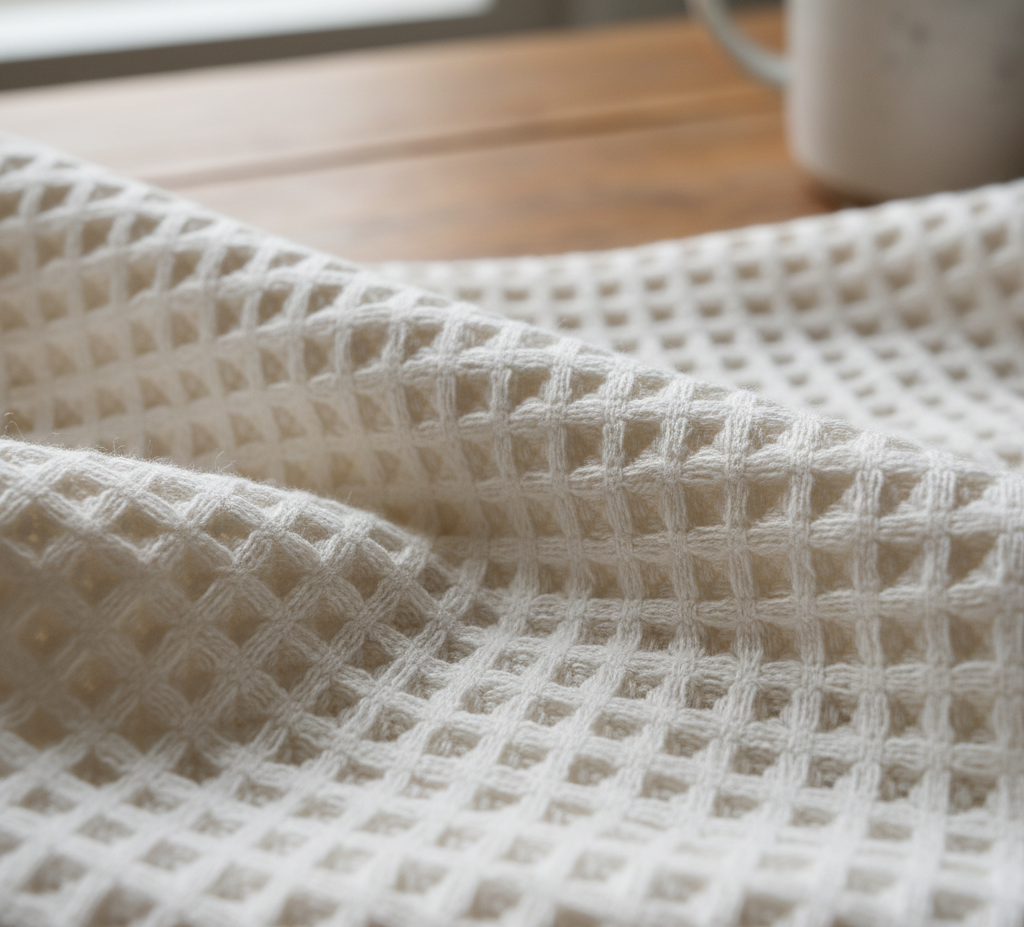
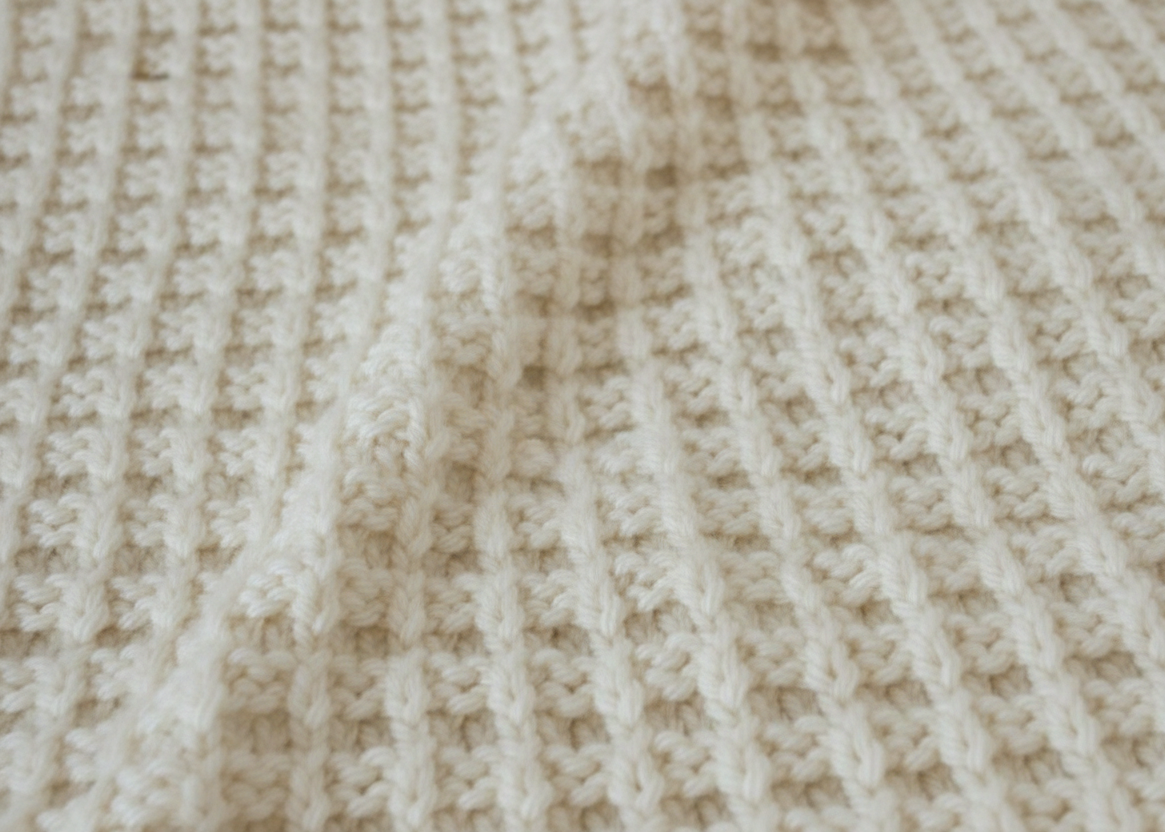
Waffle
Waffle knit is defined by its grid-shaped pattern, which does more than just look good — it also improves breathability, making the structure a natural fit for thermal and layering pieces.
- Distinct grid-shaped surface pattern
- Highly breathable, which makes it ideal for thermal wear and layering
Honeycomb
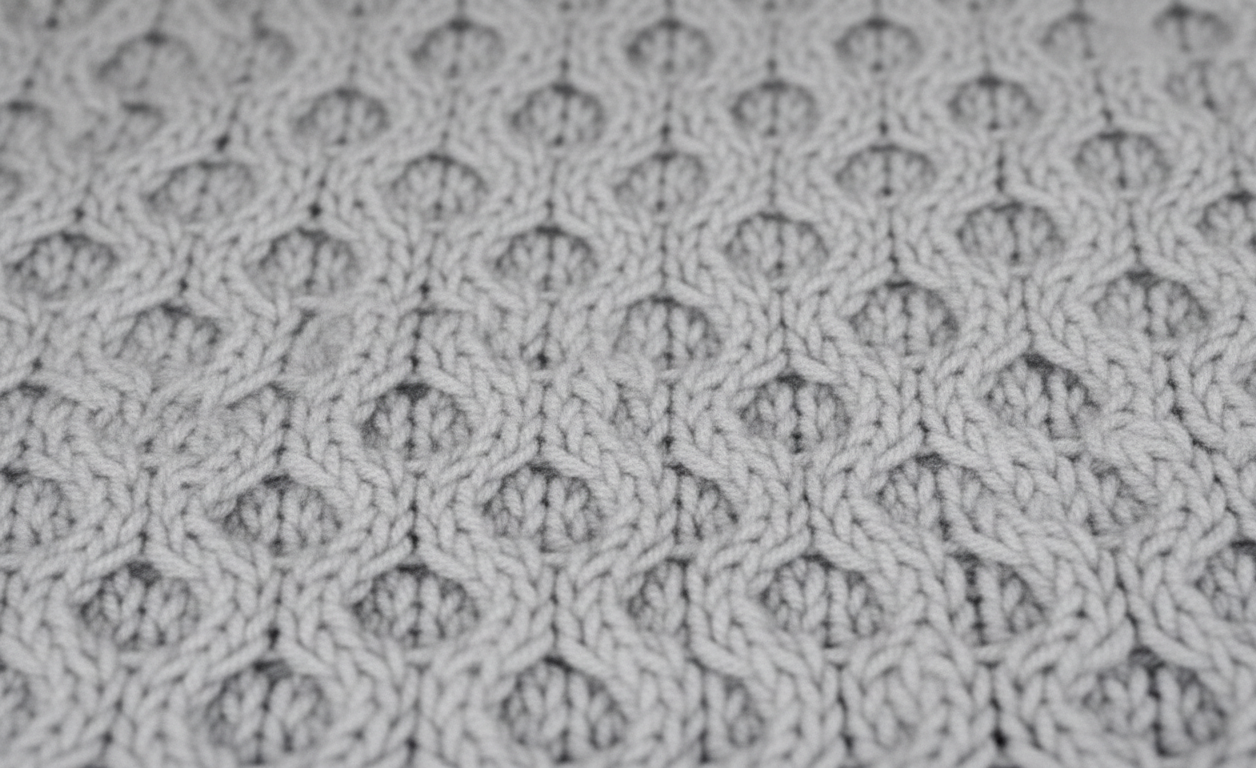
Honeycomb knit rounds out the Level‑2 lineup with a hexagonal, three-dimensional structure that reads as distinctly premium. It's one of the more visually striking intermediate structures, bridging the gap toward the sculptural effects that define Level 3.
- Hexagonal 3D structure with strong visual presence
- Premium look and feel that elevates a design beyond basic texture
Across all of these, the common thread is clear: Level‑2 structures are where a knitwear developer starts actively designing with texture rather than just selecting a functional base fabric. They require more attention on the production floor, but the payoff is a garment that visually communicates more effort and intention — which is exactly what mid-to-premium price points demand.
Level 3: Advanced and High-Complexity Knit Structures
Level‑3 is where knitwear stops being primarily about efficiency and starts being about technical achievement. These structures combine genuine engineering skill, sophisticated machine programming, and a level of creative ambition that's typically reserved for premium, designer, or fashion-forward collections. They demand advanced machinery, highly skilled operators, and — critically — a longer production timeline than anything discussed so far.
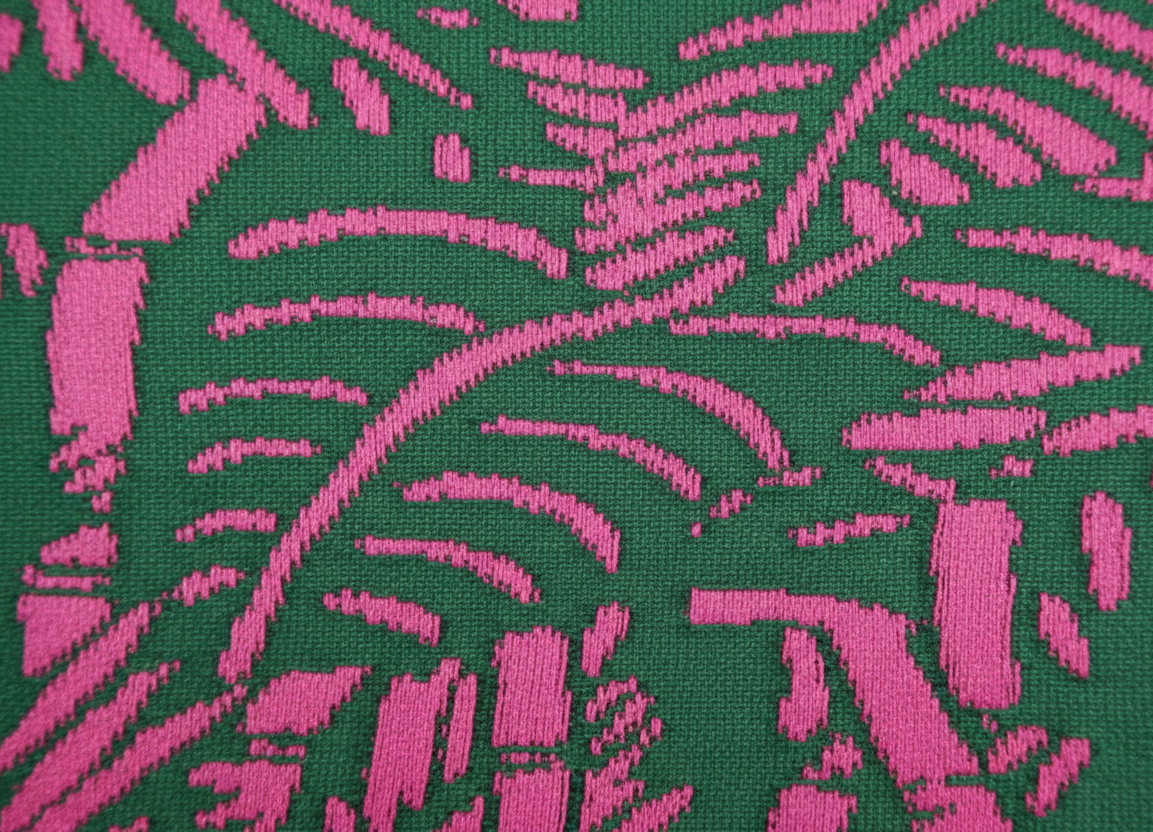
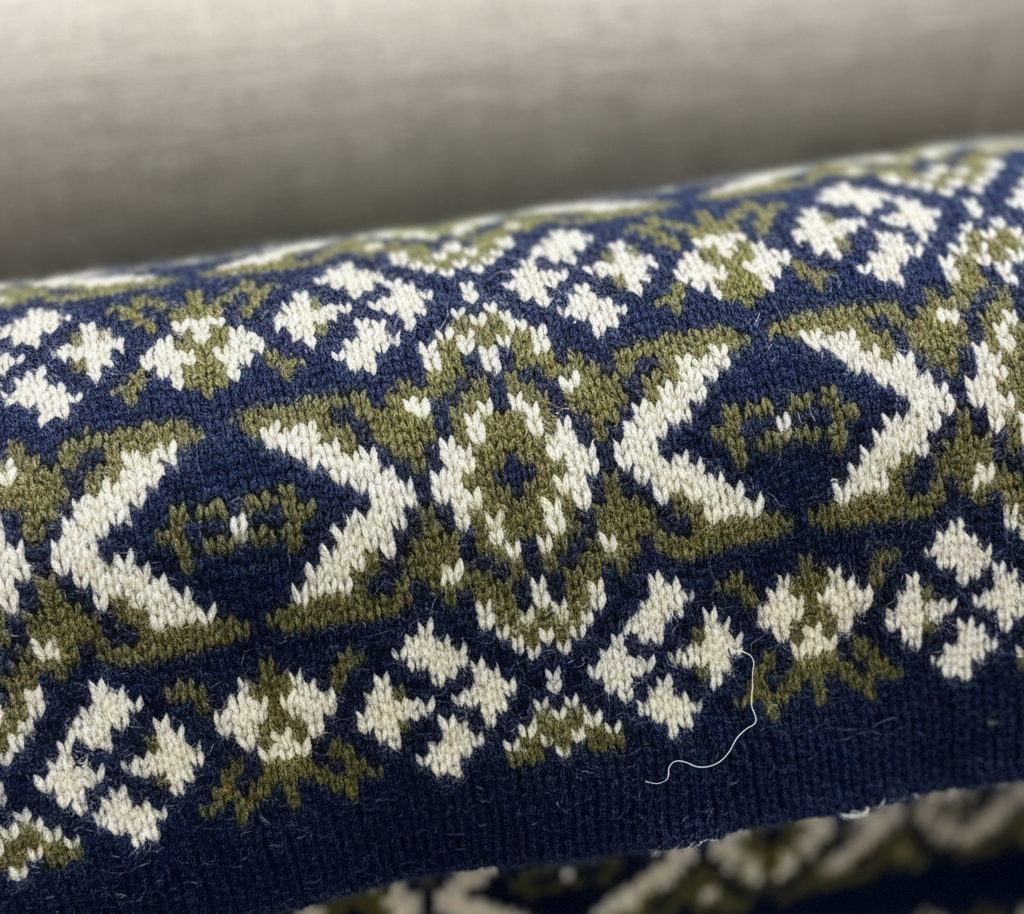
Jacquard
Jacquard is probably the most versatile and widely used technique in this entire advanced tier. It enables multi-color, highly detailed patterning that can range from large, bold motifs to fine, intricate graphics.
- Executes multi-color patterns with fine-gauge detailing
- Capable of layered color effects across large or micro motifs
- Extremely versatile for graphic and pictorial designs
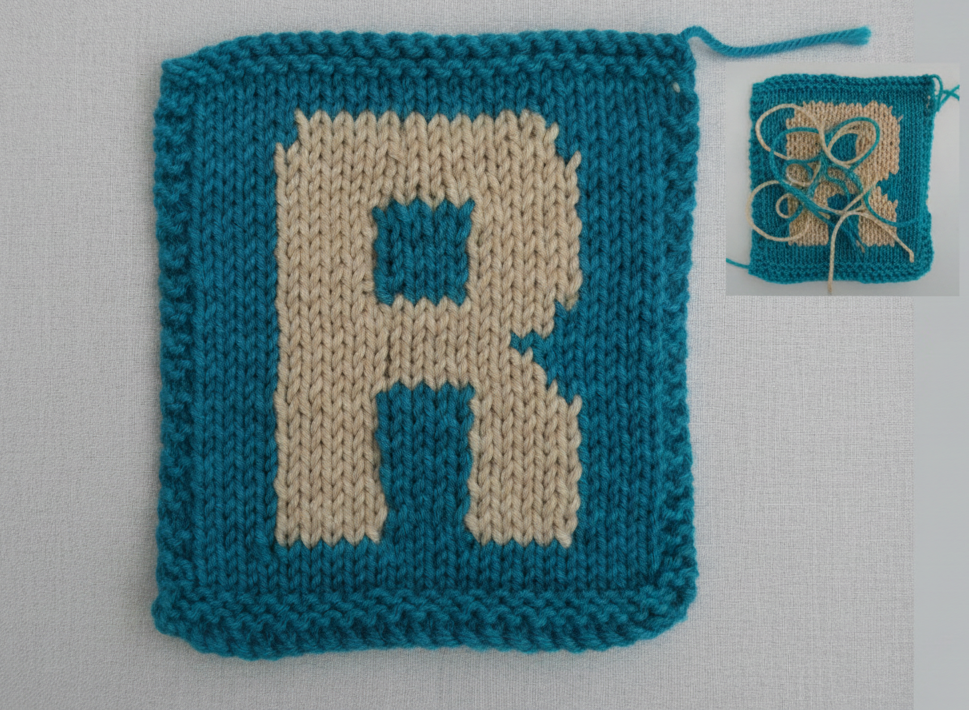
Pure Intarsia
Intarsia solves a problem that jacquard doesn't: floats. Unlike jacquard, intarsia builds color patterns without carrying yarn across the back of the fabric, which results in a cleaner, flatter finish. It's the technique of choice when a design needs crisp, high-resolution color separation.
- Clean color separation with no yarn floats on the reverse
- High-resolution graphic capability well suited to large motifs
- Produces a smooth, flat surface finish
Argyle
Argyle is the classic diamond-patterned knit, and while it's visually familiar, it's technically demanding to execute well. Precise color-change control and multi-feeder coordination are essential to keep the diamond pattern symmetric and sharp.
- Classic diamond pattern requiring precise color-change execution
- Demands multi-feeder color control and balanced pattern tension
- Success depends on sharp, consistent geometric alignment throughout

Structure
"Structure" knits are less about color and more about depth. These focus on engineered stitch pathways that create genuinely three-dimensional, almost architectural surfaces, and they require advanced needle-bed coordination to execute properly.
- Creates three-dimensional, sculptural surface effects
- Relies on engineered stitch pathways rather than color patterning
- High programming complexity with advanced needle-bed coordination required
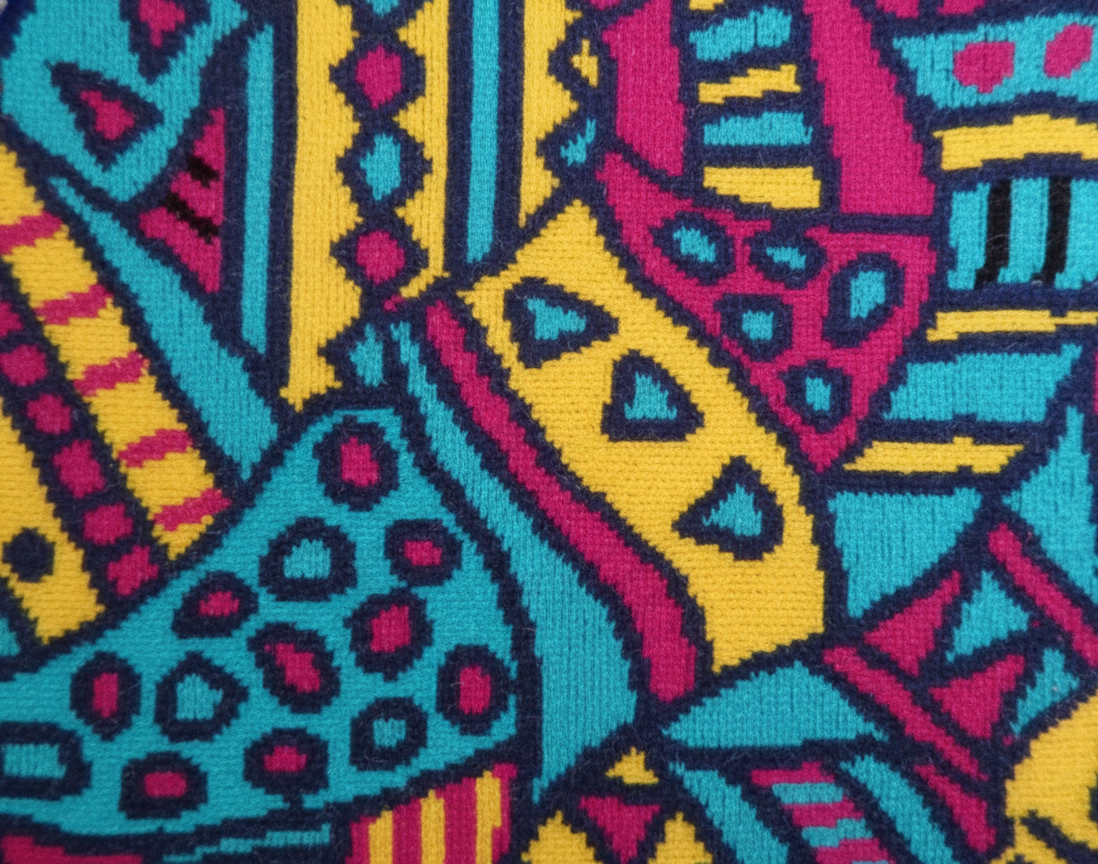
Pure Plaiting
Pure plaiting uses controlled yarn dominance — essentially layering two yarns so one consistently sits on top of the other — to create a dual-tone overlay effect with clean, consistent surface uniformity.
- Controlled yarn dominance produces a dual-tone color overlay
- Requires precise yarn pathing for consistent surface uniformity
- Results in a clean, color-layered appearance

Diamond
Diamond structures use raised or recessed geometric textures to build box or diamond motifs directly into the fabric surface, combining knit, purl, tuck, and transfer stitches for real structural depth.
- Raised or recessed diamond and box textures
- Complex combination of knit, purl, tuck, and transfer stitches
- High structural consistency with deep, premium surface definition
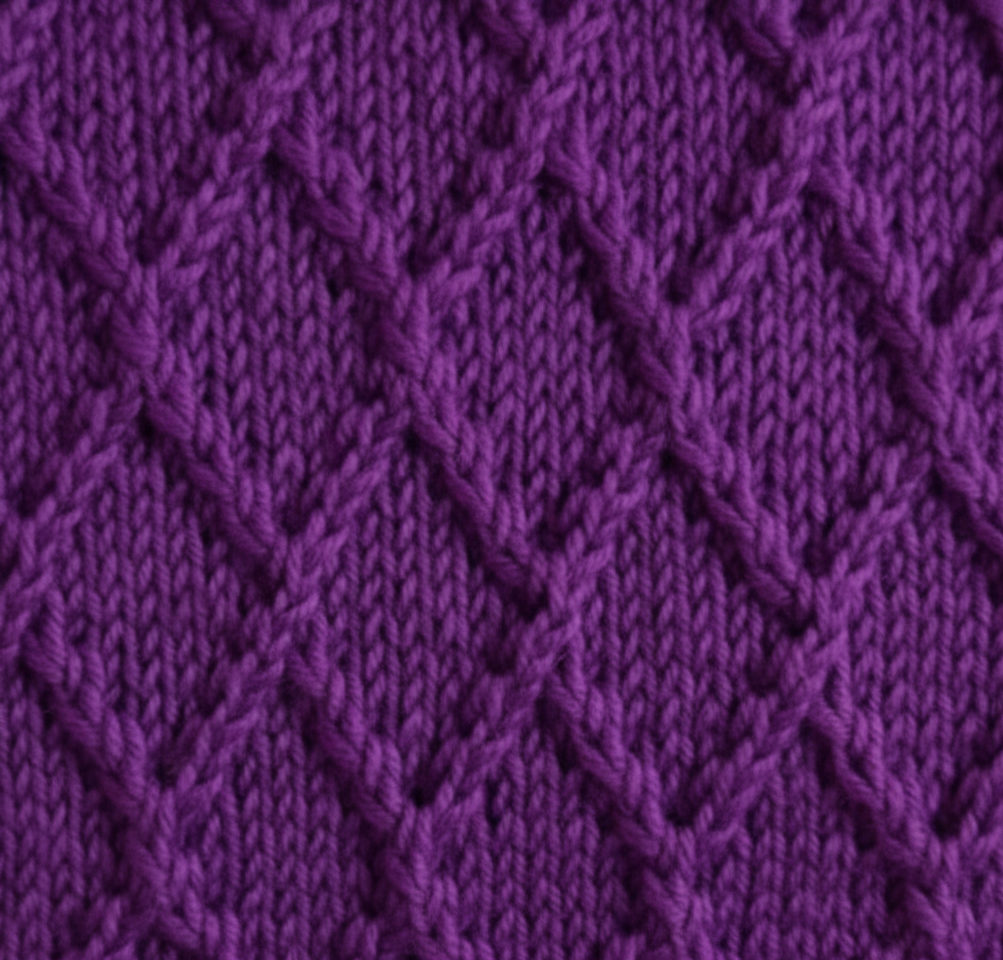
Flexible Stitch Length
This structure plays with elongated, stretched, or looped stitches to create dramatic raised textures — the kind of statement effect that tends to show up in designer collections looking to push visual boundaries.
- Elongated or stretched stitches create dramatic raised textures
- Popular in designer collections and statement pieces
Multi‑Gauge / Gauge‑Mixing
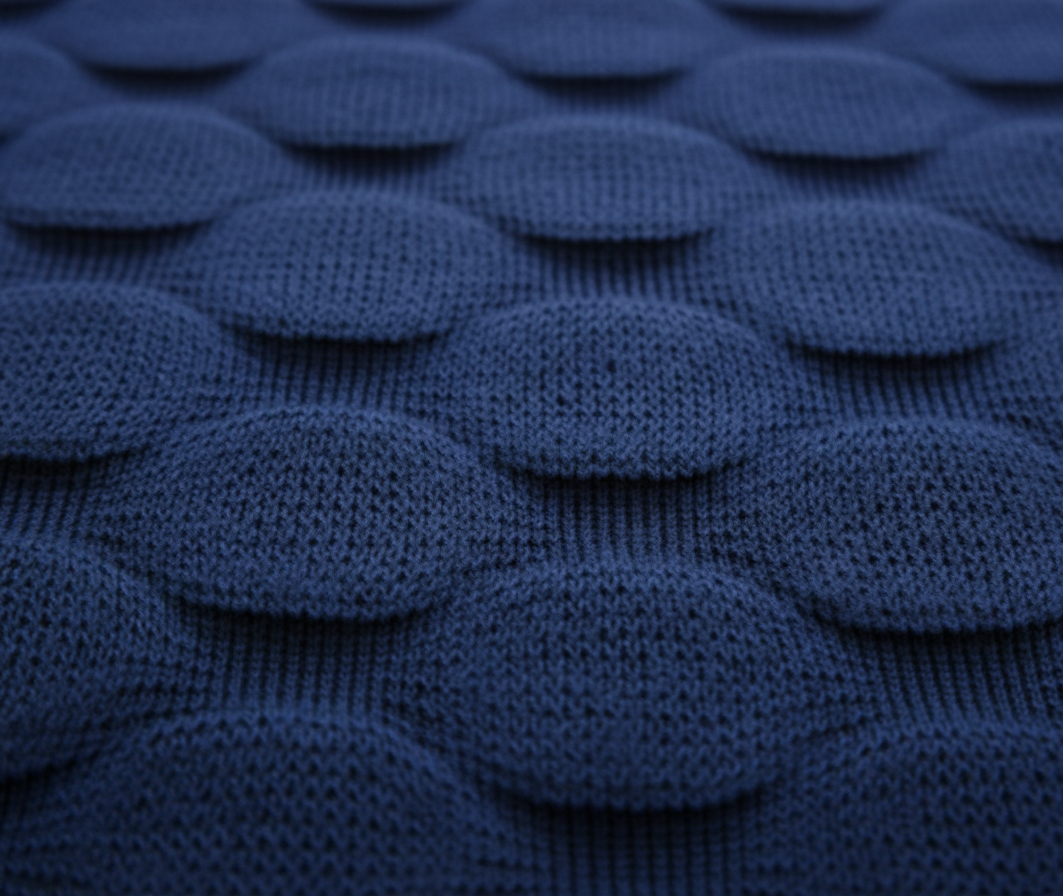
Multi-gauge structures combine different needle sizes — and therefore different gauges — within a single panel. The result is real depth and contrast, but it comes at the cost of significantly increased production complexity.
- Combines multiple gauges or needle sizes within one panel
- Creates strong visual depth and contrast
- Meaningfully increases production complexity and risk
Fringe
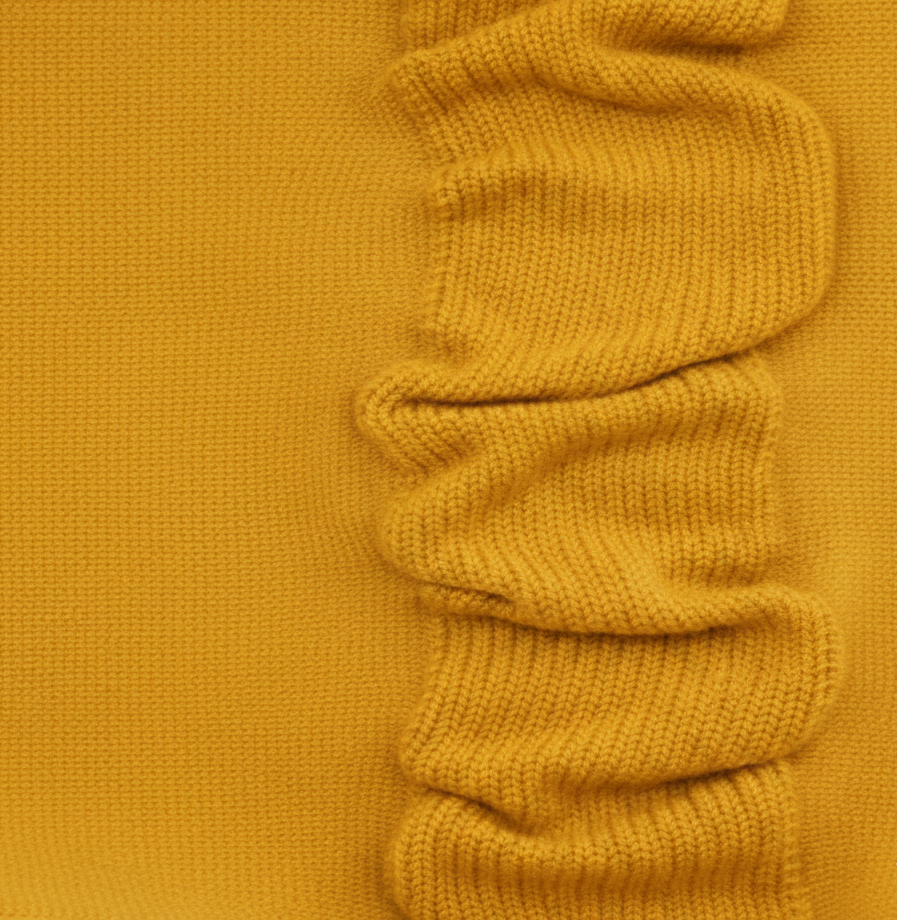
Fringe knit intentionally builds loose yarn sections into the fabric to form decorative fringing, giving the finished garment a distinctly artisanal, handcrafted look.
- Intentional loose yarns forming decorative fringe details
- Delivers a highly artisanal, handmade aesthetic
Destroy Stitch
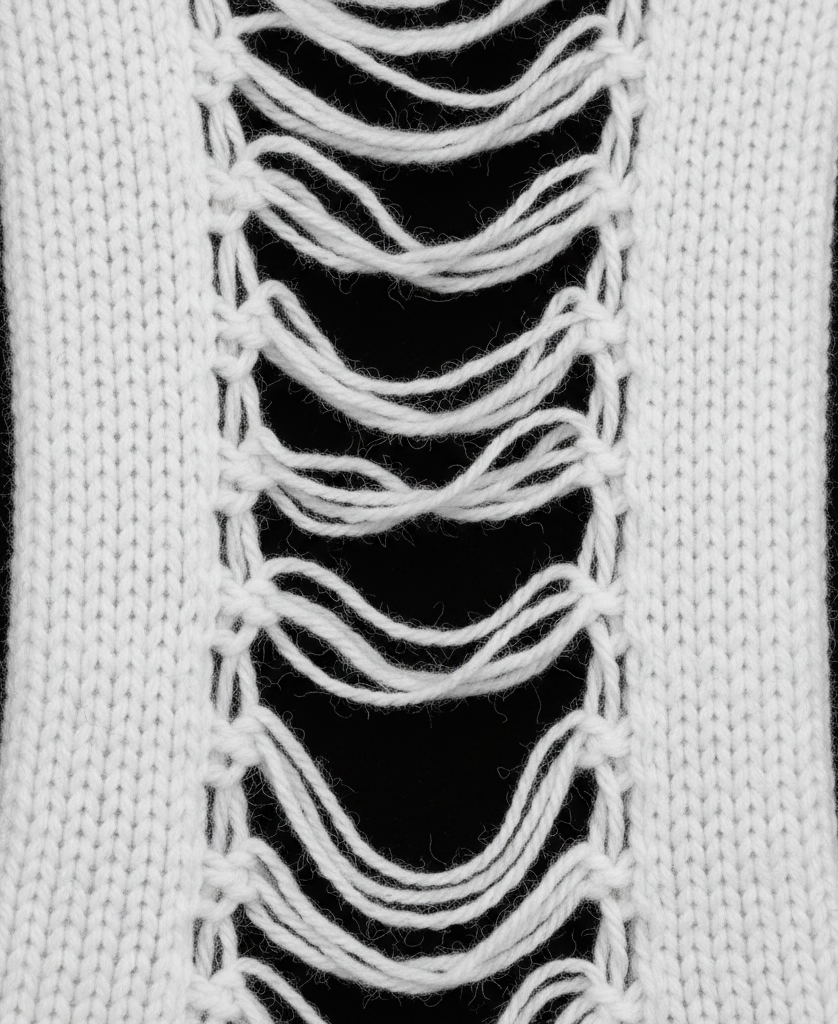
Destroy stitch is essentially engineered imperfection — a controlled, deliberately distressed look achieved through specific dropped-stitch patterns rather than actual damage.
- Controlled dropped-stitch patterns create an engineered "distressed" look
- Requires precision to keep the distressing intentional rather than flawed
Additional Advanced Structures (Level‑3)
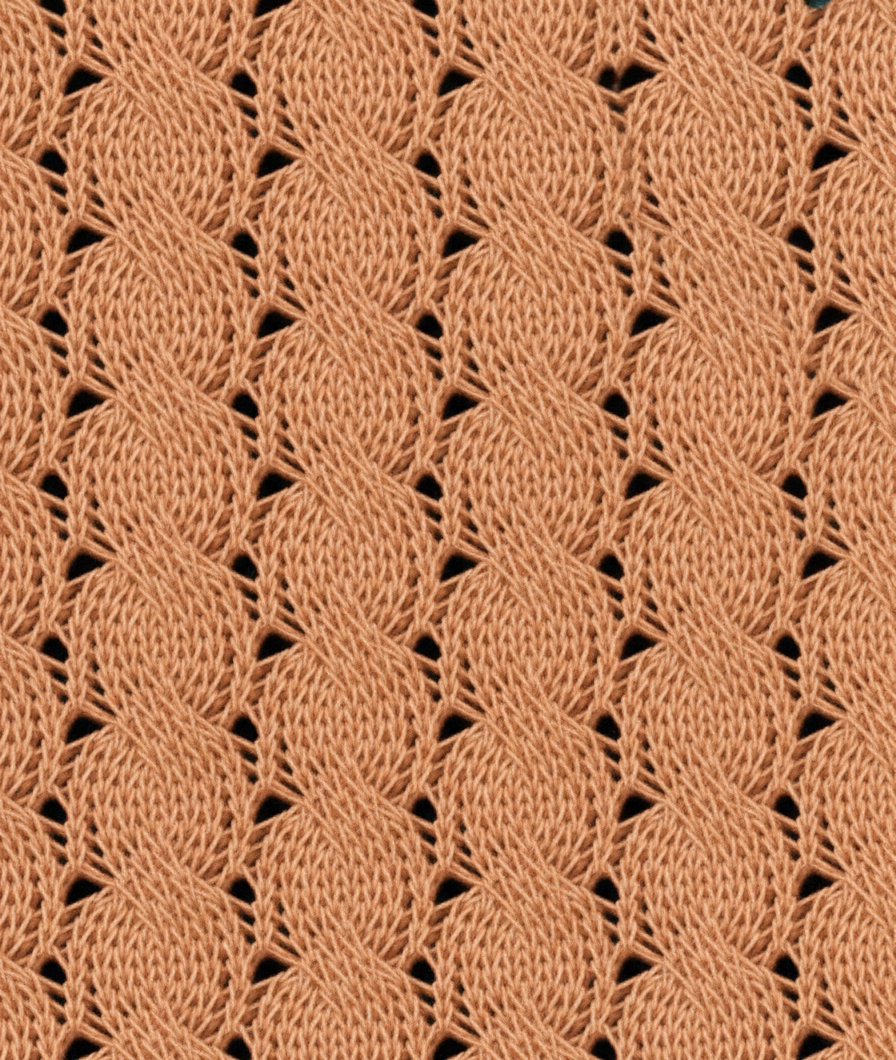
Cable + Tuck
combines twisted cable patterns with tucked stitches for a highly dimensional surface
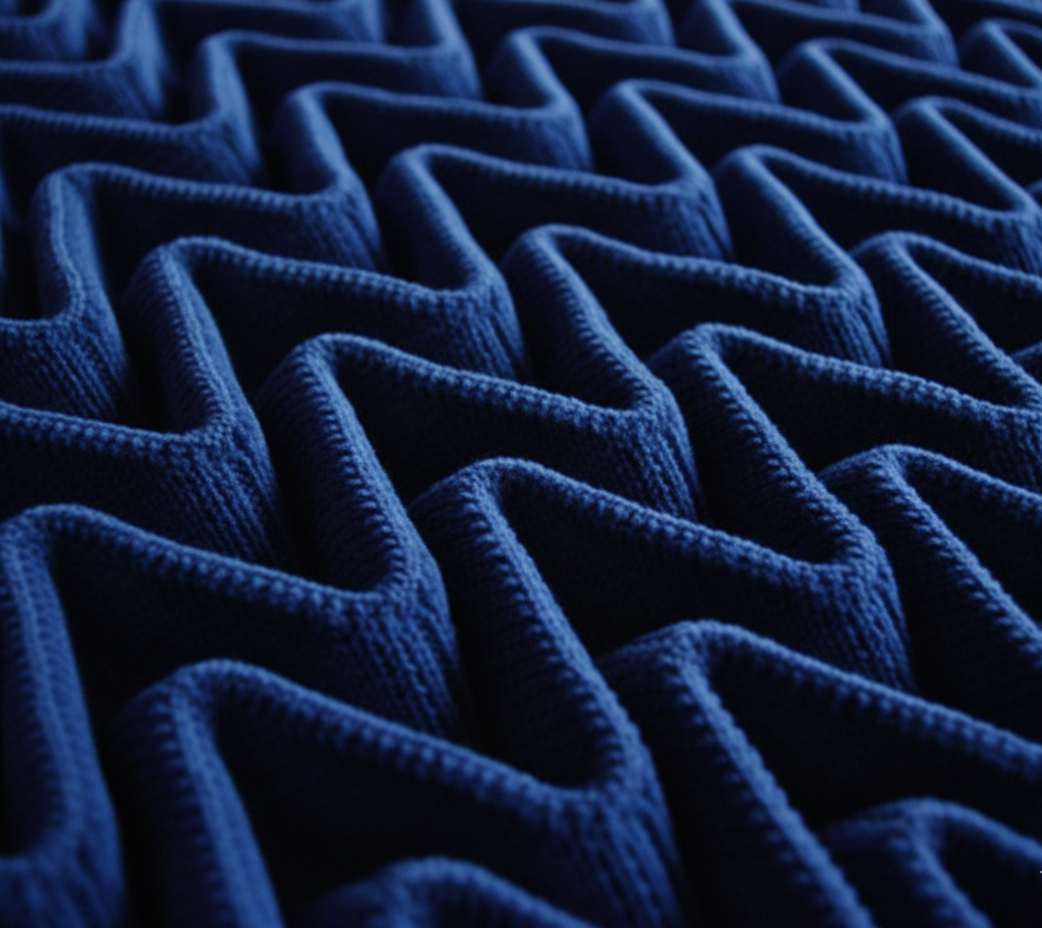
Racking & Tuck / Pleat & Fold
uses a side-shifting technique to create folded, pleated textures with a premium aesthetic
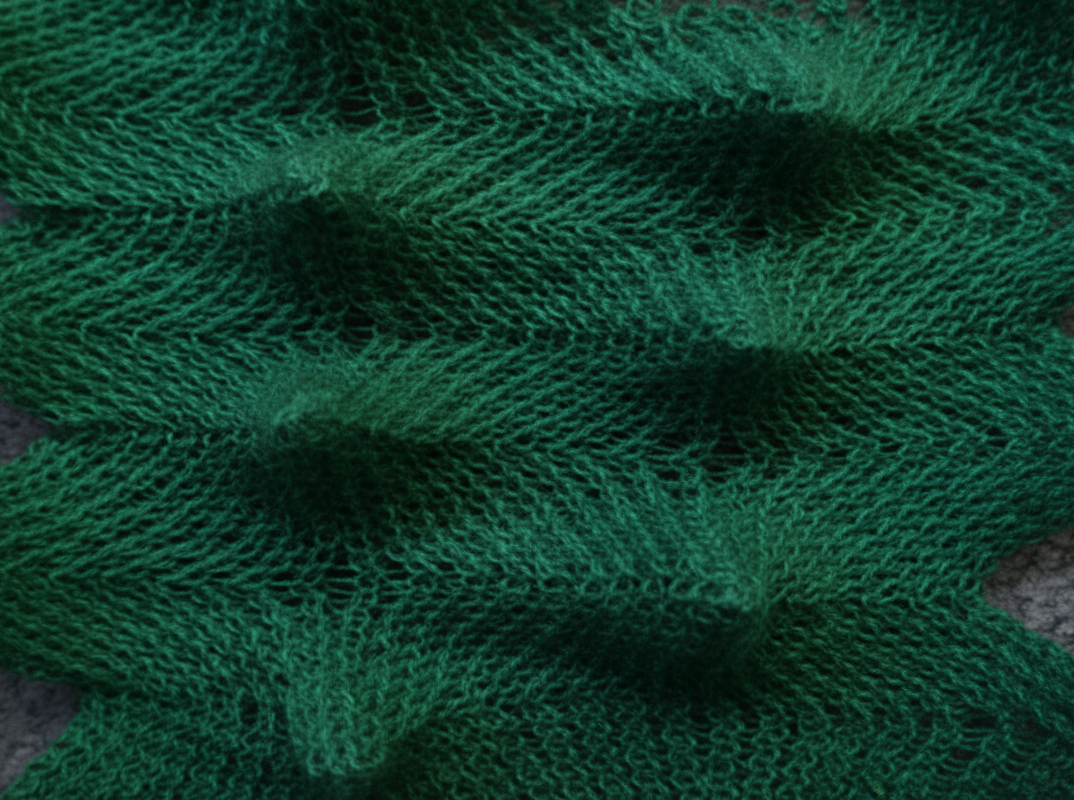
Half Fisherman
a dense, elastic structure ideal for heavyweight sweaters that need real substance
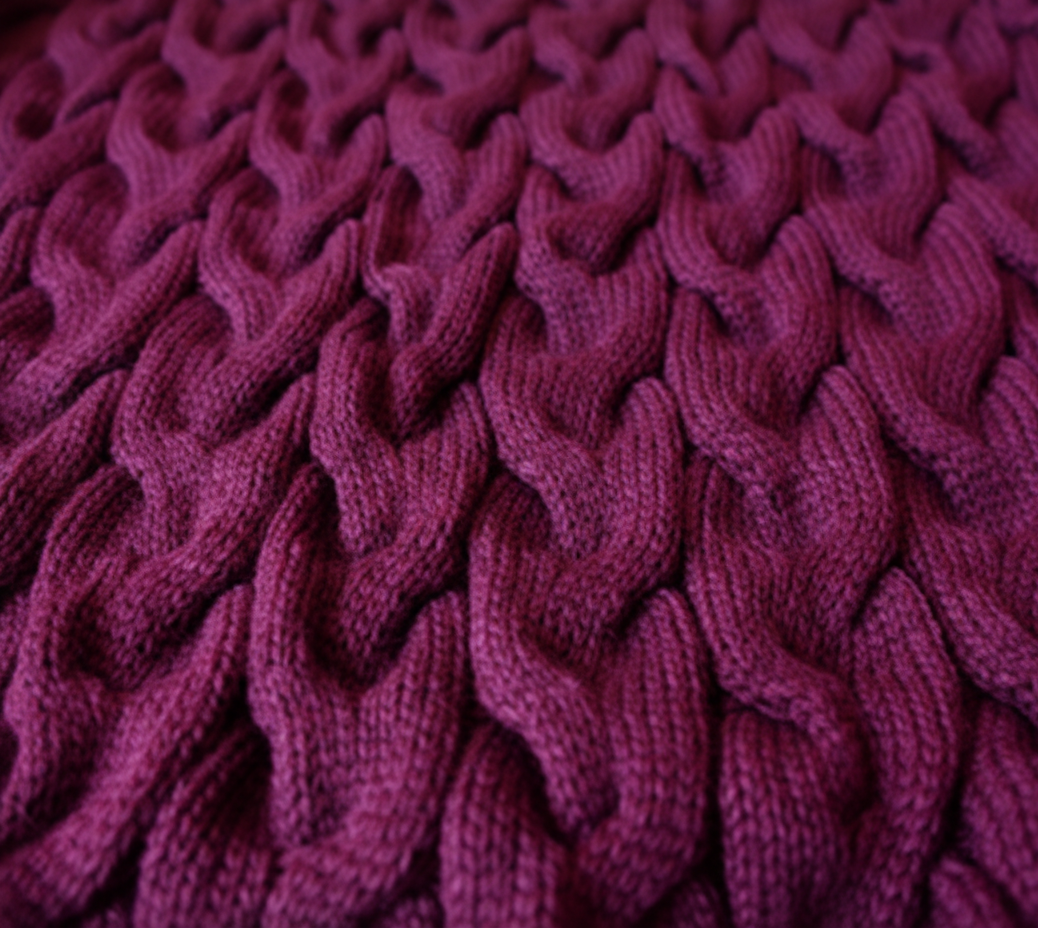
Braid + Cable
layers complex intertwined patterns for visually rich styling
Flux Honeycomb
an elevated take on honeycomb with more intricate shaping
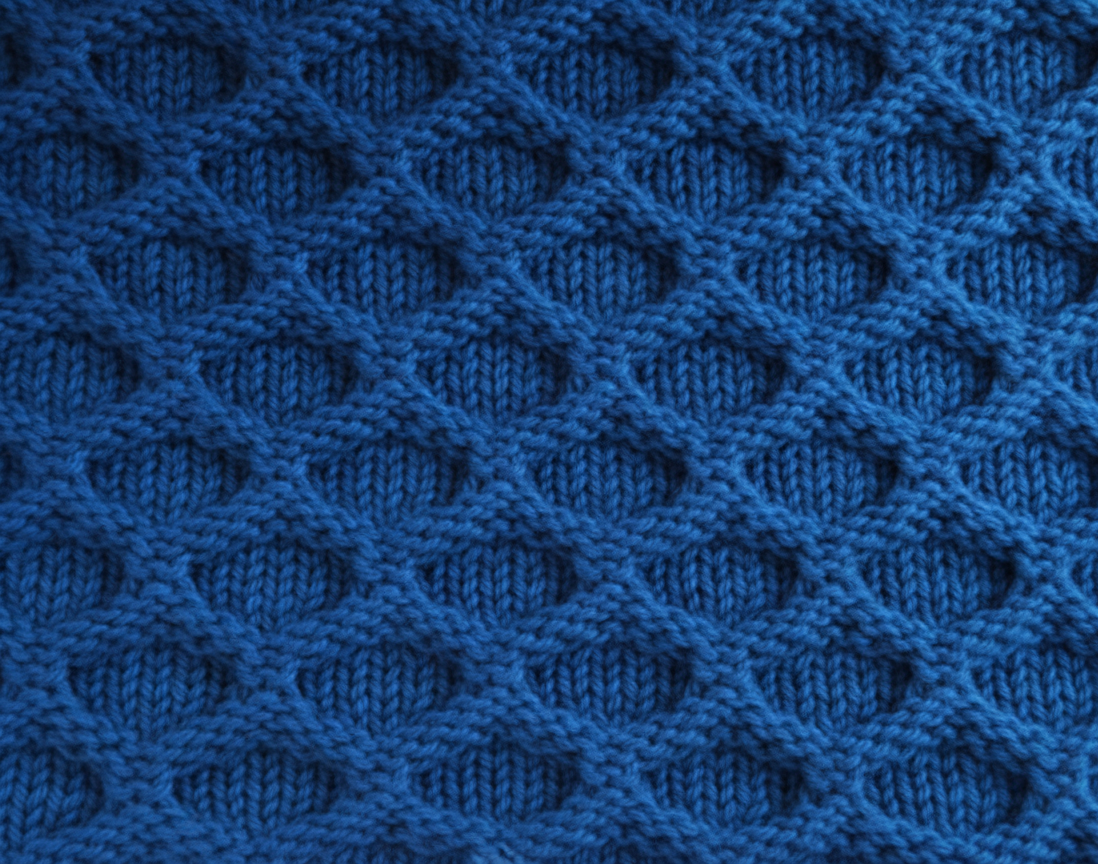
Racking
horizontal displacement of ribs to create bold geometric textures
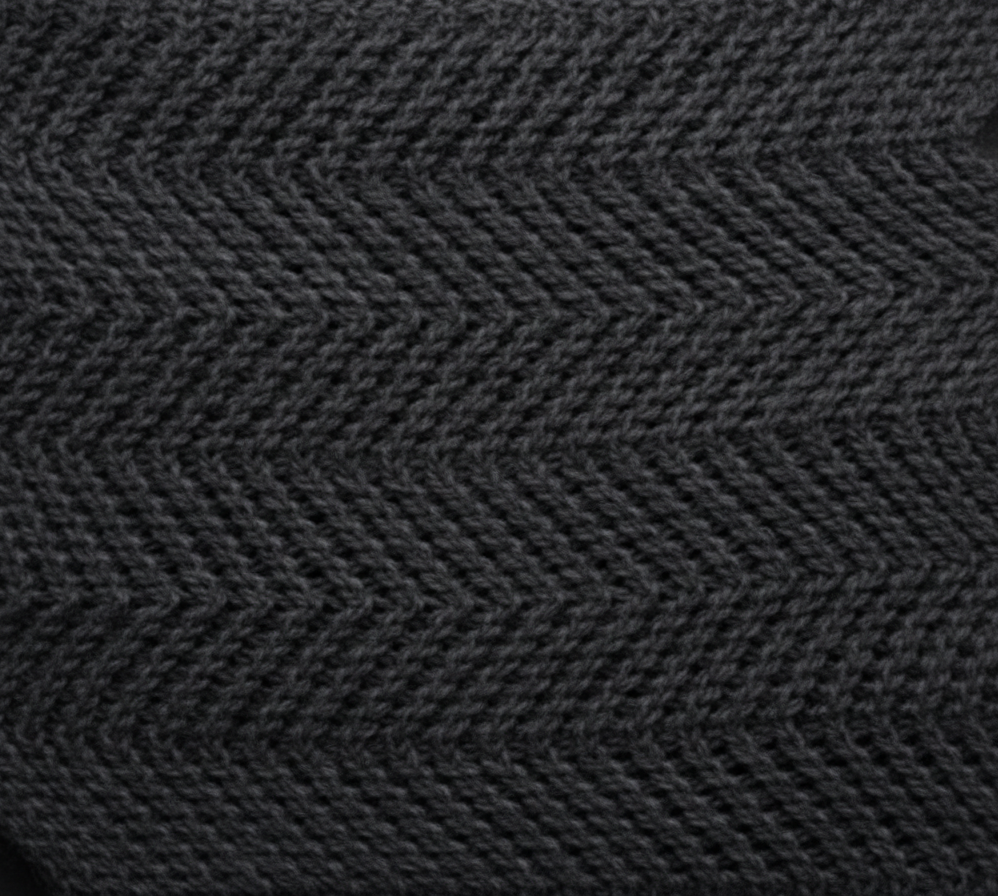
Tuck + Racking
pushes racking further into highly sculptural territory
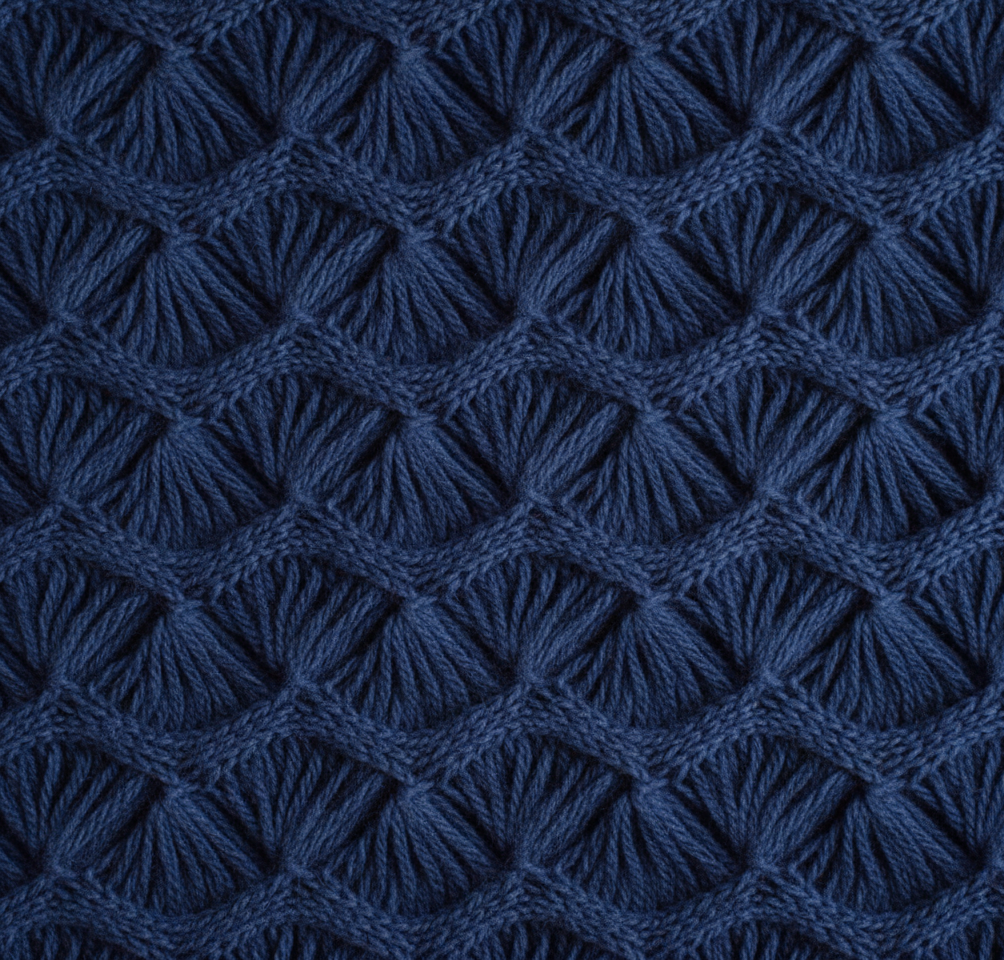
Pocket Stitch
builds raised, pouch-like patterns for distinctive fashion detailing
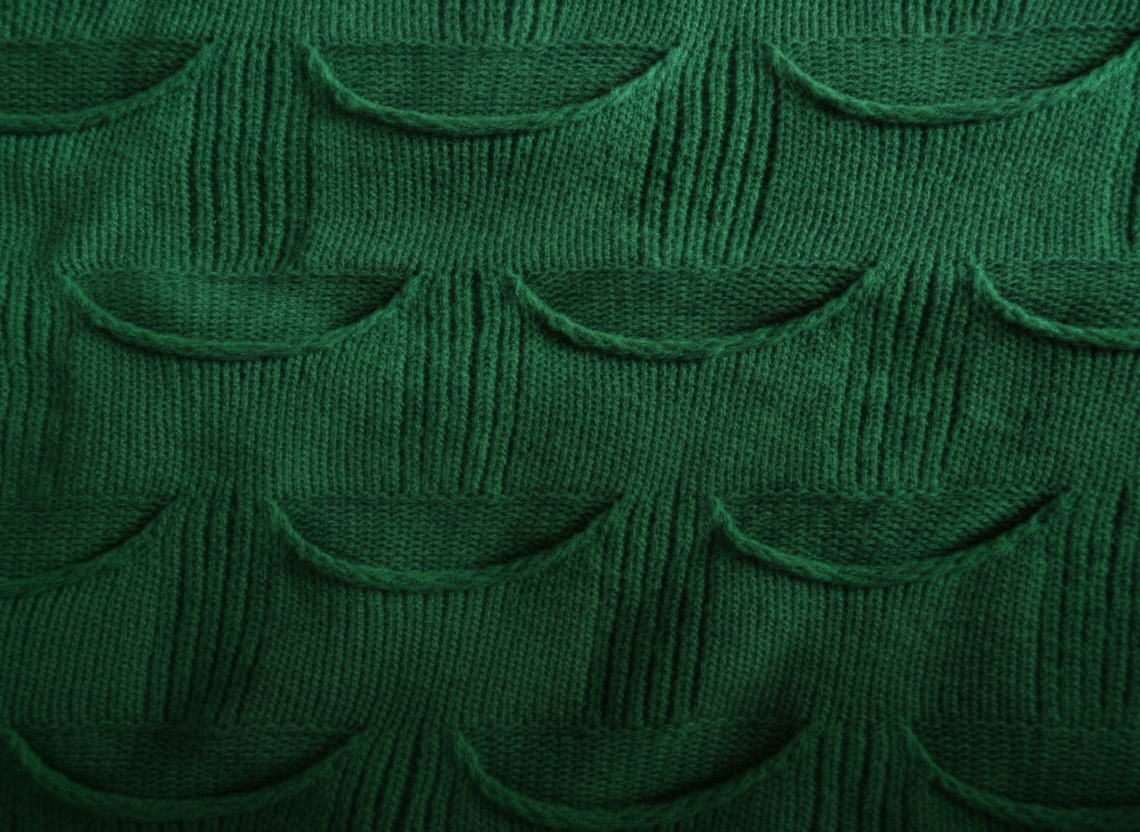
Jacquard and Textured Sub-Categories
Pointelle Jacquard
combines decorative lace-like openwork with jacquard patterning for a premium feminine look

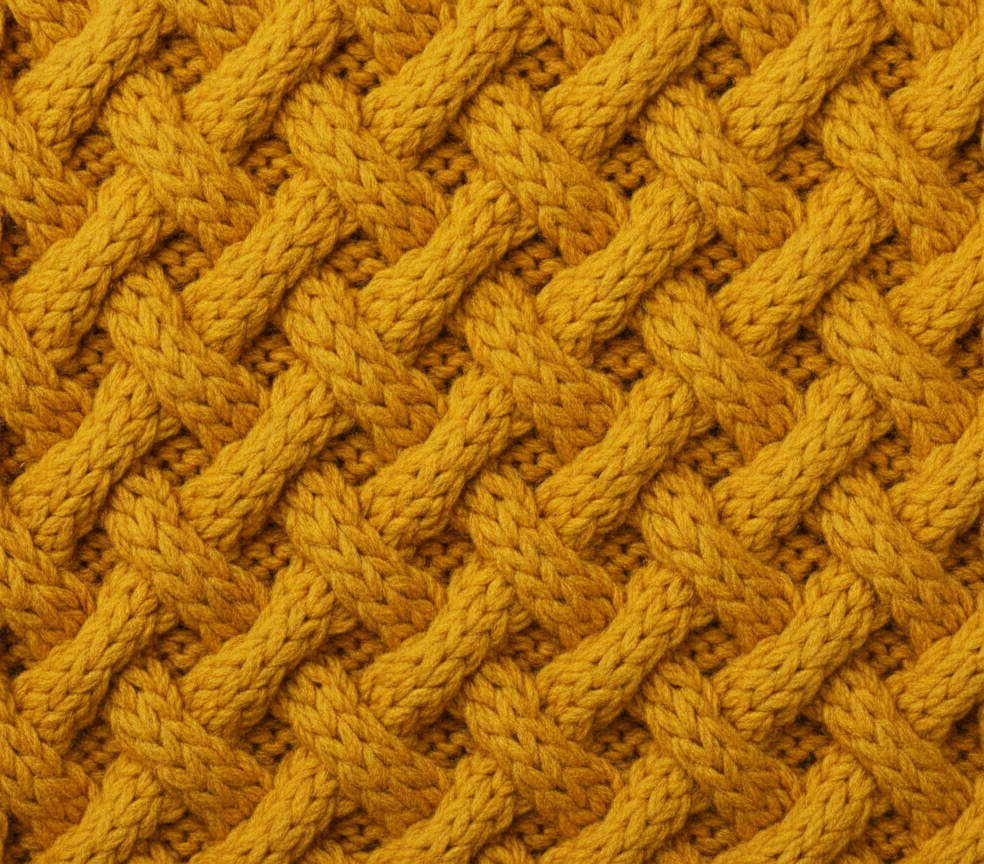
Basket Stitch
creates a woven, basket-like surface that reads as robust and structured
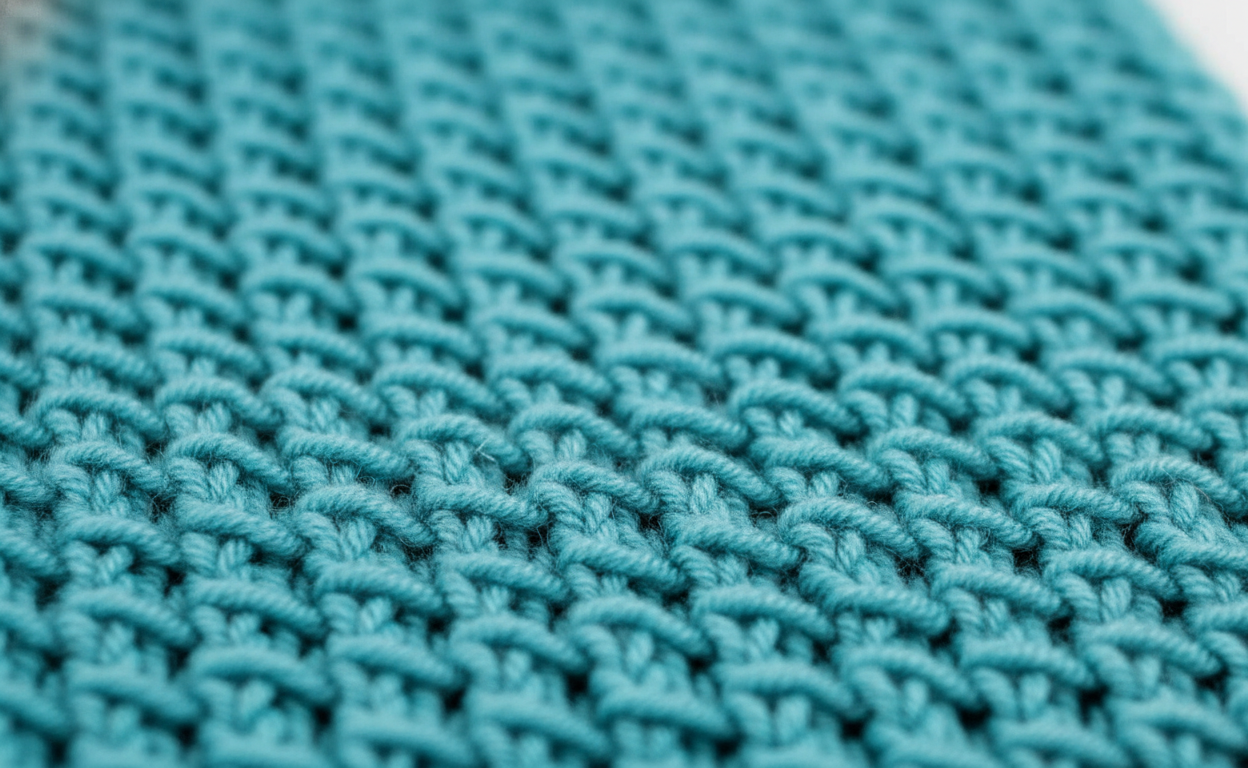
Bamboo Stitch
produces clean, vertical braided-looking lines for a modern finish
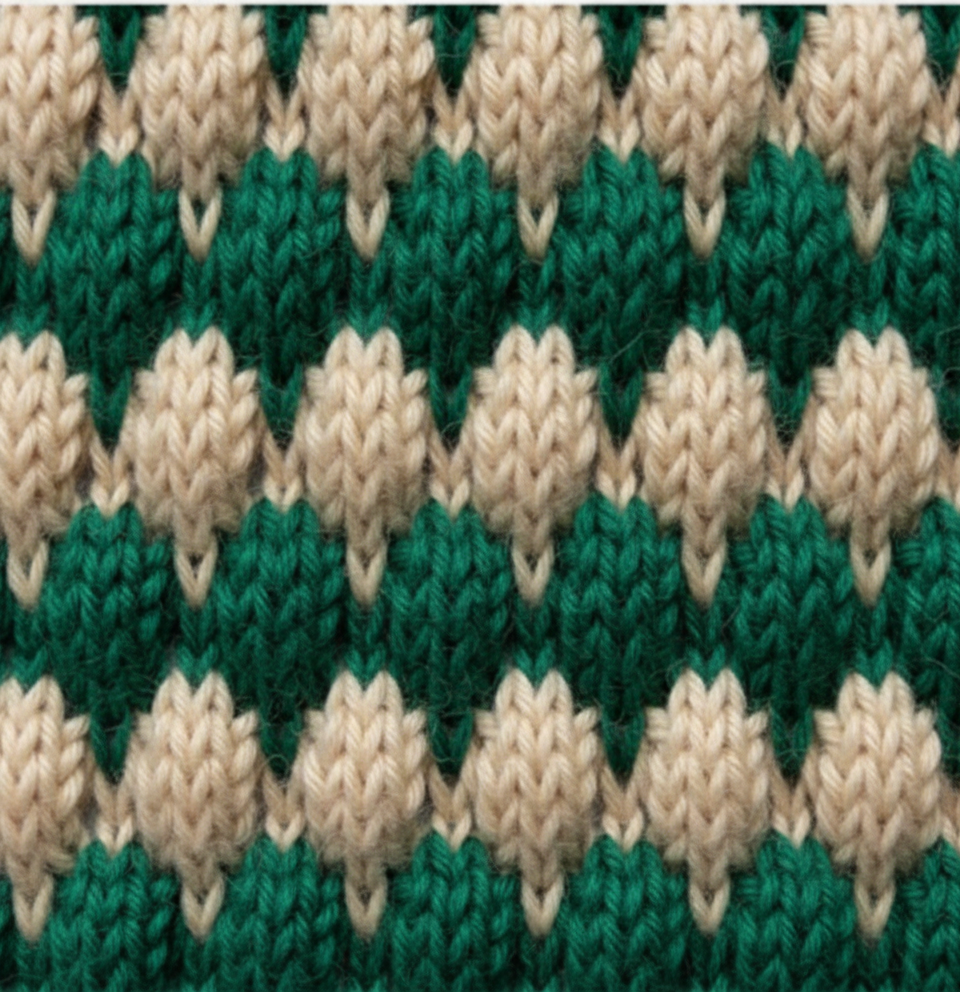
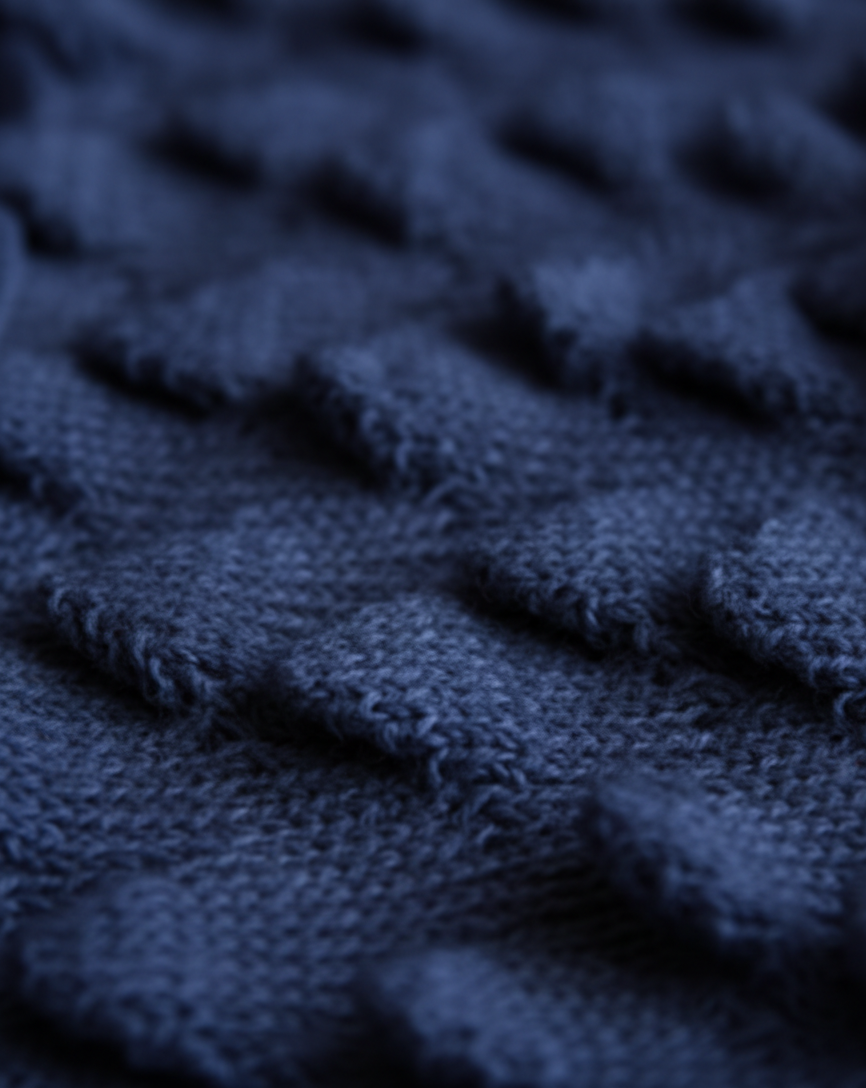
Pod / Puff / Bubble
delivers pronounced 3D raised textures for genuine statement knitwear
Butterfly, Daisy Flower
decorative textured patterns typically reserved for special or capsule collections
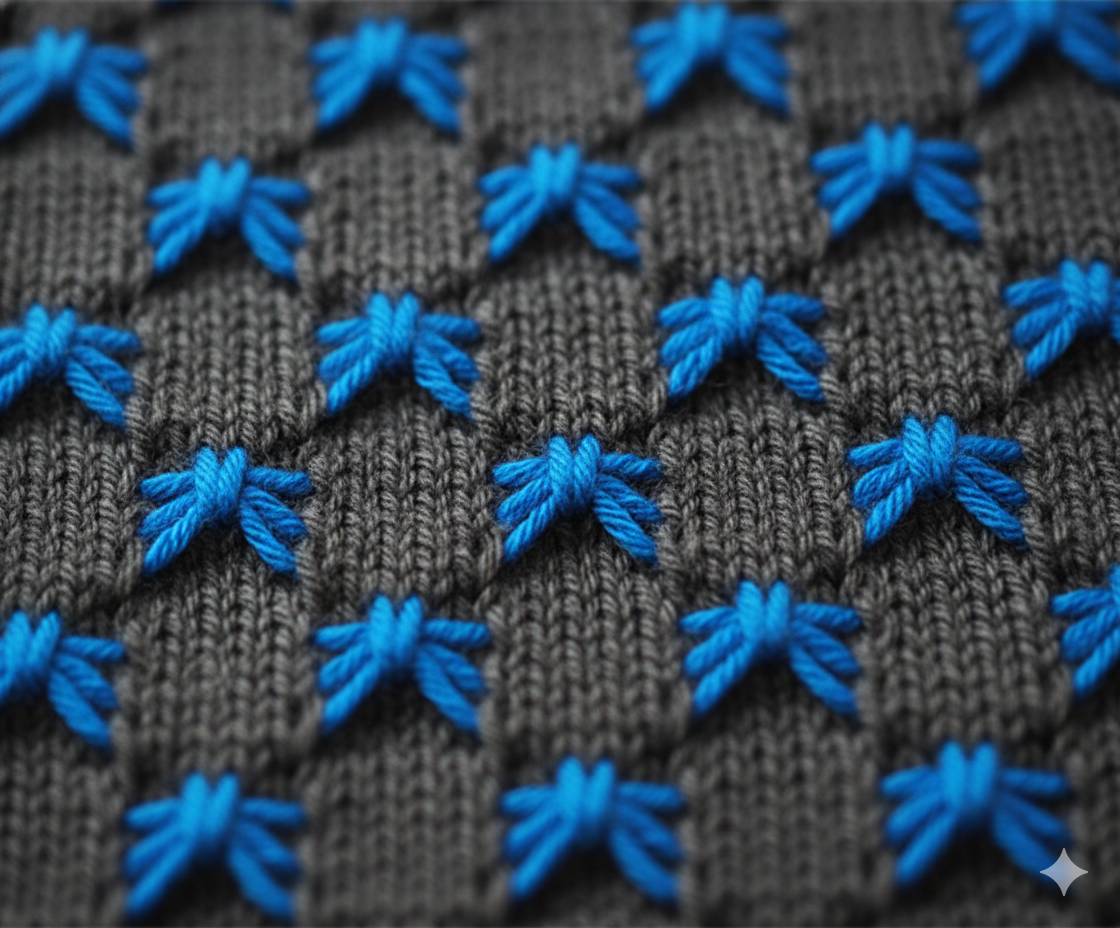
What ties all of Level‑3 together isn't any single technique — it's the shared demand for skilled programming, advanced machinery, and patience. These are not structures a factory can simply switch into overnight; they require investment in both equipment and expertise, which is exactly why they're concentrated in premium and designer price tiers.
How to Actually Choose the Right Knit Structure
Understanding the three levels is only half the job. The more practical question — the one that actually drives a collection — is how to choose the right structure for a specific garment. A few factors tend to dominate that decision in practice.
- Seasonality. Lace, pointelle, and waffle structures breathe and suit warmer months, while full cardigan, brioche, and half fisherman trap air and suit deep winter. Matching structure to season isn't optional; it's foundational.
- Price point and positioning. A mass-market basics line has little reason to reach for intarsia or multi-gauge knitting — the cost and lead time simply don't match the price the market will bear. Conversely, a designer capsule built entirely from single jersey would struggle to justify its price tag.
- Body placement and function. Ribs at cuffs and hems aren't a stylistic default — they're functional, providing the recovery needed to keep a garment fitting well over repeated wear. Structure often needs to vary within a single garment for exactly this reason.
- Yarn compatibility. Not every yarn performs well in every structure. A fine, smooth yarn might disappear into a heavily textured Level‑3 structure, while a bulky, textured yarn can overwhelm a delicate lace pattern. Sampling early is the only reliable way to confirm compatibility.
- Machine and factory capability. This is often the deciding constraint in practice. A design team can specify an ambitious Level‑3 structure, but if the manufacturing partner doesn't have the right machinery or programming expertise, the design simply isn't producible at the target cost or timeline.
- Lead time. Production speed drops meaningfully as complexity rises. A brand working against a tight seasonal deadline may need to lean toward Level‑1 or Level‑2 structures purely to hit the calendar, regardless of design ambition.
Production Speed, Cost, and the Real Tradeoffs
It's worth being direct about the tradeoffs at play, because they're the real reason the three-level system exists in the first place.
Level‑1 structures are fast and cheap because they ask very little of the machine and the operator — a single, repeating action executed at scale. Level‑2 structures slow things down because they require pattern changes, more careful tension control, and closer quality monitoring throughout the run. Level‑3 structures slow things down further still, sometimes dramatically, because they often require multiple techniques layered together, specialized programming, and a much higher tolerance for trial-and-error during sampling before a style is production-ready.
This isn't a flaw in the system — it's the entire point. A brand that understands this tradeoff can make deliberate choices: reserving Level‑3 techniques for hero pieces that anchor a collection and justify premium pricing, while relying on Level‑1 and Level�2 structures to fill out the volume-driving core of a range efficiently.
Bringing It All Together
Knitwear development is ultimately a negotiation between two forces that don't always agree: the designer's push for originality and texture, and the manufacturer's need for a product that can actually be produced efficiently and consistently at scale. Neither side wins by ignoring the other. A stunning Level‑3 structure that can't be produced within budget or timeline is just a sketch. A perfectly efficient Level‑1 basic with no design point of view rarely commands a premium.
In simple terms, the three levels each carry their own value proposition:
- Level‑1 knits deliver efficiency, cost control, and dependable quality at scale
- Level‑2 knits bring texture, personality, and genuine fashion appeal without excessive complexity
- Level‑3 knits create innovation, technical distinction, and premium value for pieces designed to make a statement
The real skill in sweater development isn't knowing that these structures exist — it's knowing which one belongs where. Matching the right level of complexity to the right purpose, price point, and production capability is what separates a collection that simply exists from one that actually performs, both on the body and on the sales floor.