Pigment Printing in Textiles: Techniques, Chemicals and Fashion Applications
November 15, 20255 min read
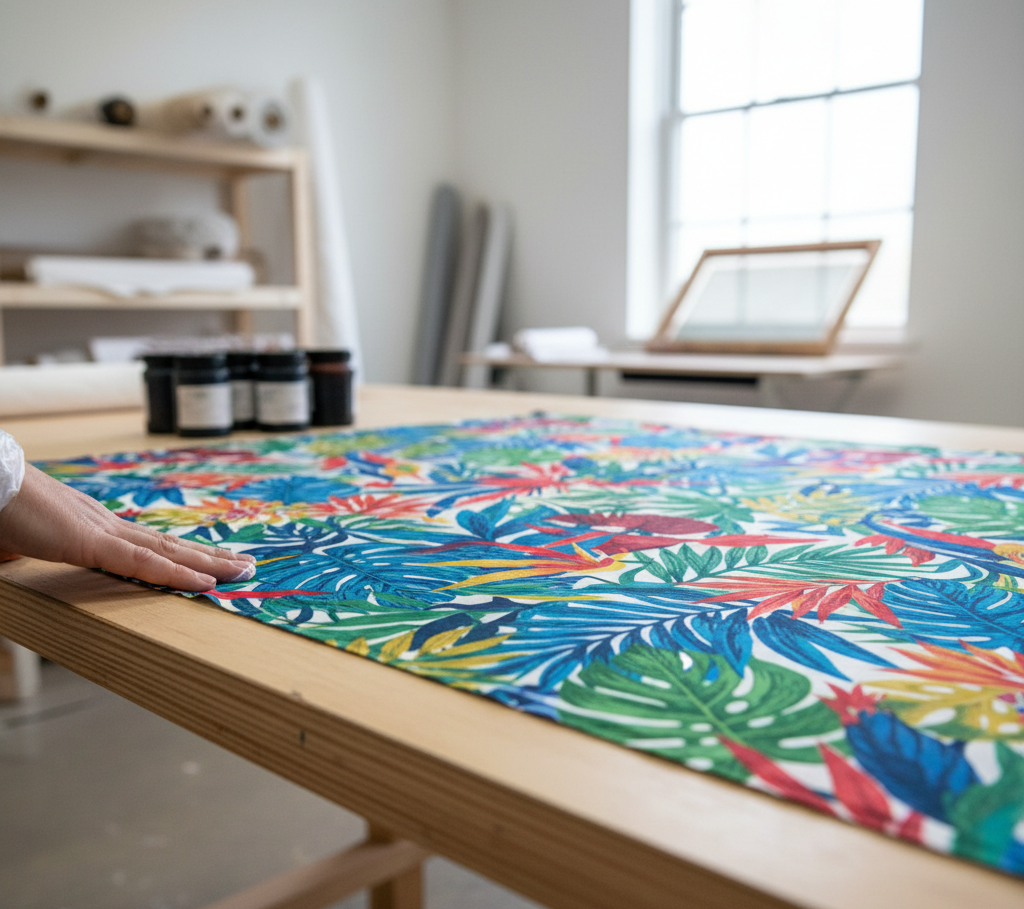
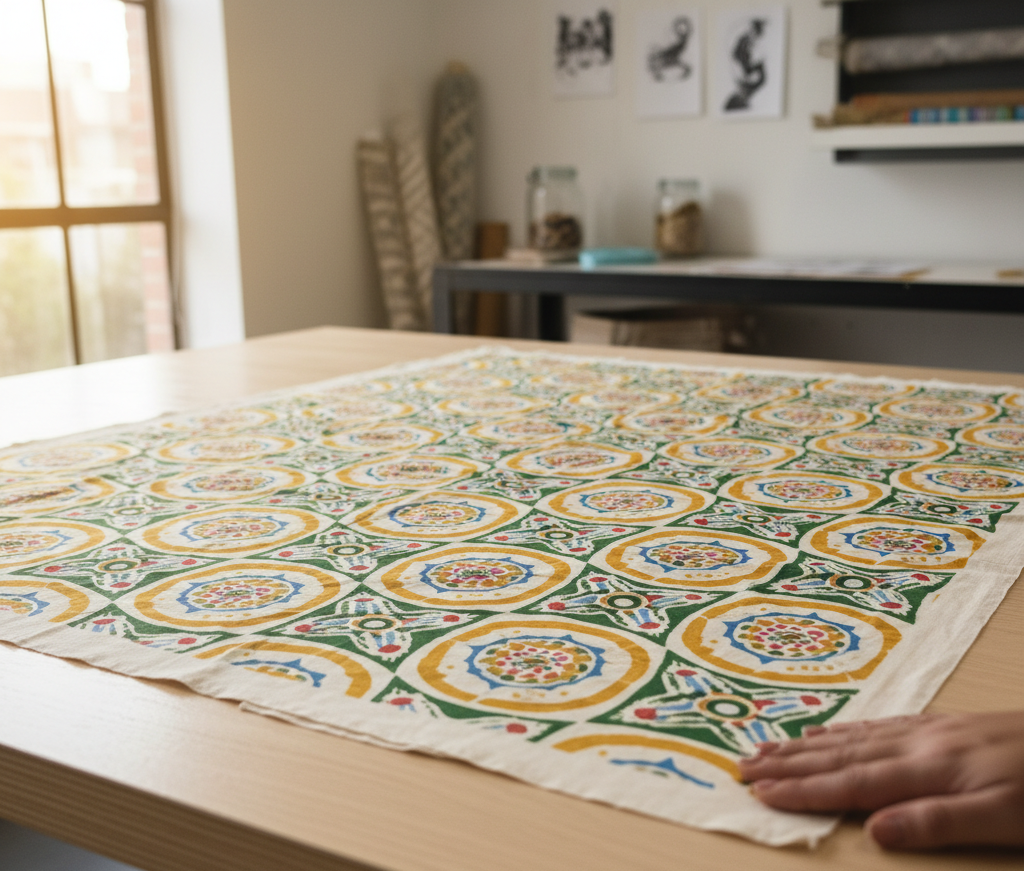
Pigment printing is one of the most popular printing methods in textile industry due to its simplicity, cost effectiveness and ability to print sharp and bright designs on a wide variety of fabrics. In contrast to dye printing, pigment printing makes use of coloured pigment particles, which are placed on the surface of the fabric and fixed with a binder. This makes it ideal for fashion apparel, home textiles and garments.
Pigment Print
Pigment printing is a type of textile printing in which insoluble pigment particles are applied to the surface of the fabric with a polymer binder, which binds the pigment to the fibres after curing.
Pigment Printing is Popular due to
✓ Works on almost all fabric types
✓ Requires no washing after printing
✓ Vibrant colors with sharp outlines
✓ Ideal for mass production and rotary printing
Characteristics of Pigment Printing
Pigment Printing
Surface-Level Color
Pigments do not penetrate the fibers; they remain on the surface.
Pigment printing is a widely used textile printing method where color is applied to the surface of the fabric and fixed using a binder. Unlike dye-based printing, pigments do not chemically bond with the fiber; instead, they are held in place by a polymer film. This makes the process versatile and suitable for a wide range of fabrics, including blends.
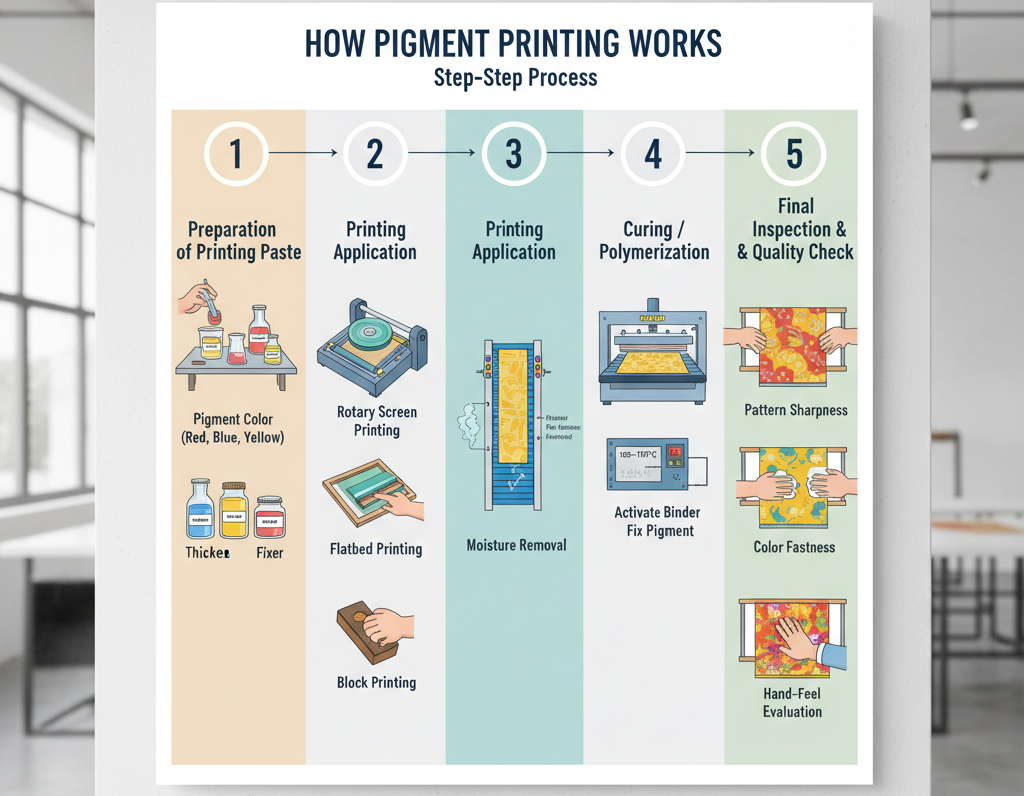
The process follows a step-by-step flow where each stage ensures proper color application, fixation, and final quality.
Pigment Printing Process Flow
1. Preparation of Printing Paste
The process begins with preparing a printing paste that carries the color and ensures proper adhesion to the fabric. The formulation must be carefully balanced to achieve the desired shade, viscosity, and durability.
Typical components include:
Pigment color – provides the required shade
Binder (acrylic, polyurethane, or hybrid) – acts as an adhesive to fix pigment on fabric
Thickener – controls viscosity and prevents spreading
Fixers & additives – improve softness, durability, and fastness
2. Printing Application
The prepared pigment paste is then applied to the fabric using different printing techniques, depending on production volume and design complexity.
Digital pigment printing (modern, flexible design capability)
At this stage, accurate placement and uniform application are critical for achieving clear and sharp designs.
3. Drying
After printing, the fabric undergoes initial drying to remove moisture from the paste. This step stabilizes the printed design before fixation.
Purpose:
Removes excess water
Prepares fabric for curing
Prevents smudging or distortion
4. Curing / Polymerization
Curing is the most important step in pigment printing. The printed fabric is exposed to heat (typically 150–170°C) to activate the binder.
During this process:
The binder forms a polymer film
Pigments are locked onto the fabric surface
The print gains durability and wash fastness
5. Final Inspection & Quality Check
After curing, the fabric is inspected to ensure it meets required quality standards. This step ensures that the print is both visually appealing and performance-ready.
Quality checks include:
Color fastness testing (wash, rubbing)
Hand-feel evaluation (softness and flexibility)
Pattern clarity and sharpness inspection
Suitable Fabrics for Pigment Printing
Pigment Printing
Highly Compatible
Cotton
Polyester (light-colored)
Viscose
Linen
Blended fabrics
Moderately Compatible
Silk
Wool
Less Suitable
Very dark synthetic fabrics
Coated or waterproof textiles (pigments cannot penetrate)
Advantages & limitations of Pigment Printing
Versatile Fabric Compatibility: Works on cotton, blends, synthetics and more.
Eco-Friendly & Low Water Usage: No washing or steaming process, reducing water waste.
Cost‑Effective for Mass Production: Low setup cost—ideal for rotary screen printing.
Excellent Design Sharpness
Perfect for:
Logos
Fine-line artwork
Geometric patterns
Digital-Friendly Option: Pigment-based inkjet printing is ideal for short runs and fast sampling.
Limitations of Pigment Printing
Hand Feel
Slightly stiffer surface due to binder
Depends on binder quality
Cracking Risk
Poor formulation or curing can cause cracks in heavy prints
Color Depth Limitations
Not as deep or bright as reactive or discharge printing
Works best on light to medium-colored fabrics
Reduced Breathability
Large solid prints may reduce airflow
References & Sources
The Textile Institute – Textile printing technologies, pigment printing, binder systems, curing processes, and print performance evaluation.
AATCC (American Association of Textile Chemists and Colorists) – Textile printing, colorfastness, rubbing fastness, durability, and fabric performance standards.
Society of Dyers and Colourists (SDC) – Pigment chemistry, textile coloration, printing auxiliaries, and fixation mechanisms.
Broadbent, A.D. – Basic Principles of Textile Coloration.
Miles, L.W.C. – Textile Printing.
Archroma, Huntsman, BASF, CHT, and DyStar Technical Resources – Pigment dispersions, acrylic binders, digital pigment printing systems, textile auxiliaries, and curing technologies.
Disclaimer: This information is intended for educational and industry reference purposes only. Pigment printing formulations, binder concentrations, thickener systems, curing temperatures, drying conditions, printing parameters, and auxiliary chemical dosages may vary depending on fabric type, pigment system, equipment specifications, supplier recommendations, buyer requirements, and factory operating standards. All pigment printing processes should be validated through laboratory trials, strike-offs, wash fastness testing, rubbing fastness testing, and approved production standards before bulk manufacturing. Compliance with applicable safety, environmental, ZDHC, OEKO-TEX®, REACH, and buyer-specific requirements should be verified prior to commercial implementation.
Written by
Alam Mohammad Shafiqul
Lead Editor, Senior Contributor & Founder
Textile Technology
Textile engineering professional with over 15 years of experience in Sweater Manufacturing, Industrial Engineering and Technical Development. Holds a degree in Textile Engineering and an MBA in Apparel Merchandising. Passionate about bridging the gap between factory-floor operations and technical expertise to drive efficiency, innovation, and continuous improvement.
Textile EngineeringSweaterIndustrial EngineeringLean Six SigmaPythonJS