Discharge printing is a color‑removal process in which a chemical agent (commonly zinc formaldehyde sulfoxylate) deactivates the dye present in the fabric. This creates a blank or lighter area that can then be re-colored using pigments or dyes.
Why Use Discharge Printing?
- Produces soft, breathable prints
- Ideal for high-detail artwork
- Suitable for dark cotton fabrics
- Long-lasting, premium finish
Types of Discharge Printing
Clear Discharge Printing
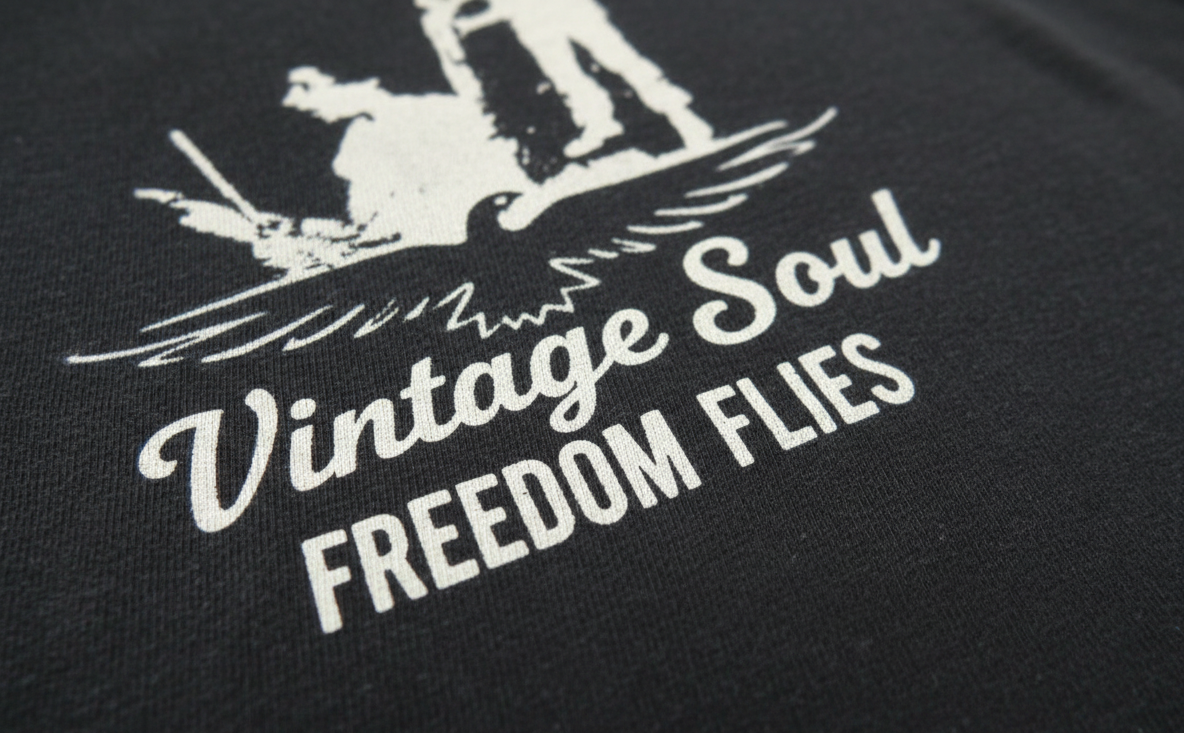
This is the simplest form—no extra color added. The process just removes the dye.
What you see:
A soft, understated pattern in the natural cotton shade.
Not loud, not flashy. More of a clean, washed-out effect.
Sometimes it’s subtle enough that you only notice it when light hits the fabric at an angle.
Pigment Discharge Printing
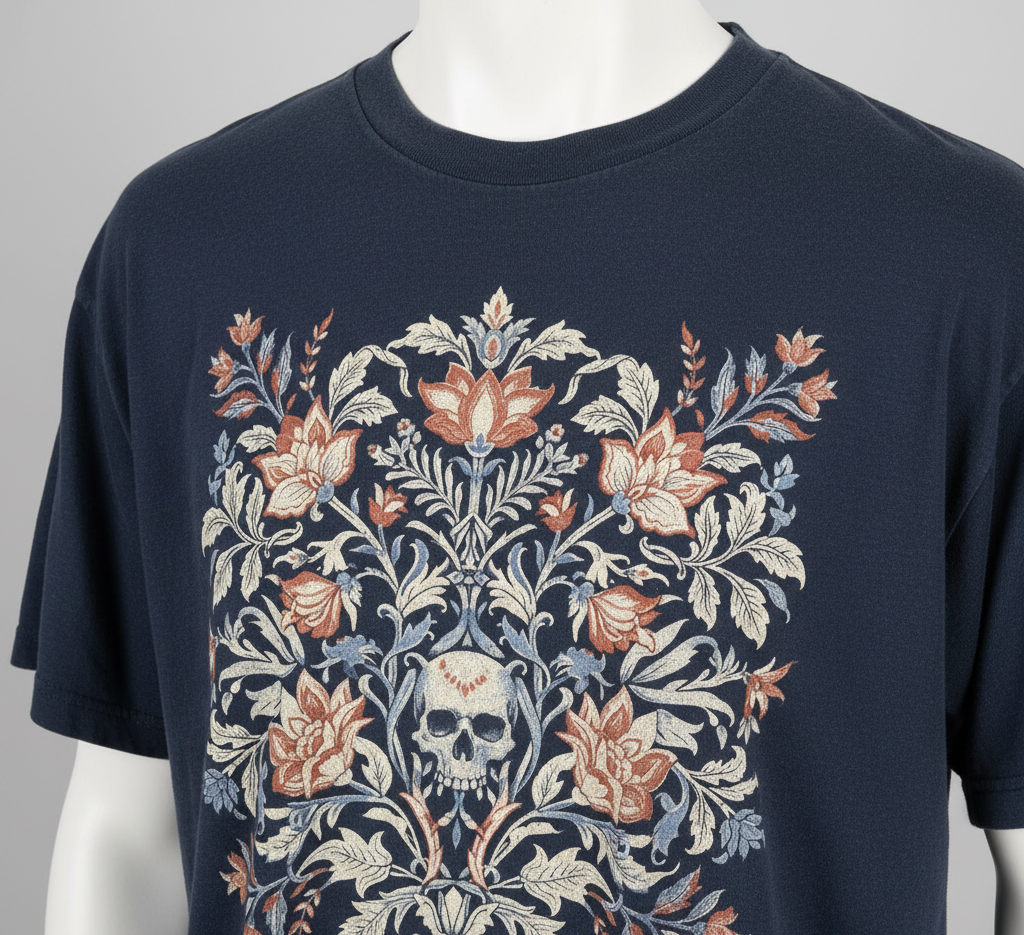
Here, the dye is removed and then replaced with a new color using pigments.
What you see:
Bright, bold designs that stand out clearly—even on dark garments.
This is what most people associate with premium graphic T-shirts today. It combines softness with strong visual impact, which isn’t easy to achieve with other methods.
Natural Discharge (No Added Pigment)
Natural discharge printing removes the original garment dye instead of adding color. It is commonly used to create a vintage, faded, or distressed appearance.
What you see:
- A slightly uneven, faded, vintage look
- Soft hand feel with no heavy ink layer
- Intentionally worn and aged appearance
Main Chemicals Used
| Chemical | Formula |
|---|---|
| Zinc Formaldehyde Sulfoxylate (Discharge Agent) | CH₄O₂S·Zn |
| Water | H₂O |
| Acrylic Binder (optional) | (C₃H₄O₂)ₙ |
| Urea (moisture retention) | CH₄N₂O |
| Sodium Carbonate (alkali) | Na₂CO₃ |
Process Principle
The discharge agent chemically destroys or reduces the dyed color in the fabric:
Colored Dye + Discharge Agent → Lighter/Faded Fabric
No additional pigment is added, so the final color depends on:
- Original garment dye
- Fabric composition
- Discharge chemistry
- Process conditions
Best Applications
- Vintage fashion
- Washed-look garments
- Distressed graphic designs
- Premium retail apparel
- Soft-hand screen printing effects
Key Chemical Symbol
The most important chemical associated with Natural Discharge Printing is:
Zinc Formaldehyde Sulfoxylate (ZFS) → CH₄O₂S·Zn
This is the primary discharge agent responsible for removing the garment's dye and creating the faded vintage effect.
How Discharge Printing Works (Process Flow)
Step-by-Step Process
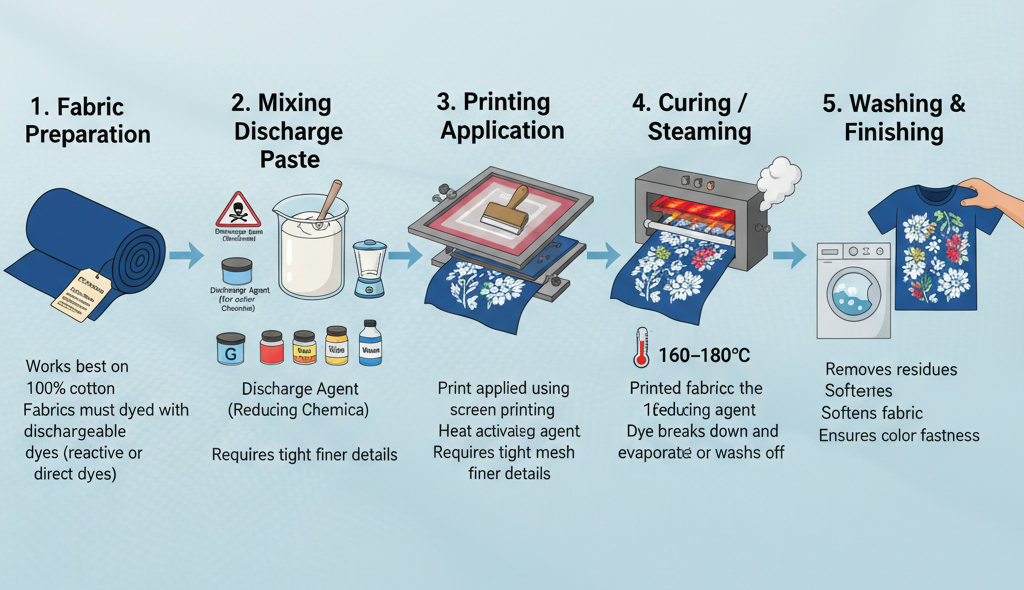
1. Fabric Preparation
You can’t skip this. The fabric basically decides whether discharge printing will work or fail.
- Best suited for 100% cotton
- Must be dyed with dischargeable dyes (like reactive or direct dyes)
If the dye doesn’t react with the chemical, nothing will happen. You’ll just end up with a regular print—or worse, a poor one.
2. Mixing the Discharge Paste
This is where the chemistry comes together.
Typical ingredients:
- Discharge agent (active chemical)
- Thickener (for proper viscosity)
- Pigments (if color is needed)
- Binder (helps fix the color)
The mix isn’t something you eyeball. Even small adjustments can change how the final print looks and feels.
3. Printing Application
Usually done using screen printing.
- Fine mesh screens help achieve better detail
- Registration needs to be tight—especially for multi-color prints
At this stage, everything still looks like a normal print. The real transformation hasn’t happened yet.
4. Curing / Steaming
This is where things get interesting.
- Fabric is heated to around 160–180°C
- Heat activates the discharge chemical
- The dye starts breaking down and lifting off
It’s not just drying—it’s an actual chemical reaction happening inside the fibers.
You might even notice a strong smell during this stage. That’s normal. It doesn’t stay.
5. Washing & Finishing
Final step, but just as important.
- Removes chemical residues
- Softens the fabric
- Stabilizes the color
Once this is done, the print feels fully integrated into the fabric—not like a layer sitting on top.
Suitable Fabrics for Discharge Printing
Works Best On
- 100% Cotton (ideal choice, no surprises)
- Cotton-spandex blends (95/5)
- Cotton-modal blends (partially effective)
Not Suitable
- Polyester and high-synthetic fabrics
- Fabrics dyed with discharge-resistant dyes (like many vat or sulfur dyes)
In simple terms: if the base dye won’t react, discharge printing won’t perform.
Advantages of Discharge Printing
Soft Hand Feel
This is the biggest advantage.
No thickness, no stiffness—just smooth fabric. You can barely feel the print.
High Detail Capability
Great for:
- Complex artwork
- Fine lines
- Photographic-style designs
The clarity is hard to match with heavier inks.
Breathability
Since there’s no thick layer blocking the surface, air passes through easily. That’s why it’s perfect for premium T-shirts and fashion apparel.
Strong Visuals on Dark Fabrics
With pigment discharge, colors appear cleaner and brighter compared to traditional plastisol prints on dark backgrounds.
Limitations of Discharge Printing
Not everything about it is easy.
-
Fabric dependency
It only works on specific dyed fabrics -
Odor during curing
There’s a noticeable smell during processing—but it washes out later -
Color variation
Slight differences between batches can happen -
Chemical handling requirements
Needs proper ventilation and safety measures
So yeah—it requires more control than basic printing methods.
Applications of Discharge Printing
You’ll see it across different segments, often without realizing it.
-
Fashion & Streetwear
Premium T-shirts, vintage-style graphics -
Sportswear
Lightweight prints that don’t interfere with comfort -
Children’s Wear
Soft, non-toxic, skin-friendly prints -
Home Textiles
Cushion covers, panels, decorative fabrics
Why Brands Stick With It
Once brands go into discharge printing, they rarely drop it entirely.
- The print looks embedded into the fabric, not pasted on top
- Better durability—less cracking over time
- Water-based system gives it a more sustainable edge compared to plastisol
It’s not the easiest method to manage. Takes experience. Requires the right setup.
But when everything clicks… the result speaks for itself.