
For textile‑producing countries like Bangladesh, India, China and Vietnam, Industry 4.0 is no longer optional. Rising labor costs, strict compliance requirements, sustainability pressure from global brands and volatile fashion demand are accelerating digital adoption across spinning, weaving, knitting, dyeing, finishing and garment manufacturing .
Concept of Industry 4.0 in Textiles
- Interconnected machines and sensors (IIoT)
- Real‑time data exchange and analytics
- Decentralized and autonomous decision‑making
- Integration of physical production with digital models (digital twins)
- End‑to‑end supply chain visibility
These capabilities allow textile manufacturers to move from reactive to predictive and prescriptive operations .
Core Industry 4.0 Technologies in Textile Manufacturing
Internet of Things (IoT)

- Real‑time production monitoring
- Reduced machine downtime
- Predictive maintenance
- Improved energy efficiency
Artificial Intelligence (AI) and Machine Learning
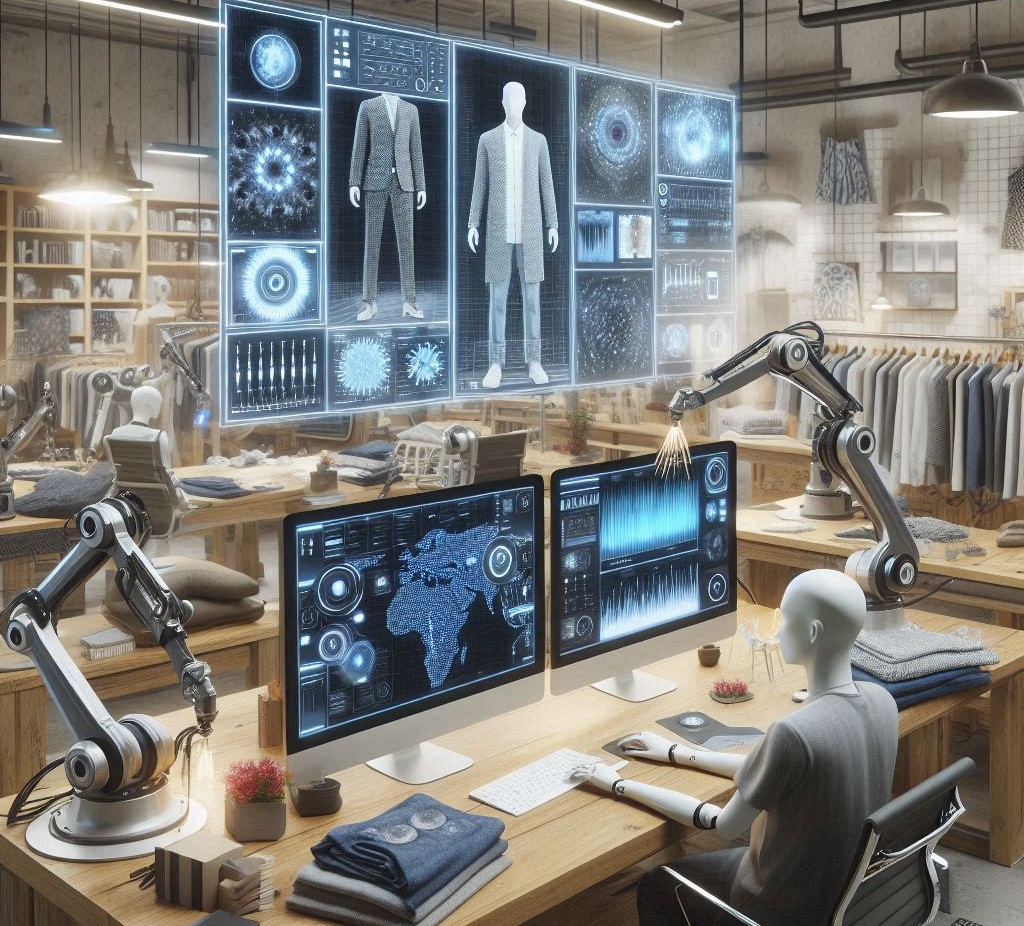
Robotics and Automation
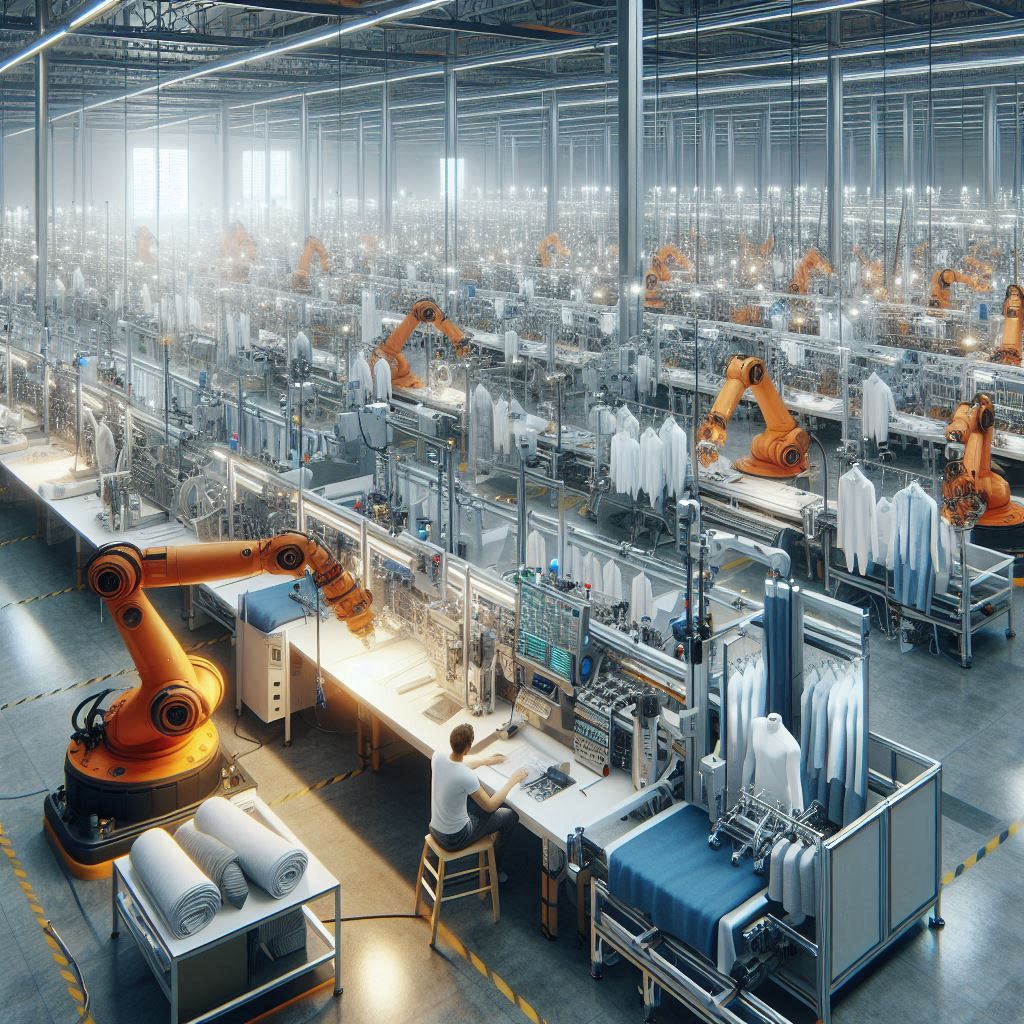
Digital Twins
The digital twin is a virtual copy of a physical textile process or machine. Manufacturers can test changes without disrupting real production by simulating different production scenarios, improving planning accuracy and reducing risk.

Blockchain Technology

Applications Across the Textile Value Chain
Industry 4.0 is transforming the textile industry by introducing smart technologies, data-driven decision-making and automation across every stage of production. From spinning to garment manufacturing, these advancements are helping improve quality, efficiency and overall productivity. Each stage of the textile value chain is now becoming more intelligent, connected and responsive.
Spinning
In the spinning sector, Industry 4.0 enables real-time monitoring and better control over yarn production processes. Modern systems continuously track important yarn parameters and machine performance, allowing quick adjustments and reducing production losses. With the integration of AI-driven technologies, spinning mills can optimize key variables such as draft, twist and spindle speed, leading to improved yarn quality and reduced waste.
- Real-time monitoring of yarn parameters
- End-break analysis for process improvement
- Predictive maintenance to reduce machine downtime
- AI-based optimization of draft, twist and spindle speed
- Improved yarn consistency and reduced waste
Weaving and Knitting
In weaving and knitting, machines are becoming smarter and more adaptive. Advanced looms and knitting machines can automatically adjust their settings based on fabric design and yarn behavior, ensuring consistent production quality. Additionally, built-in defect detection systems help identify issues early in the process, reducing rework and improving fabric quality.
- Smart looms and knitting machines with auto-adjustment features
- Real-time control based on yarn and fabric behavior
- Detection of faults such as broken ends, holes and barre effects
- Improved fabric quality and reduced defects
- Better production efficiency with less manual intervention
Dyeing and Finishing
Dyeing and finishing processes are also benefiting from digital transformation. IoT-enabled machines allow precise control over critical factors such as liquor ratio, temperature and chemical dosing. With the support of AI systems, manufacturers can achieve right-first-time dyeing, minimizing the need for reprocessing and reducing water and chemical consumption significantly.
- IoT-based monitoring and control of dyeing parameters
- Accurate chemical dosing and temperature management
- AI-driven systems for right-first-time dyeing results
- Reduced water usage and chemical waste
- Improved shade consistency and process efficiency
Garment Manufacturing
In garment manufacturing, Industry 4.0 is improving both operational visibility and production planning. Digital tools enable real-time line balancing, efficient workflow management and better utilization of resources. Automated cutting systems and intelligent sewing technologies further enhance productivity, while RFID and IoT systems provide accurate tracking of work-in-progress (WIP) across the factory floor.
- Digital production planning and real-time line balancing
- Automated cutting for higher precision and speed
- Intelligent sewing systems for improved efficiency
- RFID and IoT-based tracking of WIP
- Enhanced production visibility and control
Impact on Productivity, Quality and Cost
The adoption of Industry 4.0 technologies in the textile industry has led to significant improvements across productivity, quality and cost efficiency. By integrating automation, real-time data monitoring and intelligent systems, manufacturers are able to optimize operations and reduce inefficiencies across the production cycle. These technologies not only improve machine performance but also enhance decision-making and process control.
As a result, factories experience more stable production, fewer errors and better resource utilization. Over time, this leads to consistent quality output and reduced operational costs, making the entire system more competitive and responsive to market needs.
Key benefits include:
- Increased machine utilization and improved overall equipment effectiveness (OEE)
- Reduction in defects, rework and quality-related losses
- Lower energy and resource consumption through optimized processes
- Faster response to changing market demand and production needs
- Improved delivery reliability and on-time performance
Overall, Industry 4.0 enables measurable gains in efficiency, quality consistency and sustainable production when implemented in a structured and systematic way.
Sustainability and Industry 4.0
The textile industry has traditionally been associated with high water usage, energy consumption and chemical impact. Industry 4.0 is helping address these challenges by enabling more sustainable manufacturing practices through better monitoring, control and optimization of resources.
By using smart systems and data analytics, manufacturers can reduce waste, improve efficiency and move toward circular production models. Sustainability is no longer optional—it has become a key requirement driven by global brands and environmental regulations.
Key sustainability contributions include:
- Real-time energy monitoring and reduction strategies
- Adoption of water-efficient dyeing and processing technologies
- Reduction of material waste through predictive quality control
- Improved product traceability and recyclability
These advancements help factories reduce their environmental footprint while maintaining high production standards.
Challenges in Implementing Industry 4.0 in Textiles
Despite its clear advantages, implementing Industry 4.0 in the textile sector comes with several challenges, especially for small and medium-sized enterprises (SMEs). Transitioning from traditional systems to digital and automated environments requires both investment and organizational change.
Common challenges include:
- High initial investment costs for technology and infrastructure
- Skill gaps and resistance to change within the workforce
- Data security and cybersecurity concerns
- Lack of standardization across systems and technologies
- Limited digital infrastructure in some developing regions
Addressing these challenges requires strategic planning, phased implementation and investment in both technology and human capability.
Workforce Transformation
Industry 4.0 is not about replacing workers, but about transforming the nature of work. As automation and digital systems become more common, the demand for new skill sets is increasing. Roles are shifting toward more technical, analytical and decision-making functions.
There is growing demand for:
- Industrial engineers and process optimization experts
- Data analysts and digital system specialists
- Automation and robotics technicians
- Maintenance professionals with digital troubleshooting skills
Continuous training, upskilling and reskilling are essential to help the workforce adapt and succeed in this evolving environment.
Future Trends in Textile Industry 4.0
Looking ahead, the textile industry is expected to move further toward full digital integration and intelligent automation. Emerging trends focus on improving efficiency, sustainability and responsiveness to consumer demand.
Future developments may include:
- Fully autonomous smart factories with minimal manual intervention
- AI-driven, demand-based production systems
- Greater integration of sustainability metrics into daily operations
- Use of digital product passports for traceability and transparency
- Increased human-machine collaboration, leading toward Industry 5.0
Case Studies from Bangladesh Textile & RMG Sector
Case Study 1: Spinning Mill – Predictive Maintenance & Quality Stability
- IoT sensors installed on ring frames
- Real‑time monitoring of spindle speed, vibration and temperature
- AI‑based end‑break pattern analysis
- Reduction in end‑break rate
- Improved yarn CV% and strength consistency
- Lower maintenance cost through predictive interventions
Case Study 2: Dyeing & Finishing – Right‑First‑Time (RFT) Dyeing
- IoT‑enabled dyeing machines
- Automated chemical dosing
- Digital recipe management system
- Higher Right‑First‑Time dyeing percentage
- Reduced reprocessing and chemical waste
- Lower water and energy consumption per kg of fabric
Case Study 3: Garment Factory – Smart Production & Capacity Planning
- RFID‑based WIP tracking
- Real‑time line efficiency dashboards
- Digital SMV and capacity planning tools
- Improved line balancing and productivity
- Better order‑wise capacity visibility
- Reduced overtime dependency


