What Is Terry Fabric?
Terry fabric is a woven or knitted material covered in countless small loops. Those loops aren't there for decoration. They exist to soak up water, and they do it far better than most other fabrics you'll find in a home textile aisle. Run your hand across a bath towel and you'll feel exactly what those loops are doing — trapping air and moisture at the same time, which is why terry feels soft and dries you off quickly in the same breath.
The word "terry" actually comes from the French tirer, meaning "to pull" or "to draw out" — a nod to how the loops are pulled up from the base yarn during weaving. It's a small detail, but it explains a lot about how the fabric behaves: every loop is essentially extra yarn, pulled loose on purpose, so the fabric has more surface area than a flat weave of the same size.
A few things make terry fabric what it is:
- High absorbency, thanks to the looped pile soaking up water from every angle
- A soft, cushioned feel, which is why it's comfortable against skin
- Good durability, when the yarn and weave are done right
- Breathability, so it doesn't trap heat the way some synthetic fabrics do
- Wash resistance, meaning it holds its shape and softness through repeated laundering
Put simply, terry manages to be both practical and a little bit luxurious at the same time — which is rare for a fabric that's mostly used to dry your hands and face.
A Quick Look at Where Terry Comes From
Terry weaving isn't a new invention. Its roots trace back to 19th-century textile mills in England, where weavers were experimenting with looped-pile weaves for upholstery and towelling. Turkey later became closely associated with high-quality terry cotton, so much so that "Turkish towel" is still used as a shorthand for a good, absorbent bath towel almost anywhere in the world. Today, production has spread far beyond Turkey — Bangladesh, Pakistan, India, and China are now major producers, each known for slightly different strengths in cotton quality, weaving technology, or price competitiveness.
How the Loops Actually Get There
It helps to understand the basic mechanics before getting into types and categories. A terry weave uses three yarn systems instead of the usual two found in plain fabric:
- Ground warp — the yarn that forms the base structure of the fabric
- Pile warp — extra yarn fed in at a slower, looser tension, which is what forms the loops
- Weft yarn — the crosswise yarn that locks everything together
During weaving, the pile warp is deliberately fed with extra slack. When the weft yarn beats into place, that slack pushes up into loops instead of lying flat. Do this evenly across the whole fabric, thousands of times, and you get the familiar looped surface of a terry towel. Get the tension wrong, and you end up with the uneven pile height or pulled loops that show up later as a quality defect — more on that further down.
Types of Terry Fabric / Terry Towels
Terry fabrics can be classified based on pile construction, loop structure, manufacturing technique, and end use.
1. Based on Pile Construction
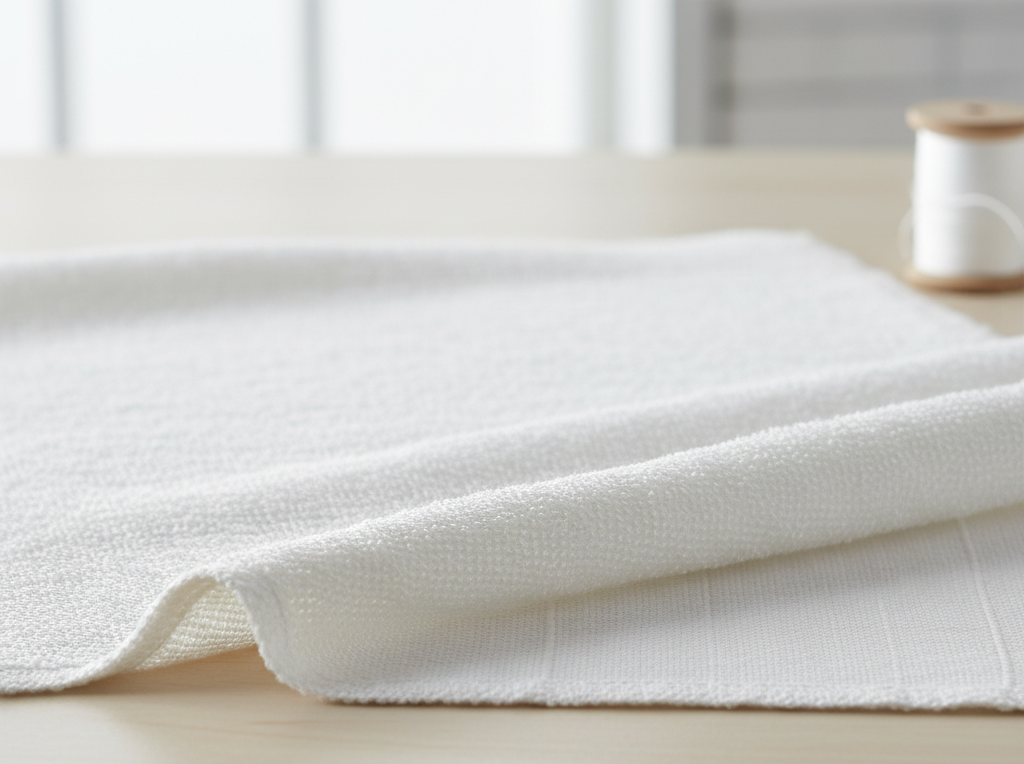
Single-Sided Terry This version has loops on only one side, while the other side stays flat and smooth. It uses less yarn overall, which keeps the fabric lighter and the cost lower. You'll usually find this in kitchen towels and lightweight hand towels, where full absorbency on both sides isn't really necessary.
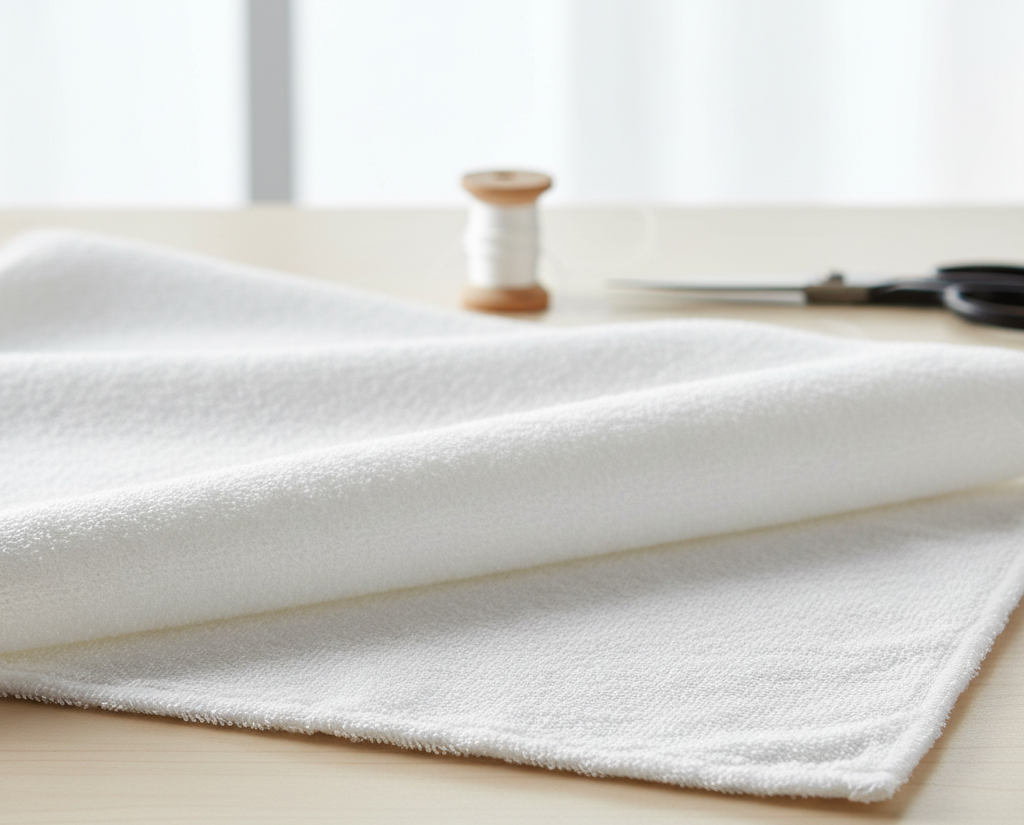
Double-Sided Terry Here, loops appear on both sides of the fabric. That means more yarn, more bulk, and — most importantly — more absorbency. This is the standard construction for bath towels and bathrobes, where soaking up as much water as possible is the whole point.
2. Based on Loop Structure
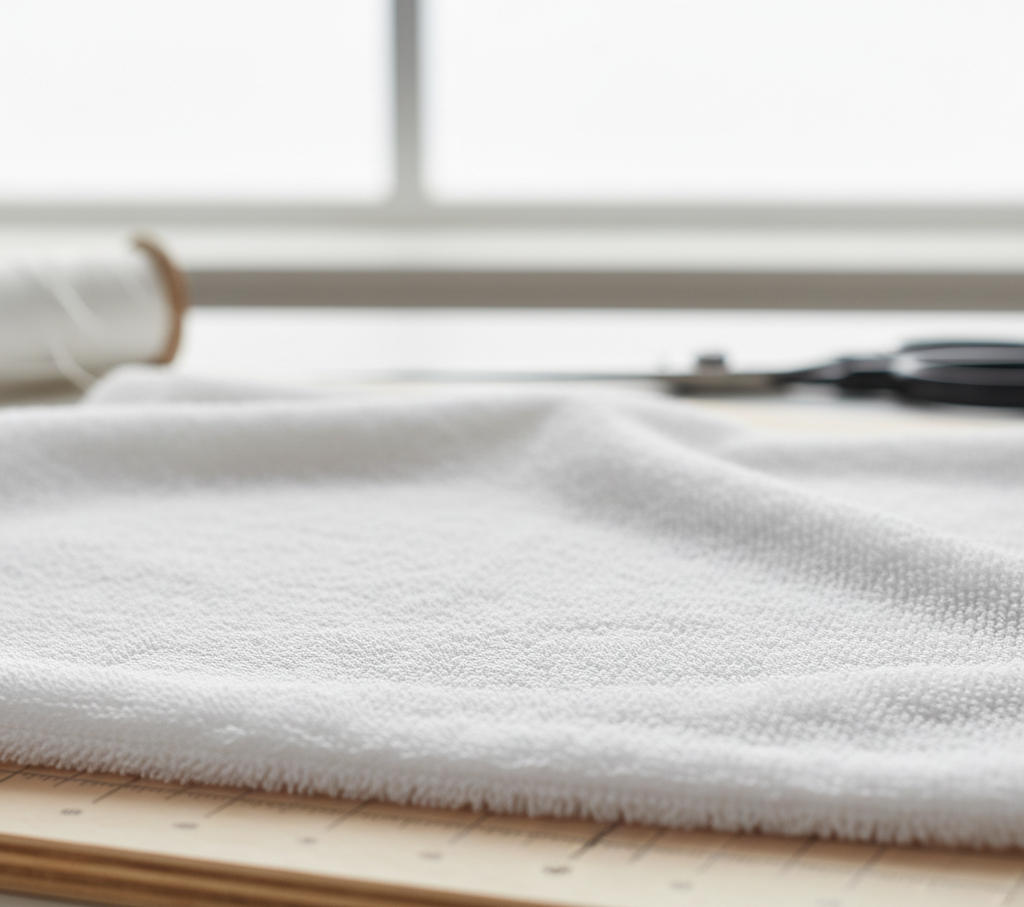
Uncut Loop Terry This is the classic towel structure most people picture when they think of terry cloth. The loops stay intact and uncut, which gives the fabric strength and keeps absorbency high. It's the most common, most durable version of terry you'll come across.
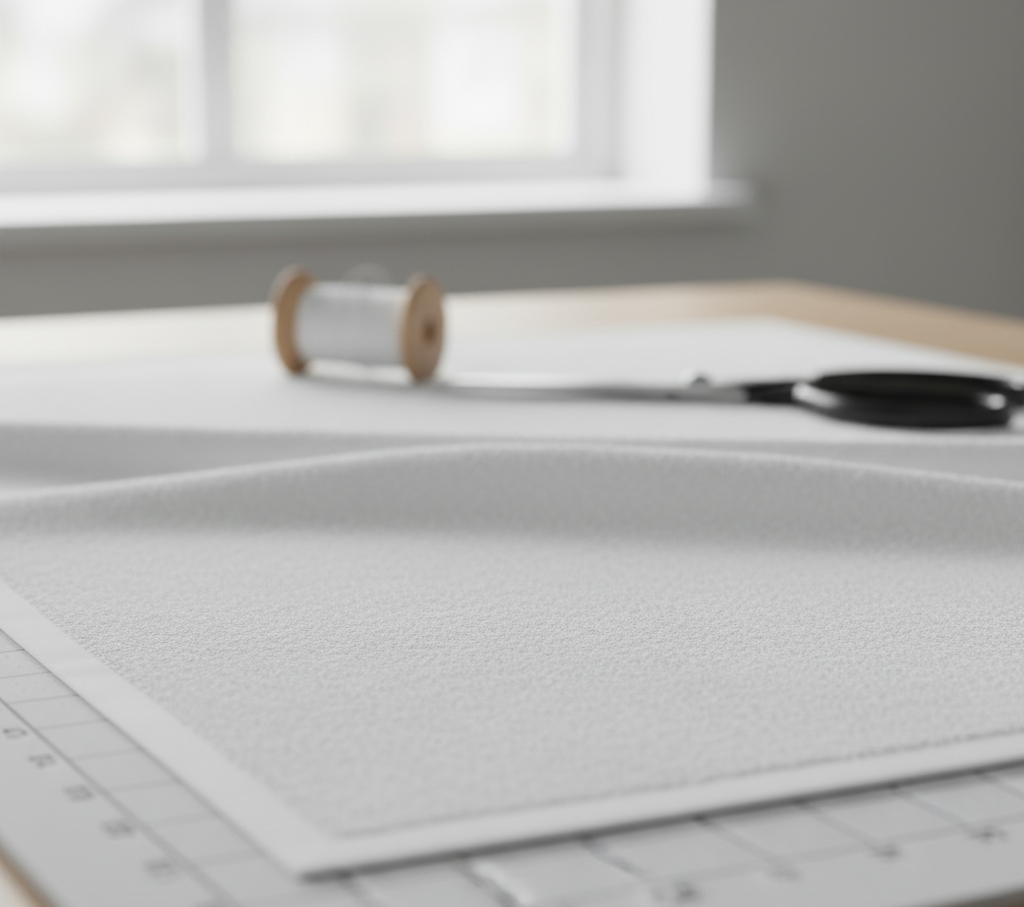
Cut Loop Terry (Velour Terry) In this version, the loops are sheared on one side, leaving a smooth, velvet-like surface. It looks and feels more premium, which is why it's popular for higher-end bathrobes and decorative towels. The trade-off is that cutting the loops reduces surface area, so absorbency drops a bit compared to uncut terry.
3. Based on Manufacturing Technique
Woven Terry Made on shuttleless looms — usually rapier or air-jet machines — woven terry is the most common and most durable type on the market. It holds its shape well and is the standard choice for towels of almost every kind.
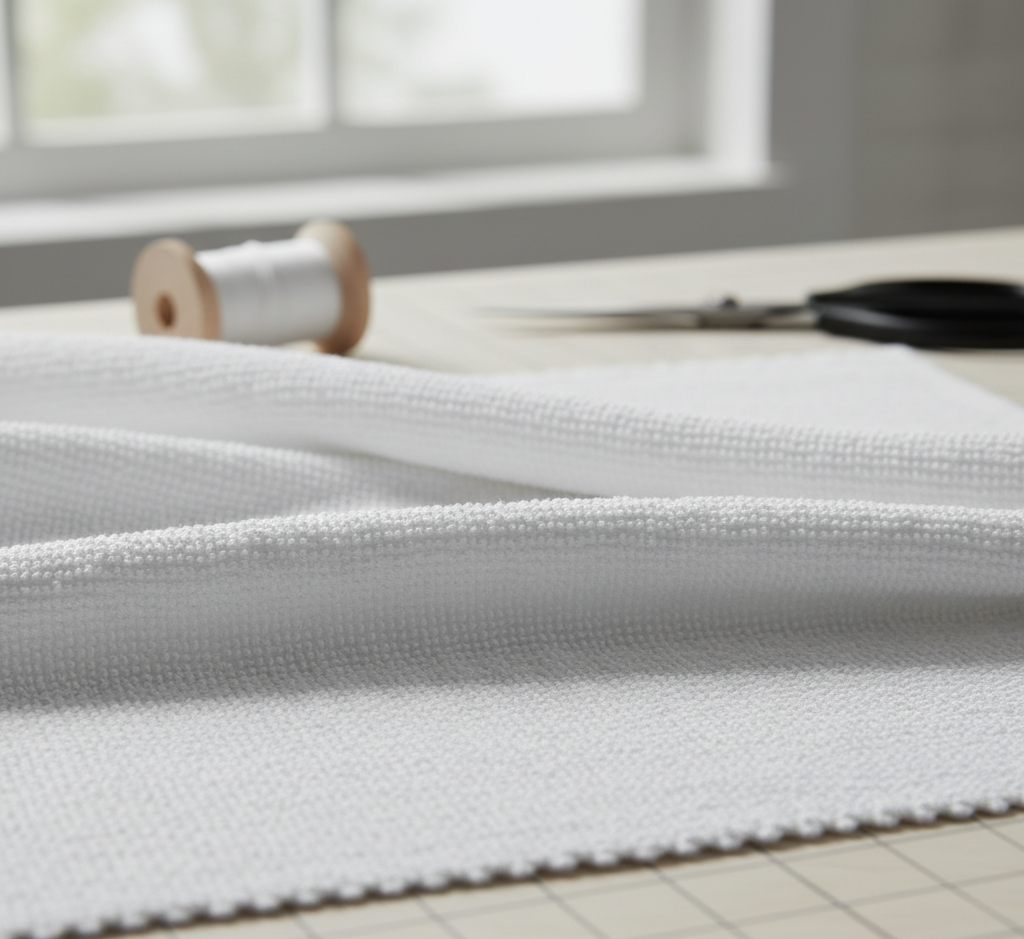
Knitted Terry Produced on circular or warp knitting machines instead of looms, knitted terry has more stretch but less structural stability than the woven version. It's typically used in garments and casual wear rather than towels, since a bit of stretch is actually useful in clothing.
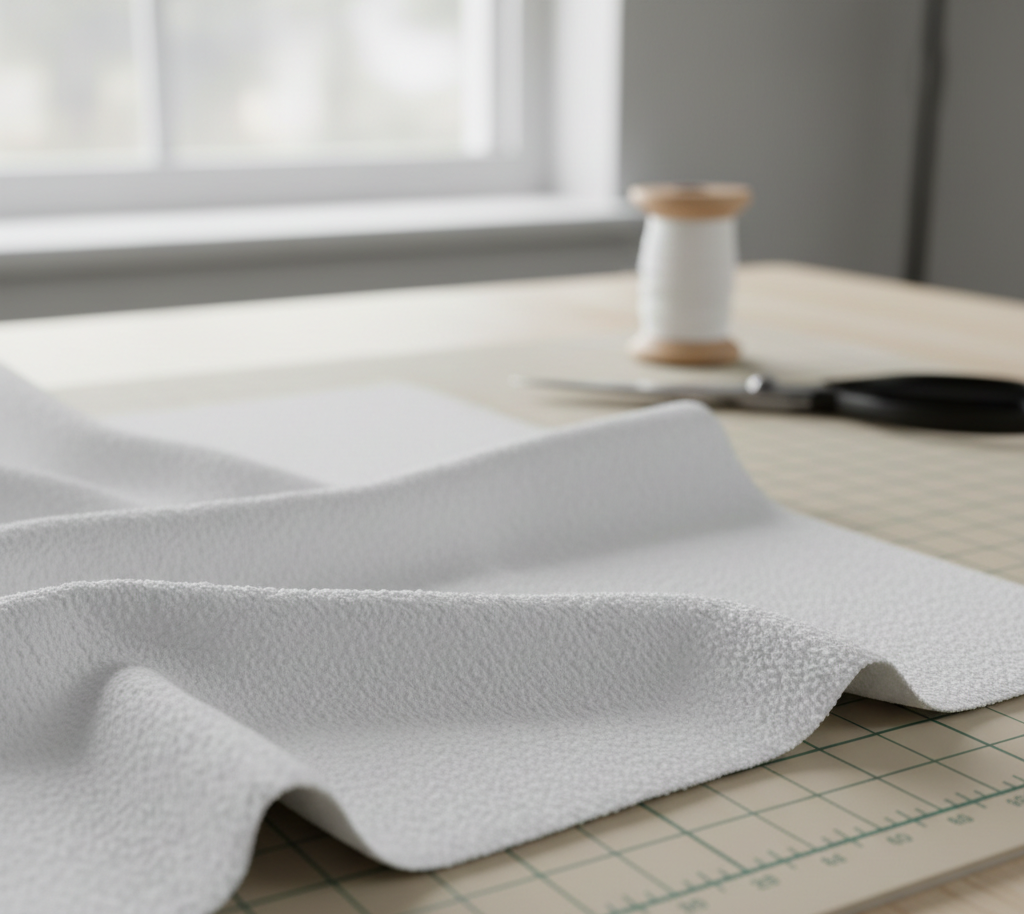
| Feature | Woven Terry | Knitted Terry |
|---|---|---|
| Production method | Shuttleless looms | Circular / warp knitting |
| Durability | High | Moderate |
| Stretchability | Low | High |
| Common use | Towels, bathrobes | Casual wear, garments |
| Stability | More stable | Less stable |
Bath towels
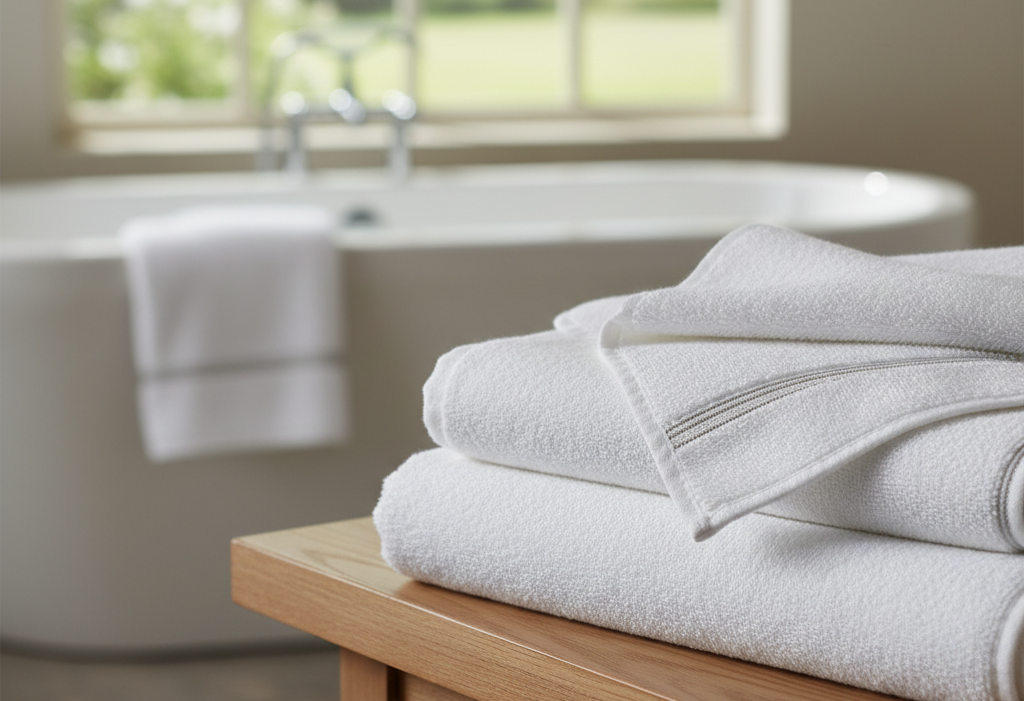
Bath towels are the most common and widely recognized form of terry fabric. They are designed to provide maximum absorbency and comfort after bathing or showering.
Size & GSM: Typically larger in size (27x52 inches or more) with GSM ranging from 400–700, depending on luxury level.
Purpose: Used to dry the body quickly while offering a soft, plush feel.
Features: Double-sided terry construction for superior absorbency, often made from long-staple cotton for durability.
Market Insight: Premium bath towels (Egyptian or Pima cotton) are marketed as luxury items, while mid-range cotton/polyester blends target affordability.
Hand towels
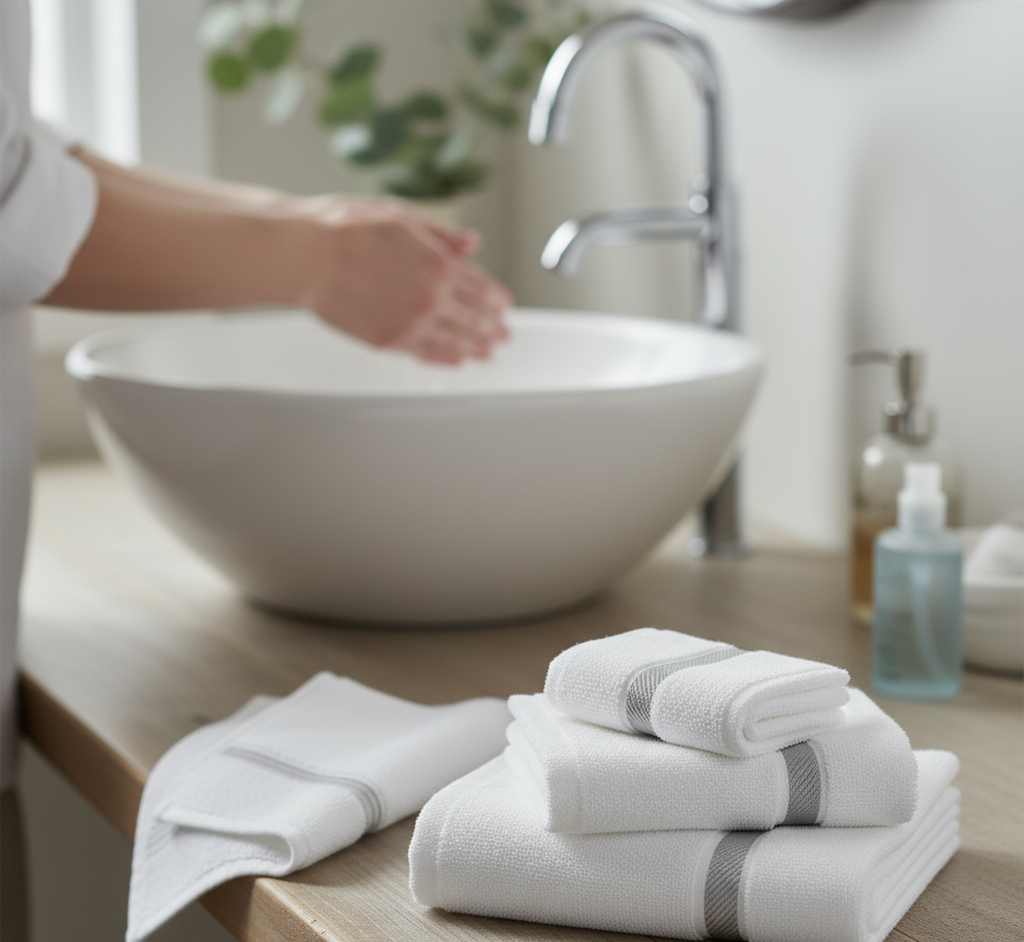
Hand towels are smaller, versatile towels used primarily for drying hands.
Size & GSM: Usually 16x28 inches, GSM between 300–500.
Purpose: Found in bathrooms, kitchens, and guest areas.
Features: Quick-drying, lightweight, and durable for frequent use.
Applications: Hotels and restaurants often stock hand towels in bulk for hygiene purposes.
Consumer Note: Hand towels are often sold in sets with bath and face towels, creating coordinated bathroom collections.
Face towels
Face towels (or washcloths) are the smallest category of terry towels, designed for delicate use.
Size & GSM: Around 13x13 inches, GSM 250–400.
Purpose: Used for facial cleansing, skincare routines, and baby care.
Features: Soft texture, often made from zero-twist cotton or bamboo blends for gentle touch.
Market Insight: Increasing demand for organic cotton and bamboo face towels due to rising skincare awareness.

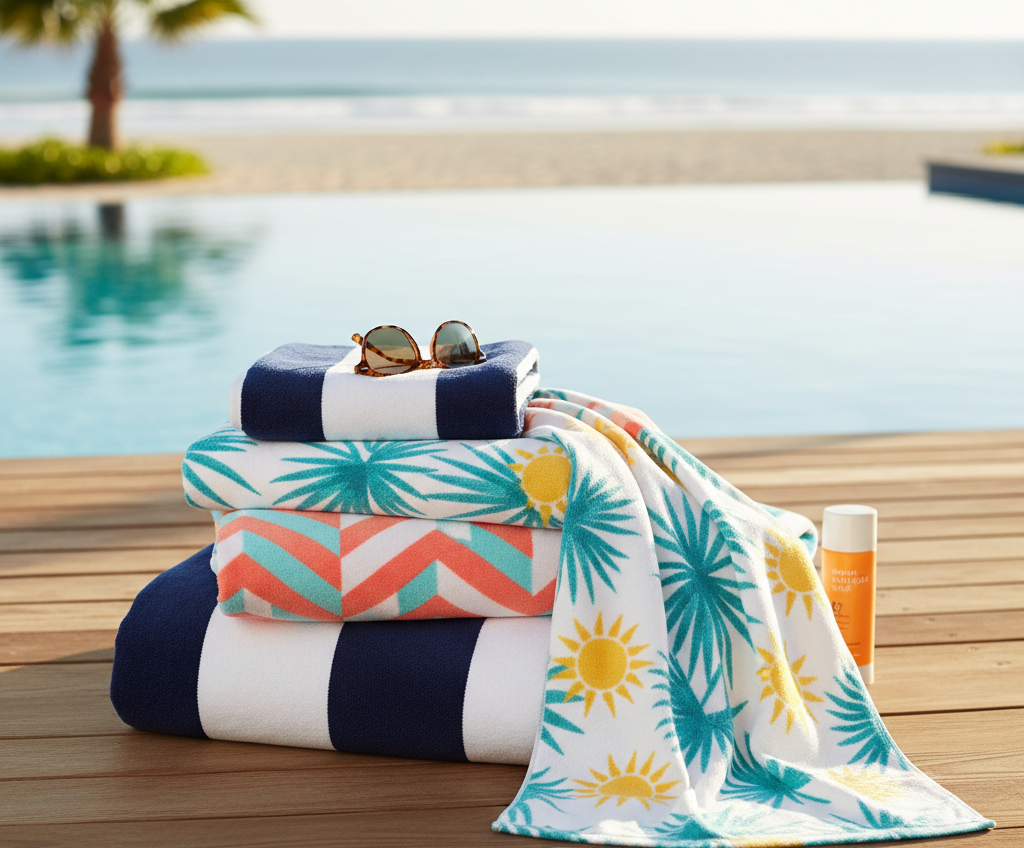
Beach towels
Beach towels are larger, more decorative terry towels designed for outdoor use.
Size & GSM: Oversized (30x60 inches or more), GSM 350–500.
Purpose: Used at beaches, pools, and resorts for drying off and lounging.
Features: Bright colors, bold prints, and durable construction to withstand sand, saltwater, and sun exposure.
Applications: Often marketed as fashion accessories as well as functional items.
Consumer Note: Polyester blends are common for quick-drying and fade resistance.
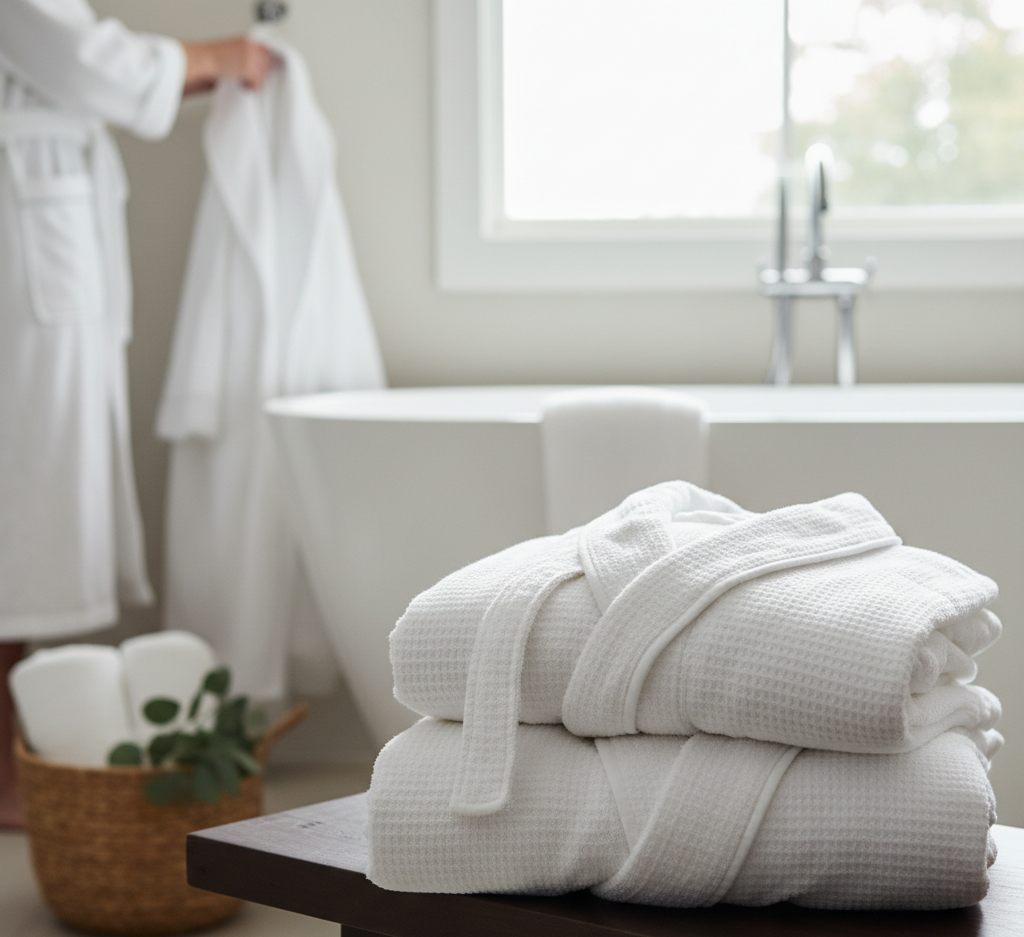
Bathrobes
Bathrobes extend the utility of terry fabric into apparel.
Construction: Made from double-sided terry for warmth and absorbency.
Purpose: Worn after bathing, swimming, or spa treatments.
Features: Comfort-focused, often with belts, hoods, or pockets.
Market Insight: Luxury hotels and spas invest in high-quality terry bathrobes to enhance guest experience.
Consumer Note: Velour terry bathrobes are popular for their smooth, premium appearance.
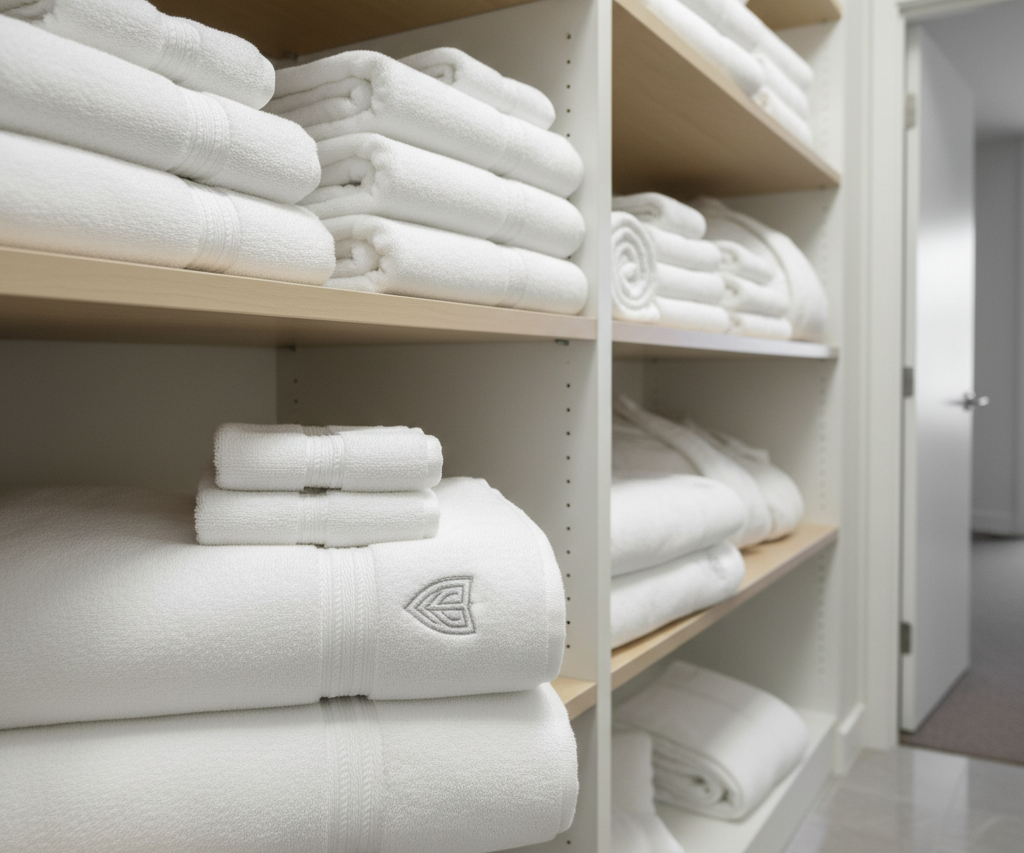
Hotel and institutional towels
Institutional terry towels are designed for heavy-duty use in hotels, hospitals, gyms, and spas.
Size & GSM: Varies widely, but generally mid-range GSM (350–500) for durability and cost efficiency.
Purpose: Withstand frequent laundering and high turnover.
Features: Strong construction, reinforced hems, and standardized white color for easy bleaching.
Applications: Hospitality industry relies on bulk production with strict quality standards.
Market Insight: Polyester blends are common to reduce costs and extend lifespan.
Comparative Table: End Use Categories
| End Use | Typical Size (inches) | GSM Range | Key Features | Common Materials |
|---|---|---|---|---|
| Bath Towels | 27x52+ | 400–700 | Plush, absorbent | Egyptian/Pima cotton |
| Hand Towels | 16x28 | 300–500 | Quick-drying, durable | Cotton/poly blends |
| Face Towels | 13x13 | 250–400 | Gentle, soft | Bamboo, zero-twist cotton |
| Beach Towels | 30x60+ | 350–500 | Decorative, fade-resistant | Cotton/polyester |
| Bathrobes | Variable | 400–600 | Comfort, absorbency | Velour terry, cotton |
| Hotel/Institutional | Standardized sizes | 350–500 | Durable, bleach-resistant | Cotton/poly blends |
Raw Materials Used in Terry Towels
1. Cotton (Most Common)
- Ring-spun cotton
- Combed cotton
- Long-staple cotton (Egyptian, Pima)
2. Blended Fibers
- Cotton + Polyester (cost efficiency, durability)
- Cotton + Bamboo (eco-friendly, antibacterial)
- Cotton + Modal (softness, drape)
Yarn Types Used
- Ground yarn: Forms the base fabric
- Pile yarn: Creates loops; usually softer and finer
- Ring-spun yarn (soft, strong)
- Open-end yarn (economical, less soft)
- Zero-twist or low-twist yarn (luxury towels)
How Terry Towels Are Actually Made
Manufacturing terry fabric involves several distinct stages, and each one affects the final quality in a different way. Skipping or rushing any single step tends to show up later as a visible defect.
1. Yarn Preparation
Everything starts with selecting and blending the right cotton, followed by spinning (either ring-spun or open-end), and then winding and warping the yarn so it's ready to be loaded onto the loom.
2. Weaving Process
As mentioned earlier, terry weaving relies on three yarn systems working together — ground warp, pile warp, and weft yarn. The loops themselves are created through one of two pick systems:
- Fast pick system — the pile yarn moves faster than the ground yarn, forming loops through that speed difference
- Loose pick system — extra yarn length is deliberately fed in, and that slack becomes the loop
Modern mills mostly rely on rapier or air-jet looms for this stage, since both offer more speed and consistency than older shuttle looms.
3. Grey Fabric Inspection
Before any dyeing or finishing happens, the raw ("grey") fabric goes through inspection. Workers check for loop uniformity, look for broken piles, and measure GSM and width to make sure the fabric matches spec before moving further down the line.
4. Wet Processing (Dyeing and Finishing)
Desizing and scouring come first, removing impurities from the fabric and improving how well it will absorb water and dye later on.
Bleaching follows, giving the fabric a clean, even whiteness and preparing it properly for dyeing.
Dyeing or printing comes next. Reactive dyes are the standard choice for cotton, and mills typically use either yarn-dyed or piece-dyed methods depending on the design and color requirements.
5. Finishing Operations
This stage shapes how the towel actually feels and performs once it reaches a customer:
- Softening with silicone or eco-friendly softeners
- Tumble drying to fluff up the pile
- Shearing, specifically for velour terry, to create that smooth cut-loop surface
- Sanforizing, which controls shrinkage so the towel doesn't warp after its first wash
6. Cutting and Sewing
The finished fabric is cut into the correct towel sizes, hemmed or overlock-stitched along the edges, and finally fitted with labels and hanging loops before packing.
Quality Parameters of Terry Towels
Judging terry quality isn't just about how soft it feels in the shop. A few measurable factors decide how well a towel will actually perform over time.
| Parameter | Standard Range / Notes |
|---|---|
| GSM (Grams per Sq. Meter) | 350–700 GSM |
| Pile height & density | Determines softness & absorbency |
| Absorbency rate | Key performance indicator |
| Color fastness | Resistance to fading |
| Shrinkage (%) | Controlled via finishing |
| Tear & tensile strength | Ensures durability |
Common Defects in Terry Towels
Even with good raw materials, things can go wrong during weaving or finishing. The most frequent problems buyers and quality teams look out for include:
- Broken or pulled loops
- Uneven pile height across the fabric
- Barre or shading (visible stripes or color inconsistency)
- Oil stains from machinery
- Skewness, where the fabric twists slightly out of shape after washing
Most of these trace back to either yarn tension problems during weaving or rushed finishing steps — which is exactly why the grey fabric inspection stage matters as much as it does.
Terry Fabric and Sustainability
Terry manufacturing has a real environmental footprint, mostly from water and chemical use during wet processing. The industry has been shifting in a few clear directions to reduce that impact:
- Wider use of organic cotton
- Low-liquor ratio dyeing, which uses less water per batch
- Water recycling systems built into finishing plants
- OEKO-TEX® and GOTS certification, which give buyers a way to verify safer chemical use
- Reduced chemical finishing overall, favoring gentler processes where possible
None of this makes terry a "zero impact" fabric, but it does mean buyers now have real, verifiable options if sustainability is part of their sourcing criteria.
Where Terry Fabric Gets Used
Terry's mix of absorbency, softness, and durability makes it useful well beyond the bathroom shelf:
- Home textiles — bath, hand, and face towels
- Hospitality — hotels and spas, where towel quality directly shapes guest experience
- Apparel — bathrobes and baby wear, where softness against skin matters most
- Sports and beach accessories — towels built to handle sand, sweat, and repeated washing
Terry vs. Other Absorbent Fabrics
Terry isn't the only fabric built for absorbency, and it helps to know how it compares to a few common alternatives, since buyers sometimes confuse them.
| Fabric | Absorbency | Texture | Typical Use |
|---|---|---|---|
| Terry (looped pile) | Very high | Plush, textured | Towels, bathrobes |
| Waffle weave | Moderate | Light, grid-textured | Lightweight towels, spa wear |
| Microfiber | High, fast-drying | Smooth, silky | Sports towels, cleaning cloths |
| Fleece | Low | Soft, warm | Blankets, loungewear |
Waffle weave dries faster and packs smaller than terry, which is why it's popular for travel towels, but it doesn't hold nearly as much water in one go. Microfiber absorbs quickly and dries fast too, though it lacks the plush, cushioned feel terry is known for. Fleece, meanwhile, isn't really built for absorbency at all — it's included here mostly because people sometimes lump it in with terry due to its soft texture, even though the two fabrics serve very different purposes.
A Few Practical Buying Tips
For anyone sourcing or shopping for terry products, a handful of simple checks go a long way:
- Feel the weight first. A towel that feels noticeably light for its size is usually lower GSM, which means less absorbency.
- Check the hem stitching. Loose or uneven stitching along the edges is often an early sign of lower overall quality control.
- Look at the loop density. Densely packed, even loops usually mean better absorbency and a longer working life than sparse, irregular ones.
- Ask about the cotton type. Long-staple cotton (Egyptian or Pima) costs more but lasts longer and stays soft through more wash cycles than short-staple cotton.
- Consider the end use before chasing the highest GSM. A heavy 700 GSM towel feels amazing in a hotel bathroom, but it's overkill — and slow to dry — for a gym bag or a beach trip.
Caring for Terry Towels
Even the best-made towel loses its softness and absorbency fast if it's washed the wrong way. A few habits make a noticeable difference over the life of a towel:
- Skip fabric softener. It sounds counterintuitive, but liquid fabric softener coats the cotton fibers in a waxy layer that actually blocks absorbency over time. A splash of white vinegar in the rinse cycle works better if extra softness is the goal.
- Wash in warm, not hot, water. Hot water breaks down cotton fibers faster and speeds up wear, especially on higher-GSM towels.
- Don't overload the washing machine. Terry needs room to move around in the drum so the loops don't get crushed or tangled against other fabrics.
- Dry on a lower heat setting. High heat is convenient, but it shortens the life of the pile and can cause shrinkage beyond what the sanforizing process already accounts for.
- Wash new towels before first use. A first wash removes any leftover finishing chemicals and actually improves absorbency compared to using a towel straight out of the packaging.
Market Trends Worth Knowing
The terry towel market has shifted quite a bit over the past decade, and a few trends are worth keeping in mind whether you're buying, selling, or manufacturing:
- Sustainability is no longer a niche request. Buyers increasingly ask for organic cotton, GOTS certification, or recycled polyester blends as a standard requirement rather than a premium add-on.
- Hospitality remains a huge, steady buyer. Hotels and spas replace towels on a regular cycle, which keeps demand for mid-to-high GSM institutional terry fairly stable even when consumer retail spending slows down.
- Lightweight, fast-drying towels are gaining ground. Travel and sports use has pushed demand toward lower-GSM, quick-drying terry and terry-microfiber blends, even though full-weight bath towels still dominate at home.
- Customization matters more at retail. Embroidered borders, jacquard patterns, and coordinated towel sets have become a bigger part of how brands differentiate what is, at its core, a fairly simple product.
- Price competition keeps shifting production. As labor and cotton costs rise in traditional hubs, buyers continue to diversify sourcing across Bangladesh, Pakistan, India, and China rather than relying on a single country.
Quick FAQ
What makes terry fabric so absorbent compared to other cotton fabrics? It comes down to surface area. The looped pile gives terry far more surface area than a flat weave of the same size, so it can hold noticeably more water for its weight.
Is a higher GSM always better? Not necessarily. Higher GSM means more absorbency and a plusher feel, but also a heavier, slower-drying towel. The right GSM depends on the intended use, not just on chasing the highest number.
What's the real difference between woven and knitted terry? Woven terry is more stable and durable, which is why it dominates the towel market. Knitted terry stretches more but holds its shape less well, so it's used mainly in garments rather than towels.
Why do some towels feel rougher after a few washes? This usually comes down to yarn quality or finishing. Lower-quality cotton or skipped softening steps during finishing can cause a towel to lose its soft feel faster than a well-made one.
Is cut-loop (velour) terry less durable than uncut terry? Slightly, yes. Cutting the loops reduces the fabric's surface area and structural strength a little, though the trade-off is a smoother, more premium appearance — which is exactly why it's popular for bathrobes rather than everyday towels.
Final Thought
Terry fabric might seem like a simple, everyday material, but there's a fair amount of engineering packed into every loop. From the choice of cotton and yarn, through the weaving and finishing stages, right down to the final GSM number on the label — each decision shapes how a towel feels, how long it lasts, and how well it does its one real job: soaking up water without falling apart. It's a fabric that manages to stay both practical and a little luxurious, which is probably why it's stayed a household staple for well over a century, and why it shows up just as comfortably in a five-star hotel bathroom as it does in a gym bag.