Sustainable & Bio‑Based Materials in Textiles

Admin 5 min read

Sustainable and bio-based textile materials are fibres and materials derived from renewable biological resources or recycled resources, designed to reduce environmental impact, reduce carbon footprint, and support the circular textile economy.

Sustainable & Bio‑Based Materials in Textiles

Unlike conventional textiles (cotton grown with heavy agrochemicals or fossil‑fuel‑based polyester), these materials aim to:

  • Minimize water, energy and chemical use
  • Reduce waste and pollution
  • Be biodegradable or recyclable
  • Regenerate ecosystems rather than deplete them

Bio‑Fabricated Fibers & Eco‑Materials

Bio‑fabrication uses biology instead of petrochemistry to grow materials at the molecular or cellular level.

Mycelium‑Based Fibres (Mushroom Materials)

Mycelium is the root-like structure of the fungi, which can grow into dense, leather-like or fibrous forms under controlled conditions.

Mycelium‑Based Fibres

Key Characteristics

  • Grown using agricultural waste (sawdust, husks)
  • Fully plant‑free and animal‑free
  • Renewable and biodegradable
  • Can mimic leather, foam or fibrous textiles

Applications

  • Leather alternatives (bags, footwear, accessories)
  • Upholstery and interior textiles
  • Fashion trims and panels

Sustainability Benefits

✅ No land‑intensive farming
✅ No livestock emissions
✅ Minimal water use
✅ Compostable at end of life

Mycelium materials represent a paradigm shift: materials grown, not manufactured.

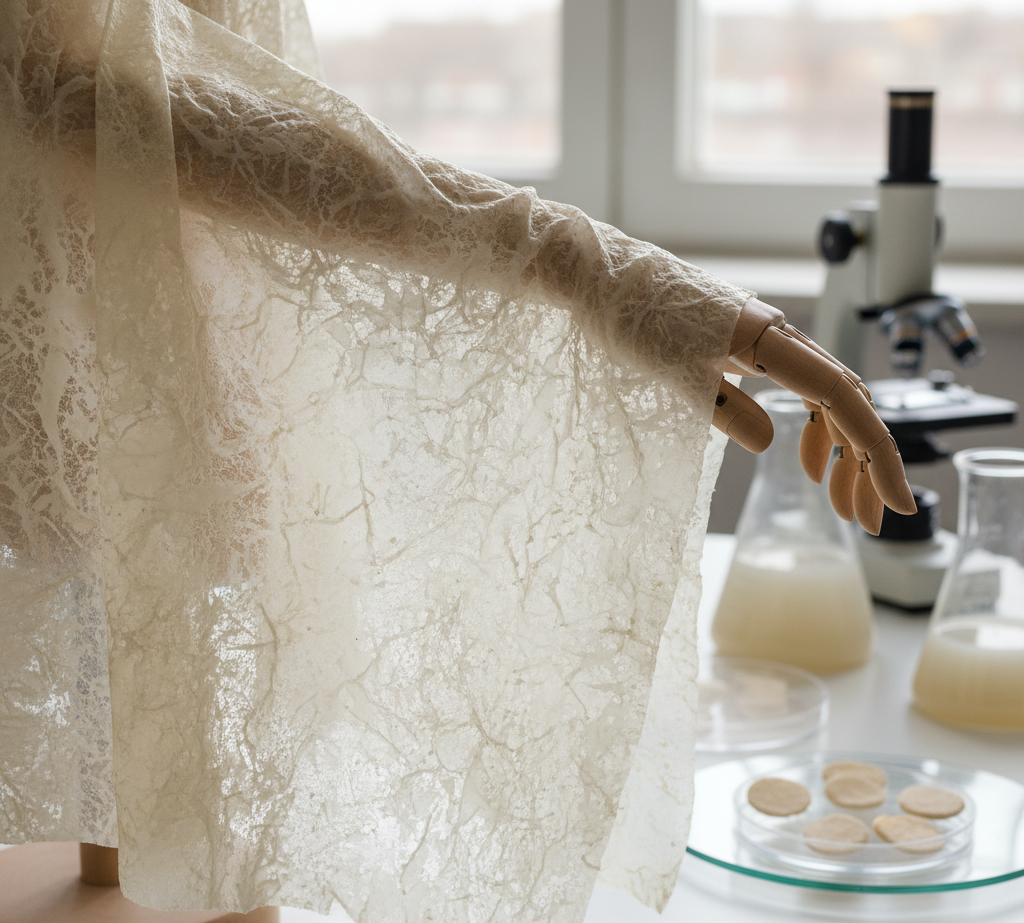
Microbial Cellulose (Bacterial Cellulose)

Cellulose produced by microorganisms (e.g., Acetobacter) during fermentation.

Microbial Cellulose (Bacterial Cellulose)

Features

  • Ultra‑pure cellulose (no lignin)
  • High strength‑to‑weight ratio
  • Smooth, leather‑like texture
  • Fully biodegradable

Textile Potential

  • Vegan leather alternatives
  • Medical and performance textiles
  • Transparent or coated fabrics

Limitations

  • Scale‑up challenges
  • Cost vs conventional cellulose
  • Moisture sensitivity without coating

Bio‑Cellulosic Fibres in Closed‑Loop Systems

Bio‑cellulosic fibres bridge nature and technology, offering a cleaner alternative to conventional viscose.


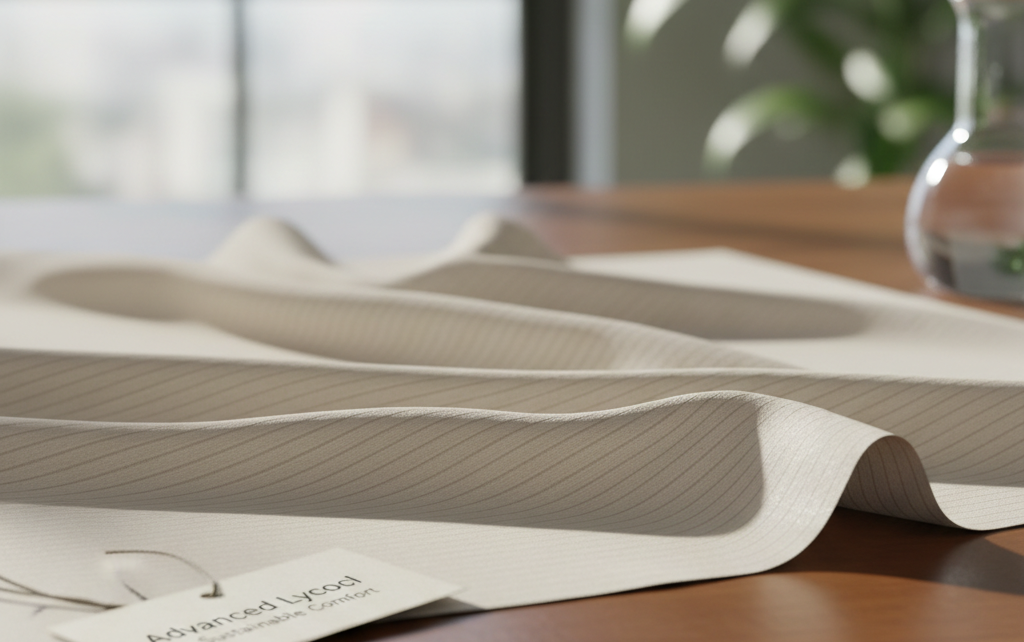
Advanced Lyocell (Next‑Gen Cellulosics)

Advanced Lyocell (Next‑Gen Cellulosics)

Source:
Wood pulp from sustainably managed forests.

Key Technology:

  • Uses non‑toxic solvent (NMMO)
  • Closed‑loop process recovers >99% of solvent

Benefits

✅ 80–90% less water than cotton
✅ No sulfuric acid or carbon disulfide
✅ Biodegradable
✅ Soft hand feel and high strength

Applications

  • Apparel (shirts, dresses, activewear)
  • Home textiles
  • Blends with cotton, wool or recycled fibers

Eco‑Viscose (Closed‑Loop Viscose)

Modern viscose has evolved through:

  • Certified forestry (FSC/PEFC)
  • Improved solvent recovery
  • Lower emissions

Limitations

Traditional viscose caused severe environmental damage.
Closed‑loop viscose demonstrates how legacy fibers can be redesigned sustainably.


Novel Biodegradable Materials


Banana Fibre

Source:
Banana plant pseudostems (agricultural waste).

Characteristics

  • Natural, biodegradable bast fiber
  • Strong and breathable
  • Low water footprint

Uses

  • Handloom fabrics
  • Home furnishings
  • Blended yarns for apparel

✅ Converts agricultural waste into value
✅ Supports rural economies


 Chitosan (From Shellfish or Mushrooms)

A biopolymer derived from chitin found in:

  • Shellfish waste
  • Fungi and mushrooms (vegan source)

Textile Functions

  • Natural antimicrobial finish
  • Odor control
  • Moisture management
  • Wound‑care textiles

Sustainability Advantage

✅ Biodegradable
✅ Replaces synthetic antimicrobial chemicals
✅ Adds functionality without toxicity


Lab‑Grown Leather (Cell‑Based Materials)

Process:

  • Cultivate collagen or protein structures in labs
  • Assemble into leather‑like sheets

Benefits

  • No animal slaughter
  • Reduced water and chemical use
  • Controlled thickness and quality

Current Challenges

  • High cost
  • Limited scale
  • Infrastructure dependency

Recycled & Regenerative Textile Technologies

Sustainability is not only about new materials, but also about reusing what is already there.

Chemical & Microwave‑Assisted Recycling

What Makes This Different from Mechanical Recycling?

  • Mechanical recycling degrades fiber quality
  • Chemical recycling breaks fibers into original monomers

Technologies Include

  • Solvolysis
  • Depolymerization
  • Microwave‑assisted separation

Capabilities

✅ Handles blended textiles (cotton/polyester)
✅ Produces virgin‑quality raw materials
✅ Enables true closed‑loop recycling

This is the foundation of a circular textile economy.


Regenerative Cotton

Regenerative agriculture is more than “less harm.” It’s about actively restoring ecosystems.

Key Practices

  • Crop rotation
  • Reduced tillage
  • Cover cropping
  • Soil carbon sequestration

Benefits

✅ Improved soil health
✅ Increased biodiversity
✅ Better water retention
✅ Lower carbon footprint

Regenerative cotton is good for the environment and for farmers.

Circular Design Models

Sustainable materials only succeed when combined with circular product design.

Core Principles

  • Design for durability
  • Design for recyclability
  • Mono‑material construction
  • Take‑back and resale systems

Lifecycle Focus

Raw Material → Production → Use → Collection → Recycling → New Product

Challenges Facing Bio‑Based & Sustainable Materials

Despite promise, several barriers remain:

❌ High production cost
❌ Limited global scale
❌ Infrastructure gaps
❌ Performance trade‑offs
❌ Certification and standardization gaps

The transition requires system‑wide collaboration, not isolated innovation.

Future Outlook

The future of textiles is moving toward:

  • Material diversification
  • Biology‑driven manufacturing
  • Closed‑loop systems
  • Regenerative supply chains

What was once “eco‑fashion” is becoming mainstream industrial strategy.


Comment 
Comments 0

Be the first to comment!

Leave a Comment