The textile and garment industry is one of the largest manufacturing sectors in the world. It produces the clothes we wear, the fabrics used in our homes and countless products that move through global supply chains every day. The industry also provides employment to millions of people and plays an important role in international trade.
There is, however, another side to this enormous industry: its carbon footprint.
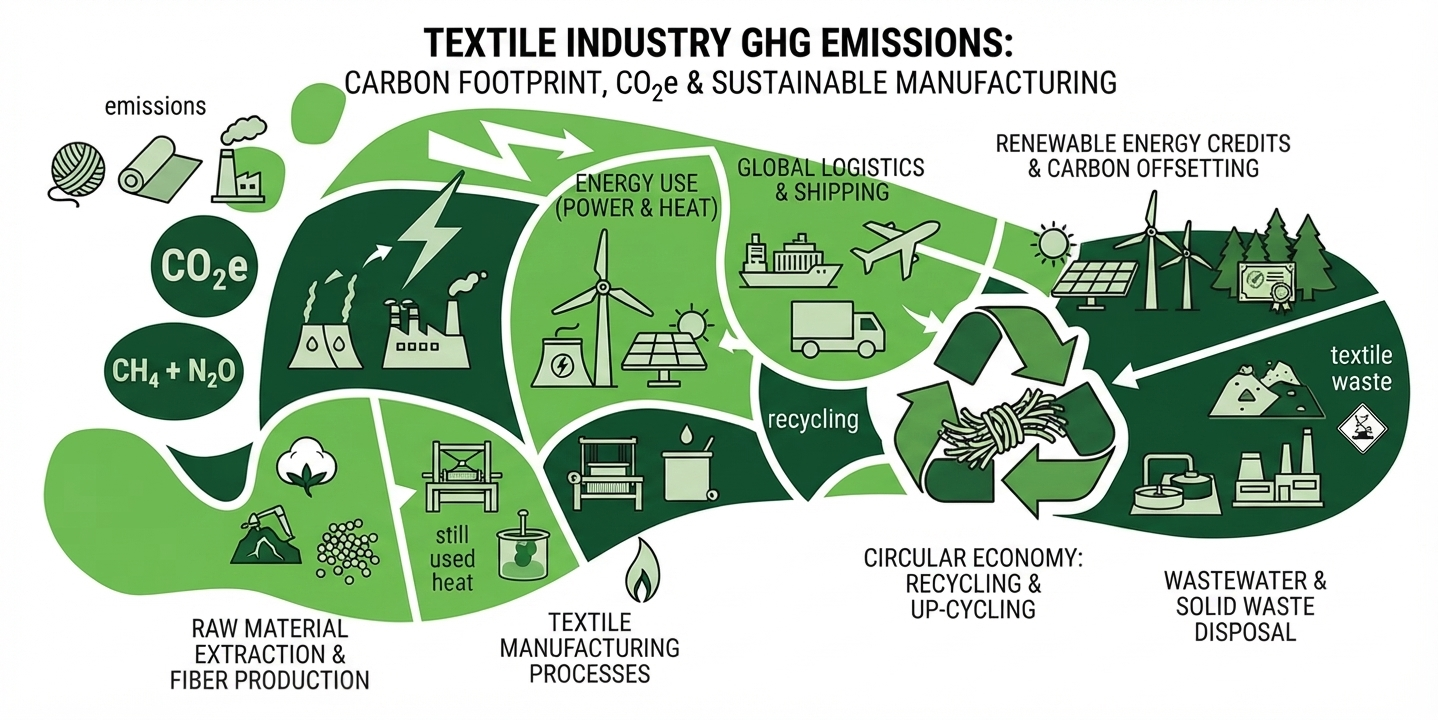
A garment may look simple when it reaches a shop, but producing it can involve many energy-intensive steps. Fiber has to be produced, yarn spun, fabric knitted or woven and then the material may go through bleaching, dyeing, washing and finishing. After that come cutting, sewing, pressing, packaging and transportation. Almost every stage requires energy and much of that energy is still produced using fossil fuels.
This is why carbon reduction has become an increasingly important issue for textile manufacturers. Global brands, governments, investors and consumers are paying closer attention to how products are made. Brands are also asking their suppliers to measure emissions, improve energy efficiency and demonstrate measurable progress.
For manufacturers, carbon management is therefore becoming more than an environmental exercise. It is increasingly connected with production cost, buyer requirements, regulatory compliance and long-term business competitiveness.
Where the Emissions Come From
Carbon emissions in textile production come from several different sources.
Some are generated directly inside the factory. These include fuel burned in boilers, diesel used in generators and fuel used by company-owned vehicles. Other emissions are indirect, such as those associated with electricity purchased from the grid.
There is also a much larger part of the picture: the supply chain. Producing raw materials, manufacturing fibers, transporting materials, shipping finished products and dealing with textile waste can all contribute to a company's overall carbon footprint.
The main sources can be summarized as follows:
| Stage | Main Activities | Major Emission Sources | Relative Impact |
|---|---|---|---|
| Fiber production | Cotton farming, polyester production | Fertilizer, energy, petrochemicals | Very high |
| Spinning | Yarn manufacturing | Electricity | Medium |
| Weaving & knitting | Fabric manufacturing | Electricity | Medium |
| Dyeing & finishing | Washing, bleaching, dyeing | Steam, boilers, chemicals | Very high |
| Garment manufacturing | Cutting, sewing, ironing | Electricity, compressed air | Medium |
| Packaging | Cartons, plastics, labels | Material production | Low–medium |
| Transportation | Road, sea and air freight | Fossil fuels | Medium–high |
| Waste management | Landfill, incineration | Methane, CO₂ | Medium |
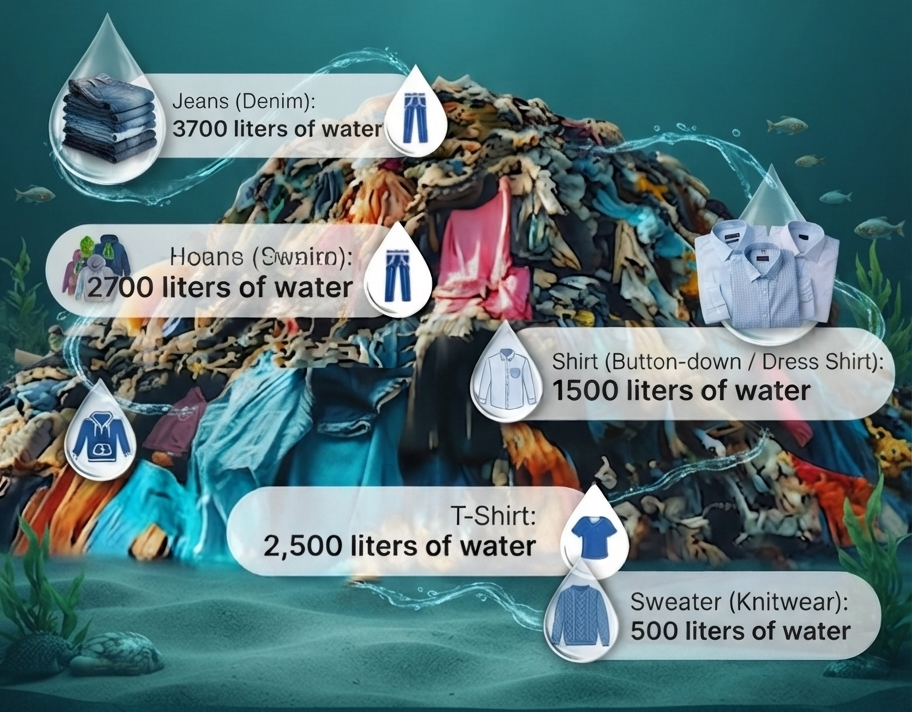
Among factory operations, wet processing often deserves particular attention. Dyeing, washing, bleaching and finishing can require large quantities of hot water and steam, which means substantial energy consumption.
Transportation can also become significant, especially when goods are moved by air or transported over long distances through complex supply chains.
Why Carbon Reduction Has Become a Business Issue
Reducing emissions and reducing operating costs often go together.
A factory that consumes less electricity and fuel normally spends less money on energy. Improving boiler efficiency reduces both fuel consumption and emissions. Recovering heat from wastewater can lower the amount of energy needed to heat fresh water. Fixing compressed-air leaks can reduce electricity consumption without changing the production process itself.
There is another important factor: buyers.
International apparel brands increasingly ask suppliers to provide environmental data and demonstrate progress against sustainability targets. A factory that can provide reliable information about its energy use, emissions and improvement projects is generally in a stronger position when dealing with international customers.
Environmental regulations are also becoming stricter in many manufacturing regions. Starting the transition early can therefore be much easier than trying to make major changes after regulations or customer requirements have already tightened.
Start With Energy Efficiency
Not every carbon-reduction project requires expensive new machinery.
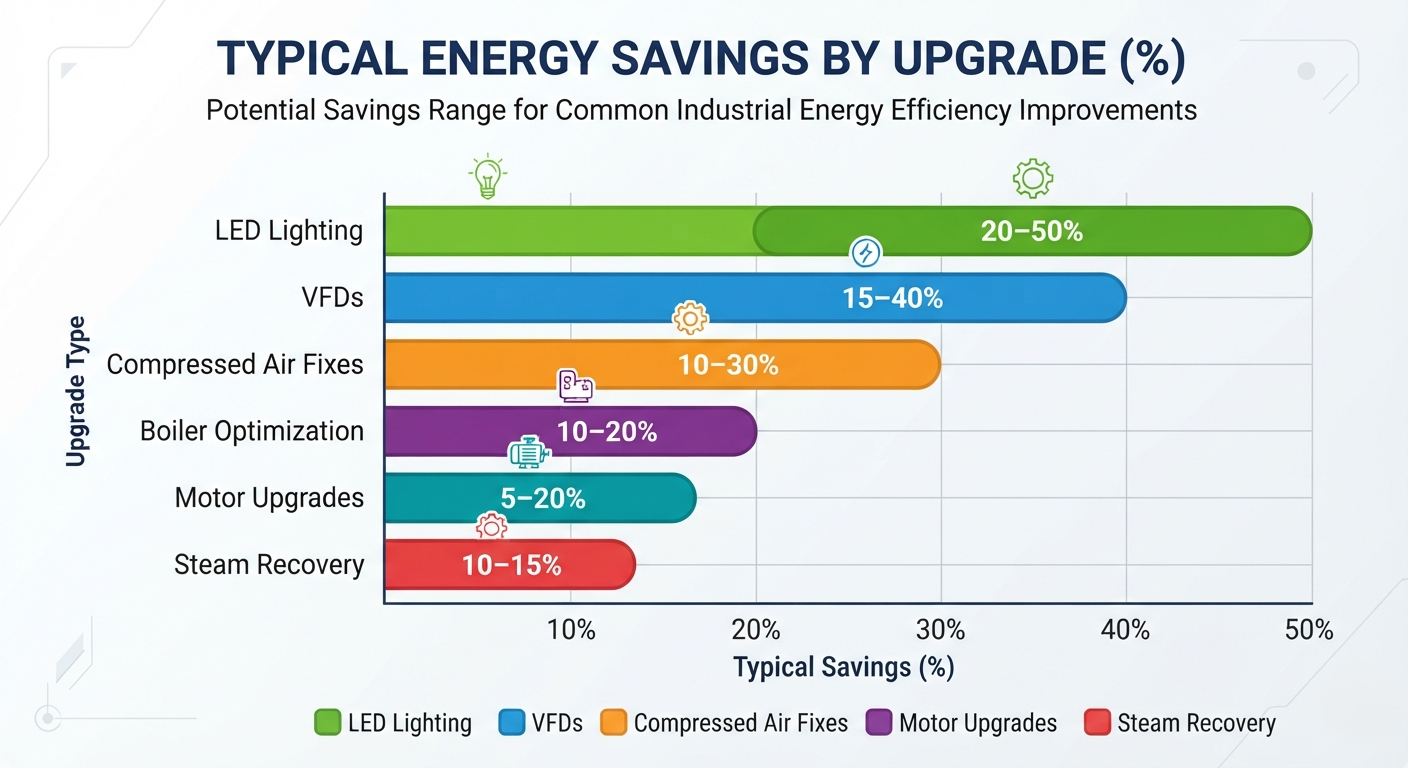
In many factories, some of the easiest opportunities are already sitting inside the existing operation. An energy audit can reveal machines that consume more electricity than expected, poorly insulated steam lines, inefficient motors or compressed-air leaks.
Common measures include:
- Conducting regular energy audits
- Replacing inefficient motors
- Installing variable frequency drives (VFDs)
- Repairing compressed-air leaks
- Improving boiler efficiency
- Insulating steam and hot-water lines
- Switching to LED lighting
- Monitoring energy consumption by department
- Introducing digital energy-management systems
The important point is to measure before investing. Without reliable consumption data, it is difficult to know where the largest losses are occurring.
Switching to Renewable Energy
Energy efficiency reduces the amount of energy a factory needs. Renewable energy changes where that energy comes from.
Solar power is particularly attractive for textile factories because many facilities have large roof areas that can accommodate photovoltaic panels. Depending on the location and electricity structure, rooftop solar can reduce dependence on grid electricity and help control long-term energy costs.
Some factories also use biomass boilers, particularly in regions where agricultural residues are readily available. However, biomass is not automatically low-carbon. Its environmental benefit depends on the source, transportation distance and how sustainably the fuel is produced and managed.
Another option is purchasing renewable electricity through suitable power-purchase arrangements or other renewable-energy mechanisms. This can help reduce emissions associated with purchased electricity, commonly reported as Scope 2 emissions.
Material Selection Also Matters
The material used to make a garment can have a substantial influence on its overall environmental footprint. Polyester, for example, is made from fossil-based feedstocks, while cotton has impacts associated with farming, fertilizer, land and water use.
For this reason, brands and manufacturers are increasingly exploring recycled and lower-impact alternatives.
| Conventional | Alternative |
|---|---|
| Virgin polyester | Recycled polyester (rPET) |
| Conventional cotton | Organic cotton |
| Virgin nylon | Recycled nylon |
| Synthetic fibers | Bio-based fibers |
Material substitution should not be treated as a simple "good versus bad" comparison. Every material has its own environmental trade-offs and the appropriate choice depends on factors such as durability, recyclability, production method, sourcing and the intended use of the product.
Water, Chemicals and Carbon Are Connected
Water management is closely tied to energy consumption in textile processing.
Dyeing and finishing operations often require water to be heated, pumped, circulated and treated. Therefore, reducing water consumption can also reduce energy use.
Several measures can help:
- Low-liquor-ratio dyeing
- Counter-current washing
- Heat recovery
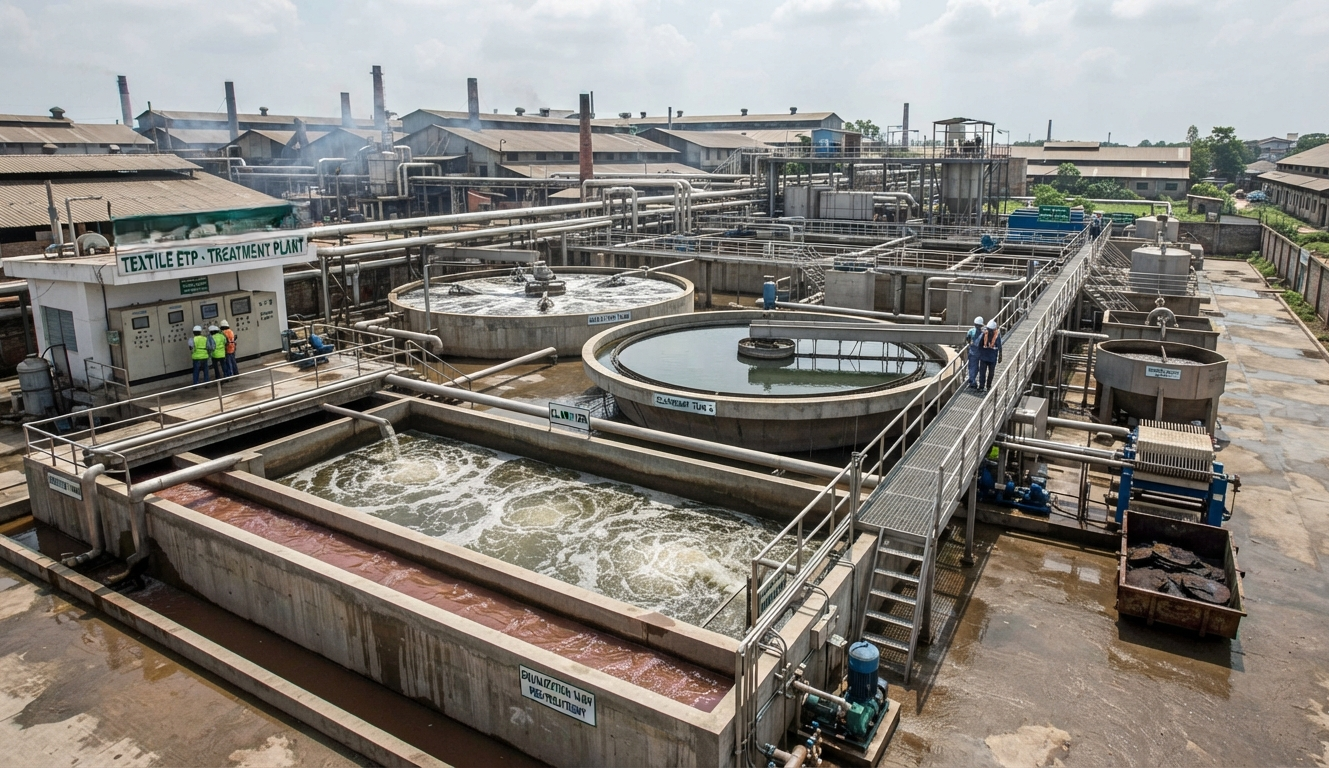
- Wastewater recycling
- Accurate chemical dosing
- Digital printing
- Better process control
- Reuse of hot process water
For example, if a factory reduces the amount of hot water used during washing, it may need less steam to heat that water. That means lower fuel consumption and, consequently, lower emissions.
This is one reason water and carbon strategies should not be managed completely separately.
Moving Toward a Circular Textile System
Traditional manufacturing follows a fairly simple pattern:
Take → Make → Use → Dispose
Circular manufacturing tries to keep materials in use for much longer:
Reduce → Reuse → Recycle → Recover
In textile production, this can mean reducing cutting waste, reusing fabric scraps, designing garments for longer life, repairing products and recycling old textiles into new fibers.
The benefit is not limited to waste reduction. If recycled material replaces virgin material, the demand for new raw materials can also fall.
Circularity therefore has the potential to reduce both waste and the emissions associated with producing new materials.
Logistics and Manufacturing Technology
A garment can travel through several countries before it reaches the final customer. Fiber may be produced in one country, yarn spun in another, fabric dyed somewhere else and the finished garment shipped to another market.
Transportation decisions therefore matter.
Manufacturers and brands can reduce logistics emissions by:
- Consolidating shipments
- Improving transport planning
- Using sea freight instead of air freight where practical
- Optimizing warehouse locations
- Improving vehicle efficiency
- Moving toward electric transportation where infrastructure allows
Technology is also changing the factory floor.
IoT sensors can monitor electricity and fuel consumption in real time. Automated systems can identify unusual consumption patterns. Predictive maintenance can help detect equipment problems before they become major efficiency losses. More advanced factories are also experimenting with AI-based systems to optimize production parameters and energy consumption.
The technology itself is not the solution. The real value comes from using the information to make better production decisions.
Measuring Carbon Emissions
One of the basic rules of carbon management is simple:
You cannot effectively manage what you do not measure.
The Greenhouse Gas (GHG) Protocol is widely used for corporate emissions accounting. It divides emissions into three main categories.
| Scope | What It Covers | Textile Example |
| Scope 1 | Direct emissions | Boilers, generators, company vehicles |
| Scope 2 | Purchased energy | Factory electricity |
| Scope 3 | Value-chain emissions | Raw materials, manufacturing, logistics and waste |
For textile and apparel companies, Scope 3 can be particularly important because a large portion of the industry's emissions occurs outside the company's own buildings.
A practical carbon-management program normally involves:
- Defining the organizational and operational boundaries
- Collecting reliable activity data
- Calculating emissions
- Identifying the largest emission sources
- Setting reduction targets
- Implementing improvement projects
- Monitoring progress
- Reporting results
What Does GHG Emissions in Tonnes CO₂e Mean?
When a company reports its emissions in tonnes of CO₂e, it is expressing different greenhouse gases in a common unit.
Carbon dioxide is not the only greenhouse gas. Methane and nitrous oxide, for example, have much stronger warming effects per tonne than CO₂. CO₂e allows these different gases to be combined into one comparable measurement using their global warming potentials.
For example:
- 1 tonne of CO₂ = 1 tonne CO₂e
- 1 tonne of CH₄ has a much higher CO₂e value
- 1 tonne of N₂O has an even higher CO₂e value
| Greenhouse Gas | Abbreviation | Global Warming Impact* |
|---|---|---|
| Carbon Dioxide | CO₂ | 1 |
| Methane | CH₄ | ~28 times higher than CO₂ |
| Nitrous Oxide | N₂O | ~265 times higher than CO₂ |
*Measured over a 100-year period.
The exact conversion factors depend on the applicable assessment standard and reporting methodology.The basic calculation can be expressed as:
CO₂e = Amount of greenhouse gas × Global Warming Potential (GWP)
For example, using a GWP factor of 28 for methane:
10 tonnes CH₄ × 28 = 280 tonnes CO₂e
The purpose of CO₂e is to make different greenhouse gases easier to compare and report within one carbon inventory.
Understanding Apparel Brand Emissions
Large apparel companies often report their greenhouse gas emissions in tonnes of CO₂e. These figures may include emissions from their own operations as well as their wider value chains.
The three-scope structure looks like this:
| Scope | Description | Example |
| Scope 1 | Direct emissions | Company boilers and vehicles |
| Scope 2 | Purchased electricity and energy | Electricity used in offices and facilities |
| Scope 3 | Other value-chain emissions | Materials, suppliers, logistics and product end-of-life |
For fashion companies, Scope 3 is often the most difficult part of the carbon footprint because it involves thousands of suppliers, raw-material producers and logistics partners.
This is why a brand can have relatively small direct emissions while still having a very large overall footprint.
Example of a Garment Factory Carbon Footprint
Consider a factory with the following annual emissions:
| Source | Emissions |
| Diesel generator | 500 tCO₂e |
| Purchased electricity | 2,000 tCO₂e |
| Raw materials and transportation | 3,500 tCO₂e |
| Total | 6,000 tCO₂e |
The factory's reported annual carbon footprint would therefore be:
6,000 tonnes CO₂e
This type of calculation also helps management identify where the biggest reduction opportunities are. If raw materials and transportation account for the largest share, improving boiler efficiency alone will not solve the problem.
Why Are Apparel Emissions So High?
The largest part of the fashion industry's carbon footprint is generally associated with activities outside a brand's offices and retail stores.
Important sources include:
- Raw-material production
- Fiber manufacturing
- Spinning and fabric production
- Dyeing and finishing
- Garment manufacturing
- Transportation
- Packaging
- Product disposal
A simplified industry-level breakdown may look like this:
| Emission Source | Approximate Share |
| Raw-material production | 30–40% |
| Textile manufacturing | 20–30% |
| Garment manufacturing | 10–20% |
| Transportation and logistics | 5–10% |
| Retail operations | Less than 5% |
| Product end-of-life | 5–10% |
These percentages should be treated as indicative rather than universal. The actual distribution varies considerably depending on the product, material mix, manufacturing locations, electricity sources and calculation methodology.
How Leading Global Brands Are Working to Cut Carbon Emissions
Large fashion companies are increasingly working with suppliers because much of their environmental footprint sits within the supply chain.
The approaches vary from company to company, but common themes include renewable electricity, energy efficiency, lower-impact materials, supplier engagement, circularity and improved emissions reporting.
targets. Suppliers who keep pace with these efforts tend to land longer-term partnerships and stronger relationships with the brands they work with.
H&M Group
H&M Group has been working with suppliers and other partners on energy efficiency, renewable electricity, materials and circularity.
Its approach includes areas such as
Renewable electricity
- More recycled materials
- Responsible fiber sourcing
- Energy-efficiency projects
- Circular business models
- Supplier engagement
For manufacturers supplying major brands, this direction is important because environmental performance is increasingly becoming part of supplier evaluation.
H&M Group GHG Emissions Trend
| Year | Total Emissions (tCO₂e) |
|---|---|
| 2019 (Baseline) | ~8.1 Million |
| 2022 | ~6.9 Million |
| 2024 | ~5.7 Million |
| 2025 | Further reduction in value-chain emissions reported |
H&M Group Climate Targets
| Target Area | Goal | Target Year |
|---|---|---|
| Scope 1 & Scope 2 Emissions | 56% Reduction | 2030 |
| Scope 3 Emissions | 56% Reduction | 2030 |
| Total Value Chain Emissions | 90% Reduction | 2040 |
| Net-Zero Emissions | Achieve Net Zero | 2040 |
Inditex (Zara)
Inditex, the parent company of Zara, has also focused on reducing the environmental impact of its operations and supply chain.
Areas of attention include
:
- Renewable electricity
- Recycled and preferred materials
- Energy efficiency
- Logistics optimization
- Circular textile systems
- Supplier environmental performance
The company's scale means that changes in its supply chain can influence a large number of textile and garment manufacturers.
Inditex (Zara) GHG Emissions Trend
| Year | Total Emissions (tCO₂e) |
|---|---|
| 2023 | ~13.5 Million |
| 2024 | ~13 Million |
| 2025 | ~12.7 Million |
Key Targets
| Target | Goal |
|---|---|
| Renewable Electricity | 100% in owned operations |
| Supply Chain Decarbonization | Continuous reduction |
| Net Zero | 2040-2050 pathway |
| Sustainable Fibers | Significant increase by 2030 |
Nike
Nike's climate work is closely associated with its broader Move to Zero initiative.
Its efforts include: 
- Greater use of renewable energy
- Recycled materials
- Manufacturing efficiency
- Waste reduction
- Supply-chain engagement
- Logistics improvements
Nike's approach demonstrates why supplier performance is important. Much of the environmental impact associated with a global sportswear company occurs during the production of materials and products rather than inside corporate offices
Nike GHG Emissions Trend
| Year | Total Emissions (tCO₂e) |
|---|---|
| 2020 | ~10.0 Million |
| 2022 | ~9.8 Million |
| 2023 | ~9.5 Million |
| 2024 | ~8.5 Million |
Nike Climate Targets
| Target Area | Goal |
|---|---|
| Scope 1 & Scope 2 Emissions | Significant reduction through renewable energy |
| Scope 3 Emissions | Continuous reduction across supply chain |
| Renewable Electricity | Expanded adoption globally |
| Net-Zero Emissions | 2050 |
Adidas
Adidas has also been working on emissions reduction through renewable energy, material changes, manufacturing improvements and supplier engagement.
Important areas include:

- Recycled polyester
- Lower-impact materials
- Renewable electricity
- More efficient manufacturing
- Sustainable packaging
- Supplier environmental programs
The increasing use of recycled materials is particularly relevant because material production can make up a substantial part of a garment's overall footprint
Adidas GHG Emissions Trend
| Year | Total Emissions (tCO₂e) |
|---|---|
| 2022 (Baseline) | ~6.74 Million |
| 2024 | ~5.38 Million |
| 2025 | ~5.38 Million |
Key Target
| Target | Goal |
|---|---|
| Scope 1 & 2 | 70% reduction by 2030 |
| Scope 3 | 42% reduction by 2030 |
| Net Zero | 2050 |
Levi Strauss & Co.
Levi Strauss has placed considerable attention on reducing the environmental impact of denim production.
Its work includes:

- Water-saving finishing
- More responsible cotton sourcing
- Renewable energy
- Supplier engagement
- Energy efficiency
- Climate targets
At the factory level, improvements such as better steam management, efficient boilers and heat recovery can help suppliers reduce both energy costs and emissions.
Levi Strauss & Co. GHG Emissions Trend
| Year | Total Emissions (tCO₂e) |
|---|---|
| 2021 | ~4 Million |
| 2022 | ~3.8 Million |
| 2023 | ~3.7 Million |
Key Targets
| Target | Goal |
|---|---|
| Scope 1 & 2 Reduction | 90%+ by 2050 |
| Scope 3 Reduction | Significant value chain reduction |
| Renewable Energy | Expanded adoption |
| Net Zero | 2050 |
Patagonia
Patagonia has built much of its environmental approach around durability, repair, reuse and responsible material sourcing.
Its approach includes:

- Recycled materials
- Product repair
- Longer product life
- Circular business practices
- Renewable energy
- Responsible sourcing
The longer a product remains useful, the longer the need for producing a replacement can be delayed. That is an important part of the circular-economy approach.
Patagonia GHG Emissions Trend
| Year | Total Emissions (tCO₂e) |
|---|---|
| 2021 | ~0.23 Million |
| 2022 | ~0.22 Million |
| 2023 | ~0.2 Million |
Key Targets
| Target | Goal |
|---|---|
| Renewable Energy | Expanded global use |
| Circular Products | Industry-leading adoption |
| Supply Chain Decarbonization | Continuous improvement |
| Net Zero | Long-term commitment |
Uniqlo (Fast Retailing)
Fast Retailing, the parent company of Uniqlo, has been working on environmental improvements across its operations and supply chain.
Areas include:
- Renewable energy
- Material sourcing
- Supply-chain emissions management
- Packaging reduction
- Factory environmental assessments
- Resource efficiency
Supplier performance is becoming increasingly important as brands attempt to reduce emissions beyond their own direct operations.
Fast Retailing (Uniqlo) GHG Emissions Trend
| Year | Total Emissions (tCO₂e) |
|---|---|
| 2022 | ~6 Million |
| 2023 | ~5.8 Million |
| 2024 | ~5.5 Million |
Key Targets
| Target | Goal |
|---|---|
| Scope 1 & 2 Reduction | 90% by 2030 |
| Scope 3 Reduction | 20%+ by 2030 |
| Renewable Electricity | Significant increase |
| Net Zero | 2050 |
PVH Corp. (Calvin Klein & Tommy Hilfiger)
PVH, whose brands include Calvin Klein and Tommy Hilfiger, also incorporates climate and environmental performance into its broader sustainability work.
Its focus includes: 
- Renewable electricity
- Supplier climate programs
- Material sourcing
- Resource efficiency
- Carbon reporting
- Environmental collaboration with suppliers
For suppliers, the message is increasingly clear: carbon performance is becoming part of normal business reporting rather than something handled only by a sustainability
PVH Corp. GHG Emissions Trend
| Year | Total Emissions (tCO₂e) |
|---|---|
| 2021 | ~2.6 Million |
| 2022 | ~2.4 Million |
| 2023 | ~2.3 Million |
Key Targets
| Target | Goal |
|---|---|
| Scope 1 & 2 Reduction | 50%+ by 2030 |
| Scope 3 Reduction | Significant supply chain reduction |
| Renewable Energy | Accelerated adoption |
| Net Zero | 2050 |
Textile Exchange and Industry-Wide Action
Individual brands are not the only organizations pushing the industry toward lower emissions.
Textile Exchange's climate initiatives focus strongly on raw materials and fiber production. This is important because the environmental impact of a garment begins long before fabric enters a dyeing or garment factory.
Areas of focus include:
- More responsible fibers
- Recycled materials
- Regenerative agriculture
- Lower-carbon raw materials
- Circular systems
- Innovation in material production
The broader lesson is that decarbonization cannot be solved only at the garment-factory level. It has to extend from raw materials through manufacturing, distribution, use and end-of-life.
A Practical Roadmap for Textile Manufacturers
For a textile mill or garment factory, the transition does not have to happen all at once.
A practical starting point could look like this:
Step 1: Establish a Baseline
Measure electricity, gas, coal, diesel, steam and other major energy inputs.
Step 2: Find the Biggest Energy Users
Compare departments and processes. Dyeing, finishing, boilers, compressors and utilities are often worth examining closely.
Step 3: Fix Basic Inefficiencies
Repair leaks, improve insulation, maintain boilers and optimize equipment before investing in expensive technology.
Step 4: Set Measurable Targets
Instead of saying "reduce energy," establish a measurable target such as reducing energy consumption per kilogram of fabric.
Step 5: Introduce Renewable Energy
Assess rooftop solar, renewable electricity procurement and other suitable options.
Step 6: Improve Process Efficiency
Look at low-liquor-ratio dyeing, heat recovery, water reuse, efficient motors and automated process control.
Step 7: Work With Suppliers
Carbon reduction cannot stop at the factory gate. Raw materials and logistics can represent a major portion of the overall footprint.
Step 8: Monitor the Results
Use meters, digital dashboards and regular reporting to determine whether projects are actually delivering the expected savings.
Useful Carbon and Energy KPIs
Factories can track a relatively small number of indicators to understand whether they are moving in the right direction.
| KPI | What It Measures |
| Total energy consumption | Overall energy use |
| Energy intensity | Energy per kg of fabric or garment |
| Total GHG emissions | Overall carbon footprint |
| tCO₂e per kg fabric | Carbon intensity of production |
| Renewable energy share | Percentage of energy from renewable sources |
| Fuel consumption | Boiler and generator fuel use |
| Electricity consumption | Purchased electricity |
| Water consumption | Freshwater use |
| Recycled water rate | Percentage of water reused |
These measurements become much more useful when tracked consistently over several years.
The Road Ahead
The textile and garment industry faces a difficult challenge because its supply chain is enormous and spread across many countries. Reducing emissions therefore requires cooperation between brands, mills, garment factories, material suppliers, logistics companies and governments.
The good news is that many of the measures that reduce carbon emissions also improve factory efficiency.
A more efficient boiler uses less fuel. A better dyeing process can reduce both water and energy. Heat recovery lowers fuel demand. Renewable electricity reduces dependence on fossil-based power. Better material utilization reduces waste and the need for additional raw materials.
This makes decarbonization more than an environmental project. Done properly, it can become part of a manufacturer's overall productivity and cost-reduction strategy.
The industry is moving toward a model where energy performance, carbon data, renewable power, responsible materials and circular production are becoming normal parts of textile manufacturing.
For factories supplying global brands, the question is no longer simply whether carbon reduction will matter. The more important question is how quickly each manufacturer can measure its footprint, identify the biggest opportunities and turn those opportunities into measurable improvements.