If you have ever walked past a textile factory, you may have noticed the water leaving the plant looks very different from the water that entered it. Depending on the process, it can be strongly colored, cloudy, foamy, or even have a noticeable smell.
There is a simple reason for this.
Textile manufacturing consumes a huge amount of water. During dyeing, washing, bleaching, printing, finishing and other wet-processing operations, that water picks up dyes, salts, chemicals, oils, fibers and other contaminants.
That wastewater cannot simply be released into a river, drain or other water source.
It first needs to be treated.
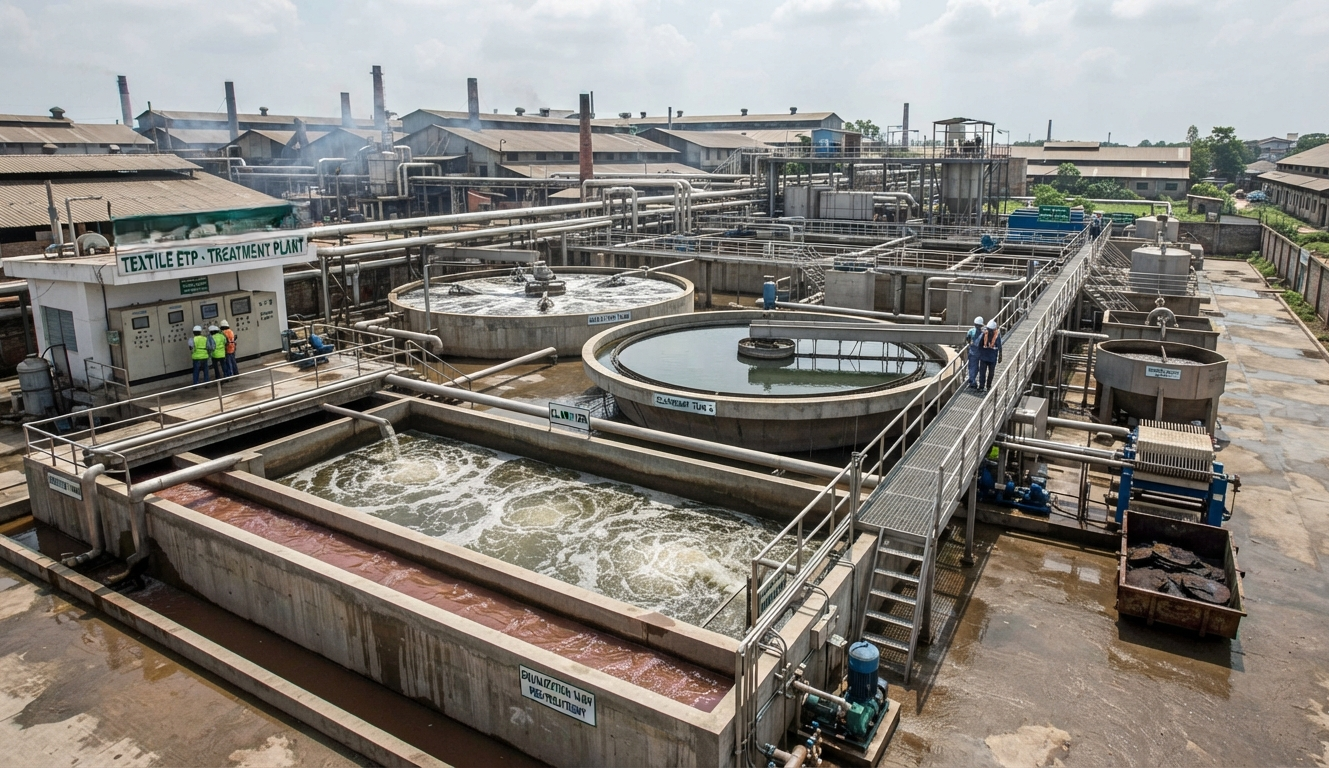
This is where an Effluent Treatment Plant (ETP) comes in.
An ETP is designed to remove pollutants from industrial wastewater so that the treated water can either be safely discharged or, with additional treatment, reused inside the factory.
In this guide, we will look at textile ETPs from the ground up. We will cover what an ETP is, why textile factories need one, the different types of treatment systems, the major chemicals used in treatment, the pollutants found in textile wastewater, the equipment involved and the complete treatment process from wastewater collection to final discharge or reuse.
What Is a Textile ETP?
ETP stands for Effluent Treatment Plant.
It is a treatment facility designed to clean industrial wastewater before it is discharged into the environment or reused.
In textile manufacturing, the wastewater is commonly referred to as textile effluent. It can come from almost every wet-processing operation, including:
Dyeing
Printing
Bleaching
Washing
Scouring
Desizing
Mercerizing
Finishing
One simple way to understand an ETP is to think of it as a treatment system with several departments.
The wastewater first enters the plant in a highly variable condition. It may contain color, suspended solids, salts, organic matter, oil, chemicals and other pollutants. Instead of trying to remove everything at once, the ETP treats the water step by step.
Each treatment stage has a specific purpose.
For example, screening removes large physical materials, chemical treatment removes color and suspended particles, biological treatment reduces organic pollution, and tertiary treatment can further reduce dissolved contaminants when higher-quality water is required.
What Can Textile Effluent Contain?
Depending on the manufacturing process, textile wastewater may contain:
Strong colors from unfixed dyes
High concentrations of dissolved salts
Acids and alkalis
Starch and sizing chemicals
Waxes and oils
Fibers and lint
Suspended solids
Organic matter
Detergents and surfactants
Finishing chemicals
High BOD and COD
Because the composition can change considerably from one process to another, textile wastewater is generally more complicated to treat than many types of domestic wastewater.
That is why textile ETPs normally combine physical, chemical and biological treatment, with advanced treatment added when necessary.
Textile ETP at a Glance
| Item | Description |
|---|---|
| Full Name | Effluent Treatment Plant (ETP) |
| Main Purpose | Treat textile wastewater before discharge or reuse |
| Common Applications | Dyeing, washing, printing, finishing and wet processing |
| Major Pollutants | Dyes, salts, acids, alkalis, oils and suspended solids |
| Main Treatment Methods | Physical, chemical, biological and advanced treatment |
| Final Objective | Meet applicable environmental requirements and protect water resources |
Why Does the Textile Industry Need ETPs?
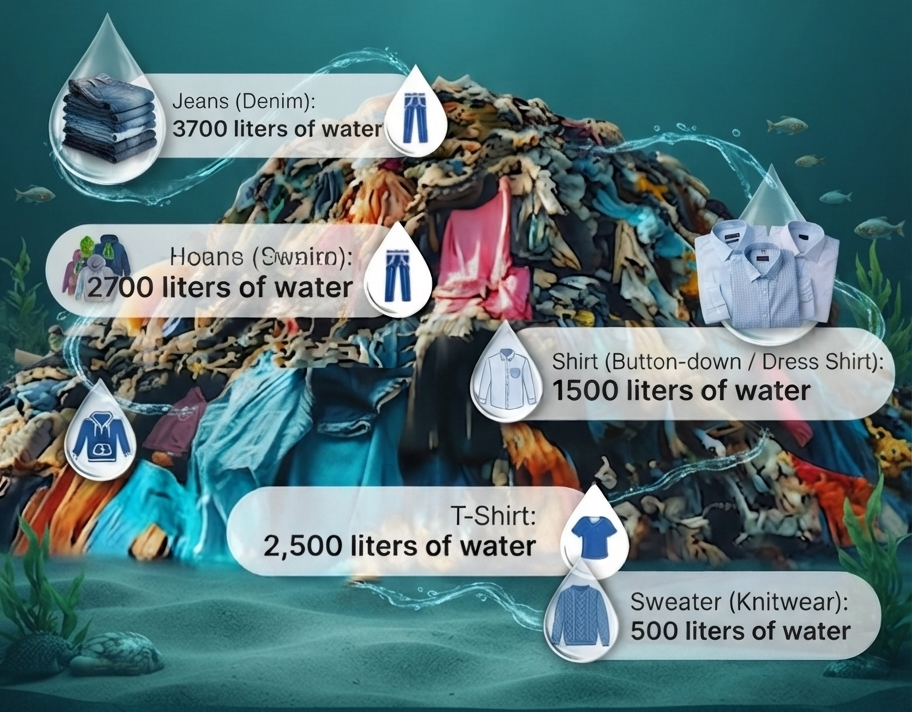
Textile production is one of the industries with a particularly high demand for water.
Depending on the type of fabric and processing route, producing one kilogram of textile material can require a significant quantity of water. Much of that water eventually leaves the factory as wastewater containing pollutants picked up during processing.
If untreated effluent is discharged into rivers, lakes, agricultural land or drainage systems, the consequences can be serious.
Some of the major problems include:
Color pollution:
Dyes can reduce the amount of sunlight entering water and interfere with aquatic ecosystems.
Toxic substances:
Certain chemicals and heavy metals can be harmful to fish and other aquatic organisms.
High salt concentration:
Large amounts of dissolved salts can affect soil quality and make agricultural land less suitable for cultivation.
High organic load:
Wastewater with high BOD and COD can consume oxygen in receiving water bodies. When dissolved oxygen falls too low, aquatic organisms can suffer or die.
Odor and visual pollution:
Strongly colored or foul-smelling wastewater can create problems for communities living near industrial areas.
For these reasons, environmental authorities in major textile-producing countries require industrial wastewater to be treated before discharge.
Depending on the location and industrial setup, a textile factory may operate its own ETP or send wastewater to a Common Effluent Treatment Plant (CETP).
Types of Textile ETP
There is more than one way to classify ETP systems.
They can be grouped according to ownership, treatment stage and treatment technology.
1. Based on Ownership and Scale
Individual ETP or Captive ETP
An individual ETP is built specifically for one factory.
Large textile factories that generate substantial volumes of wastewater often prefer captive ETPs because the factory has direct control over:
Treatment operation
Chemical dosing
Operating schedule
Maintenance
Monitoring
Treatment cost
The system can also be designed around the factory's particular production processes.
Common Effluent Treatment Plant (CETP)
A CETP is a shared treatment facility used by multiple industrial units.
This arrangement is particularly useful for small and medium-sized textile factories located within industrial clusters.
Instead of every factory investing in a complete treatment plant, wastewater from several units is collected through a common network and sent to a centralized facility.
The shared approach can reduce the treatment cost for individual factories while making wastewater treatment practical for smaller units.
2. Based on Treatment Stage
Another useful way to understand ETPs is by looking at what happens to the wastewater during each treatment level.
Primary Treatment
Primary treatment focuses mainly on physical and chemical removal.
Large solids are removed first, while processes such as coagulation and clarification can be used to remove suspended particles, turbidity and some color.
Typical equipment includes:
Screens
Collection tanks
Equalization tanks
Coagulation tanks
Flocculation tanks
Clarifiers
Secondary Treatment
Secondary treatment is mainly associated with biological treatment.
Microorganisms are used to break down biodegradable organic matter in the wastewater.
This stage is particularly important for reducing BOD and COD.
Common systems include:
Activated Sludge Process (ASP)
Aeration tanks
MBBR systems
Biological clarifiers
Tertiary Treatment
Tertiary treatment is essentially the polishing stage.
After primary and biological treatment, the water may still contain color, dissolved salts, fine particles or trace organic compounds.
Depending on the required water quality, tertiary treatment may include:
Pressure sand filtration
Activated carbon filtration
Ozonation
Advanced oxidation
Reverse osmosis
Not every textile ETP requires every tertiary process. The actual configuration depends on wastewater characteristics, discharge requirements and whether the water is intended for reuse.
3. Based on Treatment Method
Physical Treatment
Physical treatment uses mechanical processes to remove solids and other materials that can be separated without a chemical reaction.
Examples include:
Screening
Sedimentation
Filtration
Chemical Treatment
Chemical treatment involves adding chemicals to change the properties of pollutants or make them easier to separate.
It can be used for:
pH adjustment
Coagulation
Flocculation
Color removal
Oxidation
Disinfection
Biological Treatment
Biological treatment uses microorganisms to break down biodegradable organic matter.
The microorganisms consume organic pollutants and convert them into simpler products such as carbon dioxide, water and additional biological solids.
Modern Textile ETPs
In practice, textile ETPs generally combine several treatment methods.
A single process is rarely enough because textile wastewater contains many different types of contaminants.
ETP Treatment Systems at a Glance
| Treatment Type | Main Purpose | Typical Equipment |
|---|---|---|
| Physical | Remove large particles and solids | Screens, sedimentation tanks |
| Chemical | Remove color and suspended/dissolved pollutants | Coagulation and flocculation systems |
| Biological | Reduce organic contaminants | Aeration tank, MBBR, ASP |
| Tertiary | Produce higher-quality treated water | PSF, ACF, RO and advanced treatment |
Where Does Textile Effluent Come From?
To understand why textile ETPs are complicated, it helps to look at where the wastewater comes from.
Different textile processes introduce different pollutants into the water.
Sizing
Sizing chemicals such as starch and other materials are applied to yarn before weaving to improve yarn strength and performance.
Wastewater from subsequent processing can contain starch, PVA and waxes.
Desizing
Desizing removes the sizing material from the fabric before further wet processing.
Enzymes or other chemicals may be used, increasing the organic load in the wastewater.
Scouring
Scouring removes natural impurities such as oils and waxes from fibers.
Alkaline chemicals are commonly used, so the resulting wastewater can have a high pH and contain oils, grease and other impurities.
Bleaching
Bleaching is used to improve fabric whiteness.
Hydrogen peroxide is commonly used, and residual bleaching chemicals can enter the wastewater.
Dyeing
Dyeing is one of the major sources of textile wastewater pollution.
The effluent may contain:
Unfixed dyes
Salt
Alkali
Dyeing auxiliaries
Surfactants
Other process chemicals
Printing
Printing wastewater can contain pigments, binders, printing pastes and other chemicals.
Finishing
Finishing operations may introduce softeners, resins and other specialty chemicals into the wastewater.
The result is wastewater with a constantly changing composition.
This is one of the main reasons equalization and proper process control are so important in textile ETP operation.
Sources of Wastewater in the Textile Industry
| Textile Process | Major Pollutants |
|---|---|
| Sizing / Desizing | Starch, PVA, wax |
| Scouring | Oil, grease, alkali |
| Bleaching | Hydrogen peroxide residues |
| Mercerizing | Caustic soda |
| Dyeing | Dyes, salts and chemicals |
| Printing | Pigments and binders |
| Washing | Suspended solids |
| Finishing | Resins and softeners |
Characteristics of Textile Wastewater
Before an ETP is designed or operated, the wastewater needs to be tested.
The results help engineers understand the pollution load and determine the appropriate treatment process and chemical dosage.
Some of the most important parameters are listed below.
pH
pH indicates how acidic or alkaline the wastewater is.
Textile wastewater can fluctuate significantly in pH, which is why pH adjustment is commonly required.
BOD
BOD stands for Biochemical Oxygen Demand.
It indicates the amount of oxygen microorganisms require to biologically break down organic matter.
COD
COD stands for Chemical Oxygen Demand.
It indicates the amount of oxygen equivalent required to chemically oxidize organic and other oxidizable substances.
TDS
TDS means Total Dissolved Solids.
In textile wastewater, salts used during dyeing can be a major contributor.
TSS
TSS means Total Suspended Solids.
These may include fibers, lint and other suspended particles.
Color
Color is one of the most visible characteristics of textile wastewater and can be difficult to remove, particularly when stable water-soluble dyes are involved.
Oil and Grease
These can originate from natural fiber impurities, lubricants and finishing chemicals.
Typical Textile Wastewater Parameters
| Parameter | Meaning | Typical Influent Range | Typical Acceptable Limit* | Measurement |
|---|---|---|---|---|
| pH | Acidity or alkalinity | 4–12 | 6.5–8.5 | Digital pH meter |
| BOD₅ (mg/L) | Biochemical oxygen demand | 200–800 | ≤30 mg/L | 5-day BOD test |
| COD (mg/L) | Chemical oxygen demand | 500–2000 | ≤250 mg/L | COD reactor & spectrophotometer |
| TSS (mg/L) | Total suspended solids | 100–1000 | ≤100 mg/L | Filtration & gravimetric method |
| TDS (mg/L) | Total dissolved solids | 1000–10000 | ≤2100 mg/L | TDS/conductivity meter |
| Color | Dye concentration/visual pollution | High | Local requirement | Spectrophotometer |
| Turbidity (NTU) | Water clarity | 50–1000 | ≤10–20 NTU | Turbidity meter |
| DO (mg/L) | Dissolved oxygen | 0–2 | >4 mg/L at biological outlet | DO meter |
| Oil & Grease (mg/L) | Oils and lubricants | 10–100 | ≤10 mg/L | Hexane extraction |
| Temperature | Wastewater temperature | 30–60°C | ≤40°C | Temperature probe |
| Ammonia-N (mg/L) | Nitrogen compound | 5–50 | ≤50 mg/L | Laboratory method |
| Total Nitrogen (mg/L) | Total nitrogen load | 20–100 | ≤100 mg/L | Laboratory analysis |
| Phosphate (mg/L) | Phosphorus content | 5–30 | ≤5 mg/L | Spectrophotometer |
| Chloride (mg/L) | Chloride/salt content | 500–5000 | As per regulation | Titration |
| Sulfate (mg/L) | Sulfate concentration | 100–2000 | As per regulation | Spectrophotometer |
| Conductivity (µS/cm) | Dissolved ionic content | 2000–15000 | Site-specific | Conductivity meter |
*Actual discharge limits depend on the applicable local regulations and discharge location.
Chemicals Used in Textile ETP
Chemicals are an important part of many textile ETPs.
However, there is no universal chemical recipe that works for every factory.
The correct chemical and dosage depend on the wastewater characteristics, dye type, process conditions and treatment target. In practice, jar testing and laboratory analysis are often used to determine suitable dosing.
Let's look at the major chemical groups.
1. Coagulants
Coagulants help destabilize very small suspended particles and color-bearing materials so they can join together and form larger particles.
Common examples include:
Alum — Aluminium Sulfate-Al₂(SO₄)₃
Alum is one of the most widely used coagulants. It is relatively inexpensive and can be effective for turbidity and certain types of color removal.
Ferric Chloride- FeCl₃
Ferric chloride is another common coagulant and can be particularly useful for color and suspended-solid removal.
Ferrous Sulfate- FeSO₄
Ferrous sulfate can be used as a coagulant or chemical treatment agent depending on the wastewater and process conditions.
Poly Aluminium Chloride (PAC)- [Al₂(OH)nCl₆−n]m
PAC is widely used in modern water and wastewater treatment.
PAC can provide efficient coagulation at relatively low dosages in suitable applications.
2. Flocculants
After coagulation, the destabilized particles still need to come together.
Flocculants help form larger and heavier flocs that can settle more effectively.
Polyelectrolytes
These are polymer-based materials that can have different electrical charges, such as anionic or cationic types.
The appropriate polymer depends on the characteristics of the wastewater and the coagulant being used.
Unlike simple inorganic chemicals, many commercial polymers do not have one single simple chemical formula because they are long-chain polymer materials.
3. pH Adjustment Chemicals
Textile wastewater can be either acidic or alkaline depending on the production process.
pH adjustment is therefore a critical part of ETP operation.
Lime- Ca(OH)₂
Lime can be used to increase pH and provide alkalinity.
Caustic Soda- NaOH
Caustic soda is a stronger alkali and is used when faster or more precise pH adjustment is required.
Sulfuric Acid- H₂SO₄
Sulfuric acid is commonly used to reduce pH when wastewater is too alkaline.
Hydrochloric Acid- HCl
Hydrochloric acid can also be used for pH adjustment in some systems.
4. Oxidizing Agents
Oxidation can be used to break down certain difficult-to-remove color compounds and organic pollutants.
Hydrogen Peroxide- H₂O₂
Hydrogen peroxide is widely used in textile processing and can also be used in wastewater treatment for oxidation applications.
Sodium Hypochlorite- NaOCl
Sodium hypochlorite is a strong oxidizing and disinfecting chemical.
Ozone- O₃
Ozone is used in advanced treatment systems and can be highly effective for reducing persistent color.
The disadvantage is that ozone generation requires specialized equipment and can increase operating costs.
Potassium Permanganate- KMnO₄
Potassium permanganate can be used for specific oxidation requirements, although its use depends heavily on the wastewater characteristics.
5. Disinfectants
When treated water is intended for reuse or discharge, disinfection may be required.
Chlorine Gas- Cl₂
Chlorine gas is an effective disinfectant but requires strict safety controls because of its hazardous nature.
Calcium Hypochlorite / Bleaching Powder- Ca(OCl)₂
Calcium hypochlorite is a solid chlorine-based disinfectant and is easier to handle in some applications than chlorine gas.
6. Nutrients for Biological Treatment
Microorganisms need more than organic matter to remain active.
Nitrogen and phosphorus are also required for healthy biological growth.
If the wastewater does not contain enough nutrients, chemicals may be added.
Urea- CO(NH₂)₂
Urea provides nitrogen.
Diammonium Phosphate (DAP)- (NH₄)₂HPO₄
DAP provides both nitrogen and phosphorus.
The actual nutrient requirement should be determined based on the biological system and wastewater characteristics rather than applying a fixed dose.
7. Defoamers
Textile wastewater can produce significant amounts of foam because of detergents, surfactants, wetting agents and other process chemicals.
Defoamers are used to control excessive foam.
Commercial defoamers may be silicone-based, mineral-oil-based or formulated from other materials.
8. Decolorizing Agents
Some textile dyes are difficult to remove using conventional coagulation alone.
Specialized decolorizing chemicals, often based on proprietary polymer formulations, may be used when conventional treatment does not achieve the required color reduction.
9. Activated Carbon
Activated carbon is not normally classified as a conventional chemical reagent, but it is an important treatment material.
It has a highly porous structure that allows it to adsorb certain organic compounds, color, odor and trace contaminants.
The elemental composition is primarily carbon, represented as C.
Common Chemicals Used in Textile ETP
| Chemical | Formula | Main Function |
|---|---|---|
| Sulfuric Acid | H₂SO₄ | pH reduction |
| Hydrochloric Acid | HCl | Neutralization |
| Caustic Soda | NaOH | pH increase |
| Lime | Ca(OH)₂ | Alkalinity control |
| Alum | Al₂(SO₄)₃·18H₂O | Coagulation |
| Ferric Chloride | FeCl₃ | Color and solids removal |
| Ferrous Sulfate | FeSO₄ | Coagulation |
| Polyacrylamide (PAM) | (C₃H₅NO)n | Floc formation |
| Hydrogen Peroxide | H₂O₂ | Oxidation |
| Sodium Hypochlorite | NaOCl | Disinfection/oxidation |
| Ozone | O₃ | Advanced oxidation/color reduction |
| Activated Carbon | C | Adsorption |
Functions of Major ETP Chemicals
| Chemical | Application | Main Benefit |
|---|---|---|
| Alum | Coagulation tank | Helps remove color and suspended solids |
| Ferric Chloride | Coagulation tank | Helps improve coagulation and settling |
| Polymer | Flocculation tank | Helps form larger flocs |
| Sulfuric Acid | pH adjustment | Reduces alkalinity |
| Caustic Soda | pH adjustment | Raises pH |
| Hydrogen Peroxide | Oxidation | Helps break down certain color compounds |
Complete Textile ETP Process Flow
Now we can follow the wastewater through the entire ETP.
Although individual plants can have different configurations, a typical treatment sequence may look like this:
Wastewater Collection → Screening → Equalization → pH Adjustment → Coagulation → Flocculation → Primary Clarification → Biological Treatment → Secondary Clarification → Tertiary Treatment → Disinfection → Final Discharge or Reuse
Sludge generated during the process follows a separate treatment line.
Textile ETP Process Flow
| Step | Treatment Stage | Main Purpose | Typical Equipment/Chemicals | Output |
|---|---|---|---|---|
| 1 | Collection & Screening | Collect wastewater and remove large solids | Bar screens, mechanical screens, pumps | Screened wastewater |
| 2 | Equalization | Balance flow and wastewater characteristics | Equalization tank, mixers, blowers | Uniform wastewater |
| 3 | Neutralization | Adjust pH | Lime, NaOH, H₂SO₄, dosing system | pH-adjusted wastewater |
| 4 | Coagulation & Flocculation | Remove color, turbidity and fine particles | Alum, FeCl₃, PAC, polymer | Large flocs |
| 5 | Primary Clarification | Separate flocs from water | Clarifier/settling tank | Clarified water + sludge |
| 6 | Biological Treatment | Reduce BOD/COD | Aeration tank, diffusers, blowers | Biologically treated water |
| 7 | Secondary Clarification | Separate biomass | Secondary clarifier | Treated water + biological sludge |
| 8 | Tertiary Treatment | Further polish the water | PSF, ACF, ozone, RO | Higher-quality water |
| 9 | Disinfection | Reduce pathogens | NaOCl or Ca(OCl)₂ | Disinfected water |
| 10 | Sludge Handling | Reduce sludge volume and moisture | Thickener, filter press, centrifuge | Dewatered sludge |
| 11 | Discharge/Reuse | Final disposal or recycling | Monitoring equipment | Compliant/reusable water |

Step 1: Collection and Screening
Wastewater from dyeing, printing, washing and finishing areas is collected through drains, channels and pipelines.
Before entering the main treatment process, the wastewater normally passes through a screening system.
The screen catches larger materials such as:
Fabric pieces
Fibers
Threads
Plastic
Packaging material
Other debris
This may look like a simple step, but it is important.
Large solids can clog pumps, valves and downstream equipment if they are not removed at the beginning.
Step 2: Equalization
One of the biggest challenges in textile wastewater treatment is variation.
A dyeing batch may produce wastewater with a very different pH and chemical composition from wastewater generated by scouring or washing.
If these sudden changes are sent directly into the biological or chemical treatment system, they can upset the process.
The equalization tank acts as a buffer.
Wastewater is held in the tank and continuously mixed using mechanical mixers or air.
The objective is to make the incoming wastewater more uniform in terms of:
Flow
pH
Temperature
Pollutant concentration
A stable feed makes the downstream treatment process easier to control.
Step 3: Neutralization
After equalization, the wastewater may need pH adjustment.
A suitable pH range is required for effective chemical treatment and for the microorganisms used in biological treatment.
Depending on the wastewater:
Ca(OH)₂ or NaOH can be used when the pH needs to be increased.
H₂SO₄ can be used when the pH needs to be reduced.
Modern ETPs may use online pH sensors connected to automated chemical dosing systems.
This allows chemical dosing to respond to actual wastewater conditions instead of relying only on manual dosing.
Step 4: Coagulation and Flocculation
This is one of the key chemical treatment stages.
First, a coagulant such as:
Alum
Ferric chloride
PAC
is rapidly mixed into the wastewater.
The purpose is to destabilize small suspended particles and some color-bearing substances.
The wastewater then enters a flocculation stage.
Here, mixing becomes slower and a polymer or other flocculant may be added.
The small destabilized particles begin to join together and form larger flocs.
These larger flocs are much easier to remove by sedimentation.
Step 5: Primary Clarification
The wastewater now enters a primary clarifier.
At this point, gravity takes over.
The heavier flocs settle toward the bottom of the tank and form sludge.
The clarified water remains near the upper portion of the tank and flows to the next treatment stage.
The settled sludge is removed and transferred to the sludge-handling system.
Step 6: Biological Treatment
Even after chemical treatment and clarification, the wastewater still contains dissolved organic matter.
This is where biological treatment becomes important.
The wastewater enters an aeration tank, where air is supplied continuously through diffusers or other aeration equipment.
The oxygen allows microorganisms to remain active.
These microorganisms consume biodegradable organic matter in the wastewater and convert it into simpler substances and additional biological solids.
One widely used approach is the Activated Sludge Process (ASP).
Other biological systems, such as MBBR, can also be used depending on plant design.
If the wastewater does not provide enough nutrients, nitrogen and phosphorus sources such as urea or DAP may be added.
Step 7: Secondary Clarification
After biological treatment, the water contains a mixture of treated water and biological solids.
It therefore enters a secondary clarifier.
The activated sludge settles to the bottom while clearer water flows out from the upper section.
Some of the settled sludge is returned to the aeration tank.
This is called Return Activated Sludge (RAS).
Returning the sludge helps maintain an adequate concentration of microorganisms in the biological treatment system.
The remaining excess sludge is removed and sent to sludge handling.
Step 8: Tertiary Treatment
The water leaving secondary clarification may already be significantly cleaner, but it may not yet be suitable for every application.
Depending on the required final water quality, additional treatment may be necessary.
Pressure Sand Filtration
A sand filter removes remaining fine suspended particles.
Activated Carbon Filtration
Activated carbon can adsorb certain residual organic compounds, color and odor-causing substances.
Ozonation
Ozone, O₃, can be used to oxidize certain difficult-to-remove color compounds and other contaminants.
Reverse Osmosis
Reverse osmosis, commonly known as RO, uses pressure to force water through a semi-permeable membrane.
It can remove a large portion of dissolved salts and other dissolved contaminants.
RO is particularly useful when the objective is water reuse and low dissolved-solids water is required.
However, RO also produces a concentrated reject stream that needs appropriate management.
Step 9: Disinfection
Depending on the final use of the treated water and applicable requirements, disinfection may be included as a final treatment step.
Common disinfectants include:
Sodium hypochlorite — NaOCl
Calcium hypochlorite — Ca(OCl)₂
The objective is to reduce microorganisms and pathogens to the required level.
Step 10: Sludge Handling
ETP treatment does not only produce clean water.
It also produces sludge.
Sludge comes from processes such as primary clarification and biological treatment.
It needs to be handled properly because it still contains concentrated pollutants and a large amount of water.
Thickening
The sludge is concentrated to increase its solids content.
Dewatering
Equipment such as a filter press or centrifuge removes additional water.
Drying
The dewatered sludge may be further dried using sludge drying beds or mechanical drying equipment.
Disposal
Finally, the sludge must be disposed of according to applicable environmental regulations.
Depending on its composition and local rules, disposal may involve secured landfill or other approved applications. Some sludge may potentially be used in industrial applications such as brick manufacturing, but this depends on its composition and regulatory requirements.
Step 11: Final Discharge or Reuse
The final treated water is tested before it leaves the treatment system.
Typical parameters monitored include:
pH
BOD
COD
TSS
TDS
Color
Temperature
Other parameters required by local regulations
If the treated water meets the applicable requirements, it can be discharged through an approved route.
Alternatively, the water can be reused.
Depending on its quality, treated wastewater may be reused for applications such as:
Washing
Cooling
Utility operations
Other suitable factory processes
Some advanced textile facilities go even further and implement Zero Liquid Discharge (ZLD) systems.
The objective of ZLD is to recover and reuse water while minimizing or eliminating liquid wastewater discharge. Such systems generally require additional treatment and management of concentrated salts and solid residues.
Pollutants Removed at Each ETP Stage
| Treatment Stage | Major Pollutants/Problems Addressed |
|---|---|
| Screening | Fibers, threads, plastic and debris |
| Equalization | Flow and concentration fluctuations |
| Neutralization | Excess acidity or alkalinity |
| Coagulation & Flocculation | Color, turbidity and suspended solids |
| Primary Clarification | Settled solids and chemical sludge |
| Biological Treatment | BOD, COD and biodegradable organic matter |
| Secondary Clarification | Biological solids |
| Sand Filtration | Fine suspended particles |
| Activated Carbon | Certain color, odor and organic compounds |
| Ozonation | Refractory color compounds and selected organics |
| Reverse Osmosis | Dissolved salts and other dissolved contaminants |
| Disinfection | Microorganisms and pathogens |
| Sludge Handling | Sludge volume and moisture |
For a quick overview, the process can be represented as:
Factory Wastewater
↓
Screening
↓
Equalization Tank
↓
pH Correction
↓
Coagulation
↓
Flocculation
↓
Primary Clarifier
↓
Aeration Tank
↓
Secondary Clarifier
↓
Tertiary Treatment
↓
Disinfection
↓
Treated Water
↓
Discharge or Reuse
The sludge follows a separate route:
Primary/Secondary Sludge
↓
Sludge Thickener
↓
Dewatering
↓
Drying
↓
Final Disposal
Textile ETP Machinery and Equipment
An ETP is not just a collection of tanks.
It requires pumps, mixers, blowers, dosing systems, filtration equipment, monitoring instruments and sludge-handling machinery to operate reliably.
Main Equipment List
| Process Stage | Equipment | Function |
|---|---|---|
| Collection & Screening | Bar Screen | Removes large debris and fabric pieces |
| Collection & Screening | Mechanical Screen | Automatically removes solids |
| Collection & Screening | Collection Tank | Collects wastewater |
| Collection & Screening | Transfer Pumps | Moves wastewater between treatment stages |
| Equalization | Equalization Tank | Balances wastewater flow and characteristics |
| Equalization | Air Blower | Provides mixing and prevents settling |
| Equalization | Mechanical Mixer | Keeps wastewater uniform |
| Neutralization | pH Correction Tank | Adjusts wastewater pH |
| Neutralization | Chemical Dosing System | Doses acids, alkalis and treatment chemicals |
| Neutralization | pH Meter/Sensor | Measures pH |
| Coagulation | Coagulation Tank | Rapidly mixes coagulants |
| Coagulation | Flash Mixer | Distributes chemicals quickly |
| Flocculation | Flocculation Tank | Allows flocs to form |
| Flocculation | Slow-Speed Agitator | Provides gentle mixing |
| Primary Treatment | Primary Clarifier | Settles chemical flocs |
| Primary Treatment | Lamella Clarifier | Compact settling system |
| Biological Treatment | Aeration Tank | Provides biological treatment |
| Biological Treatment | Diffuser System | Transfers oxygen into wastewater |
| Biological Treatment | Surface Aerator | Alternative aeration equipment |
| Biological Treatment | Air Blower | Supplies air |
| Biological Treatment | MBBR Media | Provides surface for biofilm growth |
| Secondary Treatment | Secondary Clarifier | Separates biological solids |
| Tertiary Treatment | Pressure Sand Filter | Removes fine suspended solids |
| Tertiary Treatment | Activated Carbon Filter | Removes selected organics, color and odor |
| Tertiary Treatment | Multi-Grade Filter | Additional filtration |
| Tertiary Treatment | Ozonation System | Advanced oxidation/color treatment |
| Tertiary Treatment | UV System | Disinfection |
| Tertiary Treatment | RO Plant | Removes dissolved salts and TDS |
| Sludge Handling | Sludge Thickener | Concentrates sludge |
| Sludge Handling | Sludge Feed Pump | Transfers sludge |
| Sludge Handling | Filter Press | Dewaters sludge |
| Sludge Handling | Centrifuge | Mechanical sludge dewatering |
| Sludge Handling | Sludge Drying Bed | Allows natural drying |
| Monitoring | Flow Meter | Measures wastewater flow |
| Monitoring | DO Meter | Measures dissolved oxygen |
| Monitoring | Online pH Analyzer | Continuous pH monitoring |
| Monitoring | Turbidity Meter | Measures water clarity |
| Monitoring | COD/BOD Equipment | Laboratory wastewater analysis |
Common Dye Types and Their Behavior in an ETP
One reason textile wastewater can be difficult to treat is that not all dyes behave in the same way.
The chemical structure, solubility, application method and fixation behavior of the dye all influence how much of it ends up in wastewater and how easily it can be removed.
Dye Type and Typical ETP Treatment
| Dye Type | Typical Application | Main Wastewater Challenge | Possible Treatment |
|---|---|---|---|
| Reactive | Cotton, viscose | High color and soluble unfixed dye | Coagulation, oxidation, ozonation, RO |
| Vat | Denim, cotton | Insoluble pigment particles | Coagulation, sedimentation, filtration |
| Disperse | Polyester | Fine particles and residual color | Coagulation, filtration, activated carbon |
| Acid | Wool, silk, nylon | Acidic wastewater | pH adjustment, coagulation, biological treatment |
| Direct | Cotton/blends | Dye loss during washing | Coagulation, flocculation, clarification |
| Sulfur | Dark cotton | Sulfide, odor and COD | Oxidation, coagulation, biological treatment |
| Basic | Acrylic | Strong color intensity | Coagulation, adsorption |
| Pigment | Printing | Suspended pigments and binders | Sedimentation, coagulation, filtration |
Possible Chemical Selection by Dye Type
Chemical selection should always be based on actual wastewater testing and jar testing rather than assuming one chemical will work for every dye.
| Dye Type | Possible Primary Treatment Chemical | Possible Secondary Chemical | Advanced Treatment if Required |
|---|---|---|---|
| Reactive | Alum | Polymer | Ozone, H₂O₂ or RO |
| Vat | Ferric Chloride | Polymer | Sand filtration |
| Disperse | PAC | Polymer | Activated carbon or RO |
| Acid | Lime/NaOH | Alum | Activated carbon |
| Direct | Alum | Polymer | Ozonation |
| Sulfur | H₂O₂ | Ferric chloride | Biological treatment |
| Basic | PAC | Activated carbon | RO where applicable |
| Pigment | Alum | Polymer | Pressure sand filtration |
Benefits of a Properly Operated Textile ETP
A well-managed ETP provides benefits beyond regulatory compliance.
1. Environmental Protection
Proper treatment reduces the pollution entering rivers, soil and surrounding ecosystems.
2. Regulatory Compliance
Meeting applicable discharge standards helps reduce the risk of penalties, legal problems and operational restrictions.
3. Buyer Requirements
International textile and apparel buyers increasingly expect factories to demonstrate responsible wastewater management.
4. Water Reuse
Advanced treatment can allow a portion of treated wastewater to be reused, reducing freshwater demand.
5. Better Resource Management
Water recovery can become particularly valuable in regions where freshwater availability is limited or expensive.
Frequently Asked Questions About Textile ETP
Is an ETP mandatory for every textile factory?
Requirements vary by country, location, factory type and discharge arrangement.
In many textile-producing regions, factories involved in dyeing, printing and wet processing are required to treat their industrial wastewater before discharge. Some facilities operate individual ETPs, while others connect to a CETP or another approved treatment arrangement.
The exact legal requirement should always be checked against the applicable local environmental regulations.
What is the difference between an ETP and an STP?
An STP (Sewage Treatment Plant) is primarily designed to treat domestic sewage from sources such as toilets, kitchens and washrooms.
An ETP (Effluent Treatment Plant) is designed for industrial wastewater.
Textile effluent can contain dyes, salts, chemicals, oils and process-specific contaminants that are generally not present in ordinary domestic sewage.
For that reason, textile wastewater usually requires a different treatment strategy.
Can textile ETP water be reused?
Yes.
With appropriate treatment, treated textile wastewater can be reused for selected applications.
Possible uses include:
Washing
Cooling
Utility operations
Other suitable industrial processes
For applications requiring low dissolved solids, additional treatment such as RO may be necessary.
Some advanced textile factories use Zero Liquid Discharge (ZLD) systems to maximize water recovery and minimize liquid discharge.
Why does textile wastewater produce foam?
Foam is often associated with detergents, surfactants, wetting agents and other chemicals used during textile processing.
Excessive foam can interfere with treatment equipment, particularly aeration systems.
Defoamers can be used when necessary, although controlling the source of the foam can also be important.
Why does textile wastewater sometimes smell?
Odor can come from several sources, including organic decomposition, sulfide compounds and certain textile processing chemicals.
Good equalization, biological treatment, aeration and appropriate chemical treatment can help control many odor problems.
The actual cause should be identified before selecting a treatment response.
How long does textile wastewater remain inside an ETP?
There is no single answer.
The total hydraulic retention time depends on:
Plant capacity
Equalization volume
Biological process
Hydraulic loading
Treatment technology
Required effluent quality
In some systems, wastewater may pass through the major treatment stages within several hours, while other systems require longer retention times.
The aeration stage in particular may require several hours, depending on the biological design.
What happens to ETP sludge?
ETP sludge is normally thickened and dewatered before final disposal.
A typical sludge route is:
Sludge → Thickening → Dewatering → Drying → Approved Disposal
A filter press or centrifuge may be used for dewatering.
The final disposal method depends on the sludge composition and applicable environmental regulations.
In certain situations, treated sludge may have potential industrial uses, but this must be evaluated carefully based on its chemical characteristics and local regulations.
Final Thoughts
An ETP may operate behind the scenes, but it is one of the most important systems in a textile wet-processing factory.
Every day, large quantities of wastewater leave processes such as dyeing, washing, bleaching, printing and finishing. Without proper treatment, that wastewater can carry color, salts, chemicals, organic matter and suspended solids into the environment.
The ETP deals with this pollution step by step.
First, large debris is screened out.
Then the wastewater is equalized so sudden changes in flow and composition do not destabilize the treatment system. pH is corrected, chemicals are added to remove color and suspended particles, and the resulting flocs are separated through clarification.
The remaining organic matter is treated biologically, followed by secondary clarification.
Where higher-quality water is required, additional processes such as sand filtration, activated carbon, ozonation or reverse osmosis can be added.
At the same time, the sludge generated during treatment is collected, thickened, dewatered and disposed of through an appropriate route.
The final objective is not simply to make wastewater look clean.
The real objective is to reduce pollutants to a level that satisfies the applicable requirements and, where practical, recover the water for reuse.
As textile production continues to grow and freshwater resources become increasingly important, efficient wastewater treatment will become even more significant.
A well-designed ETP protects the environment, supports regulatory compliance, reduces water consumption when reuse is possible and helps textile manufacturers move toward more responsible production.
In other words, an ETP is not just a treatment plant at the end of a textile production line. It is an essential part of responsible textile manufacturing.