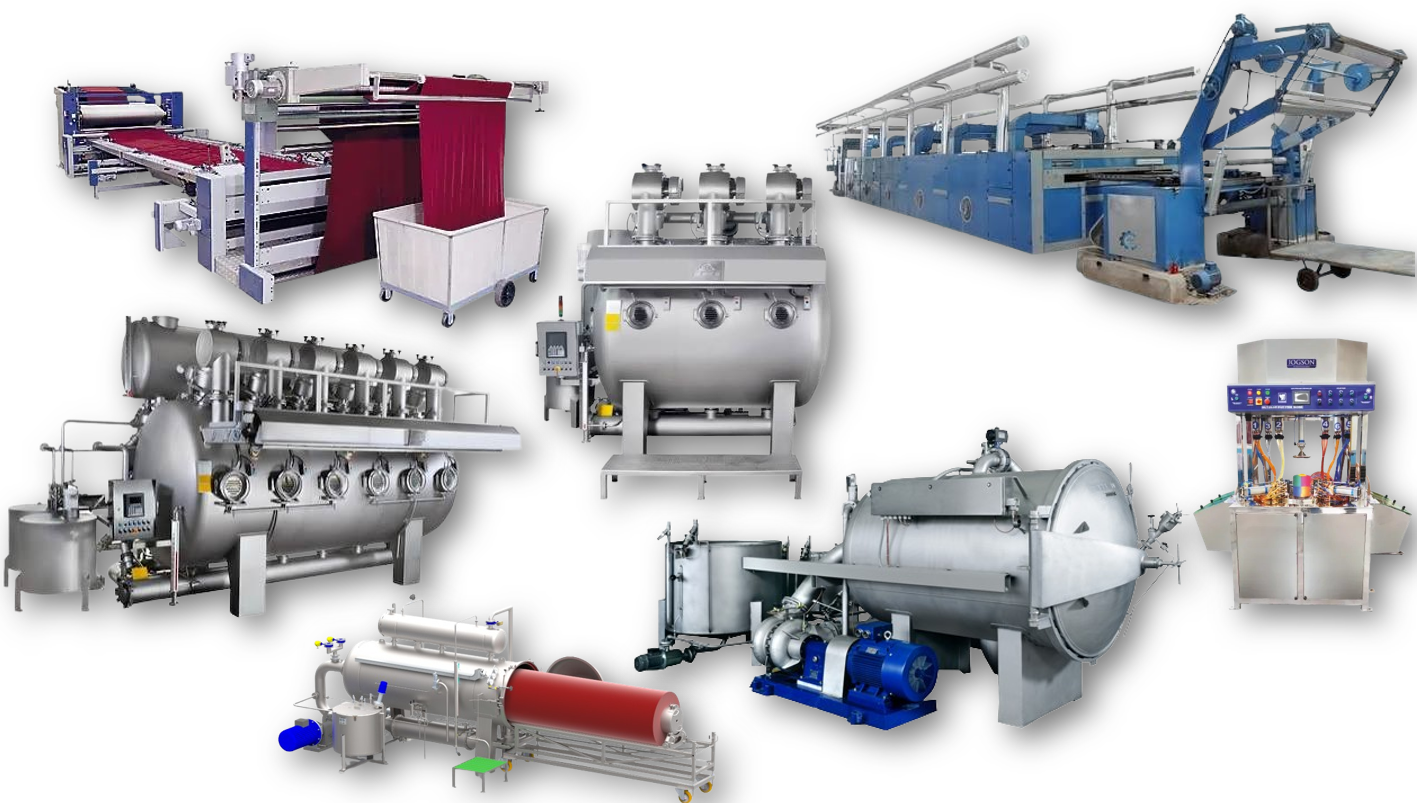
Walk into any modern textile mill and you'll notice something interesting — the loudest, busiest, most capital-intensive corner of the operation usually isn't the spinning or weaving department. It's the wet processing house, where yarn and fabric go through dyeing and finishing. This is the stage where a plain, undyed material transforms into something a customer actually wants to buy: a rich navy shirting fabric, a soft-handle bedsheet, a crisp denim, or a yarn with just the right shade to match a brand's color card.
Dyeing and finishing machinery sits at the heart of this transformation. It's not glamorous equipment in the way a high-speed loom or an automated cutting table might be, but it's arguably the most technically demanding part of the textile value chain. Get it right, and you produce fabric with even color, stable dimensions, and a hand-feel that customers love. Get it wrong, and you're looking at rejected batches, dye wastage, and unhappy buyers. This guide walks through the major categories of fibre, yarn, and fabric dyeing and finishing machinery, how they work, where they fit into production, and what factors matter when a mill is choosing or upgrading equipment.
Why Dyeing and Finishing Deserve Special Attention
Before getting into specific machines, it helps to understand why this stage of production is treated so seriously by mill owners and process engineers.
Dyeing is a chemistry-heavy process. Dye molecules need to penetrate fibers, bond at a molecular level, and then survive washing, sunlight, rubbing, and sweat without fading or bleeding. That requires precise control over temperature, time, liquor ratio (the ratio of dye liquor to fabric weight), pH, and mechanical action. A five-degree temperature swing or a few minutes of extra dwell time can shift a shade noticeably — and shade matching is one of the most unforgiving quality parameters in the entire industry.
Finishing, meanwhile, is where fabric gets its final personality. Two fabrics made from identical yarn and dyed the same color can feel completely different depending on how they're finished — one soft and drapey, another crisp and structured, a third with a slight sheen or a brushed, fleece-like surface. Finishing machinery gives mills the tools to engineer these characteristics deliberately rather than leaving them to chance.
Because both stages involve heat, chemicals, tension, and continuous material movement, the machinery involved tends to be heavy, energy-hungry, and expensive to run. That's exactly why choosing the right equipment — and running it efficiently — has such a direct impact on a mill's profitability.
Fibre Dyeing Machinery
Dyeing doesn't always wait until yarn or fabric stage — sometimes color is introduced right at the raw fiber level, before spinning ever begins. This is the earliest point at which color can enter the production chain, and it's chosen for very specific reasons: better color penetration in bulky or coarse fibers, the ability to blend different colored fibers together during spinning for heathered or melange effects, and superior color fastness in certain fiber types like wool.
Loose Stock Dyeing Machines
Loose stock dyeing (sometimes just called stock dyeing) treats raw, unspun fiber in bulk before it goes anywhere near a spinning frame. Fiber is loaded into a perforated vessel — often a large cylindrical or rectangular tank — and dye liquor is circulated through the loosely packed fiber mass, similar in principle to package dyeing but working with loose tufts of fiber rather than wound yarn.
A few points make this method distinctive:
- It's especially common for wool, where stock dyeing gives excellent, even color penetration through fibers that can otherwise be tricky to dye evenly at yarn stage.
- It's the go-to method for producing melange or heather yarns, since mills can dye separate batches of fiber in different colors and then blend them together during carding and spinning to create a mottled, multi-tone yarn effect.
- Because the fiber is still loose and hasn't been twisted into yarn, dye penetration tends to be very thorough, right down to the core of each fiber strand.
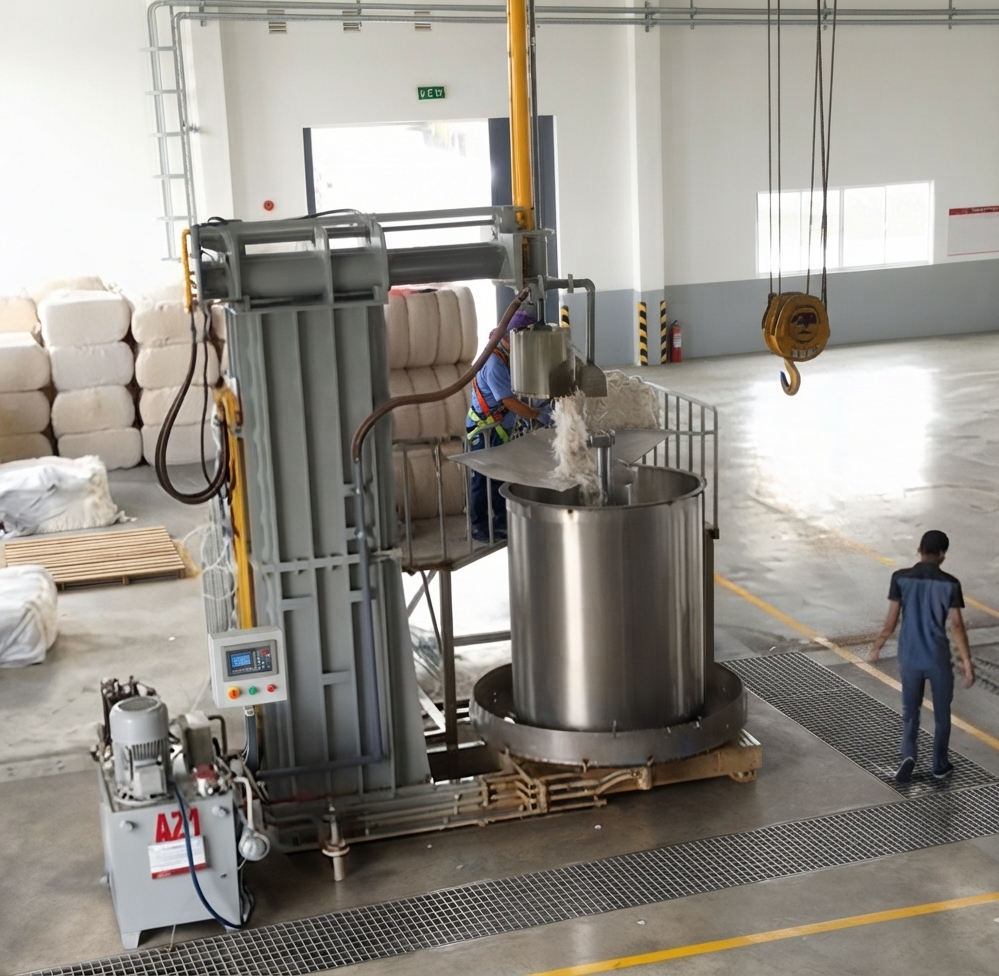
The main operational challenge is managing fiber packing density inside the vessel. Pack it too tightly and liquor can't circulate evenly, leading to patchy color; too loosely and the machine wastes capacity and liquor.
Tow Dyeing Machines
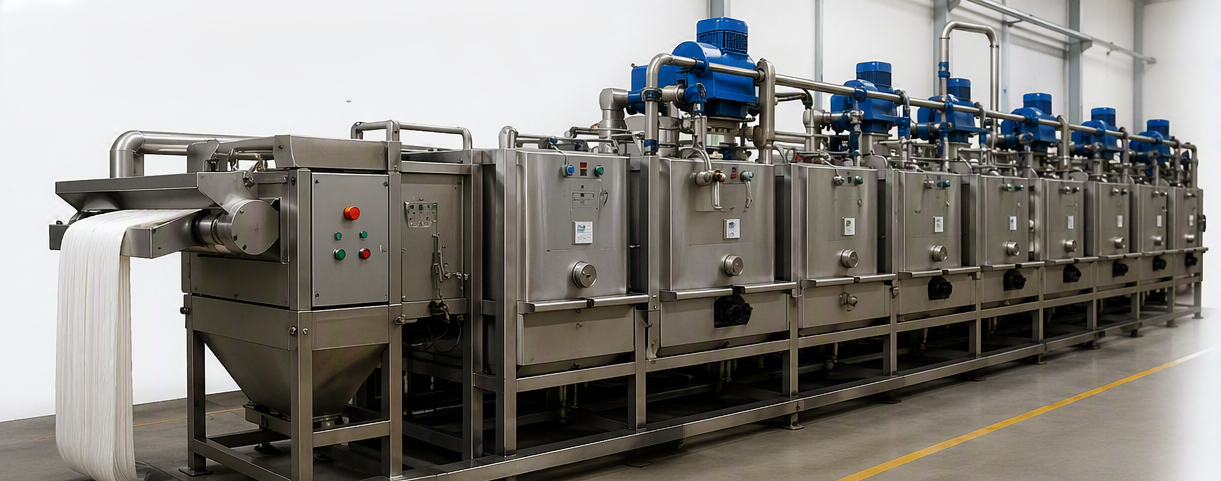
Tow dyeing machines handle a different raw material altogether — continuous ropes of synthetic filament, known as "tow," which are essentially thousands of untwisted filament strands bundled together before being crimped and cut into staple fiber. This is common in acrylic and polyester fiber production, where the tow is dyed in continuous, open form (often in a chain of dye becks or a continuous tow-dyeing range) before downstream processing converts it into staple fiber for spinning.
Because tow dyeing works with a continuous strand rather than a discrete batch, it lends itself well to high-volume, consistent-shade production runs — useful for commodity synthetic fibers where large quantities of a single, repeatable color are needed.

Top Dyeing Machines
Top dyeing sits between raw stock dyeing and yarn dyeing in the wool processing sequence. "Top" refers to combed wool fiber that's been formed into a continuous, roughly parallel sliver after carding and combing, but before spinning. Top dyeing machines circulate dye liquor through this sliver form, usually wound onto perforated packages similar in concept to yarn package dyeing.
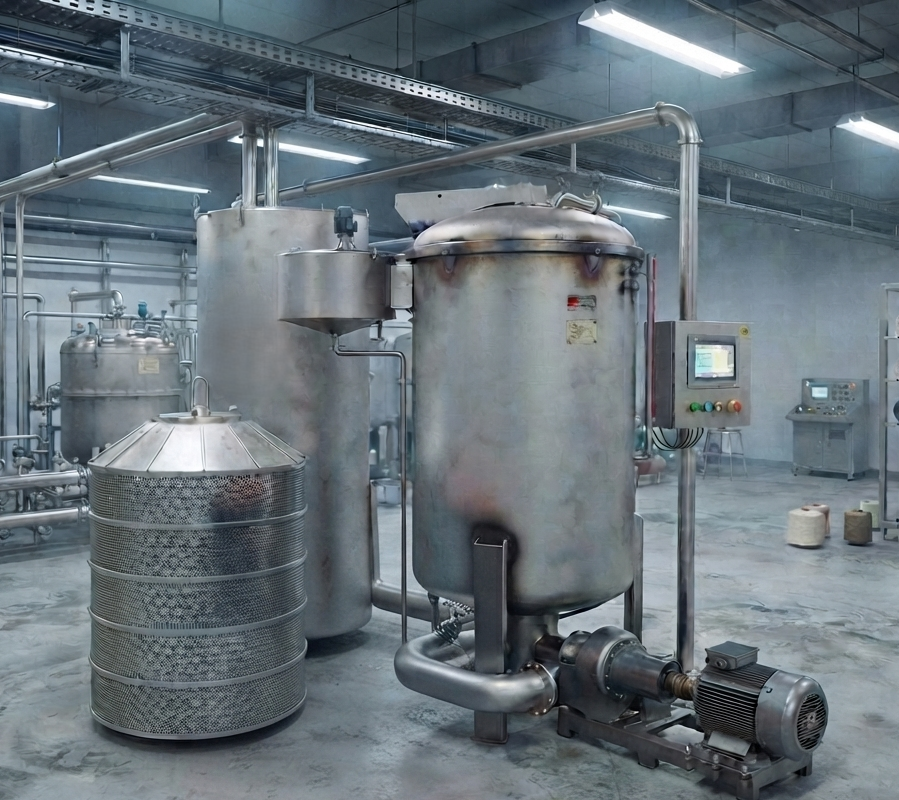
This method gives wool processors a middle-ground option: better color uniformity along the fiber length than raw stock dyeing can sometimes achieve, while still dyeing ahead of the spinning stage so the resulting yarn is ready to move straight into weaving or knitting without further color processing.
Why Mills Choose Fibre-Stage Dyeing
Fibre dyeing isn't the default choice for every product — it typically shows up when a mill has a specific reason to introduce color this early rather than waiting for yarn or fabric stage:
- Melange and heather effects: blending pre-dyed fiber batches during spinning is really the only practical way to achieve a genuine mottled, multi-tone yarn appearance.
- Deep, consistent penetration: fiber-stage dyeing tends to color the fiber more thoroughly than later-stage methods, since there's no yarn twist or fabric structure blocking liquor access.
- Wool-specific advantages: wool's scaly fiber surface and variable diameter can make later-stage dyeing less even, so stock and top dyeing remain popular in wool processing specifically to sidestep that problem.
- Planning for blended yarns: when a yarn will combine two or more fiber types with different dye affinities (a wool-acrylic blend, for instance), dyeing each fiber separately before blending can give far more predictable, controllable results than trying to dye the blended yarn as a single unit later.
The trade-off is flexibility. Once fiber is dyed and spun into yarn, that color decision is locked in early in the production chain — a mill committing to fiber-stage dyeing needs reasonably firm color forecasts, since it doesn't offer the same late-stage flexibility that piece-dyeing fabric after weaving or knitting does.
Yarn Dyeing Machinery
Yarn dyeing happens before weaving or knitting and it's typically chosen when a fabric design calls for multiple colors — think stripes, checks, jacquards or melange effects — where individual yarns need to carry different shades before they're ever turned into cloth.
Package Dyeing Machines
This is probably the workhorse of yarn dyeing. Yarn is first wound onto perforated spring cones or spools — these bundles are called "packages" — and then loaded onto carriers that sit inside a pressurized dyeing vessel. Dye liquor is pumped through the packages, alternating direction (in-to-out and out-to-in) to ensure even penetration all the way through the package, not just on the surface.

A few things make package dyeing machines particularly valuable:
- They can handle a wide range of yarn counts and fiber types, from fine cotton to synthetic filament yarns.
- Liquor ratios have come down significantly in modern machines — some newer models operate at ratios as low as 1:4 or 1:5, compared to older machines running at 1:10 or higher, which directly cuts water and energy use.
- Automation packages now allow recipe management, automatic dosing of dyes and chemicals and closed-loop temperature control, reducing the dependency on operator judgment.
The tricky part of package dyeing is achieving uniform dye pickup from the core of the package to its outer layers. Poor package winding density or uneven liquor flow can cause center-to-outside shade variation, which is a classic and frustrating defect in this process.
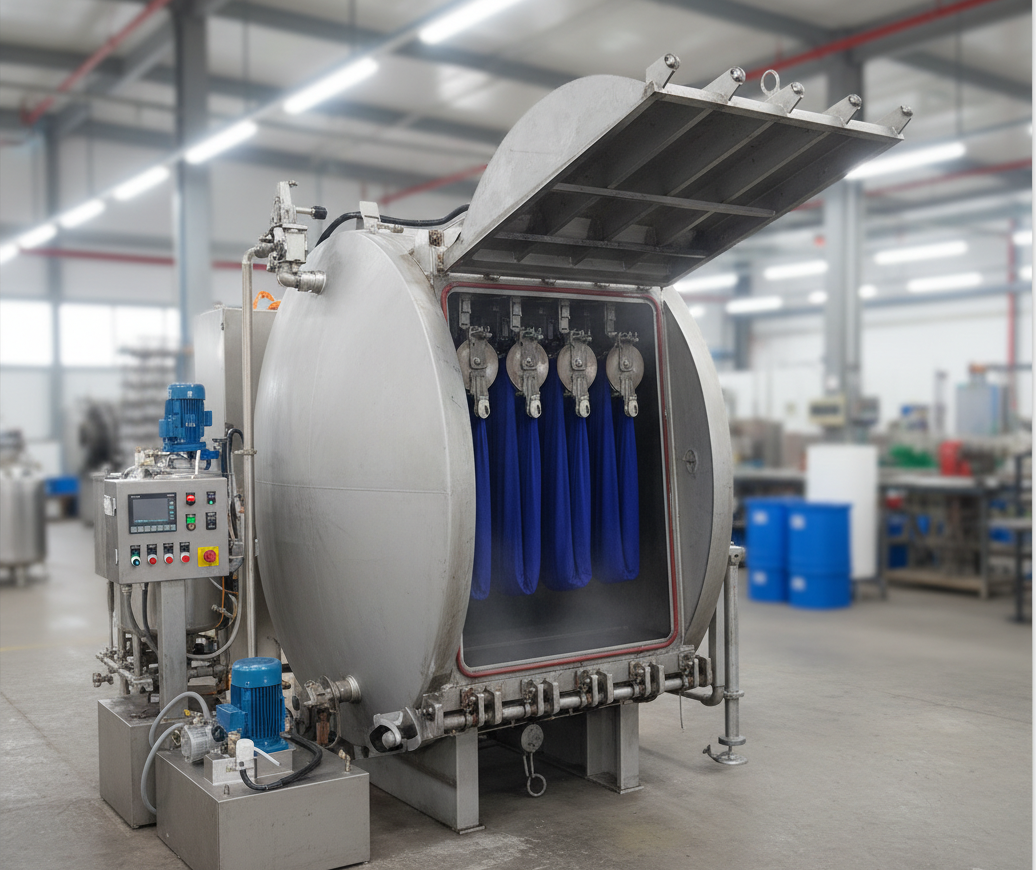
Hank Dyeing Machines
Hank dyeing is an older but still relevant method, especially for specialty and hand-loom-oriented yarns or where a softer, bulkier yarn character is desired. Here, yarn is wound into loose hanks and hung on rods inside the dyeing machine. Because the yarn isn't tightly wound, it doesn't get compressed the way it does in package dyeing, which tends to preserve loft and softness — useful for certain knitwear and specialty applications.
The trade-off is throughput. Hank dyeing generally requires more manual handling and is less efficient at scale compared to package dyeing, which is why it's often reserved for smaller batches or premium yarn types.
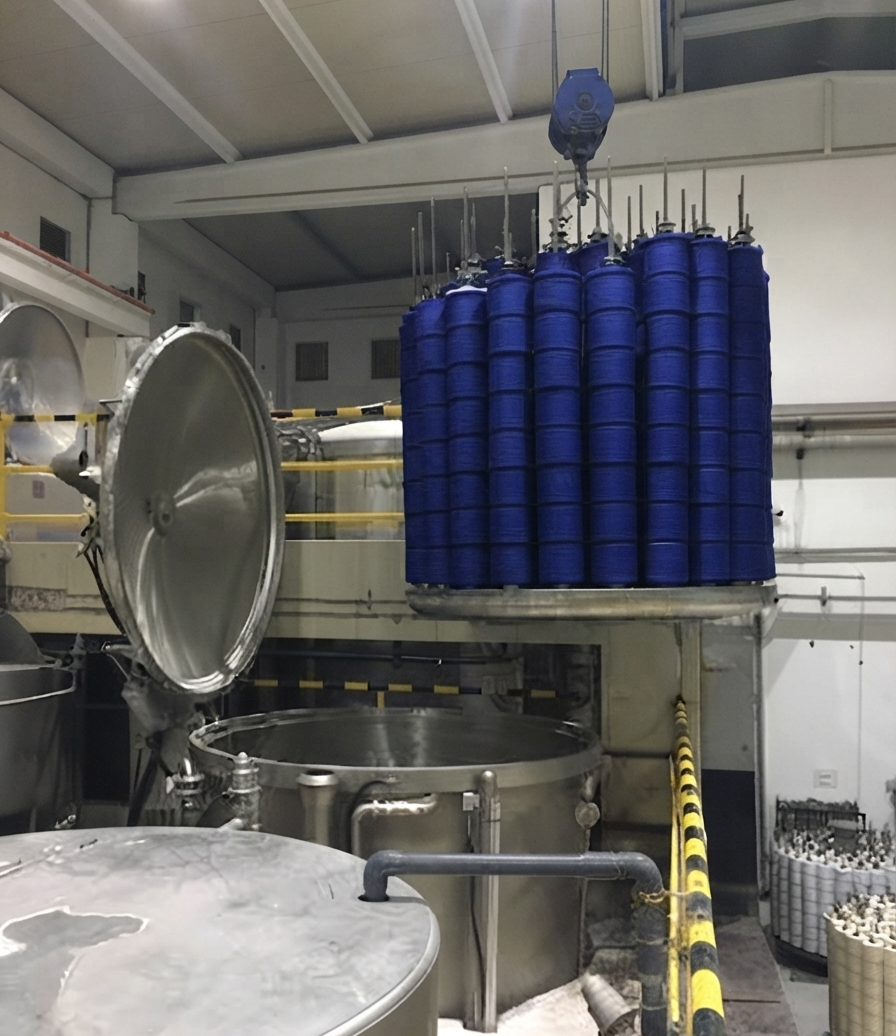
Cone and Cheese Dyeing Machines
These are essentially specialized forms of package dyeing, distinguished by the shape of the yarn package (a cone tapers, while a cheese is cylindrical). The machinery principles are similar — liquor circulation through the wound yarn under controlled pressure and temperature — but the tooling, carriers and sometimes the loading systems differ based on which package shape a mill standardizes on.
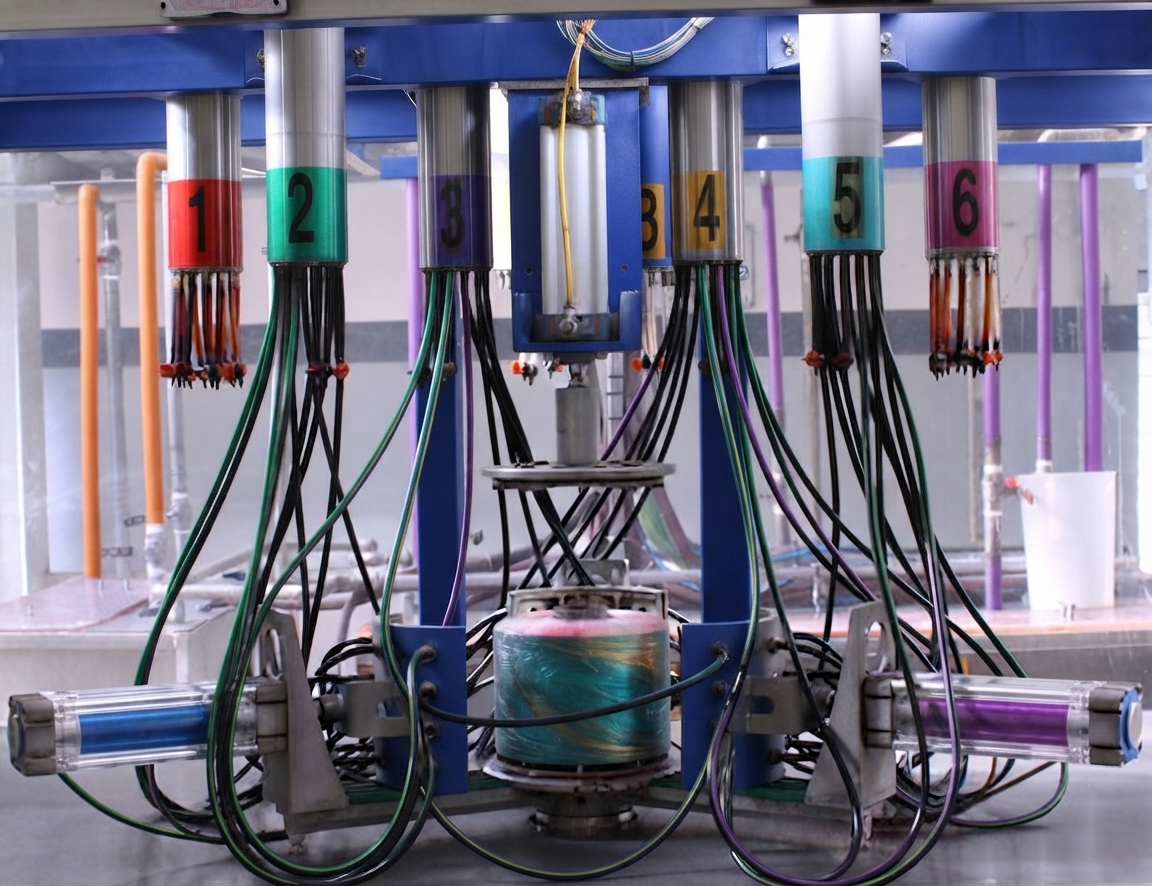
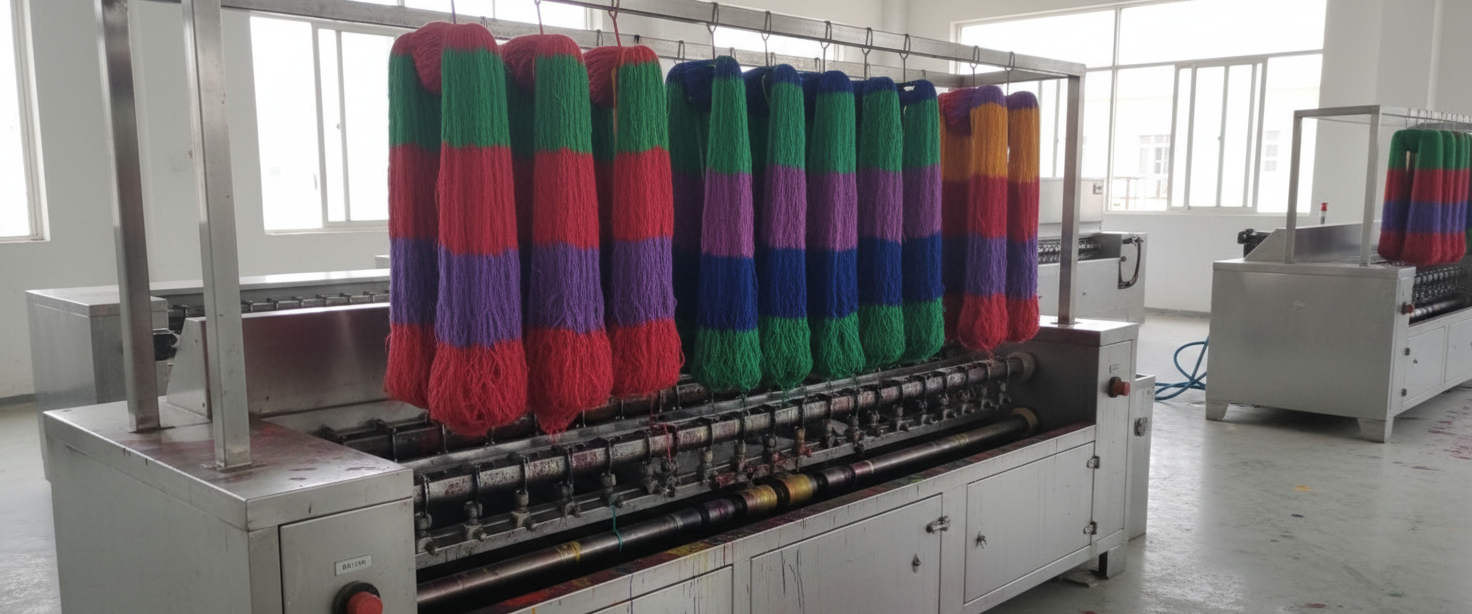
Space Dyeing and Warp Dyeing Equipment
For decorative or novelty yarns, space dyeing machines apply multiple colors along the length of a single yarn strand, creating a variegated effect popular in home textiles and certain apparel niches. Warp dyeing machines, on the other hand, dye yarn that's already been arranged into a warp sheet — this is a technique heavily used in denim production, where indigo dyeing of warp yarns (often through rope or slasher dyeing ranges) is what gives denim its signature fading characteristics over time.
Fabric Dyeing Machinery
Once fabric has been woven or knitted — sometimes from pre-dyed yarn, sometimes from greige (undyed) material — it may go through fabric-stage dyeing. This is common for solid-color fabrics or when color decisions are made later in the production cycle for flexibility reasons.
It's worth separating this discussion into knit and woven fabric machinery, because the two fabric families behave very differently under mechanical stress and machine selection follows directly from that difference. Knits are stretchy, loop-based structures that distort easily and are unforgiving of harsh handling. Wovens are more dimensionally stable thanks to their interlaced warp and weft yarns, but they're far more prone to permanent crease and crack marks if folded or bunched during processing. Understanding which category a fabric belongs to is usually the very first filter a process engineer applies when deciding which machine a batch should go into.
Machines Built for Knitted Fabrics
Knitted fabrics — single jersey, interlock, rib, fleece and similar constructions — are looped rather than interlaced, which makes them elastic, bulky in their relaxed state and easily distorted under tension or friction. Machinery for knits is built around one central goal: move the fabric gently enough that it doesn't stretch out of shape or develop permanent crease lines.
Jet dyeing machines are the dominant choice for knits today, especially for cotton, polyester and blended knit fabrics used in T-shirts, activewear and similar garments. The fabric is stitched into a continuous rope and circulated using a pressurized liquor jet that propels it through the machine, cushioning the fabric rather than dragging or pulling it mechanically.
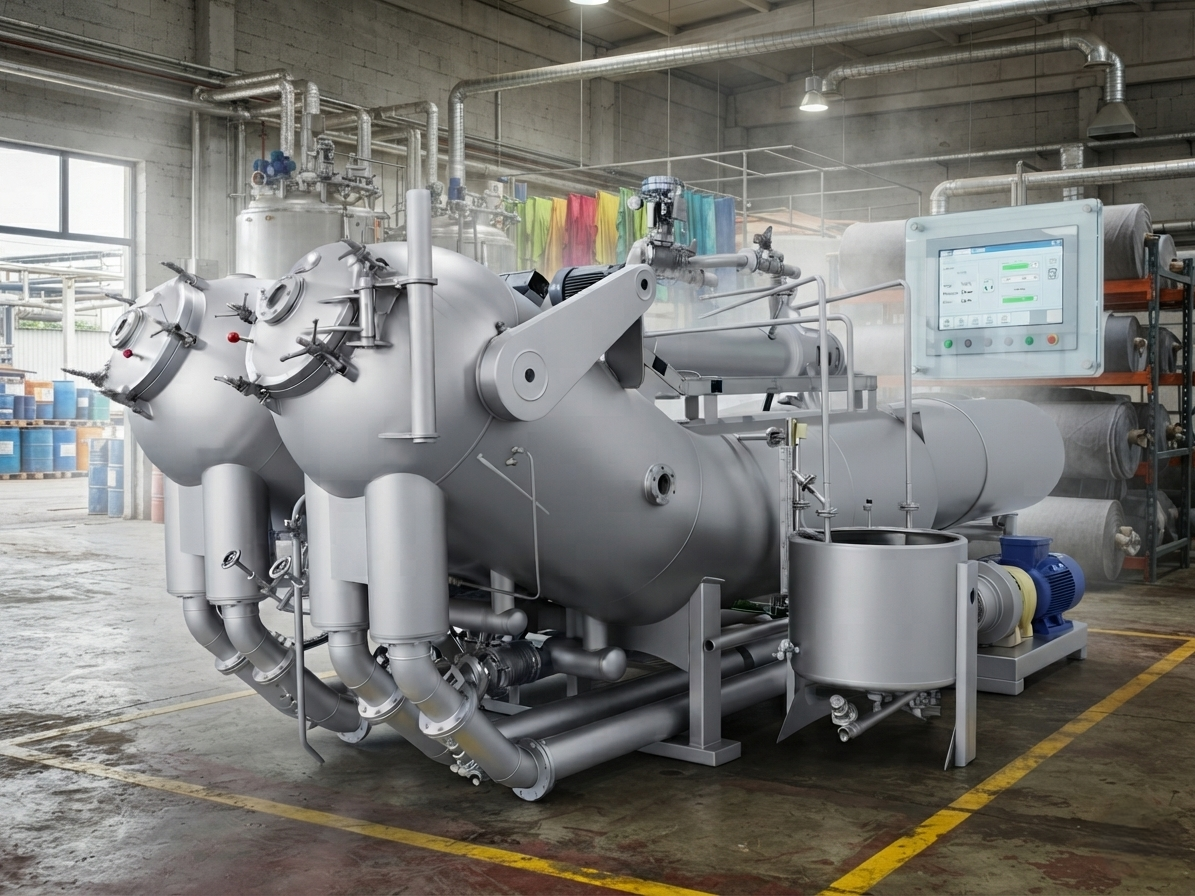
A few reasons jet machines suit knits so well:
- The liquor jet itself does most of the propulsion work, minimizing the mechanical tension that would otherwise stretch a stretchy knit structure out of shape.
- Modern soft-flow and low liquor ratio variants have cut water and chemical use substantially compared to older high-liquor-ratio jet machines, without sacrificing the gentle handling knits need.
- They handle a wide range of knit weights, from lightweight jersey to heavier fleece and work well across cotton, polyester and blended fibers, including polyester's demanding high-temperature dyeing requirements.
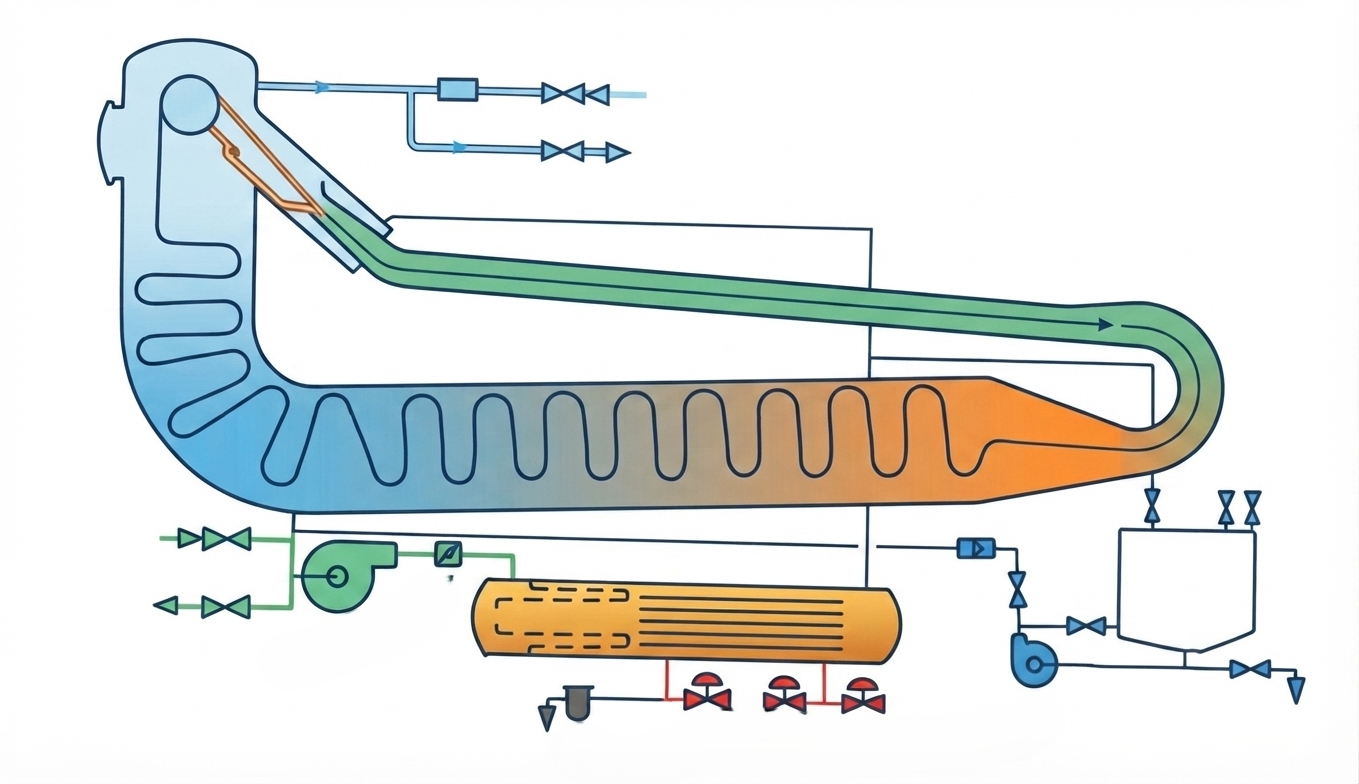
Overflow and soft-flow machines sit in the same family as jet machines but rely even more heavily on liquor flow rather than mechanical reels to move fabric, making them a common choice for particularly delicate or loosely constructed knits that are at high risk of permanent stretch marks or crease lines.
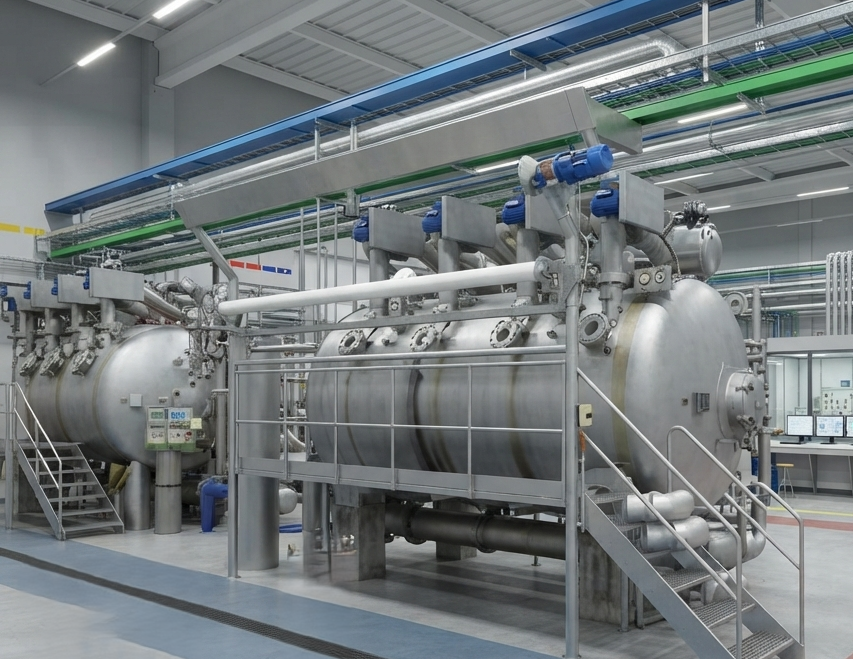
Winch (beck) dyeing machines are an older rope-dyeing format still used for certain knit fabrics, especially in smaller mills or for less delicate constructions. A rotating winch reel pulls the fabric rope through the dye bath. It's a simpler, lower-cost technology than jet dyeing, but the more mechanical handling involved means it's generally reserved for sturdier knit fabrics that can tolerate a bit more friction.
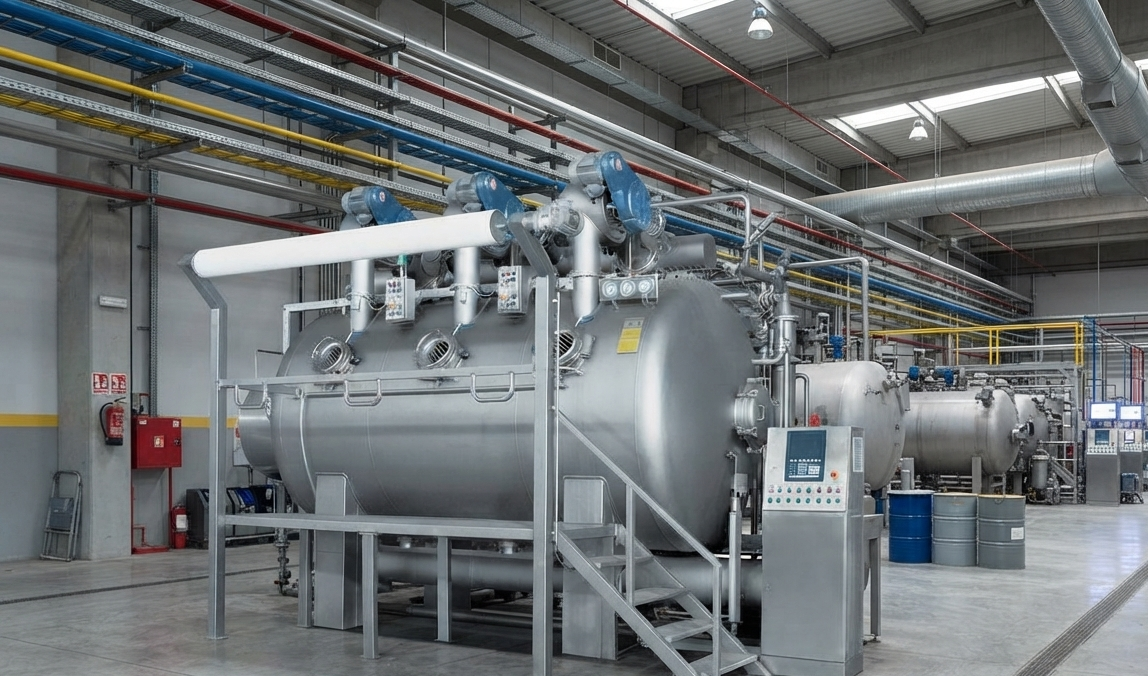
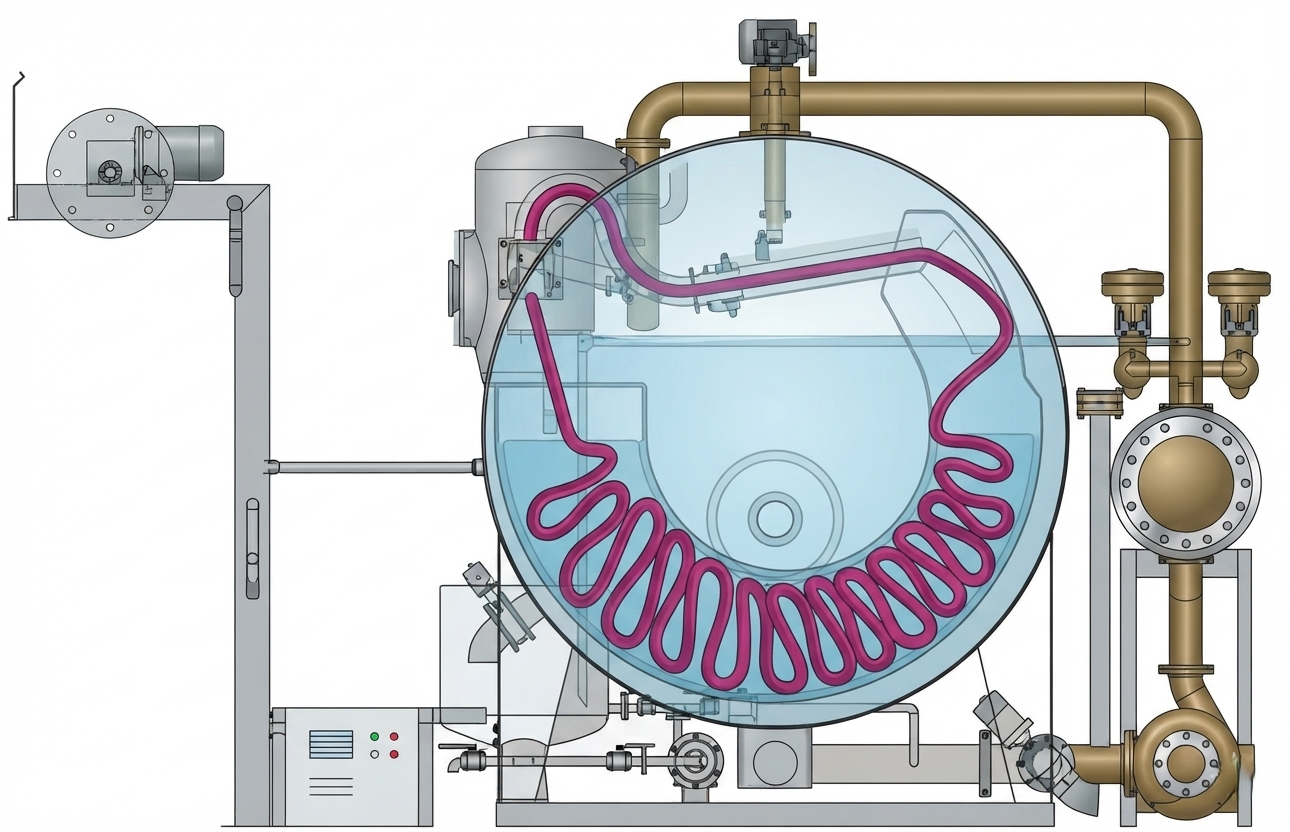
Beam dyeing machines, while more commonly associated with wovens, also see use for certain warp-knitted fabrics — tricot and raschel knits, for instance — which are more dimensionally stable than weft knits and can be wound onto a beam without the risk of distortion that a stretchy jersey knit would face.
Machines Built for Woven Fabrics
Woven fabrics — shirting, denim, twill, poplin and similar constructions — hold their shape far better than knits because the interlaced warp and weft yarns lock each other in place. The main risk with wovens isn't stretching; it's permanent crease and crack marks that form when fabric is folded, bunched or creased under heat and pressure during processing.
Jigger dyeing machines are a classic choice for wovens, particularly finer, tightly woven fabrics like shirting materials. Fabric is held in open-width form the entire time, passed back and forth between two rollers through a dye bath rather than being bunched into a rope. This open-width handling is the key advantage — it avoids the crease marks that rope-form processes can leave behind, making jiggers well suited for:
- Fine, tightly woven shirting and similar fabrics where any surface marking would be a visible defect
- Fabrics known to be prone to permanent crease formation
- Situations where dimensional stability during dyeing is a top priority
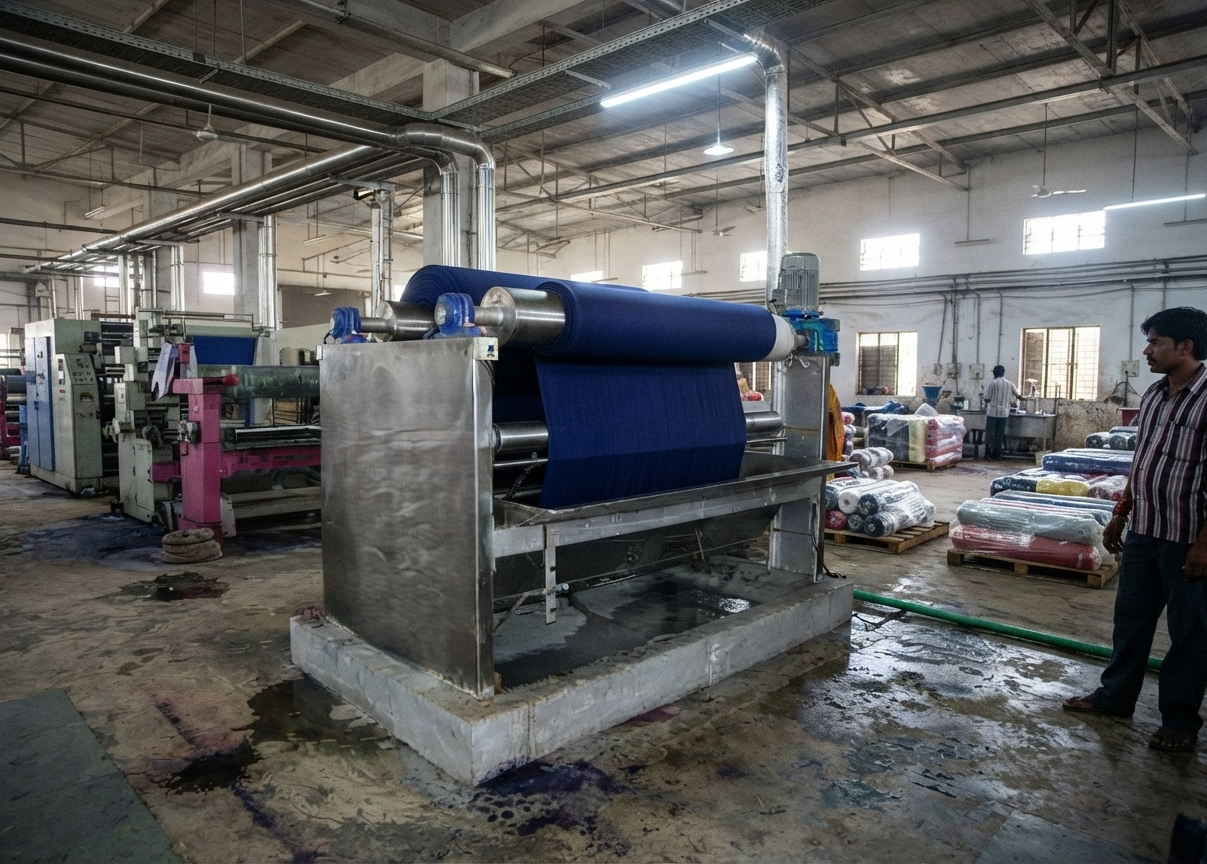
Jiggers also tend to run at lower liquor ratios than rope-dyeing formats, a nice secondary benefit for cost and water use, although cycle times run longer since fabric passes through the bath repeatedly rather than circulating continuously.
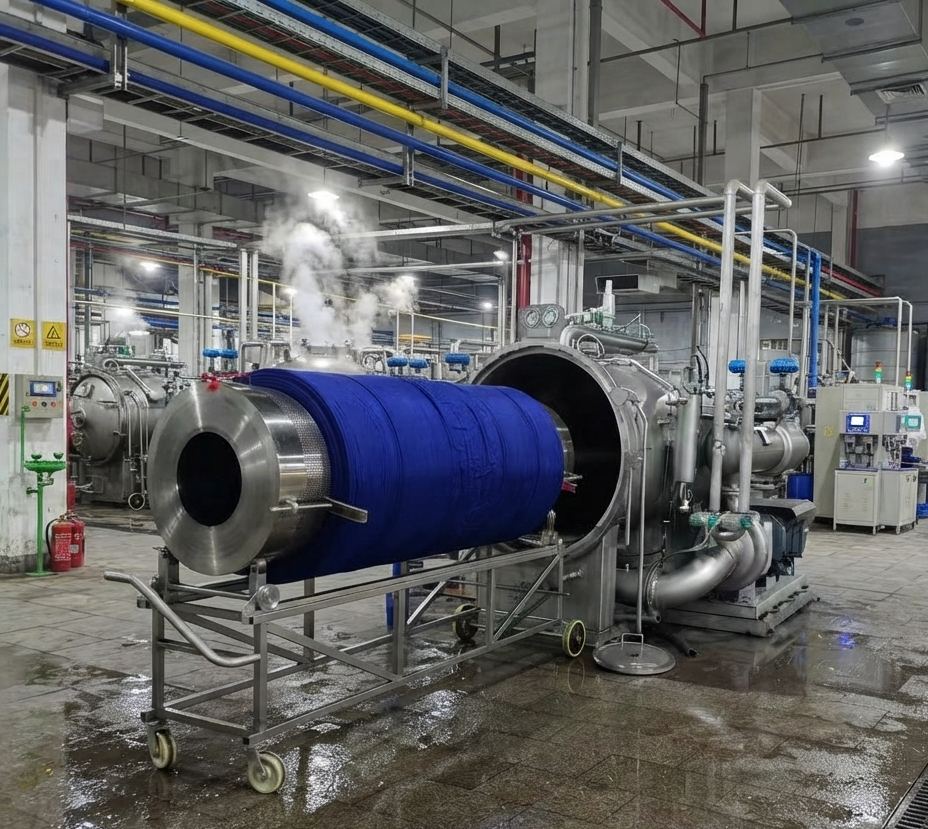
Beam dyeing machines take the open-width philosophy further still. Fabric is wound onto a perforated beam and dye liquor is forced radially through the layers rather than the fabric itself moving at all. Because there's no fabric movement during dyeing, there's essentially zero risk of crease marks or mechanical distortion, which makes beam dyeing popular for:
- Delicate or high-value woven fabrics where any surface marking is unacceptable
- Fabrics requiring very precise, even dye penetration
- Certain technical and industrial woven textiles
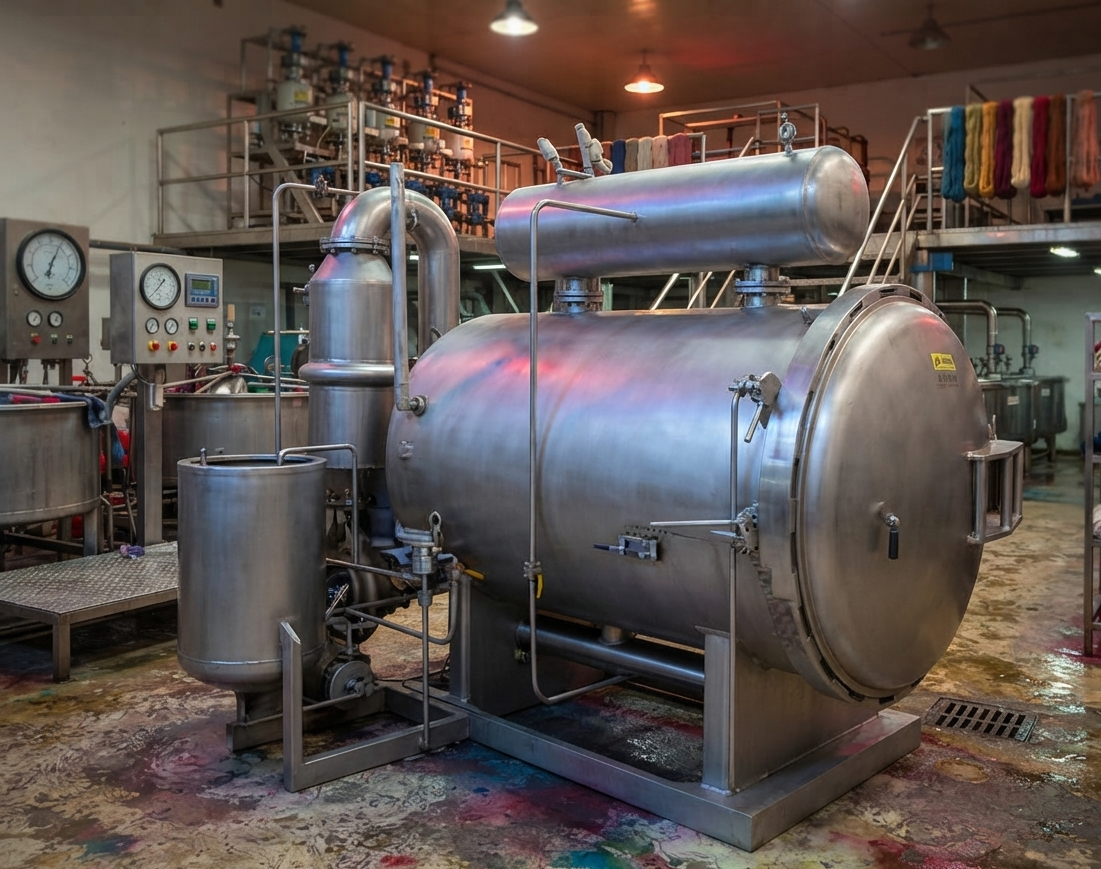
The trade-off is that beam dyeing works best on stable, evenly constructed fabrics that wind cleanly and consistently onto the beam.
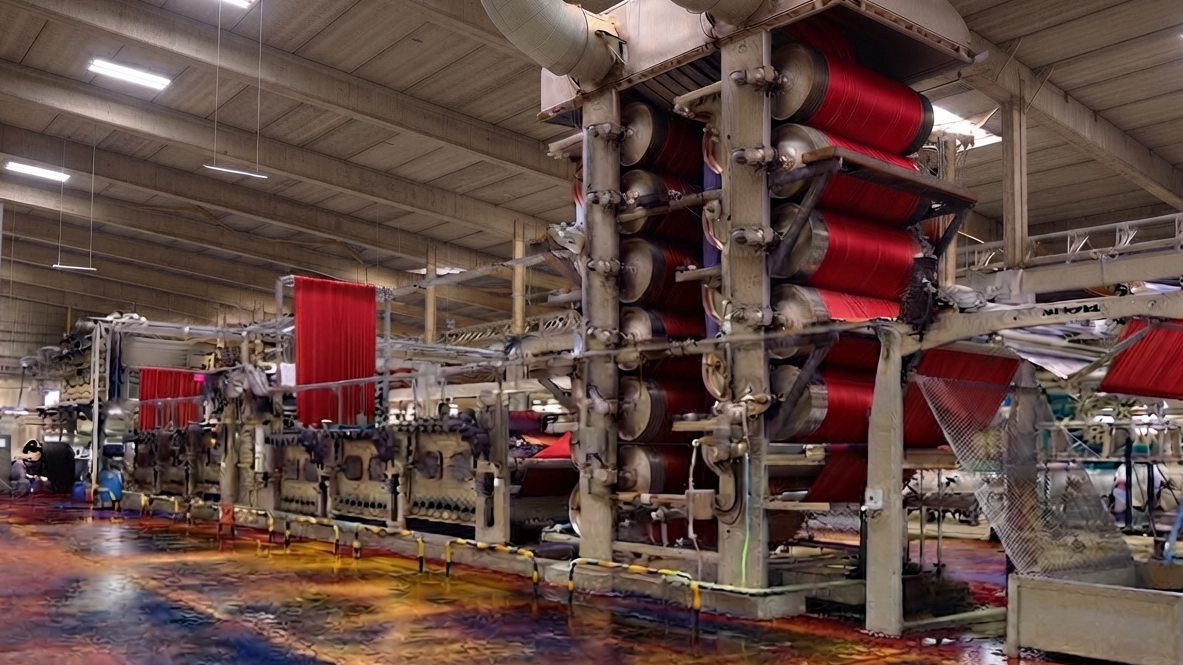
Continuous dyeing ranges are the go-to for very high-volume woven fabric production — large denim mills and bulk shirting or bottom-weight fabric producers running millions of meters a month are the classic examples. Rather than loading a fixed batch into a vessel, continuous ranges pass open-width fabric through a sequence of stations: dye application via padding (saturating the fabric, then squeezing it through rollers to control pickup), fixation through steaming or chemical means, washing and drying, all in a single continuous line. Pad-batch and pad-steam configurations are common. The appeal is speed and consistency at scale, though changeovers between colors or fabric types cost more time and material than switching a batch machine — so this format shines when order volumes are large and repeat business is steady.
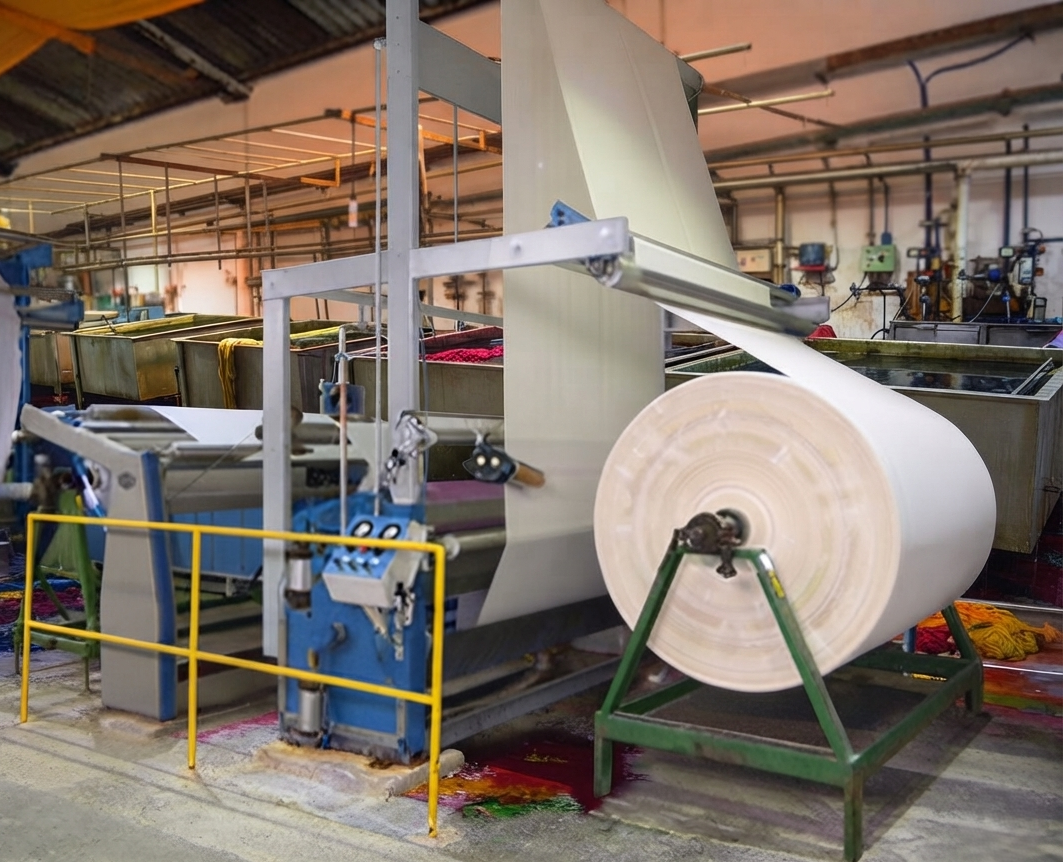
Cold pad batch dyeing systems deserve a specific mention for wovens because of how energy-efficient they are. Dye and fixing agents are applied to open-width fabric at room temperature via a padding mangle and the fabric is then rolled onto a batching roller, wrapped and left to react slowly over several hours, sometimes rotating gently to keep liquor evenly distributed. Because no steaming or high-temperature fixation step is needed, energy consumption drops substantially compared to conventional exhaust or continuous dyeing. Reactive dyeing of woven cotton is the classic application and mills chasing sustainability targets have increasingly adopted cold pad batch systems for exactly this reason.
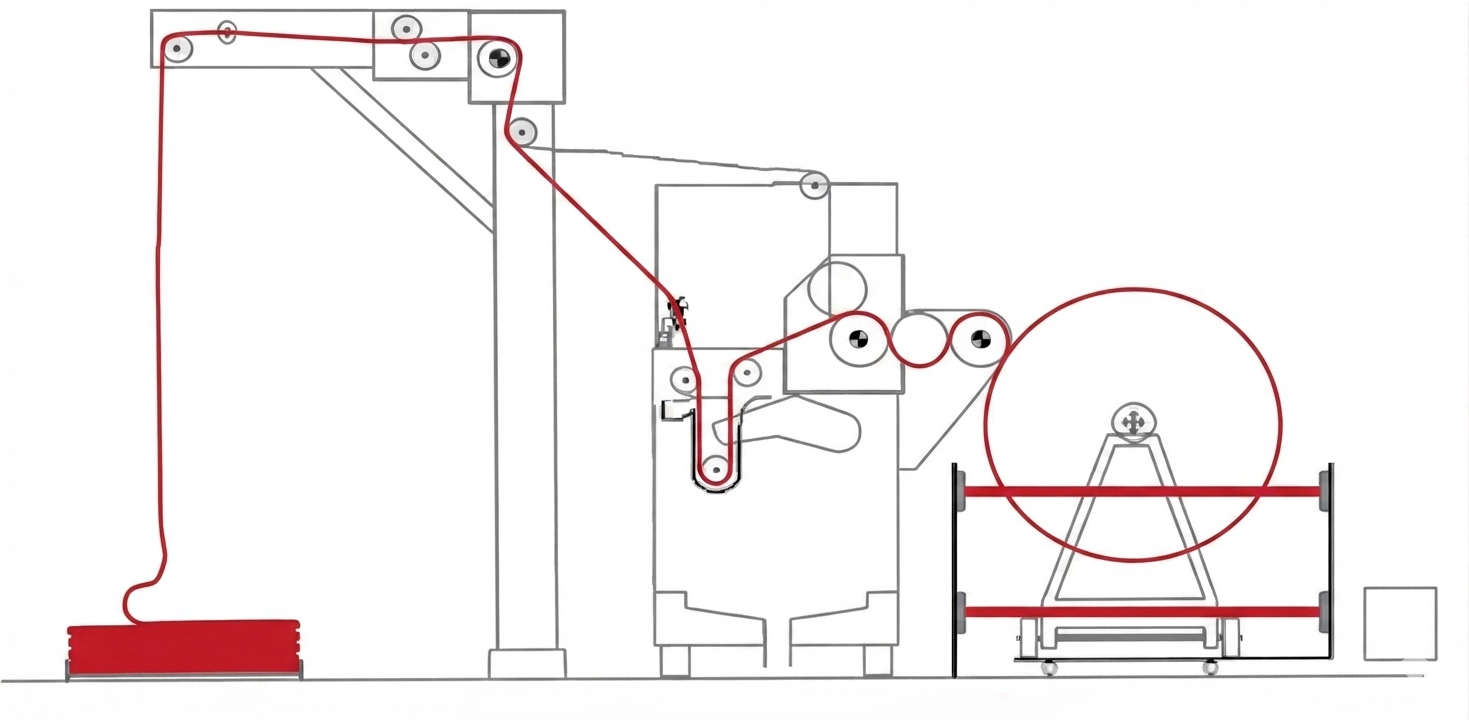
Slasher and rope dyeing ranges are worth flagging separately because of their role in one of the most recognizable woven fabrics in the world: denim. Indigo dyeing of warp yarns before weaving — usually via rope or slasher dyeing ranges — is what gives denim its signature surface shade and the fading characteristics that develop with wear over time. This process technically happens at the yarn stage before weaving, but it's so closely tied to woven denim fabric production that it's usually discussed alongside woven fabric dyeing rather than general yarn dyeing.
Machines That Serve Both Categories
A handful of machine types don't split neatly along the knit-versus-woven line and are worth calling out as flexible, dual-purpose equipment. Package and beam dyeing carriers can sometimes be adapted for warp-knitted structures as well as certain stable woven constructions and some modern soft-flow jet machines are engineered with adjustable reel speeds and liquor pressure settings specifically so a single machine can be tuned for either a delicate knit or a sturdier woven fabric, depending on what a mill needs to run that day. This flexibility tends to appeal most to mid-sized mills that need to serve varied order books without investing in a fully separate machine lineup for each fabric category.
Finishing Machinery
Once fabric is dyed and washed, it typically isn't ready to ship. Finishing machinery is what gives fabric its final dimensional stability, surface texture and functional properties.
Stenter (Tenter Frame) Machines
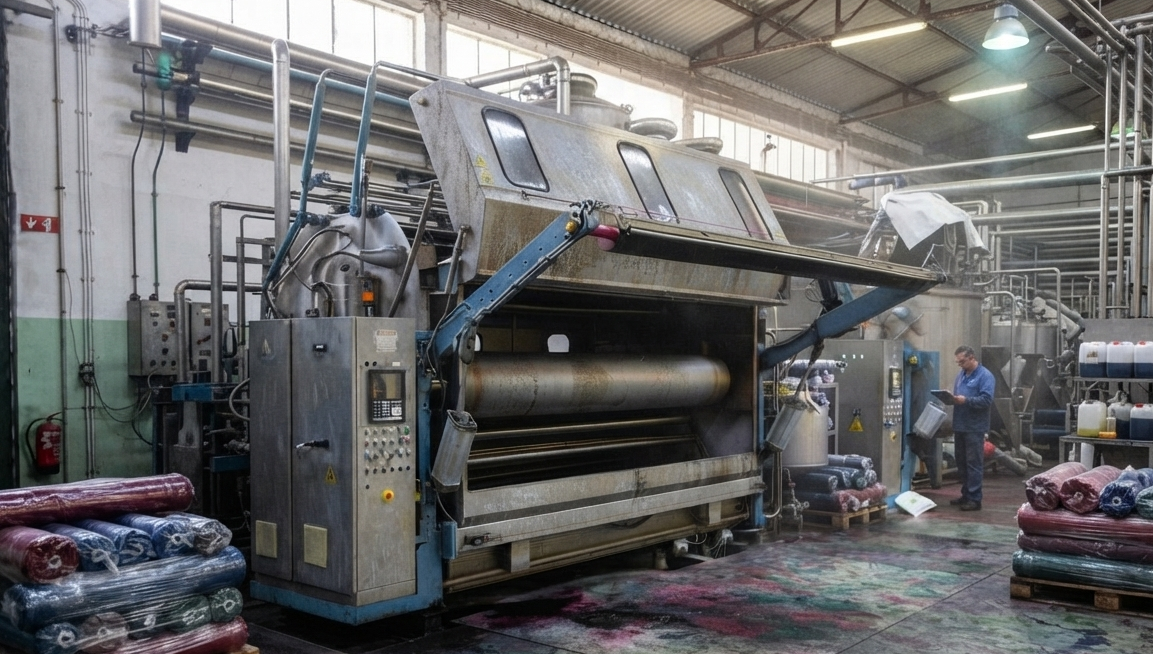
If there's one machine that almost every finishing department relies on, it's the stenter. This machine does several jobs at once: it dries fabric, sets its width using clips or pins that grip the fabric edges and stretch it to a target width and heat-sets synthetic fibers so they hold their shape.
Stenters are also the delivery mechanism for many finishing chemical treatments — softeners, anti-crease resins, flame retardants, water repellents and more are often applied via a padding unit just before the fabric enters the stenter's heated chambers.
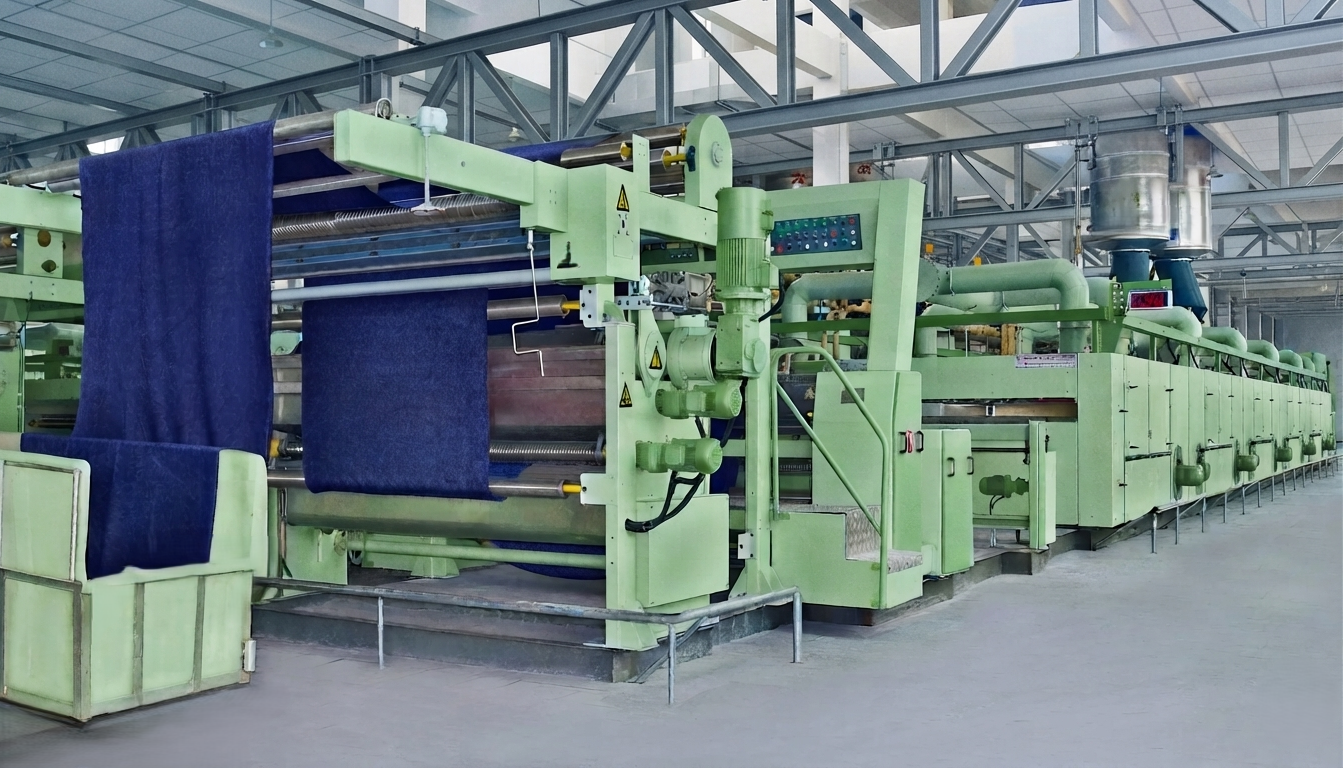
Key considerations mills weigh with stenters:
- Number of chambers and their length, which determines drying/curing capacity and line speed
- Heating source — thermic fluid, steam, gas or electric — which affects running costs significantly
- Exhaust air heat recovery systems, which have become almost a must-have as energy prices have risen, since stenters are among the biggest energy consumers on the finishing floor
Calendering Machines
Calenders pass fabric between heavy rollers under pressure (and often heat) to produce specific surface effects — a smoother, flatter surface, added sheen or in some configurations, an embossed pattern. Different roller combinations (steel-to-steel, steel-to-rubber or steel-to-cotton) produce different levels of luster and hand-feel.
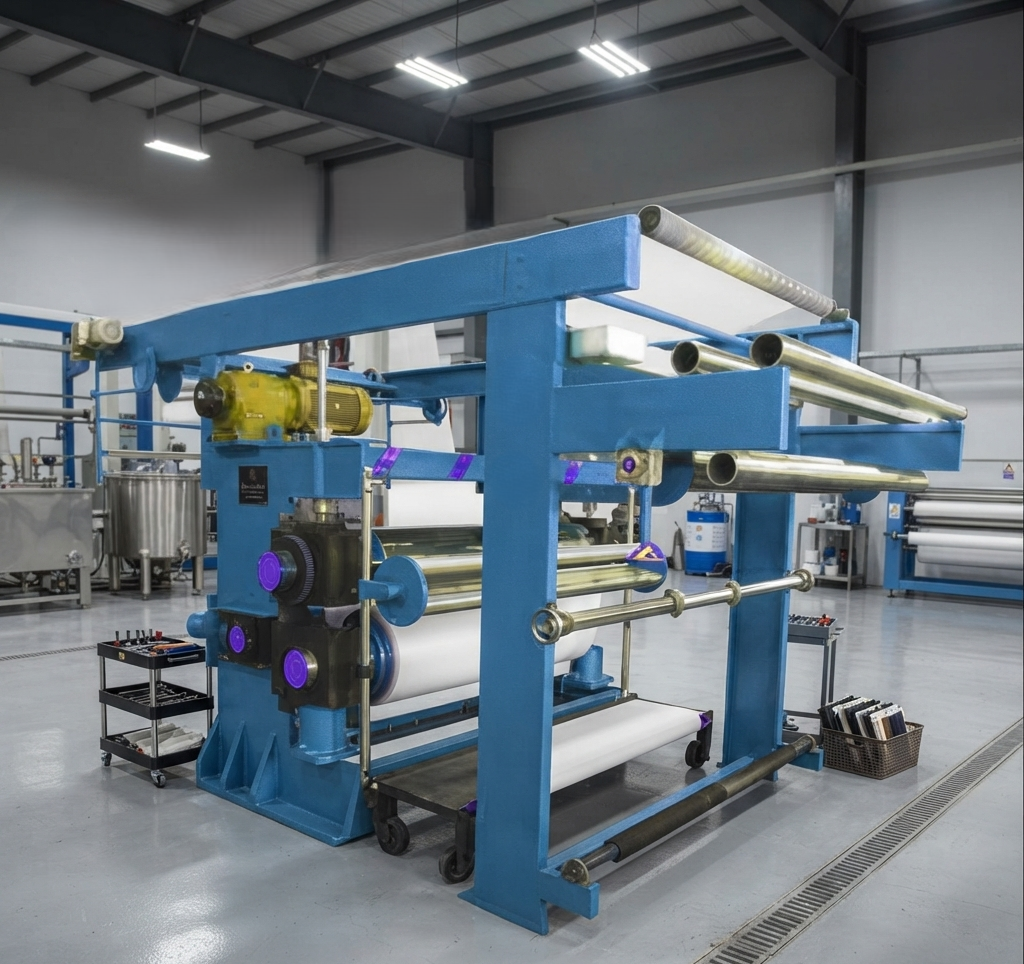
Some specialized calenders, like Schreiner calenders, use finely engraved rollers to impart a fine linear texture that increases fabric luster — commonly used on cotton sateen and similar fabrics destined for a silky appearance.
Sanforizing (Compressive Shrinkage) Machines
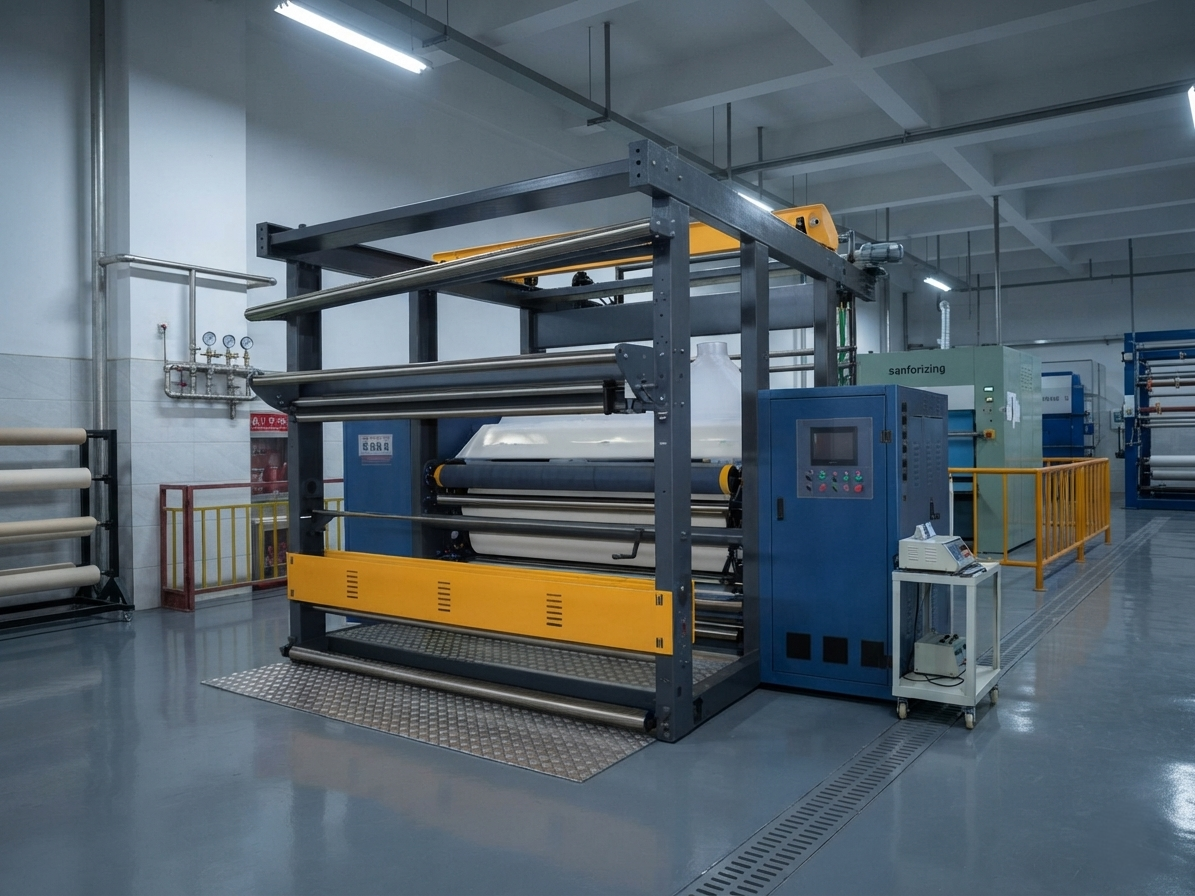
Anyone who's bought a cotton shirt that didn't shrink dramatically after the first wash has a sanforizing machine to thank. This equipment mechanically compresses fabric along its length before it ever reaches the customer, essentially "pre-shrinking" it under controlled conditions so that any residual shrinkage during actual washing is minimized.
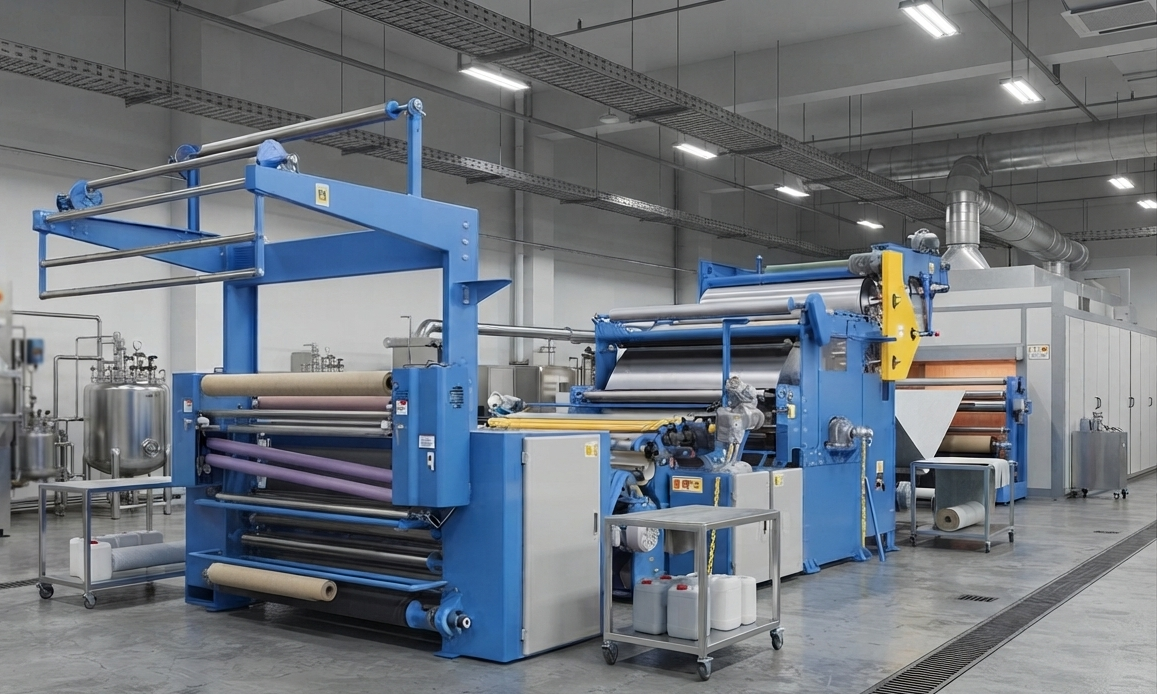
The process typically uses a rubber belt that's stretched as fabric is fed onto it, then allowed to relax — compressing the fabric as the belt returns to its natural length. It's a mechanical trick, but an extremely important one for woven cotton and cotton-blend fabrics, especially in denim and shirting production where dimensional stability is a major quality metric buyers check for.
Compacting Machines
Compacting is essentially the knit-fabric equivalent of sanforizing. Since knitted fabrics are especially prone to shrinkage (because of the looped structure), compactors reduce the courses-per-inch spacing mechanically, stabilizing the fabric before it's cut and sewn into garments. This step has become almost non-negotiable for knit garment exporters, since shrinkage complaints are one of the most common quality disputes between mills and brands.
Raising and Napping Machines
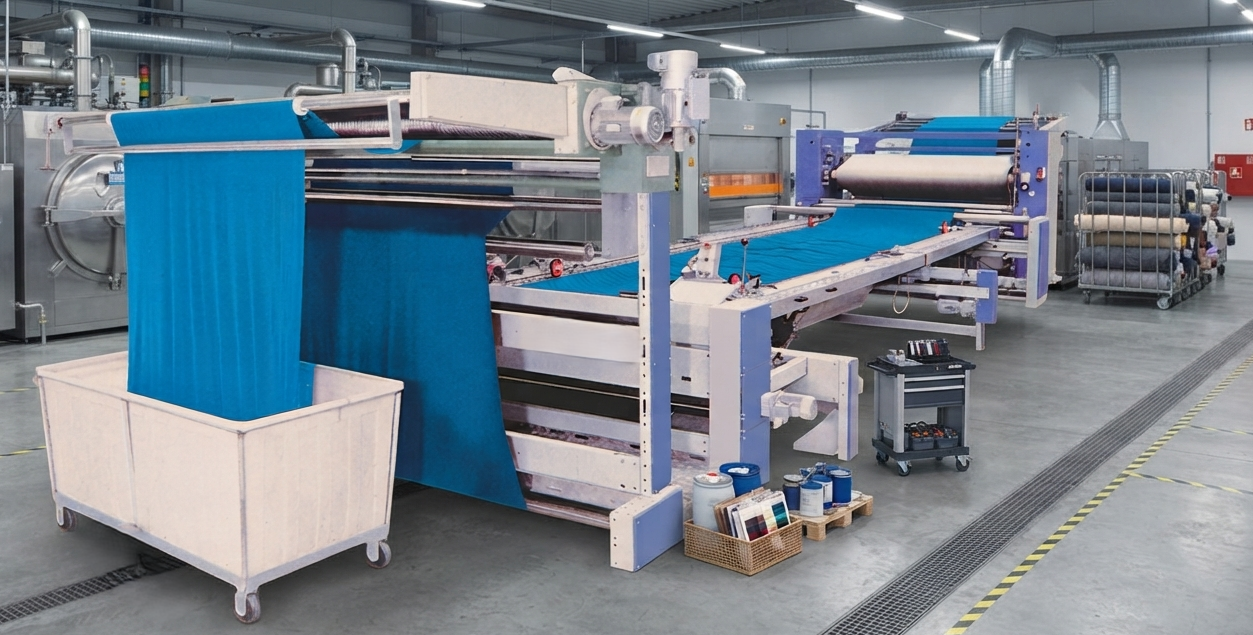
For fabrics that need a soft, brushed or fleecy surface — flannel, fleece, moleskin and similar materials — raising machines use fine wire-covered rollers to gently lift fiber ends out of the yarn structure, creating that fuzzy surface texture. Napping is a closely related process, generally producing a similar effect but sometimes with different roller configurations depending on the desired pile height and density.
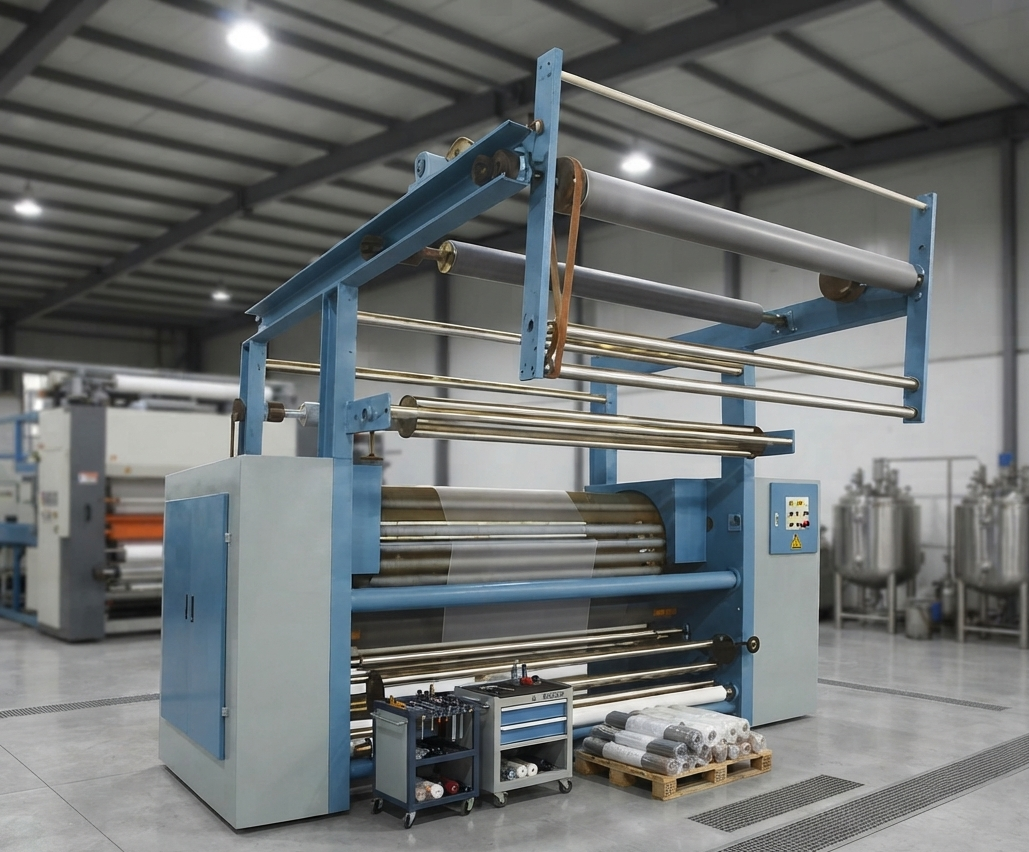
This is a delicate balancing act for machine operators: too gentle a pass and the desired hand-feel doesn't develop; too aggressive and the fabric can weaken or the surface can look uneven or patchy.
Shearing Machines
After raising or napping, fabric surfaces are often uneven, so shearing machines trim the raised fiber to a uniform height, similar in concept to mowing a lawn. This gives a clean, consistent pile across the entire fabric width, which matters a great deal for consumer-facing quality perception.
Mercerizing Machines
Mercerizing is a chemical-mechanical finishing process specific to cotton (and some cotton blends). Fabric or yarn is treated with a concentrated caustic soda solution under tension, which causes the cotton fibers to swell and take on a more rounded cross-section. The results are notable: increased luster, better dye uptake (mercerized cotton often shows deeper, richer color than unmercerized cotton dyed under the same conditions), improved tensile strength and a smoother hand-feel.
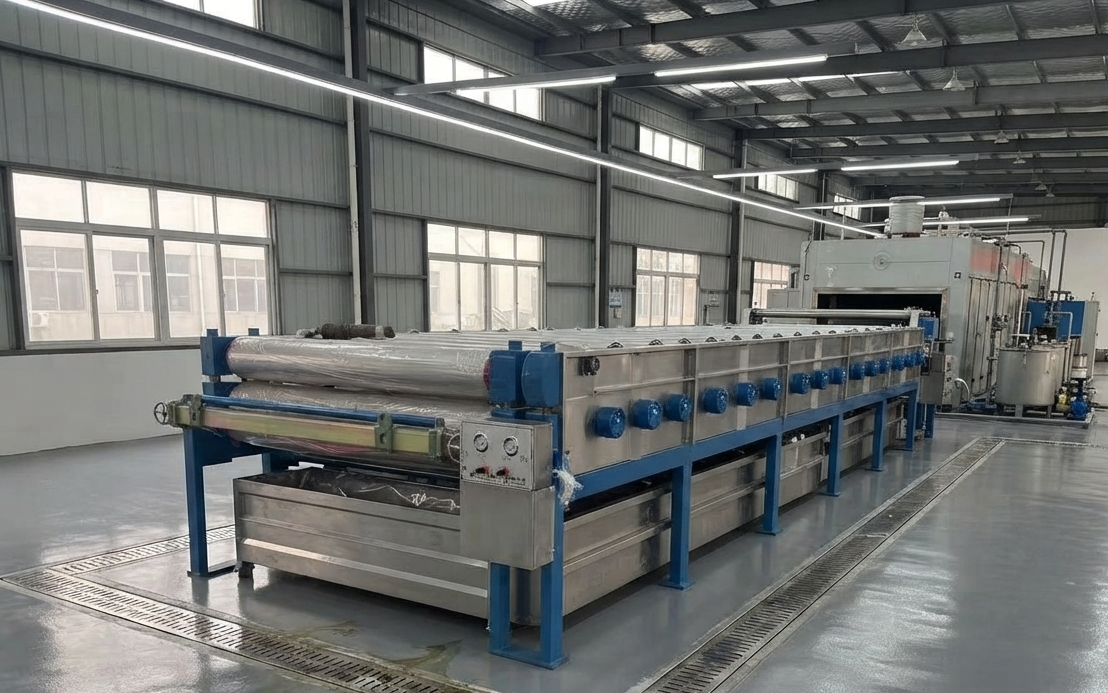
Mercerizing machines need precise tension control throughout the process, since the whole point is to lock in the improved fiber structure while the fabric is held taut — if tension is lost at the wrong moment, the benefits of the treatment can be partially undone.
Functional Finishing Equipment
Beyond aesthetics and dimensional stability, a growing share of finishing machinery exists to add functional performance to fabric:
- Water-repellent and waterproof finishing lines apply and cure coatings or treatments (like fluorocarbon-free DWR finishes, which have become the norm as environmental regulations tighten around older PFC-based chemistry)
- Flame-retardant finishing ranges, essential for workwear, home textiles and certain industrial applications
- Anti-microbial and odor-control finishing systems, increasingly popular in activewear and healthcare textiles
- UV-protective finishing equipment, used for outdoor and sun-protective clothing lines
- Coating and lamination machines, which apply polymer coatings or laminate additional layers (like membranes) onto fabric for technical and outerwear applications
These functional finishing lines often share core equipment — padding units, curing ovens, sometimes integrated with a stenter — but the chemistry and process parameters are tailored to the specific performance outcome required.
How Mills Choose Between These Machines
There's no single "best" machine in any of these categories — the right choice depends heavily on fabric type order volume, quality requirements and available capital. A few practical factors tend to guide decision-making on the mill floor:
Fiber type matters enormously. Polyester generally needs high-temperature, high-pressure dyeing due to its dense molecular structure, which rules out atmospheric (unpressurized) jiggers for many polyester applications unless the fabric is being dyed with disperse dyes designed for lower-temperature processes. Cotton, by contrast, dyes well under atmospheric conditions with reactive or direct dyes, opening up a wider range of machine options.
Fabric construction and delicacy push mills toward gentler handling technologies. A loosely knitted, lightweight jersey fabric is far more likely to end up on a soft-flow jet or beam dyeing machine than a jigger, simply because rougher handling risks distortion or permanent creasing.
Batch size and order patterns influence whether continuous or batch processing makes more economic sense. A mill fulfilling large, repeat orders for a handful of core colors benefits from continuous dyeing ranges. A mill serving fashion brands with small, frequently changing color orders is usually better served by batch machines that can be reconfigured quickly between runs.
Water and energy costs have become an increasingly decisive factor in recent years. Regions facing water stress or high utility costs have pushed mills toward low liquor ratio machines, cold pad batch systems and heat recovery-equipped stenters — not necessarily because these were always cheaper upfront, but because the operating cost savings over the machine's lifetime justify the investment.
Compliance and certification requirements from international buyers also shape machinery choices. Many global brands now require suppliers to meet standards around water usage, chemical management (such as ZDHC — Zero Discharge of Hazardous Chemicals — guidelines) and energy efficiency, which effectively steers mills toward newer, more resource-efficient machinery even when older equipment is technically still functional.
Floor space and utility infrastructure are practical constraints that don't get discussed as often as they should, but they matter just as much on the ground. A continuous dyeing range or a long multi-chamber stenter needs a building footprint that not every facility can accommodate and retrofitting an older mill building to house one can be more expensive than the machine itself. Steam capacity, thermic fluid heating systems and electrical load are all upstream infrastructure questions that need answering before a machine purchase makes sense — a mill can't simply drop a high-capacity jet dyeing machine into a facility whose boiler wasn't sized for it.
Total cost of ownership, not just the purchase price, tends to separate mills that make good long-term equipment decisions from those that regret their choices a few years in. A cheaper machine with a higher liquor ratio, weaker automation and higher chemical consumption per kilogram of fabric can easily end up costing more over a five-year horizon than a pricier, more efficient alternative. Experienced plant managers increasingly run the numbers on water, energy, chemicals and labor together rather than focusing purely on the capital expenditure line, since wet processing is exactly the kind of continuous, high-volume operation where small per-unit savings compound quickly across millions of meters of fabric a year.
Aftermarket support and spare parts availability also factor into purchasing decisions more than buyers sometimes expect going in. Dyeing and finishing machines run near-continuously in most mills, so unplanned downtime because a specialized part has to be shipped from overseas can be genuinely damaging to production schedules. Mills often weigh a machinery brand's local service network and parts inventory just as heavily as the technical specification sheet, particularly in regions where import lead times can stretch into weeks.
Trends Shaping the Next Generation of Dyeing and Finishing Machinery
The industry hasn't stood still and a few clear directions are worth understanding if you're evaluating equipment for a modern mill.
Automation and digital control have moved from being a premium feature to something close to standard on new machines. Recipe management systems store and recall exact process parameters for every shade a mill produces, reducing the guesswork and operator-to-operator variation that used to plague reproducibility. Sensors tracking liquor color, pH and temperature in real time allow automatic correction mid-process rather than discovering a problem only after a batch is unloaded.
Reduced liquor ratios continue to be a major engineering focus across almost every dyeing machine category. Every liter of water saved is also water that doesn't need to be heated, treated and eventually discharged — so this single metric has ripple effects across energy use, chemical consumption and effluent treatment costs.
Waterless and low-water dyeing technologies are moving from experimental status toward commercial reality in some segments. Supercritical CO2 dyeing, for instance, eliminates water from the polyester dyeing process entirely by using pressurized carbon dioxide as the dye-carrying medium. It's still a relatively niche technology given the specialized equipment required, but it represents a genuine shift in how some manufacturers are thinking about the future of dyeing.
Digital and inkjet printing crossover is worth mentioning too, even though printing is technically a separate process from dyeing. As digital textile printing technology has matured, it's begun to compete with certain dyeing applications, particularly for shorter runs or highly customized designs, since it can apply color with far less water and chemical use than traditional dyeing processes.
Heat recovery and energy management systems are increasingly built into new stenters, dryers and steamers as standard rather than optional add-ons. Recovering heat from exhaust air or waste liquor and feeding it back into the process has a direct, measurable impact on a mill's energy bill and carbon footprint.
Modular and flexible finishing lines are gaining ground too, allowing mills to reconfigure a single finishing line for different treatments — switching between a softening finish one day and a flame-retardant application the next — without needing entirely separate dedicated equipment for every function.
Maintenance and Operational Considerations
Buying the right machine is only half the story — how it's operated and maintained determines whether it delivers on its promised performance over the years.
- Regular calibration of temperature sensors, dosing pumps and pressure gauges is essential, since dyeing is such a precision-dependent process. A miscalibrated sensor reading two or three degrees off can be the difference between an on-shade batch and an expensive reprocessing job.
- Water quality management matters more than many mills initially realize. Hard water or water with inconsistent mineral content can interfere with dye uptake and cause shade inconsistency, so many mills invest in water softening or treatment systems specifically to protect their dyeing process.
- Preventive maintenance schedules for pumps, rollers and heating elements reduce unplanned downtime, which in a wet processing department can be extremely costly given how continuous the workflow typically needs to be.
- Operator training remains surprisingly important even as machines become more automated. Understanding fabric behavior, recognizing early signs of a process going off track and knowing how to intervene appropriately are skills that technology augments but hasn't fully replaced.
Common Defects Traced Back to Machinery Issues
Quality control teams in textile mills spend a surprising amount of their time tracing fabric defects back to a specific machine or process step and it's worth understanding a few of the classic problem patterns since they illustrate just how tightly machinery performance and final product quality are linked.
Shade variation from center to edge or end to end in a fabric roll is one of the most common complaints buyers raise and it usually points to uneven liquor flow or temperature distribution somewhere in the dyeing machine — a partially blocked nozzle in a jet dyeing machine, an aging pump losing pressure consistency or a poorly maintained heating element in a jigger's dye bath. This is exactly why so much investment has gone into automated monitoring systems that flag temperature or flow deviations in real time rather than waiting for a finished, dried fabric to reveal the problem.
Crease and crack marks on fabric surfaces almost always trace back to mechanical handling during dyeing, particularly in rope-form processes like jet or winch dyeing where fabric is bunched together as it circulates. Fabrics prone to this issue are often steered toward open-width processes like jiggers or beam dyeing precisely to avoid the risk, but even within rope-form machines, proper loading (avoiding overloading the vessel, which increases friction between fabric folds) makes a measurable difference.
Uneven shrinkage after washing, a defect that often only shows up after a garment reaches the end consumer, typically traces back to inadequate or inconsistent compressive shrinkage treatment — either a sanforizing or compacting machine that wasn't properly calibrated or a batch that skipped adequate dwell time in the process. This is one of the costlier defects to catch late, since it often surfaces only after garments have been cut, sewn and shipped, which is why compressive shrinkage control has become such a heavily monitored step in quality assurance protocols.
Pilling and surface fuzz irregularities on brushed or napped fabrics generally come down to raising or napping machine settings — wire roller speed, pressure and the number of passes all need to be tuned specifically to the fiber type and desired finish and small deviations show up quickly as either an underdeveloped hand-feel or excessive fiber damage that leads to premature pilling in wear.
Understanding these defect-to-machine relationships is part of why experienced textile engineers place so much emphasis on machine maintenance schedules and calibration routines — the connection between a poorly maintained pump or an out-of-spec roller pressure and a rejected shipment three weeks later is closer than it might initially appear.
Final Thoughts
Yarn and fabric dyeing and finishing machinery represents one of the most technically rich, capital-intensive parts of textile manufacturing — and also one of the areas where thoughtful investment pays back the most, both in product quality and operating cost. Whether it's a package dyeing machine achieving even shade penetration through a tightly wound yarn cone, a jigger handling a delicate shirting fabric without a single crease mark or a stenter setting the final width and hand-feel of a finished roll of fabric, each machine in this ecosystem plays a distinct and necessary role.
For mills and manufacturers navigating equipment decisions today, the calculus has shifted noticeably. It's no longer just about output capacity — water efficiency, energy consumption, chemical management and compliance with international buyer requirements now sit right alongside throughput and cost-per-meter as decision-making criteria. Machinery suppliers have responded with genuinely more efficient, more controllable equipment across almost every category described here, which is good news for an industry that's under real pressure to reduce its environmental footprint without compromising on the quality customers expect.
Understanding these machines — what they do, where they fit and what trade-offs they involve — isn't just useful for engineers and plant managers. It's increasingly relevant for buyers, brand quality teams and anyone working across the textile supply chain who wants to have an informed conversation about how the fabric in their hands actually came to look, feel and perform the way it does.