Stone washing is a popular denim finishing technique that creates a naturally worn, aged and vintage appearance. The process uses pumice stones to achieve mechanical abrasion on the surface of the garment, removing indigo dye and surface fibers from specific areas. The controlled abrasion results in a softer, more comfortable fabric and the cool-looking faded denim effect preferred in casual and fashion garments.
The key mechanism of stone washing is physical friction between the garment, pumice stones, water and the rotating drum of the washing machine rather than chemical fading processes. Depending on the size of the stone, the washing time and the loading of the machine, manufacturers can get effects from light aging to heavy vintage abrasion.
Working Principles
The process is based on mechanical friction between denim garments, pumice stones (SiO₂-based volcanic rock), and the rotating drum of an industrial washing machine.
Process Mechanism
- Denim garments are loaded into a rotary washing machine with water.
- Pumice stones are added to the wash bath.
- As the drum rotates, stones continuously tumble against garments.
- Friction creates abrasion on garment surfaces.
- Surface indigo dye (C₁₆H₁₀N₂O₂) is removed.
- Surface cotton fibers [(C₆H₁₀O₅)ₙ] are loosened.
- Faded and aged effects develop at seams, folds, pocket edges, and stress points.
- Once the required appearance is achieved, stones are removed.
- Garments are rinsed, softened, and dried.
Cotton Cellulose Indigo Dye
(C₆H₁₀O₅)ₙ + C₁₆H₁₀N₂O₂
↓
Mechanical Abrasion
Surface Fiber Removal + Dye Loss
↓
Vintage Stone-Washed Effect
Resulting Effects
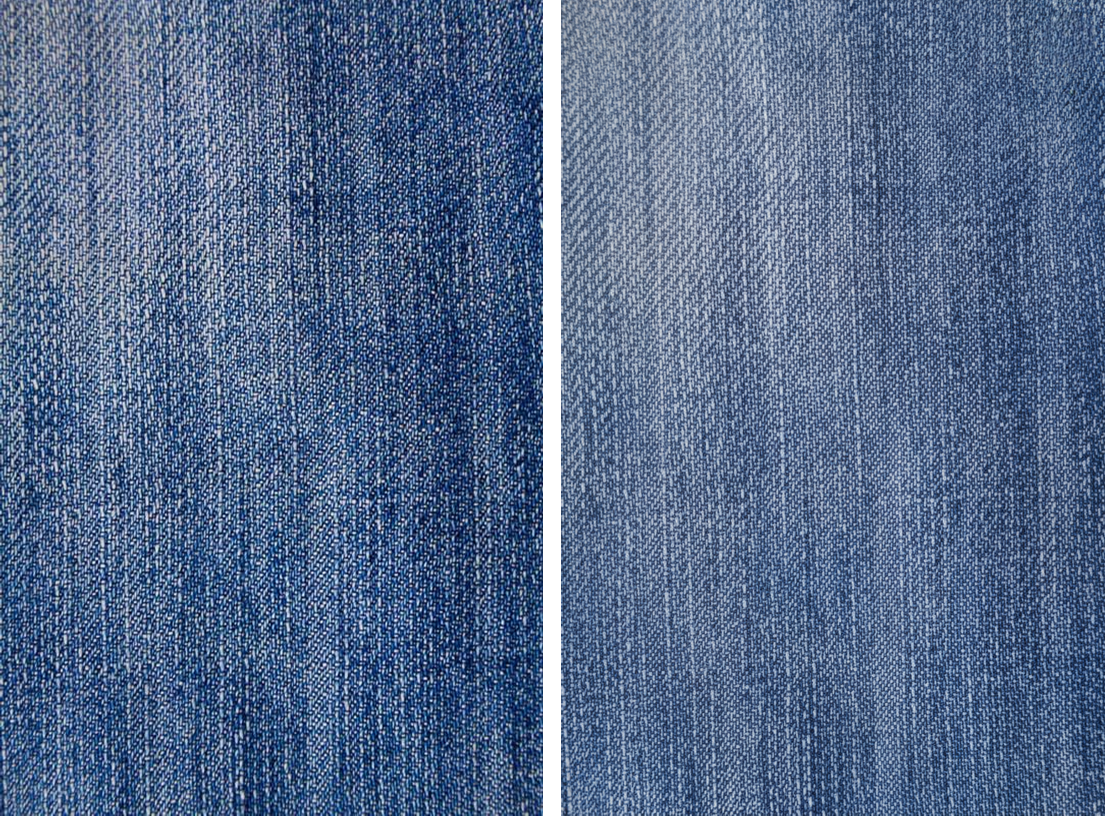
Stone washing leaves a very distinct signature. You can usually spot it right away.
- That vintage, faded look—not uniform, a bit random
- More defined seams and edges, almost highlighted
- Softer hand feel, less rigid than raw denim
- A naturally uneven wash effect, which actually adds character
Materials Used
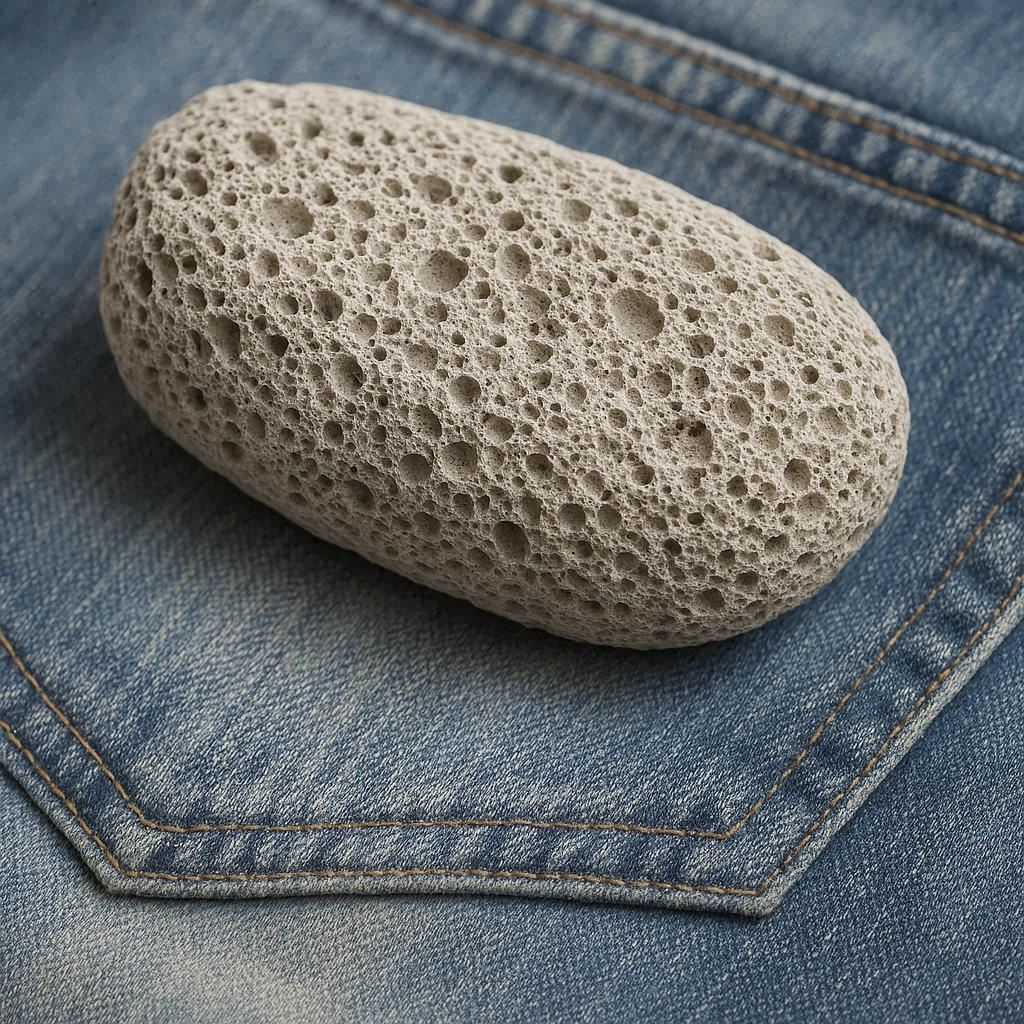
Pumice Stones
Chemical Composition (Typical):
| Compound | Chemical Symbol |
|---|---|
| Silicon Dioxide | SiO₂ |
| Aluminum Oxide | Al₂O₃ |
| Iron Oxide | Fe₂O₃ |
| Calcium Oxide | CaO |
| Magnesium Oxide | MgO |
- Lightweight porous volcanic rock
- High abrasion capability
- Available in different sizes (1–7 cm)
- Larger stones = stronger abrasion
- Smaller stones = softer wash effect
Enzymes (Bio-Stone Wash – optional)
Many manufacturers now replace stones partially or fully with cellulase enzymes, which dissolve surface fibers and reduce stone damage.
Cellulase Enzyme (C₆H₁₀O₅)ₙ
EC Number: EC 3.2.1.4
Auxiliaries
- Detergents:
| Detergent Type | Symbol |
|---|---|
| Nonionic Surfactant | R–O–(CH₂CH₂O)nH |
| Anionic Surfactant | R–SO₃Na |
- Anti-back staining agents: Polymeric dispersants, Surfactants
- Softening agents : R₄N⁺ (Quaternary Ammonium Compound), Polydimethylsiloxane (PDMS) (C₂H₆OSi)n.
Stone Wash Recipe
Batch Example
- Machine Load Capacity: 300 kg
- Garment Load: 150–180 kg (50–60% loading for good tumbling)
- Liquor Ratio: 1:6 to 1:8
- Pumice Stone: 0.5–3.0 kg stones per kg garment (depending on effect)
| Process | Chemical / Material | Dosage | Temperature | Time |
|---|---|---|---|---|
| Stone Wash | Pumice Stone (SiO₂) | 1–2 times garment weight | Room Temp | 30–60 min |
| Detergent | Surfactant | 0.5–1.0 g/L | Room Temp | — |
| Anti-back Staining | Polymer Dispersant | 0.5–1.0 g/L | Room Temp | — |
| Rinse 1 | Water (H₂O) | — | Cold | 5–10 min |
| Rinse 2 | Water (H₂O) | — | Warm | 5–10 min |
| Softening | Silicone Softener (PDMS) | 0.5–1.5% owf | 25–35°C | 10–20 min |
| Drying | Hot Air | — | 60–75°C | As Required |
Bio–Stone Wash Recipe (Optional)
This is widely used as a greener alternative.
| Process | Chemical | Dosage | Temperature | Time |
|---|---|---|---|---|
| Enzyme Wash | Neutral/Acid Cellulase | 0.5–2.0% owg | 45–55°C | 20–40 min |
| Anti-back Staining | Polymer Agent | 0.5–1.0 g/L | — | — |
| Rinse | Water (H₂O) | — | Cold | 5–10 min |
| Softening | Silicone Softener (PDMS) | 1–2% | 30°C | 15–20 min |
Stone Washing Process Flow
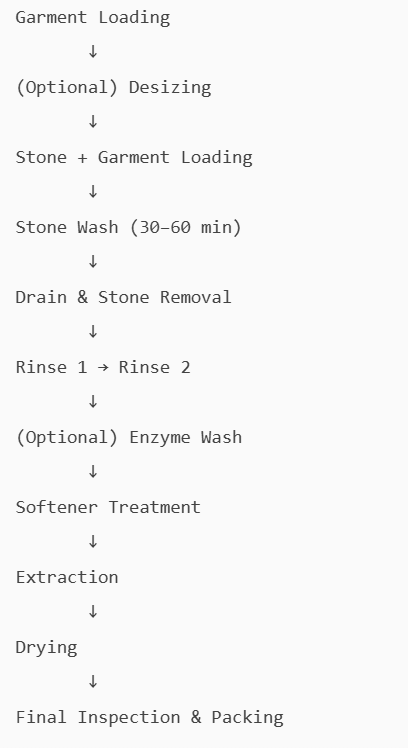
Step 1: Garment Loading
- Load garments at 50–60% of machine capacity to ensure good abrasion.
- Check zippers, buttons, trims for strength.
Step 2: Desizing (Optional )
- Add desizing enzyme or detergent.
- Liquor ratio: 1:8
- Temperature: 50–60°C
- Time: 10–15 min
- Drain.
Purpose: Remove starch and allow even washing.
Step 3: Stone Washing
- Add pumice stones into the tumbler.
- Add garments and required liquor.
- Add detergents/anti-back staining chemicals.
- Run the machine:
- Temperature: 25–40°C
- Time: 30–60 min
- Speed: 15–25 rpm
Importance:
The stones create abrasion—removing dye from surface fibers and giving the
faded look.
Step 4: Drain & Stone Removal
- Drain the wash water.
- Manually or mechanically separate stones from garments.
- Transfer garments to rinsing.
Note: Stone removal is labor-intensive; many factories now use synthetic stones or enzymes.
Step 5: Rinsing (1–2 cycles)
- Rinse 1: Cold water – 5 to 10 min
- Rinse 2: Warm water – 10 min
Purpose:
Remove stone dust, loose fibers and detergent residues.
Step 6: Optional Enzyme Wash
If a softer, cleaner look is required:
- Add cellulose enzyme.
- Temperature: 45–55°C
- Time: 20–40 min
- Dosage: 0.5–2% owg
- Run with gentle action.
Stops when the desired shade is achieved.
Neutralize enzyme if required.
Step 7: Softening
- Fill machine at LR 1:6
- Add softener
- Temperature: 25–35°C
- Time: 10–20 min
Softener improves hand feel and flexibility.
Step 8: Extraction
- Hydro-extract for 3–5 minutes.
- Ensure no residual stones.
Step 9: Drying
- Tumble
dry at 60–75°C until fully dry
or - Line dry (for premium denim pieces)
Advantages, Challenges and Modern Alternatives
Stone washing is a well-known denim finishing process that gives garments a naturally worn, vintage look. One of the biggest advantages of this method is that it creates unique fading patterns—no two pieces look exactly the same. It also makes the fabric softer, which improves comfort for the wearer. From a fashion perspective, this aged appearance adds character and can increase the overall value of the garment. Compared to heavy bleaching, stone washing generally relies on fewer harsh chemicals, which is another benefit.
That said, the process comes with several challenges. During washing, the stones can break down into small particles that may clog machines and drainage systems. Continuous rubbing with stones also weakens the fabric over time, leading to a loss in strength. The machinery itself can suffer damage due to friction with the stones, increasing maintenance costs. In addition, environmental concerns arise because of high water consumption and the disposal of used stone waste.
To address these issues, many manufacturers are shifting toward more advanced and sustainable alternatives:
- Enzyme (Bio) Stone Wash: Uses cellulose enzymes to create a similar faded look with less damage to fabric, machinery, and the environment, while also reducing water use and processing time.
- Synthetic Stones: Made from rubber or polymers, these provide similar effects with less breakage and lower impact on machines.
- Laser Fading: A modern, water-free technique that produces precise patterns without physical abrasion.
- Ozone Washing: An Eco-friendly method that lightens denim using minimal water and chemicals.
Overall, while traditional stone washing remains popular for its distinctive look, these newer methods are becoming increasingly important for improving sustainability, reducing costs, and protecting both fabrics and equipment.