Dry Wash Techniques in Garment Processing: Methods, Chemicals and Fashion Applications
June 03, 202514 min read
Dry wash is a mechanical or chemical-free garment finishing process that treats fabrics or garments without water to create special surface effects, improve hand feel, or achieve a washed appearance.
It is very common in denim finishing, knitwear enhancement and casual woven garment processing.
Dry wash
The dry washing processes are mainly mechanical in nature and do not involve water or chemical liquor. They are primarily used to make surface abrasion and visual effects.
Common Dry Wash Techniques:
Whiskering: Creation of crease lines at stress areas (thigh, knee, hip)
Hand Sanding: Manual abrasion using sandpaper
Scraping: Sharp tools used to remove dye from raised areas
Laser Washing: Computer-controlled laser technology for precision fading
Ozone Treatment: Dry ozone gas used for eco-friendly bleaching
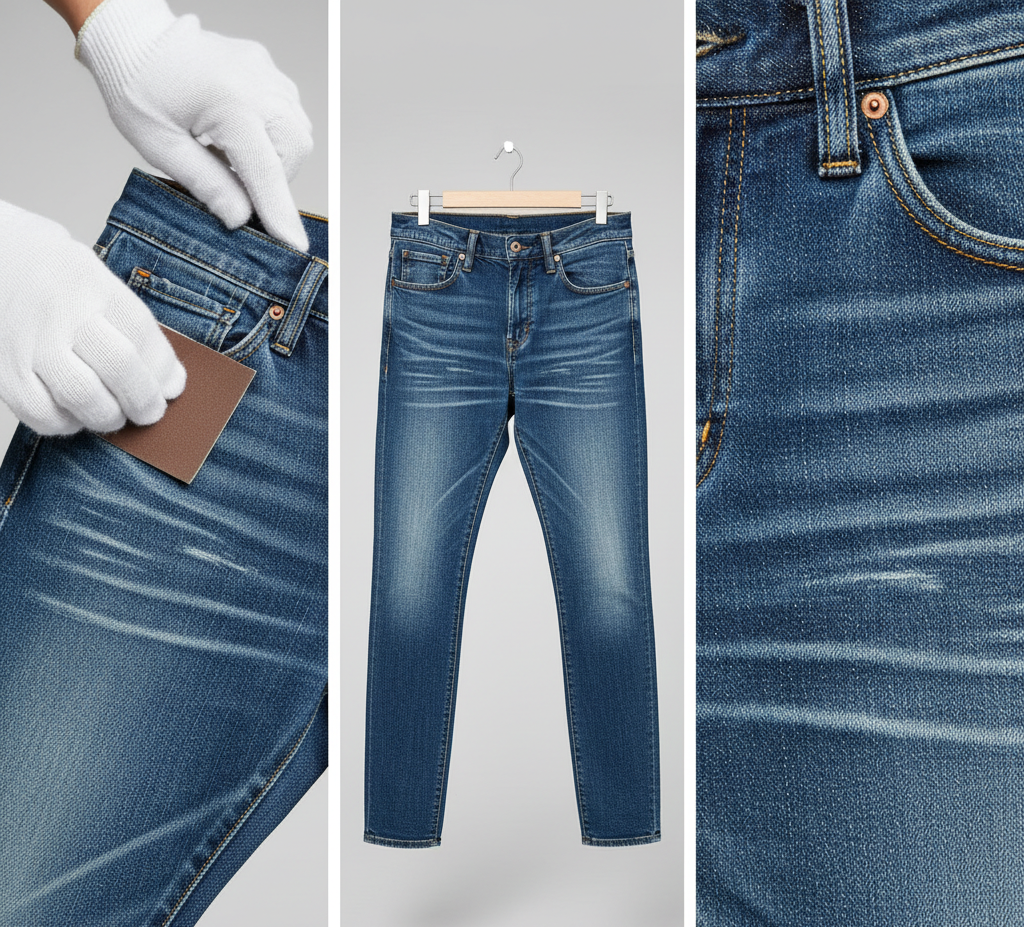
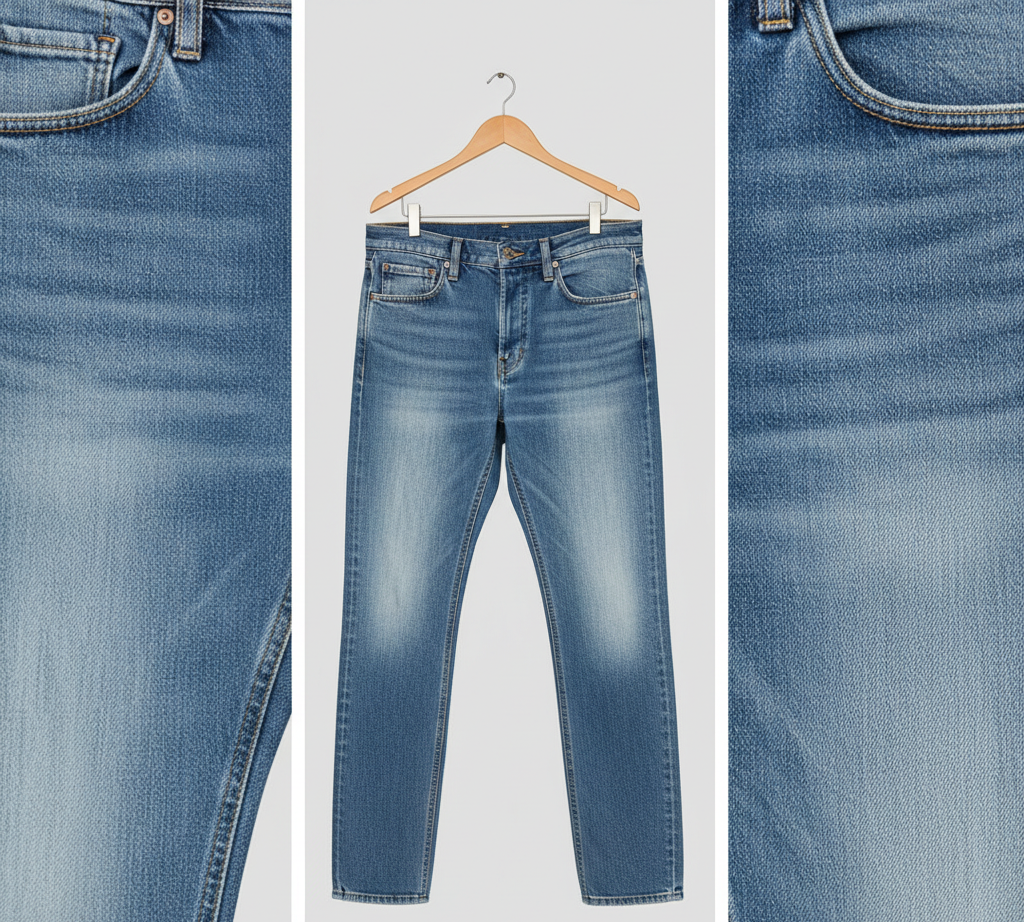
Whisker Effect (Dry Wash)
The whisker effect is the most common and most widely used dry washing process for denim garments. It gives denim natural crease-like faded lines for a worn stylish look on the garment.
Whisker Effect
Process Description
Whiskering is achieved by first creating a whisker pattern on selected areas of the garment. The garment is then laid on a dummy or flat surface and abrasion is applied along the marked pattern. Indigo colour is removed from the surface of the cloth by this abrasion. After washing the whisker design is clearly visible and becomes a permanent design on the garment.
Common Application Areas
Thigh area
Knee area
Hip and seat area
Key Features
Creates realistic wear marks similar to daily use
Enhances garment style and fashion value
Very popular in men’s and women’s denim products
Advantages
No water is required
Low chemical consumption
High buyer acceptance in denim collections
Whiskering is a signature dry wash design in denim and is commonly used in casual, premium and fashion denim garments.
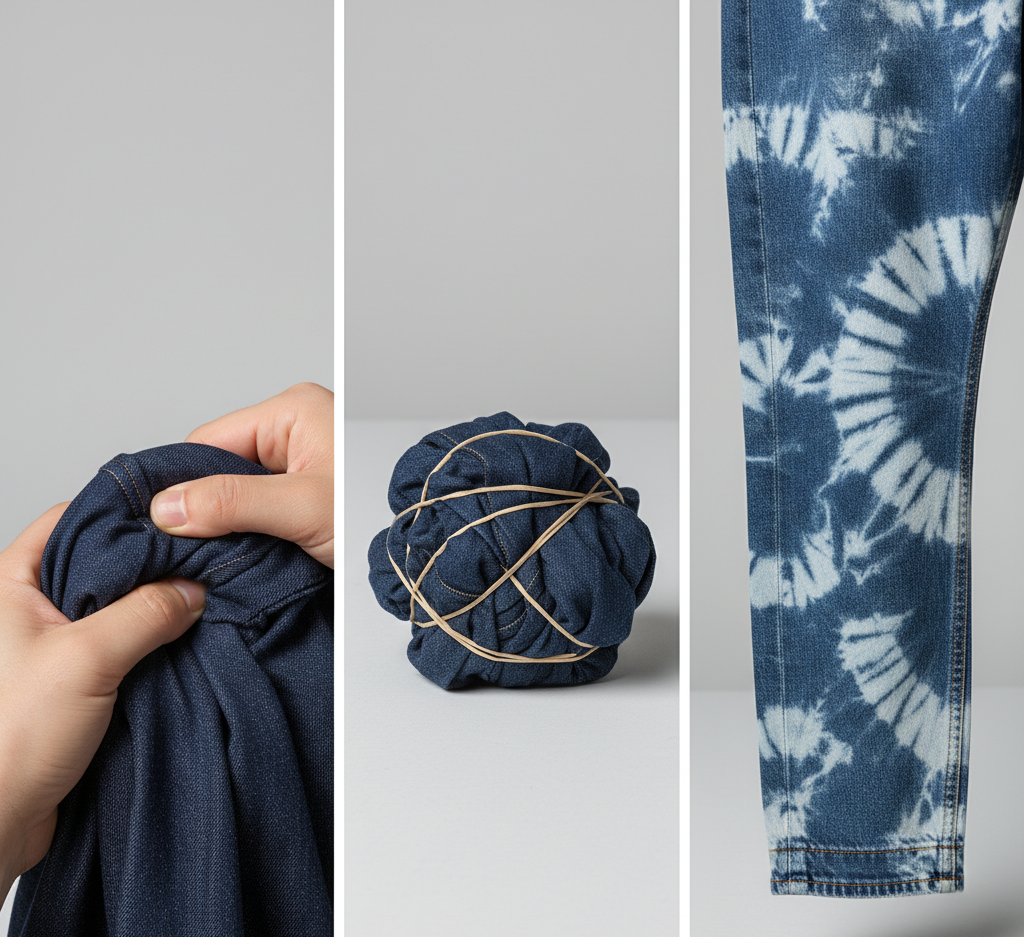
Tie Effect (Resin Tie Effect / Tie‑Dye Look)
The tie effect is a special dry finishing process used to create unique and artistic patterns on denim garments. This process is very popular in modern denim fashion and premium collections.
Tie Effect
Process Description
Following all the wet and dry washing processes, the whole garment is subjected to a resin. The garment is then folded, twisted or tied with rope or rubber bands. Then the garment is tied and passed through a hydro extractor and dried. During drying the resin hardens and creates special visual effects in the tied areas.
Characteristics
Creates irregular and artistic patterns
Each garment has a unique appearance
High fashion and trendy look
Advantages
Strong visual differentiation
Adds high value to the garment
Widely accepted in international denim markets
The tie effect is now widely applied in denim apparels and is very popular for its stylish and unique look.
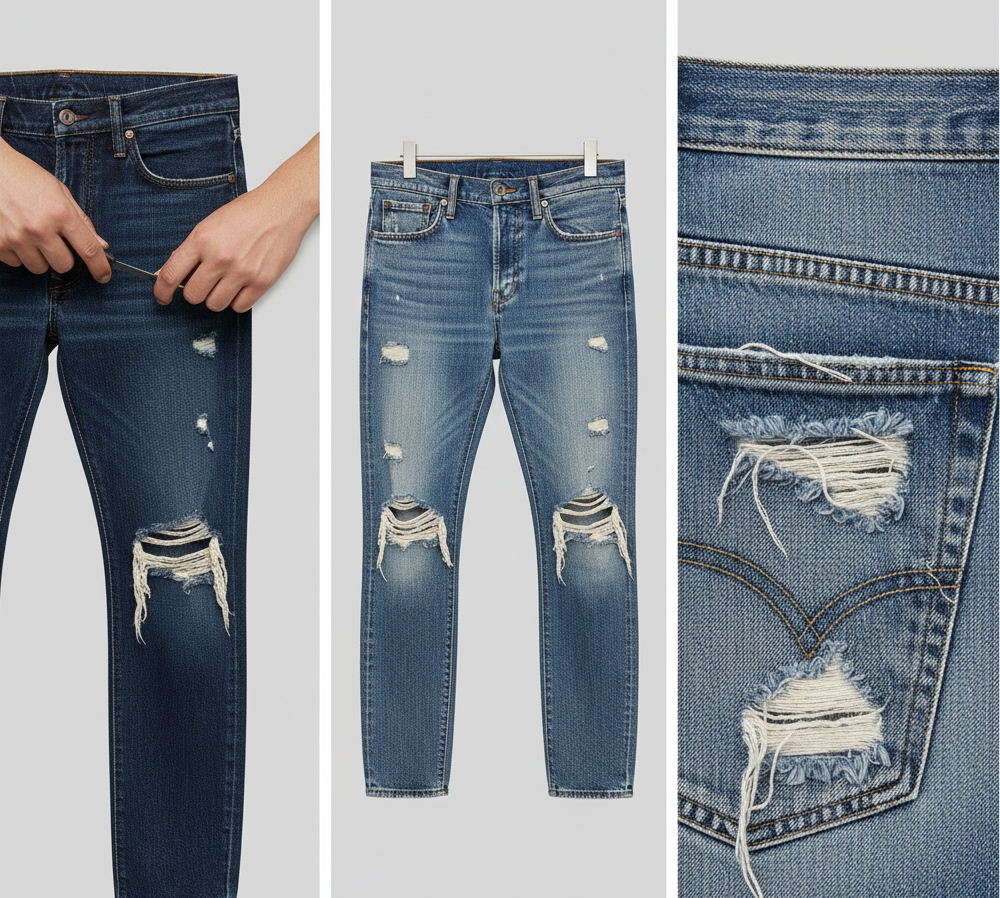
Destruction / Destroy Effect (Dry Wash)
Destruction, also called destroy effect, is one of the most popular distressing techniques in denim washing and finishing. This process is a controlled damaging of the fabric’s surface, giving a rugged, worn out and fashionable appearance.
Destruction / Destroy Effect
Process Description
The destruction effect is done with the help of a pen grinding machine or hand-held grinding tools with different sizes of stones or abrasive tips. These tools are applied to specific parts of the garment in order to remove indigo dye and damage surface yarns. This way the white weft yarns become visible, creating holes, tears and worn patches.
Common Application Areas
Thigh and knee areas
Pocket panels
Back yoke and seat area
Bottom hem
Visual Characteristics
Torn and ripped appearance
Visible white yarns
Uneven and natural worn‑out look
Advantages
Strong fashion appeal in modern denim
Makes garments look unique and trendy
High demand in casual and premium denim markets
Destruction effects are a common trend in fashion denim collections. They lend garments a bold, youthful and distinctive look, while maintaining controlled durability.
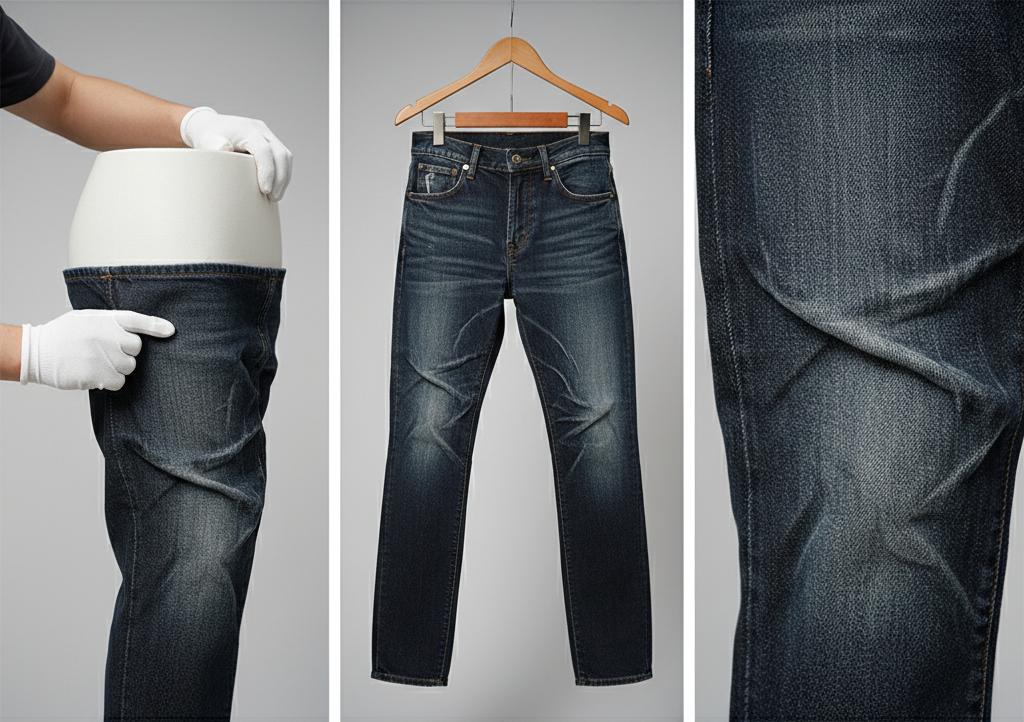
Tagging / Crinkle Effect (Dry Wash)
Tagging (also known as crinkle effect) is a dry washing technique for creating localized wrinkle or worn effects on small garment areas. This process improves the natural ageing appearance of denim garments
Tagging / Crinkle Effect
Process Description
The tagging effect is produced in a tagging machine which applies pressure and abrasion to certain areas of the garment. The process is controlled to create a crinkled or creased appearance without harm to the garment structure.
Common Application Areas
Waistband
Belt loops
Pocket openings
Pocket corners
Bottom hems
Key Features
Creates natural wear and crease marks
Enhances garment depth and detailing
Gives a realistic used appearance
Advantages
Improves overall garment aesthetics
Adds value without heavy fabric damage
Commonly combined with whisker and destroy effects
The crinkle or tag effect gives a naturally worn look, making denim apparel appear more genuine and trendy.
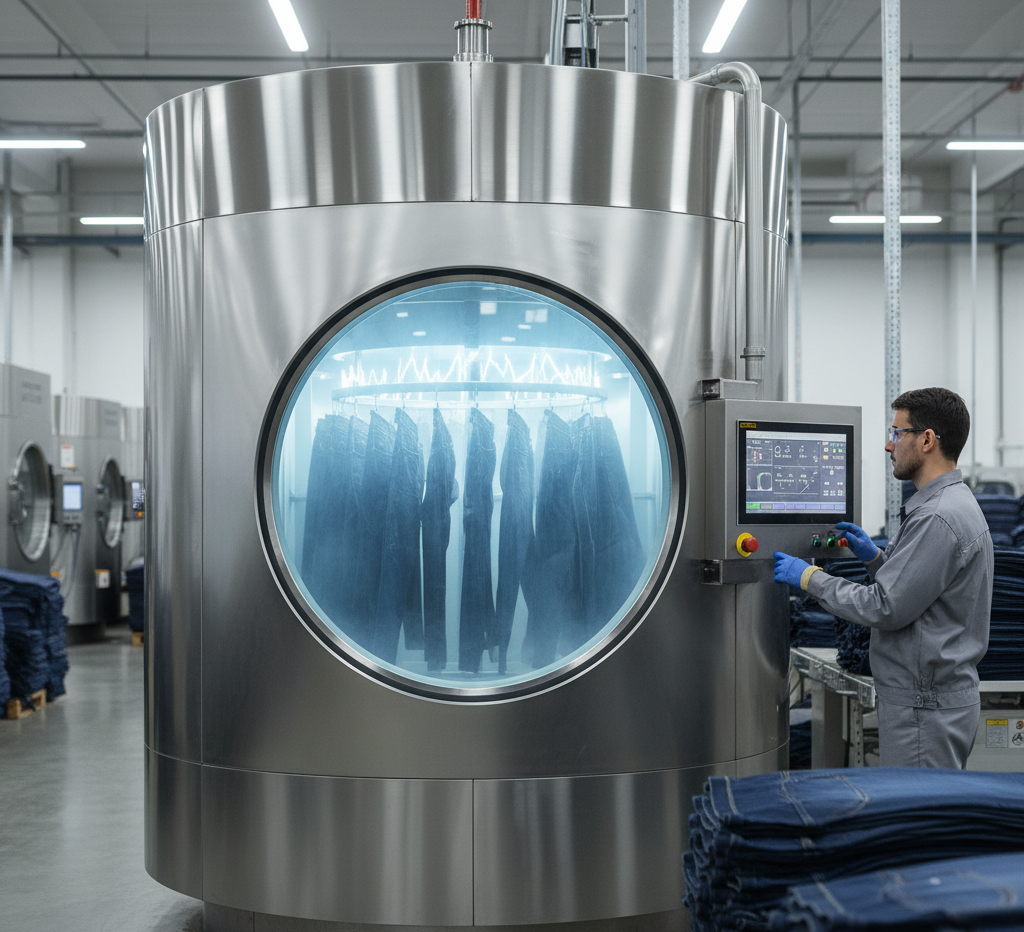
Ozone Dry Wash
Ozone Dry Wash (also called Ozone Finishing or Ozone Fading) is a waterless, environmentally friendly garment finishing process that is mainly used for denim, twill, knits, and some woven garments.
It employs ozone gas (O₃) in a sealed chamber to generate light fading, bleaching, whitening and vintage effects without water or aggressive chemicals like hypochlorite or permanganate.
Ozone dry wash is a key part of the sustainability story for brands, as it significantly reduces:
Water usage (100% water‑less)
Chemical usage
Energy requirement
Processing time
Ozone Dry Wash
How Ozone Works (Simple Chemistry)
Ozone (O₃) is generated from oxygen (O₂) using an ozonizer.
Inside the chamber:
After washing, ozone converts back into oxygen, leaving no harmful residue.
Ozone Dry Wash Effect
Ozone Dry Wash Process Flow
Step 1: Loading
Garments loaded into ozone machine drum
Usually jeans, jackets, knits, heavy garments
Step 2: Ozone Generation
Ozonizer converts O₂ into O₃
Injects gas into drum
Step 3: Ozone Treatment
Garments rotate/relax inside chamber
Exposure time = 5–30 minutes
Ozone oxidizes dyes and removes color
Step 4: Neutralization
Remaining ozone is destroyed via catalytic converter
Only oxygen (O₂) is released
Step 5: Ventilation & Unloading
Garments taken out
No rinsing, no drying needed
Step 6: Optional finishing
Softening
Dry tumble
Laser whisker pairing
Types of Effects Achieved by Ozone Dry Wash
A. Bleaching/Fading
Light blue effect on denim
Vintage wash look
Reduction of overall shade
B. Ozone Whiteness Enhancement
Used for white garments
Improves brightness without chlorine
C. Back‑Stain Reduction
Removes indigo back-staining
Improves inner side whiteness
D. Local Ozone (Spot Ozone)
Spray gun for local effects
Used for replacing permanganate spray
E. Ozone Rinse
Gentle cleaning
Reduces bacteria and odor
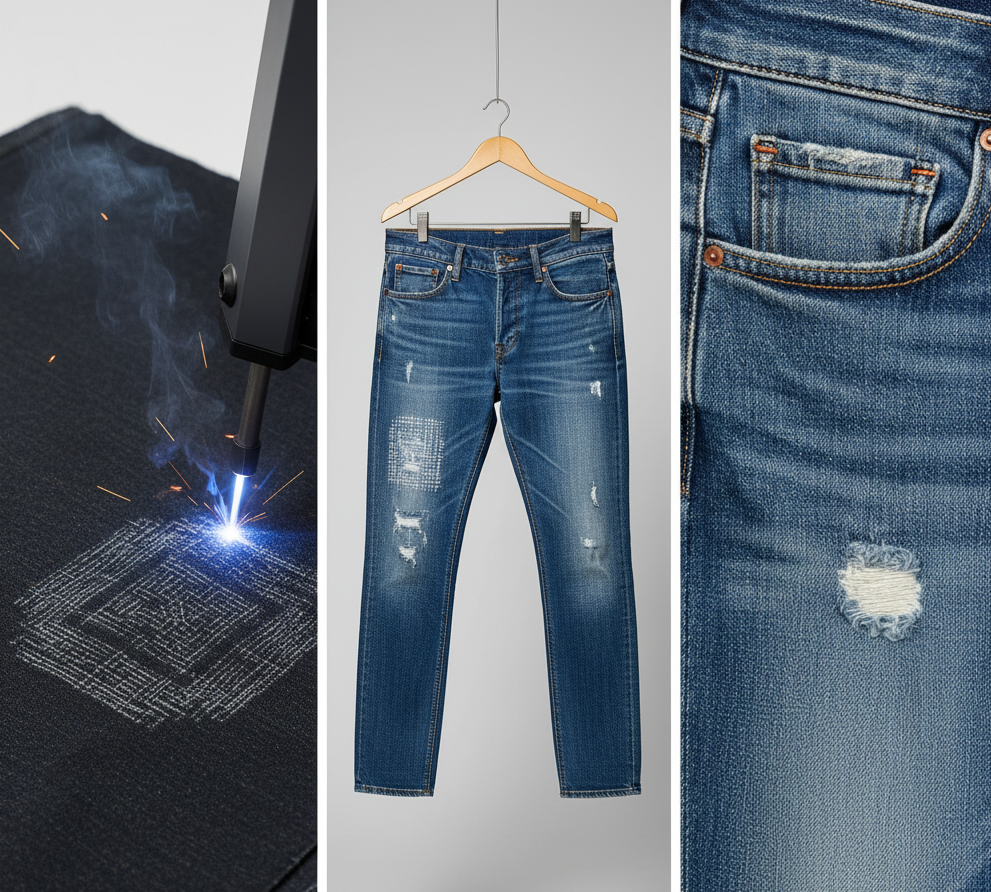
Laser Dry Wash
Laser Dry Wash: A process where CO2 lasers or fibre lasers are directed onto the garment surface to burn or fade the dye (especially indigo denim) in a controlled pattern. Laser Dry Wash or Laser Finishing is a waterless, chemical free, computer controlled garment finishing technique, which is used extensively in denim, twill garments, jackets and fashion wear.
Laser Dry wash
It uses high‑energy laser beams to create whiskers, fade marks, abrasion, scraping effects, patterns or graphics on garments—without using:
Water
Stones
Chemicals like potassium permanganate
Manual labor for sanding
This makes it one of the most sustainable and efficient garment finishing technologies in the textile industry.
Key Purpose:
Create whiskers and creases
Create denim scraping effect
Make vintage or worn-out looks
Add fashion graphics and prints
Replace hand sanding and PP spray
Reduce production time
Improve worker safety
Laser finishing has become a standard for eco-friendly garment finishing.
How Laser Dry Wash Works
Laser finishing is done inside a closed machine using high‑precision software.
Process Steps:
1. Design Creation
Whisker pattern or scraping design created in laser software
Imported as a digital file (AI, DXF, BMP, etc.)
2. Garment Positioning
Garment placed flat on laser bed or mannequin
Vacuum table used to keep fabric stable
3. Laser Exposure
Laser beams scan the garment surface
Dye burns off microscopically
Creates faded areas (no physical damage)
4. Cooling & Final Touch-up
Garment inspected
Optional dry tumble or softening for hand feel
Ready for shipment or next process
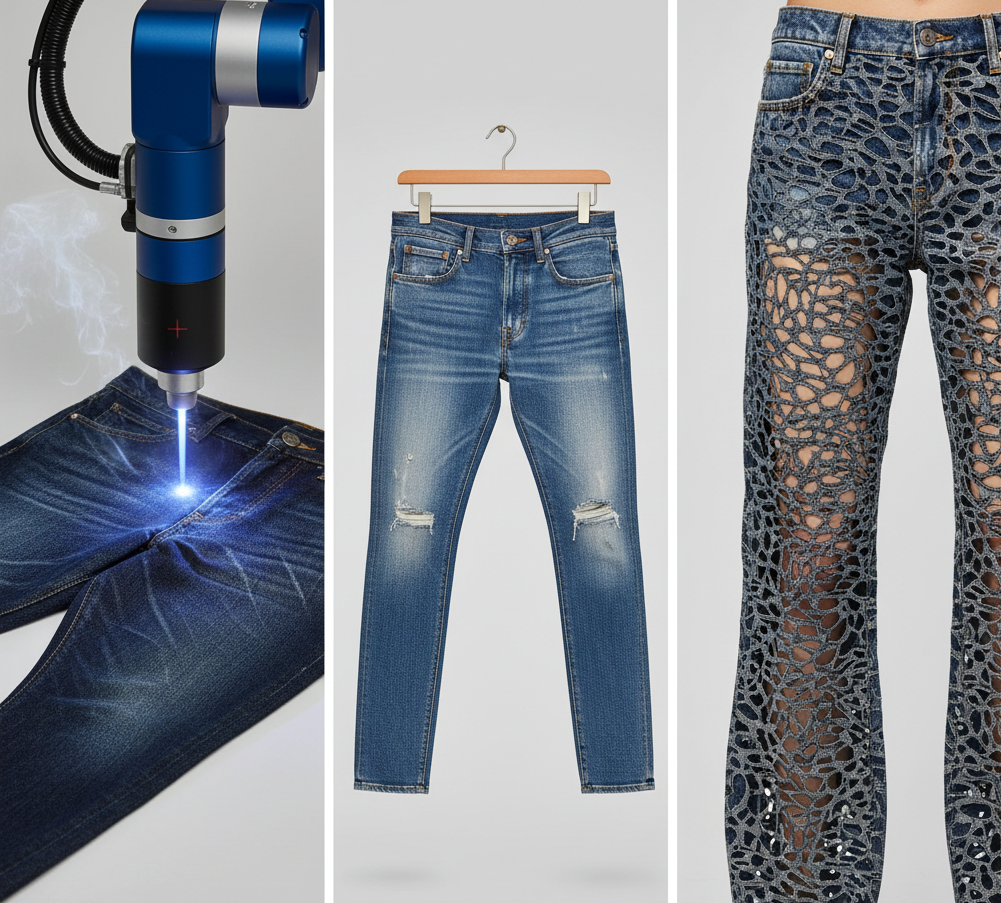
Effects Created by Laser Dry Wash
Effect of Laser
Laser is extremely versatile. It can create:
A. Whiskers (Honeycombs)
Lines at thigh, hip, back knee areas
Replace manual hand scraping
B. Fade/Scraping
Vintage worn-out effect
High-low contrast shading
C. Distress Effects
Holes, tears, cuts, scratches
Controlled damage look
D. Patterns & Graphics
Logos
Artwork
Branding
Special designs
E. Full‑Garment Fading
Overall lightening
Bleached look without chemicals
Benefits of Laser Dry Wash
Environment Friendly
Zero water
Zero chemicals
Zero PP (potassium permanganate)
No pumice stones
Worker Safety
Replaces:
Hand sanding
PP spray
Grinding
Stones
Prevents worker exposure to:
Dust
Silica
Hazardous chemicals
Consistency & Accuracy
Highly repeatable
No human error
Perfect symmetry in whiskers
Fast Production
Minutes instead of hours
Higher productivity
Low operational cost
Garment Friendly
Less fabric damage than manual processes
Better strength retention
Limitations of Laser Dry Wash
Limitation
Reason
High initial investment
Machines are expensive
Not suitable for very dark or coated fabrics
Laser may not mark deeply
Requires skilled operator
Digital pattern setup
Can cause over‑burning
If beam power is too high
Proper calibration is essential.
Applications of Laser Finishing
Denim Garments
Jeans
Jackets
Skirts
Shorts
Woven Fabrics
Twill
Canvas
Cotton blends
Knitwear (limited)
Only fabric with stable structure
Light graphic or branding marks
Fashion & Customization
Artwork
Branding logos
Laser-etched textures
Machine Parameters to Control
Parameter
Impact
Laser power (Watt)
Depth & intensity of fading
Speed of scanning
Higher speed = lighter effect
Resolution (DPI)
Detail accuracy
Spot size
Fineness of whiskers
Beam pass count
Intensity & contrast
Fabric surface
Smoothness affects results
Another major value-addition process in denim and garment manufacturing is Wet washing, you can visit Wet Wash in Garment Processing
References & Sources
Paul, R. – Denim: Manufacture, Finishing and Applications.
Gulrajani, M.L. – Textile Finishing Processes.
Choudhury, A.K.R. – Principles of Textile Finishing.
Roshan Paul (Ed.) – Denim: Visions and Challenges.
The Textile Institute – Resources on denim processing, garment washing, finishing technologies, sustainability, and apparel manufacturing.
AATCC (American Association of Textile Chemists and Colorists) – Textile finishing, color fading, garment appearance, and performance testing standards.
Society of Dyers and Colourists (SDC) – Garment wet processing, dye chemistry, oxidation processes, and textile finishing technologies
Kansai Special & Denim Processing Technical Guides – Dry process applications, whiskering, scraping, distressing, and garment surface effects.
Disclaimer: The information provided is intended for educational and industry reference purposes only. Dry wash techniques, laser settings, ozone exposure times, abrasion methods, machine parameters, process sequences, and finishing effects may vary depending on fabric construction, fiber composition, dye type, garment style, equipment manufacturer, buyer specifications, sustainability requirements, and factory operating procedures. Actual production parameters should always be established through laboratory trials, approved wash standards, machine supplier recommendations, and customer-approved production samples before bulk implementation.
Written by
Alam Mohammad Shafiqul
Lead Editor, Senior Contributor & Founder
Textile Technology
Textile engineering professional with over 15 years of experience in Sweater Manufacturing, Industrial Engineering and Technical Development. Holds a degree in Textile Engineering and an MBA in Apparel Merchandising. Passionate about bridging the gap between factory-floor operations and technical expertise to drive efficiency, innovation, and continuous improvement.
Textile EngineeringSweaterIndustrial EngineeringLean Six SigmaPythonJS