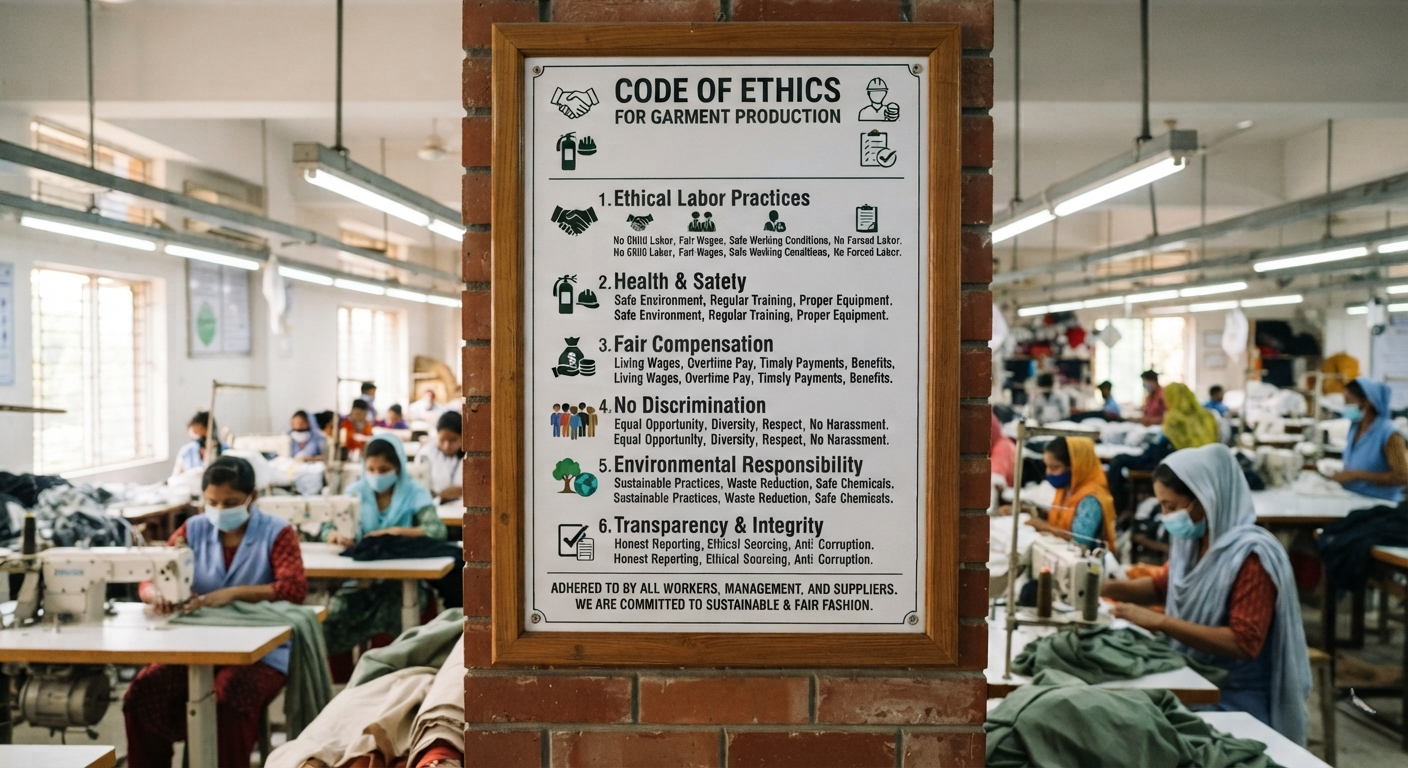
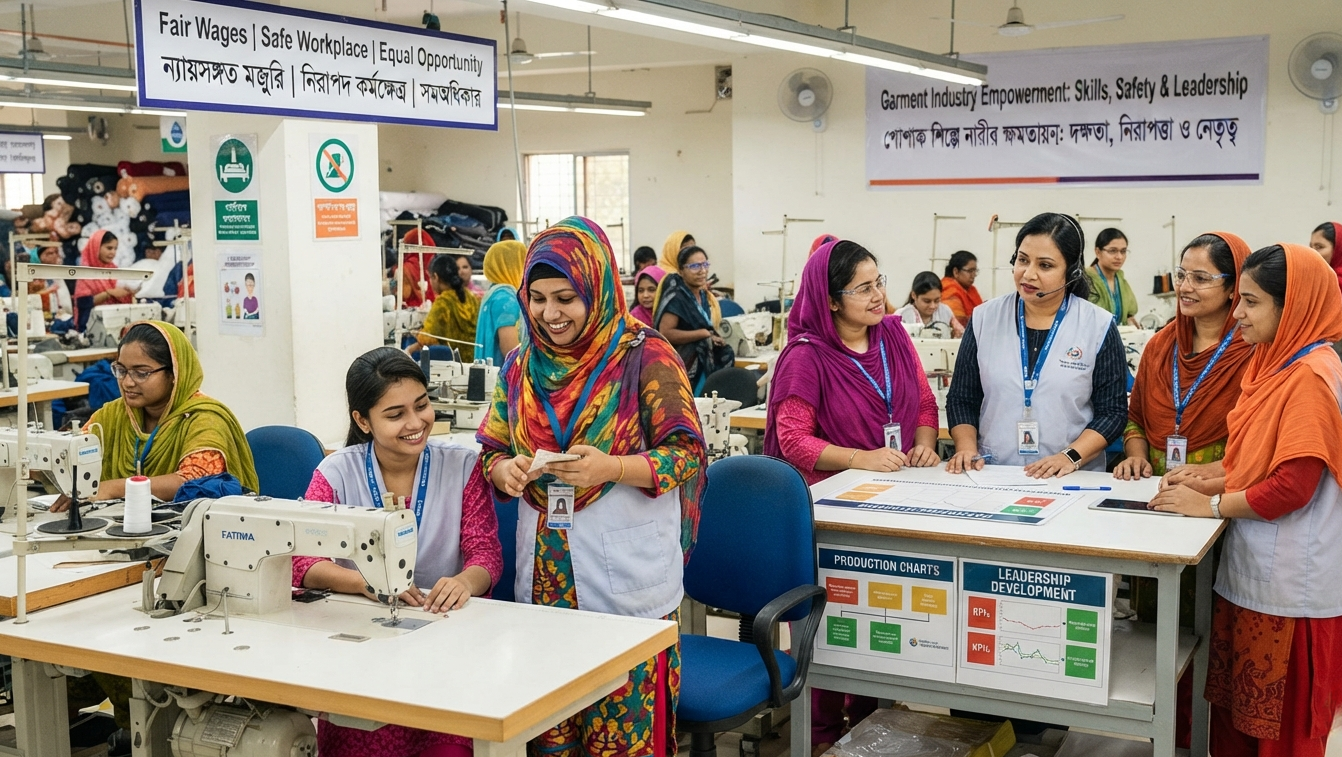
The garment and textile industry is one of the world's largest sources of employment and an important part of the global economy. Millions of people across Asia, Africa, Latin America and Eastern Europe depend on textile and garment manufacturing for their income. The industry also plays a major role in international trade, industrial development and job creation.
Over the past few decades, garment manufacturing has created employment opportunities for people who previously had limited access to formal jobs. This has been particularly important for women entering the workforce. At the same time, questions about wage levels, income inequality, overtime, job security and worker welfare continue to be important issues for the industry.
Wages are no longer seen simply as another production cost. They are increasingly connected with human rights, ethical business practices, social responsibility and supply chain sustainability. Buyers, governments, investors and consumers are paying more attention to how workers are paid and whether their income is enough to support a reasonable standard of living.
A socially sustainable garment industry therefore needs to look beyond production volume and cost. It should create economic value while also ensuring that workers receive fair compensation, work in safe conditions, have equal opportunities and are treated with dignity.
Understanding Wages in the Garment Industry
There is more than one way to look at worker compensation in the garment industry. A factory may comply with the legal minimum wage, for example, but that does not automatically mean workers are earning enough to meet their everyday needs.
Understanding the different types of wages is therefore important when evaluating compensation practices.
Types of Wages
| Wage Category | Description |
|---|---|
| Minimum Wage | The legally required wage established by the relevant government authority. |
| Industry Wage | The average wage commonly paid within a particular industry or sector. |
| Prevailing Wage | The typical wage paid for similar work within a particular region. |
| Living Wage | The income considered necessary for a worker and their family to maintain a decent standard of living. |
| Collective Bargained Wage | A wage established through negotiation between workers and employers or their representatives. |
| Take-Home Pay | The amount actually received by the employee after taxes and other permitted deductions. |
Minimum wages provide an important legal safeguard, but they do not necessarily reflect the real cost of living. This is why the discussion around garment-worker wages increasingly includes the concept of a living wage.
The important distinction is simple: meeting the legal minimum does not necessarily mean meeting the cost of living.
The Global Garment Workforce
The textile and garment sector employs millions of people around the world and remains an important source of manufacturing employment, particularly in developing economies.
Several characteristics of the workforce make wage management especially important.
Key Workforce Characteristics
A large proportion of workers are women in many garment-producing countries.
Young workers are also present in many production regions.
Migrant, temporary and contract workers are commonly part of the workforce.
Many factories depend heavily on export orders.
The industry provides employment opportunities for people with limited formal education.
Production is strongly influenced by international buyers and global sourcing decisions.
Wage levels are closely connected with factory productivity, skills and local economic conditions.
For many developing countries, garment manufacturing has been an important step toward industrialization. However, the same industry must also ensure that the economic benefits of manufacturing reach the people who actually produce the goods.
Global Wage Conditions
Garment-worker wages vary considerably from one country to another. Differences in economic development, productivity, labor regulations, inflation and the cost of living all influence wage levels.
The following figures provide an illustrative comparison of average monthly manufacturing wages:
| Country | Average Monthly Wage (USD) |
|---|---|
| Bangladesh | 135–140 (2026) |
| Pakistan | 135–140 (2026) |
| Myanmar | 161 (2026) |
| Indonesia | 194 (2026) |
| India | 195 (2026) |
| Cambodia | 256 (2026) |
| China | 400–430 (2026) |
These figures should be interpreted carefully because average wages do not tell the entire story. A wage that appears reasonable when compared internationally may still be difficult for a worker to live on in a particular city or region.
Housing, food, transportation, healthcare and education costs can vary significantly within the same country. Inflation can also reduce the purchasing power of wages over time.
Why Wages Matter for Social Sustainability
Wages have a direct connection with workers' quality of life. The amount a person earns affects what they can afford, how secure their household feels and whether they can plan for the future.
Poverty Reduction
Adequate income gives workers a better chance of meeting everyday household needs and improving their family's living conditions.
Higher and more predictable earnings can contribute to:
Better nutrition.
Improved housing.
Access to healthcare.
Children's education.
Greater financial security.
Reduced dependence on high-interest debt.
On the other hand, workers may remain financially vulnerable even when they have full-time employment if their income is not enough to cover basic living expenses.
Human Dignity
Work should provide more than a means of survival. Workers should be able to earn enough to live with dignity and participate in their communities.
Fair compensation is therefore closely connected with responsible employment. It recognizes the contribution workers make to the success of a factory and the wider supply chain.
Gender Equality
Women make up a substantial part of the garment workforce in many manufacturing countries. Wage improvements can therefore have an important effect on women's economic independence.
Fair and predictable pay can help women:
Contribute more confidently to household finances.
Make independent financial decisions.
Support their children's education.
Improve household living conditions.
Build greater financial security.
For this reason, wage policy can also be viewed as part of the broader discussion about gender equality.
Worker Well-Being
Financial uncertainty can create pressure outside the workplace as well as inside it. When workers struggle to cover household expenses, they may experience greater stress and may become dependent on loans or additional working hours.
Adequate and predictable wages can help workers:
Manage regular household expenses.
Reduce unnecessary debt.
Plan for future needs.
Maintain a healthier work-life balance.
Reduce financial stress.
| Impact Area | What Fair Wages Can Support |
|---|---|
| Poverty reduction | Better living standards, education, nutrition and household financial security |
| Human dignity | Access to housing, healthcare and a more stable personal life |
| Gender equality | Greater economic independence and household financial security |
| Worker well-being | Lower financial stress, improved morale and better family relationships |
The Living Wage Concept
What Is a Living Wage?
A living wage refers to the income a worker needs to maintain a reasonable standard of living for themselves and their family while working normal hours.
This is different from a statutory minimum wage. A minimum wage is established through law, while a living wage is generally assessed by looking at actual household expenses and the cost of maintaining a decent standard of living.
What Does a Living Wage Need to Cover?
Depending on the location and household situation, a living wage would generally need to account for expenses such as:
Nutritious food.
Safe and adequate housing.
Healthcare.
Education.
Transportation.
Clothing.
Utilities.
Communication.
Basic savings and emergency needs.
The broader objective is to ensure that workers do not have to depend excessively on overtime simply to meet basic household expenses.
Why Living Wages Matter
A more adequate wage can benefit both workers and employers.
Potential benefits include:
Better worker well-being.
Higher employee engagement.
Lower turnover.
Stronger labor relations.
Improved workforce stability.
Better productivity.
Stronger corporate reputation.
As sustainability expectations continue to develop, living wages are receiving greater attention from brands, investors and other supply-chain stakeholders.
The Gap Between Minimum Wages and Living Wages
One of the difficult issues in garment manufacturing is the difference between the legal minimum wage and what workers actually need to maintain a decent standard of living.
The gap can become more noticeable when the cost of essential goods rises quickly. Workers may face increasing expenses for:
Rent and housing.
Food.
Healthcare.
Transportation.
Education.
Utilities.
A statutory wage increase may therefore not fully compensate for increases in household expenses.
This difference between legal wages and living costs has become an important topic in discussions about social sustainability, responsible sourcing and ethical supply chains.
Factors Influencing Garment Worker Wages
Wages are influenced by much more than government wage regulations. Factory economics, buyer behavior, worker skills and broader market conditions all play a role.
| Category | Factors |
|---|---|
| Economic | Inflation, exchange rates, productivity, economic growth and industrial competitiveness |
| Industry | Factory efficiency, manufacturing capability, product complexity, skill requirements and supply-chain structure |
| Market / Buyer | Brand purchasing practices, consumer demand, sourcing competition, lead times and cost pressure |
Challenges That Can Limit Wage Improvement
Improving wages is not always straightforward. Garment manufacturers often operate in a highly competitive international market where relatively small changes in production cost can influence sourcing decisions.
Global Cost Competition
Producing countries compete with one another to attract manufacturing investment and export orders.
Factories may operate with relatively narrow margins, particularly when they face strong price competition. Under these circumstances, increasing labor costs without corresponding improvements in productivity or product pricing can be difficult.
Purchasing Pressure
Suppliers may face pressure for:
Lower prices.
Shorter lead times.
Faster production.
Greater flexibility.
Frequent order changes.
When commercial pressure is high, factories may have limited room to increase wages unless labor costs are properly considered during pricing and purchasing decisions.
Informal Employment
Workers outside formal employment arrangements can face additional risks. They may have lower earnings, fewer benefits and limited access to social protection.
They can also have less bargaining power when negotiating employment conditions.
Limited Worker Representation
Where workers have limited access to worker committees, unions or other forms of representation, it may be more difficult to raise concerns about wages and compensation.
Constructive social dialogue can help workers and management discuss wage issues in a more transparent and practical way.
Ethical Wage Governance and Code of Ethics (COE)
Ethical Commitment to Fair Compensation
A responsible company recognizes that wages affect much more than an employee's monthly income. They influence household stability, health, education, financial security and overall quality of life.
Fair compensation should reflect the work people perform and should be managed in a transparent and consistent manner.
Companies that take sustainability seriously should therefore view wages as an investment in their workforce rather than treating labor costs only as an expense to be minimized.
Principles of Ethical Wage Management
An effective wage-management system should be based on several fundamental principles:
Fairness and equal treatment.
Respect for human rights.
Transparency.
Accountability.
Compliance with applicable laws.
Equal opportunity.
Worker participation.
Continuous improvement.
These principles can help build trust between workers and management while creating a more stable working environment.
Living Wage Philosophy
Meeting the legal minimum should be treated as the starting point rather than the end of the discussion.
A responsible employer should consider whether workers' earnings remain reasonably aligned with changing living costs.
Practical steps may include:
Reviewing wage levels regularly.
Monitoring changes in living costs.
Identifying potential gaps between wages and essential expenses.
Developing longer-term wage improvement plans.
Considering productivity and business sustainability when planning wage increases.
Engaging workers in discussions about compensation.
A long-term approach to wage improvement can benefit both employees and businesses by creating a more stable and committed workforce.
| Theme | Requirements |
|---|---|
| Timely and accurate pay | Pay salaries on schedule, maintain accurate payroll records and explain deductions clearly. |
| Equal pay / non-discrimination | Ensure compensation is not unfairly influenced by gender, race, religion, nationality, age, disability, marital status or other protected characteristics. |
| Overtime | Apply required premium rates, maintain accurate working-hour records and calculate overtime transparently. |
| Wage transparency | Clearly communicate basic wages, incentives, bonuses, attendance payments, overtime rates and deductions. |
| Responsible purchasing | Consider labor costs when negotiating prices and maintain realistic production schedules. |
| Worker representation | Provide appropriate channels for workers to raise concerns and participate in workplace discussions. |
| Vulnerable worker protection | Protect migrant, temporary, contract, apprentice, young and female workers from wage theft, illegal deductions and other unfair practices. |
Wage Performance Monitoring
Good wage management requires more than checking whether employees receive their salaries on time. Companies should monitor wage-related information regularly to identify problems and measure improvement.
Recommended Wage Sustainability KPIs
| Indicator | Objective |
|---|---|
| Legal wage compliance rate | Confirm compliance with applicable wage requirements |
| Average wage growth | Track changes in employee earnings over time |
| Living wage gap | Monitor progress toward more adequate compensation |
| Payroll accuracy rate | Reduce payroll errors |
| Gender pay gap | Monitor pay equity |
| Overtime dependency ratio | Understand whether workers depend heavily on overtime income |
| Employee satisfaction score | Understand workforce perceptions of compensation |
| Wage grievance rate | Identify recurring compensation concerns |
| Employee retention rate | Assess longer-term workforce stability |
| Worker consultation participation | Measure employee involvement in wage-related discussions |
These indicators can help management move from simply reacting to wage complaints toward identifying patterns and addressing underlying issues.
ESG and Wage Sustainability
Wages are increasingly connected with the Social component of Environmental, Social and Governance (ESG) programs.
| ESG Consideration | Relevance |
|---|---|
| Fair compensation and pay equity | Important social sustainability indicator |
| Living wage progress | Increasing area of investor and stakeholder attention |
| Worker well-being | Important human-capital consideration |
| Human rights due diligence | Increasingly relevant to responsible sourcing |
| Supply chain transparency | Important for ethical sourcing and sustainability reporting |
For garment companies, wage information can therefore form part of a broader assessment of social performance across the supply chain.
Future Trends in Garment Worker Compensation
The way wages are managed is likely to change as technology, regulation and buyer expectations continue to evolve.
| Trend | Implication |
|---|---|
| Automation and digital transformation | Greater demand for skilled workers may lead to changes in job roles and pay structures |
| Consumer expectations | More attention to transparency around how products are made and how workers are treated |
| Regulatory change | Stronger human-rights and supply-chain due-diligence requirements |
| Sustainable procurement | Wage-related criteria may become more common in supplier evaluations |
| Public disclosure | Companies may increasingly report wage and workforce indicators in sustainability disclosures |
Automation, for example, may reduce demand for some repetitive tasks while increasing demand for technical, maintenance and digital skills. This could gradually change the skills and compensation structures within factories.
At the same time, buyers are increasingly expected to consider whether their own purchasing practices allow suppliers to maintain responsible labor standards. Realistic lead times, stable orders and commercially sustainable pricing can all influence a supplier's ability to maintain good employment conditions.
Conclusion
Wages remain one of the most important social sustainability issues facing the global garment and textile industry. The sector has created employment and economic opportunities for millions of people, but questions surrounding wage adequacy, living wages, income security and pay equity remain unresolved in many production regions.
Addressing these issues requires cooperation across the entire supply chain. Governments have a role in establishing and enforcing labor standards. Manufacturers need to maintain responsible compensation systems. Brands and buyers need to consider labor costs when making sourcing and purchasing decisions. Workers need meaningful channels through which they can raise concerns and participate in workplace discussions.
Legal compliance provides an essential foundation, but sustainable wage management requires a broader perspective. Companies need to understand the relationship between wages, living costs, productivity, worker welfare and business performance.
Ultimately, the success of the garment industry should not be judged only by production volume, delivery performance or profit. The people who make the products are also part of that success. When workers receive fair and reliable compensation, businesses can build stronger relationships with their workforce and create a more stable supply chain.
Fair wages are therefore much more than a labor-cost issue. They are an important part of social sustainability, responsible business conduct and a healthier future for the global garment and textile industry.