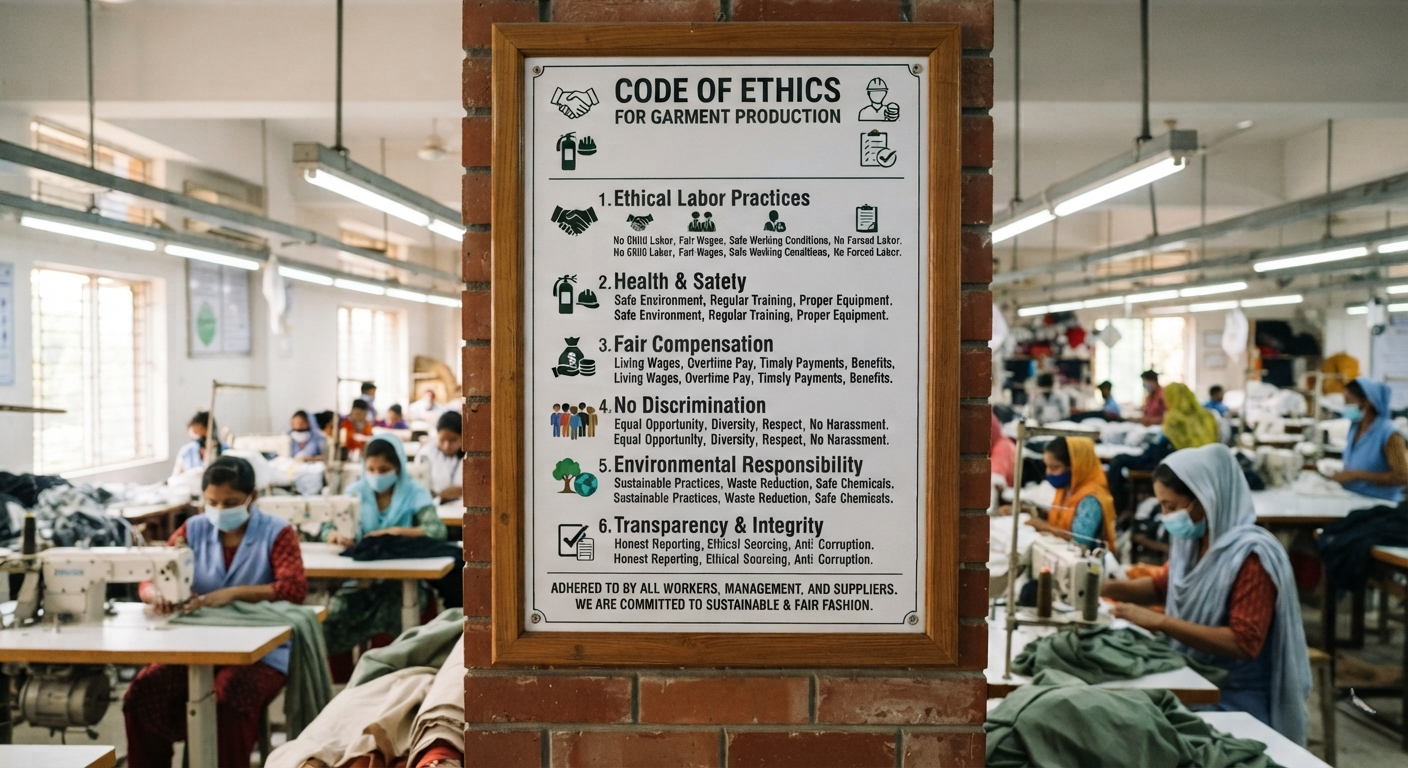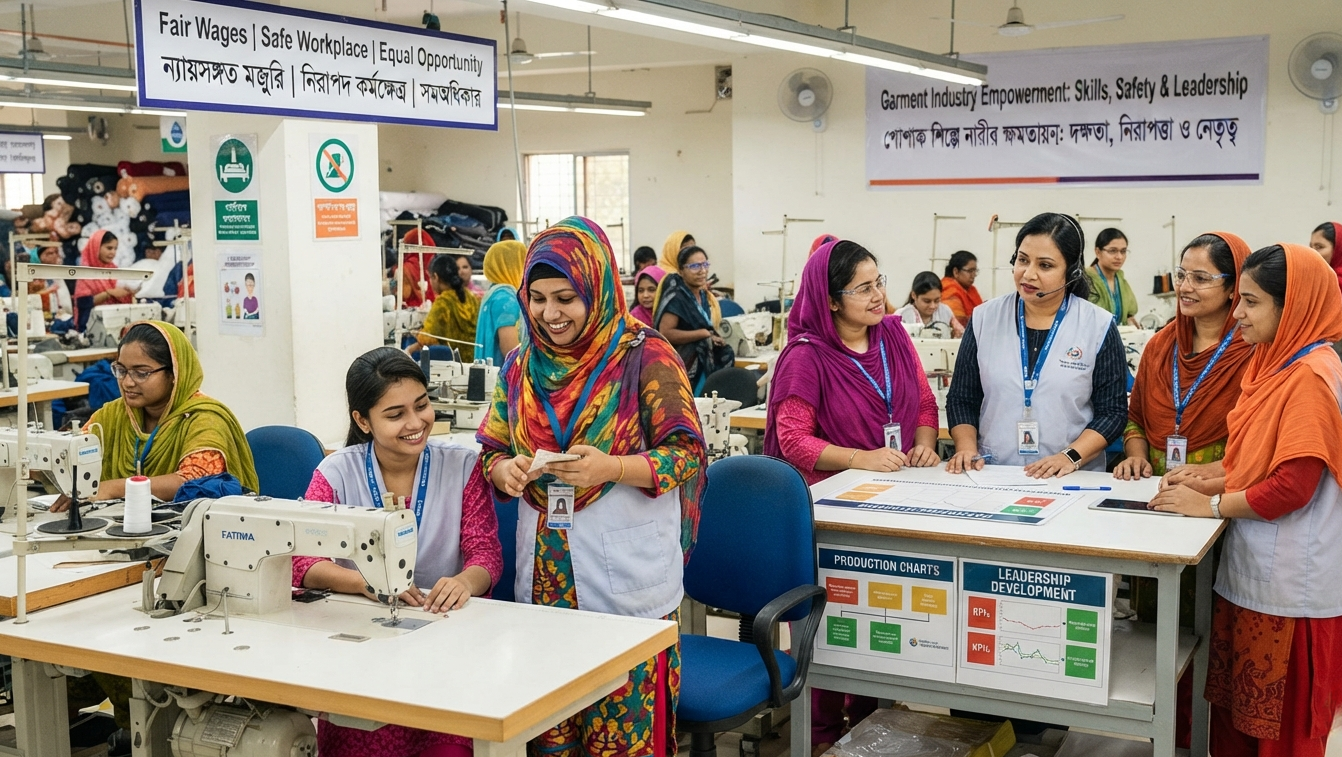
Millions of women around the world work in garment factories. They cut fabric, operate sewing machines, inspect finished garments, manage production lines and perform many of the jobs that keep the industry moving. Without their contribution, the global clothing business simply could not operate at its current scale.
For many years, however, the people doing this work did not always receive the pay, safety, respect or opportunities they deserved. In many factories, women remained concentrated in lower-paid positions and had limited opportunities to move into supervisory or management roles.
That picture is gradually changing.
Brands, manufacturers, governments and worker-support organizations are putting more attention on women's rights and opportunities in garment production. The changes are not happening everywhere at the same pace, but the direction is clear: women need more than a job. They need safe workplaces, fair treatment, opportunities to learn and a genuine voice in decisions that affect them.
This article looks at why women are so important to the garment industry, the problems they still face and some of the programs and approaches being used to create better opportunities.
Why Women Matter So Much in the Garment Industry
The garment industry is one of the major sources of employment for women in many manufacturing countries. In several garment-producing regions, women make up a large share of factory workers, particularly in sewing and other production roles.
For many of these workers, a factory job is their first opportunity to earn a regular income outside the home. That income can make a significant difference to their families.
Some important points stand out:
Women represent a large proportion of garment workers in many production countries.
Many women contribute a major share of their household income.
Factory employment can provide women with their first regular paid job.
Stable income can improve a family's ability to afford food, education and healthcare.
Employment can also give women greater financial independence and confidence.
The impact therefore goes beyond the factory floor. When women have more control over their income and decisions, the benefits can reach their children, families and wider communities.
What Does Women's Empowerment Actually Mean?
"Women's empowerment" is a phrase used frequently in sustainability and social-compliance discussions, but it can sound vague.
In the garment industry, it is essentially about giving women the rights, resources, skills and opportunities they need to participate fully in their working lives and make meaningful choices about their future.
That can include:
Receiving fair and timely wages
Working in a safe environment
Being protected from harassment and discrimination
Having a way to raise concerns without fear
Receiving training and learning new skills
Having opportunities for promotion
Accessing healthcare and support during pregnancy and motherhood
Participating in workplace decisions
Empowerment is therefore not one single program or benefit. It is a combination of workplace conditions and opportunities that allow women to become more secure, confident and independent.
Common Challenges Women Face in Garment Factories
Despite the progress made in recent years, many women workers still face significant challenges.
Low Pay
Low wages remain a concern in many garment-producing countries. A worker may spend long hours at the factory and still struggle to meet the basic needs of her family.
The issue is not simply whether wages are paid on time. The wider question is whether workers' earnings are sufficient to support a reasonable standard of living.
Workplace Safety
A safe workplace is a basic requirement, yet safety problems can still exist in some factories. Building conditions, fire safety, machinery, electrical systems, working hours and emergency procedures all need proper attention.
Harassment and Unfair Treatment
Women can be particularly vulnerable to verbal abuse, discrimination and sexual harassment. Even when formal policies exist, workers may hesitate to report problems if they believe speaking up could affect their job.
Limited Career Opportunities
Women often make up a large part of the production workforce but are less represented in supervisory and management positions.
Without access to training and career development, workers can remain in the same entry-level roles for many years.
Lack of Voice
Workers need a safe way to communicate with management. Without worker committees, grievance systems or other channels for feedback, everyday problems can remain unresolved.
Work and Family Responsibilities
Many women have responsibilities at home as well as at work. Long working hours, limited childcare and insufficient maternity support can make it difficult for mothers to remain in employment.
How the Industry Is Starting to Change
Brands, manufacturers and worker-support organizations are increasingly introducing programs designed to address these issues.
| Effort | What It Aims to Do |
|---|---|
| Fair pay programs | Improve wages and help workers meet basic living needs |
| Safety training | Help workers and managers identify and prevent workplace risks |
| Skills training | Give women opportunities to move into better-paying positions |
| Worker committees | Give employees a channel to raise concerns and suggest improvements |
| Health programs | Provide healthcare and additional support for women and mothers |
| Anti-harassment policies | Protect workers from harassment, discrimination and abuse |
These initiatives cannot solve every problem immediately. However, when they are properly implemented and maintained, they can create meaningful improvements in everyday working conditions.
The Role of Major Fashion Brands
Fashion brands have considerable influence over the conditions found in their supply chains. They decide where products are sourced, negotiate prices and establish requirements that factories must meet.
That influence gives brands an important responsibility.
Many brands now take steps such as:
Conducting factory assessments and social audits
Requiring suppliers to follow workplace safety standards
Supporting skills and leadership programs
Introducing supplier requirements covering worker rights
Increasing transparency around their supply chains
Working with factories to improve working conditions
There is still considerable room for improvement. A policy on paper does not automatically mean workers experience better conditions on the production floor.
For that reason, implementation matters just as much as the policy itself.
Skills Training Can Open the Door to Career Growth
Training is one of the most practical ways to improve women's opportunities in garment manufacturing.
A worker who learns additional technical or management skills may be able to move from an entry-level production position into a higher-skilled role.
Training can cover areas such as:
Sewing and machine operation: Workers can improve their technical knowledge, productivity and understanding of safe machine operation.
Leadership: Supervisory and leadership training can prepare experienced women workers for team-leader, supervisor or management positions.
Financial skills: Basic financial education can help workers manage income, savings and household expenses.
Health and safety: Workers can learn about workplace hazards, emergency procedures and their rights.
Digital skills: As factories adopt more digital systems, workers increasingly need basic digital and technology skills.
The importance of leadership training should not be underestimated. When women move into supervisory positions, they not only improve their own careers but also become visible examples for other women in the factory.
Giving Workers a Voice
A factory can have excellent written policies and still struggle with workplace problems if workers have no practical way to communicate with management.
Worker committees can help bridge that gap.
These groups give employees an organized way to raise concerns, discuss workplace issues and share suggestions with management.
Effective worker committees can:
Give women a safer channel for raising concerns
Help resolve problems before they become serious
Improve communication between workers and managers
Encourage workers to participate in workplace decisions
Build confidence and leadership skills
For women workers, having a voice can be particularly important. Issues such as maternity support, harassment, sanitation facilities, nursing arrangements and working-hour concerns may otherwise remain unnoticed or unreported.
Health and Safety Should Come First
Women's empowerment cannot be separated from workplace safety.
A worker cannot fully benefit from training, career development or better wages if she is working in an unsafe environment.
Basic workplace requirements include:
Safe buildings and clearly marked emergency exits
Reliable fire and emergency systems
Clean drinking water
Hygienic sanitation facilities
Appropriate personal protective equipment
Reasonable breaks during working hours
Healthcare support where appropriate
Protection from harassment and abuse
Proper support for pregnant workers and new mothers
These measures also make business sense. Factories that provide safer and more supportive working environments are often better positioned to retain experienced employees and reduce workplace disruption.
The Impact Goes Beyond the Factory
The benefits of women's empowerment do not stop when a worker leaves the factory at the end of her shift.
A woman's income can influence the financial stability of her entire household. Greater confidence and independence can also affect how she participates in family and community decisions.
The wider effects can include:
Better access to education for children
Improved household spending on food and healthcare
Greater financial independence for women
Increased participation of women in community activities
More women becoming role models for younger generations
This is one reason women's empowerment is increasingly viewed as both a workplace issue and a broader social-development issue.
Examples of Brand and Industry Initiatives
Several brands and industry organizations have developed programs aimed at improving women's skills, health, safety and economic opportunities.
Gap Inc. P.A.C.E. and Empower@Work
Gap Inc.'s P.A.C.E. program focuses on helping women and girls develop life skills, workplace skills and opportunities for career growth.
The wider Empower@Work effort brings together organizations working to improve women's opportunities and workplace conditions across the garment industry.
RISE
RISE, or Reimagining Industry to Support Equality, brings together major women's empowerment efforts to increase their reach and impact.
The initiative focuses on areas such as worker and management training, workplace practices and policies that support greater equality.
Its work extends across several garment-producing countries, including Bangladesh, China, Vietnam, Cambodia, Indonesia, India, Egypt and Pakistan.
Better Work
Better Work works with factories, governments and industry stakeholders to promote decent working conditions and better business practices in the garment sector.
Its approach combines workplace improvement with industry-level cooperation.
BSR's HERproject
HERproject works with women workers on areas such as health, financial capability and workplace rights.
The program is also one of the organizations involved in the wider RISE initiative.
Naja
Naja has focused on employing women, including single mothers and women who are primary earners in their households.
Its approach includes employment opportunities, benefits and flexible working arrangements intended to support working mothers.
Raven + Lily
Raven + Lily works with women artisans and aims to provide them with sustainable income through their craft.
Parker Clay
Parker Clay supports programs intended to help women achieve more stable incomes while maintaining traditional craft skills.
H&M
H&M has supported a range of initiatives related to women workers throughout its supply chain.
These efforts include health support, protection from gender-based violence, financial inclusion and skills development.
In Bangladesh, H&M Foundation-supported initiatives have included programs aimed at improving health and financial security for garment workers. Digital wage-payment systems have also been encouraged, allowing workers to receive wages directly through bank accounts rather than relying entirely on cash payments.
The company has also supported skills development that can help women move toward higher-skilled roles.
| Program or Brand | Main Focus |
|---|---|
| Gap Inc. P.A.C.E. / Empower@Work | Life skills, workplace training and career development |
| RISE | Scaling women's empowerment programs across the industry |
| Better Work | Better working conditions and responsible business practices |
| BSR's HERproject | Health, financial skills and workplace rights |
| Naja | Employment support, benefits and flexibility for mothers |
| Raven + Lily | Sustainable income for women artisans |
| Parker Clay | Income opportunities and support for women |
| H&M | Health, financial inclusion, workplace safety and skills development |
These examples show that women's empowerment can take many different forms. Some programs focus on health, others on skills or income, while others try to change workplace systems themselves.
At the same time, programs rarely cover an entire supply chain. Continued monitoring and broader implementation are therefore still important.
Short-Term and Long-Term Change
Not every improvement happens at the same pace.
Some changes can be introduced relatively quickly, while deeper changes in workplace culture and management practices can take years.
| Type of Change | Typical Time Frame | Example |
|---|---|---|
| Short-term | Weeks to months | Safety training and basic health improvements |
| Medium-term | 1–3 years | Worker committees and leadership development |
| Long-term | 3+ years | Changes in workplace culture, pay systems and management practices |
Short-term improvements are valuable because workers can see the results quickly. However, long-term changes are what determine whether those improvements become a permanent part of the factory's culture.
What Still Needs to Improve?
Despite the progress, major challenges remain.
The industry still needs to work on:
Making sure wage commitments are actually reflected in workers' pay
Preventing harassment and discrimination
Giving women equal access to training
Increasing the number of women in supervisory and management roles
Making worker committees genuinely effective
Holding brands and suppliers accountable for their commitments
Ensuring improvements reach workers throughout the supply chain
A policy is only meaningful when workers can actually feel its effect in their daily lives.
What Can Consumers Do?
Consumers also have a role to play.
People do not need to understand every detail of the global garment supply chain to encourage better practices. Even simple choices can create pressure when millions of consumers make them.
Consumers can:
Look for brands that are transparent about their supply chains
Learn about a brand's labor and sustainability commitments
Support companies that demonstrate responsible employment practices
Ask where garments are manufactured and under what conditions
Support organizations working to improve garment-worker rights
Share reliable information with others
Consumer pressure is not the only solution, but it can encourage brands to take their supply-chain responsibilities more seriously.
Final Thoughts
Women's empowerment in the garment industry is about much more than wages.
It is about whether a woman can go to work safely, receive fair treatment, develop new skills, speak up when something is wrong and have a realistic opportunity to build a better career.
Millions of women help produce the clothing that people around the world wear every day. Their contribution is enormous, yet the opportunities available to them are still uneven.
Brands, factories, governments, workers and consumers all have a role to play in closing that gap.
The industry has already made progress, but lasting change will require more than short-term projects or policies written on paper. It will require factories to build better workplace systems, brands to take responsibility for their supply chains and workers to have a genuine voice in the process.
The next time you buy a garment, it is worth remembering that somewhere along its production journey, a real person made it. Very often, that person is a woman.
Creating better conditions for her is not simply a social responsibility. It is an investment in stronger families, healthier communities and a more sustainable future for the garment industry.