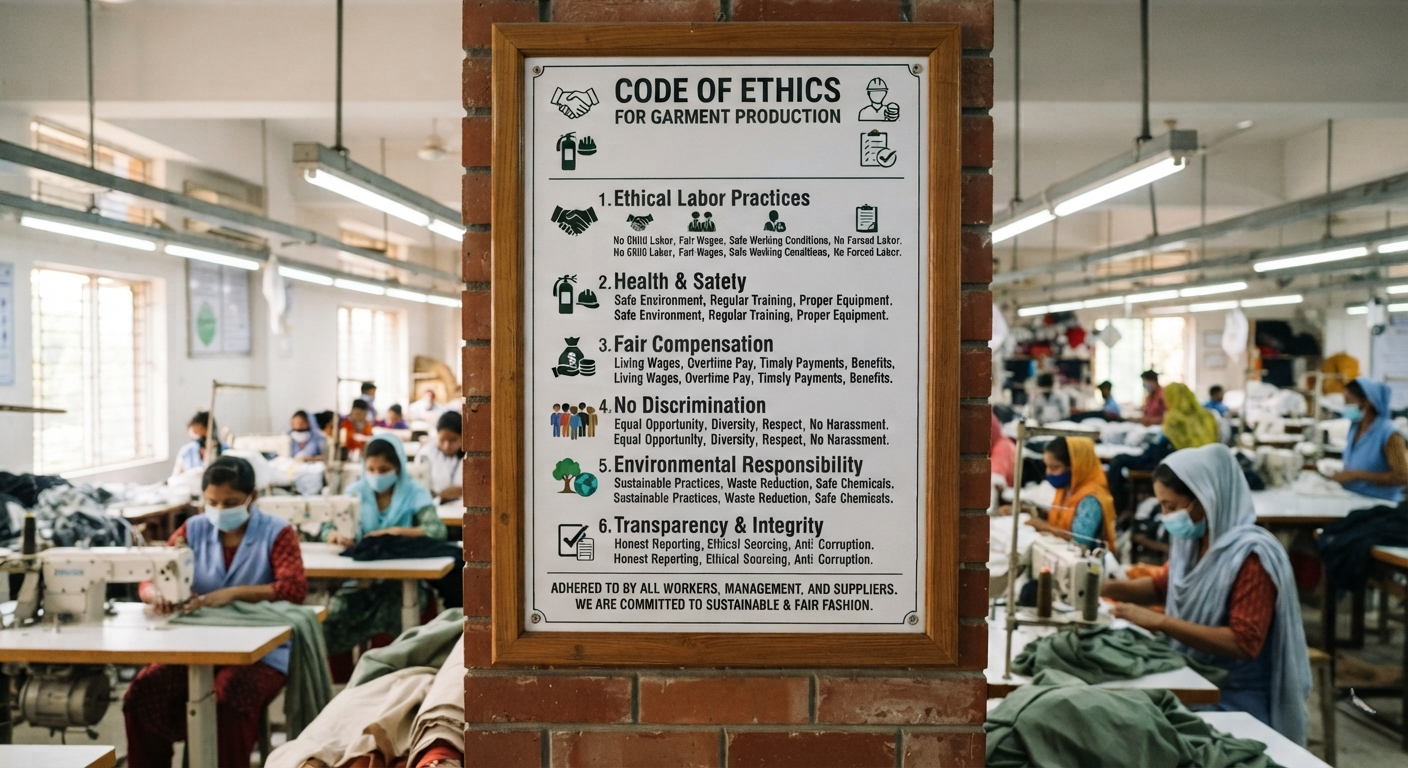
The garment industry is one of the biggest employers in the world. Millions of people work across the industry, from spinning and textile production to cutting, sewing, finishing, packing, distribution and retail. Behind almost every piece of clothing is a long chain of people, factories, suppliers and businesses working together.
This industry creates jobs and supports families in many countries, but it also faces serious challenges. Worker safety, fair wages, excessive working hours, discrimination, child labor, forced labor, environmental pollution and corruption are among the issues that have received attention over the years.
This is where a Code of Ethics becomes important.
A Code of Ethics gives a company a clear set of principles for how it should treat people, conduct business and make decisions. It applies not only to factory employees but also to managers, suppliers, subcontractors and other business partners.
For garment manufacturers, ethical business practices are no longer simply a matter of having a good reputation. International buyers, consumers, regulators and investors increasingly want to know how products are made and whether workers and the environment are being treated responsibly.
In simple terms, an ethical garment business should make clothes while also respecting the people who make them and the communities and environment around them.
What Is a Code of Ethics?
A Code of Ethics is a written set of principles that explains how an organization expects its people to behave.
It provides guidance when employees and managers have to make decisions, deal with difficult situations or handle problems at work. Instead of leaving every situation to personal judgment, the code establishes some basic expectations: be honest, treat people fairly, follow the law, protect workers and act responsibly.
In the garment industry, this is particularly important because the supply chain can be complicated. A brand may work with a buying office, which works with a factory, while that factory may purchase materials from several suppliers or use subcontractors for certain processes.
When so many businesses and people are involved, maintaining consistent standards can be difficult.
A good Code of Ethics helps create a common understanding of what acceptable business behavior looks like.
A garment manufacturer's ethical code may cover areas such as:
Human rights
Fair employment
Worker health and safety
Child labor
Forced labor
Equal opportunities
Harassment and discrimination
Environmental protection
Anti-corruption
Supply chain responsibility
Confidentiality and data protection
Grievance and reporting systems
A Code of Ethics should not simply sit in a company handbook. Its real value comes when its principles are reflected in everyday decisions on the factory floor, in management meetings and throughout the supply chain.
Key Elements of a Garment Industry Code of Ethics
| Principle | What It Means |
|---|---|
| Integrity | Doing business honestly and avoiding deceptive practices. |
| Respect | Treating workers, customers and business partners with dignity. |
| Compliance | Following applicable laws and relevant industry requirements. |
| Accountability | Taking responsibility for decisions and actions. |
| Transparency | Providing accurate and honest information to stakeholders. |
| Sustainability | Reducing environmental harm and using resources responsibly. |
| Human Rights | Protecting workers from exploitation and abuse. |
| Safety | Providing a workplace where employees can work without unnecessary risk. |
Why Does a Code of Ethics Matter?
The garment industry has experienced many ethical problems over the years. Issues such as unsafe factories, excessive overtime, low wages, discrimination, child labor and environmental pollution can cause serious harm to workers and communities.
A strong ethical framework gives companies a way to prevent these problems rather than simply reacting after something goes wrong.
There are also clear business benefits.
Companies that take ethical standards seriously can build:
Better relationships with international buyers
Greater trust among customers
Higher employee morale
Better employee retention
Lower compliance and legal risks
Stronger brand reputation
More stable supplier relationships
Better long-term business performance
For example, workers who feel respected and safe are generally more likely to stay with an organization. A factory with good working conditions may also find it easier to attract skilled employees.
So ethics and business performance are not necessarily separate issues. In many cases, they support each other.
What Is the Purpose of a Code of Ethics?
A Code of Ethics provides a common direction for everyone in an organization.
Its main purposes include:
Encouraging responsible business behavior
Protecting workers' rights and dignity
Supporting compliance with laws and regulations
Promoting a safe working environment
Preventing exploitation and abusive practices
Improving supply chain transparency
Encouraging environmental responsibility
Reducing unethical business practices
Building trust with customers and buyers
Creating accountability across the organization
Most importantly, the code gives employees something they can refer to when they are unsure about the right course of action.
Core Ethical Principles in the Garment Industry
1. Respect for Human Rights
Every worker deserves to be treated with dignity.
It should not matter where someone comes from, what their gender is, what religion they follow, or what their social or economic background may be. Basic human rights should apply to everyone working in a garment factory.
Factories should make sure that workers are not subjected to physical abuse, verbal abuse, threats or humiliation.
Workers should also have a safe way to raise concerns. If someone sees a problem but is afraid of losing their job for reporting it, the company does not really have an open and ethical workplace.
Respect for human rights therefore includes:
Treating workers with dignity
Preventing abuse
Respecting freedom of association
Providing grievance channels
Protecting workers from retaliation
Allowing employees to raise legitimate concerns
Respect is not just a policy statement. It should be visible in the way supervisors communicate with operators, how managers handle complaints and how workers are treated during difficult production periods.
2. Fair Employment Practices
People should be hired and promoted because of their qualifications, skills and performance rather than their gender, religion, background or personal connections.
Fair employment begins with recruitment.
Workers should receive clear information about their jobs, wages, working hours and benefits before they start working. Employment terms should not be deliberately hidden or changed without proper explanation.
Good employment practices include:
Equal opportunity recruitment
Clear employment contracts
Transparent hiring procedures
Fair disciplinary processes
Equal pay for equal work
Reasonable working hours
Legal benefits
Fair opportunities for promotion
Favoritism and discrimination can quickly damage employee trust. A fair workplace gives people confidence that their work and ability actually matter.
3. Preventing Child Labor
Child labor remains a serious concern in global supply chains.
Garment manufacturers should have clear systems to prevent children below the legal working age from being employed.
This starts with proper recruitment procedures. Factories should verify workers' ages and maintain accurate employment records.
Important measures include:
Checking age during recruitment
Maintaining accurate employee documentation
Following applicable minimum-age laws
Monitoring suppliers and subcontractors
Taking appropriate corrective action if a violation is discovered
Preventing child labor is about more than rejecting underage workers. When an underage worker is found, companies should follow responsible remediation procedures that consider the child's safety, education and welfare.
4. Eliminating Forced Labor
Employment should always be voluntary.
Workers should be able to accept a job freely and leave the employment relationship according to applicable laws and contractual requirements. They should not be threatened, trapped by debt or prevented from leaving.
Forced labor can take different forms, including:
Debt bondage
Human trafficking
Threats or intimidation
Withholding wages
Taking passports or identity documents
Restricting freedom of movement
Forcing workers to remain in employment
Factories and suppliers need systems to identify and prevent these practices.
A worker should never feel that they have no choice but to continue working because someone has taken their documents, withheld their wages or threatened them.
Workplace Health and Safety
A factory cannot be considered responsible if its workers are not safe.
Garment production involves machinery, electricity, chemicals, heat, repetitive work and sometimes large buildings with thousands of employees. Each of these areas can create risks if they are not managed properly.
Factories should identify potential hazards and take practical steps to reduce them.
These may include:
Fire protection systems
Clearly marked emergency exits
Machine guards
Personal protective equipment
Adequate lighting
Safe electrical systems
Ergonomic workstations
Proper chemical storage
Regular safety inspections
Safety should not be treated as something that matters only when a buyer is visiting. It needs to be part of everyday factory management.
Emergency Preparedness
Even a well-managed factory cannot completely eliminate the possibility of an emergency.
Factories therefore need clear emergency procedures and employees need to know what to do when something goes wrong.
Emergency preparedness may include:
Regular fire drills
Clearly marked evacuation routes
Unblocked emergency exits
First-aid facilities
Trained emergency response teams
Medical support
Emergency communication systems
A safety plan is useful only when workers understand it. Regular training and drills help employees react more confidently during an actual emergency.
Ethical Working Conditions
Working Hours
Working long hours for extended periods can affect a person's health, concentration and family life. It can also increase the risk of accidents and mistakes.
Factories should therefore follow applicable working-hour laws and provide workers with appropriate rest periods.
Responsible practices include:
Following legal working-hour limits
Making overtime voluntary where required
Providing appropriate breaks
Giving workers weekly rest days
Paying overtime correctly
Production pressure should never become an excuse for ignoring workers' basic rights.
Fair Compensation
Wages are one of the most important parts of employment.
Workers should receive at least the wages and benefits required by law, with clear information about how their pay is calculated.
Ethical payroll practices include:
Paying wages on time
Keeping accurate payroll records
Paying overtime correctly
Providing legally required benefits
Clearly explaining deductions
Maintaining transparent wage calculations
When workers understand how their wages are calculated, misunderstandings are less likely to develop.
Fair compensation also helps companies build a more stable workforce.
Diversity, Equity and Inclusion
Garment factories bring together people from different backgrounds, communities and cultures.
A workplace where everyone has a fair opportunity can benefit both employees and the organization.
Companies should work to:
Prevent discrimination
Promote gender equality
Provide fair career opportunities
Encourage diversity in management
Support employees with disabilities
Create a respectful workplace
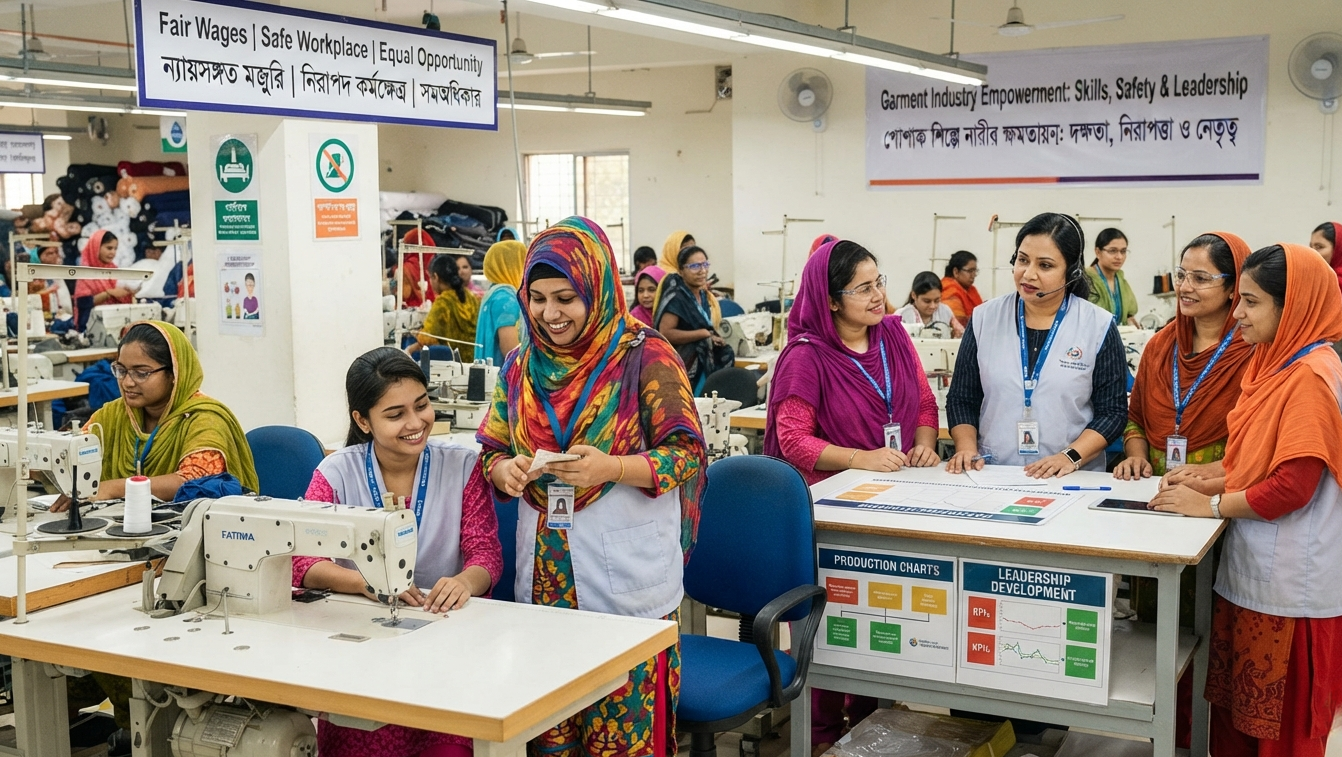
Women make up a large part of the garment workforce in many manufacturing countries. Giving women opportunities to become supervisors, managers and decision-makers is therefore an important part of building a more inclusive industry.
Preventing Harassment and Abuse
Nobody should have to tolerate harassment simply because they need a job.
Workplace harassment can take many forms. It may involve shouting, threats, bullying, unwanted sexual behavior, humiliation or physical intimidation.
A strong workplace policy should clearly prohibit:
Verbal abuse
Physical intimidation
Sexual harassment
Bullying
Threats
Humiliation
Retaliation against complainants
Workers should also have confidential ways to report concerns.
The reporting process matters just as much as the policy itself. If workers believe that nothing will happen after they complain, they are unlikely to report problems.
Environmental Responsibility
Ethical manufacturing is not only about people. It is also about the environment.
Garment production uses considerable amounts of water, electricity, chemicals, fuel and raw materials. It also generates fabric waste, wastewater, packaging and other forms of waste.
Factories can reduce their environmental impact by focusing on:
Water conservation
Energy efficiency
Waste reduction
Carbon emissions
Responsible chemical management
Sustainable raw materials
Recycling
Proper wastewater treatment
Environmental improvements can sometimes bring financial benefits as well. Reducing unnecessary energy use, for example, can lower operating costs.
Sustainable Production Practices
Sustainability does not always require completely new production systems. Sometimes relatively simple improvements can make a difference.
Examples include:
Improving cutting efficiency to reduce fabric waste
Using energy-efficient machinery
Reusing production materials where practical
Improving wastewater treatment
Using renewable energy where feasible
Choosing more responsible raw materials
Reducing unnecessary packaging
For a garment factory, even a small reduction in fabric waste can become significant when multiplied across thousands of garments.
Ethical Supply Chain Management
A factory cannot claim to operate ethically while ignoring what happens at its suppliers or subcontractors.
Garment supply chains can involve many businesses, including fabric suppliers, dyeing and washing units, printing facilities, embroidery suppliers, packaging companies and subcontractors.
Companies therefore need to understand who is involved in producing their goods and what standards those partners follow.
Suppliers should be expected to:
Respect labor rights
Prevent child labor
Eliminate forced labor
Provide safe working conditions
Follow environmental requirements
Maintain accurate records
Cooperate with assessments and audits
Regular monitoring can help identify problems before they become serious.
At the same time, audits alone are not enough. Companies also need to understand the root causes of problems and work with suppliers to improve them.
Business Integrity and Anti-Corruption
Trust is essential in the garment business.
Factories deal with buyers, suppliers, government agencies, auditors, service providers and many other parties. Unethical payments or dishonest records can damage those relationships very quickly.
Companies should have clear rules against:
Bribery
Fraud
Kickbacks
Extortion
Falsifying records
Undisclosed conflicts of interest
Employees should also know where they can report suspected corruption.
An ethical culture starts with leadership. If managers tolerate dishonest behavior when it benefits the company, employees quickly learn that written policies do not mean much.
Confidentiality and Data Protection
Modern garment factories handle more information than many people realize.
They may hold employee records, salary information, buyer specifications, production data, prices, technical documents and other confidential information.
That information needs to be protected.
Companies should:
Restrict access to sensitive information
Use appropriate security controls
Protect employee records
Train staff in information security
Follow relevant privacy requirements
Prevent unauthorized sharing of confidential data
Good data protection is part of responsible business management.
Transparency and Accountability
Ethical behavior becomes difficult to trust when companies are unwilling to provide accurate information.
Transparency means being honest about operations, performance and problems.
Companies should:
Keep accurate records
Provide truthful information to stakeholders
Cooperate with legitimate audits
Report compliance issues appropriately
Investigate violations
Take corrective action when necessary
Accountability means that responsibility does not disappear when something goes wrong.
Managers and employees should be prepared to accept responsibility for their decisions and take action to correct mistakes.
Grievance Mechanisms and Whistleblower Protection
Workers need a safe way to speak up.
A grievance system allows employees to report concerns about wages, working conditions, harassment, discrimination, safety or other workplace issues.
An effective system should be:
Easy to access
Confidential
Available to all workers
Capable of receiving anonymous complaints where appropriate
Supported by timely investigations
Protected from retaliation
The goal is not simply to collect complaints. The goal is to understand what is happening and solve problems.
For example, if workers repeatedly complain about a particular production area being unsafe, management should investigate the underlying problem rather than treating each complaint as an individual case.
Training and Ethical Awareness
A policy is only useful when people understand it.
Workers and managers should receive regular training on topics that affect their daily responsibilities.
Training may cover:
Worker rights
Health and safety
Anti-harassment policies
Environmental practices
Ethical decision-making
Grievance procedures
Compliance requirements
Anti-corruption policies
Training should also be practical.
Instead of simply asking employees to read a policy document, companies can use real workplace examples and explain what employees should do in different situations.
Management Responsibilities
Managers have a major influence on workplace culture.
Employees watch how supervisors behave, especially when production targets are difficult to achieve.
Managers should therefore:
Lead by example
Treat workers respectfully
Follow company policies
Respond to complaints seriously
Encourage open communication
Support employee development
Take corrective action when necessary
A company can have an excellent Code of Ethics on paper, but if supervisors ignore it every day, the document has very little value.
Ethical leadership has to be visible in everyday management decisions.
Employee Responsibilities
Ethics is not only a management responsibility.
Every employee has a role to play in maintaining a respectful and responsible workplace.
Employees should:
Follow company policies
Respect colleagues
Follow safety procedures
Protect company property
Maintain professional behavior
Report serious misconduct
Avoid dishonest practices
A strong ethical culture develops when both management and employees understand their responsibilities.
Ethical Challenges in the Garment Industry
The garment industry has made progress in many areas, but ethical challenges remain.
Some problems are straightforward to identify. Others are more complicated because they are connected to production pressure, low prices, tight deadlines and complex supply chains.
| Area | Ethical Concern | Possible Impact |
|---|---|---|
| Labor | Excessive overtime | Fatigue and reduced well-being |
| Recruitment | Unethical hiring | Exploitation or discrimination |
| Safety | Poor factory conditions | Injuries and loss of life |
| Environment | Pollution and waste | Damage to ecosystems and communities |
| Supply Chain | Limited transparency | Hidden violations |
| Compensation | Inadequate wages | Financial pressure on workers |
| Governance | Corruption | Loss of trust |
| Equality | Discrimination | Lower morale and fewer opportunities |
Solving these problems requires cooperation. Factories cannot do everything alone. Buyers, brands, governments, suppliers, workers and industry organizations all have a role.
Benefits of Following Ethical Standards
Ethics is sometimes treated as an additional cost, but responsible practices can create real business value.
Companies that maintain strong ethical standards may benefit from:
A stronger reputation
Better relationships with international buyers
Higher employee retention
Improved workplace morale
Lower compliance risks
Greater customer confidence
More stable operations
Stronger investor relationships
For example, a factory with high employee turnover may repeatedly spend money recruiting and training new workers. Improving working conditions can help reduce that turnover.
In this way, ethical improvements can sometimes support operational efficiency as well as social responsibility.
How to Implement an Effective Code of Ethics
Writing a Code of Ethics is only the beginning.
The difficult part is making sure the principles are actually followed.
A practical implementation process can include the following steps:
| Step | What the Company Should Do | Expected Result |
|---|---|---|
| Develop the policy | Define clear ethical standards | Everyone understands expectations |
| Communicate it | Share the policy with employees and partners | Greater awareness |
| Provide training | Explain policies using practical examples | Better understanding |
| Monitor performance | Conduct audits and workplace assessments | Problems become easier to identify |
| Investigate complaints | Examine reported concerns fairly | Issues can be resolved |
| Take corrective action | Address the root cause of violations | Reduced risk of repetition |
| Review the system | Evaluate the program regularly | Continuous improvement |
The process should not stop after an audit or training session.
Companies need to review their performance regularly and make changes when new risks appear.
Building an Ethical Workplace Culture
There is a difference between having ethical policies and having an ethical culture.
A policy might say that workers should be treated respectfully. A culture exists when supervisors actually speak respectfully to workers, even during a difficult production day.
An ethical culture is built through everyday behavior.
Some signs of a healthy ethical workplace include:
People can raise concerns without fear
Managers listen to employees
Rules apply consistently
Workers are treated fairly
Problems are investigated rather than hidden
Employees receive appropriate training
Management accepts responsibility for mistakes
Improvement is encouraged
Over time, these behaviors become part of the way the organization operates.
Conclusion
A Code of Ethics provides an important foundation for responsible business in the garment industry. It helps companies establish clear expectations around worker rights, safety, fair employment, environmental responsibility, business integrity and supply chain management.
But an ethical garment industry cannot be created simply by publishing a policy.
The real test is what happens in everyday operations.
Are workers paid correctly? Can they leave work safely at the end of their shift? Can they report harassment without fear? Are suppliers held to the same standards? Are environmental problems addressed instead of hidden? Do managers follow the same rules they expect employees to follow?
These questions are much more important than the wording of a policy document.
For garment manufacturers, ethical practices can also make good business sense. Respecting workers can improve morale and retention. Better safety systems can reduce accidents. Transparent business practices can strengthen relationships with buyers. Responsible environmental practices can reduce waste and operating costs.
Most importantly, ethical manufacturing recognizes that garments are not made by machines alone. People are at the center of the industry.
A truly responsible garment business therefore needs to balance production goals with respect for workers, communities and the environment. When ethics becomes part of everyday decision-making rather than just a compliance requirement, the industry can move toward a future that is not only more profitable, but also safer, fairer and more sustainable.