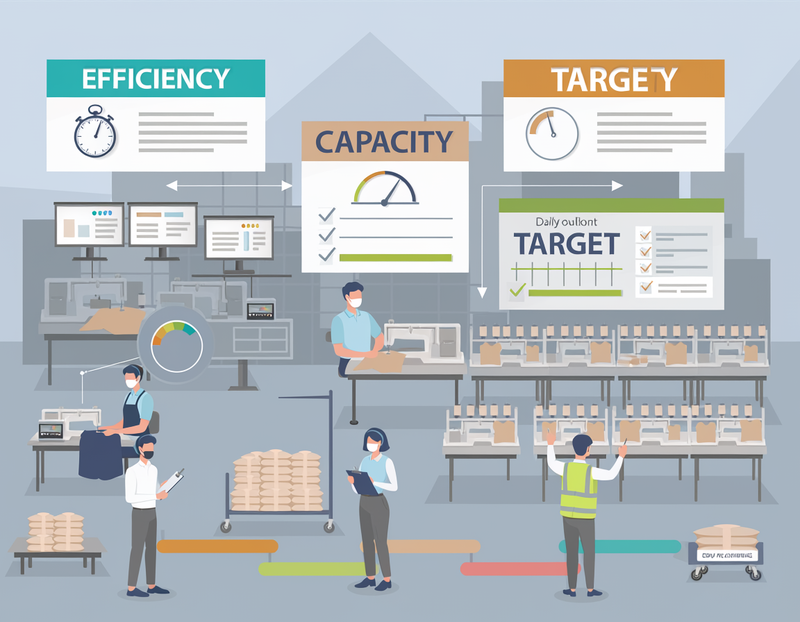
In a garment factory, people talk about efficiency, capacity and target almost every day. Not because they sound good—but because they decide how much you produce, how fast you deliver… and how much it eventually costs you.
They’re numbers, yes. But very practical ones.
Efficiency:
Let’s start simple.
Efficiency tells you how well time is being used. It’s basically asking: out of all the minutes available, how many were actually productive?
Not all working time is productive. There are delays, breakdowns, small stoppages… they add up.
So efficiency measures the real output.
Efficiency measures the percentage of “productive minutes” out of the total minutes available for work.
Where:
- Total Produced SMV = Output garments × SMV of garment
- Available Minutes = Number of operators × Working time in minutes
Line Efficiency
Line Efficiency compares the total SMV produced against the total available minutes of all operators.
Factory Efficiency
Factory efficiency considers total SMV produced from multiple divisions and compares it with total available minutes from all operators and helpers.
Expanded Formula for Multi‑Style Factory
This formula accurately handles multiple lines running different SMVs.
Why Efficiency Matters
Efficient production systems help factories survive in highly competitive markets. Some major benefits include:
Improved Line Productivity: Increases the number of garments produced per day without adding manpower.
Reduced Production Cost: High efficiency reduces:
- Excess labor cost
- Overheads
- Fabric and trim wastage
Better Capacity Planning: Knowing efficiency allows better prediction of daily and monthly output.
Fewer Bottlenecks: Efficient lines follow standardized methods, reducing imbalance and lost time.
Stronger Buyer Confidence: Brands prefer factories that meet deadlines consistently with fewer quality issues.
Key Factors That Influence Efficiency
Operator Skill Level:Trained operators deliver higher output at lower fatigue.
Standardized Work Methods: Industrial engineers prepare:
- Motion Economy
- Operation Bulletin
- Layout and WIP control
These directly increase efficiency.
Machine and Workplace Layout: Well‑organized layouts reduce unnecessary motions, travel and handling time.
Quality of Materials: Defective fabrics and trims increase rework and reduce efficiency.
Effective Supervision: Skillful line leaders create balanced lines, manage WIP and solve bottlenecks quickly.
Capacity
If efficiency tells you how well you’re working, capacity tells you how much you can produce.
Capacity determines how many garments can be produced under available resources and efficiency levels. It is used by IE teams and merchandisers for planning orders, allocating manpower and estimating shipment timelines.
Operator Capacity:

This shows how many pieces a single operator can ideally produce in a shift.
Line Capacity:
For a sewing line:

Where:
Input Minutes = No. of Operators × Working Minutes
Factory Capacity
Factory Capacity (Minutes)=(Total Manpower×Working Minutes)

A factory has:
- Total manpower (operators + helpers): 600 workers
- Working minutes per worker per day: 480 minutes
- Factory efficiency: 58%
- Average SMV of product: 10 minutes
Step 1: Total Available Minutes
Step 2: Factory Capacity in Minutes
Step 3: Factory Capacity in Pieces
Why Capacity Analysis Is Essential
- Determines if new orders can be accepted
- Helps calculate daily production commitment
- Guides manpower planning
- Avoids over‑booking lines
- Supports smooth shipment scheduling
Target
Now comes the daily pressure point.
Target = how much you’re expected to produce within a shift.
Target refers to the expected number of garments an operator or line must produce within a given time frame. It helps factories plan shift‑wise output and evaluate performance against expectations.
Target at 100% Efficiency
This is the theoretical maximum; however, achieving 100% efficiency continuously is rare due to unavoidable delays.
Practical Targets (50–90%)
Most factories set realistic targets:
Where X is efficiency as a decimal (e.g. 80% = 0.80).
Number of operators on the line: 35
Working minutes: 480/day
SMV of garment: 20 minutes
Step 1: Calculate Input Minutes
Step 2: Line Capacity at 100% Efficiency
Step 3: Practical Target (e.g., 65% efficiency)
Why Target Setting Is Important
Targets are not just numbers on board.
They help:
- Guide operators
- Track daily performance
- Identify slow operations
- Improve consistency
Without a clear target, the line just drifts.
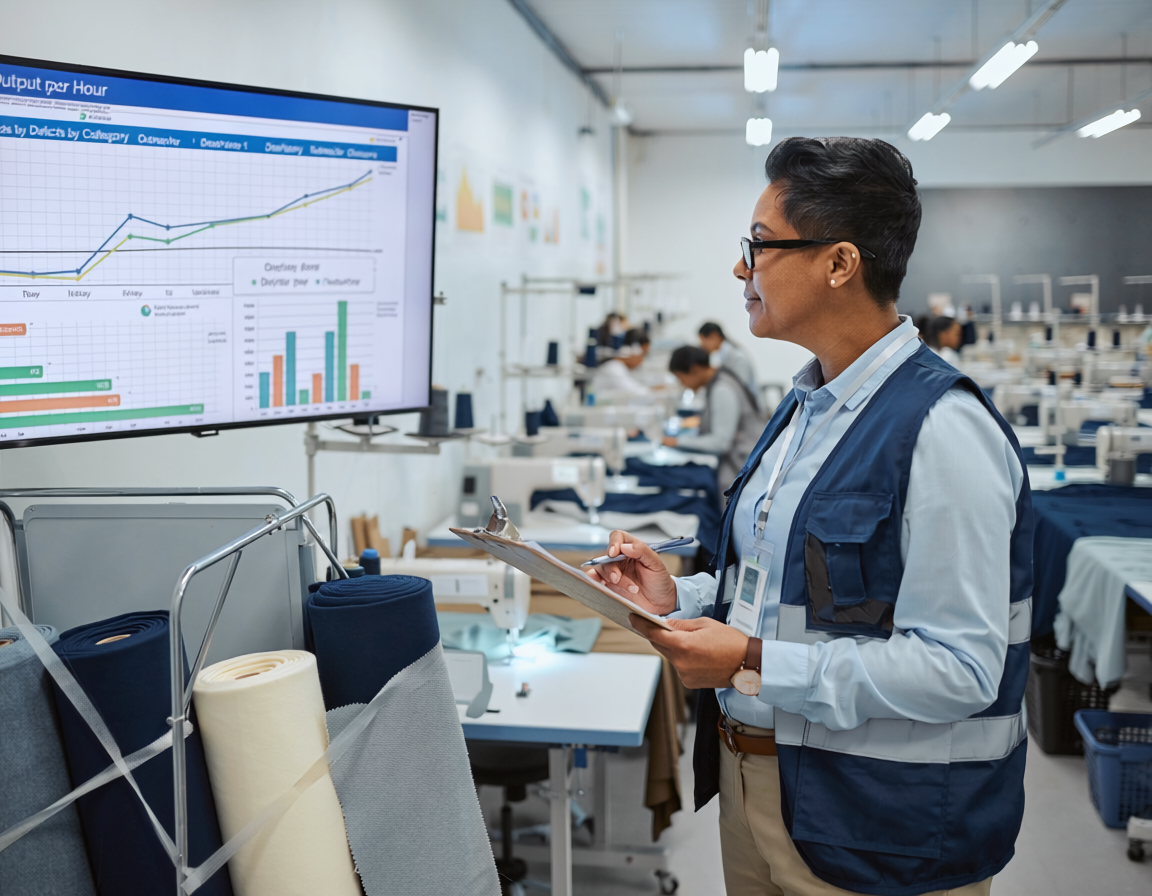
How Efficiency, Target & Capacity Work Together
This is where everything comes together.
- Capacity tells you what’s possible
- Efficiency tells you how much of that you’re actually using
- Target sets what you expect every day
And the key point:
👉 Improve efficiency → capacity increases automatically
👉 Higher capacity → better target achievement
No extra manpower needed.
Final Thought
These three—efficiency, capacity, target—might seem like routine calculations. But in reality, they drive the whole production system.
A small improvement in efficiency can shift everything:
- More output
- Lower cost
- Better delivery
Ignore them… and problems build up quietly. Missed targets, delayed shipments, rising costs.
Get them right though—and the line runs smoother. Planning becomes easier. Pressure drops.
Not perfect. But controlled.
And in garment manufacturing, that control makes all the difference.