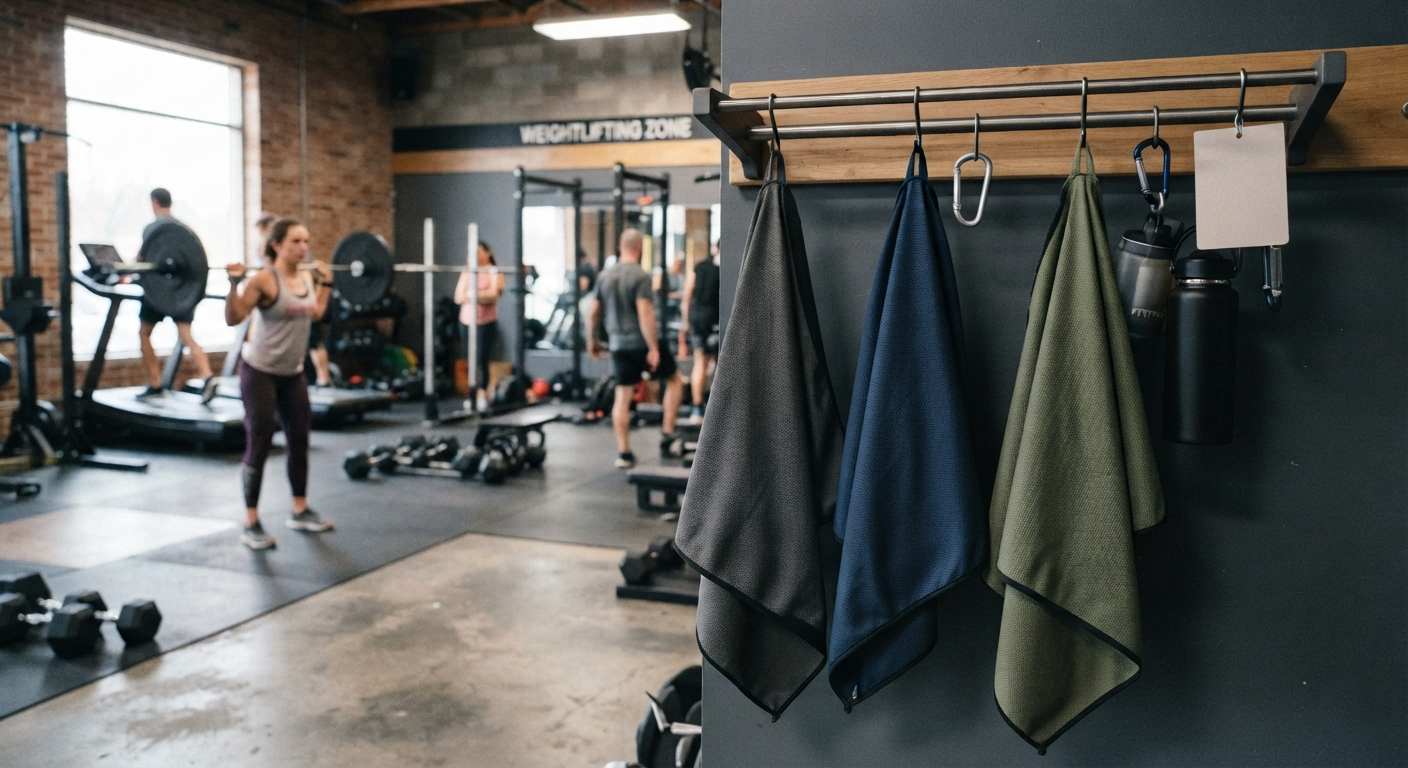
There's a good chance you've used a quick-dry towel without ever thinking much about what makes it different. Maybe it was the thin towel you grabbed at the gym, the compact one you packed for a camping trip, or the small towel someone recommended before a long journey. They don't look particularly impressive at first, but once you start using one regularly, it's easy to understand why so many people prefer them.
The biggest advantage is simple: they don't stay wet for long.
For anyone who has dealt with a damp towel sitting inside a gym bag or suitcase, that difference can be surprisingly useful. And behind that simple benefit is some interesting textile engineering.
What Is a Quick-Dry Towel?
A quick-dry towel is designed to absorb moisture and then release it into the air much faster than a conventional towel. Most regular cotton towels are thick and plush because cotton is very good at absorbing water. The downside is that all that absorbed moisture takes time to evaporate.
That's where quick-dry towels take a different approach.
Instead of relying mainly on thick, heavy fabric, they use specific fibers, yarn constructions and fabric structures that help spread moisture across the surface. Once the water is spread over a larger area, air can reach it more easily and evaporation happens faster.
This is particularly useful when you don't have much time or space to dry a towel. A damp cotton towel folded inside a backpack can become unpleasant surprisingly quickly. A lightweight quick-dry towel is much less likely to create that problem.
In simple terms, the idea is:
Absorb moisture → spread it across the fabric → release it quickly
For more background on how different fabric structures affect performance, see our guide to fabric structures.
The Materials Behind Quick-Dry Towels
Not every quick-dry towel behaves in exactly the same way. The fiber and fabric construction have a major influence on how the towel feels, how much water it absorbs and how quickly it dries.
| Material | Feel | Absorbency | Dry Time | Best For |
|---|---|---|---|---|
| Microfiber | Soft, slightly synthetic | High | Very fast | Travel, gym, camping |
| Cotton-polyester blend | Similar to a regular towel | Medium-high | Fast | Everyday home use |
| Bamboo fiber | Soft and natural | Medium | Moderate | Eco-conscious buyers |
| PVA synthetic suede | Smooth, chamois-like | Very high | Fast | Swimming, water sports |
Microfiber
Microfiber is probably the material most people associate with quick-dry towels. It is made from extremely fine synthetic fibers, commonly polyester and nylon. Because the individual fibers are so fine, the fabric can create a large surface area within a relatively small amount of material.
That gives microfiber two useful properties: it can pick up moisture quickly and it doesn't need to remain saturated for long.
It is also lightweight and easy to compress, which explains why microfiber towels are so common among travelers, hikers and gym users.
Cotton-Polyester Blends
If you like the familiar feel of a cotton towel but don't want to wait all day for it to dry, a cotton-polyester blend can be a good compromise.
The cotton contributes softness and absorbency, while polyester helps reduce drying time. The result feels closer to a traditional towel than pure microfiber, but generally dries faster.
Bamboo Fiber
Bamboo-based towels are often marketed toward consumers looking for softer or more natural-feeling textile products. They can offer good softness and reasonable moisture management, although they generally don't dry as quickly as a well-designed microfiber towel.
It's also worth remembering that the environmental story of bamboo textiles depends on how the fiber is produced. The word "bamboo" by itself doesn't automatically mean a towel has a low environmental impact.
PVA Synthetic Suede
PVA towels, sometimes called chamois towels, are particularly common around swimming pools and water sports. They can absorb a surprisingly large amount of water relative to their size.
Unlike a conventional towel, they are often designed to be wrung out and used again rather than simply hung up after one use. That makes them practical for swimmers who need to dry off repeatedly.

How Do Quick-Dry Towels Actually Work?
The technology isn't based on one single trick. Several textile properties work together to make the towel dry faster.
Fine Fiber Structure
Microfiber contains extremely fine strands, often much finer than conventional textile fibers. These tiny fibers create small spaces and channels that help move water through the fabric by capillary action.
It's somewhat similar to what happens when a paper towel absorbs a spill. Water doesn't just sit in one place; it moves through the small spaces within the material.
Large Surface Area
Fine fibers create a surprisingly large total surface area.
Instead of having a large amount of water sitting deep inside a thick fabric, moisture can be distributed across a broader area. Once that happens, more of the water is exposed to air, making evaporation easier.
Lower Water Retention
Synthetic fibers such as polyester don't behave exactly like cotton when they become wet. Cotton absorbs and holds a considerable amount of water within its fiber structure, while many synthetic constructions allow moisture to move more readily through the fabric.
The exact performance still depends on the yarn, weave or knit structure and finishing process.
Fabric Construction
Fiber isn't the whole story.
The way the yarns are arranged can have a major effect on drying performance. Open structures, waffle constructions and other breathable designs can allow more air to move through the material and help moisture escape.
This is one reason two towels made from similar fibers can perform quite differently.
Quick-Dry vs. Regular Cotton Towels
So, does a quick-dry towel actually replace a regular cotton towel?
Not necessarily.
It depends on what you want from your towel.
| Feature | Quick-Dry Towel | Regular Cotton Towel |
|---|---|---|
| Drying time | About 1–3 hours* | About 8–24 hours* |
| Weight | Lightweight | Heavier |
| Packed size | Compact | Bulky |
| Odor resistance | Generally better when dried quickly | Can become musty when left damp |
| Feel | Thin to moderately soft, sometimes synthetic | Soft, plush and familiar |
| Price | Often similar or slightly higher | Widely available at many price points |
Drying time varies significantly with fabric construction, humidity, airflow, temperature and how wet the towel is.
A traditional cotton towel still has an advantage when comfort is the priority. There's something satisfying about stepping out of a shower and wrapping yourself in a thick, fluffy towel.
But if you're traveling, going to the gym or dealing with a humid environment, drying speed becomes much more important.
That's where quick-dry towels make the most sense.
Why Are People Switching to Quick-Dry Towels?
Faster Drying Can Mean Less Odor
Anyone who has left a wet towel in a gym bag knows the smell that can develop.
Moisture creates an environment where microorganisms can grow, and the longer a towel stays damp, the greater the chance of unpleasant odors developing. A towel that dries relatively quickly has less time to remain in that damp state.
Of course, quick drying doesn't mean a towel never needs washing. It still does.
They're Easier to Pack
This is probably one of the biggest advantages for travelers.
A thick cotton bath towel can take up a surprising amount of room in a backpack. A microfiber towel can usually be folded or rolled into a much smaller package.
When you're trying to keep your luggage light, that difference matters.
They Perform Better in Humid Conditions
Drying laundry is already difficult when humidity is high. A thick cotton towel can remain damp for many hours, especially in a poorly ventilated bathroom.
Quick-dry constructions can make the situation easier because they generally release moisture faster.
One Towel Can Handle Several Activities
Quick-dry towels aren't limited to one particular use. You'll find them in gyms, swimming pools, hiking bags, yoga studios, travel backpacks and increasingly in ordinary bathrooms.
Common Uses
Travel: A compact towel takes up less space in luggage and is easier to dry overnight.
Camping and hiking: When there is no dryer nearby, drying speed becomes much more important.
Gym and fitness: A lightweight towel can be carried easily and washed frequently.
Swimming and beach trips: PVA-style towels are particularly useful when repeated drying is required.
Yoga and Pilates: Thin towels can work as mat covers or personal sweat towels.
Everyday bathroom use: Some people prefer quick-dry towels simply because they don't like dealing with a damp towel hanging around the bathroom.
Choosing the Right Quick-Dry Towel
There's no single "best" quick-dry towel for everyone. The right choice depends on how you plan to use it.
For Travel and Backpacking
Look for a lightweight microfiber towel that folds down small. A carrying pouch can also be useful when you're moving between locations.
For the Gym
A medium-sized microfiber towel is usually practical. If odor control is important, some products include antimicrobial treatments, although good washing and drying habits are still important.
For Swimming
PVA or chamois-style towels are worth considering because they can absorb a lot of water and can be wrung out between uses.
For Everyday Home Use
If you don't like the feel of microfiber, a cotton-polyester blend may be a better choice. It offers a more familiar hand feel while generally drying faster than a thick 100% cotton towel.
For Eco-Conscious Buyers
Look at the actual fiber content and manufacturing claims rather than relying only on labels such as "eco-friendly." Bamboo-based fabrics and recycled synthetic fibers can have advantages, but their overall environmental impact depends on how the material is produced and processed.
How to Take Care of a Quick-Dry Towel
A quick-dry towel still needs proper care if you want it to keep performing well.
Avoid fabric softener and dryer sheets. They can leave a coating on the fibers and reduce absorbency.
Use cool or warm water. Excessive heat can gradually affect some synthetic fibers.
Air dry when practical. This can help reduce unnecessary heat exposure and extend fabric life.
Keep microfiber away from lint-heavy laundry. Microfiber tends to attract lint, which can quickly make a clean towel look dirty.
Wash regularly. Fast drying doesn't replace normal washing and hygiene.
The Downsides You Should Know
Quick-dry towels aren't perfect, and it's better to know the trade-offs before buying one.
For starters, they don't always provide the same plush, luxurious feeling as a thick cotton towel. Some microfiber towels can feel slightly synthetic, particularly when they're new.
Microfiber can also attract lint and develop static, especially after machine drying.
There's another issue that deserves more attention: synthetic textiles can release microfibers during washing. Some of these particles can enter wastewater systems. Using appropriate washing practices and microfiber-catching laundry products may help reduce fiber release, although these solutions don't eliminate the issue completely.
And finally, better construction often costs more. A very cheap quick-dry towel may technically dry fast but feel unpleasant or wear out quickly.
The Bottom Line
Quick-dry towels aren't revolutionary, but they solve a very ordinary problem surprisingly well.
They dry faster, take up less space and are easier to manage when you're traveling, exercising or living somewhere with high humidity. That's why a simple microfiber towel has become a common item in backpacks, gym bags and suitcases.
Still, there's no reason to throw away every cotton towel you own. A thick cotton towel can be hard to beat when you're at home and comfort matters more than drying speed.
Think of quick-dry towels as a different tool rather than a complete replacement.
For a weekend trip, a morning at the gym, a day at the swimming pool or a humid bathroom where towels never seem to dry properly, they can make life noticeably easier.
And that's probably the biggest reason they've become so popular: they aren't trying to reinvent the towel. They're simply making one annoying part of using a towel—waiting for it to dry—a lot less annoying.