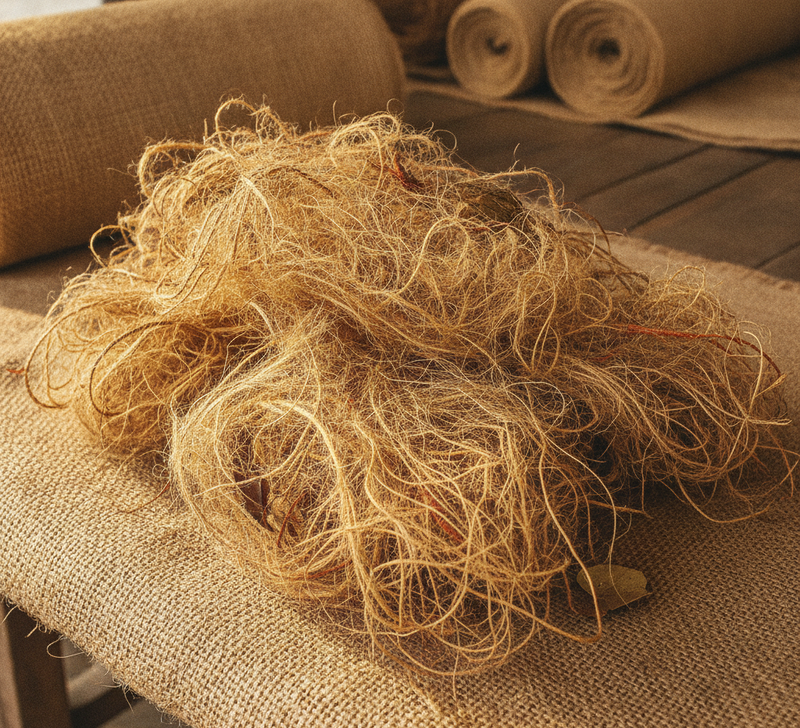
Textile Fibres
Fabric is made of yarns and yarns are made of fibers. we can say
Textile fibre is smallest structural element of fabric
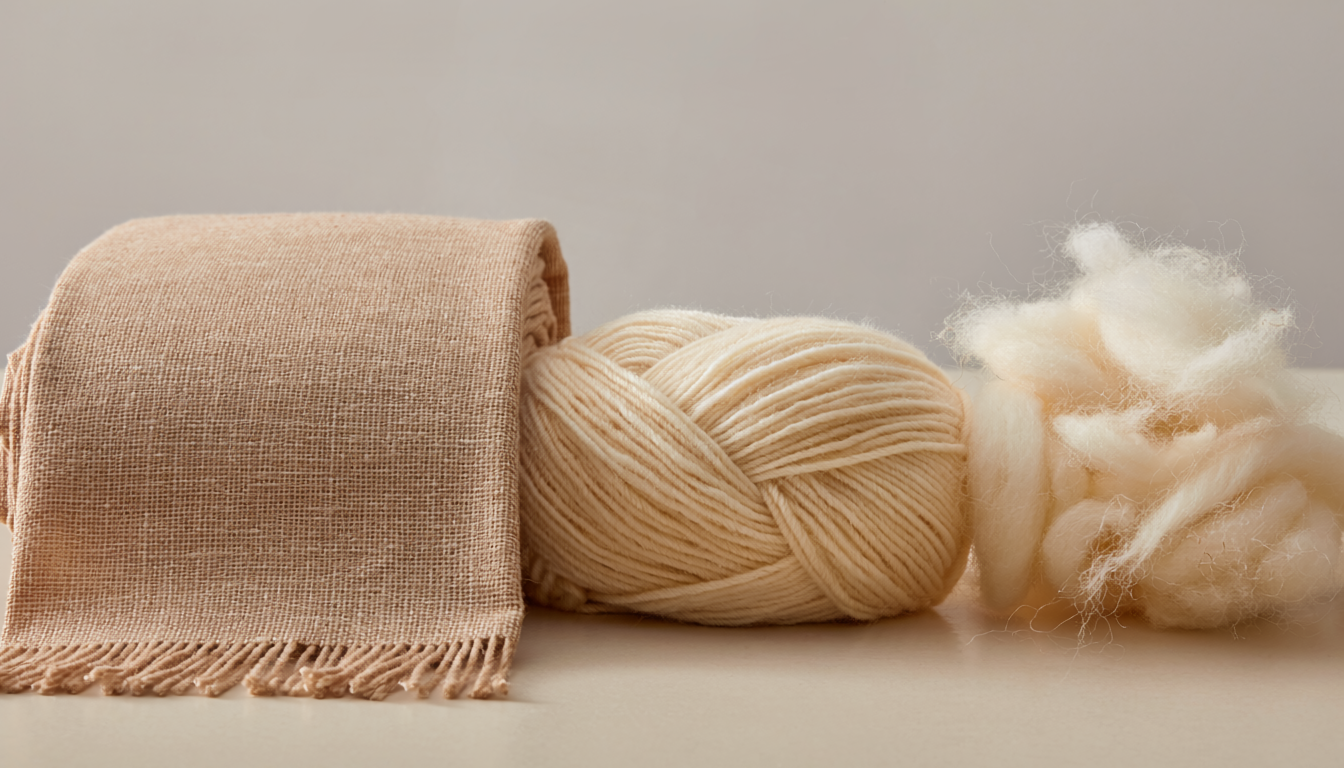
The Hierarchy of Textile Materials
Fabric - The final woven or knitted material
Yarn - Continuous strands twisted from fibers
Fibre - The smallest, fundamental unit
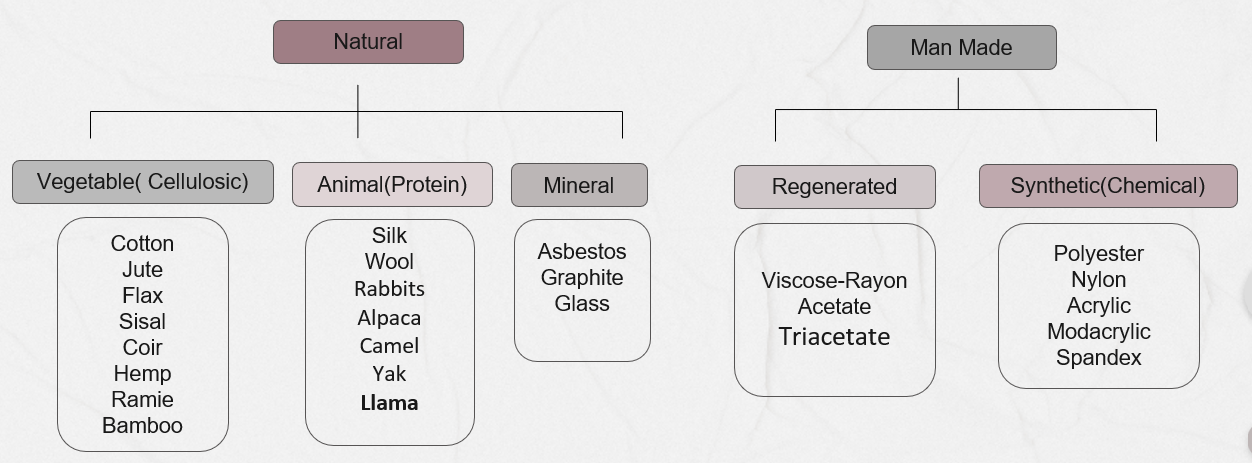
Textile fibres can be classified in two ways depending on-
Origin of fibre- from natural sources and manufactured by man.
Length of fibres-short/staple fibres and long/filament fibres.
The length of man-made fibres can be controlled and made into kilometres. Natural fibres are generally short in length except silk/jute fibre. Manmade fibres are filament fibres.
Requirements for Becoming a Fiber
To be useful as a textile fibre, a material must possess certain essential properties. These properties determine whether the substance can be spun, woven, dyed and used in fabric production.
Twistability / Coarseness
A fiber must be twistable to hold together as yarn. Proper coarseness provides enough friction between fibers to develop cohesion.
Tenacity
Tenacity is the strength of fibre. A fiber should be strong enough to withstand processes such as spinning, weaving and usage without breaking easily.
Elasticity & Resilience
A fiber must be able to stretch and return to its original shape. Good resilience enables fabrics to resist creasing, deformation and stress in wear.
Heat Conductivity
The ability of a fiber to conduct or insulate heat affects its comfort properties.
Examples:
- High heat conductivity→ cool feel (linen)
- Low heat conductivity → warm feel (wool)
A fiber must be able to absorb moisture (water, perspiration, dye solutions) Improved absorbency enhances comfort, dyeability and finish.
Affinity for Dyes
For stable, uniform coloration, a fiber must have good bonding with dyes. Good affinity for dye means good color strength, fastness and durability.
Fibre Properties:
Textile production starts long before fabrics are woven or garments are sewn. It begins at the level of the fibre. The world around us gives us a huge range of natural and man‑made fibres but not all fibres have the properties necessary to become textile fibres. A fibre must have certain essential characteristics so that it can be spun into yarn and then converted into fabrics. These characteristics, referred to as fibre properties, influence not only the behavior of the fibre during processing, but also the appearance, handle and performance of the final fabric.
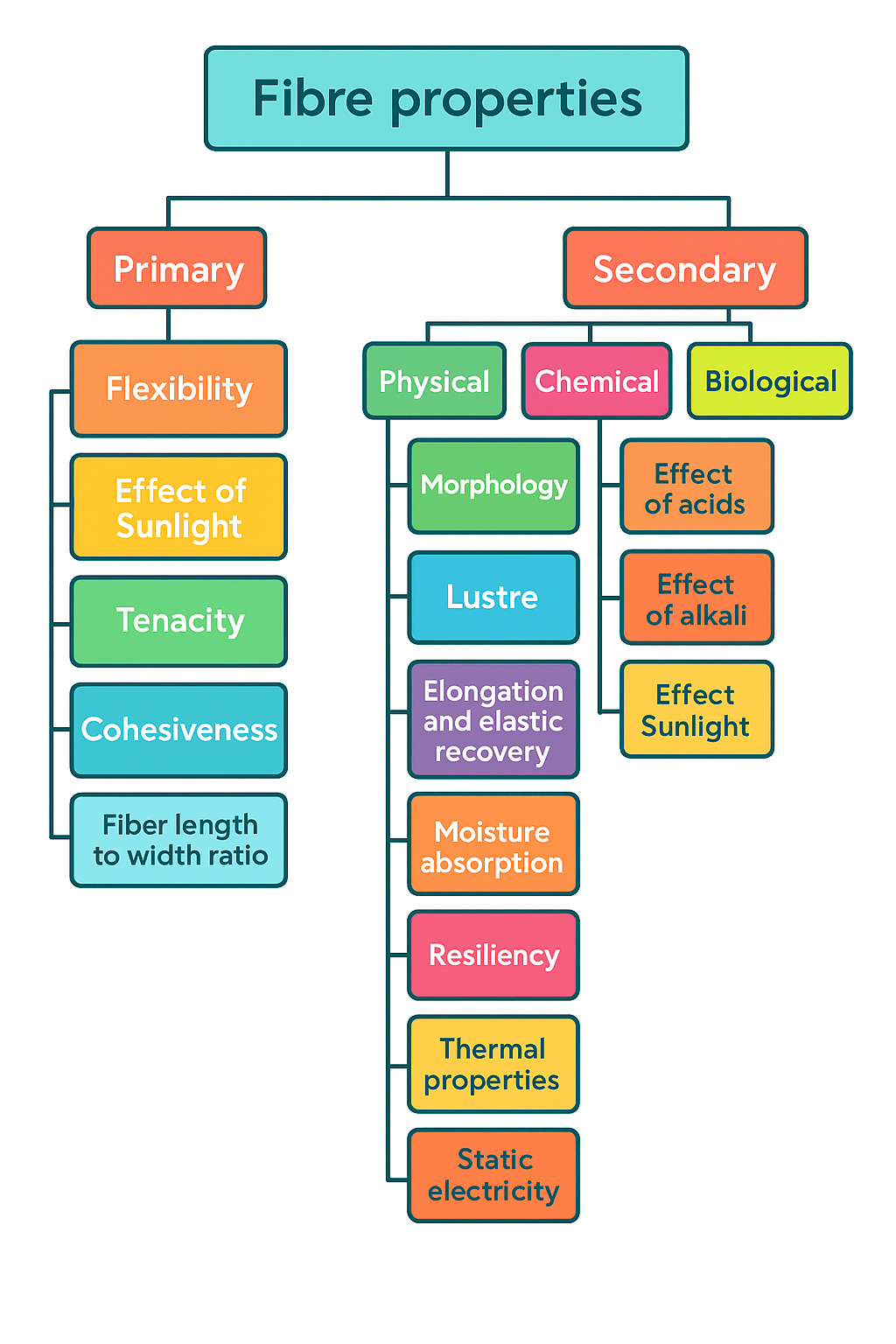
Fibre properties are generally classified into two major groups:
Primary (Essential) Properties
Secondary (Desirable) Properties
Let’s explore each group in detail.
Primary Properties of Textile Fibres
Primary properties are those essential properties a fibre must have to be suitable for textile use. Fibres lacking these properties cannot be efficiently spun, woven or knitted. They directly affect the spinning performance, yarn formation and fabric durability.
Fibre Length-to-Width Ratio
Also known as the aspect ratio, this is the relationship between the fibre’s length and its diameter.
- A fibre must be long enough to be twisted into a yarn.
- Ideally, the diameter should be 1/100 of its length.
- Longer, finer fibres allow better twisting and produce smoother, stronger yarns.
- In Lesson‑5, you will learn how this property affects the spinning process.
Tenacity (Strength)
Tenacity refers to the strength of the fibre, measured as the force required to break it.
- Higher tenacity fibres can withstand mechanical processing.
- Stronger fibres result in durable and long‑lasting fabrics.
- For example, nylon has high tenacity, whereas wool has moderate strength.
Flexibility (Pliability)
Flexibility is the fibre’s ability to bend or move without breaking.
- A fibre that can flex easily will not snap during carding, drawing, roving and spinning.
- Flexible fibres also produce softer and more drapeable fabrics.
Fibre Uniformity
Uniformity refers to the consistency of fibre diameter and length.
- Natural fibres are often irregular, so they require sorting and grading.
- Poor uniformity leads to weak, uneven yarns and rough fabrics.
- Uniform fibres improve yarn smoothness and strength.
Cohesiveness (Spinning Quality)
means the tendency of the fibre to hold together during spinning.
- Influenced by fibre surface texture and cross‑section shape.
- Wool fibres, with their scaly surfaces, have excellent cohesiveness.
- Smooth fibres like polyester may need higher twist for yarn formation.
Secondary Properties of Textile Fibres
Primary properties are those that determine the usability of a fibre in textile industry. Secondary properties influence the performance of a fibre in a fabric. These include physical, chemical and biological properties which influence appearance, comfort, durability and care requirements.
Physical Properties
Morphology
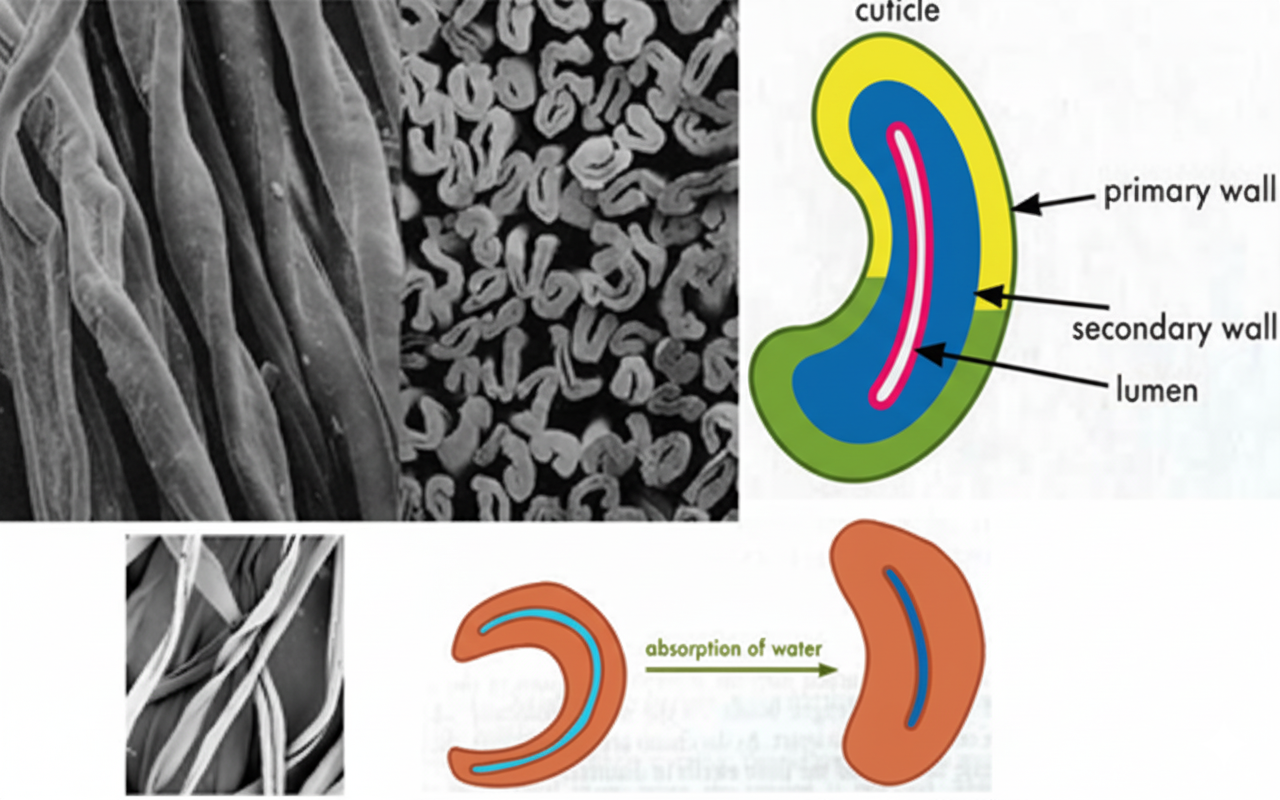
Fibre morphology includes the structure, shape and internal arrangement of the fibre.
- Most fibres require microscopic study due to their fineness.
- Features like scales, convolutions or smoothness affect performance.
Longitudinal View
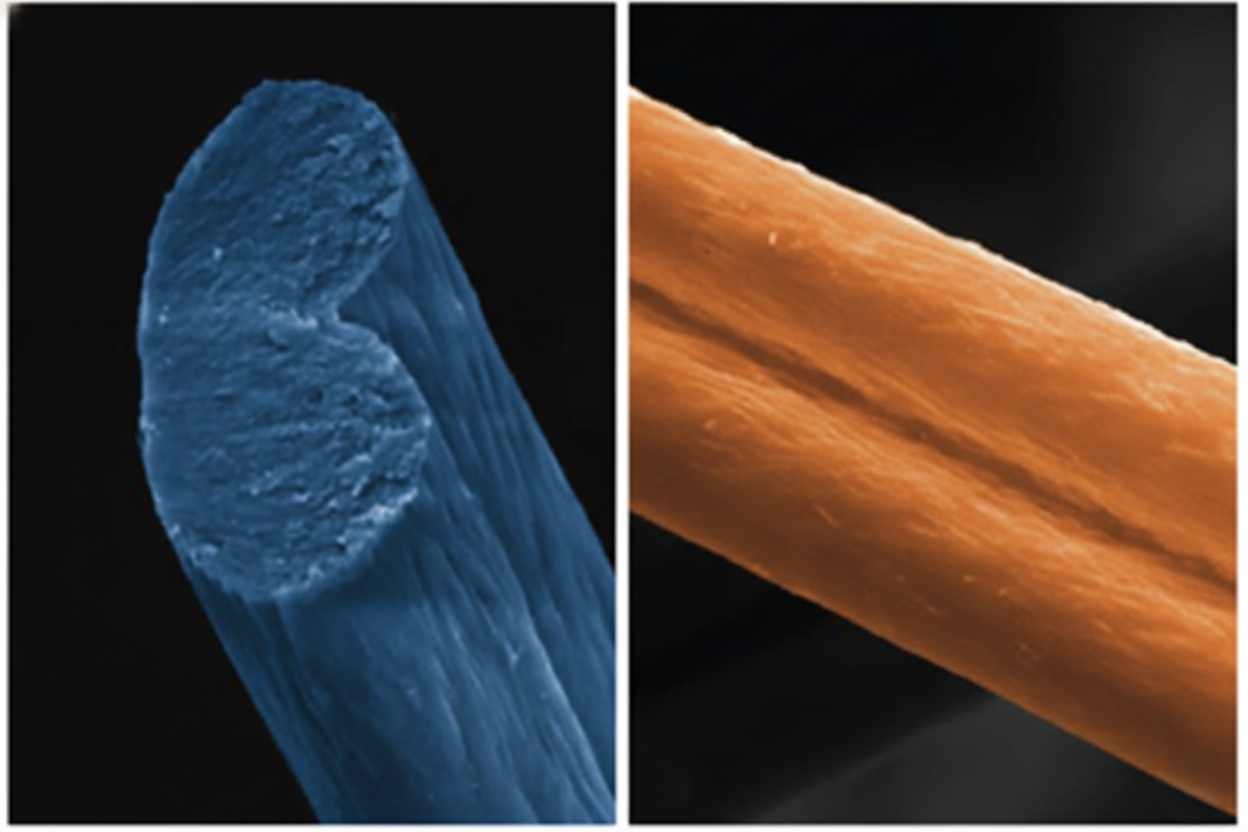
This is the lengthwise appearance of the fibre when viewed under a microscope.
Cross‑Sectional View
This is the appearance of the fibre when cut horizontally, like slicing a cucumber.
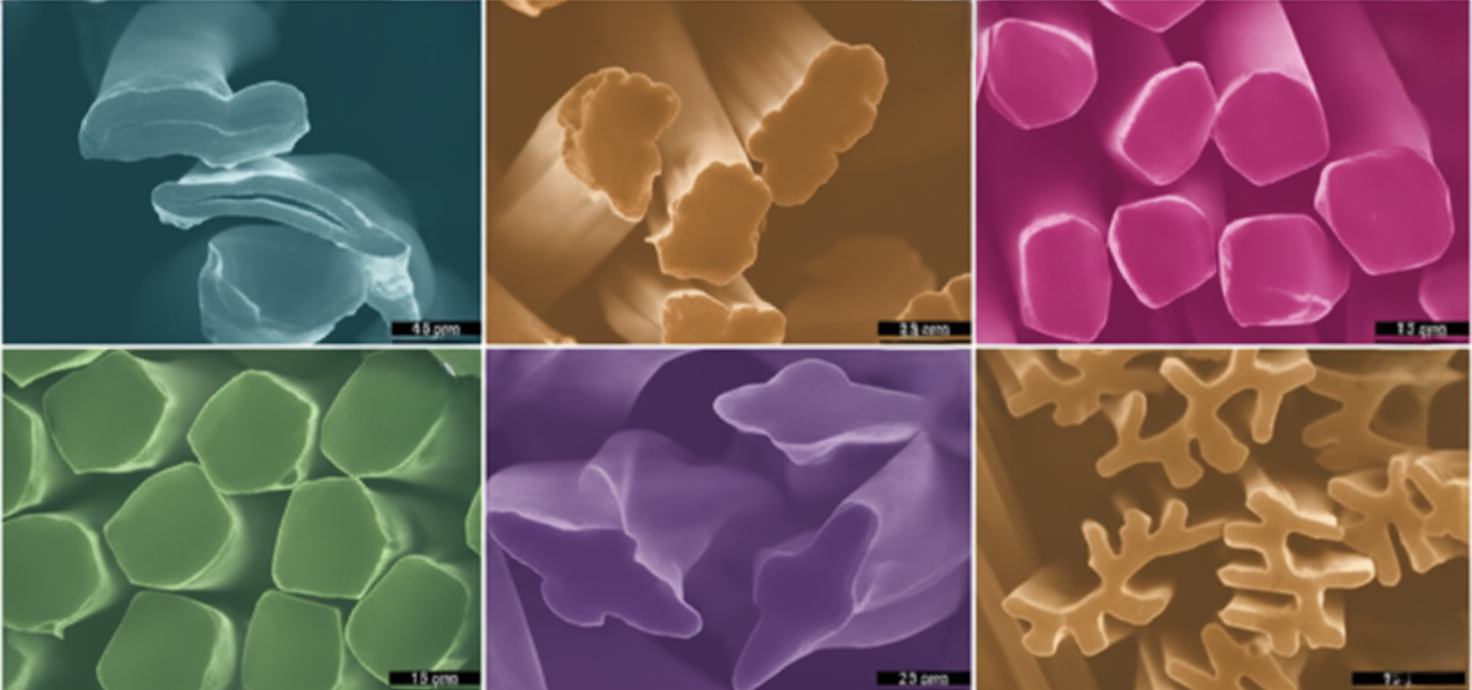
- Cross‑sections may be round, triangular, kidney‑shaped or multilobed.
- Cross‑section influences lustre, bulk, moisture behaviour and feel.
Lustre
Lustre refers to the shine or gloss of a fibre. It is the result of how light reflects off its surface.
- Filament fibres (e.g., silk, polyester) are more lustrous.
- Staple fibres (e.g., cotton) have a duller appearance unless treated.
Colour
Natural fibres have inherent colours determined by climate, soil and environmental conditions.
- Cotton often appears off‑white or creamy.
- Wool can be white, brown or grey.
- Fabrics are usually bleached before dyeing to achieve richer colours.
Elongation and Elastic Recovery
- Elongation is how much a fibre can stretch before breaking.
- Elastic recovery is the ability to go back to original length.
- High elasticity prevents sagging and improves comfort.
Moisture Absorption
Also called hygroscopicity, this is the fibre’s ability to absorb water.
- Highly absorbent fibres (cotton, wool) are more comfortable in hot climates.
- Low absorbency fibres generate more static electricity.
Resiliency
Resiliency is the ability to spring back after being folded, crushed or wrinkled.
- Wool has high resiliency (wrinkle‑resistant).
- Cotton has low resiliency (wrinkles easily).
Dimensional Stability
The ability of a fibre to retain its shape and size despite moisture, heat or mechanical stress.
- Poor dimensional stability causes shrinkage or stretching.
Abrasion Resistance
Resistance to rubbing or surface wear.
- Important for fabrics used in uniforms, upholstery and sportswear.
Thermal Properties
How a fibre reacts to heat and flame:
- Thermoplastic fibres melt (e.g., polyester).
- Natural fibres ignite but do not melt.
Static Electricity
Fibres with low moisture content (e.g., nylon, acrylic) generate more static charges due to friction.
Chemical Properties
Effect of Acids
- Strong mineral acids like sulphuric acid damage cellulose fibres (cotton, linen) and wool.
- Mild organic acids may not harm fibres significantly.
Effect of Alkalis
- Alkalis (like in detergents) do not harm cotton.
- Alkalis weaken or dissolve protein fibres like wool and silk.
Effect of Sunlight
Prolonged exposure to sunlight can cause:
- Yellowing of fabrics
- Fibre degradation
- Strength loss
Some fibres, such as nylon, are particularly sensitive.
Biological Properties
This includes fibre resistance to fungi, bacteria, insects and pests.
- Wool and silk are prone to moth and beetle attacks.
- Cellulosic fibres may develop mildew when stored in damp conditions.
Proper storage conditions—dry, cool and well‑ventilated—are essential to prevent biological damage.
you can visit Fibre Identification in Textiles to see how fibres are identified.
Specification & Microscopic details of common Fibres
Cotton
| Property | Details |
|---|---|
| Microscopic | Kidney‑shaped cross section, primary/secondary wall, lumen; ribbon-like twists |
| Diameter (mm) | 0.014 mm |
| Length | 0.5 – 3.5 cm |
| Color | Cream white |
| Luster | Minimum or no luster |
| Moisture Regain | 7–11% |
| Strength (N/tex) | 0.3 – 0.5, becomes +25% stronger when wet |
| Thermal/Chemical | Loses strength at 218°C, does not melt, cellulose |
| Elongation | 7% |
| Heat Conductivity | High degree of heat conductivity |
| Countries | USA, Russia, Brazil, Egypt, India, Pakistan, China (Egypt: best quality) |
Flax
| Property | Details |
|---|---|
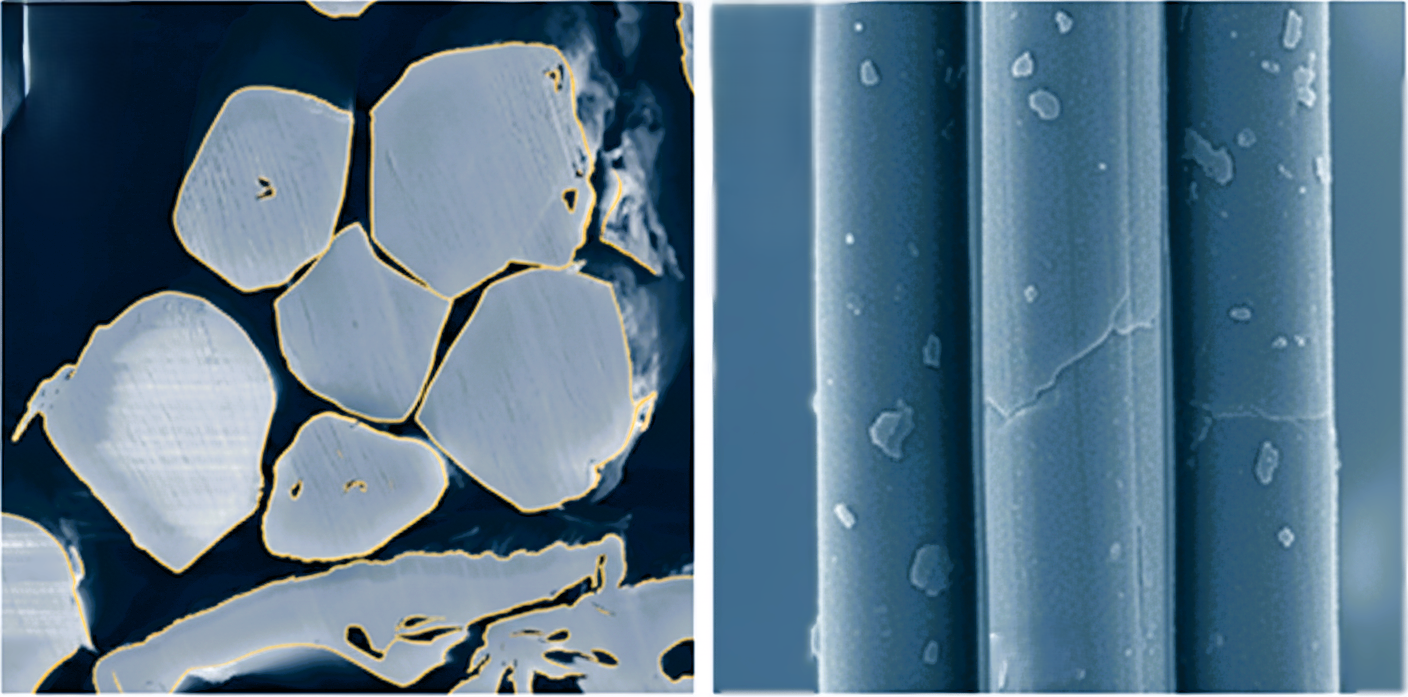
| Microscopic | Polygonal cross-section; smooth surface (SEM images from your slide) |
| Diameter (mm) | 0.02 mm |
| Length | 0.5 – 1 cm |
| Color | Brown |
| Luster | Luster (natural) |
| Moisture Regain | 11–20% |
| Strength (N/tex) | 0.4 – 0.6, becomes +10% stronger when wet |
| Thermal/Chemical | Loses strength at 310°C, does not melt, cellulose |
| Elongation | 1–3% |
| Heat Conductivity | Very high degree of heat conductivity |
Jute
| Property | Details |
|---|---|
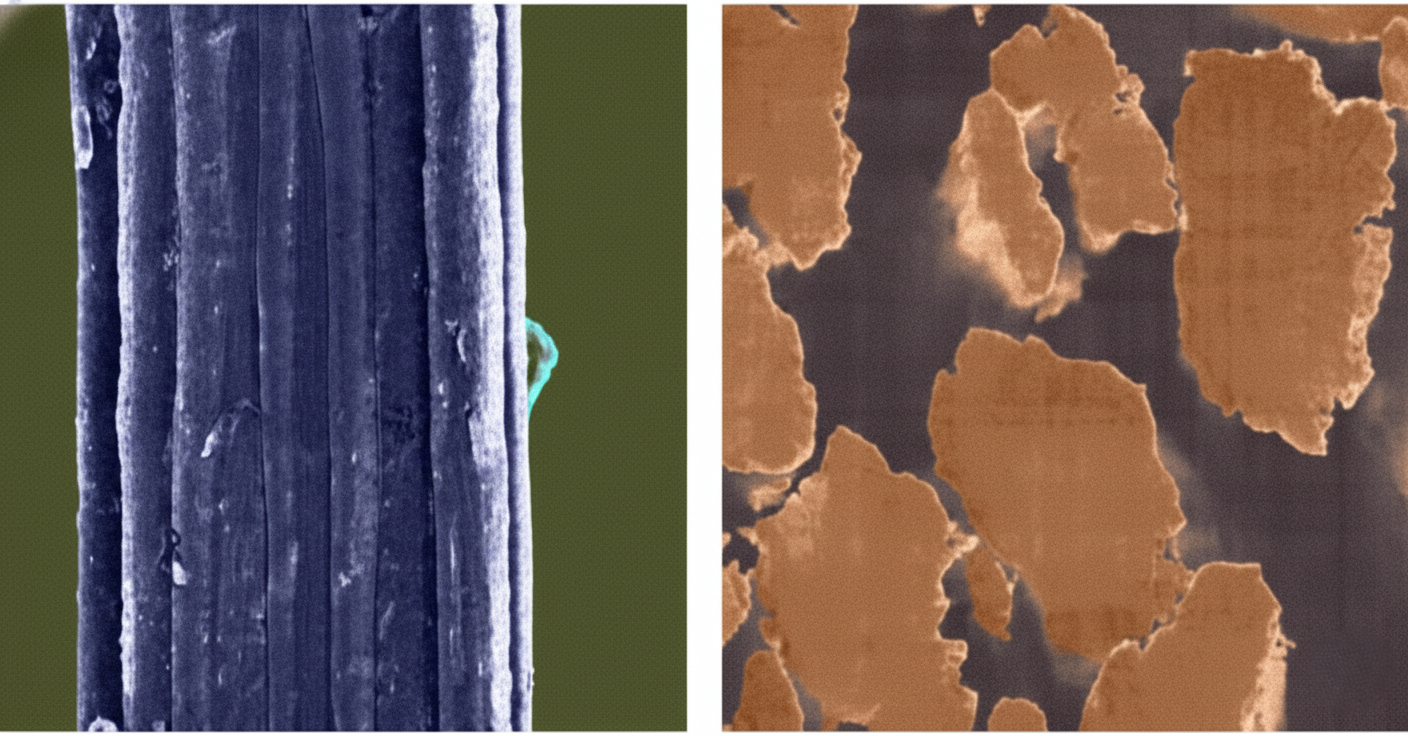
| Microscopic | Irregular polygon, thick cell walls (SEM images from your slide) |
| Diameter (mm) | 0.018 mm |
| Length | 0.5 – 3 mm |
| Color | Light gold |
| Luster | Medium luster |
| Moisture Regain | 15–17% |
| Strength (N/tex) | 0.1 – 0.2, –10% loss when wet |
| Thermal/Chemical | Loses strength at 290°C, does not melt, cellulose + lignin |
| Elongation | 3% |
| Heat Conductivity | Good conductor of heat |
Viscose / Rayon
| Property | Details |
|---|---|
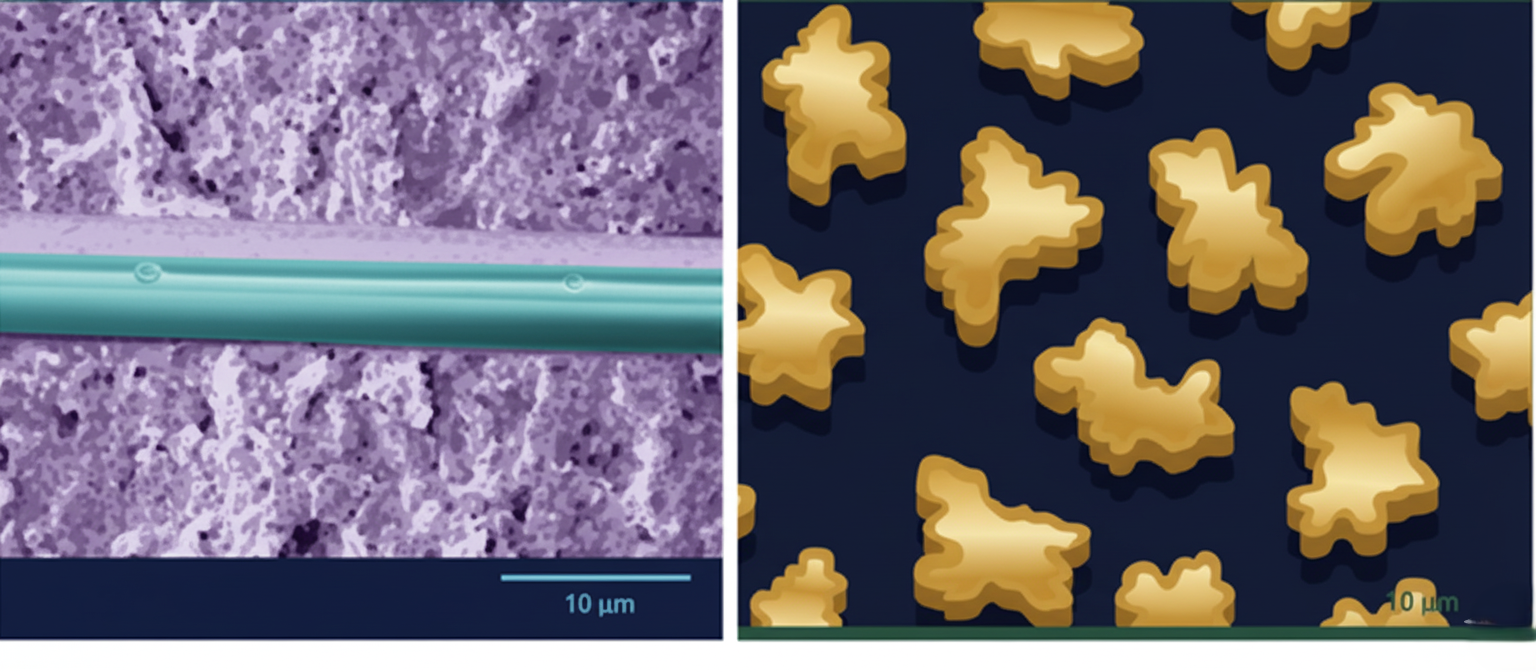
| Microscopic | As per spinnerets |
| Diameter (mm) | 0.004– |
| Length | Filament |
| Color | Creamy white |
| Luster | Minimum or no luster / Can have luster |
| Moisture Regain | 11–12.5% |
| Strength (N/tex) | 0.1–0.3, –35% strength when wet |
| Thermal Behaviour | Loses strength at 230°C, does not melt |
| Chemical Composition | Cellulose |
| Elongation | ~25% |
| Heat Conductivity | Good conductor |
Acetate
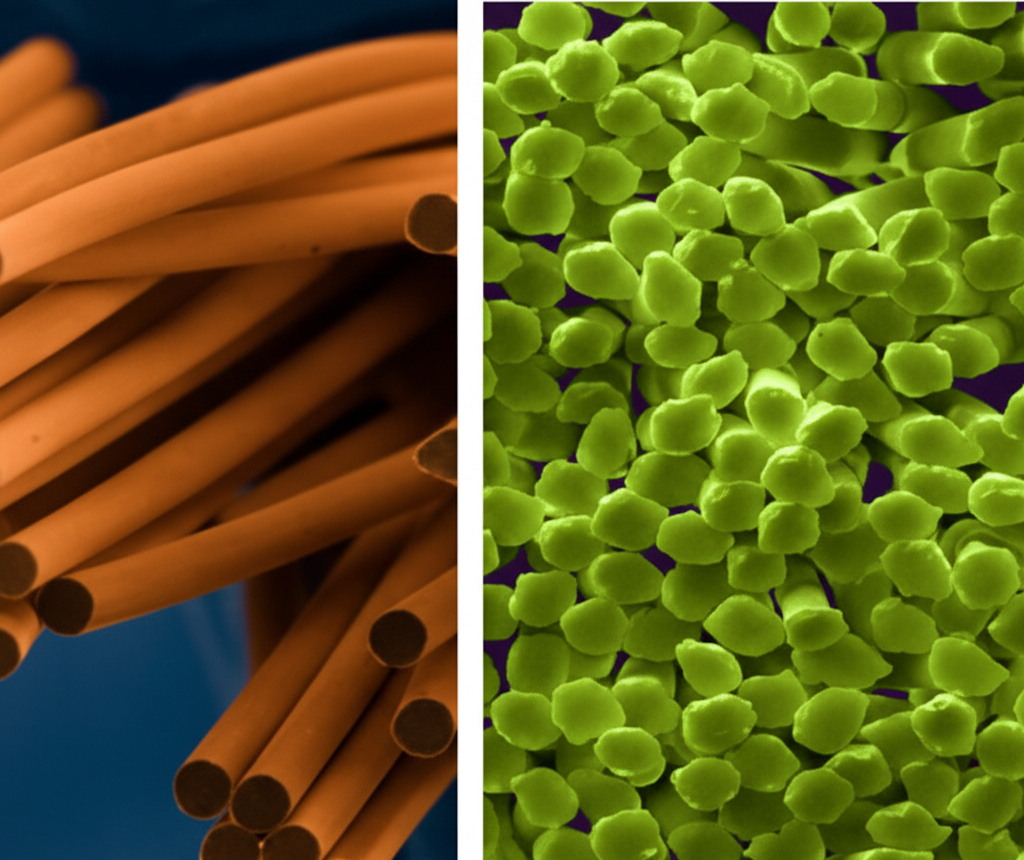
| Property | Details |
|---|---|
| Microscopic | As per spinnerets |
| Diameter (mm) | 0.004– |
| Length | Filament |
| Color | White |
| Luster | Medium luster |
| Moisture Regain | 0.065 |
| Strength (N/tex) | 0.1–0.2, –8% wetting strength |
| Thermal Behaviour | Loses strength at 190°C, melts |
| Chemical Composition | Cellulose acetate |
| Elongation | 20–45% |
| Heat Conductivity | Good conductor |
Wool
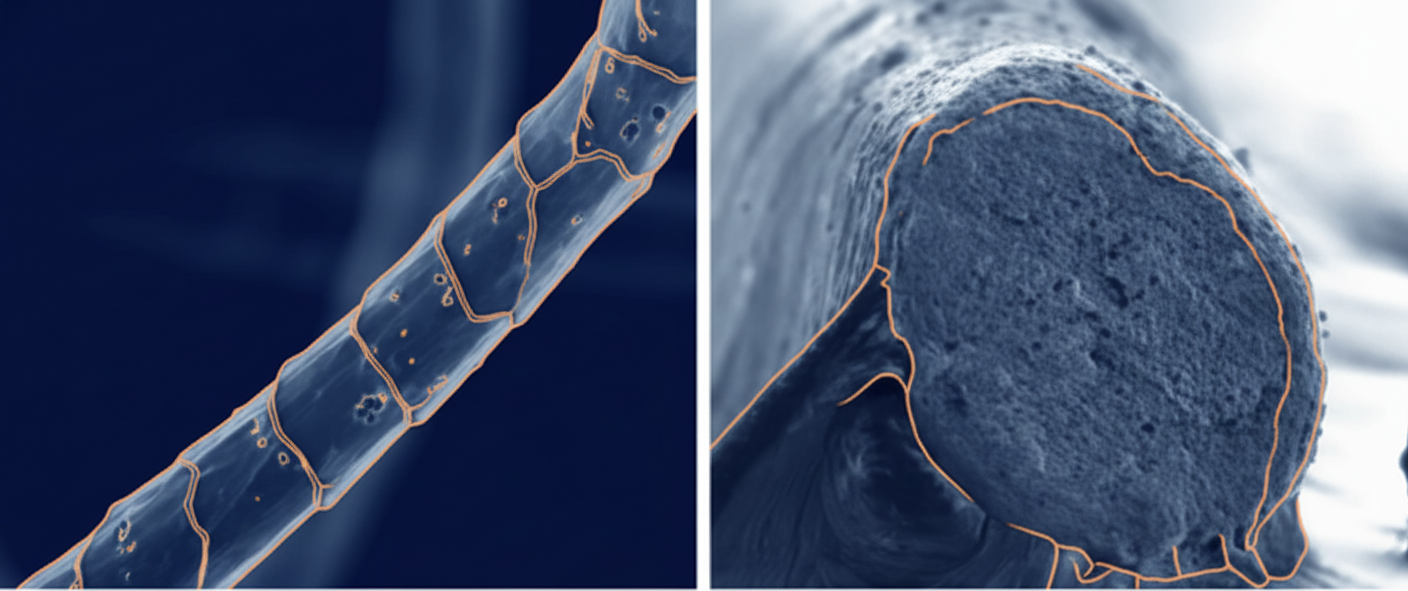
| Property | Details |
|---|---|
| Microscopic | Round with Ruff surface |
| Diameter (mm) | 0.015 |
| Length | 0.5–3.5 cm |
| Color | Creamy white |
| Luster | Medium luster |
| Moisture Regain | 13–18% |
| Strength (N/tex) | 0.1–0.2, +8% stronger when wet |
| Thermal Behaviour | Loses strength at 130°C, melts |
| Chemical Composition | Keratin |
| Elongation | 35% |
| Heat Conductivity | Poor heat conductivity |
Silk
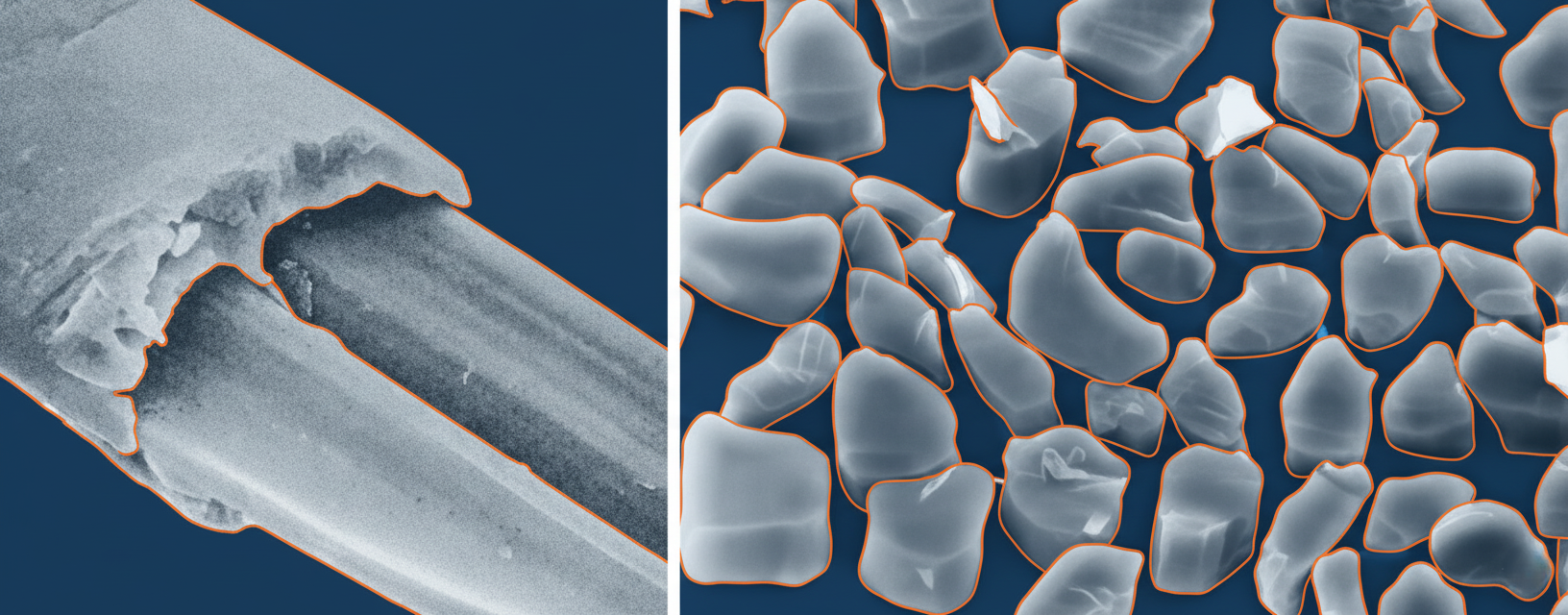
| Property | Details |
|---|---|
| Microscopic | Triangular |
| Diameter (mm) | 0.014 mm |
| Length | Filament |
| Color | Golden yellow |
| Luster | High luster |
| Moisture Regain | 0.11 |
| Strength (N/tex) | 0.2–0.5, –21% on wetting |
| Thermal Behavior | Loses strength at 170°C, melts |
| Chemical Composition | Fibroin |
| Elongation | 25% |
| Heat Conductivity | Poor heat conductor |
Polyester
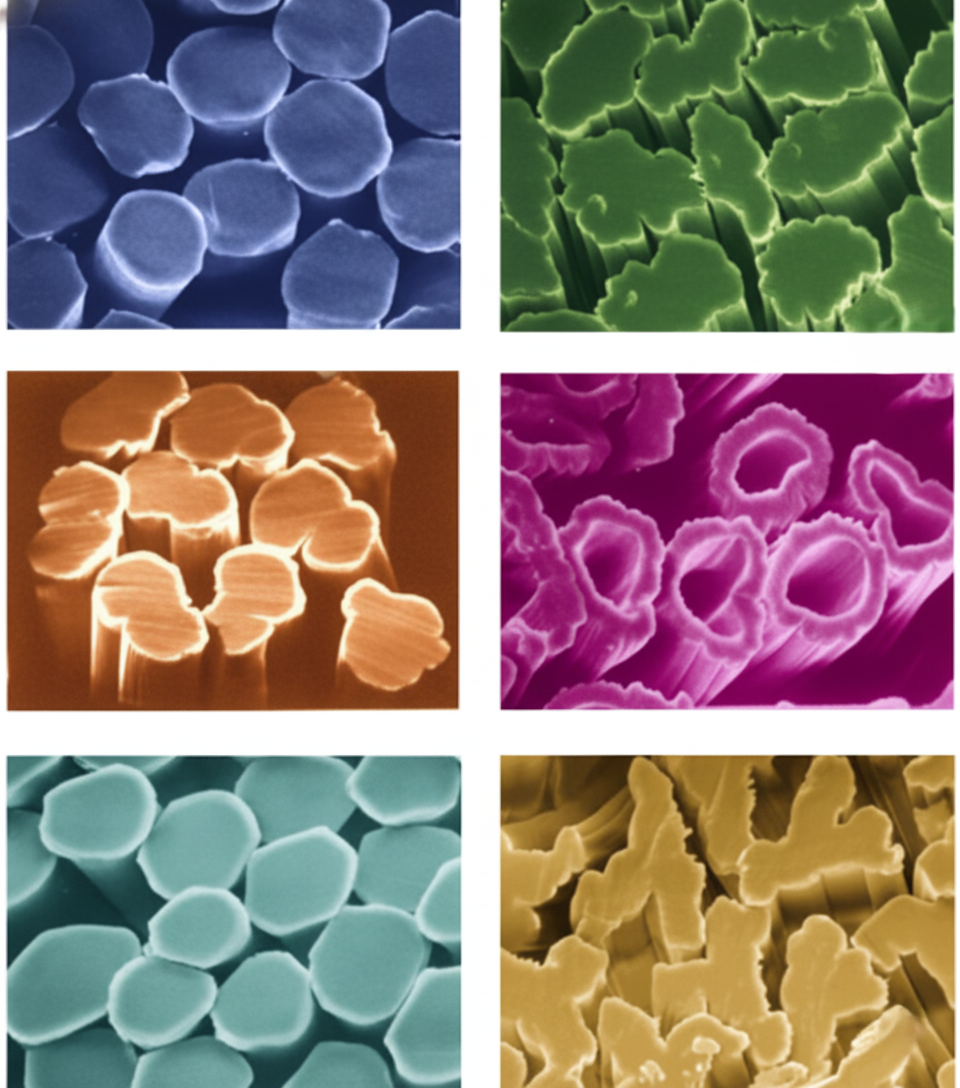
| Property | Details |
|---|---|
| Microscopic | As per spinnerets |
| Diameter (mm) | 0.002~ |
| Length | Filament |
| Color | White |
| Luster | High luster |
| Moisture Regain | 0.4–0.8% |
| Strength (N/tex) | 0.3–1.2, –1% on wetting |
| Thermal Behaviour | Loses strength at 240°C, melts |
| Chemical Composition | Polyethylene glycol terephthalate |
| Elongation | 300–450% |
| Heat Conductivity | Very poor heat conductor |
Nylon / Polyamide
| Property | Details |
|---|---|
| Microscopic | As per spinnerets |
| Diameter (mm) | 0.002~ |
| Length | Filament |
| Color | White |
| Luster | High luster |
| Moisture Regain | 2.8–5% |
| Strength (N/tex) | 0.3–1.2, –10% on wetting |
| Thermal Behaviour | Loses strength at 250°C, melts |
| Chemical Composition | Polyhexamethylene diamine |
| Elongation | 100–300% |
| Heat Conductivity | Very poor heat conductor |
Acrylic
| Property | Details |
|---|---|
| Microscopic | As per spinnerets |
| Diameter (mm) | 0.004~ |
| Length | Filament |
| Color | White |
| Luster | Luster |
| Moisture Regain | 1–2.5% |
| Strength (N/tex) | 0.2–0.5, –5% strength on wetting |
| Thermal Behaviour | Loses its strength at 235°C, melts |
| Chemical Composition | Polyacrylate nitrile |
| Elongation | 25–45% |
| Heat Conductivity | Very poor heat conductor |
Spandex
| Property | Details |
|---|---|
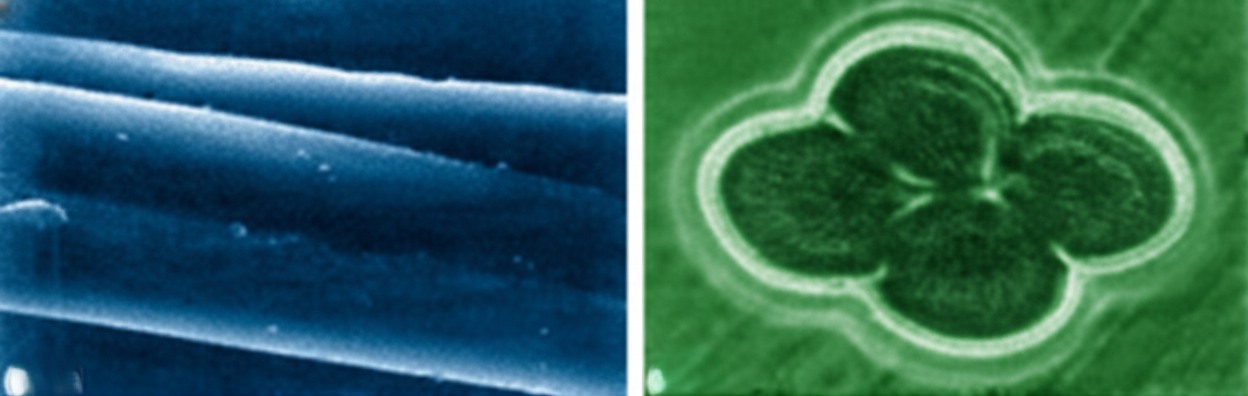
| Microscopic | As per spinnerets |
| Diameter (mm) | 0.002~ |
| Length | Filament |
| Color | White |
| Luster | Luster |
| Moisture Regain | 0.7–1.3% |
| Strength (N/tex) | 0.44–0.88, –1% on wetting |
| Thermal Behaviour | Loses strength at 210°C, melts |
| Chemical Composition | Polyurethane |
| Elongation | 450–550% |
| Heat Conductivity | Very poor heat conductor |
Final thought
Textile fibres are the smallest building blocks of fabrics, and they determine how cloth feels, looks and performs. The softness of cotton. The strength of polyester. Every fibre has a story to tell, written by nature or by human ingenuity. The usefulness of a fibre in textiles is not to be found in its origin, but in the balance between its strength, flexibility and absorbency, and its reactions to heat, dyes and even the environment.
Length, tenacity and cohesiveness are the primary properties which decide if a fibre can be made into yarn at all. Luster, color, resiliency and resistance are secondary characteristics which decide how the finished fabric behaves in everyday life. That's why silk gleams, wool holds its shape against wrinkles, and polyester stretches far beyond natural limits.
Next step to is know about yarn, you can visit Yarn for further details