Export documentation is one of the most critical components of international trade operations. Every export transaction generates a series of documents that serve commercial, regulatory, transportation, customs and financial purposes. These documents facilitate the movement of goods across borders, support payment collection, establish ownership, ensure compliance with foreign exchange regulations and provide evidence of shipment.
In international trade, banks, customs authorities, shipping companies, insurers and importers rely heavily on documentation rather than physical inspection of goods. Consequently, accuracy and completeness in export documentation are essential. Even minor errors can result in documentary discrepancies, customs delays, payment refusal under a Letter of Credit (LC) or regulatory penalties. Therefore, exporters must understand the purpose, classification and preparation requirements of export documents to ensure smooth execution of trade transactions.
Why Export Documents Are Essential?
Export documents serve as the backbone of international trade transactions. They provide evidence that contractual obligations have been fulfilled and enable the flow of goods, information and payments between trading partners.
Export documentation is required to:
- Comply with foreign exchange regulations.
- Satisfy customs and regulatory requirements.
- Facilitate payment under Letters of Credit, Documentary Collections and remittance arrangements.
- Provide proof of shipment and delivery.
- Establish ownership of goods.
- Support transportation and logistics activities.
- Enable insurance coverage and claims processing.
- Provide evidence for dispute resolution.
Incorrect or incomplete documentation can create significant problems, including payment delays, shipment detention, discrepancies under LC transactions, financial losses and reputational damage.
Classification of Export Documents
Export documents are generally grouped into four major categories based on their purpose and function.
1. Commercial Documents
Commercial documents are prepared by the exporter and form the basis of the trade transaction. These documents provide information regarding the goods being exported and the payment due from the importer.
Common commercial documents include:
- Commercial Invoice
- Packing List
- Bill of Exchange
- Proforma Invoice
- Beneficiary's Certificate
2. Transport Documents
Transport documents provide evidence that goods have been handed over to a carrier for transportation.
Examples include:
- Bill of Lading (B/L)
- Air Waybill (AWB)
- Railway Receipt
- Road Consignment Note
- Multimodal Transport Document
These documents are crucial because they connect the physical movement of goods with the financial and commercial aspects of the trade transaction.
3. Regulatory and Statutory Documents
Regulatory documents are required by government agencies, customs authorities, central banks and trade promotion organizations.
Typical examples are:
- EXP Form
- Certificate of Origin
- Inspection Certificate
- Export Permit
- Phytosanitary Certificate
- Health Certificate
These documents ensure compliance with national and international trade regulations.
4. Financial and Banking Documents
Financial documents are used for negotiation, collection, discounting and realization of export proceeds through the banking system.
Examples include:
- Export Letter of Credit
- Bill of Exchange
- Collection Schedule
- Foreign Exchange Reporting Forms
- Bank Certificates
These documents facilitate payment settlement and regulatory reporting.
Key Commercial Export Documents
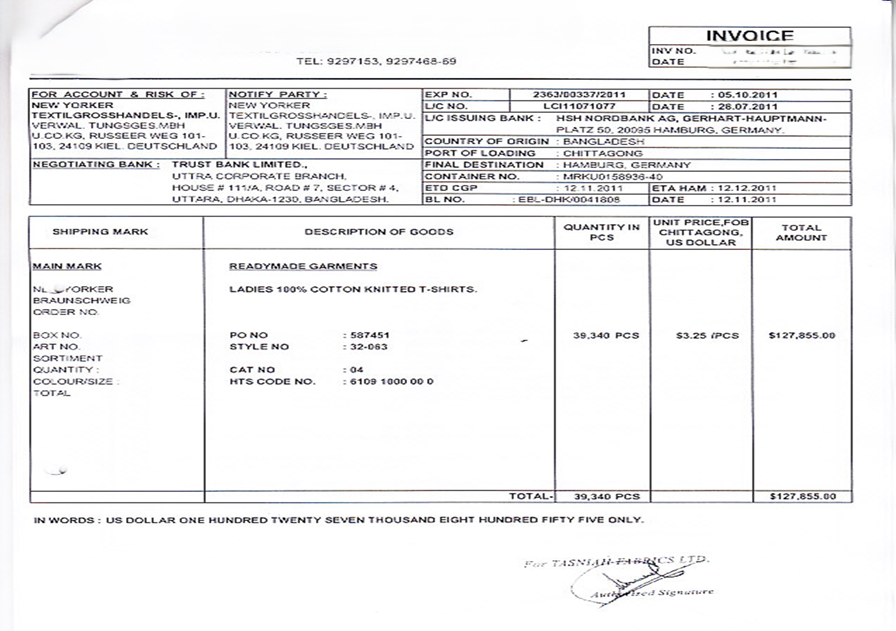
Commercial Invoice
The Commercial Invoice is the principal export document issued by the exporter to the importer. It serves as the seller's claim for payment and provides detailed information regarding the goods sold.
The commercial invoice is often described as the foundation of the export documentation package because many other documents are prepared based on the information contained in it.
Key Contents of a Commercial Invoice
A typical commercial invoice includes:
- Exporter's name and address
- Importer's name and address
- Invoice number
- Invoice date
- Description of goods
- Quantity of goods
- Unit price
- Total invoice value
- Currency of transaction
- Incoterms (FOB, CIF, CFR, etc.)
- HS Code
- Country of origin
- LC number (where applicable)
Under a Letter of Credit transaction, the invoice must strictly comply with the terms and conditions of the LC.
Importance of Commercial Invoice
The commercial invoice is used for:
- Customs valuation
- Payment processing
- Documentary examination by banks
- Tax and duty calculation
- Trade recordkeeping
Because of its importance, any inconsistency in the commercial invoice may lead to documentary discrepancies.
Packing List
Role of Packing Lista
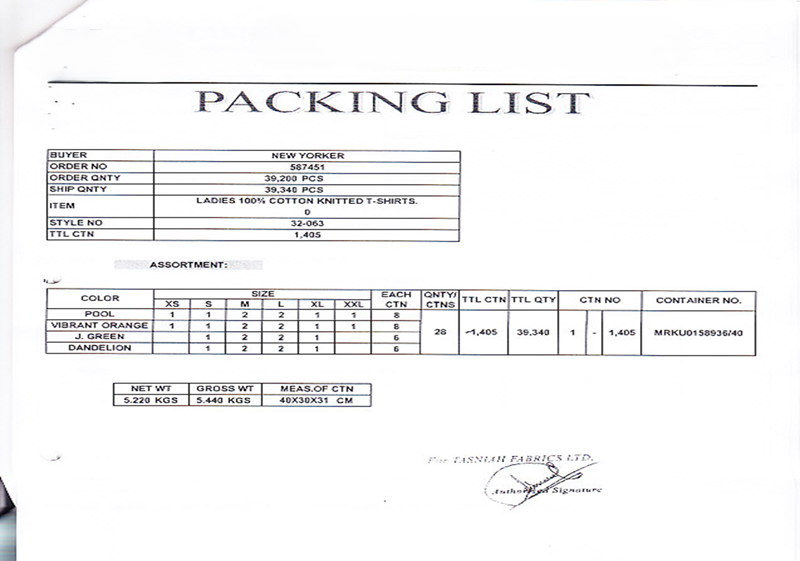
The Packing List provides detailed information regarding the packing arrangement of the exported goods.
While the Commercial Invoice describes the commercial aspects of the shipment, the Packing List focuses on physical packaging details.
It helps:
- Customs officials during inspection
- Freight forwarders during handling
- Carriers during transportation
- Importers during unloading and inventory verification
Information Included in a Packing List
The document generally contains:
- Package numbers
- Carton numbers
- Marks and numbers
- Gross weight
- Net weight
- Dimensions
- Quantity per package
- Product description
Unlike the Commercial Invoice, the Packing List does not generally contain pricing information.
Bill of Exchange
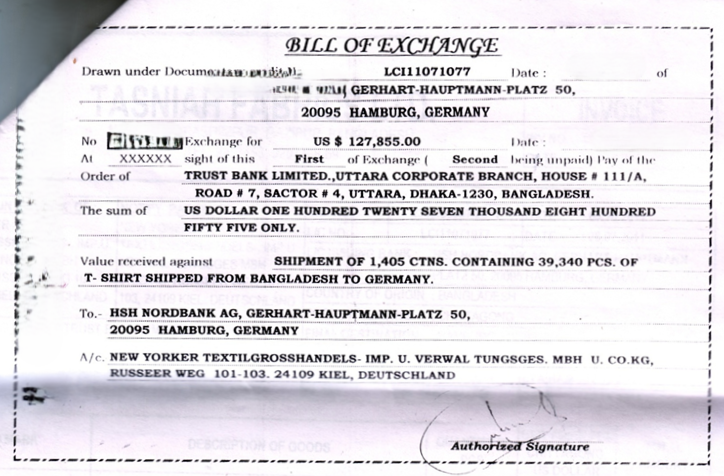
A Bill of Exchange is a negotiable financial instrument used to collect payment from the buyer or bank.
Through this document, the exporter orders the importer or another designated party to pay a specified amount either immediately or at a future date.
Types of Bills of Exchange
Sight Bill: A Sight Bill is payable immediately upon presentation and acceptance.
Usance Bill: A Usance Bill is payable after a specified credit period, such as:
- 30 days
- 60 days
- 90 days
- 120 days
In Letter of Credit transactions, the bill must match the amount, maturity period and terms specified in the LC.
Transport Documents
Bill of Lading (B/L)
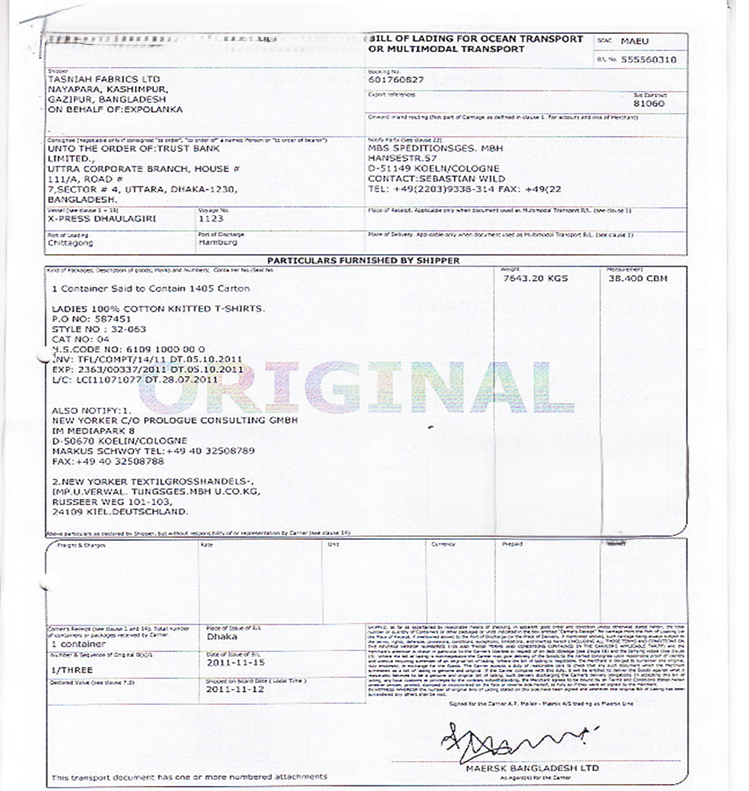
The Bill of Lading is one of the most important transport documents used in international trade. It serves multiple legal and commercial functions.
A Bill of Lading acts as:
- A document of title.
- A receipt for goods.
- A contract of carriage.
Essential Features of a Bill of Lading
A standard Bill of Lading includes:
- Name of shipper
- Name of consignee
- Notify party details
- Port of loading
- Port of discharge
- Description of goods
- Freight status
- Vessel information
- Shipment date
Banks typically require a full set of original clean "Shipped on Board" Bills of Lading when negotiating export documents.
Importance in Trade Finance
Because the Bill of Lading represents ownership of goods, it plays a key role in:
- Letter of Credit transactions
- Documentary collections
- Import financing
- Release of cargo at destination
Air Waybill (AWB)
An Air Waybill is used when goods are transported by air.
Compared to sea transport, air shipments are generally faster and used for high-value, time-sensitive or perishable products.
Key Characteristics
The Air Waybill:
- Is issued by an airline or air carrier.
- Serves as evidence of transportation.
- Is non-negotiable.
- Is not a document of title.
Although it performs many of the same transport functions as a Bill of Lading, ownership cannot be transferred through an Air Waybill.
Regulatory and Statutory Export Documents
Export Form (EXP Form)
The EXP Form is a mandatory regulatory document used to monitor export proceeds and foreign exchange earnings.
It enables the central bank and other authorities to ensure that export earnings are repatriated through official banking channels.
Certification and Submission
The EXP Form is:
- Certified by customs authorities at shipment.
- Submitted through authorized dealer banks.
- Used to monitor export realization.
This document plays an important role in foreign exchange control systems.
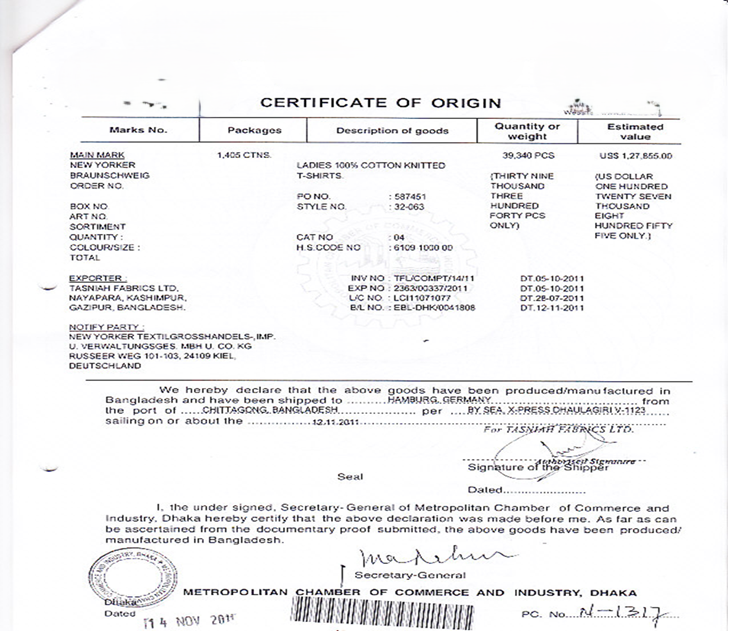
Certificate of Origin
A Certificate of Origin certifies the country where the exported goods were manufactured, produced or substantially transformed.
The certificate is often required by customs authorities in the importing country.
Uses of Certificate of Origin
It is commonly required for:
- Preferential tariff treatment
- Trade agreement benefits
- Customs clearance
- Trade statistics
The document is generally issued by a Chamber of Commerce or authorized government agency.
Inspection Certificate
Role
An inspection certificate confirms that goods have been inspected for:
- Quality
- Quantity
- Specifications
Some buyers or LCs require pre‑shipment inspection (PSI) by an independent agency.
Financial and Banking Documents
Letter of Credit (Export LC)
The Export Letter of Credit is a bank's irrevocable undertaking to pay the exporter provided that compliant documents are presented.
In an LC transaction, the exporter must ensure that all export documents strictly conform to the LC requirements.
Key Considerations
Exporters should carefully verify:
- Product description
- Quantity
- Shipment dates
- Currency
- Document requirements
- Presentation period
Any discrepancy may delay payment or result in refusal by the issuing bank.
Export Register and Bank Reporting
Banks maintain detailed export registers containing:
- Export bill references
- Negotiation dates
- Export value
- Currency realization
- Local currency equivalent
These records assist in export monitoring and reporting.
Export Document Flow Process
Step‑by‑Step Export Documentation Flow
Export Order Received
↓
Goods Manufactured/Prepared
↓
Shipment of Goods
↓
Transport Documents Obtained
↓
Preparation of Export Documents
↓
Submission to Bank
↓
Document Examination
↓
Negotiation / Collection / LC Processing
↓
Receipt of Export Proceeds
↓
Credit to Exporter's Account
↓
Export Transaction Closed
1. Shipment of Goods
Exporter ships goods and obtains transport documents.
2. Preparation of Documents
The exporter prepares:
- Commercial Invoice
- Packing List
- Bill of Exchange
- Bill of Lading or Air Waybill
- Certificate of Origin
- Inspection Certificate
- Other required documents
3. Submission to Bank
Documents are submitted to the bank for:
- Negotiation
- Collection
- Discounting
- LC presentation
4. Document Checking
The bank examines documents according to:
- LC terms
- UCP 600
- ISBP guidelines
5. Realization of Export Proceeds
Upon acceptance of documents, payment is received and credited to the exporter's account.
Common Export Documentation Errors
Common mistakes include:
- Invoice description not matching LC wording.
- Late shipment.
- Late document presentation.
- Incorrect HS Code.
- Incorrect consignee details.
- Missing signatures or seals.
- Inconsistent quantities.
- Incorrect values.
- Missing certificates.
Such mistakes can lead to documentary discrepancies, causing delays or refusal of payment.
Best Practices for Exporters
To ensure smooth processing and timely realization of export proceeds, exporters should adopt strong documentation practices.
Recommended measures include:
- Review LC terms before shipment.
- Use standardized document formats.
- Coordinate closely with freight forwarders.
- Verify all information before submission.
- Maintain accurate export records.
- Present documents within the stipulated deadline.
- Conduct internal document checks before bank submission.
Following these practices significantly reduces the risk of discrepancies and improves payment security.
Conclusion
Export documentation is a fundamental part of international trade operations. It serves multiple functions, including regulatory compliance, customs clearance, transportation, ownership transfer, insurance coverage and payment realization. Documents such as the Commercial Invoice, Packing List, Bill of Exchange, Bill of Lading, Air Waybill, Certificate of Origin, Inspection Certificate and Export LC collectively support the successful execution of export transactions. Since banks, customs authorities and buyers rely heavily on documentary evidence rather than physical inspection of goods, accuracy and compliance are critical. Proper export documentation not only ensures smooth shipment and timely payment but also strengthens export compliance, financial security and long-term business success.